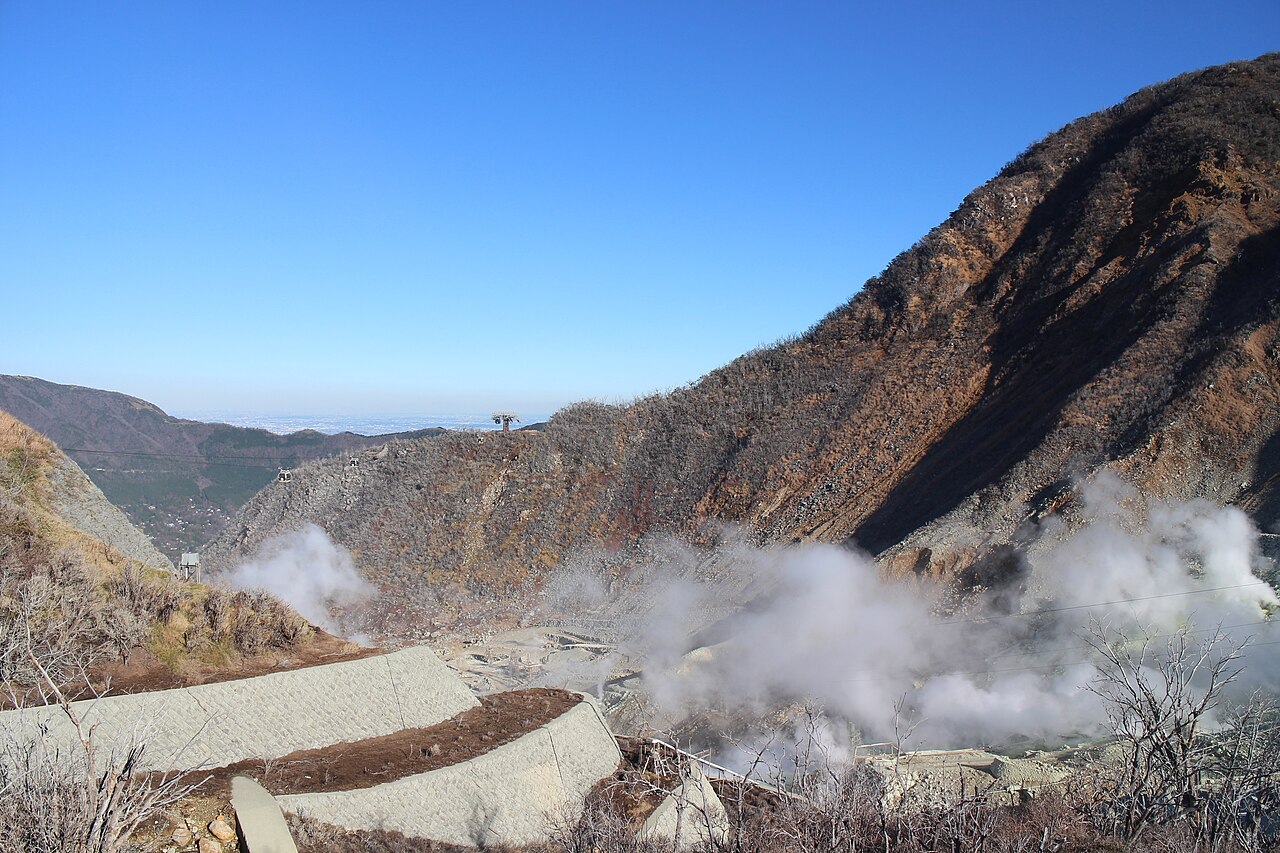
A person called a "steamer" makes black eggs every day in the hot spring pond on Enmadai at Owakudani, in upper Hakone. The observation deck on the valley's nature trail shows Hakone's mountain range and Mt. Fuji at once. Inside the Hakone Geomuseum, touchable exhibits include the inverted cedar of Lake Ashi, the Jindai cedar, a volcanic terrain model and anchor work. At the Hōraien garden, trees turning color can be seen against the Hakone mountain range.
The black eggs at Owakudani, the touchable exhibits at the Geomuseum and the Japanese garden at Hōraien each add something different to a walk through upper Hakone.
Owakudani: Steam Vents, Black Eggs and the Hakone Geomuseum
The Owakudani nature trail is a garden path that reaches close to the steam vent area. Along the trail the smell of volcanic gas fills the path, and explanation boards at various points give details on how the volcano was formed. Rising volcanic steam and nature unique to volcanic areas can be observed throughout the trail. The trail is entered by guided group entry, with the details listed in the table below.
Black eggs at Owakudani are sold fresh and hot, and only eggs made that day are sold. They are made by boiling raw eggs in a hot spring pool, where components of the pool adhere to the porous shell and turn it black. The blackened eggs are then moved to a steamer. Black eggs are also sold at the shop below and are carried there by a dedicated ropeway.
The Hakone Geomuseum exhibition room has about fifty self-contained panel exhibits, as well as actual exhibits including Hakone rocks, a terrain model and the inverted cedar of Lake Ashinoko. Its panel exhibits introduce Hakone volcano, Owakudani, Sengokuhara, Hakone hot springs and the blessings of volcanoes. The museum opened in the valley, one of the geosites, as the base facility of the Hakone Geopark.
The nature trail shows the volcano outdoors through steam and explanation boards, and the Geomuseum covers the same volcano indoors with panels and touchable exhibits, so the two pair well in one visit.
Sengokuhara: The Susuki Grassland, Kintoki Shrine and the Pola Forest Trail
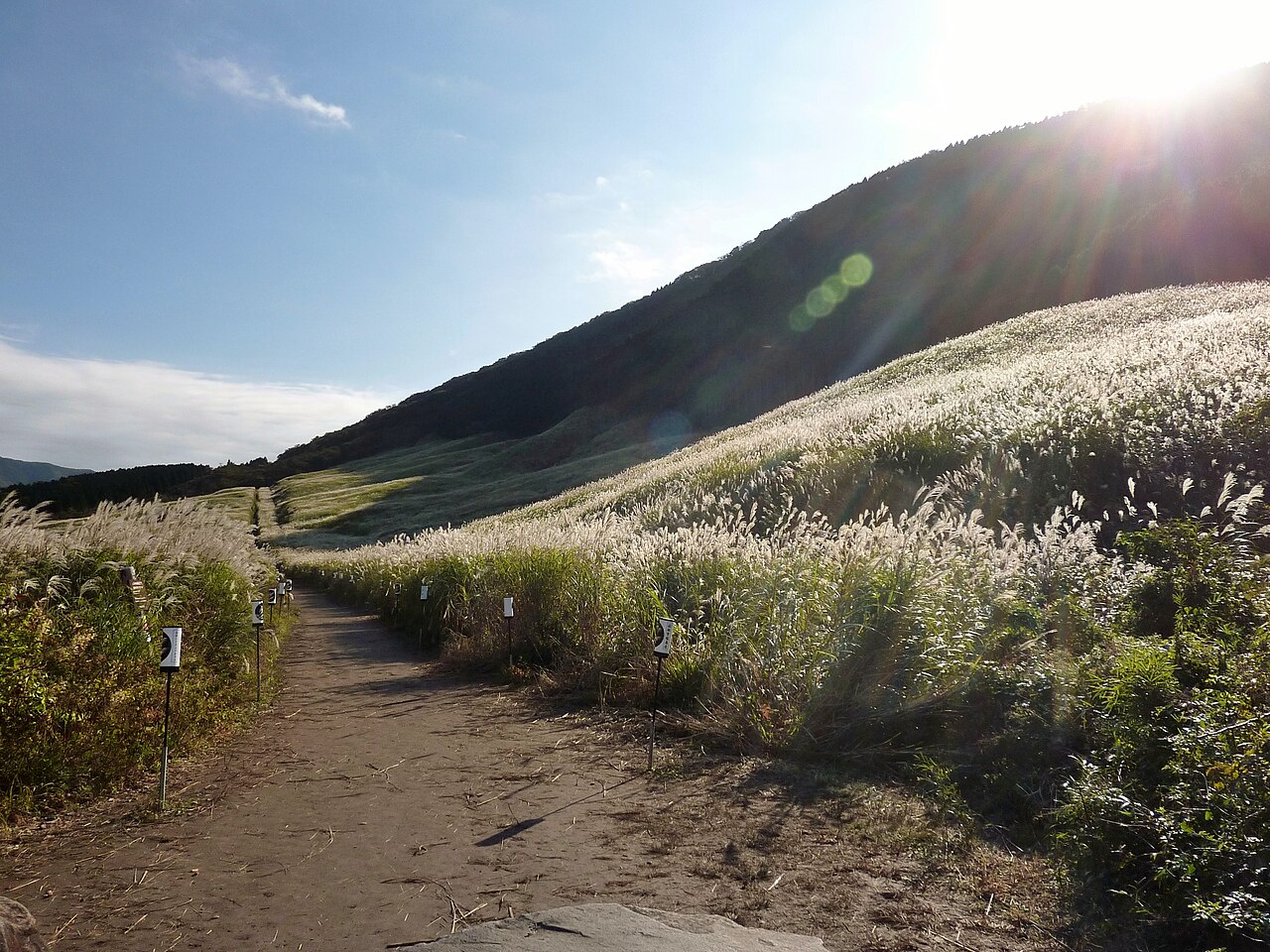
The Sengokuhara susuki grassland covers the slope of Daigatake, where countless pampas grass plants grow in a continuous expanse. A mountain-burning (yamayaki) of the grassland is held every March on a day without wind. If the grassland is left without burning, trees invade it and it turns into a thicket.
Hakone Shisseikaen is a botanical garden focused on plants that grow in wet areas such as wetlands, rivers, lakes and marshes. Along the Pola Museum forest trail, the himeshara tree has a smooth, glossy, pale reddish-brown bark. The beech trees there have a white-to-gray mottled pattern.
Kintoki Shrine stands at the foot of Mt. Kintoki and enshrines Kintaro. A hiking trail to Mt. Kintoki starts within the shrine grounds, a climb of about one hour and twenty minutes. Along the trail stands a small shrine dedicated with the axe said to have been used by Kintaro. The Yadori-iwa and Temari-iwa rocks from the Kintaro legend can also be seen on the climb.
The onsen resort in Sengokuhara opened on a wide grassland. Water piped from Owakudani, a sulfur spring with cloudy water, is centrally managed and supplied to each ryokan and hotel. Hot spring use here began in seventeen thirty-six with that piped water.
The susuki grassland is a slope covered in pampas grass, whereas the Pola Museum forest trail runs among beech and himeshara trees, so the choice in Sengokuhara is between grass and woodland.
Gora and Around: Villa Remains, Miyagino Cherries and the Horaien Garden
Gora has many restaurants and souvenir shops standing around its station area. Many remains of the Meiji-era villas in Gora are still preserved. Gora developed as a hot spring resort after the Hakone Tozan Railway opened in nineteen nineteen, and prospered as a villa district for political and financial figures and literati.
Miyagino has about one hundred twenty Somei-Yoshino cherry trees planted on the embankment along the Haya River, and they come into bloom in spring. Miyagino Onsen sits in a small settlement a little above Miyanoshita. The Miyagino Suwa Shrine stands within the guardian forest of Miyagino. Dōgashima Onsen lies at the bottom of the Haya River gorge.
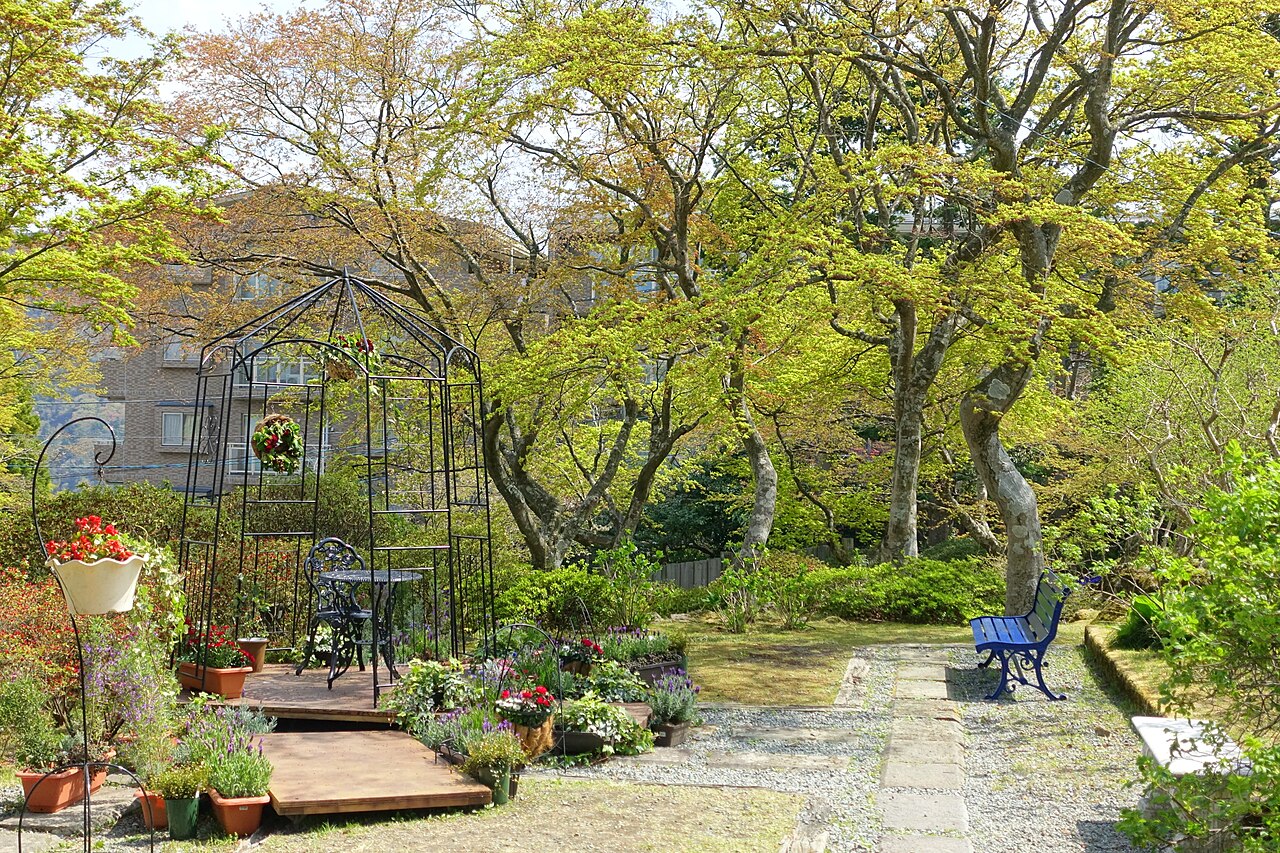
Hōraien is a Japanese garden opened in the early Taishō era that blends with Hakone's nature. Pale pink wild mountain cherry trees surround its grounds. The listed best viewing period for the garden's trees turning color is from mid to late November.
If the plan centers on Meiji-era villa remains, Gora has them; if it centers on a Japanese garden with wild mountain cherry trees, Hōraien is the one to add.
One Day in Upper Hakone: Gora, the Cable Car, the Ropeway and Owakudani
The Hakone Tozan Railway runs up to Gora in about forty minutes, and the line itself is part of the day. The Ōhiradai Hydrangea Path is a hydrangea spot along the line between the Ōhiradai switchback and Miyanoshita. In Gora, the restaurants and souvenir shops around the station area make a place to pause before the next leg.
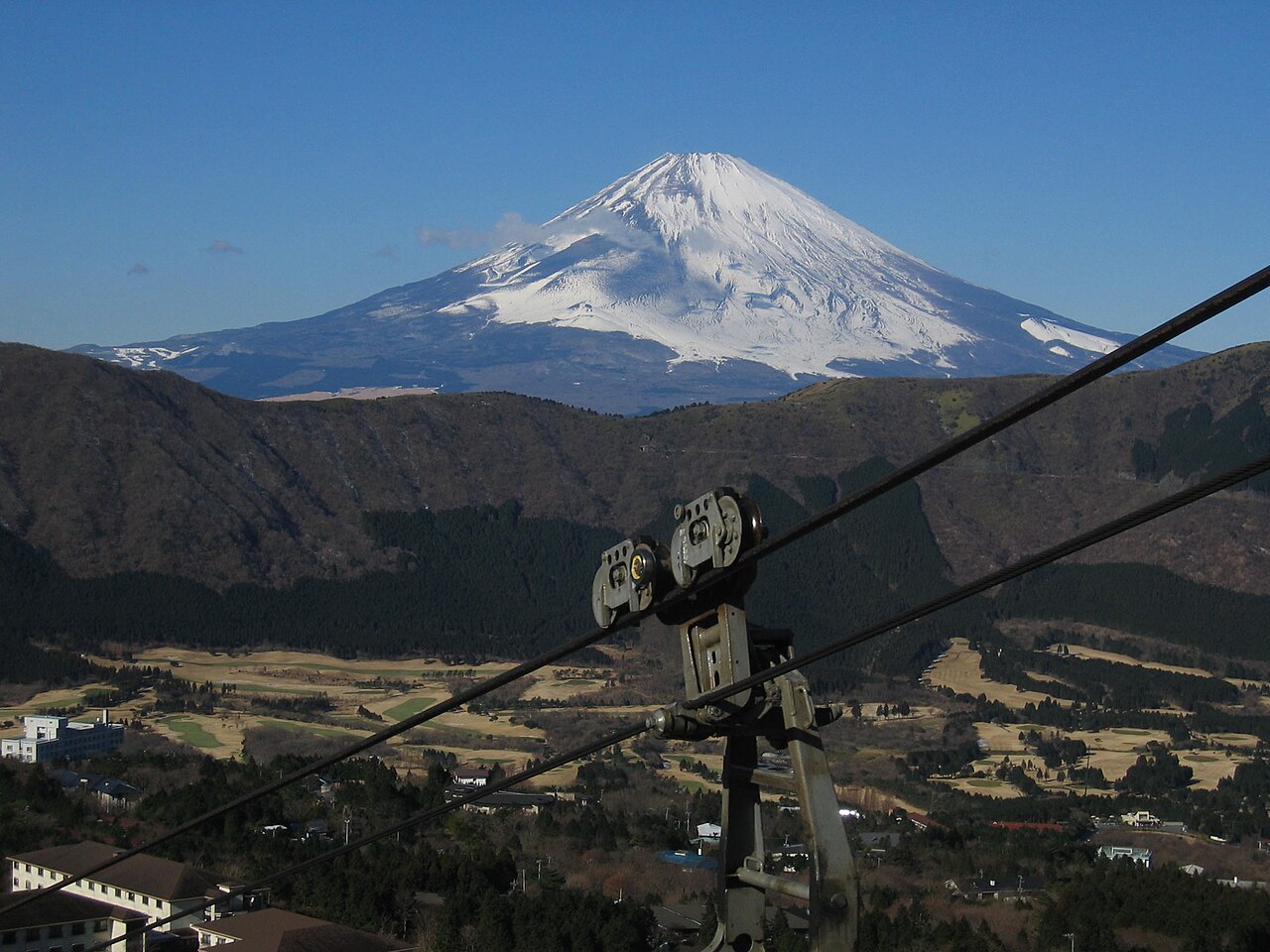
The cable car from Gora covers its line in about ten minutes. From the ropeway, Owakudani-zawa can be observed from above, where hot-spring boring facilities and erosion-control facilities can be seen on the bare mountain slope with no vegetation due to geothermal heat. At Owakudani, the day's black eggs and the museum panels on Hakone volcano round out the route. With limited time, the eggs and the museum are the pair to keep, since both are in the same valley.
For an overnight base, see places to stay around Gora and Owakudani. For a guided visit, see the Hakone tour listed for the area.
Getting to Gora and Owakudani, Hours and Fees
New to rural buses and one-man trains? See how to ride them, step by step.
The table below gathers the transport, hours and fees for upper Hakone as listed by each operator. Hakone Ropeway hours differ between the two periods shown, and entry to the Owakudani nature trail follows the arrangements in the fourth row.
| Item | Details (as listed) |
|---|---|
| Hakone Tozan Railway and cable car | Hakone-Yumoto to Gora, eight point nine kilometers, about forty minutes; cable car between Gora and Sounzan, one point two kilometers, about ten minutes |
| Hakone Ropeway fares (from October first, two thousand twenty-five) | Uniform one-way fare: adult two thousand yen, child seven hundred yen, ticket valid for one day; uniform round-trip fare: adult three thousand yen, child one thousand yen, ticket valid for two days |
| Hakone Ropeway hours (as listed) | February to November, nine in the morning to five in the afternoon; December to January, nine in the morning to quarter past four in the afternoon at all stations; about one minute between departures during business hours |
| Owakudani nature trail and fumarole area (as listed) | The fumarole area has been under entry restrictions since September two thousand sixteen; entry is through the nature trail by guided group entry, by reservation only, four times a day, thirty people per session; the section from Bonji-butsuzo and Kobo-no-suzuri-ishi to the fumaroles has been closed to entry since the two thousand fifteen eruption |
| Museums (as listed) | Hakone Geomuseum: nine in the morning to four in the afternoon, no closing days. Hakone Geomuseum admission: adult and child one hundred yen. Pola Museum of Art: nine in the morning to five in the afternoon, last admission at half past four in the afternoon. Pola Museum of Art adult individual admission: two thousand two hundred yen. Hakone Open-Air Museum: nine in the morning to five in the afternoon, no closing days, admission until thirty minutes before closing |
Thinking of staying overnight?
Compare places to stay near Hakone Gora, Kanagawa, Japan →
Disclosure: This post may contain affiliate links. If you book through them, we may earn a commission at no extra cost to you.