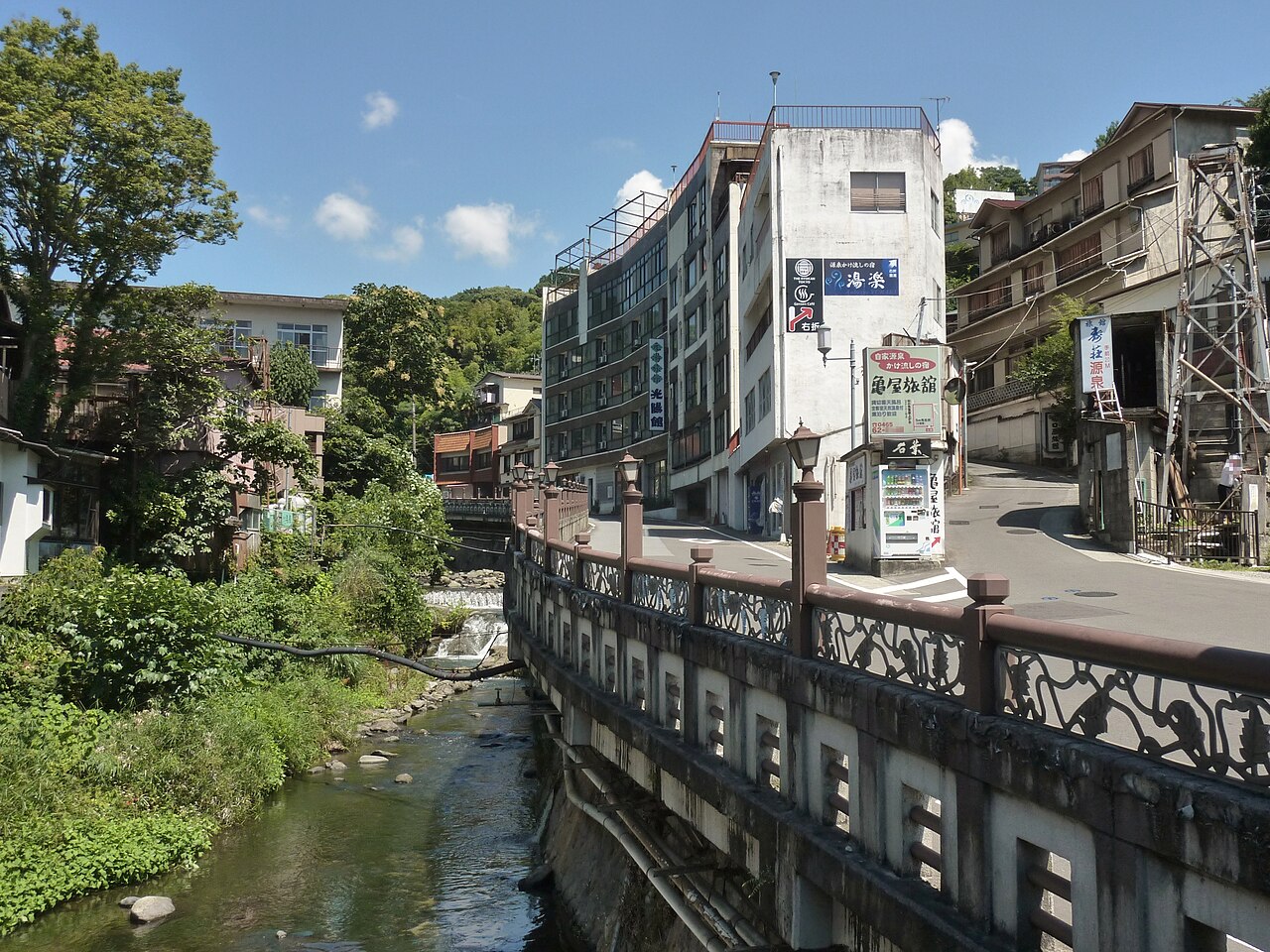
Yugawara is a hot spring town in Kanagawa where a mikoshi is carried through the streets while spectators douse it with hot spring water. In the plum season about four thousand red and white plum trees bloom on the slopes of Makuyama, and in autumn the streets of Okuyugawara close into a red maple tunnel through a quiet ryokan district. Add an outdoor bath and a sashimi set meal at a fishing-port canteen, and the day fills itself with things to see, taste and walk through.
Hot Water Poured on a Mikoshi
The Yukake Matsuri sends a mikoshi through the hot spring town while spectators douse it from barrels and wooden buckets set out along the route. The pouring recreates a purification rite in which water was poured over an offering mikoshi as it set off, a prayer for protection on the road, and today that rite means one thousand barrels of spring water, about five thousand wooden buckets and about sixty tonnes of hot water thrown over the procession.
At the large staircase at the entrance plaza of Manyo Park the route becomes a hot-water zone, where a great deal of hot water comes down at once. The festival is held on the fourth Saturday of May in a typical year, and spectators who take up a bucket are asked not to splash each other or the flower floats and lighting vehicles in the parade.
A summer festival in August is a different sight: floats and mikoshi dance along the route to shouted calls, and geisha in colourful yukata dance in unison. Yutanpo is held in the onsen district on the first Saturday and Sunday of even-numbered months, when ryokan, shops and groups prepare special programs. For a first visit, plan around the Yukake Matsuri in May; in other months, aim for a Yutanpo Saturday or Sunday.
Manyo Park, Fireflies and a Tea House
Genji fireflies flit about at the water's edge of Manyo Park, flying among the trees in the dark. They are raised as larvae in the park's firefly hut and released in early March by pupils of Yugawara Elementary School, and those flying over the water are the generation that then emerged on its own. Because they fly in the dark, they are a reason to still be in town after the daytime sights are done.
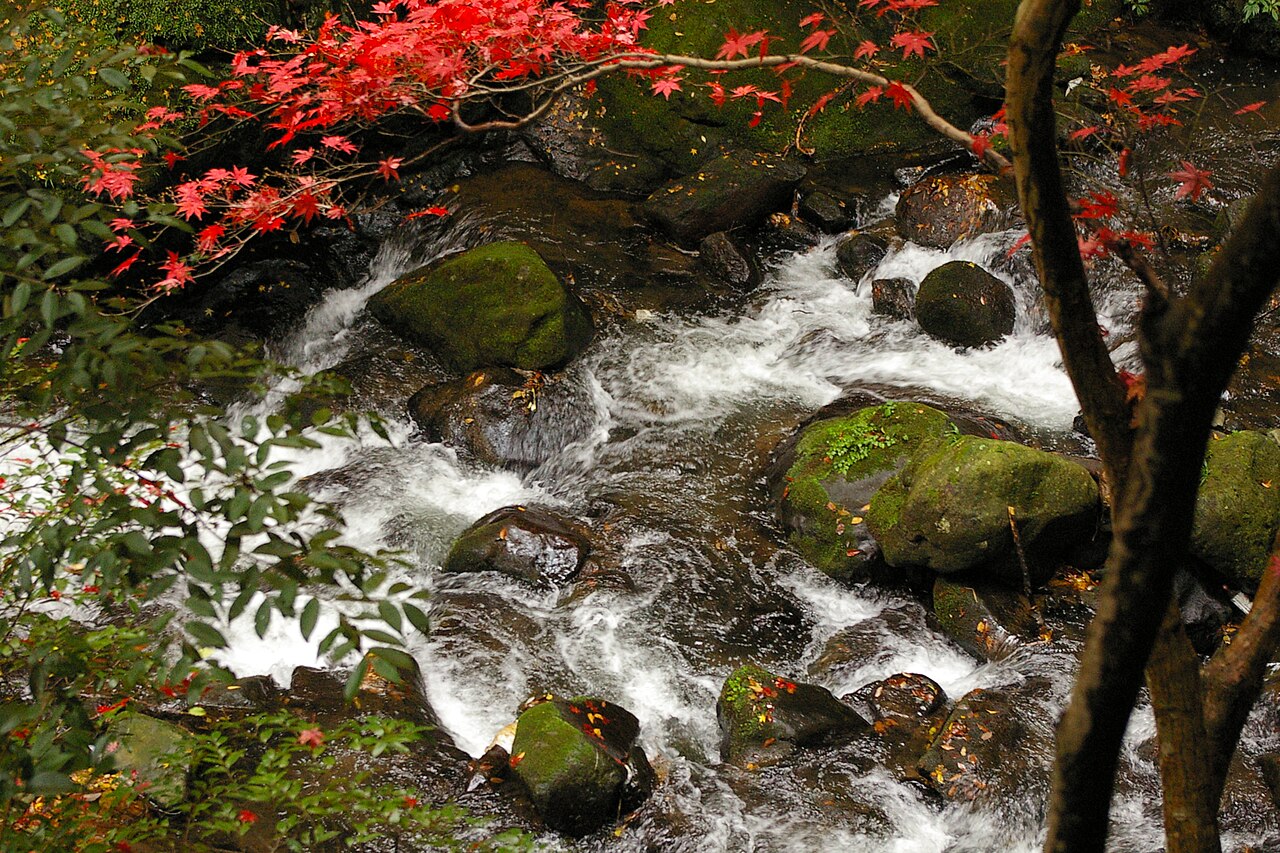
Natural fireflies also live along the Fujikigawa, Chitosegawa and Shinzakigawa rivers. The park's hot spring is fed straight from its source and sits among trees, with the sound of the river around the bath. A cafe and a coworking space sit inside the park as well, with a footbath next to the cafe for anyone who wants warm water without the full bath.
Matcha is served at the tea house Manyo-tei inside the park, a tea room surrounded by forest and water. Yugawara tourism volunteers walk with visitors through the park and give a simple guide as they go, so the firefly hut, the tea house and the river come with someone to explain them.
Maples and Waterfalls of Okuyugawara
Walk the streets of Okuyugawara in autumn and the maples along them close into a red tunnel through a quiet ryokan district. About five hundred and forty iroha-momiji grow at Ikemine Momiji no Sato, and the colour reaches well beyond the street, with the whole mountain colouring from Okuyugawara up to Daikanzan. The trees of Daikanzan turn yellow until the mountain looks golden, and on a clear day it can be seen together with Mt. Fuji.
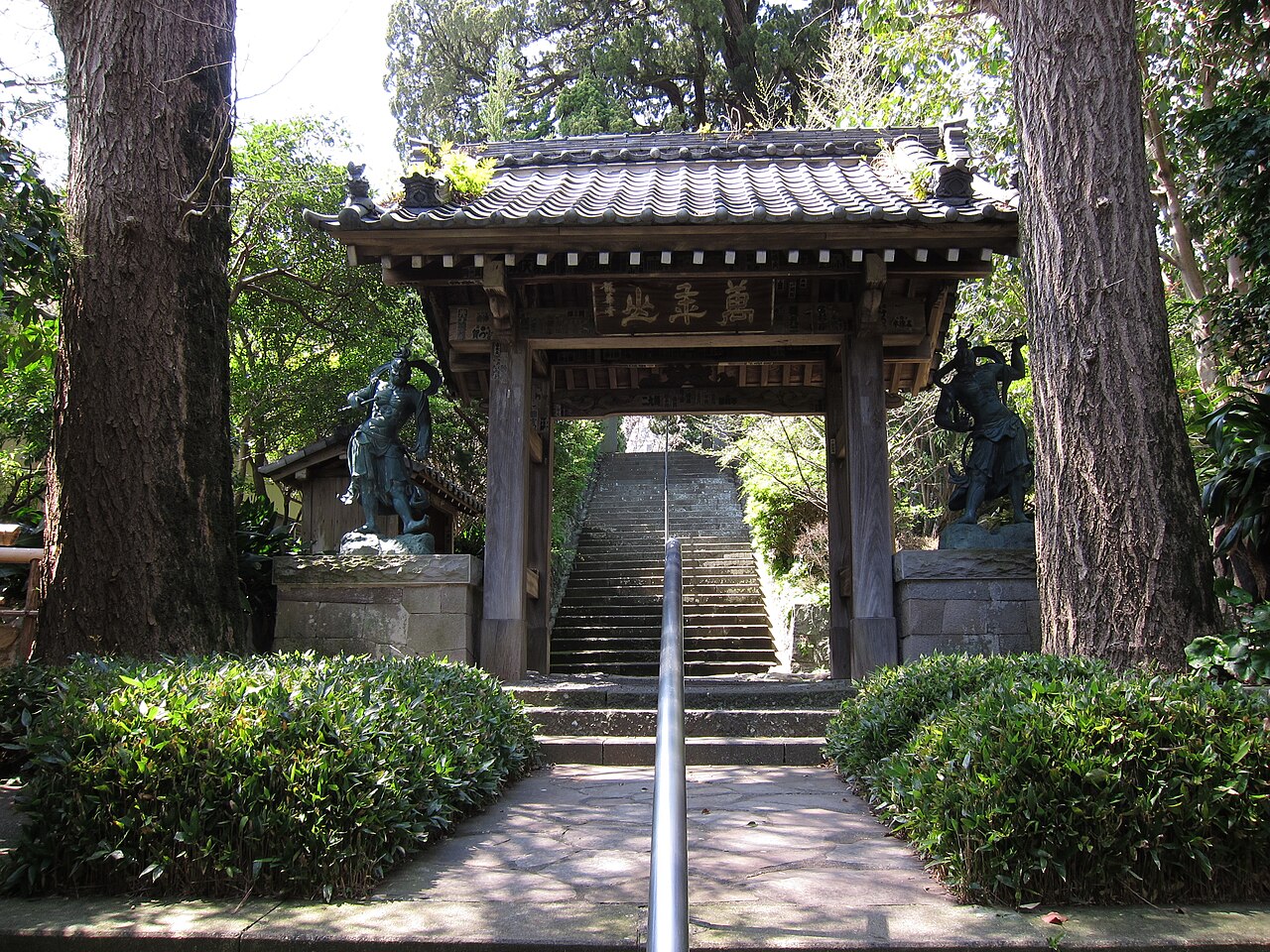
The promenade here leads past waterfalls, one of them a roughly hundred-metre run of water in five tiers, and those five steps, seen from the path, give it its name. Another takes its name from a rock jutting out at its centre in the shape of a daruma doll. A third is a roughly thirty-metre waterfall that looks like silk thread flowing down, and at yet another the sound grows louder with every step towards it along the promenade.
Okuyugawara has two hiking courses, and the summit at the top of one of them looks out on mountains stretching into the distance. The colour at Okuyugawara peaks in mid-to-late November. For a first look, start with the maple street through the ryokan district and keep the hiking courses for a day with time to spare.
The Plum Slopes of Makuyama
Makuyama is a six-hundred-and-twenty-six-metre mountain, and in the plum season about four thousand red and white plum trees bloom against it, filling the grounds with a faint scent of plum. Birdsong and the scent of plums fill the park while the trees are in flower, from February into March.
The Makuyama course climbs the mountain by way of Makuyama Park and is a course for beginners, so the plum slope suits a first hike as much as a stroll among the trees. Upstream in the valley, the sound of water echoes in the silence against the large rock wall of Makuyama rising from the valley floor, a face of the mountain you hear as much as see.
During the Ume no Utage, the plum festival held in February and March, plum soft-serve ice cream and Yugawara souvenirs are sold on the grounds, a taste tied to those weeks of bloom. Out of season the slope is a mountain path with a park at its foot; the scent, the birdsong and the ice cream belong to the plum season, so time a visit for it if the flowers matter.
Market Stalls, Hot Spring Baths and a Fishing-Port Lunch
The morning market sells fresh local vegetables and specialties, including a wide range of mandarin oranges and dried fish made from the nearby catch. The stalls are a place to talk with local people, who may show you how to pick good ingredients and cook local dishes.
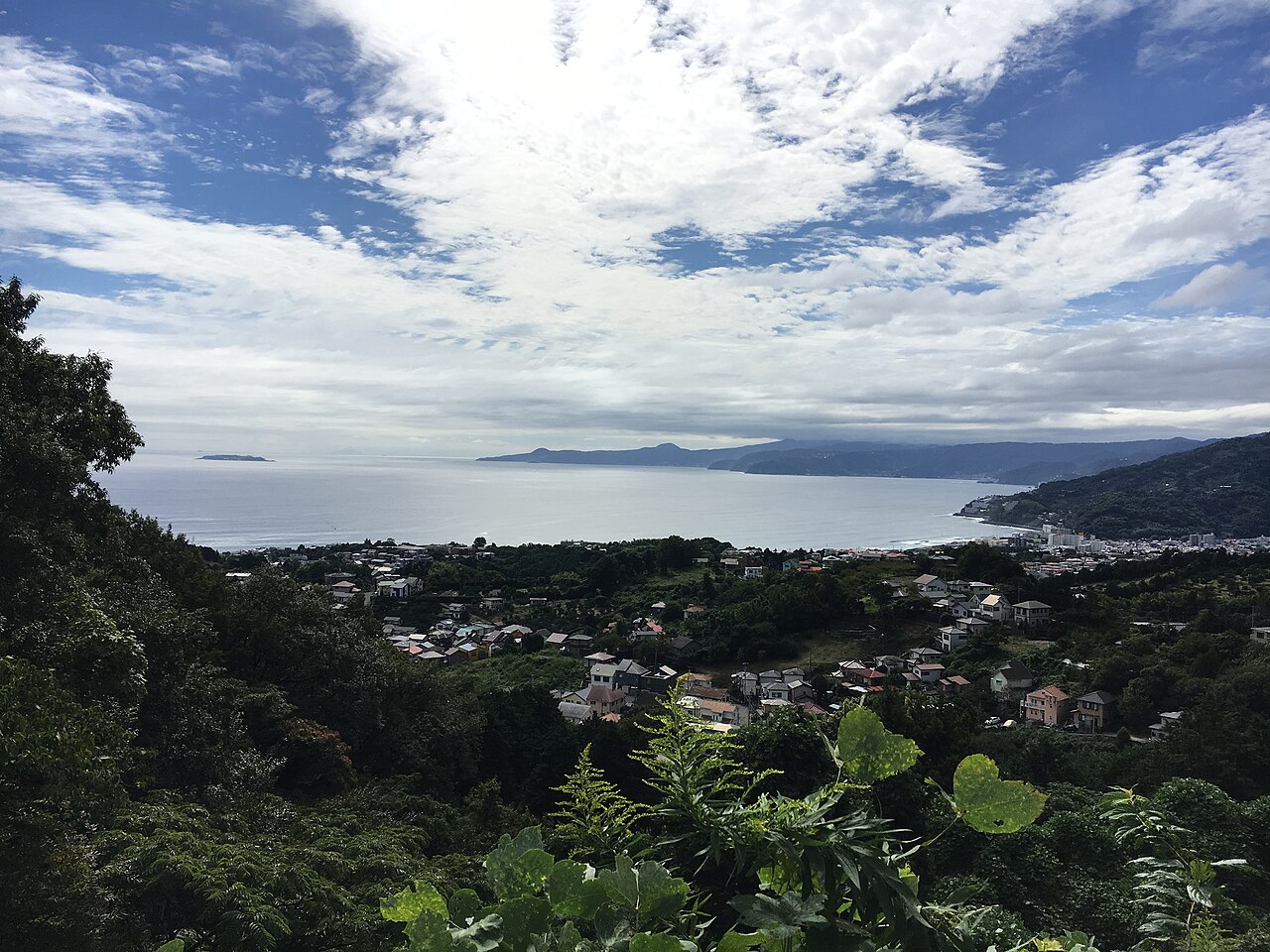
Kogome no Yu is a day bathhouse with an outdoor bath and a large bath on both the men's and women's sides, and its mild salt spring water warms the body from the core. The rest room and the dining hall look out over the townscape of the onsen quarter, so the view comes with the rest between baths.
A canteen in a fishermen's hut in front of a fishing port serves a sashimi set meal: four to six kinds of sashimi with rice, miso soup and pickles. The arani comes in limited quantities, and the kabutoyaki set meal changes with the season, buri kama, kanpachi and madai among the fish that reach the plate. To give the outdoor bath and the warmth of its mild salt water an unhurried evening, add a night at one of the places to stay in Yugawara.
Getting to Yugawara
| Leg | How | Time and estimate |
|---|---|---|
| Yugawara Station to Manyo Park | Bus bound for Okuyugawara, to the stop by the park | About 9 minutes |
| Park stop to the firefly terrace | Walk | About 5 minutes |
| Yugawara Station to the end of the Okuyugawara line | Bus bound for Okuyugawara, to the terminal stop | About 16 minutes |
| Yugawara Station to Makuyama Park | Bus bound for Makuyama Park in the plum season, then a walk from the stop | About 15 minutes by bus |
| Yugawara Station to Kogome no Yu | Bus bound for Okuyugawara to the park entrance stop, then a walk | About 9 minutes by bus plus about 3 minutes on foot |
| Yugawara Station to Manyo Park | Taxi | About 1,640 yen (medium-size car, approximate) |
| Yugawara Station to Manazuru Station | Community bus | 23 minutes |
| Manazuru Station to a canteen at a fishing port | Walk | About 15 minutes |
New to rural buses and one-man trains? See how to ride them, step by step.
Hours and Fees
| Place | What | Hours or fee |
|---|---|---|
| Kogome no Yu | Day-bath hours and closing day | 9:00-21:00, last admission 20:30; closed on Mondays (the next day when Monday is a public holiday) |
| Kogome no Yu | Admission from 9:00 to 19:00 | Adults 1,100 yen, elementary and junior high school children 600 yen; infants free |
| Tea room Manyo-tei | Hours and matcha with a sweet | 10:00-15:00; two listings give the matcha different prices |
| Day-trip hot spring facility in Manyo Park | Hours and closing day | 10:00-18:30, last admission 16:15; closed on the second Tuesday of every month |
| Day-trip hot spring facility in Manyo Park | Plan without a meal | 3,500 yen for a 3-hour stay, tax and bath tax included; a plan with a meal is also offered |
| Sunday morning market | Hours | Every Sunday 6:00-9:00; held even in rain |
| A canteen at a fishing port | Hours | 11:00-15:00 (last order 14:30) |
| Makuyama Park | Admission during the plum festival | February 6 to March 7, 2027; 300 yen |
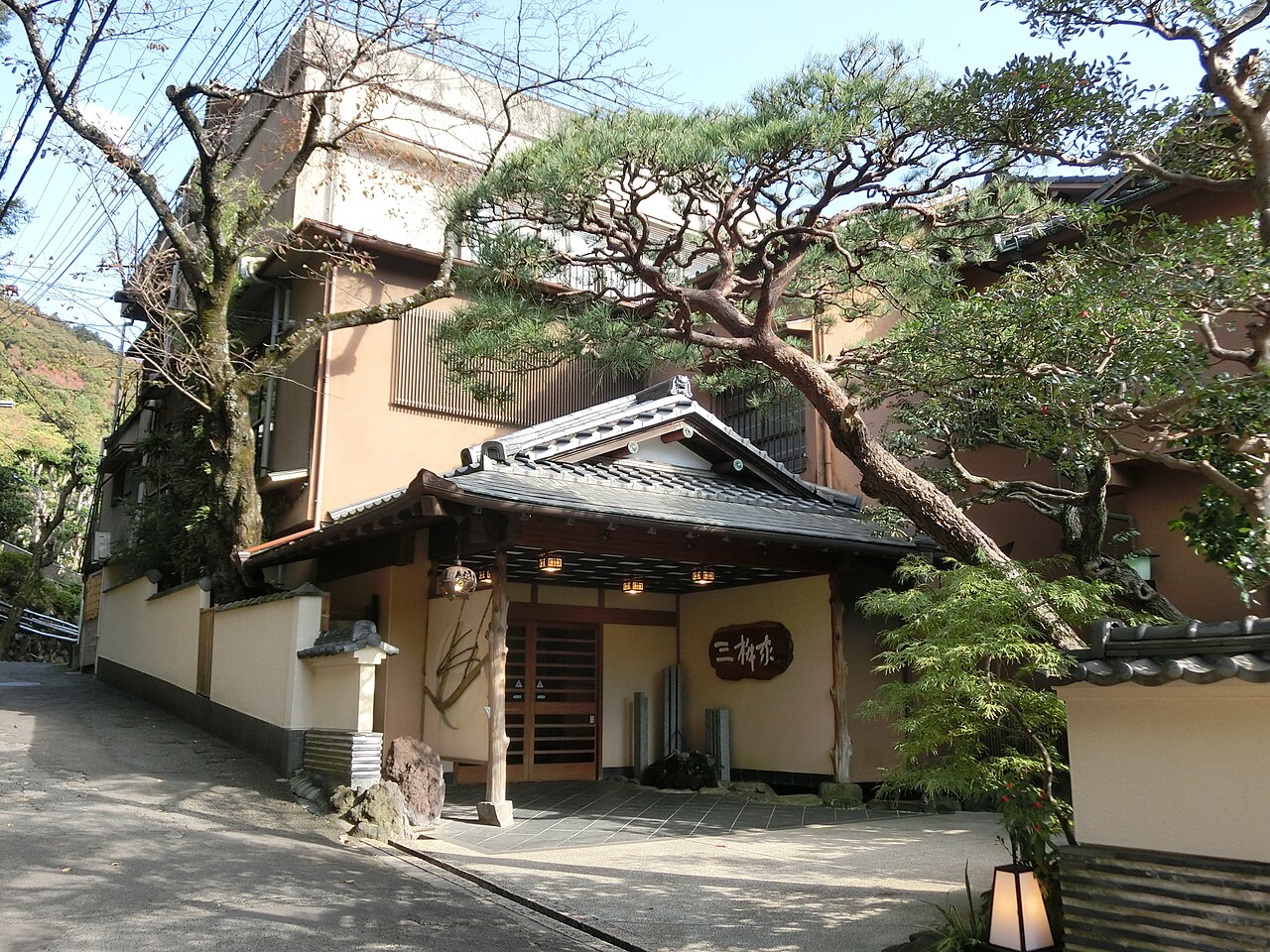
Where to stay
Places to stay near Yugawara, Kanagawa, Japan →
Disclosure: This post may contain affiliate links. If you book through them, we may earn a commission at no extra cost to you.