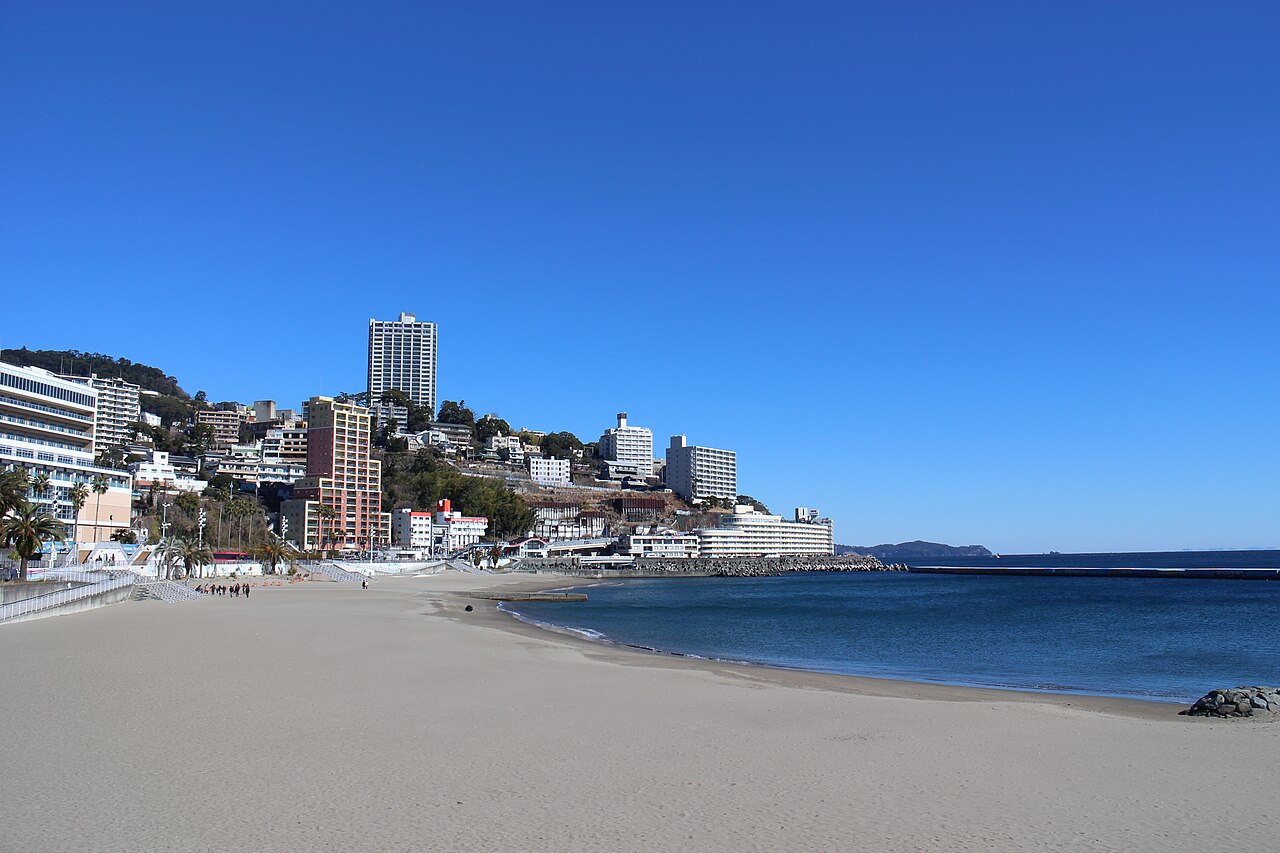
Atami brings a shrine, a garden, a beach and hot spring water together in one town. At Kinomiya Shrine, the great camphor tree, a natural monument, stands at the back left of the main hall. Atami Plum Garden holds about three hundred eighty maple trees, so maple leaves can be seen there as well as plum blossoms. Atami Sun Beach pairs blue sea and white sand with a palm-lined avenue, and a visit can end at a foot bath using natural hot spring water and a smooth pudding steamed with local milk.
Kinomiya Shrine and the plum garden are each about fifteen minutes by bus from JR Atami Station, and Atami Sun Beach is about a fifteen-minute downhill walk, so the shrine and garden fit one half of a visit and the seafront and foot bath the other.
Circling the Great Camphor Tree at Kinomiya Shrine
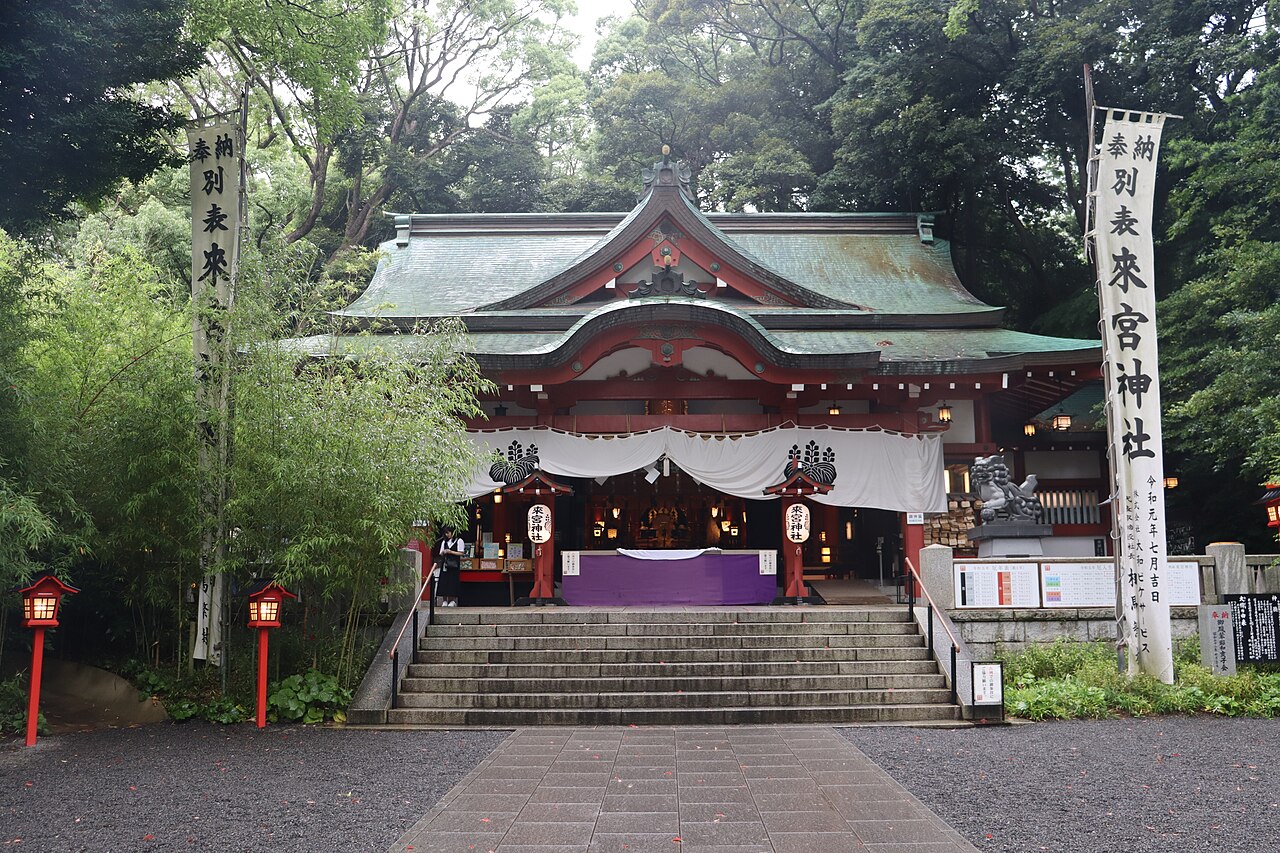
Walk through the torii at Kinomiya Shrine and the approach path leads to the main hall, with greenery and water around the grounds along the way. The great camphor tree stands at the back left of the main hall, so the visit does not end at the hall itself. Continue to the back left to reach the tree, which is a natural monument.
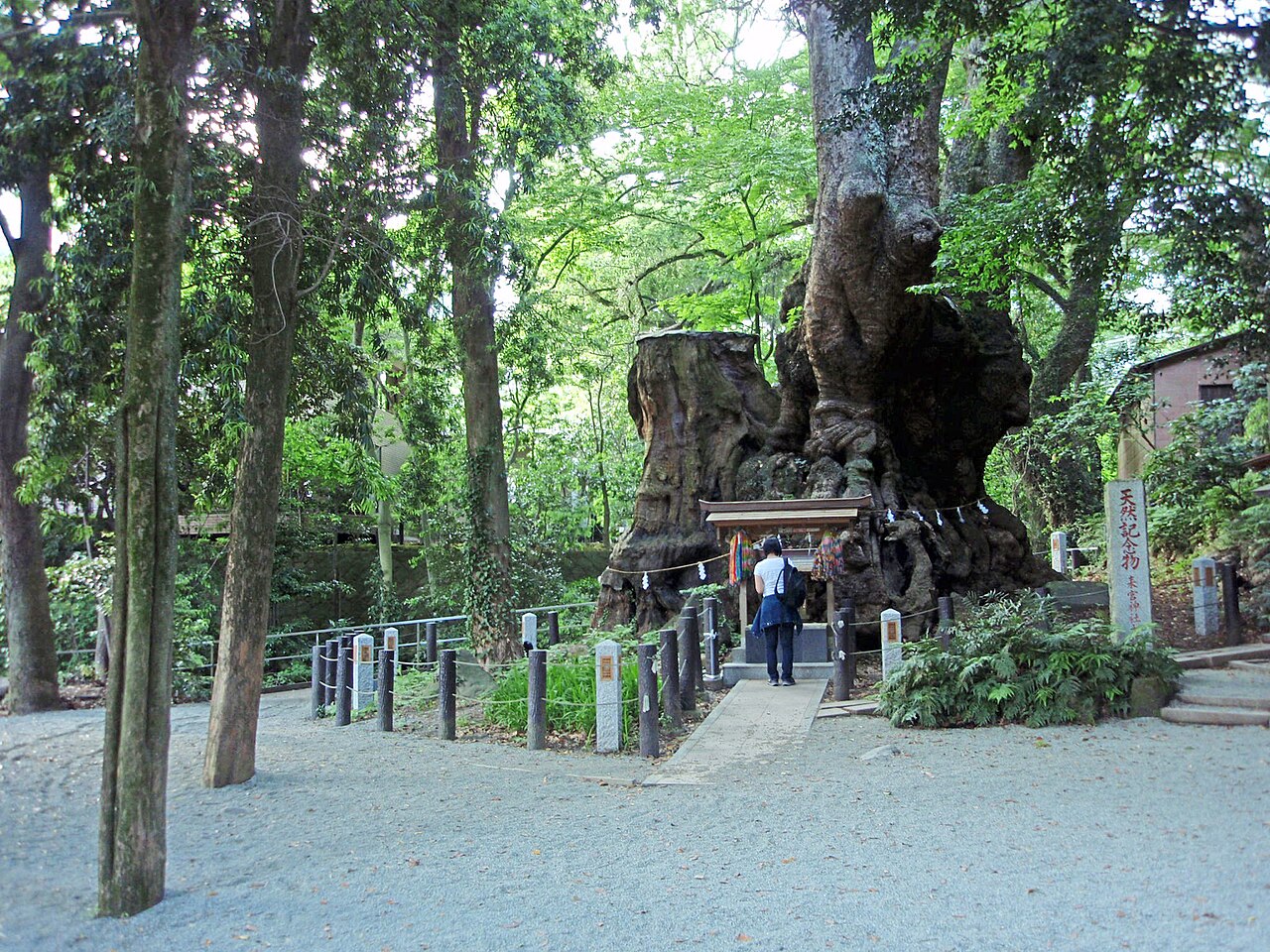
The tree is designated a national natural monument and is about two thousand one hundred years old, so the trunk itself is the thing to see. Walking once around that trunk is said to extend a person's life by one year. A person with a wish who walks around the tree once without telling anyone the wish is said to have it come true.
The camphor tree is lit up at night, which gives anyone staying in town a reason to return to the shrine after dark. On the grounds, the cafe Houko serves an orange cider whose faint bitterness is softened by confiture. It is a drink that people trying this kind of orange for the first time can drink easily.
Maple Leaves and Plum Trees in Atami Plum Garden
About three hundred eighty maple trees grow in Atami Plum Garden, enough that a garden named for plums is also a place to see maple leaves. The garden holds its maple festival from mid-November to early December. Go in that window if maple leaves are the reason for the visit, and check this year's festival dates in the table at the end of this page.
Early-blooming plum trees in the garden begin to flower from around mid-November, so maple leaves and plum blossoms can be seen at the same time. During the festival, a footbath, a photo contest and a maple light-up are planned. Five bridges are listed in order from the main entrance, which gives a walk through the garden a sequence to follow.
Walking Atami Sun Beach and the Seaside Park Beyond It
Atami Sun Beach puts blue sea, white sand, a row of hotels and a palm-lined avenue in one place. That combination is the reason to walk it from one end to the other instead of stopping at the first stretch of sand. The beach is also the starting point for the seaside park that continues south from it.
The seaside park south of the beach was developed with the image of a resort on the northern Mediterranean. The reason is a sister-city tie: Atami is paired with Sanremo in northern Italy, and the terrain and townscape of the two are similar. Walking on from the sand into the park therefore changes the setting from a beach to a planted seafront.
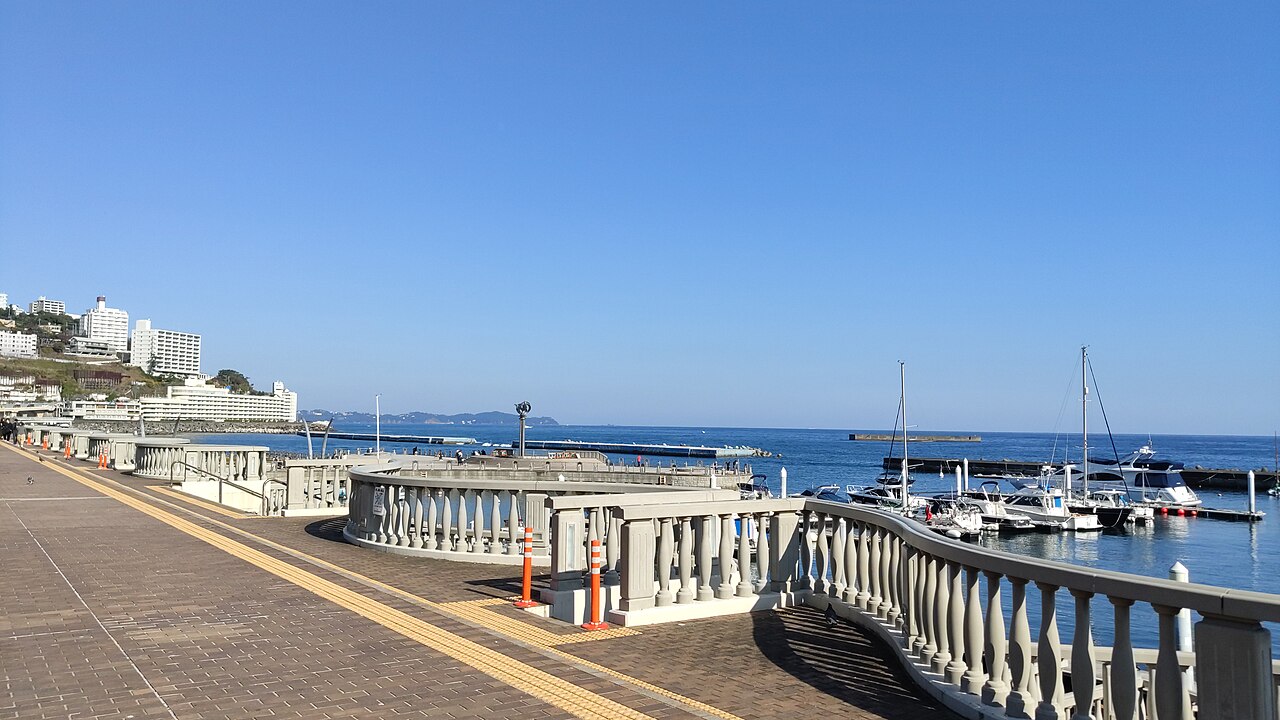
The planting changes from one section of the park to the next. The first section has flower spots, king protea among them, along with Himalayan cherry and Oh-kanzakura cherry trees. The second is planted with palm trees and Oh-kanzakura, and the third with palm trees, Atami cherry, jacaranda and Chinese redbud. Jacaranda is also planted along the national road in front of the first and second sections.
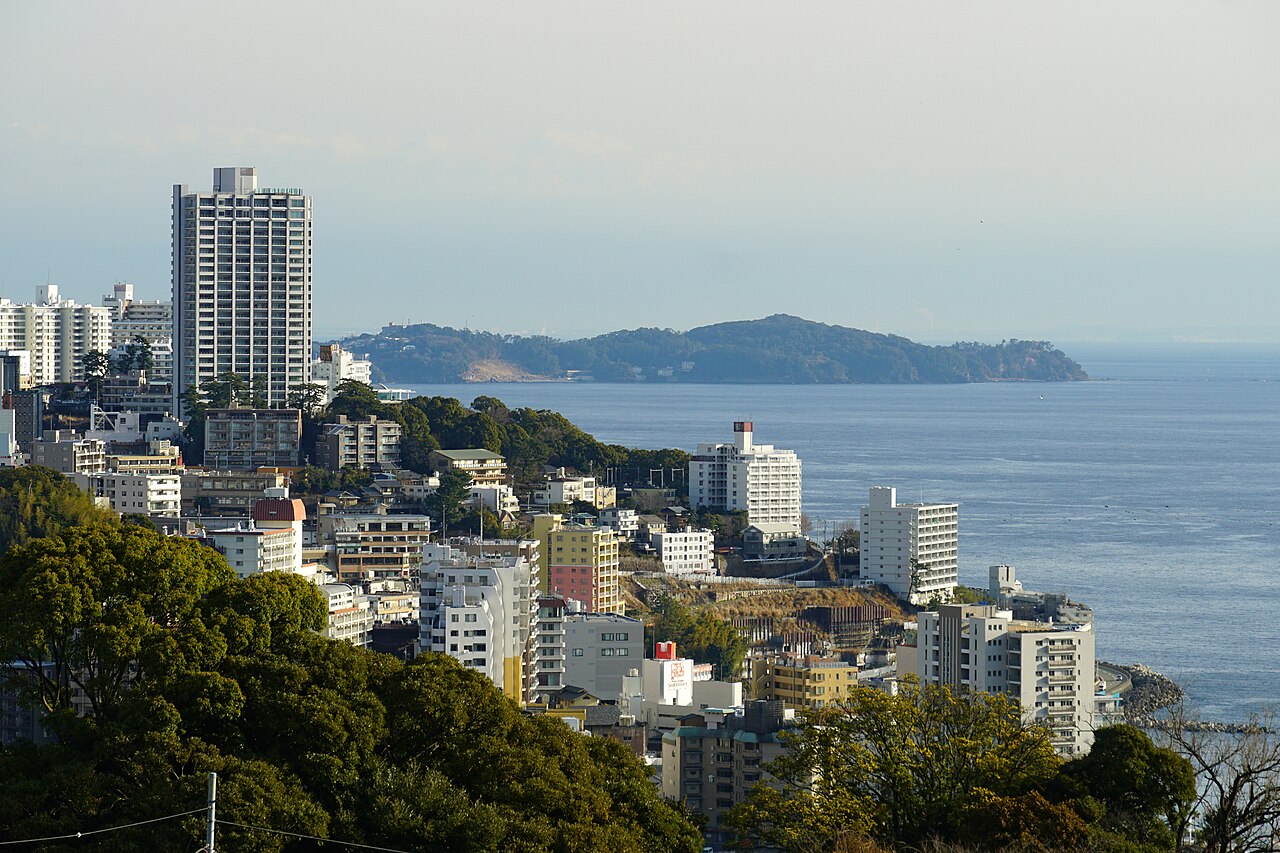
Atami Bay is surrounded by mountains on three sides in a bowl shape. When a sea fireworks festival is held, the fireworks are launched in the bay, and that shape makes their sound echo like a large stadium. For anyone curious about the bay itself, the mountains on three sides are the feature to look for.
Hot Spring Steam, a Foot Bath and Sweets in Atami
Atami's hot spring water can be used at hotels, inns, public baths and facilities for people who are not staying overnight. A foot bath using natural hot spring water sits in front of the town's main JR terminus, which suits a short stop at the start or end of a visit. Its water is about forty-one degrees, while the source spring is sixty-eight degrees.
Steam rising from the ground appears at places along the slopes when walking through the town, and it marks the source springs. One of these sources is a geyser, where hot water is currently erupted artificially roughly every five minutes, so a short wait is enough to see it. It is not a bathing facility, so treat it as something to watch.
For something sweet, look for the pudding made with local milk, steamed slowly and carefully until its texture is smooth and creamy. The caramel syrup on top is handmade. A second local sweet is a handmade Western-style confection made with plenty of fresh butter and eggs, an alternative for anyone who does not want pudding.
The shopping streets in front of the terminus are made up of small individual shops, and some have been in business for sixty or seventy years, which makes them worth a slow look. Restaurants, cafes, sushi shops, dried fish shops and souvenir shops are found there. Onsen manju can be eaten while walking around, so the streets work as a last stop.
Getting to Atami
New to rural buses and one-man trains? See how to ride them, step by step.
| Route | Item | Detail |
|---|---|---|
| JR Tokaido Shinkansen (Kodama) | Tokyo Station to Atami | about fifty minutes |
| JR Tokaido Shinkansen | Shin-Osaka Station to Atami | about three hours by Kodama and about two hours fifteen minutes by Hikari |
| Bus from JR Atami Station | To the Kinomiya Shrine stop | about fifteen minutes |
| Bus from JR Atami Station | To the Plum Garden stop | about fifteen minutes |
| Walk from JR Atami Station | To Atami Sun Beach | about fifteen minutes on foot, downhill |
| Walk from JR Atami Station | To the foot bath | about one minute on foot |
If you would rather stay overnight, places to stay in Atami is a place to start.
Hours and Fees
| Place | Item | Time or fee |
|---|---|---|
| Kinomiya Shrine | Hours | nine in the morning to five in the evening |
| Kinomiya Shrine | Prayer requests accepted until | four thirty in the afternoon |
| Atami Plum Garden | Maple festival, this year | November fourteenth to December sixth |
| Atami Plum Garden | Maple light-up, each festival day | four thirty to nine in the evening |
| Kiunkaku | Hours | nine in the morning to five in the evening, last admission at four thirty |
| Kiunkaku | Closed | Wednesdays (open when the Wednesday is a public holiday), and the year end, December twenty-sixth to thirtieth |
| Kiunkaku | Adults | six hundred ten yen |
| MOA Museum of Art | Hours | nine thirty in the morning to four thirty in the afternoon, last admission at four |
| MOA Museum of Art | Closed | Thursdays (open when the Thursday is a public holiday) and exhibition changeover days |
| MOA Museum of Art | Adults | two thousand yen |
| Foot bath | Hours | nine in the morning to four in the afternoon |
| Hatsushima boat | Round trip, adults | two thousand nine hundred yen |
Fees and hours were checked against official sources on 19 November 2026.
Thinking of staying overnight?
Compare places to stay near Atami →
Disclosure: This post may contain affiliate links. If you book through them, we may earn a commission at no extra cost to you.