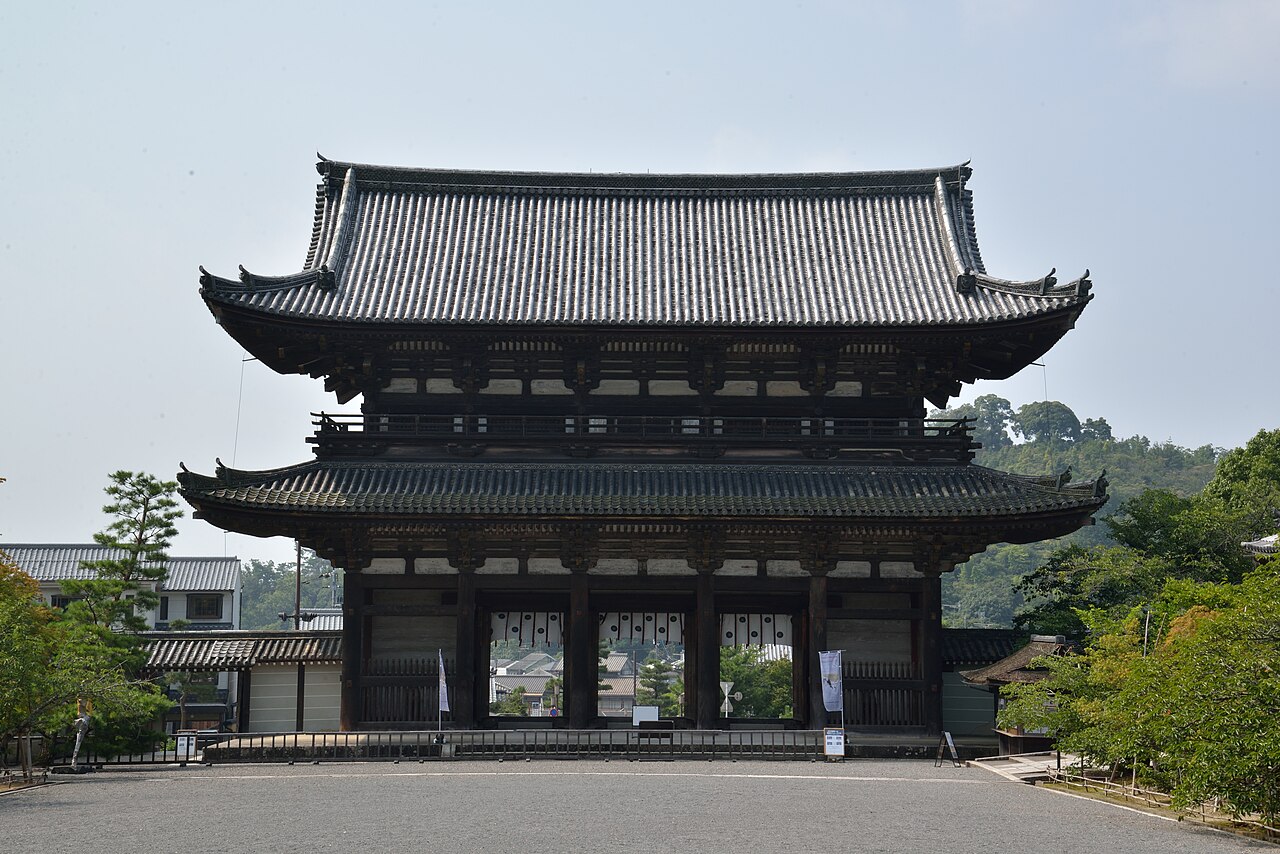
Passing through the Niomon gate of Ninnaji, with a Nio statue standing on either side of its front, brings visitors into the head temple of the Omuro school of Shingon Buddhism. Further in, the Chumon gate stands between the Niomon and the Kondo hall and leads toward the central compound, which includes the five-storied pagoda and the Kannondo. On the hill behind the temple, a mountain path links the halls of a pilgrimage route, each enshrining Kobo Daishi. A daytime walk past the gates and halls can be paired with an evening at the light-up, when the sky and the national treasure Kondo appear as a single view at the blue hour after sunset.
Walking From the Niomon Gate to the Kondo, Pagoda and Goten Garden
The walk through the grounds follows a set order: from the Niomon gate through the Chumon to the Kondo, with the five-storied pagoda and the Kannondo in the same compound.
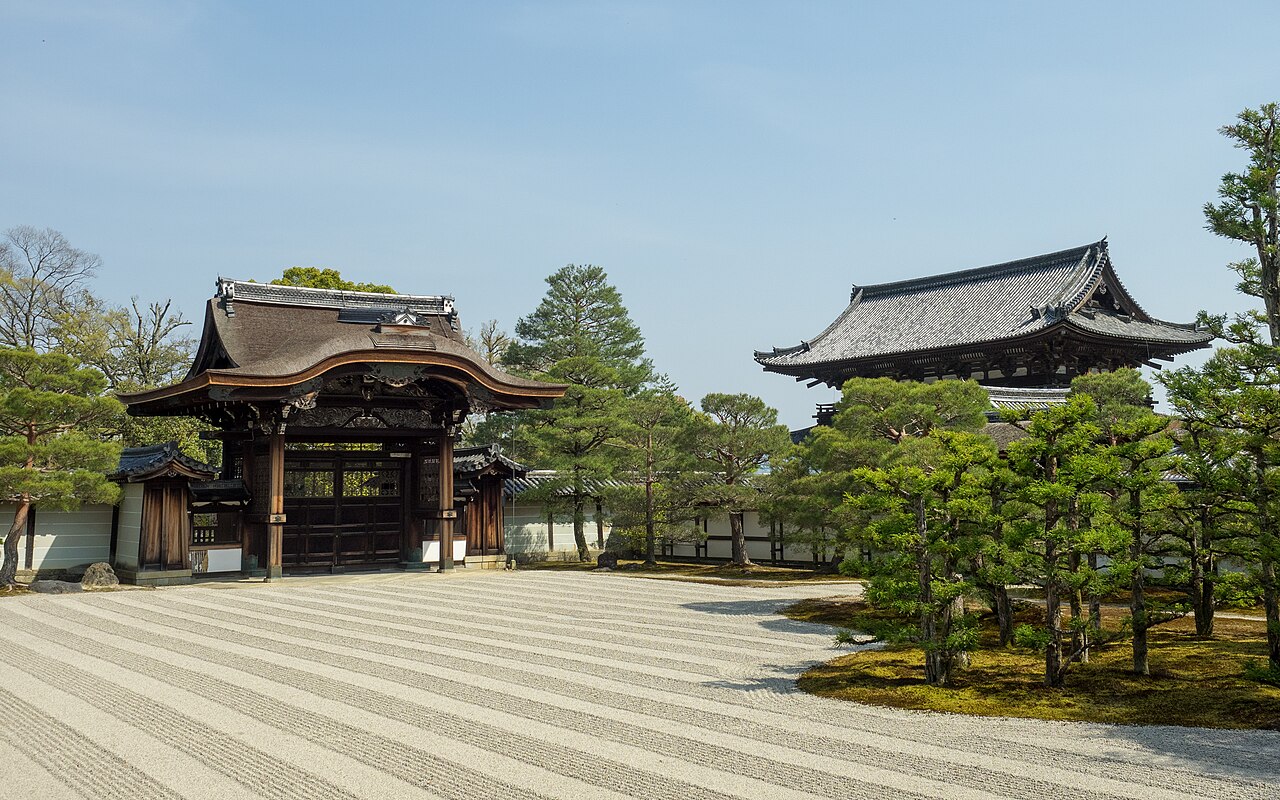
Passing under the Niomon gate, visitors walk between the pair of Nio statues, Agyo and Ungyo, on the left and right of its front. Karashishi lion statues stand at its rear. The Chumon, further along, houses Saihoten on the left and Tohoten on the right as seen from the front. Emperor Uda founded Ninnaji, continuing the intention of his father, Emperor Koko.
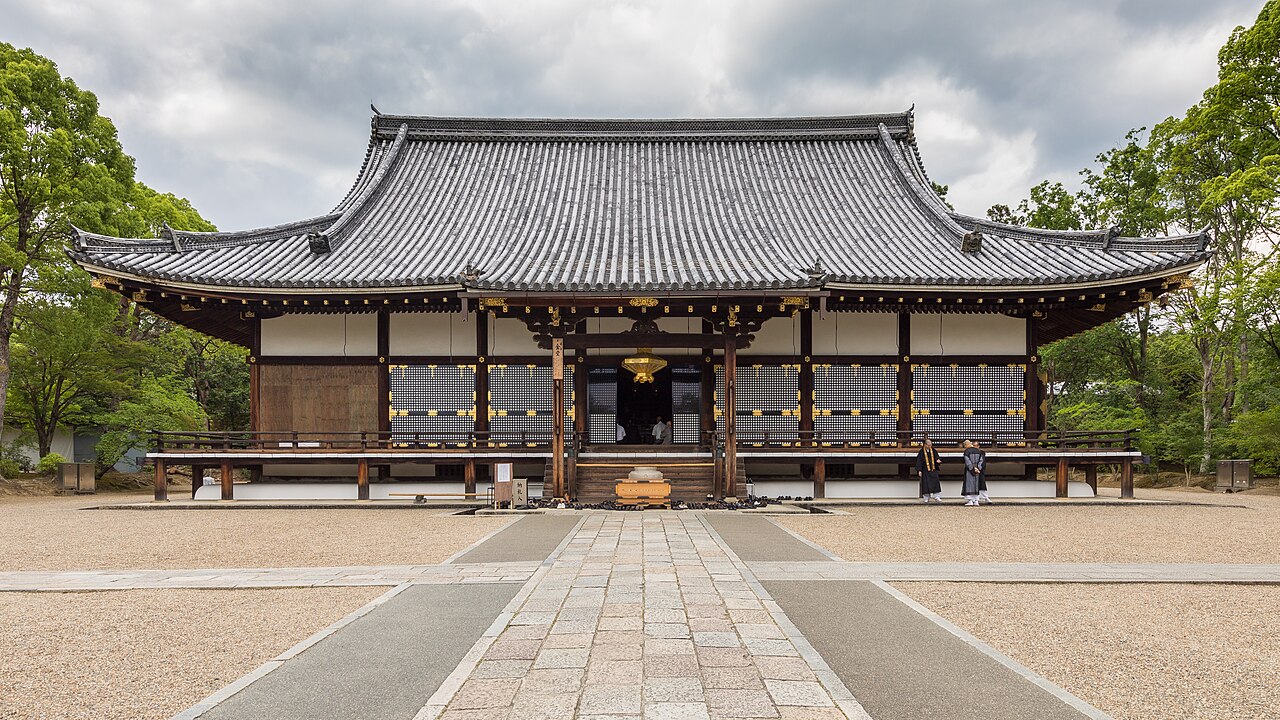
Reaching the Kondo, visitors face the hall of the Amida triad, Ninnaji's principal image. A roof tile shows a person riding a turtle, depicting an immortal. The Kondo was moved from the Shishinden hall of the Imperial Palace in the Kan'ei era. In mid-April the low-growing Omuro cherry trees bloom west of the Chumon, and Somei-yoshino cherry trees in front of the Kondo flower in spring.
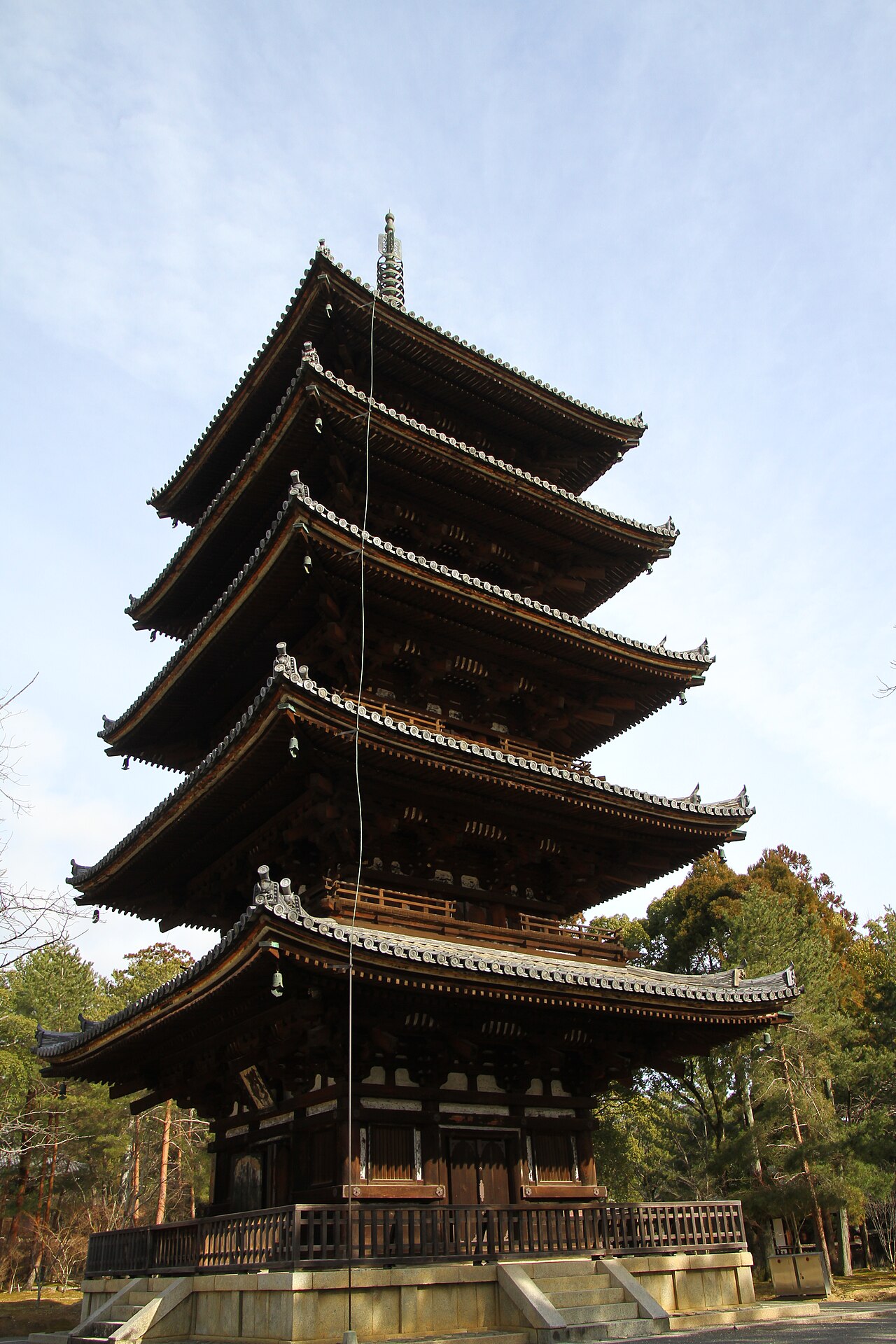
Walking on, visitors see the five-storied pagoda and the Kannondo from outside. The Kannondo has an irimoya-style roof, porches at front and back and a tall eave height, and its interior is kept private for the transmission of the Dharma lineage. The pagoda and the Niomon each have a ladder, but visitors cannot climb them. Ninnaji is registered as a World Heritage site.
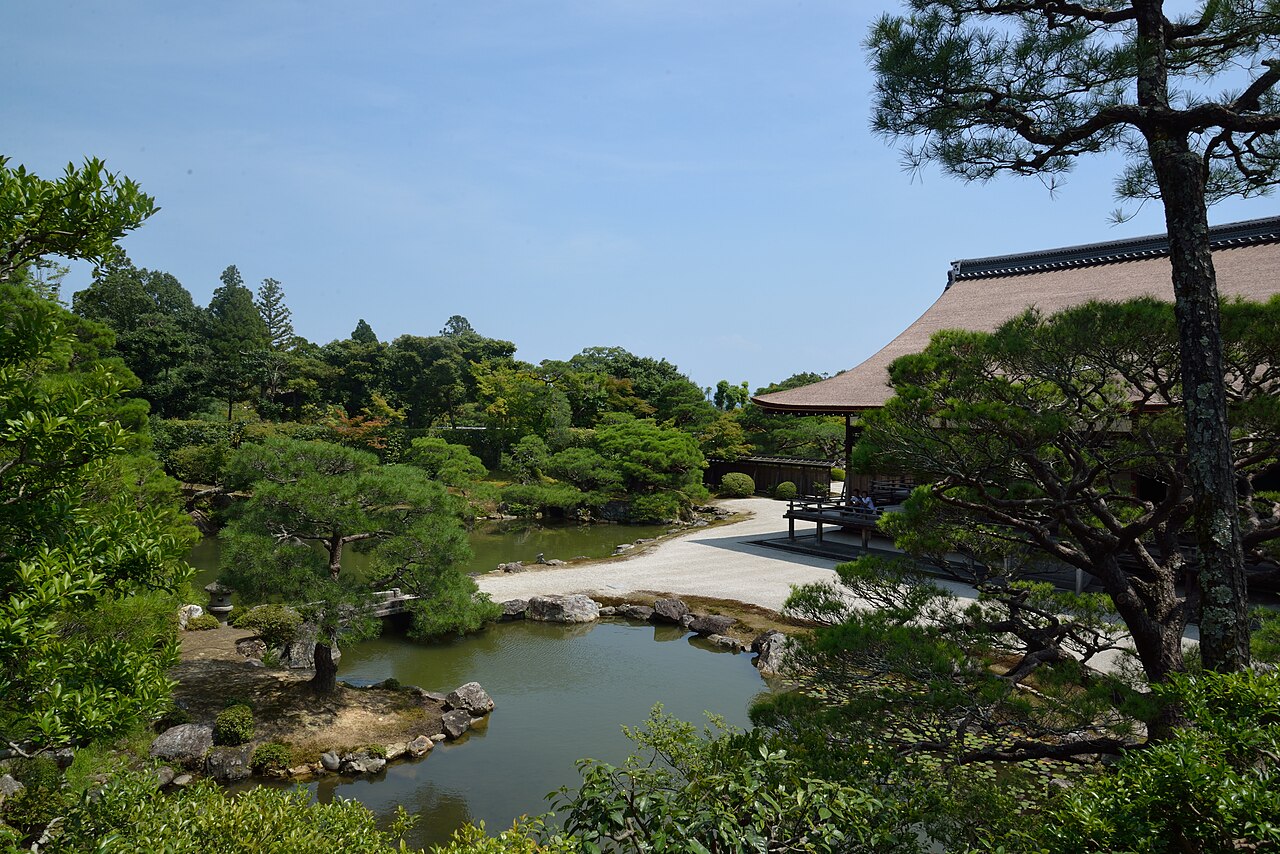
Entering the Goten, visitors come to the South Garden, or Nantei, named for lying south of the Shinden hall. The goshuin office inside the palace garden gives an autumn-limited cut-paper goshuin. Its design centers on the Kannondo, with red and orange leaves arranged large around it. The upper right shows the single path from the Chumon to the Kondo and a row of autumn-leaf trees.
Choosing a goshuin book, visitors find a pink cover embroidered with the Omuro cherry and a navy cover with the Niomon, each with the five-storied pagoda on the back. Amulets include a cherry-blossom shape, a real four-leaf clover and a lucky cat, and the temple has its own incense. The MaNavi app sends a phone notification near a cultural property, then plays audio commentary.
Following the Omuro Eighty-eight Temple Pilgrimage Path Behind the Temple
If there is energy left after the halls, the Omuro Eighty-eight Temple Pilgrimage path behind the temple adds pilgrimage halls, singing birds and, on a clear day, a view as far as Fushimi.
Following the route means walking a mountain path on Mt Jojuzan, behind Ninnaji. Each pilgrimage hall along the way enshrines a principal image and Kobo Daishi. The halls were built over sand brought back from the Shikoku pilgrimage temples.
Walking further, visitors hear small birds sing and pass seasonal flowers growing along the path. Looking out over Kyoto city on a clear day, they can see as far as Fushimi. The path runs through natural surroundings where the changing seasons can be seen.
Watching each step matters in places, because parts of the course have poor footing. Visitors may follow the pilgrimage at any time of year. The length of the route and the time it takes are given in the table at the end of this page.
Hearing Monthly Chanting, Then Seeing the Autumn Light-Up and Reihokan Exhibition
Anyone who matches a visit to a service day can attend the Miedo-ku with its shomyo chanting or go up into a hall for a goma rite.
Attending the Miedo-ku, visitors can hear monks recite shomyo chanting. The service takes place each month before the enshrined portrait of the founder Kobo Daishi, as a ceremony of thanks for his benevolence. Shomyo is chiefly a song praising the virtues of the Buddha. At Ninnaji it is also recited at the daily services, at the goma rites and at various other ceremonies.
Joining a goma rite, anyone may go up into the hall. Offerings are thrown into the hearth of the altar, the pure fire burns away worldly desires, and the scent of the offerings is presented to the deities. Monks pray for the wishes of the names written on the goma sticks. The word goma comes from the Sanskrit word Homa, which means to burn.
Taking part in a goeika class is possible for anyone, and a group that meets at the temple holds it every month. Goeika lyrics are poems that explain the teachings of the Buddha and Kobo Daishi in an easy-to-understand way. Copying sutras is another activity for the general public each month, at a sutra copying session held in a hall of the temple.
Staying into the evening brings the light-up, which runs on Fridays, Saturdays, Sundays and holidays from late October to mid-December. The light-up is listed through December thirteenth, twenty twenty-six. At the blue hour after sunset, the sky and the national treasure Kondo appear to merge. Visitors can receive an original goshuin at the goshuin office in front of the Kondo on light-up evenings.
Looking around the Reihokan is possible in its opening periods. The autumn exhibition listed there took as its theme the restoration and rebuilding of the temple buildings, together with the temple treasures and sacred texts later gathered at Omuro and the deeds of successive Omuro abbots. Eating a lunch box is possible in the plaza opposite the Reihokan.
Getting to Ninnaji, Entry Fees and Service Days
New to rural buses and one-man trains? See how to ride them, step by step.
| Item | Details (as listed) |
|---|---|
| Randen tram | Omuro-Ninnaji Station, about three minutes on foot; flat adult fare two hundred fifty yen |
| Hanazono Station and city bus | Hanazono Station is about fifteen minutes on foot; city bus route twenty-six from Kyoto Station takes about forty minutes |
| Goten palace garden | adult individual admission eight hundred yen |
| Reihokan museum | adult individual admission five hundred yen, in its opening periods |
| Omuro Hanamatsuri | special entry fee for an individual adult is eight hundred yen; the festival runs from late March into early May |
| Visit length | about one hour for the temple; the hill pilgrimage takes about two hours, is about three kilometers, free of charge, any time of year |
| Monthly services | Kannon-e on the eighteenth, Miedo-ku on the twenty-first, goma rites on the twenty-fifth and twenty-eighth |
Rooms in Kyoto are listed in places to stay in Kyoto. The figures above follow the listings of the temple and of the Randen tram operator.
Thinking of staying overnight?
Compare places to stay near Kyoto →
Disclosure: This post may contain affiliate links. If you book through them, we may earn a commission at no extra cost to you.