The castle town spreading at the foot of Echizen-Ono Castle is an area with a historic townscape and spring water. Groundwater is abundant, and spring sites are found throughout the town. Teramachi street was laid out about four hundred years ago, after Kanamori Nagachika entered Ono, and was modelled on the grid plan of the Kyoto capital.
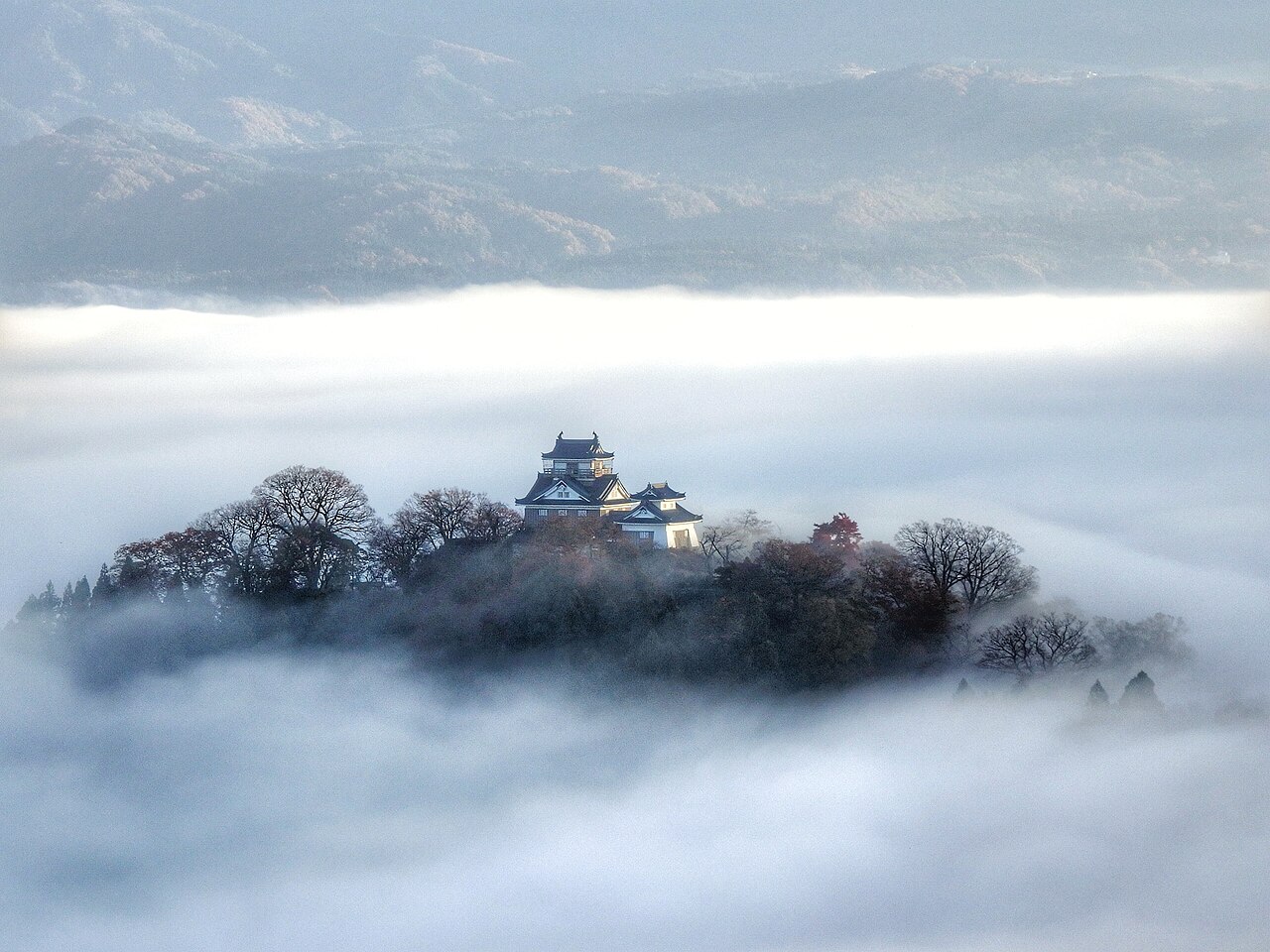
The Castle Above the Clouds
When weather conditions align at a cold dawn from October to April, the castle town is wrapped in a deep sea of clouds and the castle on the summit of Kameyama alone stands out. The sea of clouds is seen especially in November.
The stated conditions are high humidity the previous day, a large temperature difference with the day, and weak wind. The viewpoint is a separate lookout, not the castle itself. It can be seen from dawn until around nine in the morning.
Echizen-Ono Castle and the Spring Blossoms
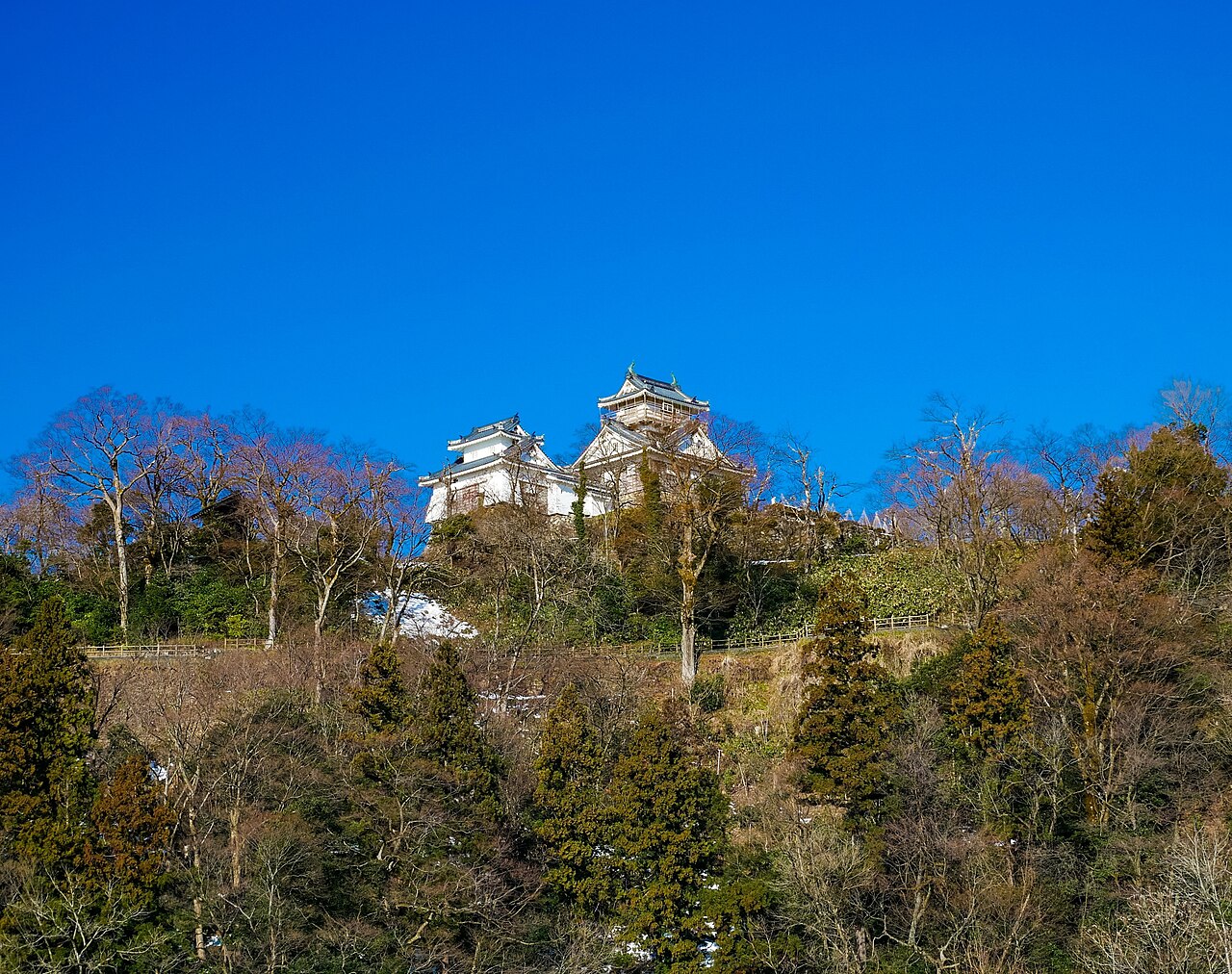
Echizen-Ono Castle was built over four years by Kanamori Nagachika, who was given two thirds of Ono District by Oda Nobunaga. The current keep was rebuilt and displays relics of successive castle lords.
Inside, the stairs from the third floor to the fourth floor with the observation deck carry art showing colorful seasonal landscapes, the castle keep and a rabbit. A heart mark is hidden in the stair art.
At Kameyama Park, where the castle stands, about three hundred Somei-Yoshino cherry trees surround the area when in full bloom, and visitors can view the blossoms while walking the promenade. In a satoyama area with a walking path maintained by local residents, visitors can stroll among light purple katakuri flowers.
In the Izumi district of Ono, about fifteen hundred flowering peach trees, planted mainly by the local neighbourhood association, bloom in white and pink. Around Lake Kuzuryu, about three thousand trees, mainly Somei-Yoshino cherry, are planted.
Oshimizu, Spring Water and Temple Street
The groundwater of Echizen-Ono, cool in summer and warm in winter, has a clean, natural taste in the mouth. Visitors can draw spring water at spring spots in the town centre.
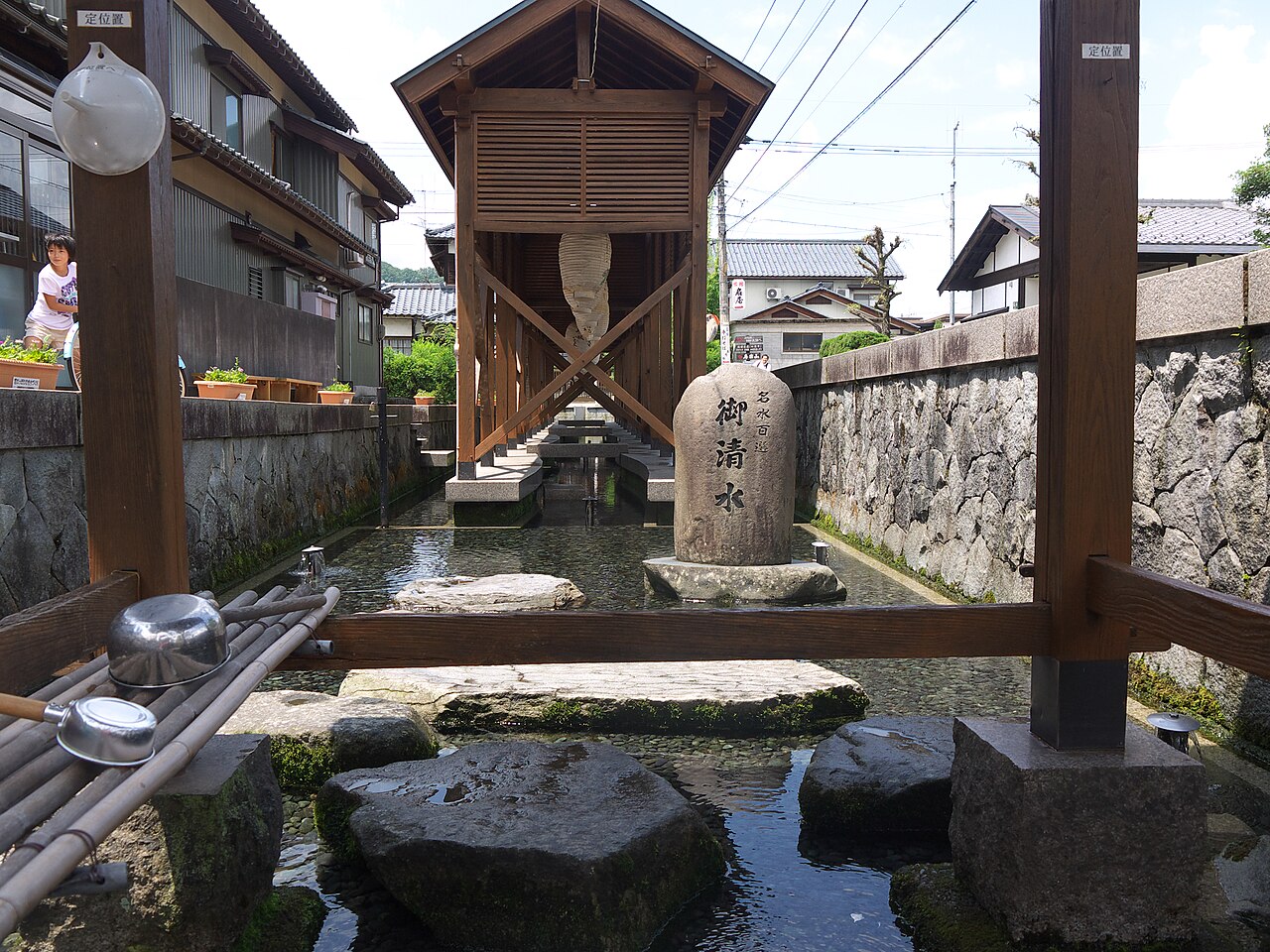
On summer nights, colorful lanterns made of washi paper are lit at Oshimizu, and the illuminated lanterns appear on the mirror-like water surface.
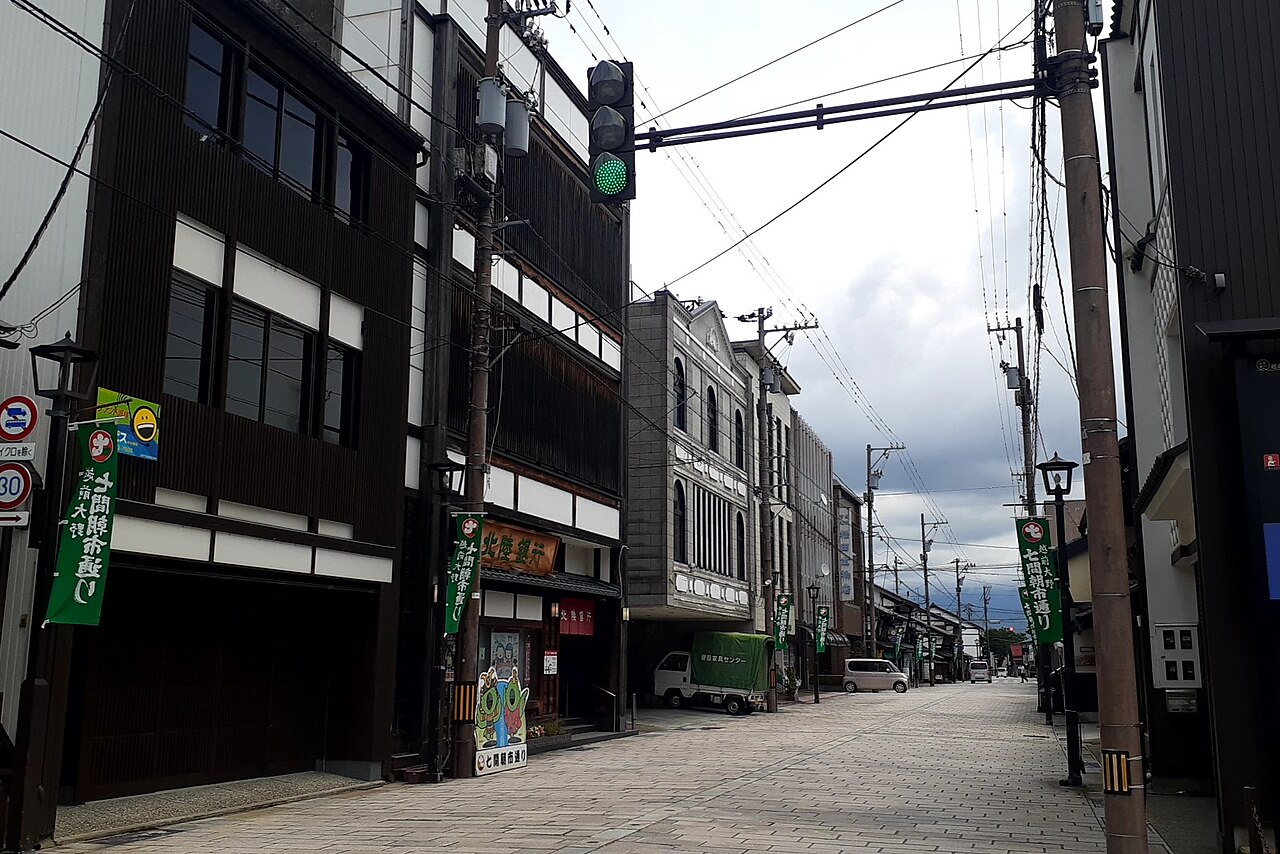
The castle town spreads out in a grid pattern, with samurai residences and traditional Japanese houses standing in it. About twenty temples line up north to south along Teramachi. The temple quarter on the east edge of the town is said to have gathered temples of each sect so that the castle town could be governed easily.
The Old Hashimoto House and Photo Spots
The Old Hashimoto House, an Important Cultural Property, is a thatched, irimoya-style building of around the eighteenth century, the mid-Edo period. It was originally a farmhouse in the Hokyoji village, belonging to a family that served as village head. The house was dismantled, moved to its present site and restored to its appearance at the time of construction.
In the centre of the interior is the Niwa, a room with a hearth.
About two thousand windmills in total are installed seasonally from the approach to inside the residence. A summer shoji with a castle-view window appears at the detached building of the samurai residence for a limited period from summer to autumn.
About two hundred Japanese tenugui of about fifty kinds, differing in color and pattern, are set along a forty-metre section of the Yuirakuza corridor and on the terrace of a Western-style building.
Soba, Katsu-don, Sweets and Sake
Ono native buckwheat is described as small-grained with rich flavor, and soba made with it and spring water has a moist, chewy texture. Oroshi soba is cold soba combined with grated daikon and dashi broth. Some shops serve it with grated daikon on the side and some mix it into the dashi, and the dashi flavour, noodle thickness and aroma vary by shop.
Shoyu katsu-don was born from a collaboration between an old soy sauce shop and restaurants in Ono city. Its basic rules are a sauce made with Fukui-grown soy sauce, a serving of katsu, and plenty of vegetables.
The Echizen-Ono Sightseeing Bureau describes the Ono-themed one-hand gourmet foods as street-food items sold at individual shops for strolling the castle town. The bureau describes the items as using local ingredients such as taro and maitake mushrooms, or as themed on Ono, such as the castle in the sky and the starry sky.
Visitors can borrow a retro parasol, take photos at the samurai residence that is a photo spot, and ride a bicycle around the confectionery shops.
Manazuru Shuzo, a long-established brewery in Echizen-Ono, is a small brewery that brews everything by hand without relying on machines, with all products made to ginjo standards. Echizen-Ono is a fan-shaped basin surrounded by mountains of the one-thousand-metre class and is a specialty production area of the sake rice Gohyakumangoku.
At the Hanagaki brewery, five sake-brewery buildings are registered as cultural properties. Yuirakuza stocks sweets, local sake, soy sauce, processed goods and local vegetables from Ono.
Getting to Echizen-Ono
New to rural buses and one-man trains? See how to ride them, step by step.
| From | Route and time |
|---|---|
| Fukui Station west exit terminal, stop five | A bus on the Ono Line, about one hour ten minutes |
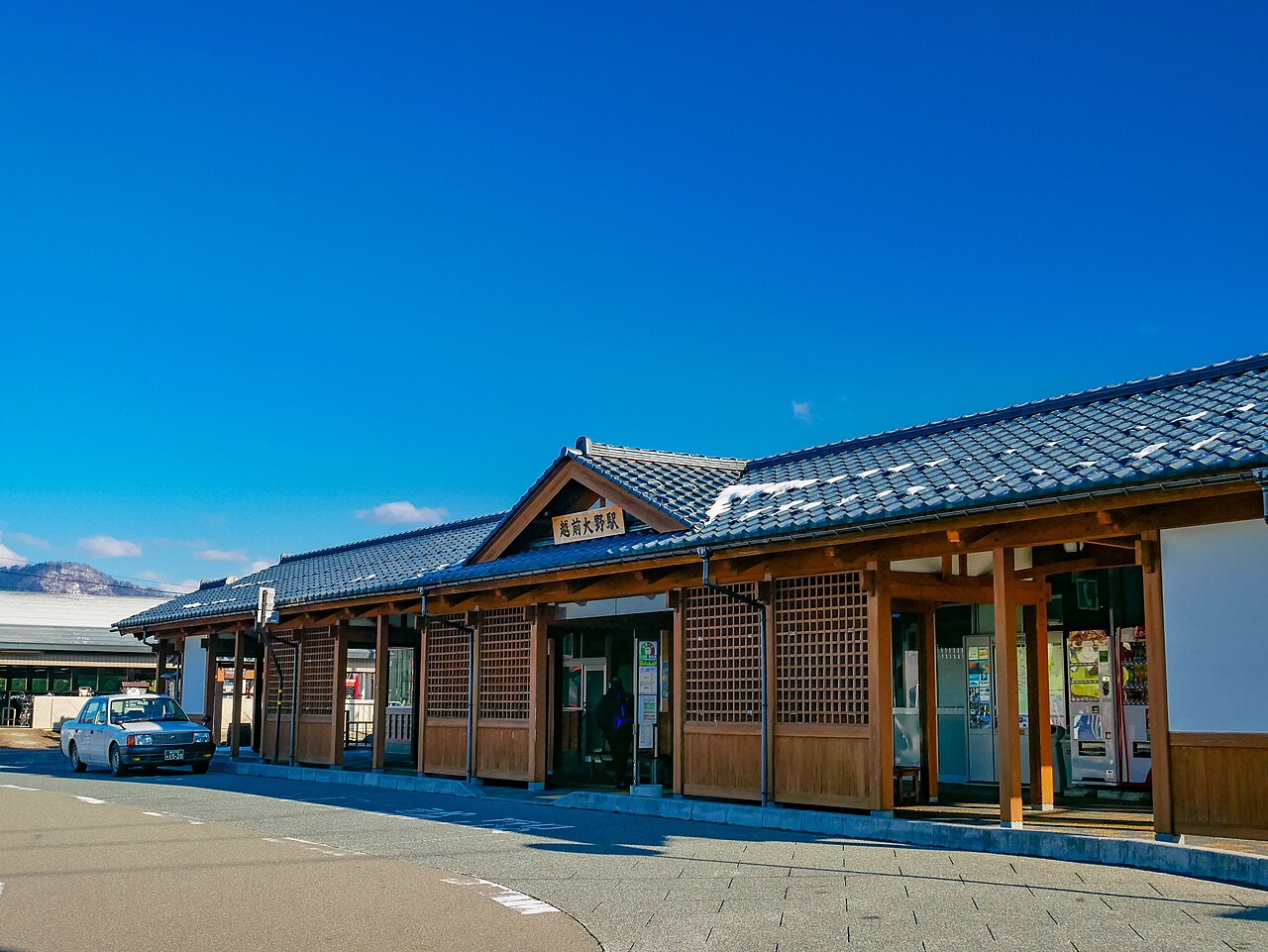
| Echizen-Ono Station | A walk to the castle climbing gate, about thirty minutes |
| Castle climbing gate | On foot to Echizen-Ono Castle, about fifteen to twenty minutes |
The bus from Fukui Station takes about one hour ten minutes.
For the hill itself, Echizen-Ono Castle on Google Maps marks the keep.
Hours and Fees
| What | Detail |
|---|---|
| Echizen-Ono Castle admission | Four hundred yen for adults; junior high school students and younger are free |
| Echizen-Ono Castle, April to September | Open from nine in the morning to five in the afternoon |
| Echizen-Ono Castle, October to November | Nine in the morning to four in the afternoon |
| Echizen-Ono Castle, winter | Closed from December first to March thirty-first |
| Former Uchiyama samurai residence, weekdays and Saturdays | Open from nine in the morning to four in the afternoon |
| Former Uchiyama samurai residence, Sundays and holidays | Open from nine in the morning to five in the afternoon |
| Former Tamura residence | Closed on Tuesday (the next day if Tuesday is a holiday) and from December twenty-seventh to January fourth |
| Manazuru Shuzo | Nine in the morning to six in the evening; closed on Sundays |
| Hanagaki brewery | Listed as nine in the morning to five in the afternoon, with irregular closing days |
| Yuirakuza | Listed as half past nine in the morning to five |
| Sweets-hopping set | Listed at one thousand four hundred yen |
| Me+asu water-drawing service | One hundred yen per PET bottle |
| Echizen-Ono tourism bureau, which sells the Me+asu bottles | Listed as nine in the morning to five in the afternoon |
| Nanaken morning market | Seven to eleven in the morning on the opening day |
Fees and hours were checked against official sources between 11 October 2026 and 16 November 2026.
To stay overnight in town, browse places to stay in Ono.
Thinking of staying overnight?
Compare places to stay near Ono, Fukui, Japan →
Disclosure: This post may contain affiliate links. If you book through them, we may earn a commission at no extra cost to you.