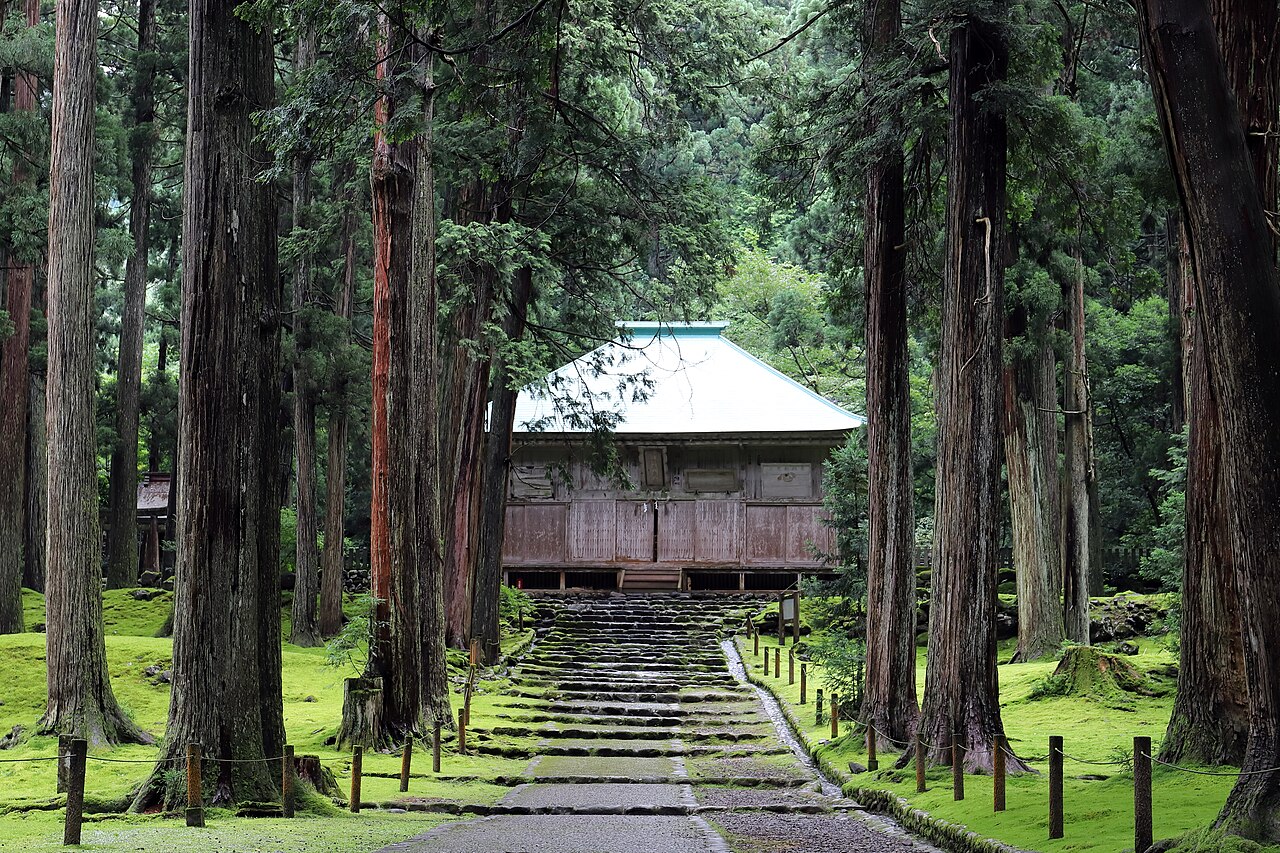
Heisenji Hakusan in Katsuyama, Fukui, is the Echizen-side base of Hakusan worship and is said to have been founded by the monk Taicho roughly thirteen hundred years ago. Around its worship hall, green moss spreads like a carpet beneath cedars several hundred years old, and that carpet is the first reason to come. The old stone-paved approach through Bodaibayashi is said to carry the Lotus Sutra on the undersides of its stones. The main shrine adds a contrast of its own: plain wood outside, colour inside.
Moss, Cedars and the Worship Hall
The worship hall stands under a hipped roof of cypress bark built in the Edo period. The main shrine keeps an exterior of plain unpainted wood while its interior is colourfully decorated. It was rebuilt in seventeen ninety-five by Matsudaira Shigetomi, the twelfth lord of the Fukui domain. The main shrine sets the tone: restraint outside, colour within.
The moss is the main event, spreading like a carpet around the worship hall under cedars that have stood for several hundred years. The Bodaibayashi forest holds the great cedars and also large beech trees, which grow only in high mountains, and old sal and Japanese pear trees. Walk slowly; the carpet is the point.
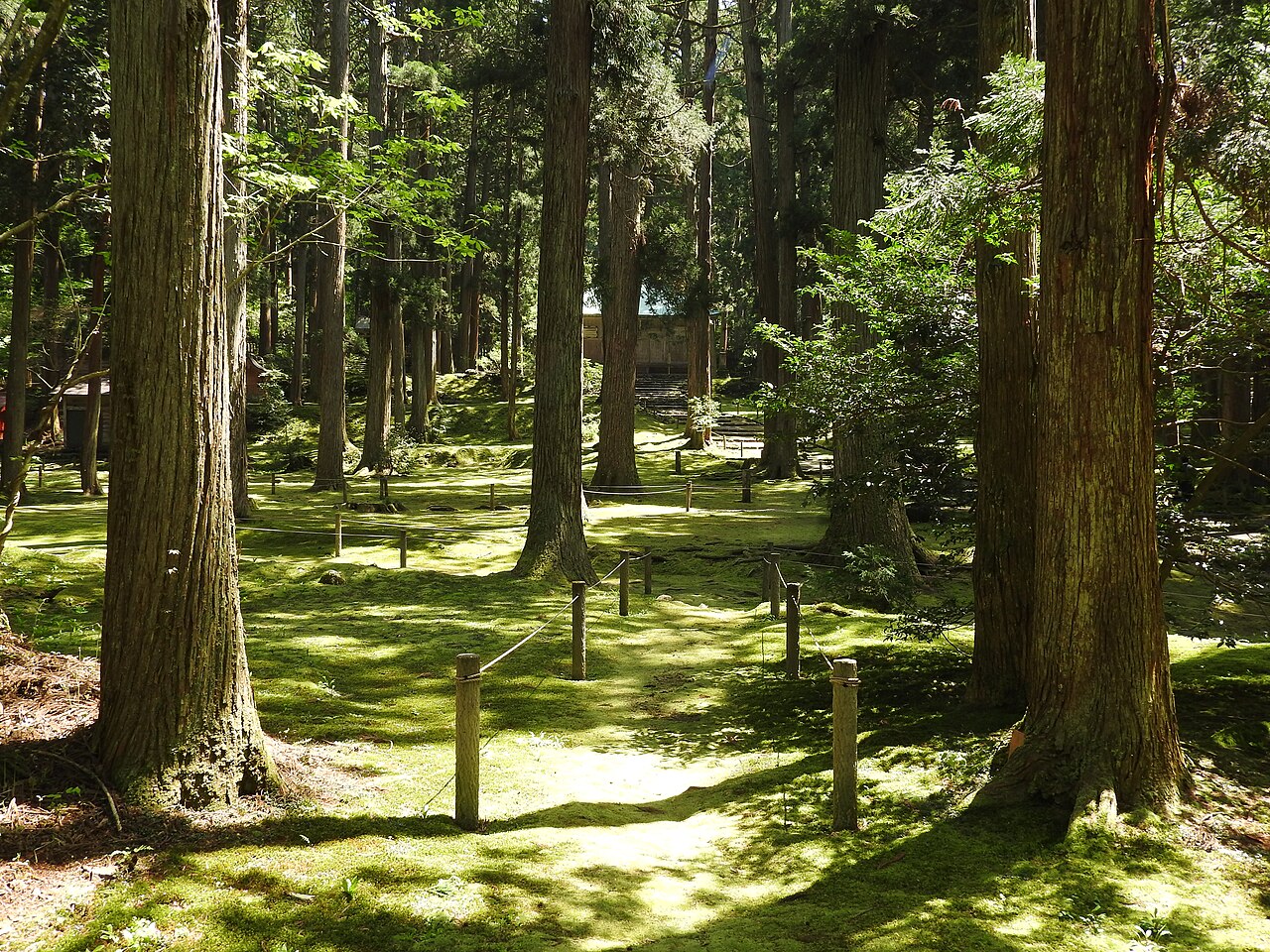
Taicho founded the shrine himself soon after he opened Hakusan in the year seven hundred and seventeen. In spring, the grand festival is held on the third Sunday of April, and girls perform a dedicatory dance in a worship hall that fills with people. If the dance is what you want to see, plan around that Sunday.
The Stone-Paved Approach
The old approach road is a stone-paved path that runs for seven hundred metres through Bodaibayashi. The stones have characters of the Lotus Sutra written on their undersides. Monks are said to have carried them by hand from the river while chanting sutras, which turns a plain walk into something closer to a procession.
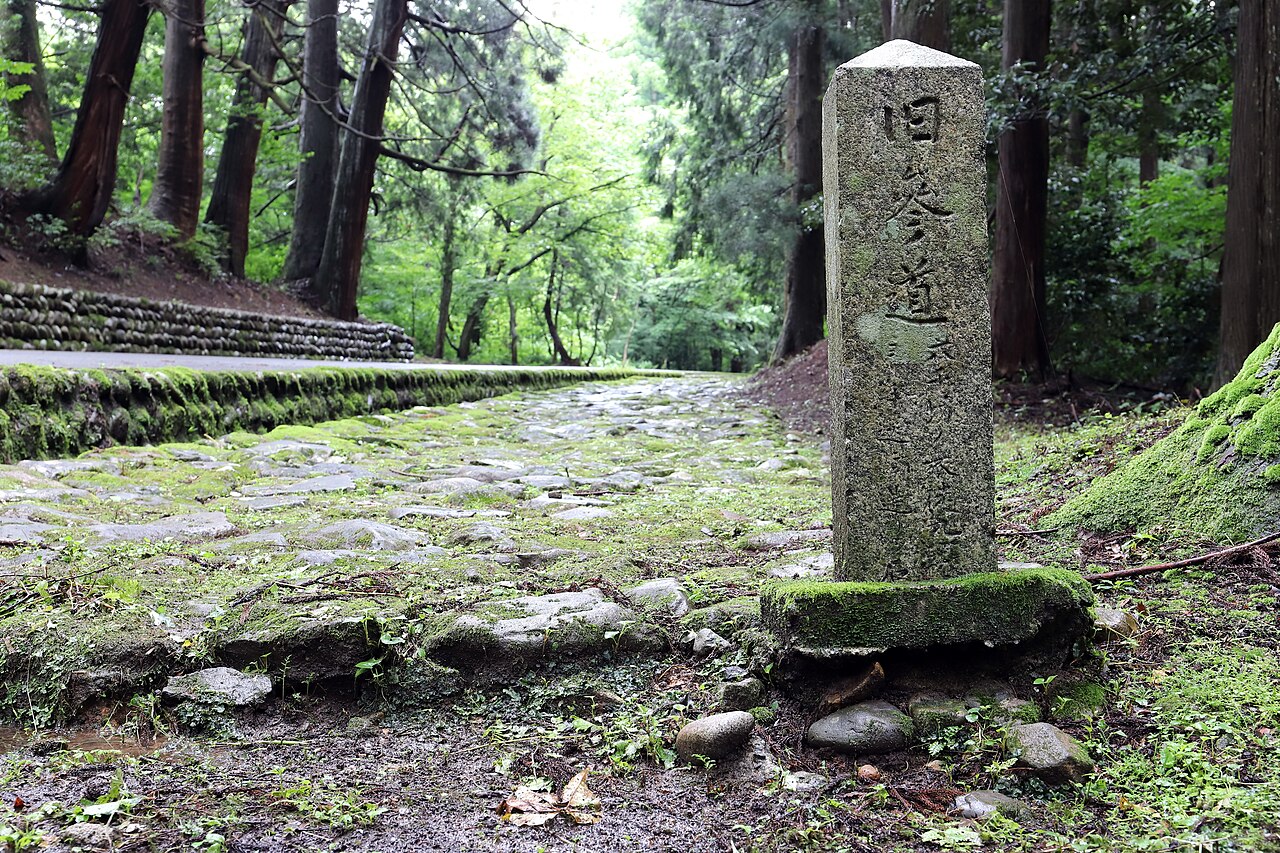
At a spot called Azukikashiki, water still runs in the roadside gutter, and its sound is said to reach you from somewhere as a shari-shari. It is worth a pause: the sutra stones and the running water are, between them, what the approach is about.
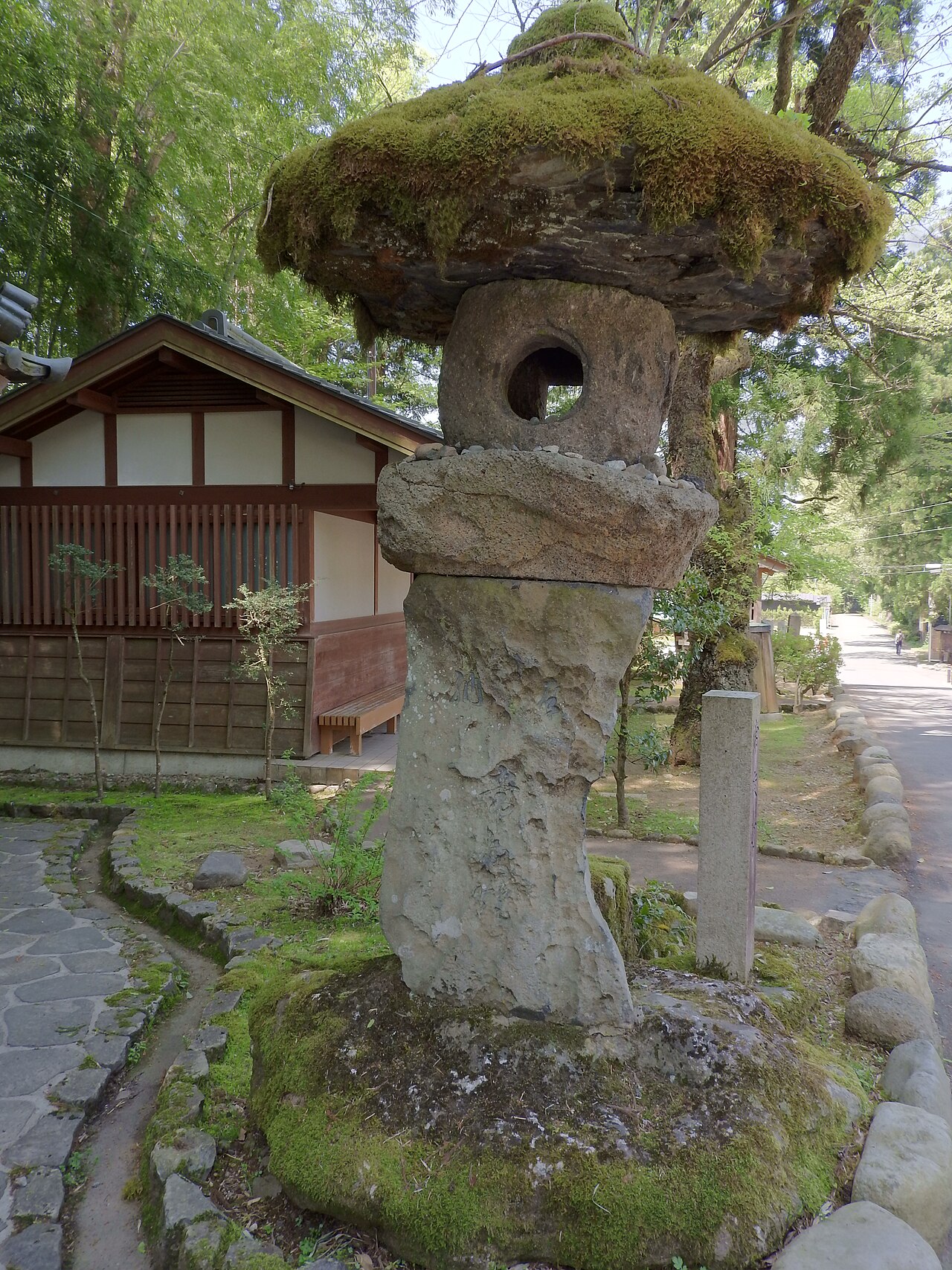
A full circuit of the site, approach road, shrine precinct and excavation areas included, takes about two hours and thirty minutes from the site entrance, while a walk from the guidance facility covering only the precinct and excavation areas takes about one hour and thirty minutes. If the stones and the water are why you came, begin at the entrance.
Why a Mountain Temple Stood Here
In a corner of the precinct, water wells up in the Omitarashi pond, the spring where Taicho prayed. In the medieval period, dozens of halls and shrines and thousands of monastic quarters are said to have stood within a precinct far larger than today's shrine. That precinct spread about one point two kilometers east to west and about one kilometer north to south.
All of it burned in fifteen seventy-four, in the fighting with the Ikko-ikki, and almost nothing of that former appearance was left. One of the great cedars is said to have survived that fire. Excavation has since brought lanes, walls and wells back to light, which makes a visit here as much about absence as about what remains.
In summer, the grand festival is held on the eighteenth of July. It is held in remembrance of the day Taicho opened Hakusan, which ties the present shrine back to its founder. A Gokaicho, the opening of the inner doors, takes place once every thirty-three years.
Mahoroba, the Excavations and Guided Courses
Excavations at the lodge sites have turned up the remains of residences, wells, ditches and earthen walls, along with everyday items and high-grade ceramics. Each lodge consisted of a main building and several attached buildings, its grounds enclosed by an earthen wall. The roads through the lodge clusters have stone pavement and side ditches, and the digging shows they ran like a net between the lodges.
To make sense of the stones and wells, begin at Mahoroba, where details of the excavation results are exhibited, before walking the ruins. Its guidance corner introduces the history of the old precinct and of mountain worship, with touch panels showing videos, photos and explanations about Hakusan and Heisenji. Another corner explains the three peaks of Hakusan, Taicho and the pilgrim route from the Echizen side.
A video hall shows high-definition images on a two-hundred-inch screen. A guided course leaves Mahoroba, goes around Hakusan Shrine and returns to Mahoroba. A guide makes sense for anyone who wants the lanes and wells explained on the spot; those who prefer to read the panels first can walk the ruins on their own afterwards.
The information office handles merchandise, drinks and tourist information. In winter, though, it is closed from the first of December to the twentieth of March, and the dates can move with the snow, so a winter visit means doing without it.
Soba and Katsudon in Katsuyama
In Katsuyama itself, one hand-cut soba shop keeps its menu to four items: oroshi soba, zaru soba, yamakake soba and kake soba. The daikon for the oroshi is grated only after the order is taken. The stone-mill grinding of the buckwheat can be watched inside the shop. That is the whole pitch, and for soba it is enough.
A second soba restaurant mills Katsuyama-grown buckwheat in-house and offers meat soba and herring soba beside the standard oroshi soba. A third, certified as a shop using Fukui-grown buckwheat, grinds each day's buckwheat in a stone mill, only as much as that day will serve. Its oroshi soba shares the menu with a newly named specialty, soy-sauce katsudon, and many set meals.
For the katsudon side, a diner in Katsuyama serves a dish named creamy egg katsudon along with oroshi soba and sauce katsudon. Anyone choosing quickly can take the four-item shop and order the oroshi; anyone wanting a heavier meal after the walk can look for katsudon, soy-sauce, sauce or egg. All of these are in Katsuyama, so plan them as the meal before or after Heisenji.
Getting to Heisenji
| Leg | How | Time |
|---|---|---|
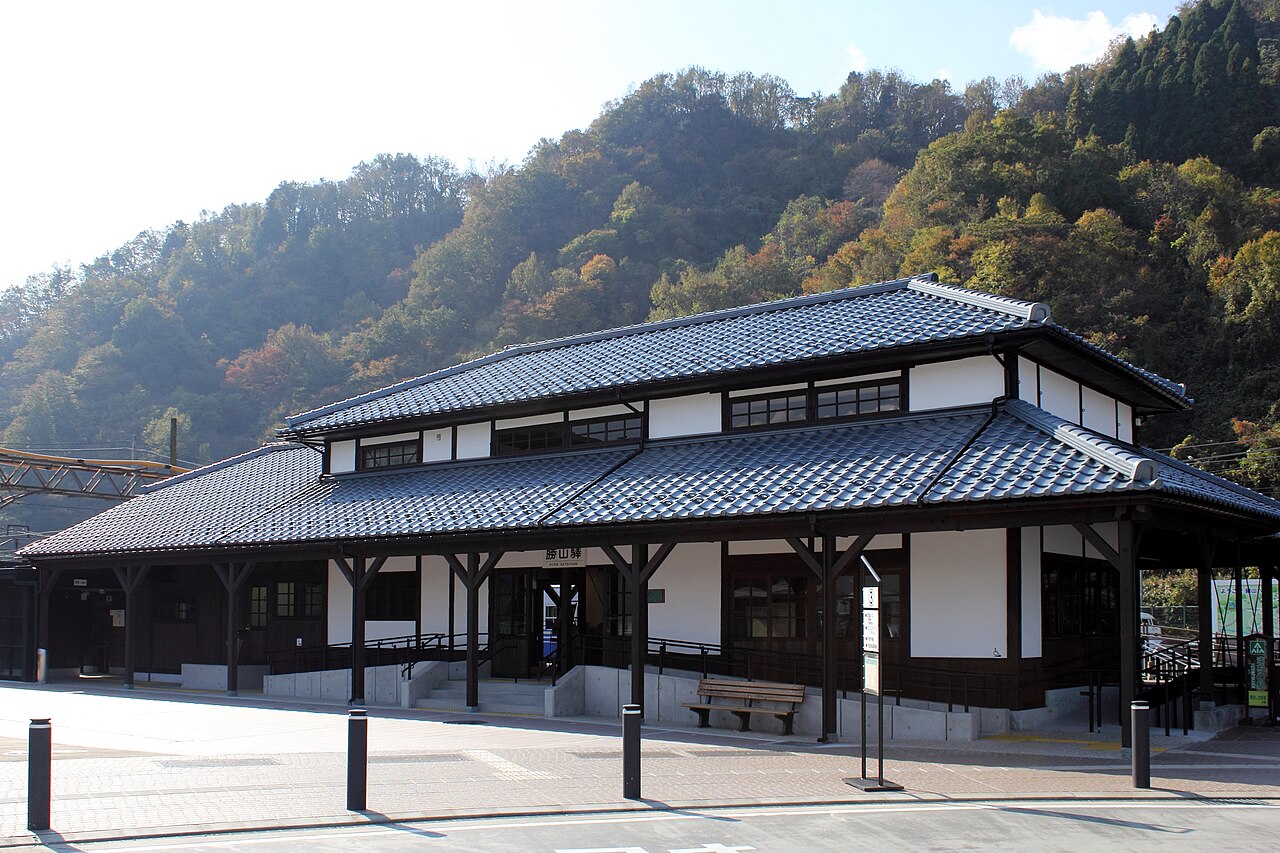
| Fukui Station to Echizen Railway Katsuyama Station | Train | About 1 hour |
| Fukui-Kita Junction to Katsuyama Interchange | Car, via the Chubu-Jukan Expressway Eiheiji-Ono Road | About 30 minutes |
| Katsuyama Station to the Heisenji Jinja-mae stop | Dynagon city sightseeing bus | About 13 minutes at the fastest |
| Dynagon service to Heisenji | Suspended because of snow | December to mid-March |
| Parking lots 1 and 2 to the Mahoroba entrance | On foot | About 3 minutes |
The Dynagon service toward Heisenji is suspended from December to mid-March because of snow, so check official information before visiting.
New to rural buses and one-man trains? See how to ride them, step by step.
Hours and Fees
| Place | What | Hours or fee |
|---|---|---|
| Mahoroba | Open | 9:00 to 17:00, entry until 16:30 |
| Information office | Open | 9:00 am to 5:00 pm |
| Information office | Winter closure | December 1 to March 20, varies with snow |
| Shrine office (amulets, ofuda, shuin) | Open | 8:00 to 16:00, irregular closing days |
| Former Genseiin Garden | Admission | 50 yen |
| Parking | Environmental maintenance fee | 300 yen |
| Guided course, Mahoroba to Hakusan Shrine and back | 70 minutes | 2,200 yen per guide |
| Minamidani guided course | 120 minutes | 3,300 yen per guide |
| Bodaibayashi guided course | 120 minutes | 3,300 yen per guide |
| Whole site from the site entrance | Approach road, precinct and excavation areas | About 2 hours 30 minutes |
| Walk from the guidance facility | Precinct and excavation areas | About 1 hour 30 minutes |
| Ofuda | One piece | 500 yen |
| Omamori | Green or red | 300 yen |
| Hand-cut soba shop | Open | 11:00 to 14:00 |
| Hand-cut soba shop | Oroshi soba | 580 yen |
| Soba restaurant certified for Fukui-grown buckwheat | Open | 11:00 to 14:00 and 17:00 to 19:00 |
| Soba restaurant certified for Fukui-grown buckwheat | Closed Wednesdays | Tuesdays and Sundays lunch only |
Touring the whole historic site from the site entrance takes about two hours and thirty minutes, not counting time inside the guidance facility, so Heisenji fills a good part of a day on its own. Anyone who would rather not hurry back can compare places to stay in Katsuyama before settling on a plan.
Where to stay
Places to stay near Katsuyama, Fukui, Japan →
Disclosure: This post may contain affiliate links. If you book through them, we may earn a commission at no extra cost to you.