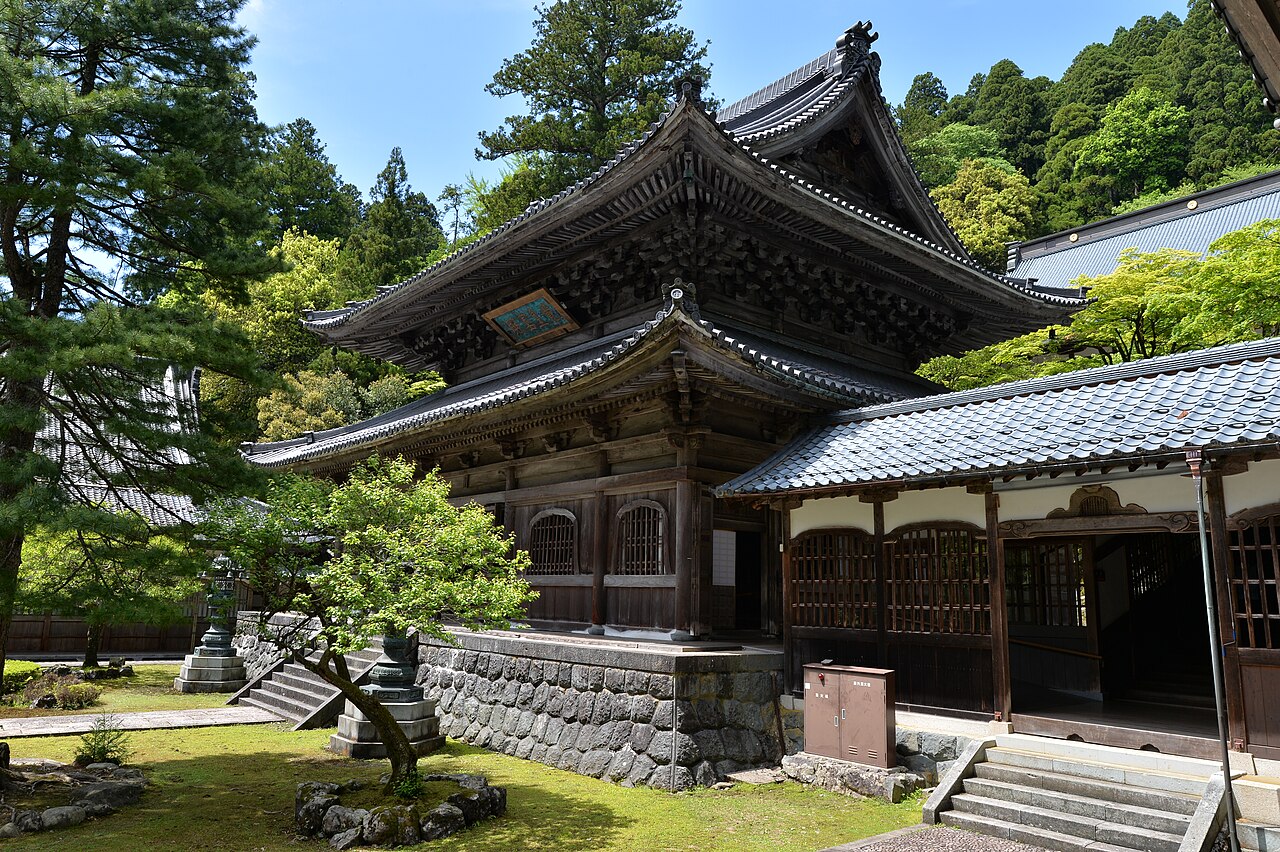
A monastery deep in the cedars
Eiheiji lies at Shibi, in the folded hills of Shibidani, some four ri east of Fukui. It is the head temple of the Sōtō school of Zen, and more than fourteen thousand branch temples look to this mountain as their source. The precinct keeps a strict old order: the Chokushimon, reserved for imperial messengers, stays shut, and the way in leads through the Tsuyomon, past the two-storey Sanmon, to the Butsuden, the Hattō, and the Jōyōden above. Dōgen raised the first halls here in the opening year of the Kangen era and called the place Daibutsu-ji; within a few years it took the name Eiheiji. Even on a busy morning the cedars swallow sound, and the buildings seem less set upon the hillside than grown out of it.
The founder and his mountain
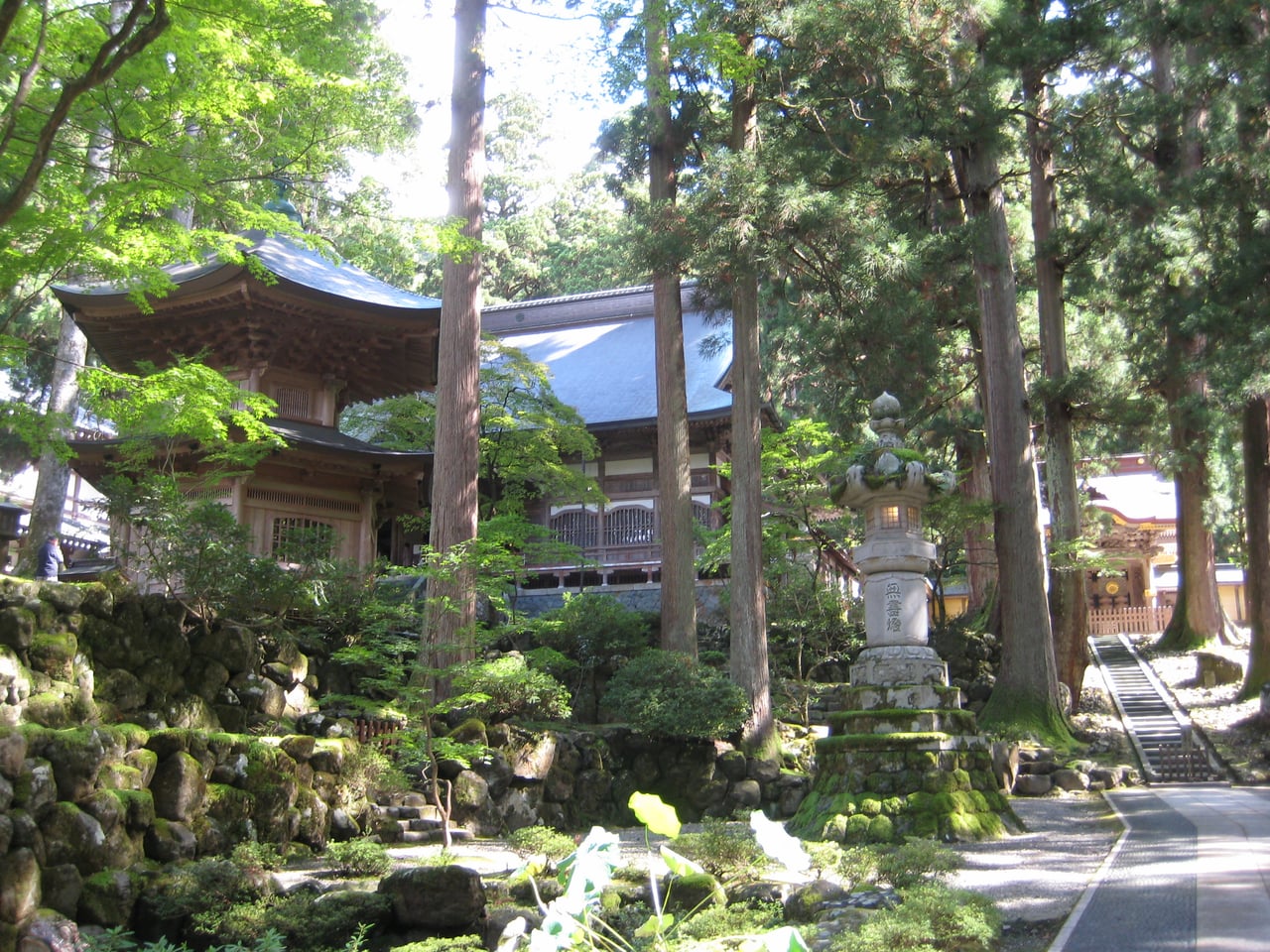
Dōgen entered religious life at thirteen, crossed to Song China in search of a truer practice, and died at fifty-four. The emperors Kōmei and Meiji later granted him honorific titles, but the mountain honors him more plainly. The Jōyōden holds his remains, and the Kōunkaku beside it marks the hermitage of the second abbot. Fire has not spared the temple: the halls burned in the Bunmei era and rose again from the Chōkyō era onward, and under the Tokugawa the temple's rank at the head of the Sōtō school was confirmed. Bashō walked in from Matsuoka and set down what the visit was worth to him at Dōgen's remote mountain retreat. What drew the poet still meets anyone who climbs past the last hall and lets the forest close in.
Kippō-ji and the quiet above Yoshimine
Before Eiheiji there was a hermitage. At Yoshimine in Kami-Shibi stands Kippō-ji, on the spot where Dōgen first settled when he came to Echizen, and the hilltop keeps its stillness. The present halls were raised in the latter half of the Meiji era, and the deep quiet at the summit is the point of the walk. Where the great monastery draws its steady stream of pilgrims, Yoshimine offers the same lineage with hardly a soul beside you.
Where to stay
Disclosure: This post may contain affiliate links. If you book through them, we may earn a commission at no extra cost to you.
Ichijōdani: the valley of the Asakura
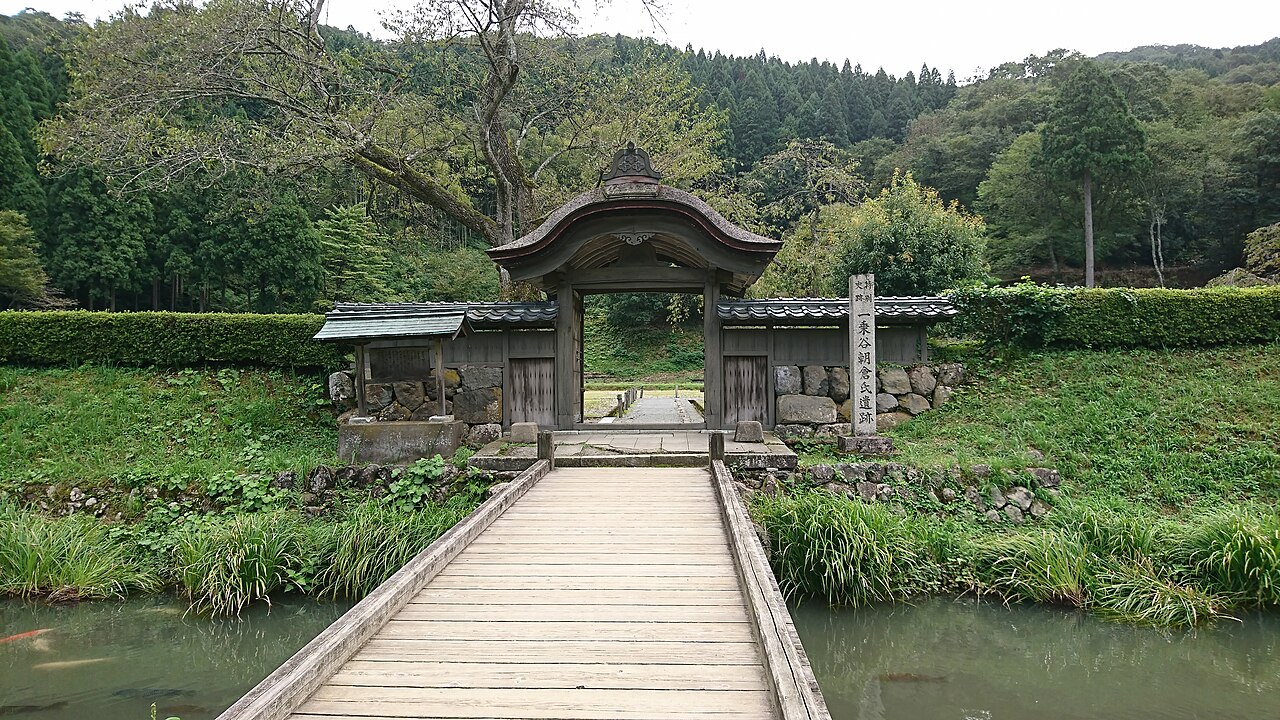
On Ichijō mountain lie the remains of the Asakura castle, first built by Asakura Toshikage; the clan's power ended before Nobunaga's advance. The gorge below is thick with old trees and deeply secluded, and the old compilers judged it at its best in the heat of summer, when the shade alone is worth the journey. The Ichijō falls, once counted the largest in Echizen, feed the Asuwa river on its way down to the plain. The valley lies some three ri out of Fukui, near enough to pair with the monastery in one unhurried day.
Getting there
When the guidebook behind this article was compiled, visitors came out from Fukui by carriage and by rickshaw. The road is easier now. A direct bus leaves the east exit of Fukui station for Eiheiji, and the adult one-way fare is seven hundred and fifty yen. The fare for a child is three hundred and eighty yen. The limited express Eiheiji Liner covers the run from Fukui station to the temple's gate town in about thirty minutes. Coming by rail instead, the local bus from Eiheiji-guchi station reaches the stop below the temple in about thirteen minutes. Go early if you want the halls at their quietest. A day that starts among the cedars at Eiheiji and ends among the ruins at Ichijōdani makes one of the quietest itineraries in this part of Japan. If this kind of travel is what you are after, you can browse bookable quiet day trips for more ideas. Prices and timetables shift with the seasons, so check official information before visiting.
New to rural buses and one-man trains? See how to ride them, step by step.