Ichijodani is a narrow valley a short hop out of Fukui, where the Asakura clan once held a castle on the mountain and a town along the stream below. The town is long gone, but a stretch of its street has been rebuilt, a modern museum now stands beside the road, and the hills on either side are as wooded as ever. The whole place is compact enough to walk in a day, with a stop for soba or a pot of rice in between. This guide lays out how to get there, what each part of the site charges, what times they keep, and where to eat.
Getting There from Fukui Station
The simplest way in is by rail. From JR Fukui Station, the JR Etsumi-hoku Line, also called the Kuzuryu Line, takes fifteen minutes to reach Ichijodani Station. From Ichijodani Station, allow a three-minute walk.
There is also the Asakura-Eiheiji Direct Bus from Fukui Station. It departs the East Exit at ten in the morning and arrives at the Restored Townscape at half past ten in the morning, which puts you at the townscape with the whole day ahead.
If you plan to eat at Ichijodani Restaurant, note that it is about a fifteen-minute walk, one point two kilometres, from Ichijodani Station on the Etsumi-hoku Line. Schedules can change, so check official information before visiting.
The Restored Townscape
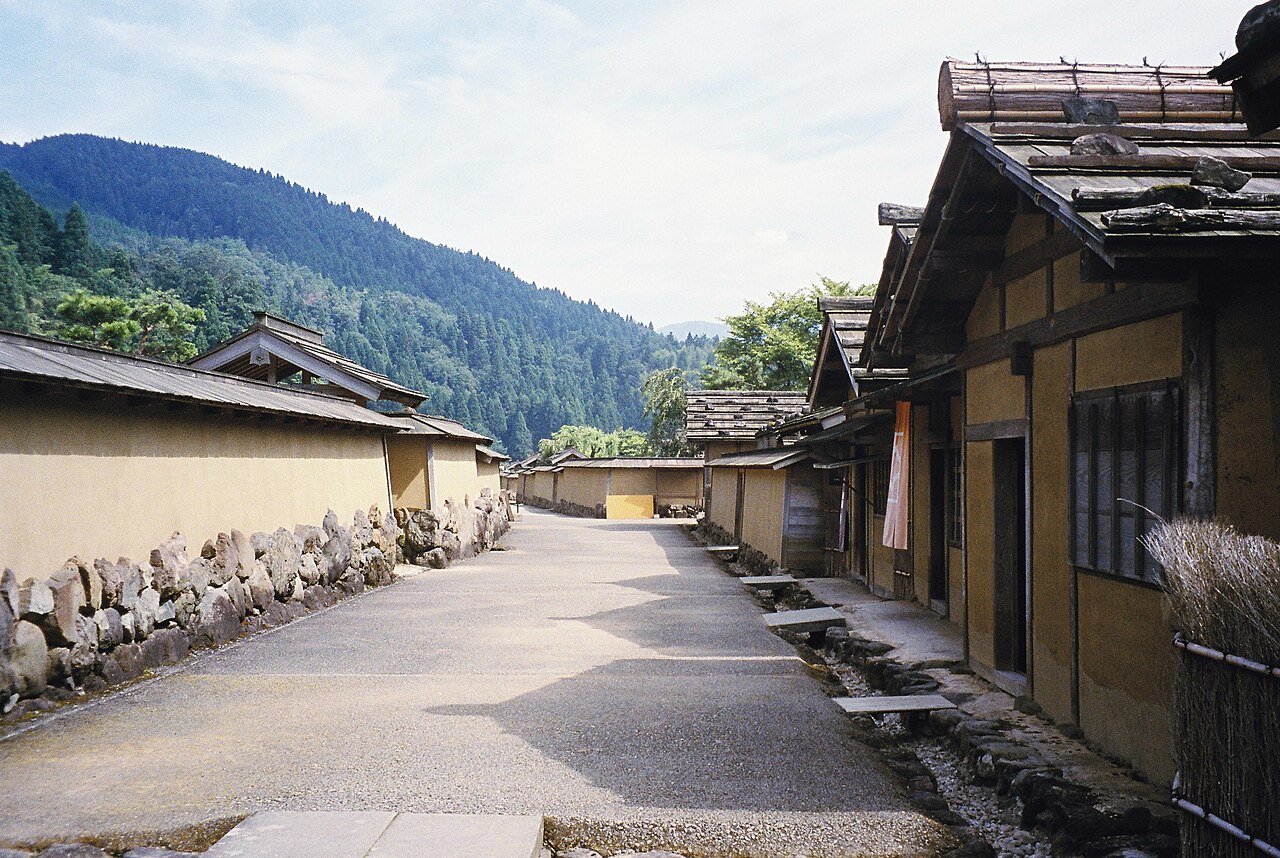
Earthen walls and low wooden houses along the rebuilt street, a stone-edged gutter running beside them and the forest closing in behind.
The Restored Townscape, Fukugen Machinami in Japanese, is a rebuilt street of the castle town: earthen walls and low wooden houses with a stone-edged gutter at their feet and the forested hillside closing the view. Walk it slowly. The appeal is the street as a whole, the way the walls hold their edge and the hills press in at the end of it, rather than any single building.
Admission to the Restored Townscape:
- Adults aged fifteen and over: three hundred and thirty yen.
- Elementary and junior high school students: one hundred yen.
- Visitors aged seventy and over: one hundred yen.
- Open nine in the morning to five in the afternoon, with entry until half past four in the afternoon.
- Closed over the year-end and New Year holidays, from the twenty-eighth of December to the fourth of January.
The Asakura Family Site Museum
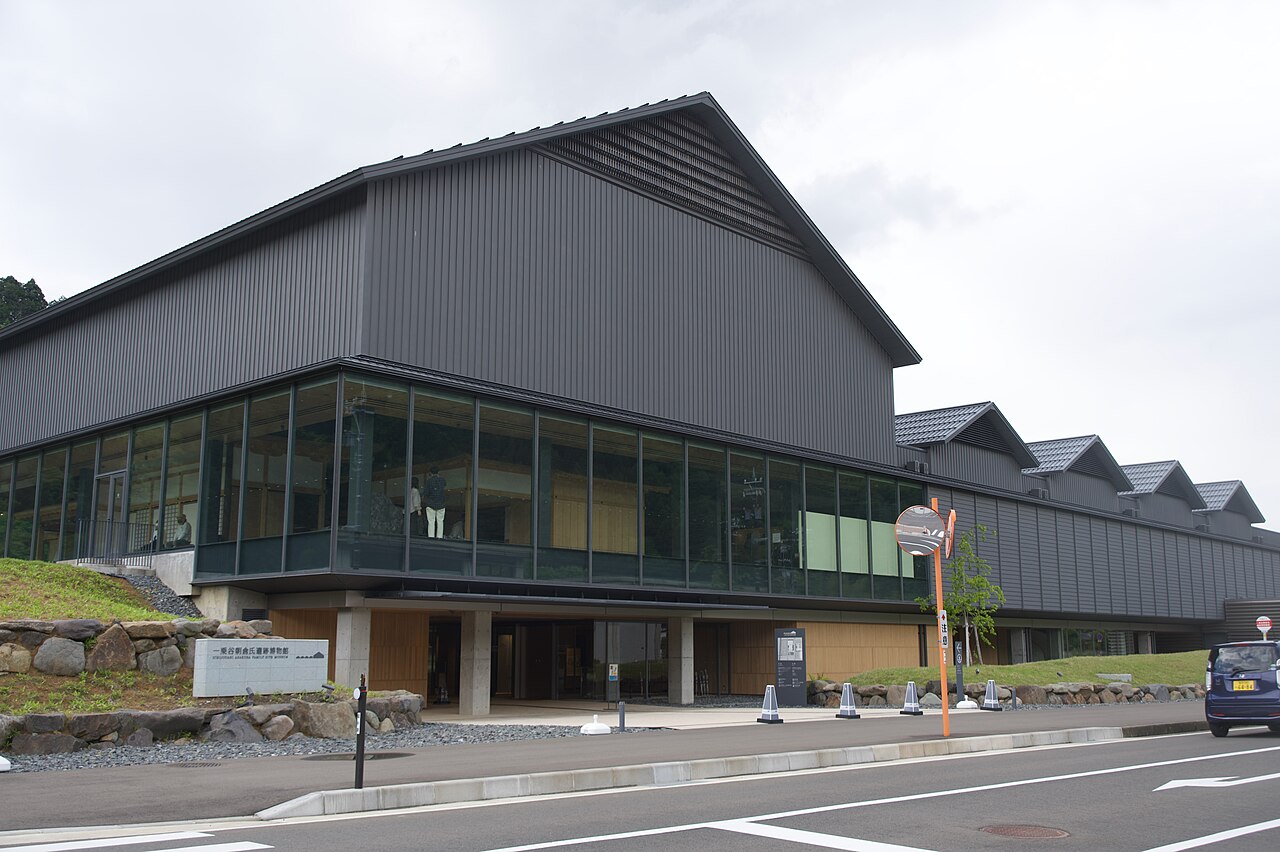
The museum's new building: dark gabled roofs over a glass-fronted ground floor, with a stone sign standing at the roadside.
The Ichijodani Asakura Family Site Museum is the modern anchor of the visit, and seeing it before the ruins makes the valley far easier to read. Give it the first part of the day, then go out to the site with the layout in your head.
- Basic exhibition: seven hundred yen for general visitors, four hundred yen for high school students, two hundred yen for elementary and junior high school students, and three hundred and fifty yen for those aged seventy and over.
- Open nine in the morning to five in the afternoon, with admission until half past four in the afternoon.
- Groups of twenty or more get twenty percent off the basic exhibition.
Both the townscape and the museum keep the same hours, nine to five with last entry at half past four, so there is no need to rush either one.
Where to stay
Places to stay near Fukui, Fukui, Japan →
Disclosure: This post may contain affiliate links. If you book through them, we may earn a commission at no extra cost to you.
The Valley and Its Castle Mountain
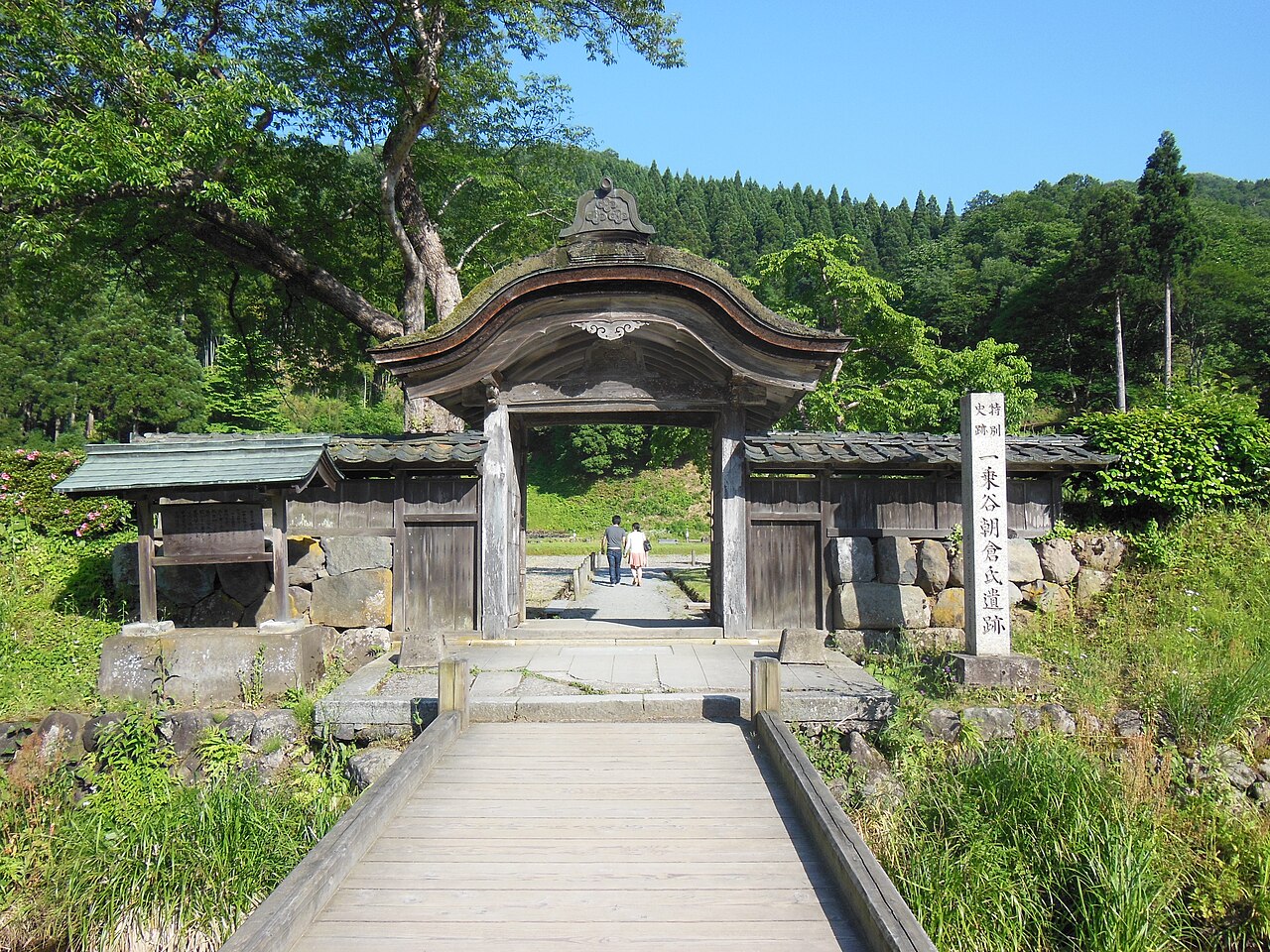
The Karamon at the residence site: a curved roof reached over a plank footbridge, a stone marker to one side, and cedar rising behind.
A Taisho-era gazetteer places Mount Ichijo on the border of the old districts of Imadate and Ono, with the valley of Ichijodani spreading out at its foot and belonging to a village of the same name. The gazetteer records that the castle on the mountain's middle slope was built by Asakura Toshikage, and that it fell in the time of Yoshikage, the fourth head of the house, after repeated fighting with Oda Nobunaga. The gazetteer notes, too, a Kasuga Shrine at Abaka, on the north side of Mount Ichijo and the south bank of the Asuwa River, which in its day was ranked as a prefectural shrine.
On the valley floor, the residence site is marked by the Karamon, a gate with a curved roof that you cross a plank footbridge to reach, with a stone marker beside it and cedar climbing the slope behind. The site also keeps the garden at the Suwa residence, where a maple stands at the centre of moss-covered rockwork against a wall of cedar.
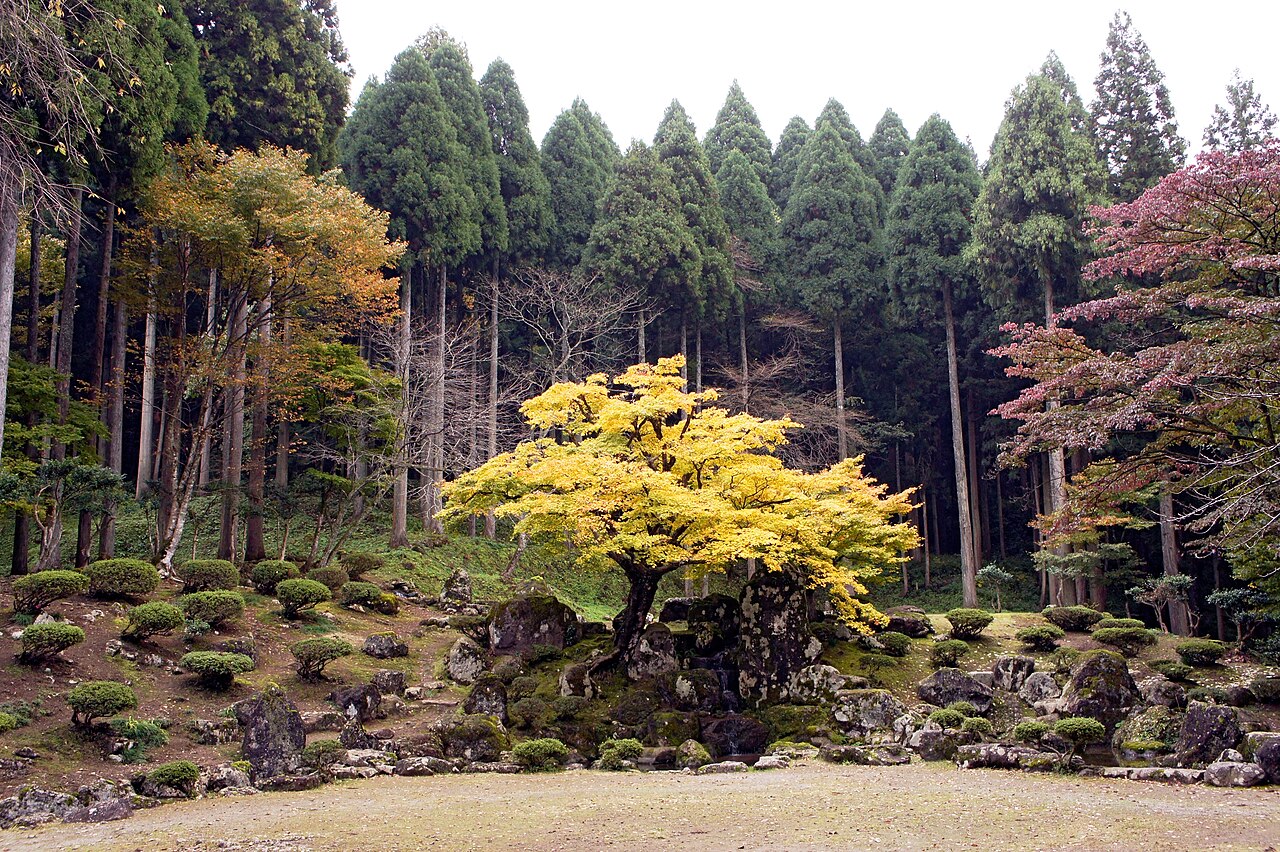
The Suwa residence garden: a yellow maple at the centre of moss-covered rockwork, with cedar closing the view behind.
Ichijo Falls
The same gazetteer describes a waterfall near Jokyoji, formed where the valley stream drops, and calls it the foremost waterfall of Echizen in its day. Below it, the gazetteer says, the stream is known as the Jokyoji River or the Taki River before it joins the Asuwa. In the gazetteer the valley is described as thick with old trees, hushed and deep, and since the Taisho years it is said to have been prized as a place to escape the summer heat.
Whether to add the falls depends on how much walking you want; the ruins and the museum alone fill a day comfortably.
Where to Eat in the Valley
Echizen oroshi soba, thin buckwheat noodles topped with grated daikon, is widely recognised as the local dish that stands for Fukui Prefecture, and it is the natural lunch here.
Ichijodani Restaurant lists an Ichijodani Soba Set at one thousand eight hundred yen. The Kyozen Lunch there is listed at three thousand yen. Lunch runs from eleven in the morning to half past two in the afternoon, last order. Cafe time follows, from half past two in the afternoon until four in the afternoon, and the restaurant is closed in winter, from December to February.
At Michi-no-Eki Ichijodani Asakura Mizu-no-Eki, a roadside rest stop, the dish to book is the Asakura Hakamameshi, hakama-pot rice, at one thousand six hundred yen, or one thousand nine hundred and fifty yen for the Hakamameshi Plus; it has to be booked ahead. The cafe there does an Asakura Sansho Soft Cream, soft-serve flavoured with sansho pepper, for six hundred and fifty yen. The rest stop keeps hours of nine in the morning to six in the evening. In December and January it is open nine in the morning to five in the afternoon. The food booth runs from ten in the morning to four in the afternoon, with only the cafe menu from three in the afternoon.
A workable order for the day is the museum first, then the townscape, lunch at the restaurant or the rest stop, and the residence site and the Suwa garden afterwards, with the falls as an extension if the legs are willing. If you would rather not hurry back, there are places to stay in Fukui city, which leaves the next morning for a second, slower walk through the valley.