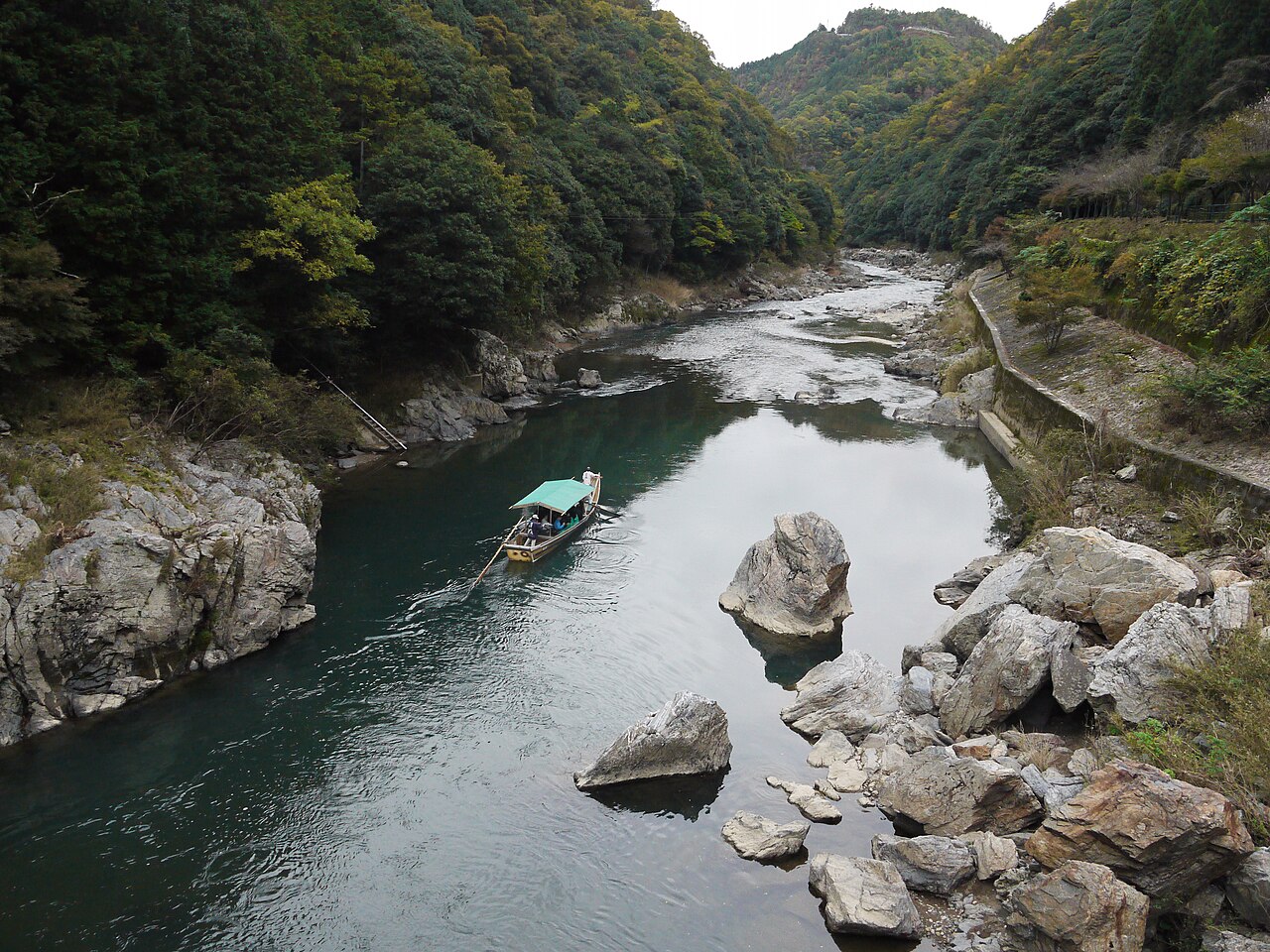
The Hozugawa boat ride sets out from Kameoka down a river whose flow has both rapids and deep pools. On the water the scenery takes on various faces through the four seasons, with rocky mountains, pine mountains, mixed-wood mountains, cherry blossoms and autumn leaves among them. On the rails, the Rich car of the Sagano Torokko has a see-through floor, so the wind comes in from underfoot as well.
Down the Hozugawa River by Boat
Being hit by water spray is one of the things particular to the Hozugawa boat ride, and passengers feel the river as well as see it. The boats carry a splash-guard sheet, but depending on the river's water volume the sheet does not keep out all of the water. On rainy days the boat runs with a canopy fitted, and on days of strong sunshine with a sunshade tent. There is no swell like the sea on this ride, so motion sickness is not a worry.
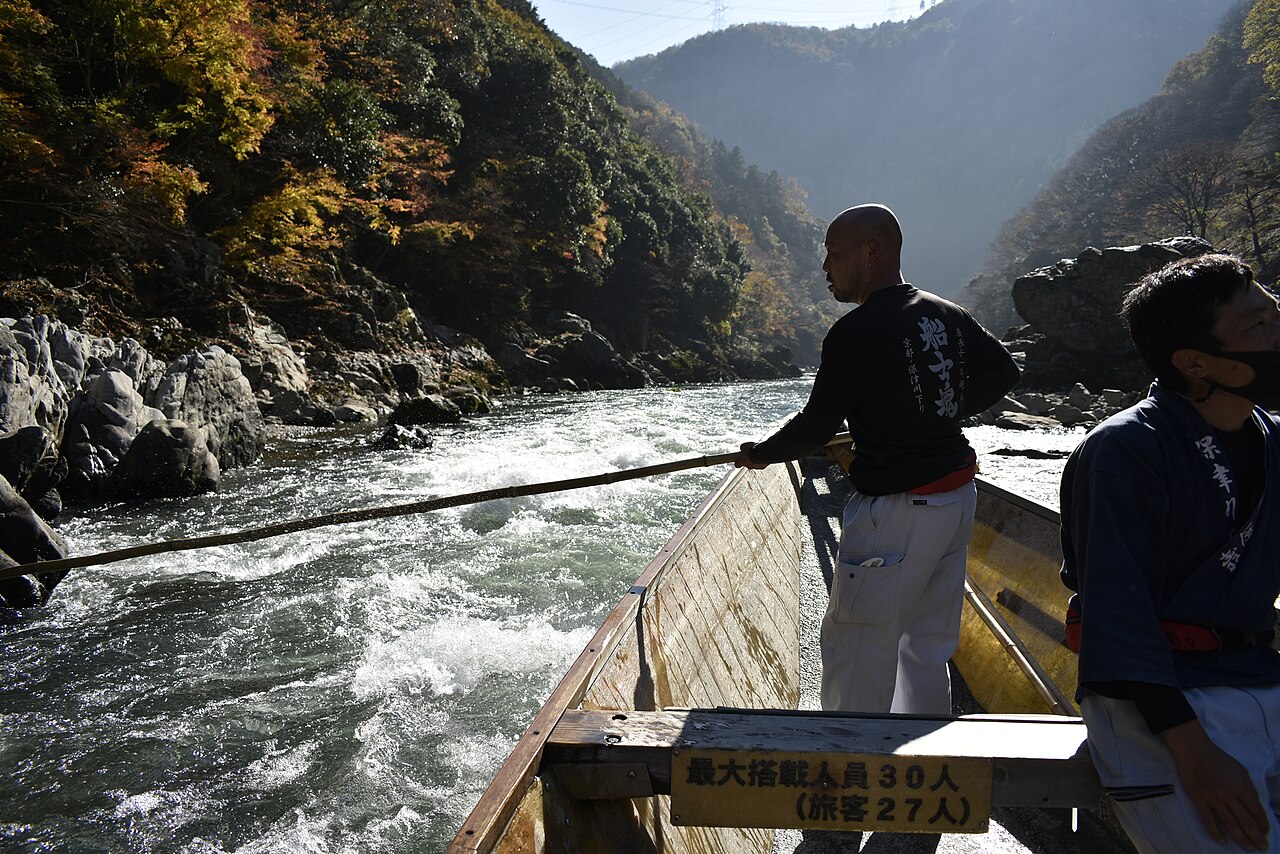
Every passenger is asked to put on a life jacket, and at boarding the boatman explains in detail how to put it on and use it, checks that each one is on correctly, and guides passengers on and off the boat. In the summer season the jacket is a shoulder-type one that inflates automatically on entering the water. At the rapids, passengers are asked never to stand up.
Stories and Care Along the River
Near the end of the ride, on entering Saga-Arashiyama, a temple can be seen on the hillside to the right. The man who cut the gorge built it to console the spirits of those who died in the excavation work. The gorge he cut was hemmed in by mountains, with huge boulders lying across it and a swift current. In one novel, the water ahead of the Kameoka boarding point still flows slowly, with the look of green oil.
A separate eco tour by boat, not offered on the regular ride, lets visitors see the state of the Hozugawa's environment and the litter and plastic waste drifting in it. Cleaning runs also go down the river by boat with volunteer groups, citizen NPOs and schools. The Michelin Green Guide Japan gives the Hozugawa river boat ride one star.
Riding the Sagano Torokko Cars
The Torokko cars run as a sightseeing service over the former route of the Sanin Main Line, at about the speed of a slightly fast bicycle. The set is five Art Deco style passenger cars with wooden chairs and bare light bulbs inside. The car closest to the locomotive is called the Rich car and has no window glass; passengers in it may get wet when it rains, and umbrellas cannot be used inside the car.
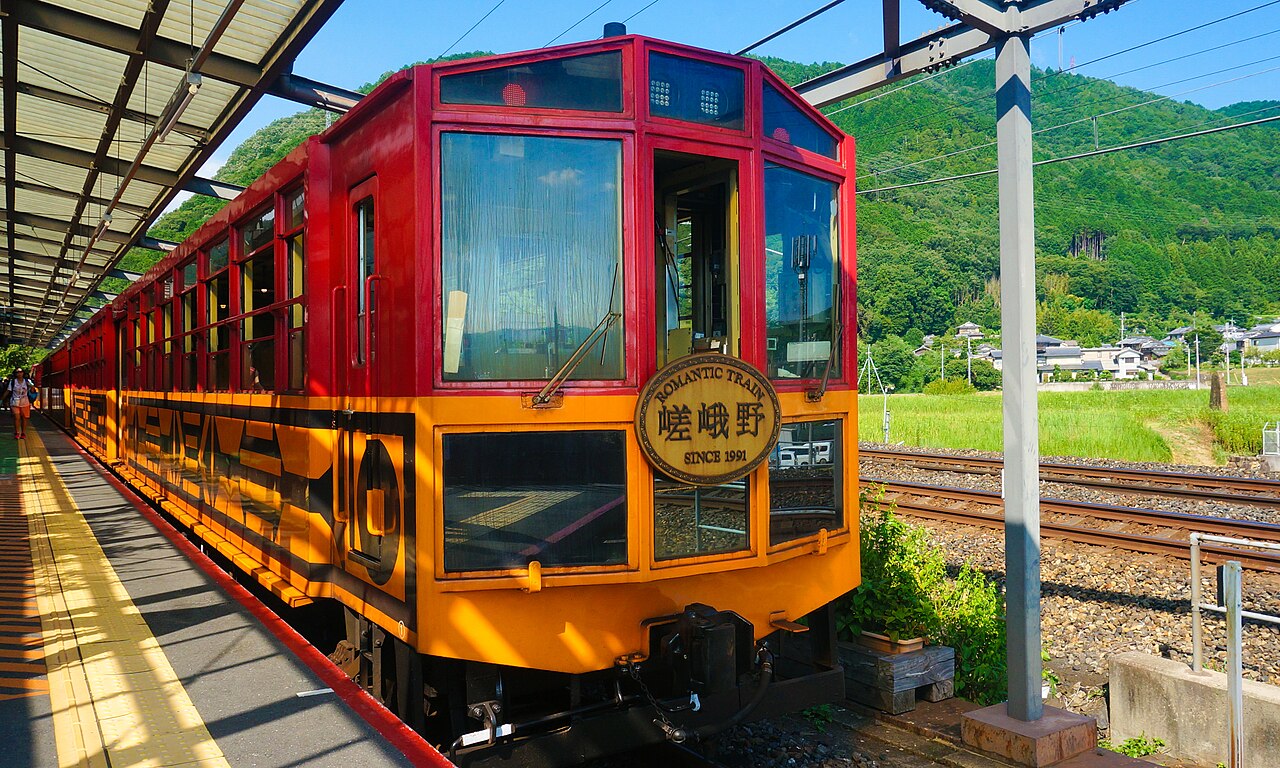
The other four cars are standard cars with windows and four-person box seats. Converted from old freight cars, they rattle along, and with the windows wide the wind can be felt and sounds heard.
Hozu Gorge Rocks and Seasons
Large rocks and oddly shaped boulders lie scattered on the riverbed, and each one has a charm of its own and a story passed down about it. Strata that look like books stacked sideways can be seen in one rock. Another rock closely resembles the kajika frog, a creature of rivers with clean flow that cries morning and evening.
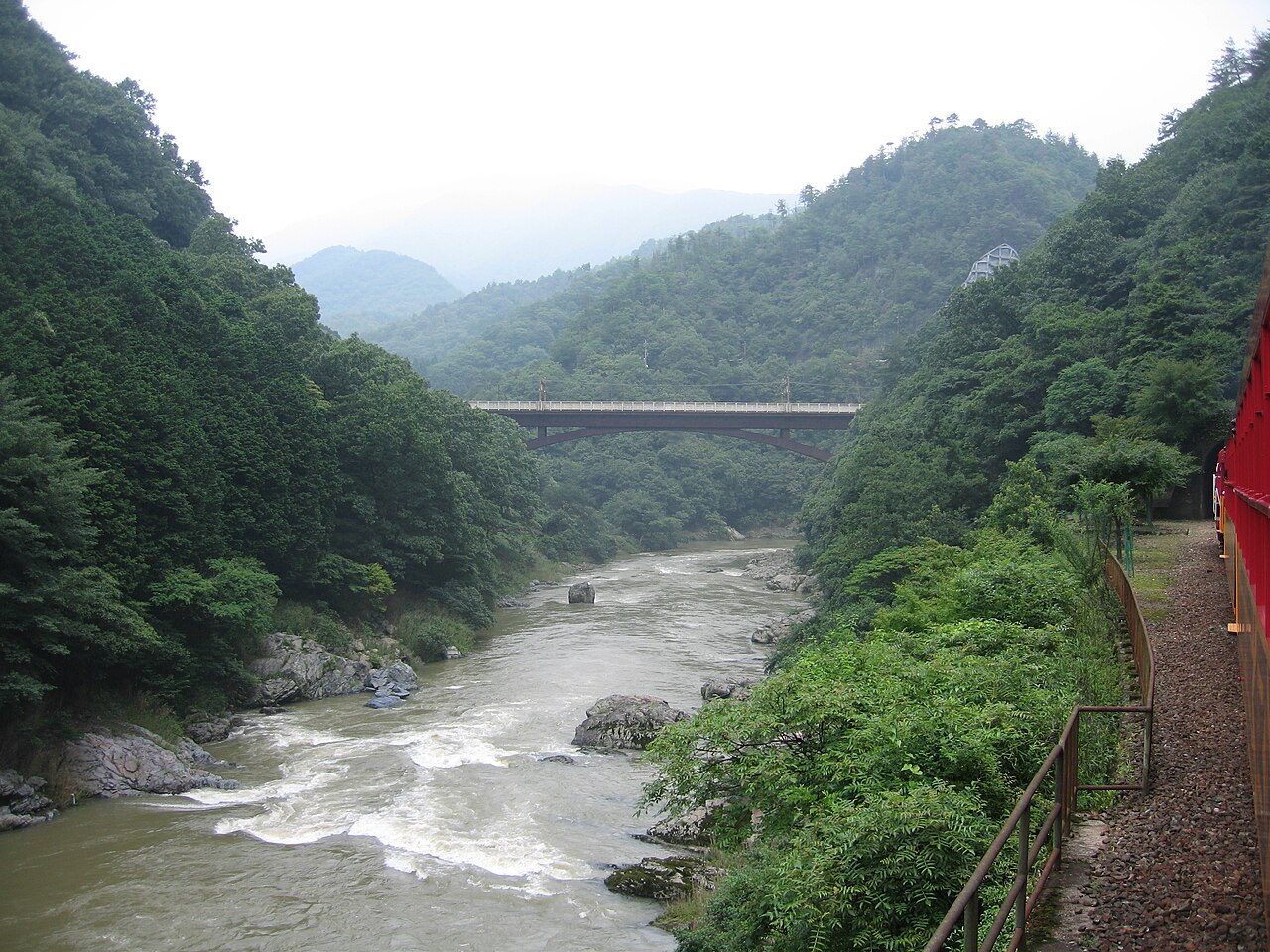
Here and there on the rocks remain the marks of the boatmen's poles and of the ropes used to haul the return boats up by manpower, and they tell the history of the boat ride. The hollows were worn over more than four hundred years by poles pushed into the same spot, and the scars by ropes rubbing as boats that had gone downstream were hauled back up over about three hundred and fifty years. Mount Atago, which enshrines a fire deity, rises as the high peak above both banks and appears and disappears ahead of and behind the boat each time the river bends right and left through the valley.
The gorge changes with the seasons. Spring brings mountain cherry and fresh green, with cherry blossoms and petals scattering in the river breeze. Summer fills the gorge with the cicada chorus, the murmur of the river and the rustling of bamboo. Autumn colours the mountains with brilliant red leaves, and winter turns the gorge to snow scenery.
Kameoka's Seasons and Local Tastes
Kameoka's own seasonal nature runs from cherry blossoms and rape blossoms in spring to bellflowers in summer, cosmos and autumn leaves in autumn, and snow scenery in winter. A cosmos flower spot held in autumn draws many tourists every year. For visitors who want to see and touch things, Kameoka also has rafting on the Hozugawa and paragliding.
Local products include Tanba rice, local sake, wild mountain vegetables and Kameoka beef, and the local foods follow the seasons: mountain vegetables in spring, sweetfish in summer, matsutake in autumn, and local sake and botan-nabe in winter. At a restaurant on the Oi River, seasonal dishes come with the Oi River and Mount Atago scenery filling the windows. A place run by a local farming association offers meals and soba-making, and a burger shop makes hamburgers with original buns made from rice flour, chewy in texture.
To stay overnight in the area, browse places to stay in Kameoka.
Getting to Kameoka
New to rural buses and one-man trains? See how to ride them, step by step.
| Leg | How | Time |
|---|---|---|
| From JR Kyoto Station to Kameoka Station | Rapid service on the Sanin Main Line (Sagano Line) | About twenty minutes |
| From Saga-Arashiyama Station to Kameoka Station | Rapid service on the Sanin Main Line (Sagano Line) | About eight minutes |
| From Umahori Station to Torokko Kameoka Station | On foot | About ten minutes |
| Between Torokko Saga Station and Torokko Kameoka Station | Sagano Romantic Train | Seven point three kilometers, about twenty-five minutes |
| Between the Kameoka boarding place and Arashiyama | Hozugawa river boat | About one hundred minutes, varying with the river's water level |
Hours and Fees
| Place | What | Hours or fare |
|---|---|---|
| Hozugawa river boat | Regular shared boat fare | Adults six thousand yen; children (infant to elementary school age) four thousand five hundred yen |
| Hozugawa river boat | Hours | March tenth to December thirteenth, twenty twenty-six: nine in the morning to three in the afternoon; January fifth to March ninth, twenty twenty-seven: ten in the morning to half past two in the afternoon; no boats from December twenty-ninth to January fourth |
| Sagano Romantic Train | One-way fare | Adults eight hundred eighty yen; children four hundred forty yen |
| Sagano Romantic Train | Operating period | March first to December twenty-ninth; closed on Wednesdays, but runs when Wednesday is a national holiday |
| Sagano Romantic Train | Rich car seats | Request the Rich car when buying a ticket, or select it in a web reservation |
Fees and hours were checked against official sources on 10 November 2026.
Thinking of staying overnight?
Compare places to stay near Kameoka, Kyoto, Japan →
Disclosure: This post may contain affiliate links. If you book through them, we may earn a commission at no extra cost to you.