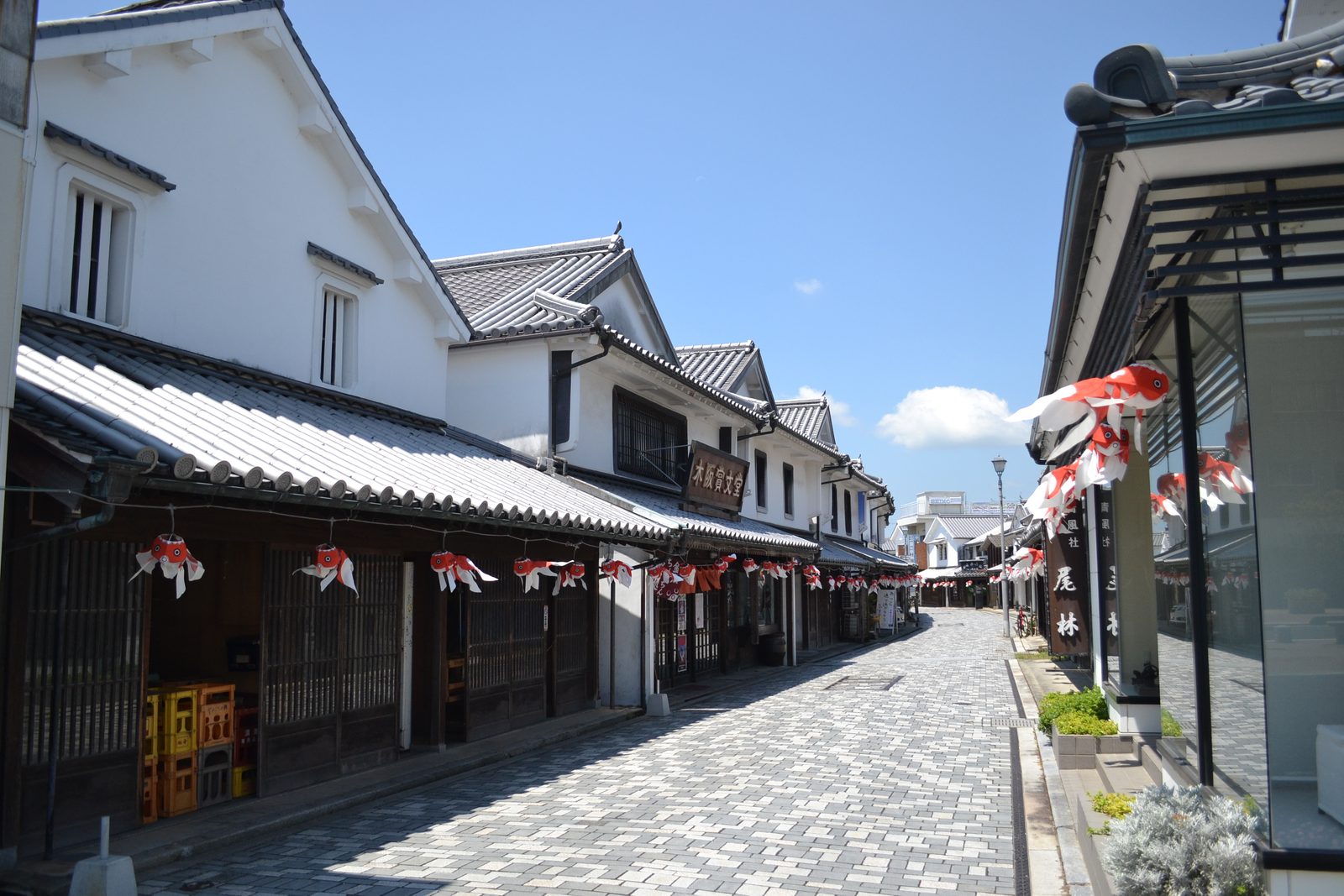
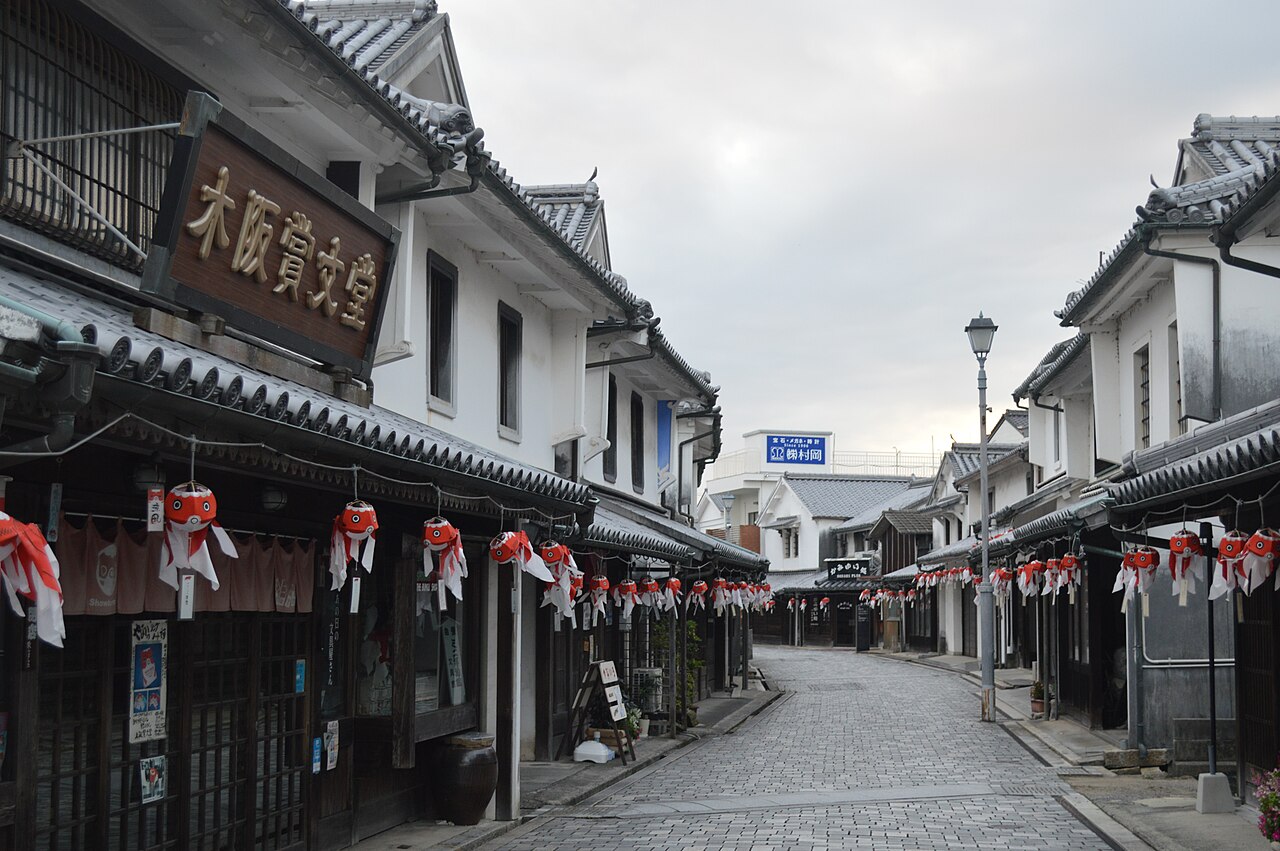
Along Shirakabe no Machinami in Yanai, rows of Edo-period merchant houses line either side of the street. The goldfish lantern, a folk craft of the town, has been handed down since the same era. Part of a soy-sauce brewery in use since the Edo period serves as a museum of the brewing process and tools of the time.
The White-Walled Street and the Walk Up to the Hill
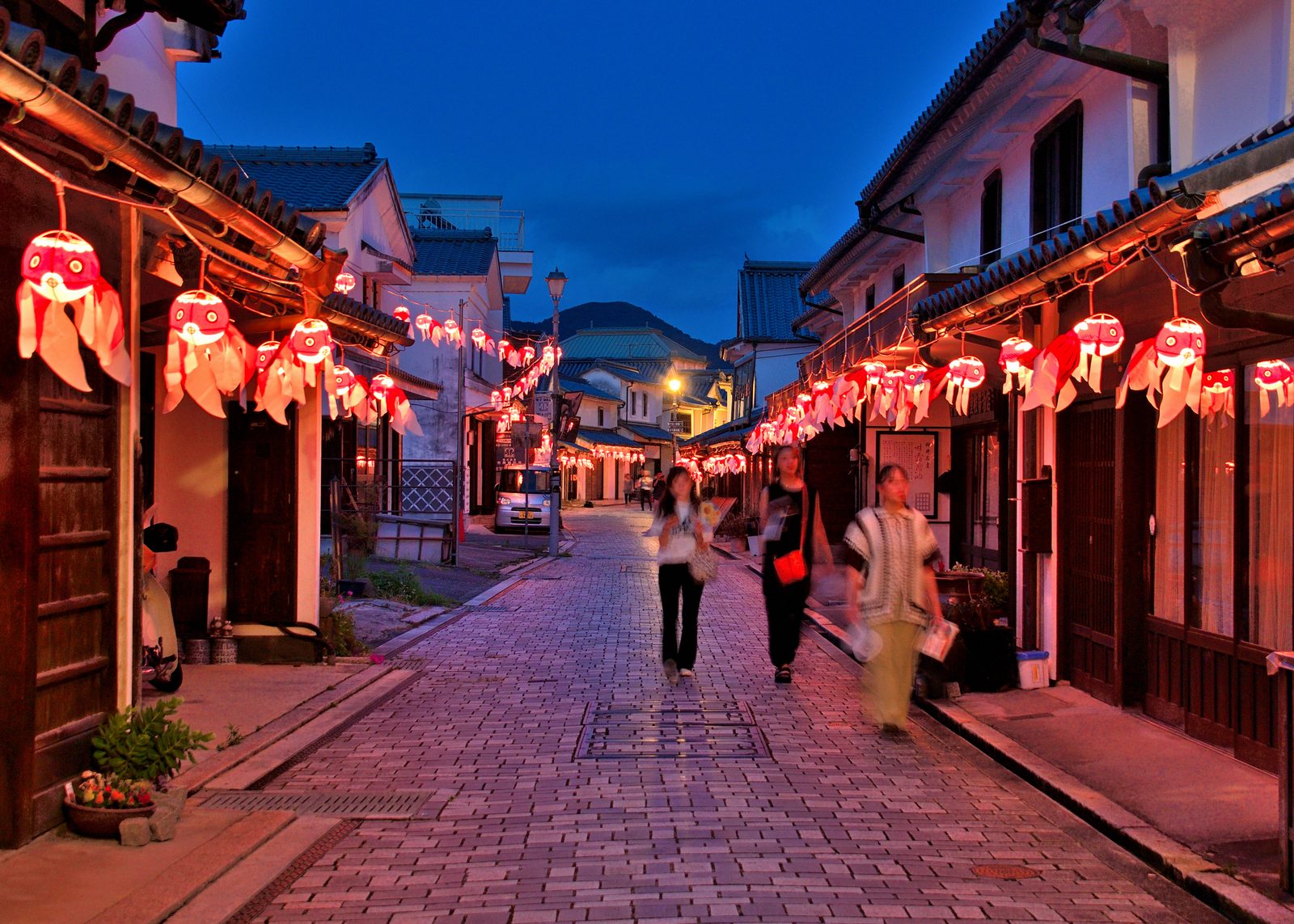
The street keeps a medieval town layout that is still alive. In the domain period it was known as the Iwakuni domain's storeroom, and carts loaded with goods came and went along it. The merchant street holds a national designation as an Important Preservation District for Groups of Traditional Buildings.
Reito-ji Street runs straight northwest from JR Yanai Station and was laid out to evoke a townscape of the Meiji to Showa eras. Flowering dogwood and flowering peach line it, and in spring white and pale pink flowers come out along the street.
Going straight along Reito-ji Street, you see the bell tower of Seiko-ji on the hill. The double cherry beside the tower blooms in ball-like clusters of flowers. Okanoue Park is a small park in a quiet residential area close to the Shirakabe townscape, and around May wisteria blooms on its trellis.
Goldfish Lanterns Through the Year
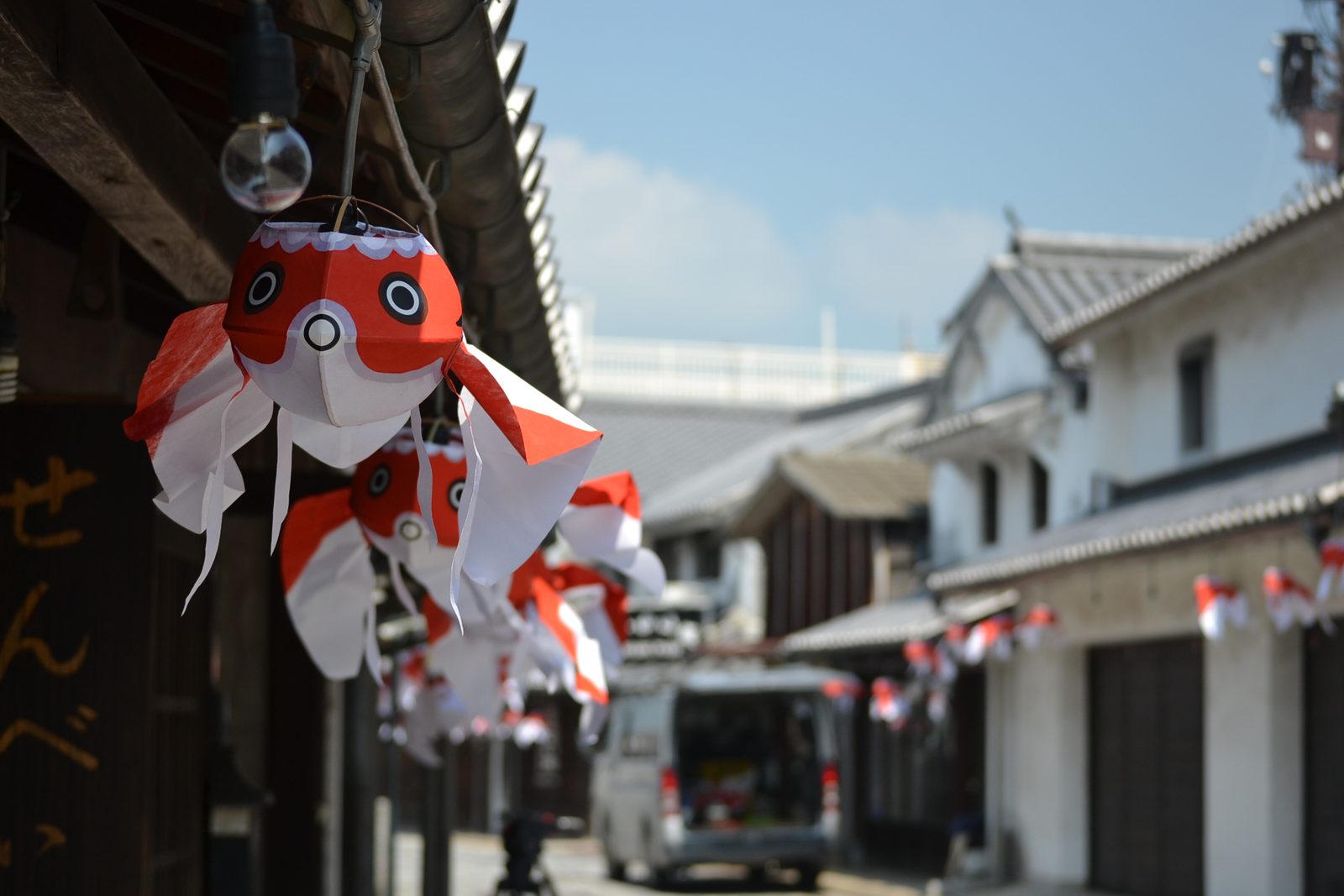
The goldfish lantern is said to have been devised by Kumagai Rinzaburo, a Yanai merchant, who took a hint from the Nebuta of Aomori. The lanterns once served as welcoming lanterns, made from washi paper and bamboo strips and coloured with the dye used for Yanai-jima.
In early August the goldfish lanterns decorating the Shirakabe street are lit, and they sway through the night streetscape as if swimming. The Yanai goldfish lantern festival takes place every year on the thirteenth of August.
Seasonal goldfish lanterns appear in the white-walled townscape through the year, and you can walk the townscape looking for them; each season brings its own original design. Cherry-blossom lanterns appear around April, fresh-green and carp-streamer lanterns around May, hydrangea lanterns around June, Halloween lanterns around October and autumn-leaf lanterns around November.
Yanai Nishigura: Lanterns and Weaving by Hand
Yanai Nishigura is a wooden, single-storey storehouse with a tiled roof and white plaster walls, built as a soy-sauce storehouse in the late Taisho era. Here you can make your own goldfish lantern, attaching the fins and eyes and drawing in the scales.
You can weave a coaster of Yanai-jima, the town's traditional cotton, on a loom; the warp on each loom carries a different pattern, and you pick a weft in a colour you like. Yanai-jima is a plain-woven cotton that people have long been familiar with.
In the Edo period, when Yanai prospered as a merchant town, the cloth was known across the country as Yanai cotton. From the late Meiji period the weaving declined with industrialisation, and from the early Taisho period it became a phantom textile. The revived Yanai-jima adds new elements while valuing the texture of hand weaving.
Merchant Houses and Museums
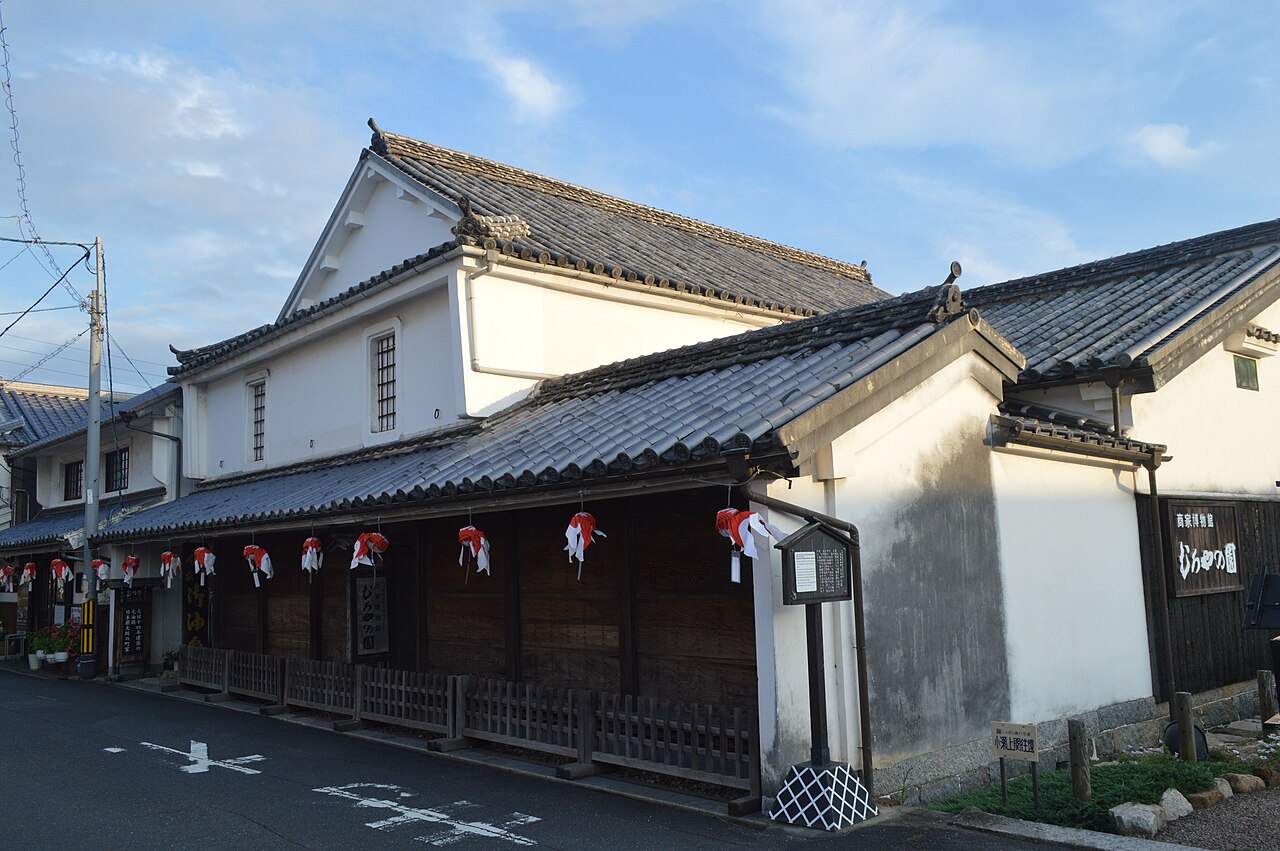
The Muroya no Sono merchant museum spreads over eleven buildings and thirty-five rooms, taking in the main house, main storehouse, accounting storehouse, rice storehouse, tool shed and servants' quarters. You see the tools used in trade and the implements of daily life on display.
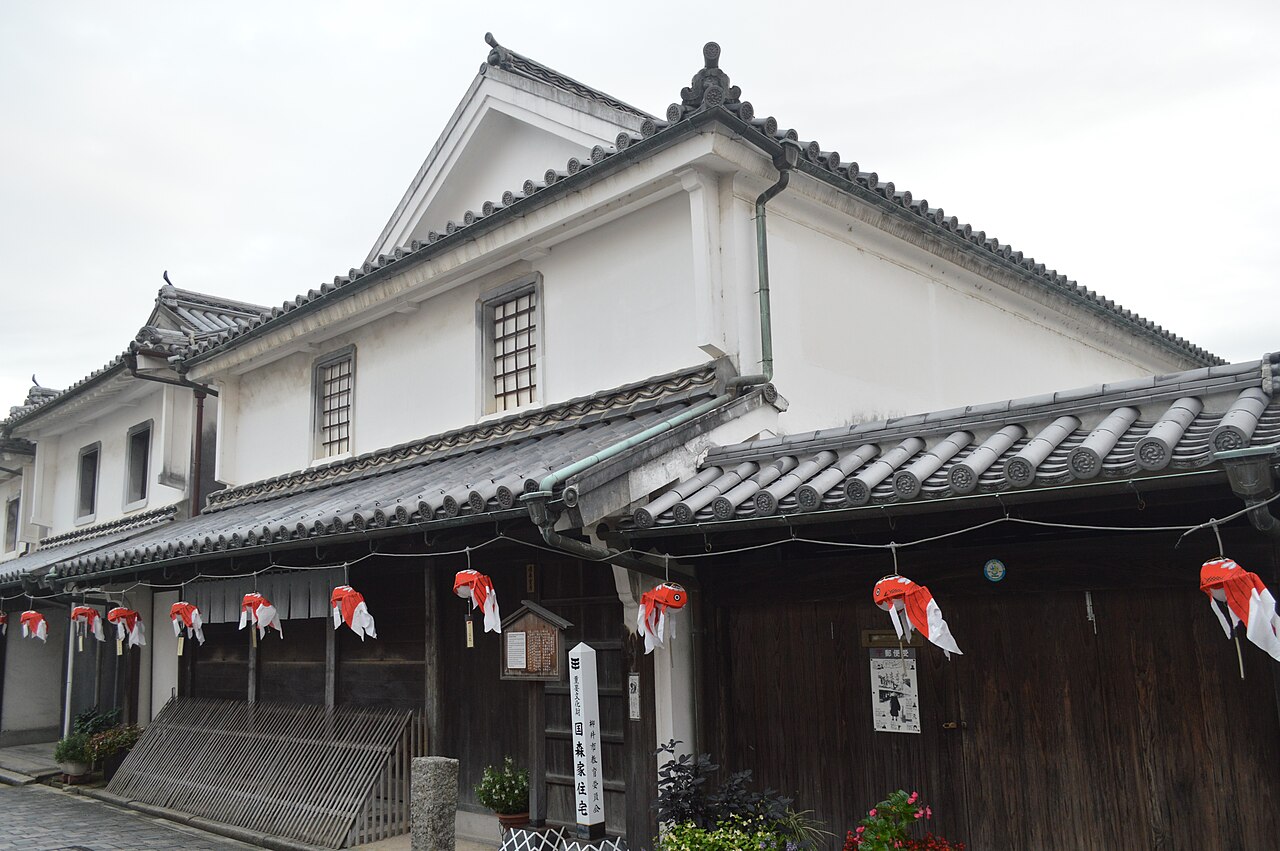
The Kunimori family dealt in lamp oil and hair-dressing oil. Their residence stands as a two-storey white plaster storehouse with a gable-end entrance, a main-tile roof and an irimoya-style roof.
The Yanai Townscape Museum occupies a building put up as the head office of a local bank. The ground floor shows models of townhouses in the preservation district, and the second floor is a memorial hall for a singer from Yanai, where you can see records and posters of her representative song and the piano she used.
Shirakabe Gakuyukan arranges items from Yanai's history, folk customs and traditional culture by theme. Among them you see many old folk tools, nostalgic household items and old goldfish lanterns. The Gakuyukan holds a course on Yanai's history.
Kanro Soy Sauce and Sea Bream Hot Pot
At the Sagawa soy-sauce brewery you see the brewing process, the large cedar vats that mark the brewery's history and displays of the tools used to make soy sauce, and the brewery carries a faintly sweet soy sauce scent. Kanro soy sauce is brewed with water from the Kotoishi mountain range and takes twice the usual ingredients and time.
The sauce comes from a distinctive double-brewing method and is aged for two years or more. The Shigeeda soy-sauce brewery is one of the makers of Yanai's Kanro soy sauce, and it sells moromi, miso and soft ice cream.
Shiomachi-nabe is a seafood hot pot built around sea bream with local specialities and fresh ingredients. Sea bream raised in the waters near Ōhatake Seto has firm flesh and a sweet, rich taste. Each shop in the city serves it with a different arrangement of flavour.
Getting to Yanai
New to rural buses and one-man trains? See how to ride them, step by step.
| Leg | How | Time |
|---|---|---|
| Hiroshima → Yanai | JR Sanyo Line | About 85 minutes |
| Iwakuni → Yanai | JR Sanyo Line | 35 minutes |
| Tokuyama → Yanai | JR Sanyo Line | 35 minutes |
| JR Yanai Station → the white-walled townscape (Shirakabe no Machinami) | On foot | About 10 minutes |
| JR Yanai Station → Yanai Nishigura | On foot | About 10 minutes |
| JR Yanai Station → Muroya no Sono | On foot | About 10 minutes |
| JR Yanai Station → Kunimori family residence | On foot | About 10 minutes |
| JR Yanai Station → Yanai Townscape Museum | On foot | About 10 minutes |
| JR Yanai Station → Seiko-ji | On foot | About 10 minutes |
| JR Yanai Station → Sagawa soy sauce brewery (Kanro Shoyu museum) | On foot | About 15 minutes |
| JR Yanai Station → Shirakabe Gakuyukan | On foot | About 15 minutes |
| JR Yanai Station → Okanoue Park | On foot | About 15 minutes |
The JR Sanyo Line brings you in from Hiroshima, Iwakuni or Tokuyama, and the places in the table lie within about fifteen minutes on foot of JR Yanai Station.
Hours and Fees
| What | Hours or fare | Note |
|---|---|---|
| Muroya no Sono | 9:00–17:00 | Open Fridays, Saturdays and Sundays |
| Muroya no Sono admission | Adults 600 yen; junior and senior high school students 450 yen; elementary school students 400 yen | — |
| Kunimori family residence | 10:00–16:30; entry until 16:00 | During the public opening period |
| Yanai Townscape Museum (Matsushima Utako Memorial Museum) | 10:00–17:00 | Closed Mondays and Thursdays and over the year-end and New Year period |
| Shirakabe Gakuyukan | 9:00–17:00 | — |
| Yanai Nishigura | 9:00–17:00 | Closed Tuesdays and 12/29–1/3 |
| Goldfish lantern making (reception) | 9:00–16:00 | — |
| Goldfish lantern making | Medium 1,000 yen; small 900 yen | — |
| Yanai-jima weaving | 500 yen | 10 cm coaster |
| Sagawa soy sauce brewery (Kanro Shoyu museum) | Weekdays 8:00–17:00 | — |
| Sagawa soy sauce brewery (Kanro Shoyu museum) | Weekends and holidays 9:30–16:30 | — |
| Shigeeda soy-sauce brewery | 7:00–19:00 | Irregular closing days |
| Shiki Shunsai Kuraya | Lunch 11:30–13:30 | Reservations given priority, limited quantity, available on the day if seats are free |
| Shiki Shunsai Kuraya | Dinner 17:00–22:00 | — |
| Tea room | 11:00–17:00; last order 16:00 | — |
| Tea room | Lunch plate from 950 yen | — |
| Yamaguchi Yanai Shokudo | 7:00–22:30 | — |
Fees and hours were checked against official sources between 9 October 2026 and 8 November 2026.
Muroya no Sono is open on Fridays, Saturdays and Sundays, and the Kunimori family residence is open during its public opening period.
If you would rather not rush back, there are places to stay in Yanai that put the white-walled street within reach for a second morning.
Thinking of staying overnight?
Compare places to stay near Yanai, Yamaguchi, Japan →
Disclosure: This post may contain affiliate links. If you book through them, we may earn a commission at no extra cost to you.