This walk is written from a Meiji-era gazetteer of Nagato Province (新撰名勝地誌) together with fares, opening hours and access details published by the City of Hagi, Tōkō-ji, Kikuya Residence and Shōin Shrine.
Most castle towns point you at a keep. Hagi cannot, because its own lords took the castle down and left. What remains is the frame that once held power — samurai blocks, merchant lanes, temple hills, a ring of river mouths — with no single monument to pull every visitor onto the same spot.
Where Hagi is
The old gazetteer describes Hagi as a castle town laid out at the mouth of the Abu river, on the northern coast of the old province of Nagato — the side of western Honshū that faces the Sea of Japan, with its back turned to the busy Pacific corridor.
The same survey draws a town that is flat and full of water: hills close it in on every side except the sea-facing north, the Hashimoto and Matsumoto rivers hold its two flanks, and channels thread the blocks so thoroughly that bridges become part of the town's character.
For a visitor without a car, this is generous geography. The ground is level, the distances are short, and the water does much of the wayfinding for you. You are rarely more than a few turns from a bridge, and the whole delta reads as one deliberate composition.
The castle that was taken down
In the Keichō era, the gazetteer relates, Mōri Terumoto — his holdings cut down to the two provinces of Suō and Nagato — greatly enlarged the fortress on Mount Shizuki and made it his seat, and generation after generation of his house ruled from this town at the delta.
Then, in the early eighteen-sixties — the account continues — the thirteenth lord, Takachika, gave the castle up and moved his government inland to Yamaguchi. Hagi's career as a seat of power simply ended, and no later century rebuilt a keep to fill the sky. That absence is now the town's defining feature — and its good luck.
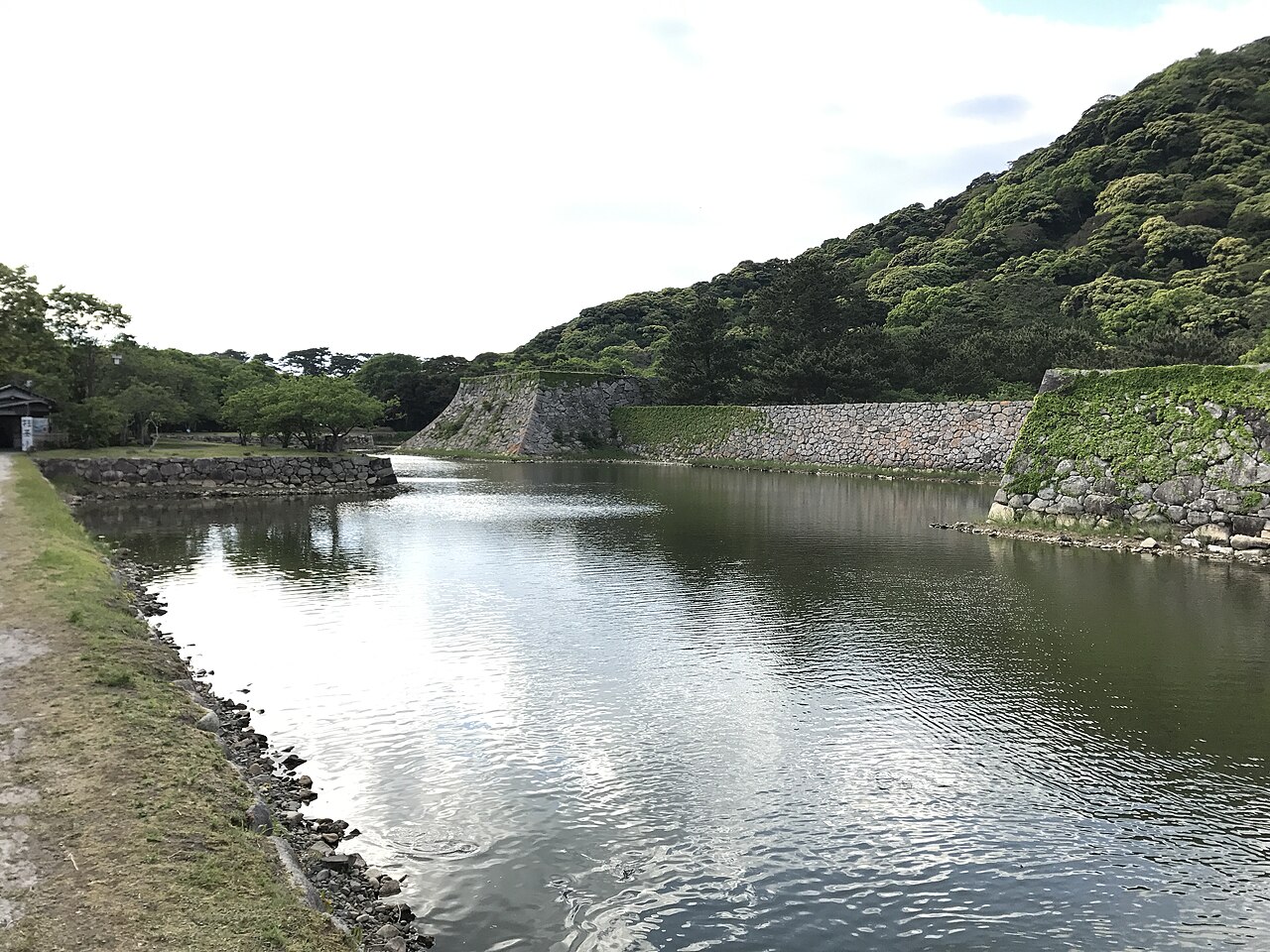
What survives sits at the town's northern tip. The old account lingers over Mount Shizuki itself: a wooded hill thrust out into the sea, prized for its outlook, with the Shizuki shrine standing on the site of the innermost bailey and, near the ruins, an aged pine so admired that it carries a name of its own.
Getting in is straightforward. A combined ticket of two hundred and twenty yen covers Shizuki Park together with the former Asa Mōri family rowhouse. Riding the westbound loop of the Hagi Junkan Maaru Bus, step off at the Hagi Castle Ruins–Shizuki Park Entrance stop, signed Kitamon Yashiki Entrance, and the ruins are about three minutes on foot.
Getting there and getting around
From JR Higashi-Hagi Station, on the San'in main line, Shōin Shrine is five minutes by taxi or twenty minutes on foot. The shrine and the temple hills sit east of the rivers; the merchant lanes and the castle ruins wait across the delta to the west.
To hop between the quarters, use the town's own loop. A single ride on the Hagi Junkan Maaru Bus costs one hundred yen for anyone of junior-high age or older, so check official information before visiting. Children of elementary age and younger pay fifty yen. The loop exists for exactly this kind of day.
Reaching Hagi was once a journey in itself. When the gazetteer was compiled, the nearest railhead it could name was Ogōri Station in Suō — today's Shin-Yamaguchi — over on the San'yō line. The road onward it reckoned at eleven ri, served by a horse-drawn carriage on a regular timetable. That remoteness never wore off, and it still sets the town's temperament.
Hagi rewards self-directed wandering, and the flat delta makes improvising easy. If you would rather hand the logistics to someone else for a day — or want a local voice alongside the old stones — compare bookable tours in Hagi before you travel, and keep your attention on the town rather than the map.
Compare options
See partner pricing and availability →
Disclosure: This post may contain affiliate links. If you book through them, we may earn a commission at no extra cost to you.
Shōin's school, and the temple of the Mōri tombs
East of the rivers, the mood shifts from streets to hillside. Here, in the Ansei era — so the record tells — the teacher Yoshida Shōin founded a small private academy at the foot of Gokokuzan, and it took the name Shōka Sonjuku, the village school beneath the pines.
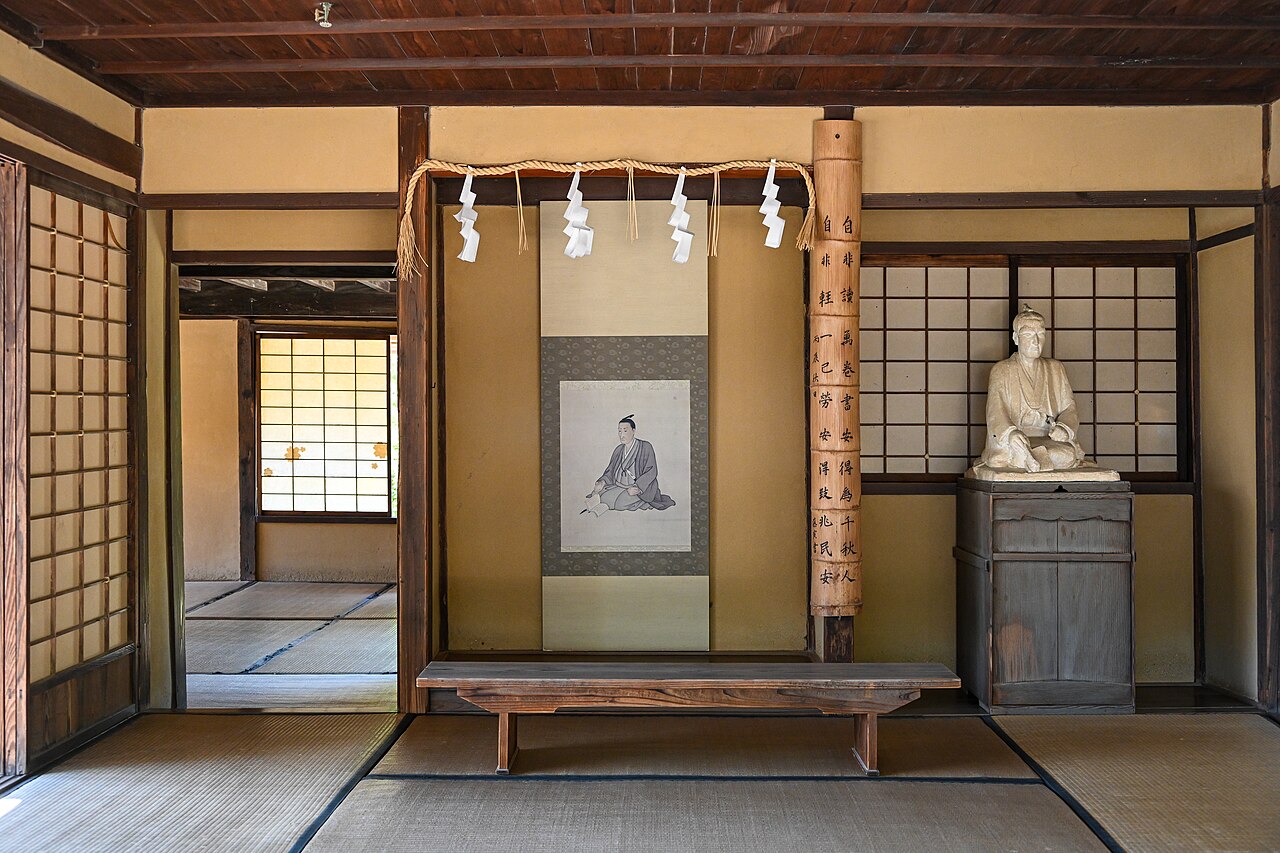
Shōin Shrine now keeps that ground. The old survey places it in Tsubaki-gō Higashibun, east of the town proper, names Yoshida Shōin as the spirit enshrined, and records its elevation to prefectural rank in the Meiji years. Of all Hagi's sights, this one stands nearest your likely point of arrival.
A little further toward the hills is Tōkō-ji, a Zen temple of the Ōbaku school at Matsumoto. Its founding is credited in the same source to the lord Mōri Yoshinari in the Genroku era, with the priest Egoku Dōmyō as first abbot, and the memorial tablets of Yoshinari, Yoshimoto, Shigetaka, Narifusa and Narimoto rest within.
Tōkō-ji is open from eight thirty to five, every day of the year. Make it the first mark on your day: begin here, then let the merchant quarter come later, once its own doors have begun to move. In Hagi, the order of the day matters more than its pace.
The merchant lanes and the Kikuya house
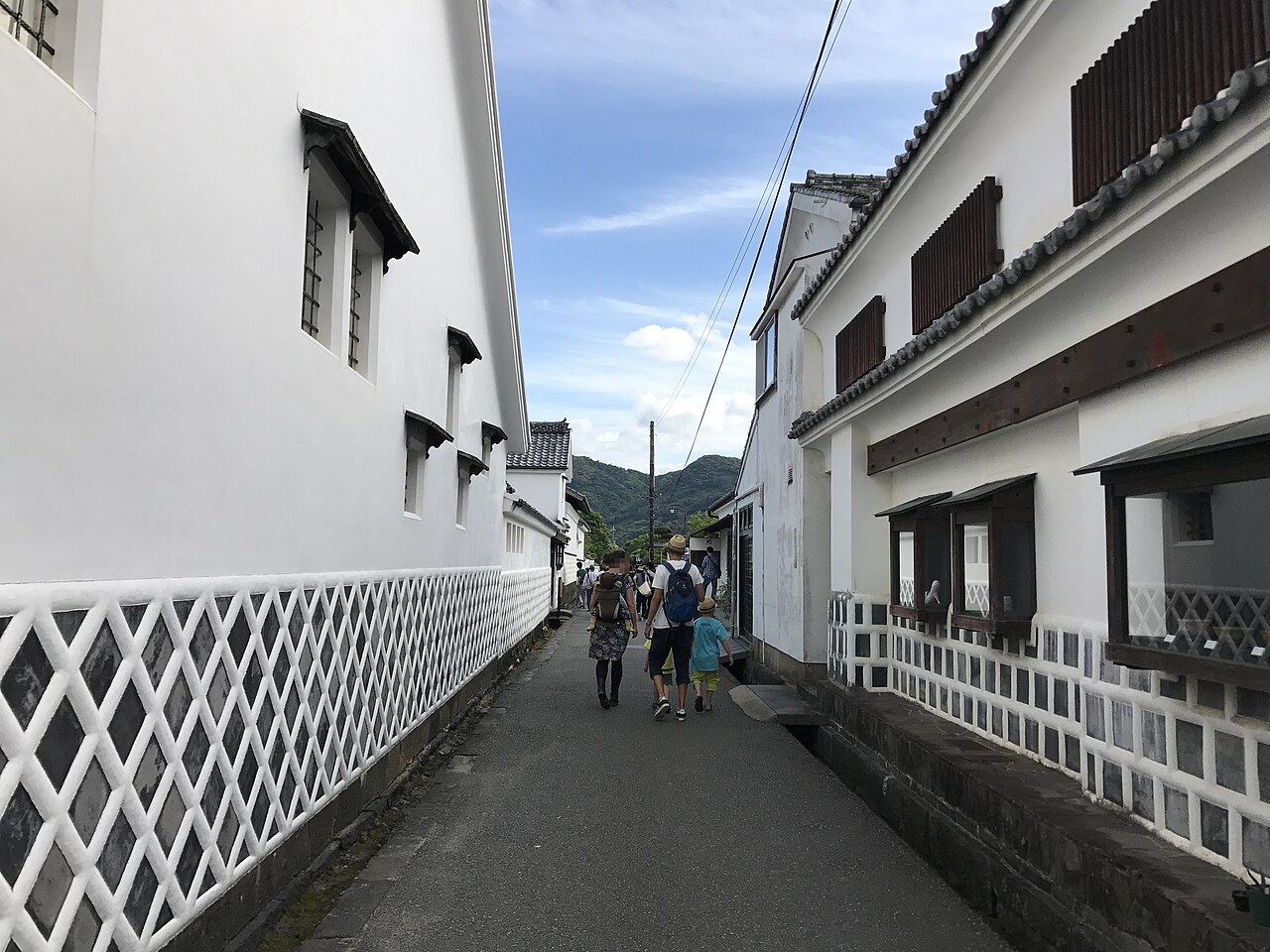
West of the central bridges, the castle's supporting cast still holds its ground: long runs of white plaster over dark diamond-patterned namako tiling, gates scaled to merchant pride, straight lanes crossing block after block. This is the Hagi that stayed behind when the government moved away.
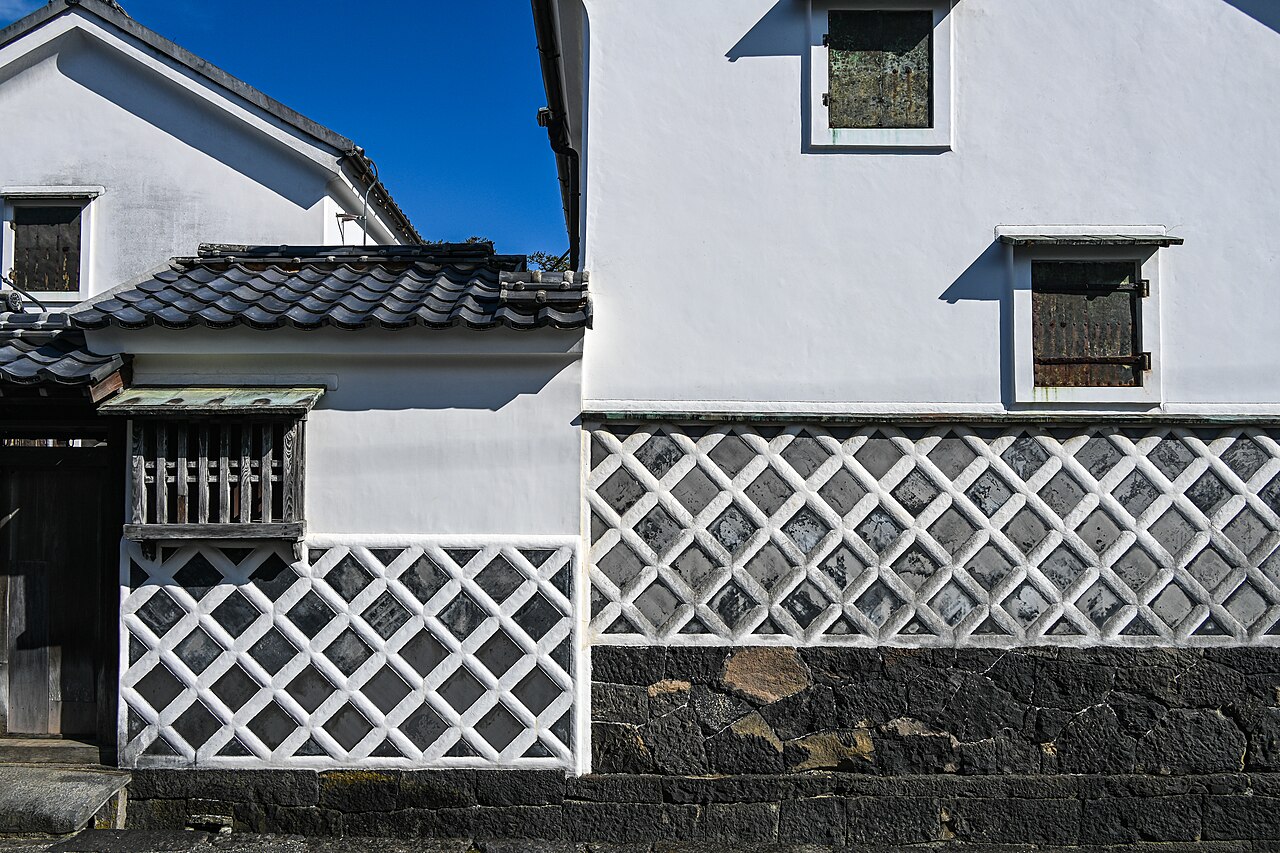
The one interior to plan around is the Kikuya Residence. It is open from nine to five. Last entry comes at four forty-five — treat that as the pivot your whole afternoon turns on. Plan the lanes loosely around those two anchors, and the rest of the quarter can be taken in whatever order the light suggests.
If shrines pull at you, the old survey also points a league south of the town to Tsubaki Hachiman, at the foot of Tsubakiyama in Tsubaki-gō Nishibun — founded, by tradition, in the Ninji era, and long counted first among Hagi's five great shrines and guardian of the whole Tsubaki district.
| Place | When it is open | What it costs |
|---|---|---|
| Kikuya Residence | nine to five (last entry four forty-five) | — |
| Shizuki Park (castle ruins) | — | two hundred and twenty yen (combined ticket) |
| Hagi Junkan Maaru Bus | — | one hundred yen per ride (fifty yen for a child) |
A dash means the sources this piece draws on do not state that figure. The table carries only what those sources give outright — nothing has been estimated, rounded, or borrowed from another guide to make the columns look complete on the page.
The eight views, and where the quiet actually is
In the gazetteer's pages, the edges of Hagi are catalogued too, as the Yae Hagi Hakkei — eight seaside views: returning sails at Kurae, the autumn moon at Tamae, evening snow at Sakurae, the evening bell at Komatsue, clearing haze at Kamitsue, night rain at Nakatsue, geese alighting at Shimotsue, the evening glow at Tsurue.
The eight are inlets around the town, likened to the classic eight views of Ōmi. The choosing itself was an act of state: in the Genroku era, the record notes, the lord set three of his men to select them, and their names still travel with the list.
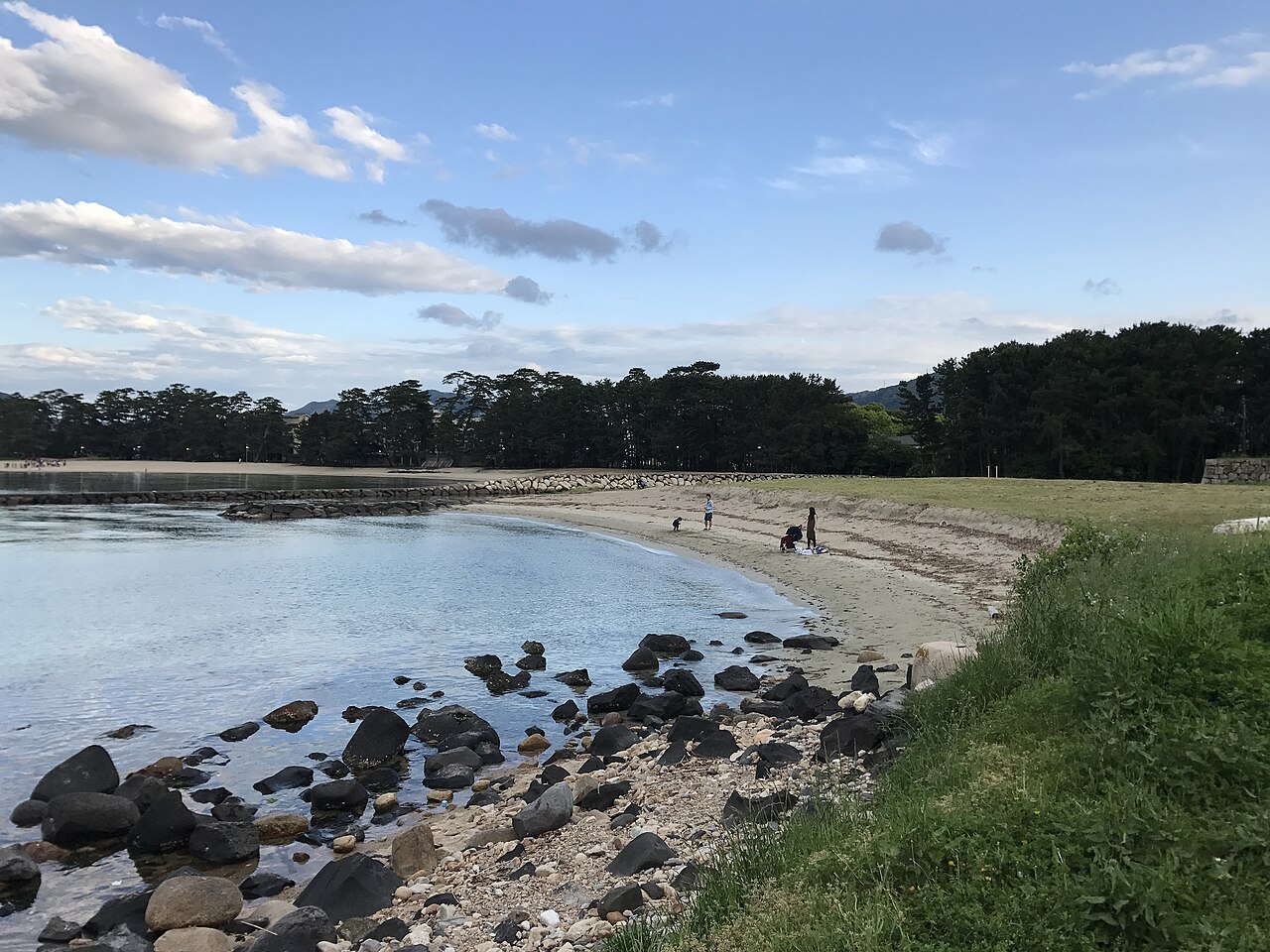
At Tamae, the record says, people fond of poetry gathered for moon-viewing in the eighth month of the old calendar, their verses full of waves in a clear wind and the moon over the ridge. Kurae it paints as the wide prospect: spray on the island shadows, shore pines rinsed by first frost, sails passing out and back.
So where is the quiet? In the plan itself: nothing concentrates visitors at one point, and the day spreads across the delta. Begin at Tōkō-ji as its doors part, save the Kikuya house for the afternoon, and end at Tamae, facing the water the poets faced — or compare bookable tours in Hagi if you would rather be led.