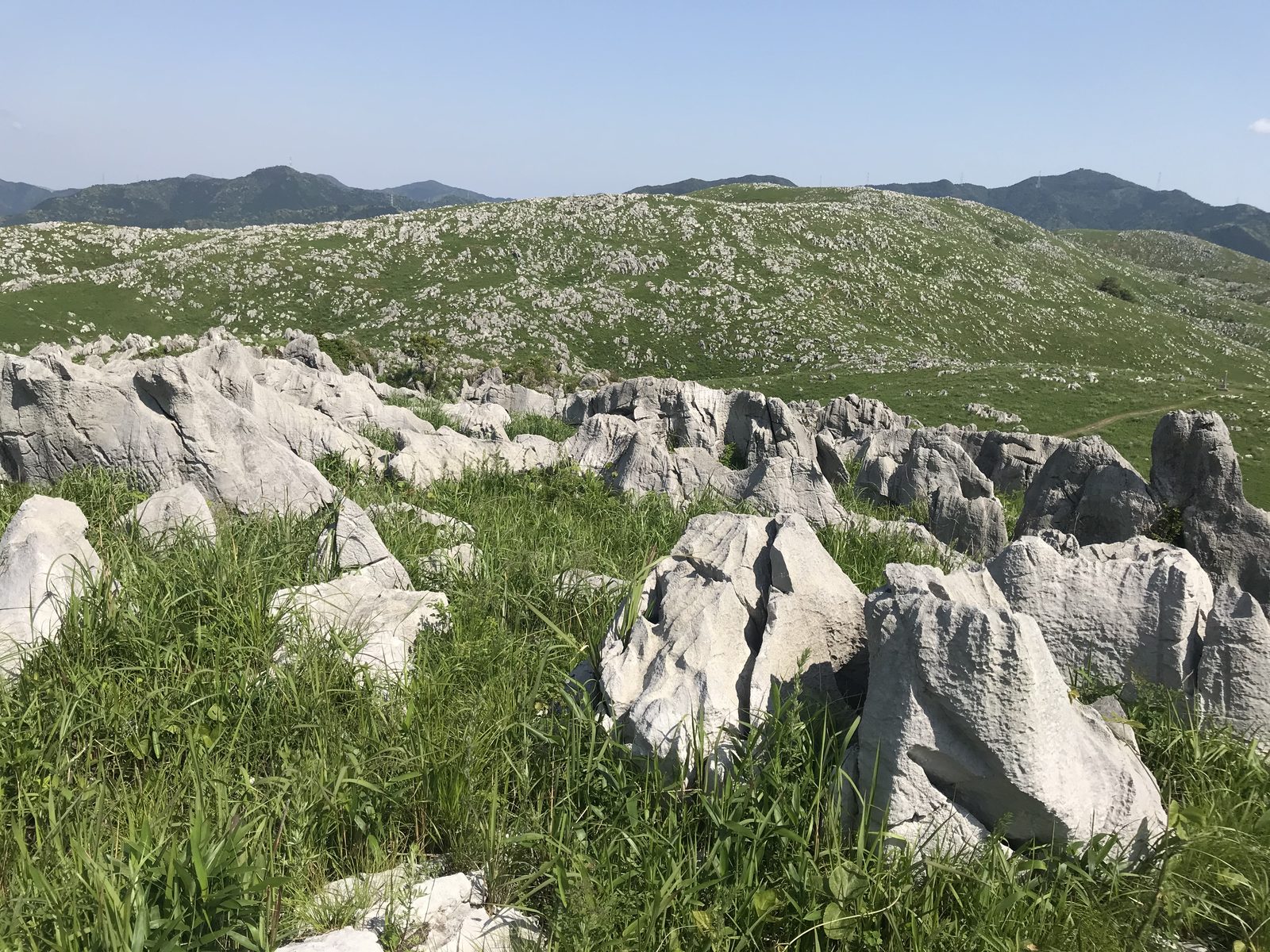
A bus ride north of Shin-Yamaguchi lies a landscape that does not look like the rest of Japan: a rolling grassland studded with pale limestone, and beneath it, one of the great caves of the country. The grassland is Akiyoshidai, the cave is Akiyoshido, and both fit into a single unhurried day. This guide lays out how, and what it costs.
Where Akiyoshidai Is and How It Was Shaped
Akiyoshidai lies within the city of Mine in Yamaguchi Prefecture and ranks among the largest karst plateaus in Japan, a broad expanse of limestone spread across the high ground. The present city of Mine is itself fairly new: it came into being in two thousand eight when the former city of Mine merged with the towns of Mito and Shuho. In two thousand fifteen the whole of the city was recognised as the Mine Akiyoshidai Geopark, a designation that says a great deal about how central this limestone country is to the area's identity.
The plateau's most distinctive features are its dolines, bowl-shaped hollows that dot the surface. They form where rainwater gathers at a single point, seeps underground, and slowly eats away the limestone beneath. Several hundred of them are scattered across the plateau. Even the smaller ones measure twenty to thirty metres across, the largest exceed two hundred metres, and their inner walls generally slope at about forty degrees.
Because the rain drains straight down through these hollows, the plateau has no surface streams at all; the water simply has no chance to gather and run before it is swallowed. What vanishes on the grassland reappears far below. The cave at the plateau's southern edge, once called Takiana and now known as Akiyoshido, is the outlet where that underground water returns to daylight, and it is counted as one of the most celebrated of limestone caves.
Getting There by Bus from Shin-Yamaguchi Station
The straightforward approach is the Bocho Bus from JR Shin-Yamaguchi Station, which reaches Akiyoshido in about forty minutes. The fare from Shin-Yamaguchi Station to Akiyoshido Bus Center on the Bocho Bus is one thousand one hundred seventy yen. If you are based in the town centre near JR Yamaguchi Station instead, the bus from there takes about sixty minutes to Akiyoshido.
Look up the return departures before you set out and keep the last one in mind. Everything else in the day is arranged around it.
- From JR Shin-Yamaguchi Station: about forty minutes by bus
- Bocho Bus fare from Shin-Yamaguchi Station to Akiyoshido Bus Center: one thousand one hundred seventy yen
- From JR Yamaguchi Station: about sixty minutes by bus
Where to stay
Places to stay near Yamaguchi →
Disclosure: This post may contain affiliate links. If you book through them, we may earn a commission at no extra cost to you.
Inside Akiyoshido Cave
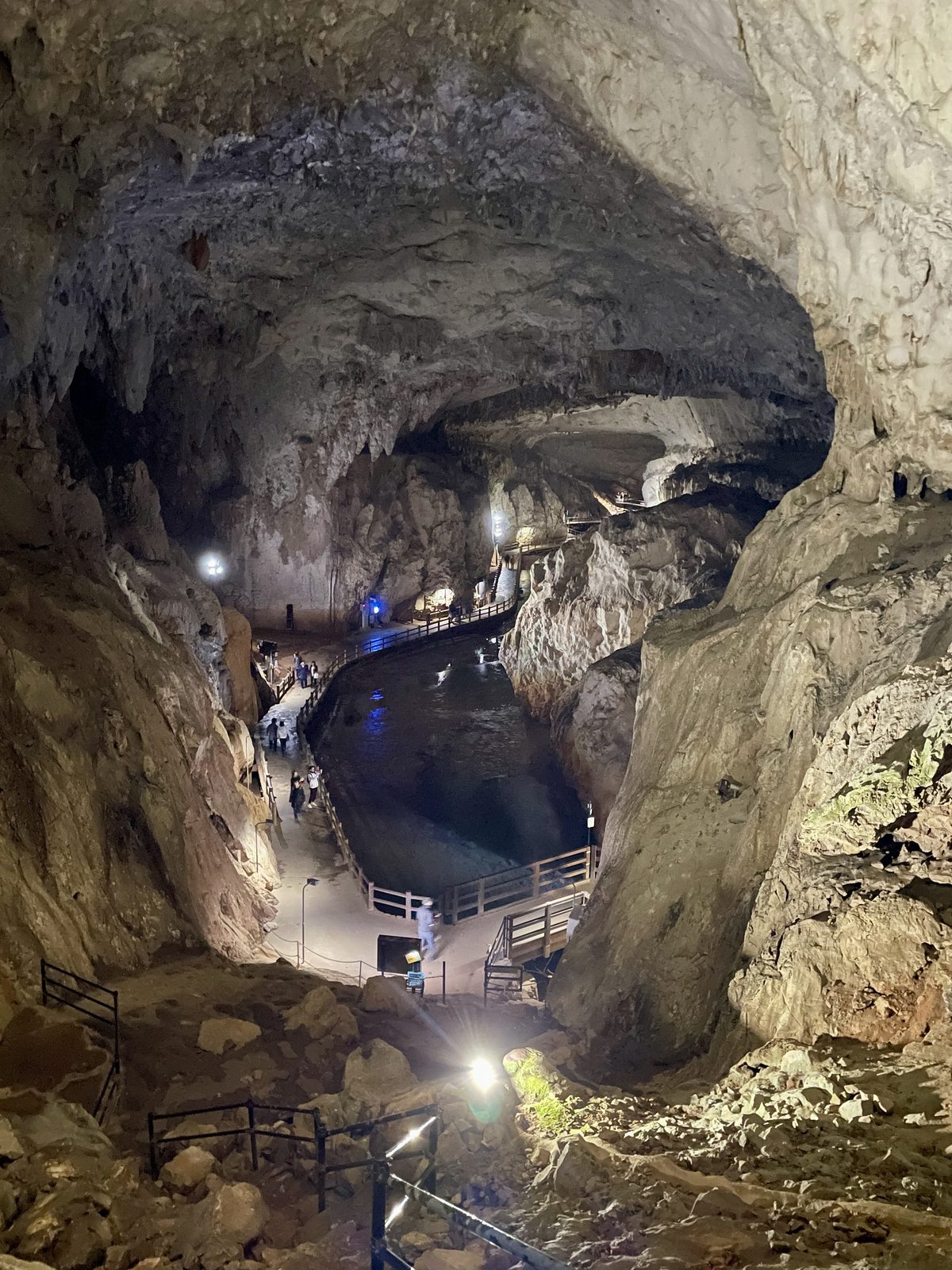
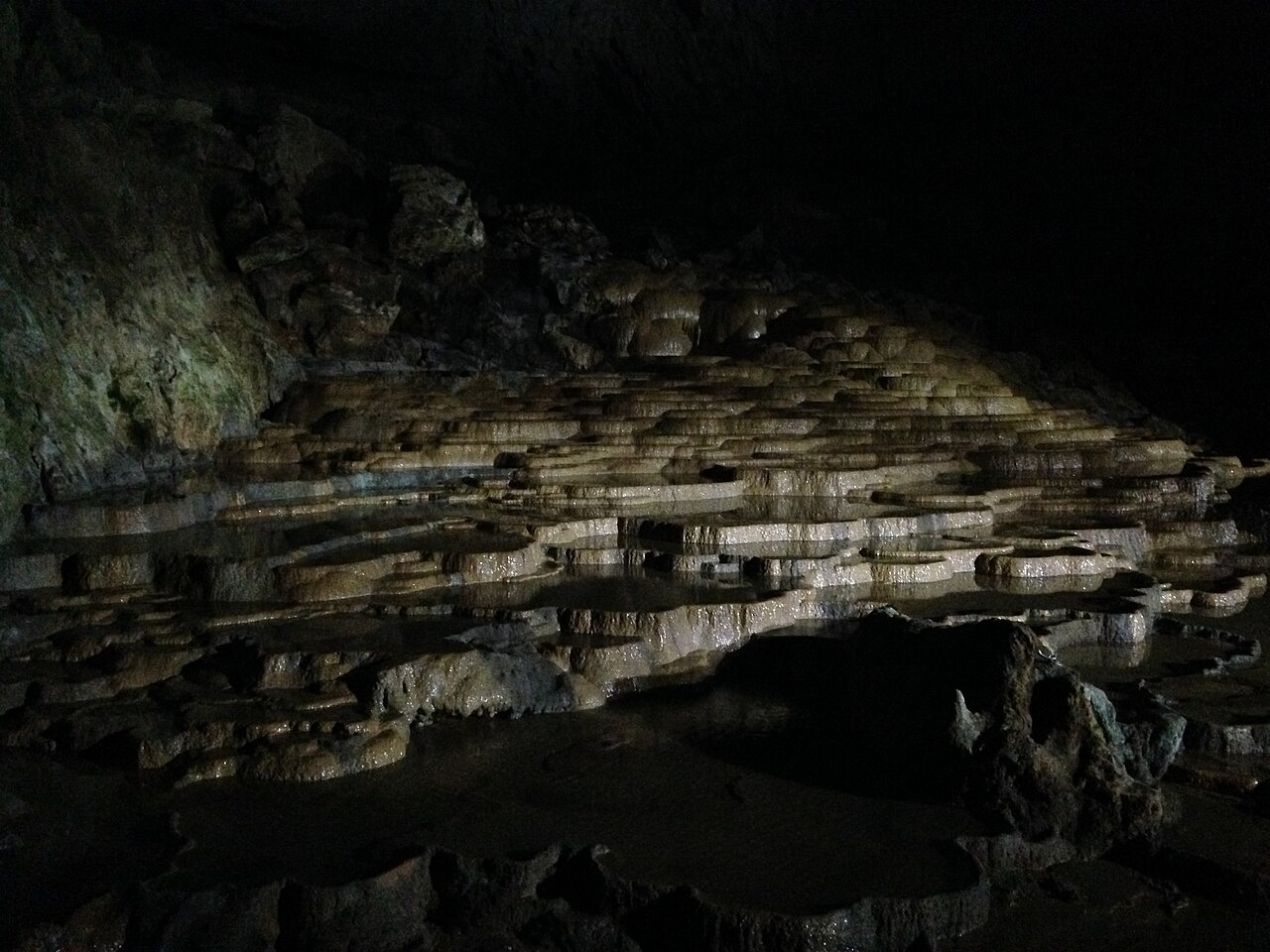
Akiyoshido spreads out beneath the plateau and is regarded as one of the grandest limestone caves in the East, both for its scale and for the variety of its scenery. The mouth alone sets the tone: an opening about twenty metres high and five to six metres across at its widest, with the underground water pouring out of it into the light.
Older accounts of the cave read like an inventory of wonders. A Meiji-era gazetteer records formations named for what they resemble: Senjojiki, the great hall; the Bamboo-Shoot Rocks; the Umbrella Shop; the Morning Star; and the Gold and Silver Pillars. An even older guide to the province is said to have put the cave's reach at roughly two kilometres, as far as a point known as En no Gyoja, beyond which a vertical shaft was believed to continue to a depth no one had measured. It is easy to see why those early visitors ran out of ordinary words.
Reception for entry runs from nine in the morning to half past four in the afternoon during the regular season. In the busy season, from the first of July to the thirtieth of September, entry reception runs from nine in the morning until half past five in the afternoon. Regular-season admission for an adult, meaning anyone of high-school age or older, is one thousand six hundred yen. Fares, admission and reception times can change, so check official information before visiting.
If you would rather have someone else handle the timetable, browse Akiyoshido and Akiyoshidai tours on GetYourGuide and compare what is on offer for your dates.
Up on the Plateau Among the Dolines
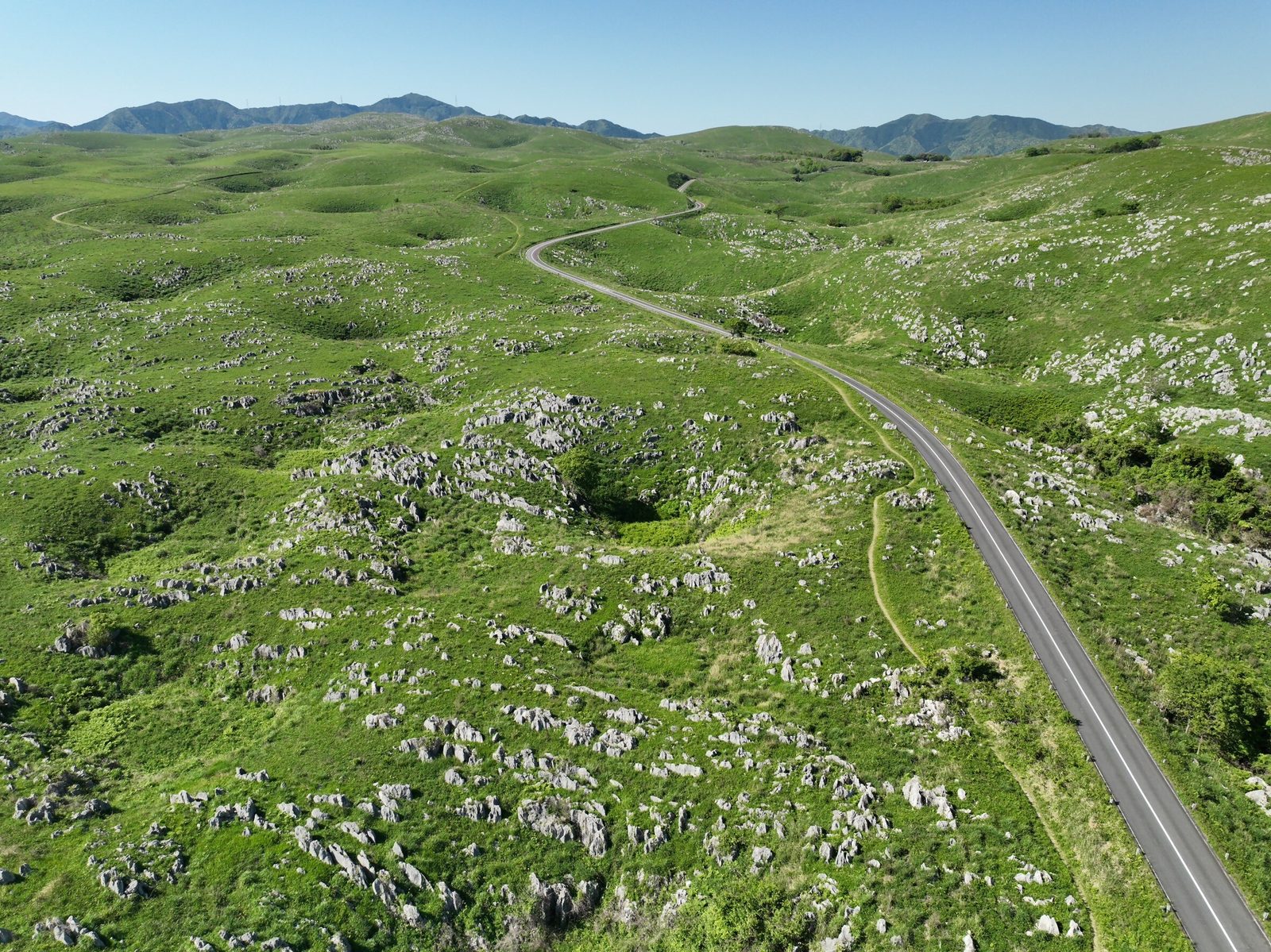
Above ground the mood changes completely. The plateau is wide, bright and almost treeless, and the limestone that was overhead in the cave now pokes through the grass in pale clusters. Time spent here is less about reaching a particular viewpoint than about letting the scale of the place sink in.
The dolines are the thing to look for. The Meiji-era description explains that rain carries soil down into their bottoms, and that the accumulated earth is so fertile that barley and vegetables were grown there without any fertiliser, small patches of cultivation dotted across an otherwise bare limestone waste. That contrast, tidy fields inside sharply sloping bowls in the middle of the grassland, was noted as one of the plateau's most particular sights, and the bowls themselves are plain to see from the road that winds across the top.
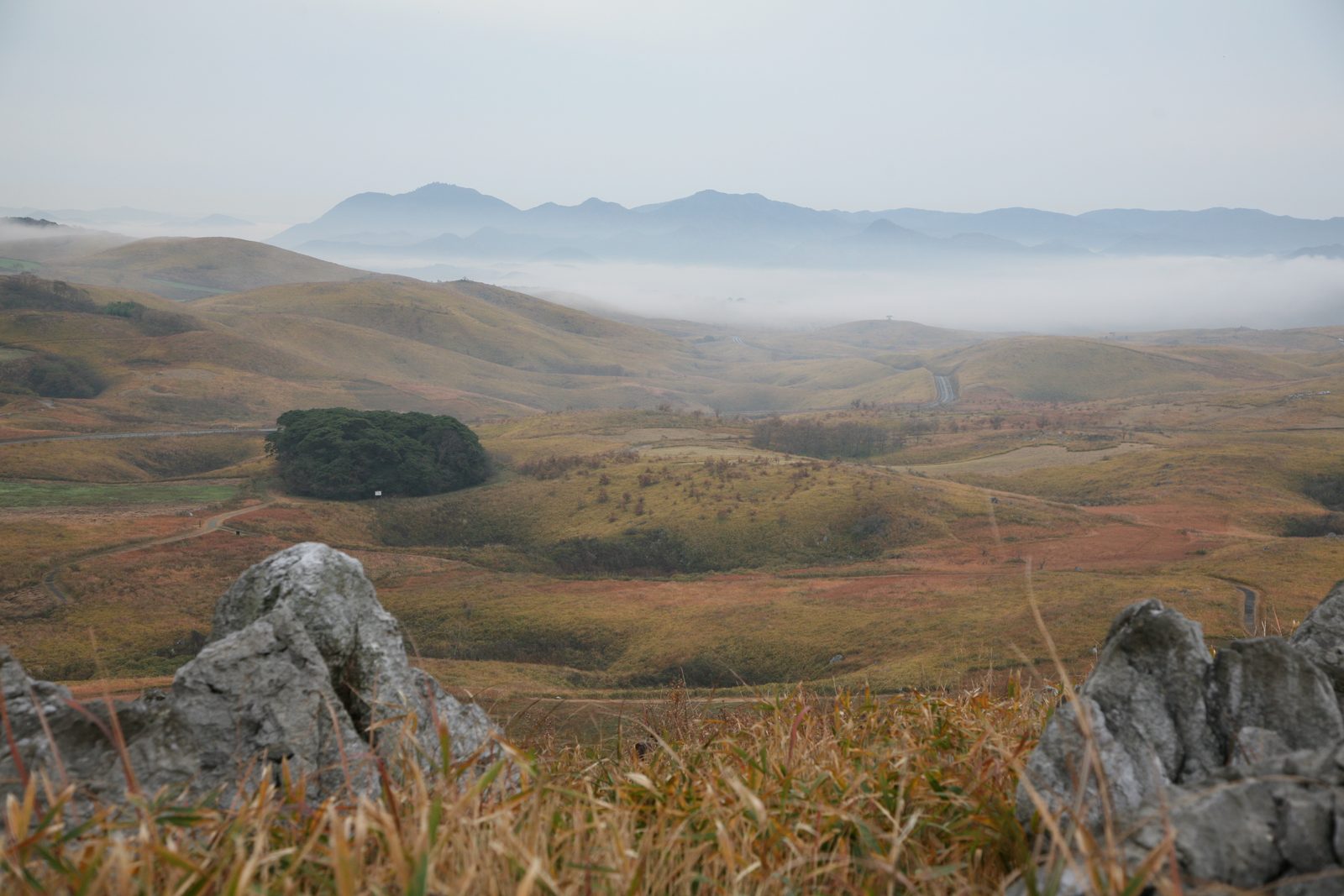
The grass changes with the season, green with grey stone showing through in the warm months and the colour of straw later in the year. Whichever you get, the absence of any stream on the surface gives the place an unusual hush: there is no sound of running water up here because all of it is underneath you.
Adding Taishodo Cave
If one cave is not enough, a second, Taishodo, admits visitors from nine in the morning to half past four in the afternoon. Individual adult admission at Taishodo is one thousand three hundred yen. Whether it fits depends on the return timetable more than on your energy, so check the departure times before committing to it.
A Day That Fits the Bus
Put together, the plan is simple. Take the Bocho Bus from JR Shin-Yamaguchi Station in the morning, a ride of about forty minutes. Go into Akiyoshido first, so that the wide grassland is what you finish the day on. Give the cave the time it deserves, then spend the middle of the day on the plateau, and be back for the bus you chose before you set out.
If you would rather not rush the return, stay in Yamaguchi City and leave from JR Yamaguchi Station the next morning, a bus ride of about sixty minutes to Akiyoshido. You can find a place to stay in Yamaguchi City and give yourself a slower start.