This guide covers Kintaikyo Bridge, Iwakuni Castle, the ropeway, the seasons, Iwakuni sushi and the practical details of visiting Iwakuni.
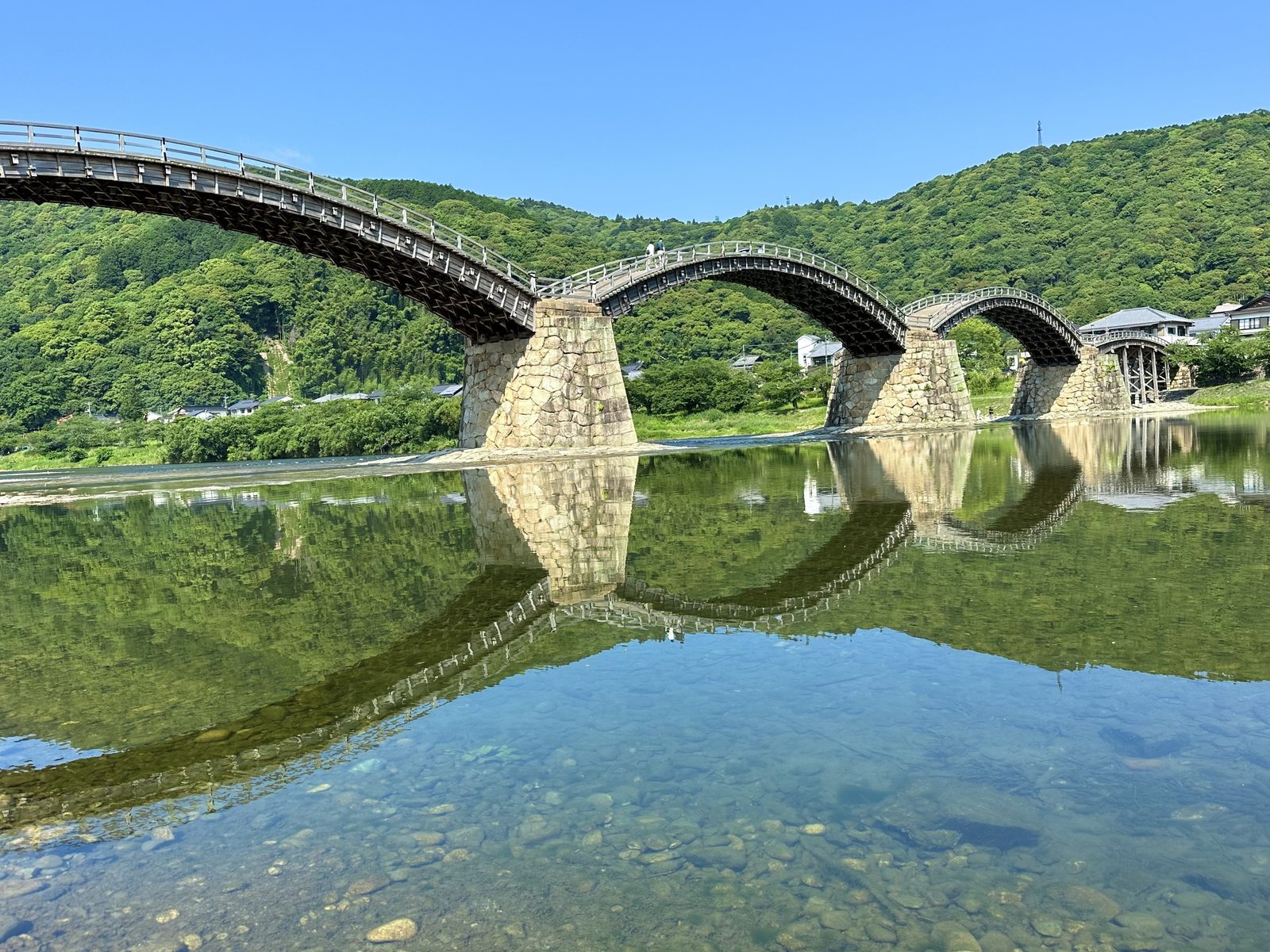
You can walk onto Kintaikyo Bridge in Iwakuni with a round-trip entry ticket. An old guidebook records that the bridge rests on four stone piers in the river, with five half-moon-shaped arches above and layered girders carrying the load. The guidebook describes Iwakuni Park as planted with many cherry trees and full of visitors in the blossom season.
Iwakuni sushi, the dish of the town, is a pressed sushi stacked three to five layers deep with pickled lotus root, chisha leaves, simmered conger eel, shredded egg crepe and denbu. The old guidebook describes an autumn boat ride up the Nishiki River, with colored trees on both banks and the clear current setting each other off.
Kintaikyo Bridge
Kintaikyo Bridge is about one hundred ninety-three meters long and about five meters wide. The bridge is a one-minute walk from the Kintaikyo bus center. The walk over the arches and back is the heart of a visit, and the table below lists the current entry prices along with the toll booth times for the winter period.
| Item | Detail |
|---|---|
| Kintaikyo Bridge round-trip entry ticket, adult, individual | 500 yen |
| Kintaikyo Bridge round-trip entry ticket, adult, group of 15 or more | 450 yen |
| Kintaikyo Bridge round-trip entry ticket, elementary school student, individual | 250 yen |
| Kintaikyo Bridge round-trip entry ticket, elementary school student, group of 15 or more | 200 yen |
| Kintaikyo Bridge toll booth hours, winter period | 8:00 to 17:00 |
The entry ticket is sold as a round trip only, so one purchase covers the walk across and the walk back. Prices by age and group size are in the table above, and the toll booth times for the other seasons appear in the next section.
Kintaikyo Through the Seasons
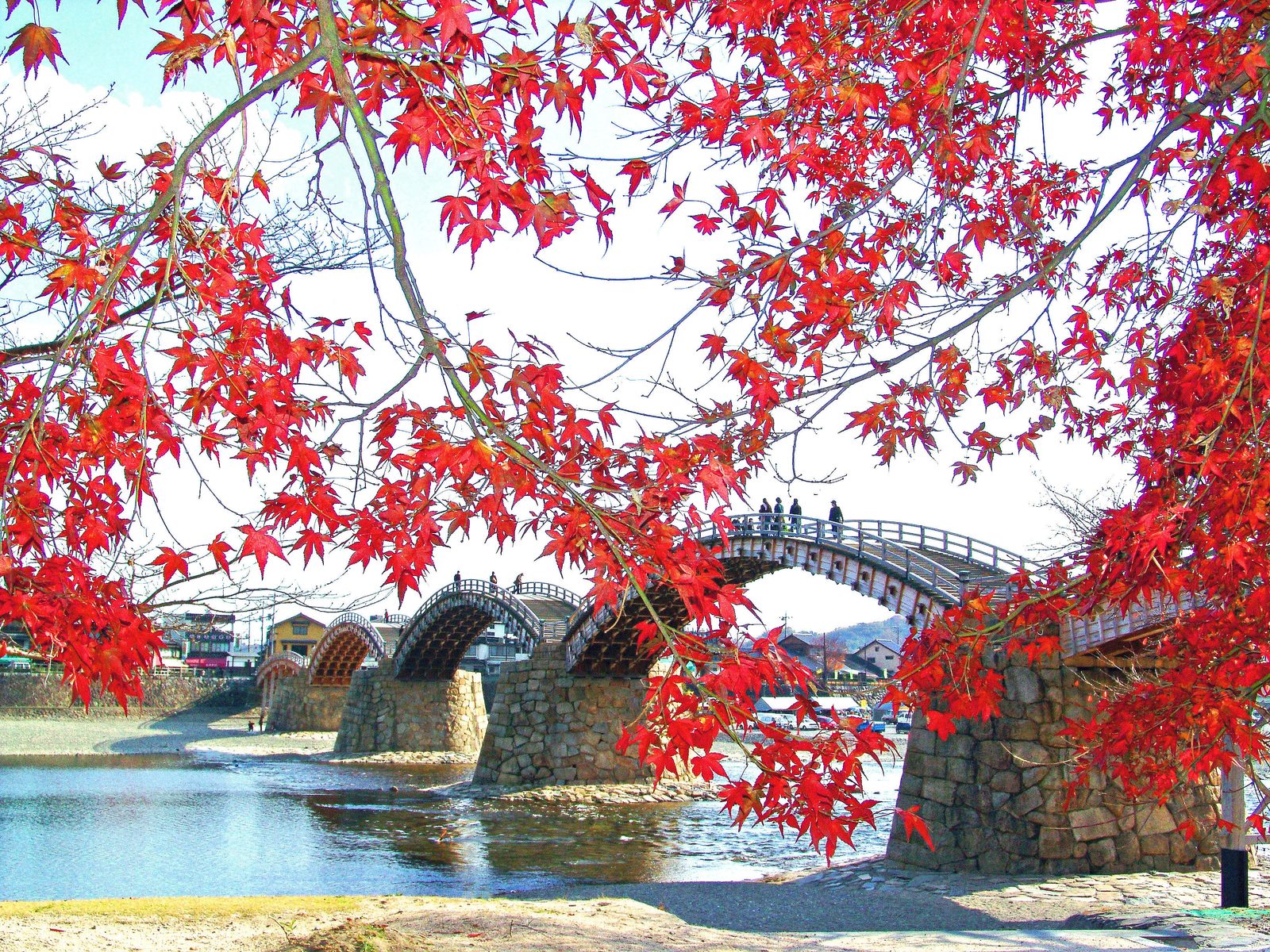
The seasons change what you see from the bridge. The old guidebook records that Mount Iwakuni was once thick with maples whose autumn leaves looked like brocade, which gave the Nishiki River and Kintaikyo Bridge their names, though it laments that the hillside had since been cleared and not one maple was left.
Winter has its own entry in the same book. The guidebook describes Mount Iwakuni under snow as a view that had drawn praise since early times. The dates and the extended toll booth times below cover the rest of the year.
- Kintaikyo Bridge Festival: April 29 (holiday)
- Kintaikyo Bridge toll booth stays open until 18:00 in the tourist season
- Kintaikyo Bridge toll booth stays open until 19:00 in summer
Iwakuni Castle
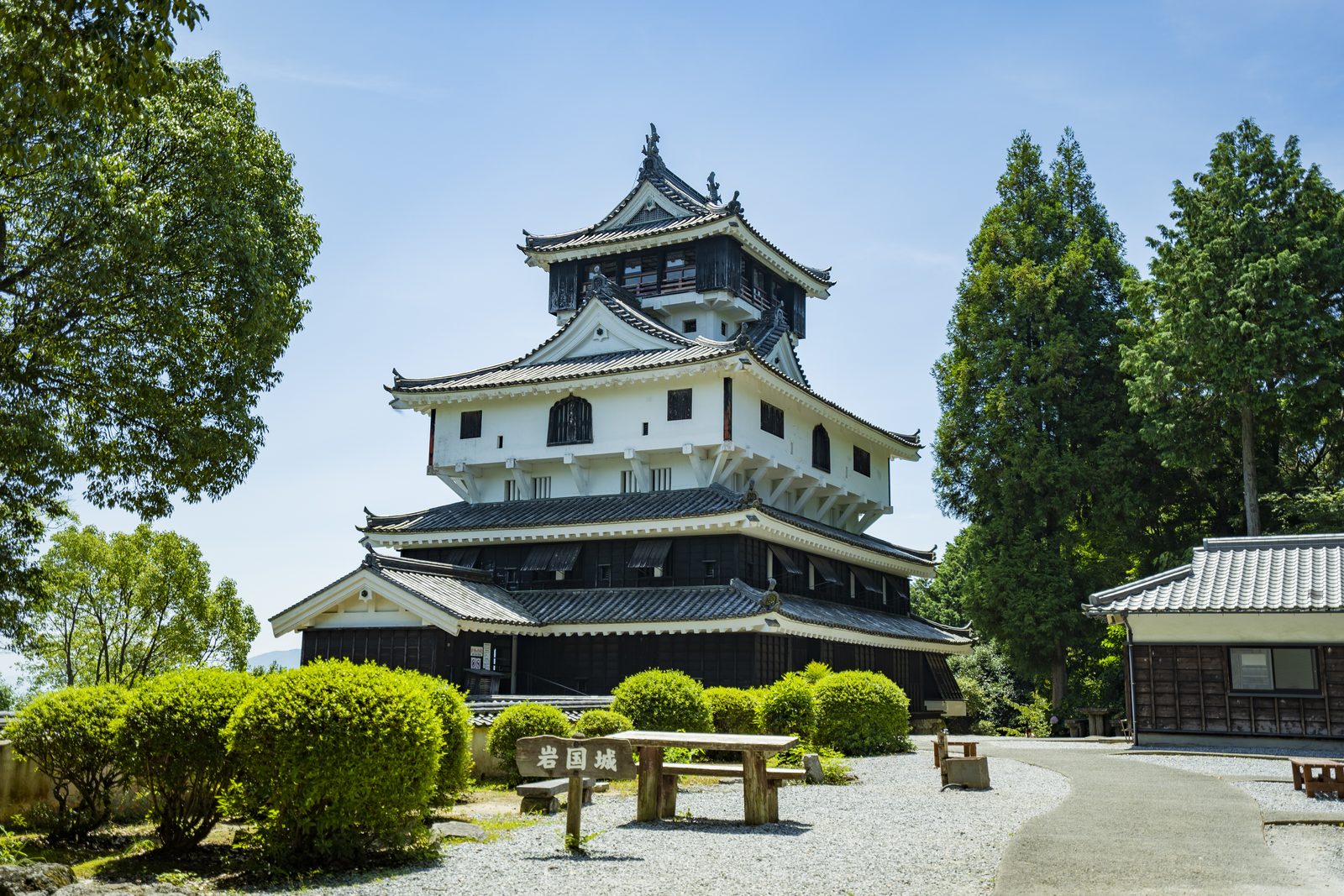
Iwakuni Castle makes the second half of the visit. The Iwakuni Castle keep opens at nine in the morning and closes at a quarter to five, with last entry at half past four. Admission and the set ticket covering the bridge, the ropeway and the keep are in the table below.
| Ticket | Price |
|---|---|
| Iwakuni Castle keep admission, adult, individual | 350 yen |
| Iwakuni Castle keep admission, adult, group | 300 yen |
| Iwakuni Castle keep admission, elementary school student, individual | 200 yen |
| Iwakuni Castle keep admission, elementary school student, group | 150 yen |
| Set ticket (Kintaikyo Bridge, ropeway and Iwakuni Castle), adult | 1,550 yen |
| Set ticket (Kintaikyo Bridge, ropeway and Iwakuni Castle), elementary school student | 700 yen |
For an elementary school child, the set ticket covering Kintaikyo Bridge, the ropeway and Iwakuni Castle is sold at a discount against the three separate tickets. If you plan to do the bridge, the ropeway and the keep together, the set ticket is the simpler purchase.
Where to stay
Places to stay near Iwakuni, Yamaguchi, Japan →
Disclosure: This post may contain affiliate links. If you book through them, we may earn a commission at no extra cost to you.
The Iwakuni Castle Ropeway
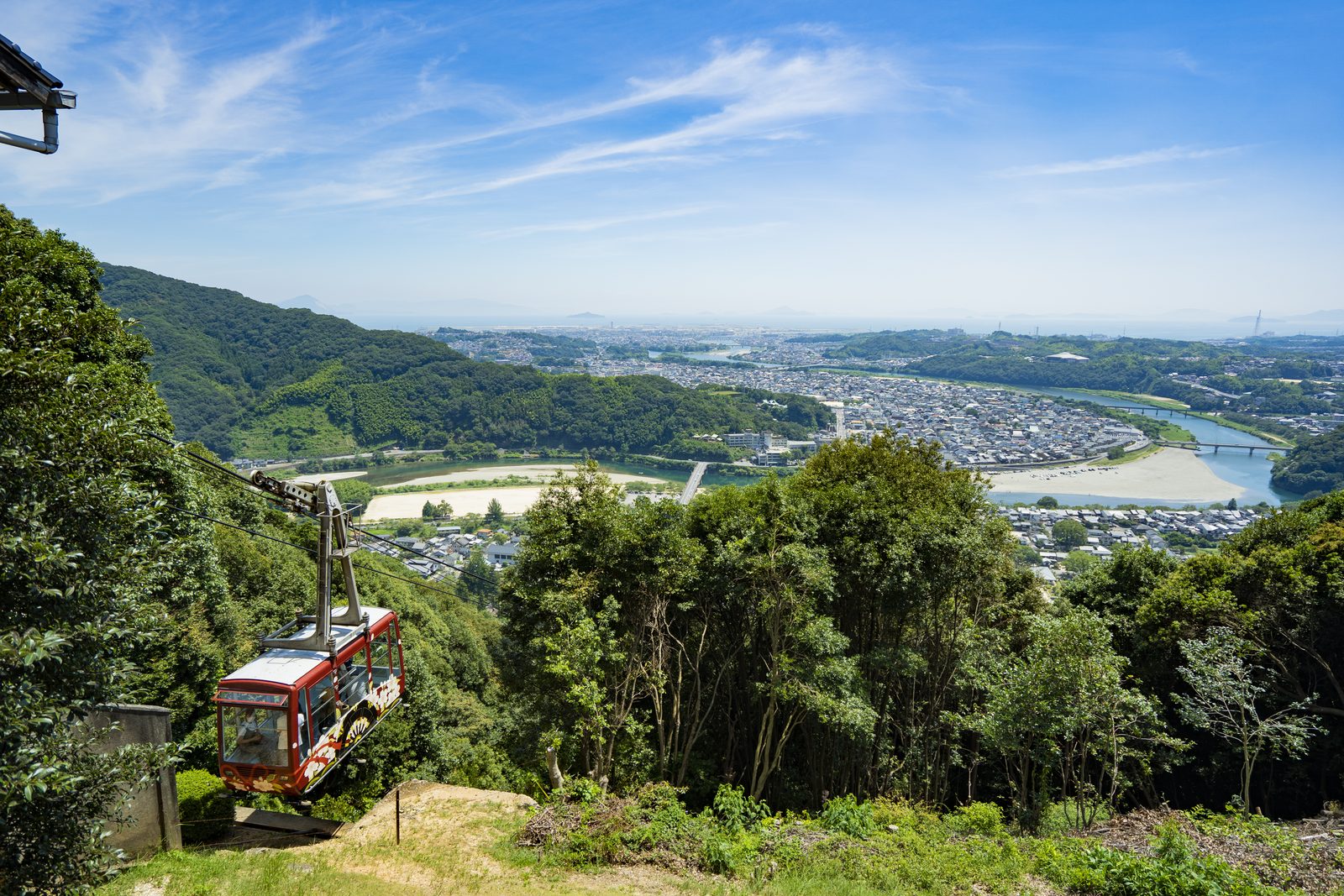
The ropeway ride itself is brief. The Iwakuni Castle Ropeway runs from the Kikko Park Front base station to the summit station in about three minutes. Its lower end takes its name from the park, so the two fit into the same stretch of the afternoon.
The ropeway runs from nine in the morning to five in the afternoon. Plan the ride around the keep's last entry rather than around the ropeway's own timetable. Fares for adults and children, with and without the ride back down, are in the table below.
| Ticket | Price |
|---|---|
| Iwakuni Castle Ropeway, adult, round trip | 900 yen |
| Iwakuni Castle Ropeway, adult, one way | 500 yen |
| Iwakuni Castle Ropeway, elementary school child, round trip | 400 yen |
| Iwakuni Castle Ropeway, elementary school child, one way | 250 yen |
Kikko Park and the White Snakes of Iwakuni
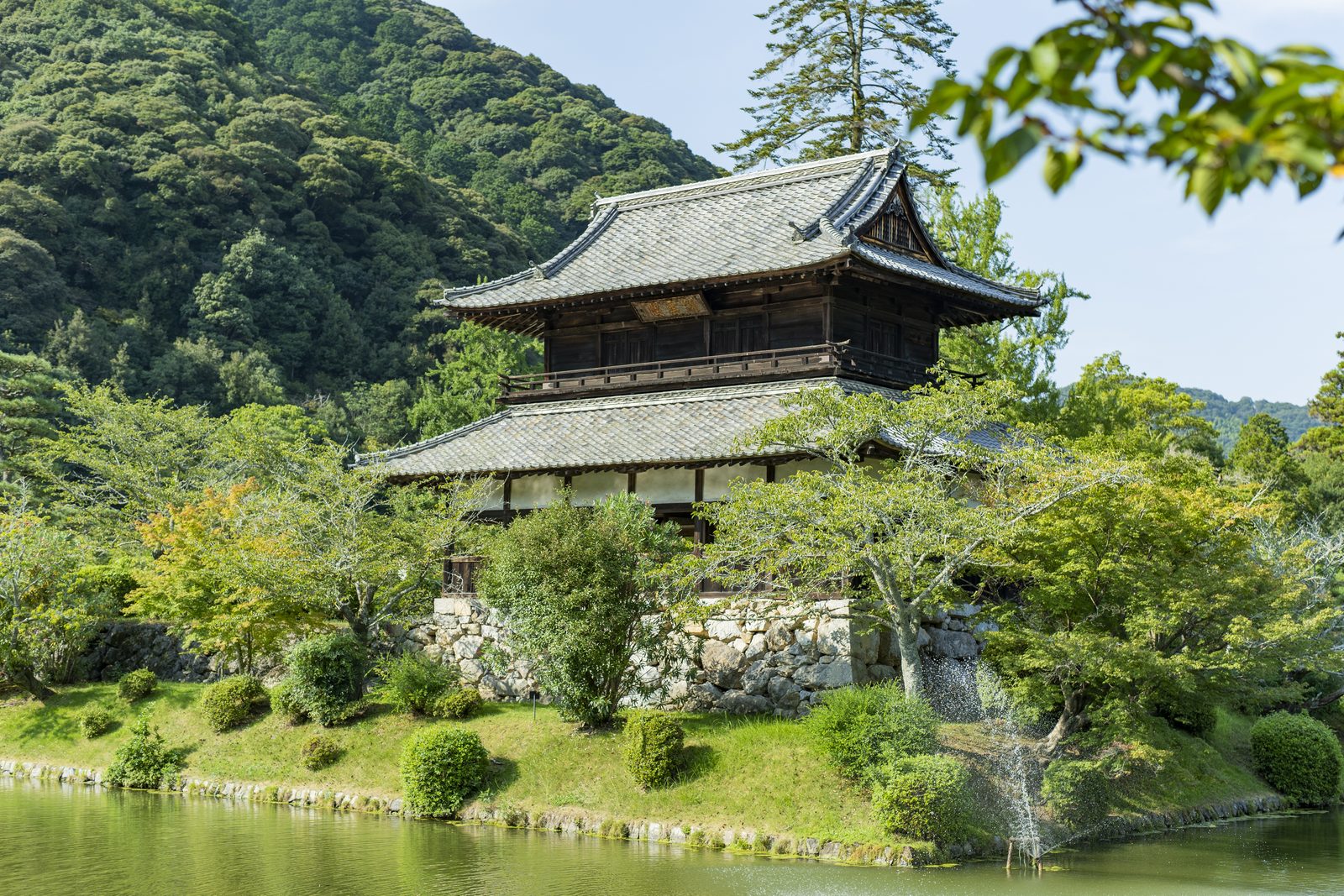
The old guidebook records that Iwakuni Park holds Kikko Shrine, which stands on the former castle site of the Yoshikawa clan and enshrines Yoshikawa Motoharu and the family heads who followed him. A shrine guidebook describes a white snake exhibit house in Kikko Park where visitors learn about the history and biology of the snakes.
That guidebook states that the white snakes of Iwakuni are a national natural monument, rare anywhere in the world and native only to the city of Iwakuni. The Iwakuni White Snake Shrine itself dates from twenty twelve, when local residents backed its founding, the same guidebook notes.
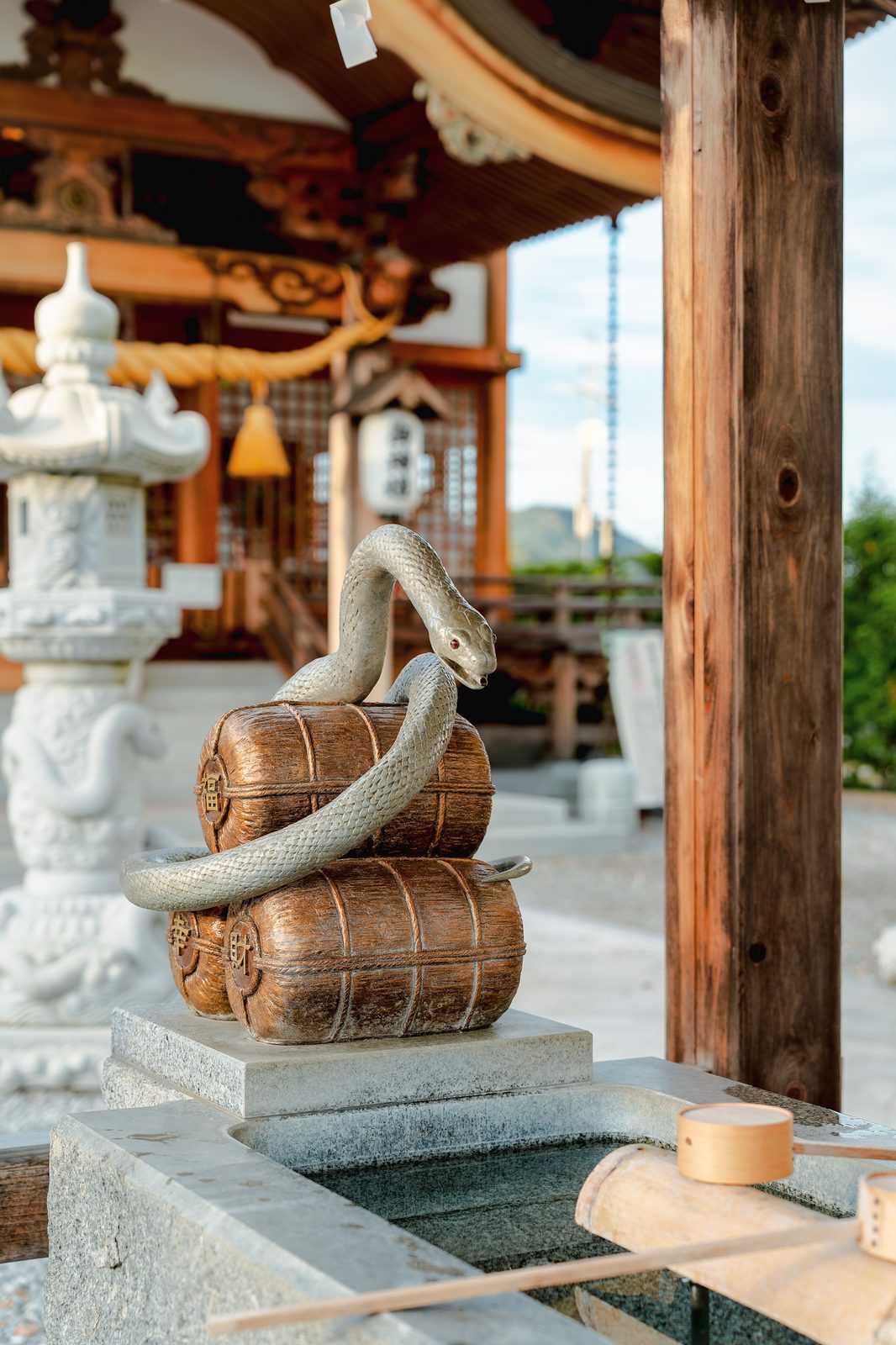
Within the grounds, the shrine guidebook describes white snake motifs on the plaque over the gate, on the stone lanterns and at the water basin, with red-eyed white snakes carved into the lanterns. The water basin takes the form of a white snake statue coiled around three rice bales, as the guidebook describes it.
Iwakuni Sushi
Iwakuni sushi is built layer by layer. The maker lines the bottom of a sushi frame with chisha leaves, packs in vinegared rice mixed with minced fish such as horse mackerel, adds shredded egg crepe, mushrooms, denbu and pickled lotus root for color, lays down chisha leaves again and repeats the layer.
The pressing stage has its own story. For a large frame, the sushi makers would sometimes climb onto the pressing lid and use their own body weight to press the layers firm. You can try the process yourself at a hands-on session, with the times and price below.
- Iwakuni sushi making experience: year-round, 11:00 to 14:30
- Iwakuni sushi making experience: 2,200 yen
Getting to Iwakuni and Where to Stay
From the bus stop in front of JR Iwakuni Station, the bus to Kintaikyo Bridge takes about twenty minutes. From Shin-Iwakuni Station, the bus to Kintaikyo Bridge takes about fifteen minutes. The express bus between Hiroshima Bus Center and Kintaikyo Bridge costs nine hundred fifty yen one way and one thousand seven hundred yen for a round-trip ticket.
| Route | Time |
|---|---|
| Bus from Iwakuni Kintaikyo Airport to Kintaikyo Bridge | about 30 minutes |
| Express bus, Hiroshima Bus Center to Kintaikyo Bridge | 50 minutes |
| JR train from Hiroshima to Iwakuni | 44 minutes |
| JR train from Miyajimaguchi to Iwakuni | 19 minutes |
| Shinkansen between Hiroshima and Shin-Iwakuni | 16 minutes |
The table above sets out the main approaches from the airport, from Hiroshima and by JR. For more of the region, see Miyajima in Hiroshima Prefecture and Yanai in Yamaguchi Prefecture. If you would like more time in Iwakuni than a day allows, browse places to stay in Iwakuni.