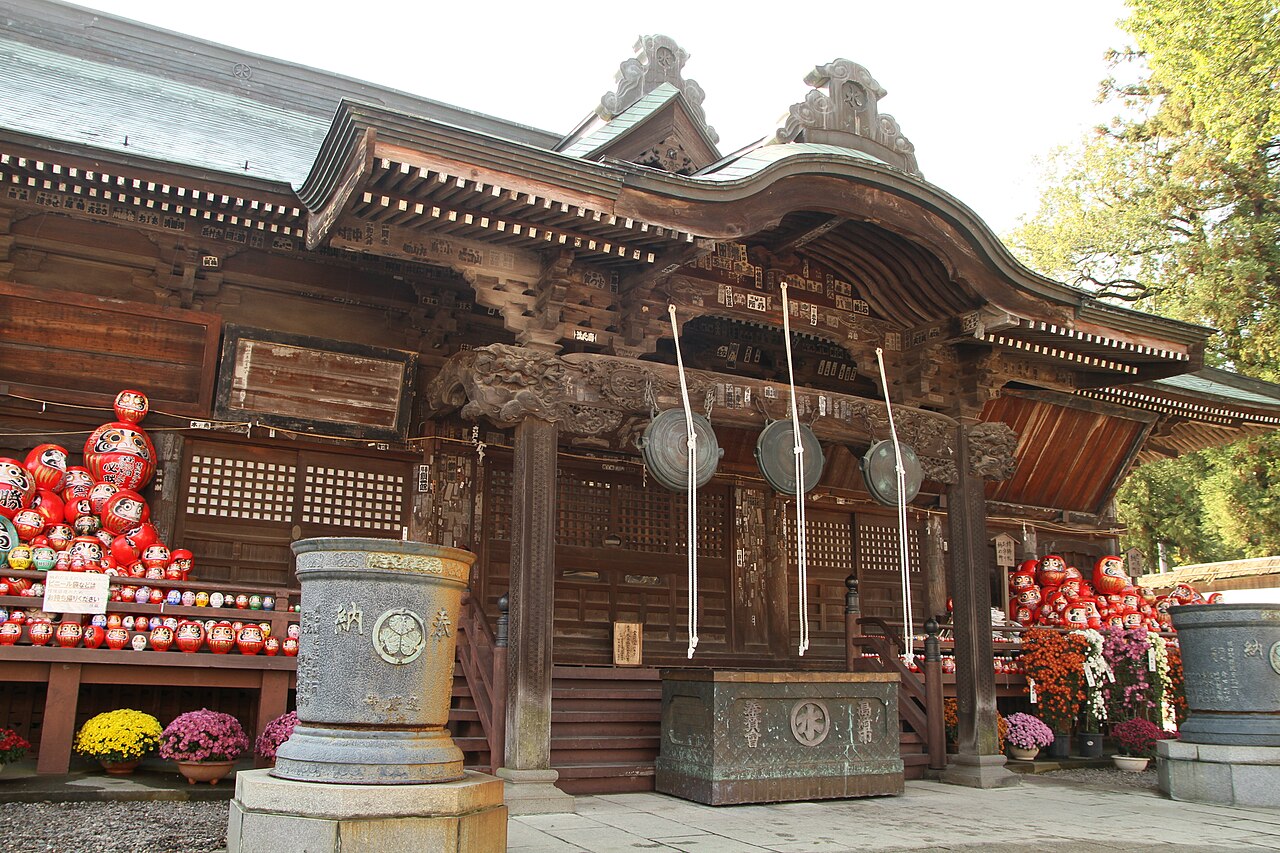
A household makes a wish and paints in one eye of its daruma, and the other eye goes in as thanks when the wish is granted. The temple's origin story at Shorinzan Daruma-ji says that its ninth head priest, Togaku, carved a wooden mold from a painting by the founder and taught the papier-mache method to Yamagata Tomogoro of Toyooka village. That daruma can be painted with your own brush, and the Byakue Kannon can be climbed from the inside.
Shorinzan Daruma-ji: Painting Your Own Daruma
Painting a daruma at Shorinzan Daruma-ji can be done by a single visitor, and no booking is needed to sit down and start. The painting takes about thirty minutes, and there is no time limit on the session. The face of a Takasaki daruma, the figure painted here, carries two auspicious animals. Its eyebrows are drawn as a crane, and the nose running down into the mustache forms a turtle. The same figure also goes under the name of a lucky daruma.
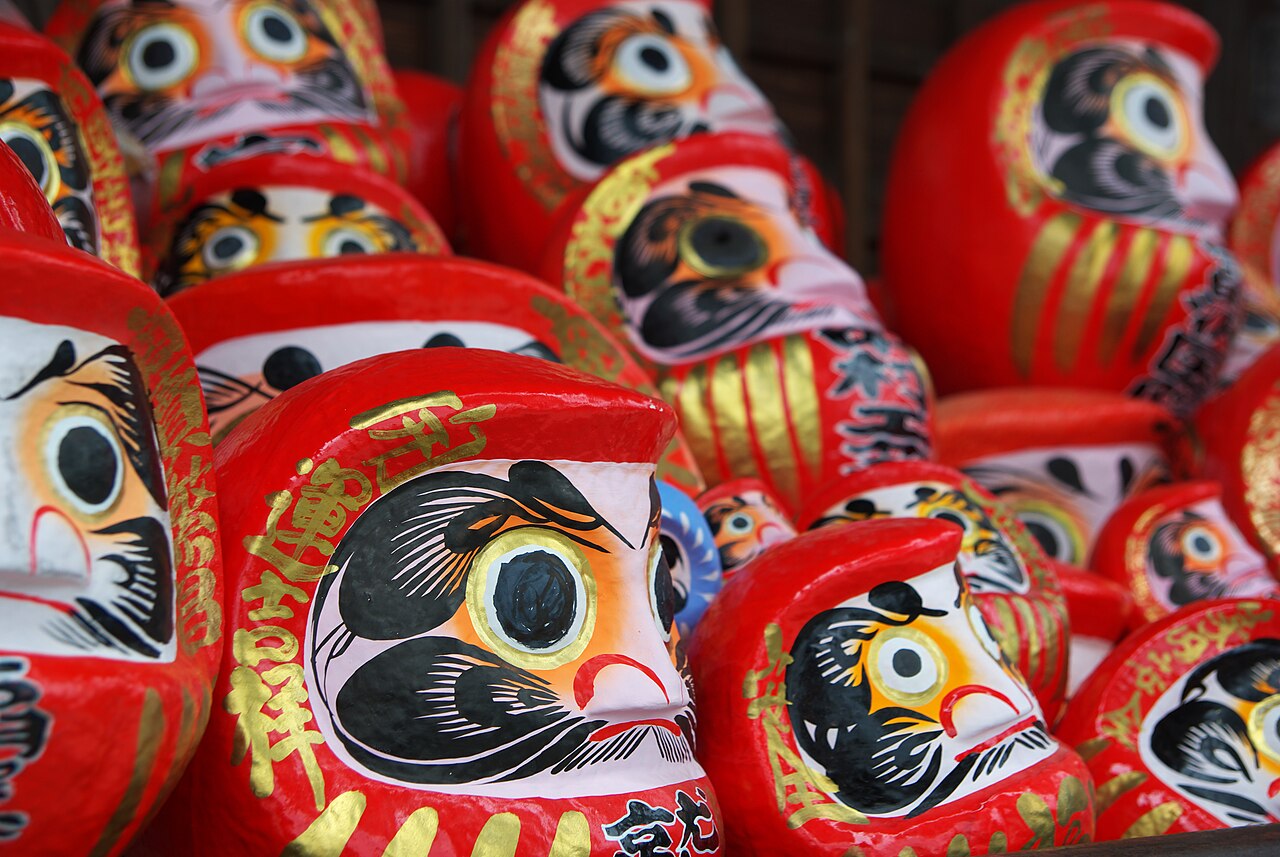
When the painting hall becomes crowded, visitors are asked to give up their seat for others who want to paint. The seat in the painting hall is yours for the painting itself, and then goes to the next visitor when the hall is full. Silk-farming households spoke of a silkworm breaking out of its old shell as the worm getting up. Because of that word, the same households kept the daruma that tumbles seven times and rises eight as a guardian deity. A daruma painted by your own hand carries that guardian home with you from Shorinzan Daruma-ji.
A priest can perform the daruma eye-opening on a painted daruma, a rite that puts a spirit into the figure. Eye-opening means giving the daruma its soul, and it is done to the daruma that was just painted in the hall. There is no set amount for the eye-opening offering, and each visitor decides what to give in keeping with their own prayer. The amount follows the prayer rather than a set figure, and the decision rests with the person who painted the daruma.
A weight, the Hetta, is fixed to the bottom of the daruma, so that like a self-righting toy it stands back up when knocked over. Push the painted daruma over and the Hetta brings it upright again. Vacuum forming has become the main method for making the daruma body that takes the paint. As an undercoat, the whole daruma is coated with a white powder made from burnt shells. Red paint then goes on over that white undercoat, giving the body its color before any brush touches the face.
Takasaki Byakue Kannon: Climbing Inside and Walking Kannon-yama
The Takasaki Byakue Kannon can be climbed from the inside, up one hundred forty-six steps to the height of the Kannon's shoulders on the ninth floor. The steps run inside the body of the statue, and the climb ends at the height of the shoulders. Its white robe is said to represent a heart kept pure in the search for enlightenment. That robe is the white robe in the name, the White-robed Great Kannon.
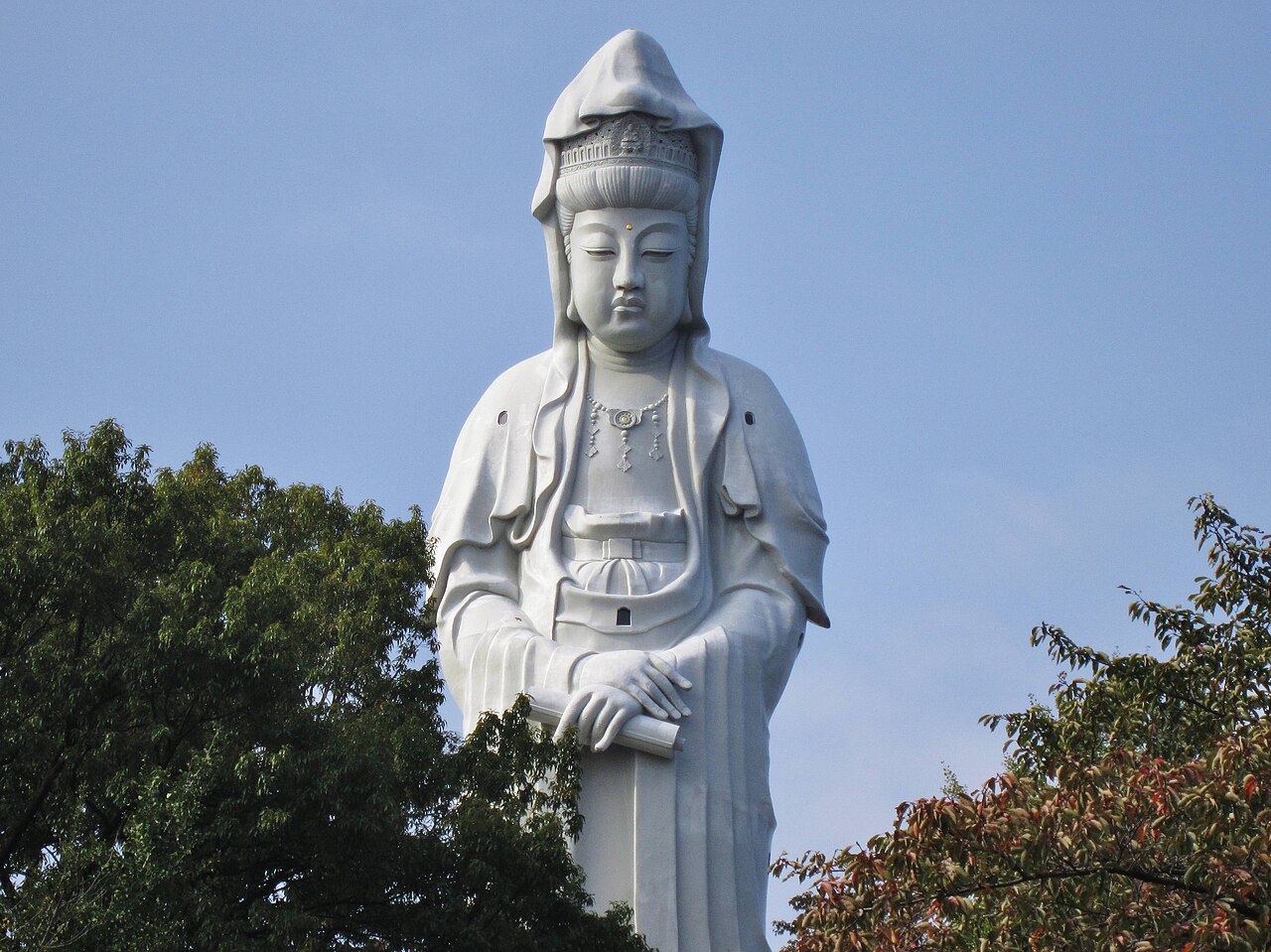
The windows on each floor of the statue look out over Takasaki city and the Jomo Sanzan mountains. From the same windows the view reaches across the Kanto Plain. Each floor has its own windows, so the city and the mountains come back at every level of the climb. The inside of the statue also holds twenty Buddha statues and statues of high priests. Those twenty figures stand within the same body that the one hundred forty-six steps climb through. For those with sound legs, seeing the inside of the statue takes about fifteen minutes.
The dye-craft hall at the Dye Plant Garden displays textiles and other dyed goods, with a range of colors to see. Dyed goods beyond textiles are shown in the same hall. The Dye Plant Garden around the hall plants its representative dye plants along four paths, each named for a period of history. The paths run by era, so the dye plants of older times and those of the present day sit along different paths.
Udon and a konnyaku miso oden nicknamed Hippataki can be tasted at the stalls on the approach to the Kannon. The Hippataki is konnyaku oden with miso, served from the stalls along that approach. The Hibiki Bridge connects the Byakue Kannon with the Dye Plant Garden as a walking spot on Kannon-yama. The valley right behind the Kannon is the wild-bird forest of Kannon-yama, where over one hundred species of wild birds are observed each year. With a short afternoon, start inside the Byakue Kannon and save the Hibiki Bridge for after.
Takasaki Yakimanju, Horumon and Pasta
Takasaki yakimanju starts as a manju fermented with koji and steamed in a seiro steamer. Four of those steamed pieces go onto one skewer. The skewer is brushed with a sweet-salty miso sauce and then grilled slowly over charcoal. The miso sauce goes on sweet and salty at once, and the charcoal does its work slowly on the four pieces. Each skewer carries four pieces, so a single skewer of yakimanju is four grilled manju.
In Gunma and in Takasaki, yakimanju is served at stalls at festivals and fair days. At those festivals and fair days, the yakimanju comes from the event stalls rather than from a shop. Yakimanju is also sold at nearby street-front shops as an inexpensive snack. Locals have loved yakimanju as their soul food for a long time.
Takasaki has many yakiniku restaurants and motsunabe restaurants that serve horumon. Horumon means offal, and motsunabe is the offal hotpot. Among those restaurants are shops run directly by meat wholesalers. Takasaki has a long history of eating pork horumon dishes, against the background of a major pig-farming area. Pig farming is a major industry around Takasaki, and pork horumon dishes have been eaten here for a long time.
In Takasaki, summer pairs grilled horumon with beer. Winter in Takasaki pairs motsunabe with sake instead. The beer goes with the grilled horumon of summer, and the sake with the motsunabe of winter. The same pork offal is grilled in one season and simmered in the other. Travelers who want a sit-down meal rather than a snack should look to the yakiniku and motsunabe restaurants for horumon.
At King of Pasta, each participating shop serves its signature menu made with locally produced ingredients. The King is decided by votes from visitors. Takasaki's flour-based food culture grew from locally produced good-quality wheat flour. Pasta restaurants in Takasaki sharpened one another in a fiercely competitive field to produce Takasaki pasta. Gunma Prefecture is one of the nation's leading wheat-producing areas. Dishes made with wheat flour have been tied closely to the lives of Takasaki residents since long ago.
To stay overnight in the area, browse places to stay in Takasaki.
Getting to Shorinzan Daruma-ji and Byakue Kannon
New to rural buses and one-man trains? See how to ride them, step by step.
| Leg | How | Time or cost |
|---|---|---|
| Takasaki Station West Exit (stop one) to the Shorinzan Iriguchi stop | Gururin Shorinzan Line bus | About thirty minutes |
| Gunma-Yawata Station to Shorinzan Daruma-ji | On foot, or by taxi | About twenty minutes on foot; about five minutes by taxi |
| Takasaki Station West Exit to the Kannon-yama summit stop | Gururin Kannon-yama Line bus, then on foot | About twenty minutes by bus; then about ten minutes on foot |
| Gururin bus | Basic fare | Adults two hundred yen, children one hundred yen (a basic fare, not a fare for a given stop) |
Hours and Fees
| Place | What | Hours or fee |
|---|---|---|
| Painting a daruma at Shorinzan Daruma-ji | Fee by size | One maru size (twelve-centimeter), fifteen hundred yen; one and a half maru size (fifteen-centimeter), two thousand yen |
| Inside the Byakue Kannon | Hours and admission | March to October, nine in the morning to five in the afternoon; November to February, nine to four thirty; adults three hundred yen (high school students and older); children one hundred yen |
| Daruma Hall at Shorinzan Daruma-ji | Hours | Nine in the morning to five in the afternoon |
| Darudaru shop at Shorinzan Daruma-ji | Hours | Ten in the morning to four in the afternoon |
Fees and hours were checked against official sources on 10 November 2026.
Thinking of staying overnight?
Compare places to stay near Takasaki →
Disclosure: This post may contain affiliate links. If you book through them, we may earn a commission at no extra cost to you.