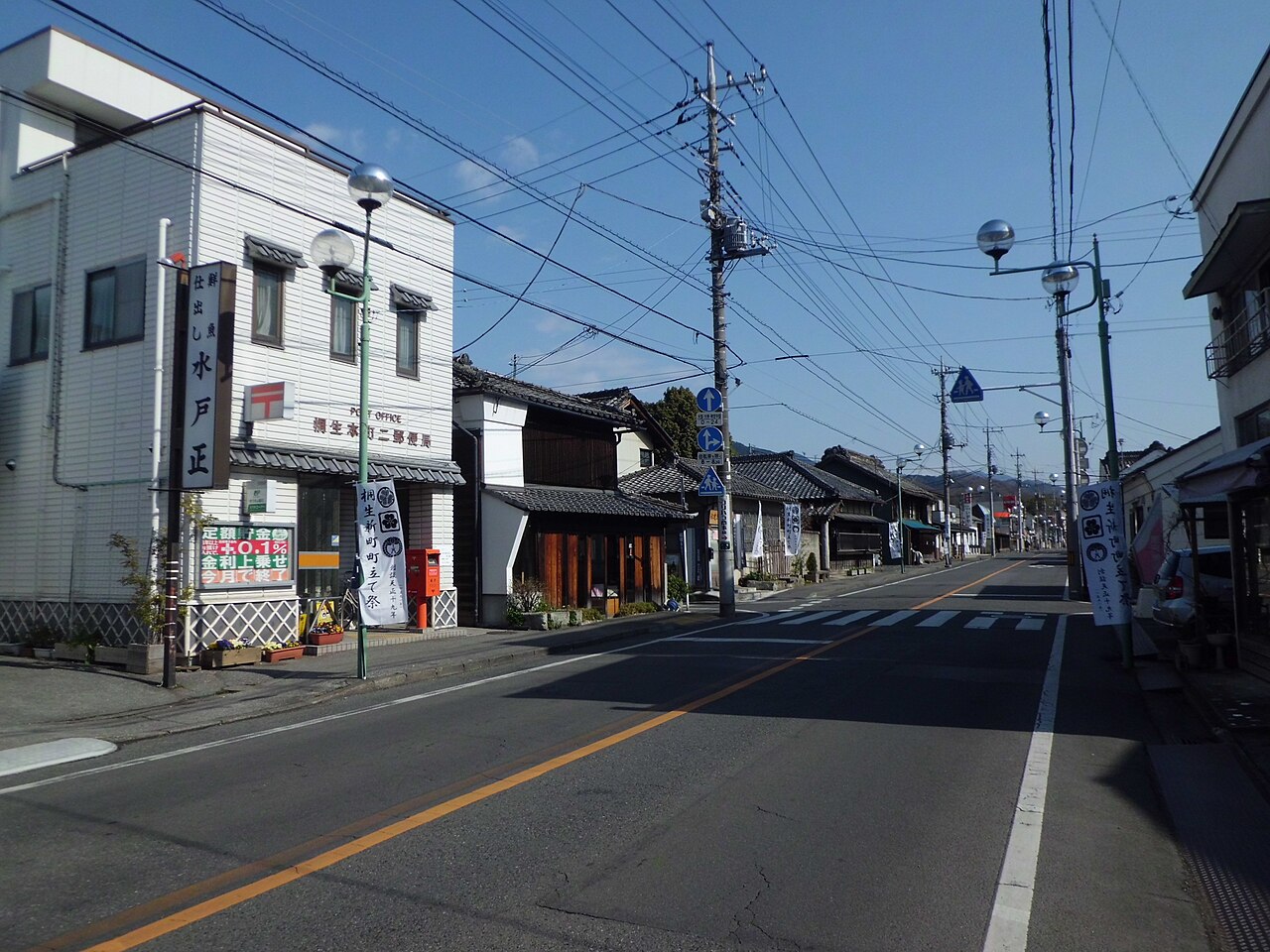
From the north exit of JR Kiryu Station, it is about a fifteen-minute walk to the Kiryu Shinmachi preservation district. This guide covers the sawtooth-roof weaving sheds, the Yurinkan storehouses, the Meijikan and other Western-style buildings, and the local dishes Himokawa udon and sauce katsudon. Travel times from Tokyo, Takasaki and Oyama come at the end.
The Old Honcho Streets of Kiryu Shinmachi
The Chikyu no Arukikata Gunma guidebook notes that Kiryu Shinmachi has grown as a weaving center since the town was laid out in fifteen ninety-one. The same guidebook lists all of Honcho one-chome and two-chome, with part of an adjoining block, as component assets of a Japan Heritage designation. These blocks are the core of the walk described below.
The Gunma guidebook says that the Machinaka Koryukan, a facility presenting the district's traditional buildings, began receiving visitors inside the preservation district in twenty twenty-four. Guidebooks describe Ichinoyu as a public bathhouse built in the early Showa era for weaving-mill workers, which went out of business once and was revived by its present owner in twenty twenty-three.
- The Machinaka Koryukan is open from 9:00 to 17:00, with entry until 16:30.
- The Machinaka Koryukan is closed on Tuesdays (the next day if Tuesday is a holiday), on the second day after a holiday, and from December 28 to January 4, among other days.
Sawtooth-Roof Weaving Sheds
Edo-period Kiryu was a major silk-weaving center, paired with Nishijin in the saying "Nishijin in the west, Kiryu in the east", the Gunma guidebook notes. The same guidebook puts six of the thirteen component assets in Gunma's Japan Heritage silk story inside Kiryu. A Meiji-era gazetteer states that the town then had four thousand households and over twenty thousand people.
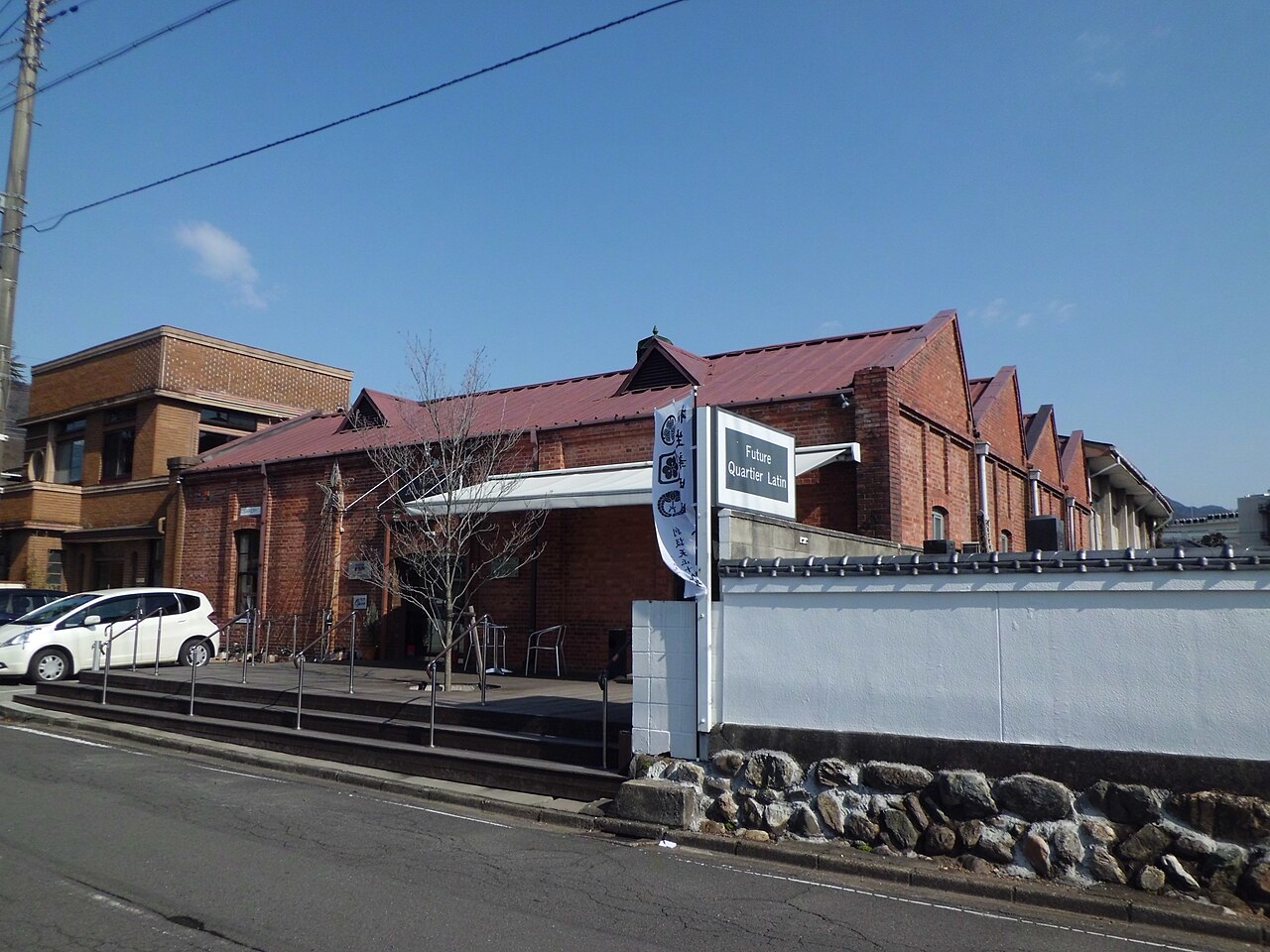
The former Kaneyoshi weaving mill of nineteen nineteen is Kiryu's only surviving brick sawtooth-roof mill, the Chikyu no Arukikata Gunma guidebook notes. The same guidebook lists it as a registered tangible cultural property now run as a bakery cafe. Guidebooks describe Goto Orimono, founded in eighteen seventy, as a weaver whose wooden sawtooth-roof mill can be visited by appointment.
The former Soga weaving mill of nineteen twenty-two, built of Oya stone, has five sawtooth roofs in a row plus ventilation towers and windows, the Gunma guidebook notes. The Orimono Sankokan Murasaki museum reuses the boiler house, warping room and sawtooth-roof mill of a weaver founded in eighteen seventy-seven and runs indigo-dyeing and hand-weaving classes, the same guidebook says.
| Item | Detail |
|---|---|
| Orimono Sankokan Murasaki, opening hours | 10:00 to 16:00 |
| Orimono Sankokan Murasaki, individual admission | Adults 800 yen, university and vocational students 700 yen, high school and junior high students 600 yen, elementary students 400 yen |
The Yurinkan Storehouses
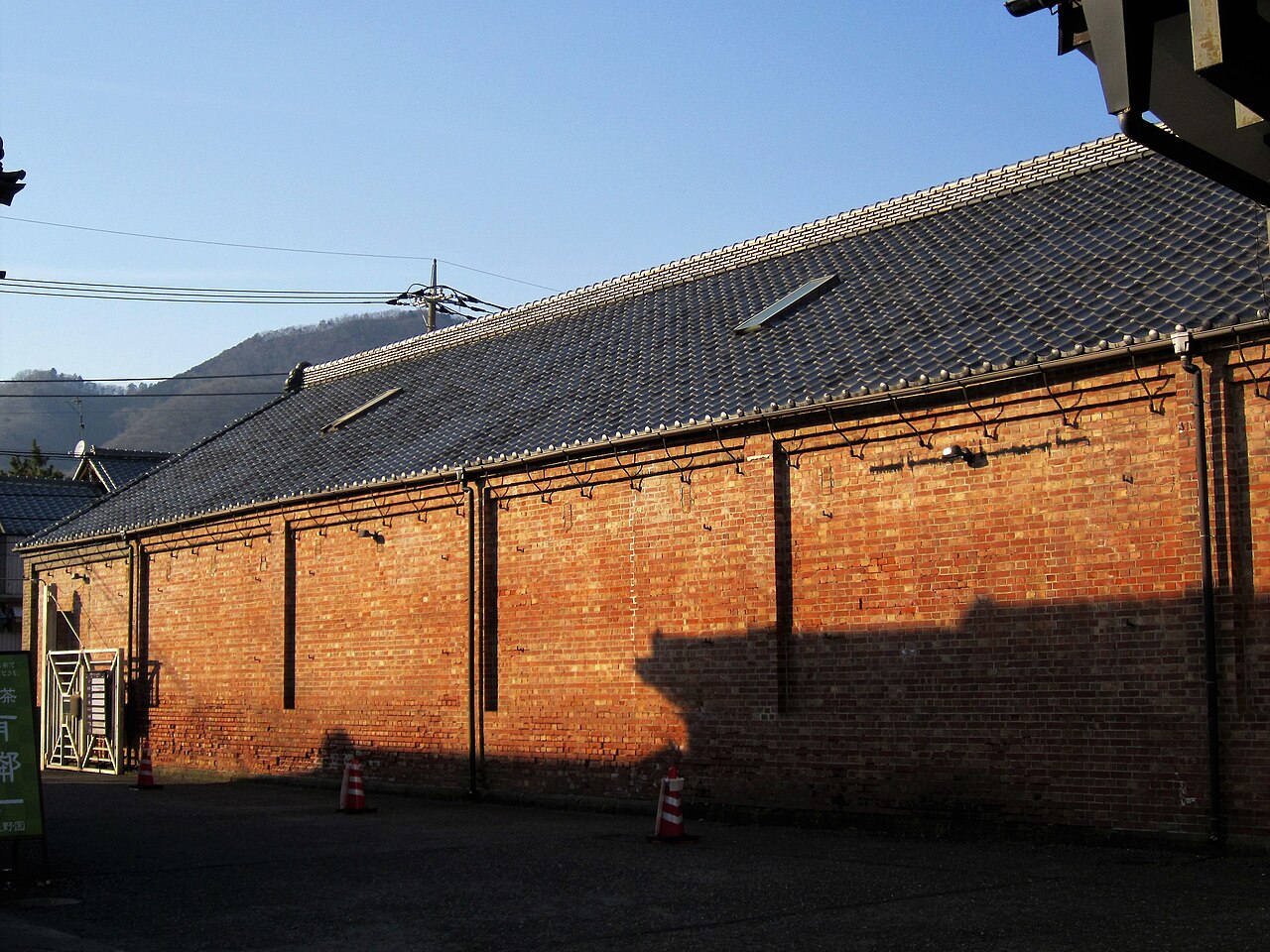
The Chikyu no Arukikata Gunma guidebook notes that the Yurinkan is a group of eleven storehouses put up between the Edo period and the Showa era. Sake, miso and soy sauce were once brewed here, and the compound now works as a multipurpose event venue, the same guidebook says. What you find inside depends on what is on that day.
The Gunma guidebook describes Yanoen as a long-established tea merchant housed in a nineteen sixteen building in the style of an Edo-period merchant house. Besides selling tea and soy sauce, Yanoen keeps a tearoom serving Japanese tea and matcha latte, the same guidebook notes.
- The Yurinkan opening hours are 9:00 to 21:00, shortened to 17:00 on days with no event from April 1, 2025.
- The Yurinkan is closed on Mondays (the next day if Monday is a holiday), the day after a holiday, and from December 28 to January 4, among other days.
- The Yurinkan-mae bus stop on the Orihime Bus Chuo and Umeda lines is a 1-minute walk from the Yurinkan.
Where to stay
Places to stay near Kiryu, Gunma, Japan →
Disclosure: This post may contain affiliate links. If you book through them, we may earn a commission at no extra cost to you.
The Meijikan, the Silk Twisting Memorial Hall and Other Western-Style Buildings
The Kiryu Meijikan was built in eighteen seventy-eight in Maebashi as a hygiene office and medical school, then moved to Kiryu in the early Showa era, the Chikyu no Arukikata Gunma guidebook notes. The same guidebook lists it as an Important Cultural Property and a textbook case of pseudo-Western architecture, with Japanese roof framing beneath Western exterior ornament.
The Gunma guidebook notes that the Silk Twisting Memorial Hall, a Western-style stone building of nineteen seventeen, ranks among the oldest of its kind in the prefecture. It once worked as a model factory that mechanized the twisting of silk thread, and now displays local heritage materials, the same guidebook says.
Built in nineteen thirty-four for the weavers' association, the Kiryu Textile Memorial Hall has scratch-tile walls, a blue-green tiled roof and stained-glass windows, the Gunma guidebook notes. Guidebooks describe the Kiryu Club as a two-story wooden building of nineteen nineteen that once hosted local notables. Its orange tiled roof and colonnaded porch are Spanish in style, the Gunma guidebook says.
| Item | Detail |
|---|---|
| Kiryu Meijikan, opening hours | 9:00 to 17:00, last entry 16:30 |
| Kiryu Meijikan, closed days | Mondays (the next day if Monday is a public holiday) |
| Kiryu Meijikan, admission | Adults 150 yen, children 50 yen |
| Silk Twisting Memorial Hall, opening hours | 9:00 to 17:00, entry until 16:30 |
| Silk Twisting Memorial Hall, admission, adults | 150 yen |
| Silk Twisting Memorial Hall, admission, children | 50 yen |
The same Gunma silk story continues at Tomioka Silk Mill.
Himokawa Udon and Sauce Katsudon
Guidebooks describe Himokawa udon as one of Gunma's three great udon styles, with a very wide, flat noodle as its defining trait. At Tanumaya the noodle is about one millimeter thick, made with clear river water and matured at length before serving, the Gunma guidebook notes. The noodle changes from shop to shop.
The Chikyu no Arukikata Gunma guidebook describes Furukawa's version as more than fifteen centimeters wide, with a chewy texture and an outsized presence when lifted on chopsticks. Fujiya Honten, founded in eighteen eighty-seven and now run by a sixth-generation owner, keeps up its hand-made tradition, the same guidebook notes.
The Gunma guidebook describes Shitamiya Honten, roughly a century old, as the first to serve sauce katsudon. Kiryu's version uses pork fillet, dipped in sauce fresh from the fryer and laid over rice, the Gunma guidebook notes. The dish has since spread to restaurants in Maebashi and Isesaki and ranks as a regional dish for all of Gunma.
Getting to Kiryu and Staying Nearby
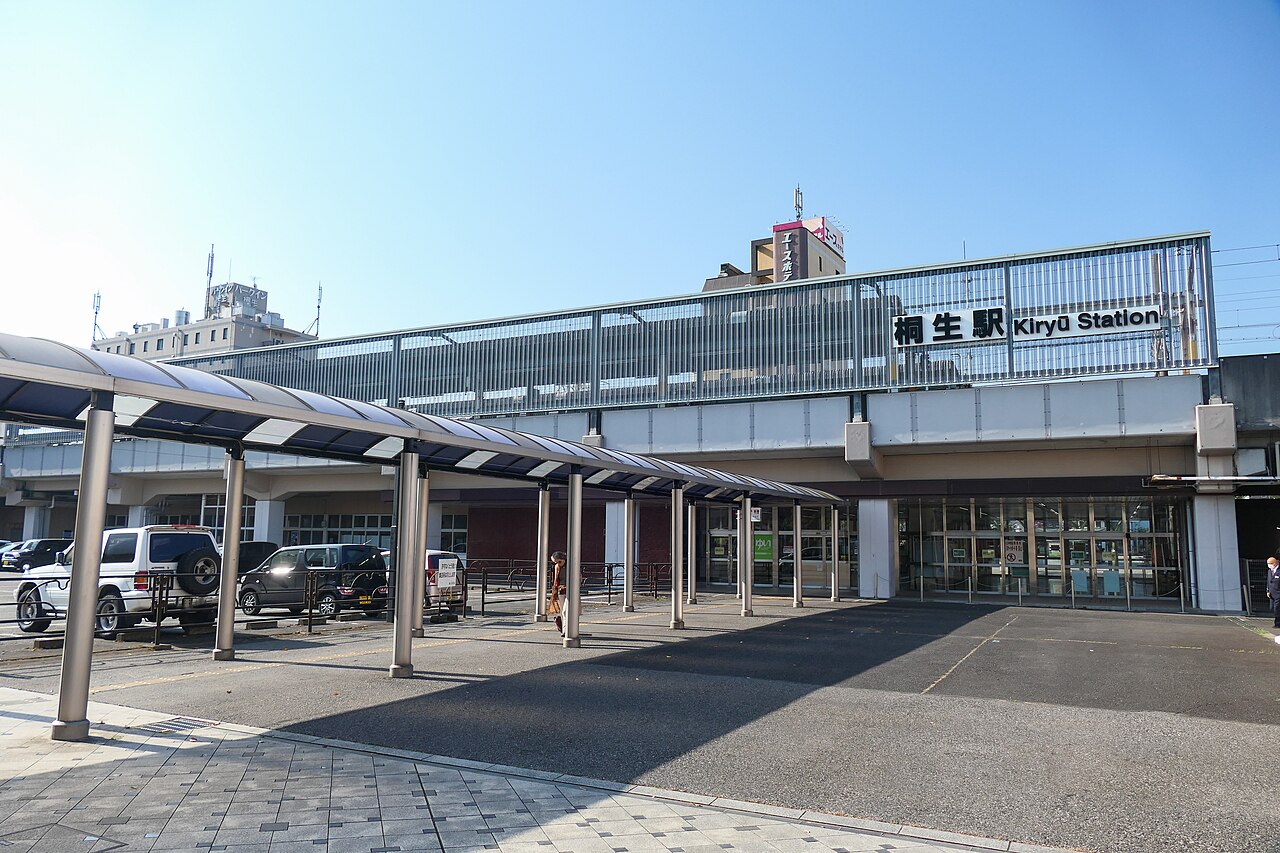
The times below run from named starting points by JR and Tobu rail and by car on the Kita-Kanto Expressway, followed by notes on walking and cycle rental on arrival.
- From Takasaki Station, the JR Ryomo Line reaches Kiryu in about 45 minutes.
- From Oyama Station, the JR Ryomo Line reaches Kiryu in about 55 minutes.
- From Tokyo, the Shinkansen and the Ryomo Line via Oyama or Takasaki reach JR Kiryu Station in about 2 hours.
- From Asakusa or Kitasenju, the Tobu limited express Ryomo reaches Shin-Kiryu Station in about 1 hour 40 minutes.
- Kiryu is about 20 minutes by car from Ota-Kiryu IC on the Kita-Kanto Expressway.
- Kiryu is about 20 minutes by car from Ota-Yabuzuka IC on the Kita-Kanto Expressway.
- From JR Kiryu Station, the Silkul Kiryu tourist information center is about a 10-minute walk.
- Shin-Kiryu Station's rental cycle pick-up reception runs from 9:00 to 15:00.
Kiryu also works as a base for a longer stay among the sheds and storehouses. If you would like more time in the area than a day allows, browse places to stay in Kiryu.