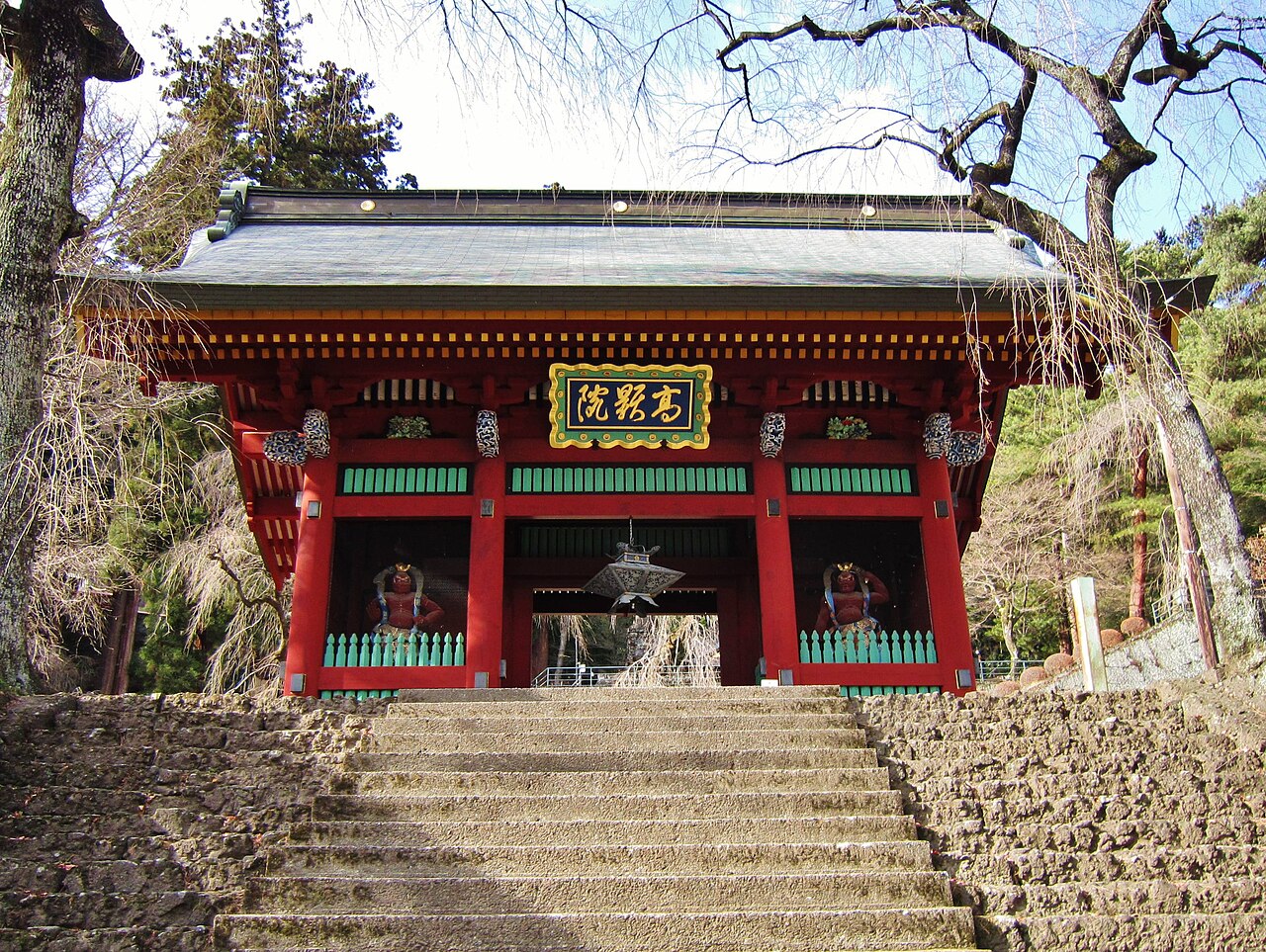
This guide covers a day trip to Myogi Shrine, on the eastern side of Mount Myogi in Gunma: how to reach it from the nearest stations, what its gates and halls look like, where its name and long history come from, and how the jagged peaks above it took shape. It does not cover visiting Nakanotake Shrine or the mountain trails themselves.
Getting to Myogi Shrine
Myogi Shrine lies along the Shin'etsu Line, and guidebooks of the Meiji era pointed pilgrims to Matsuida Station or Isobe Station as the places to start. That advice still holds: from either station the final approach to the shrine is a short taxi ride, and Matsuida, the nearer of the two, is the starting point used here.
| From | To | How | Time |
|---|---|---|---|
| Matsuida Station | Myogi Shrine | taxi | about 10 minutes |
| Isobe Station | Myogi Shrine | taxi | about 15 minutes |
- The shrine grounds are open all day and admission is free, so you can enter at any hour to pay your respects.
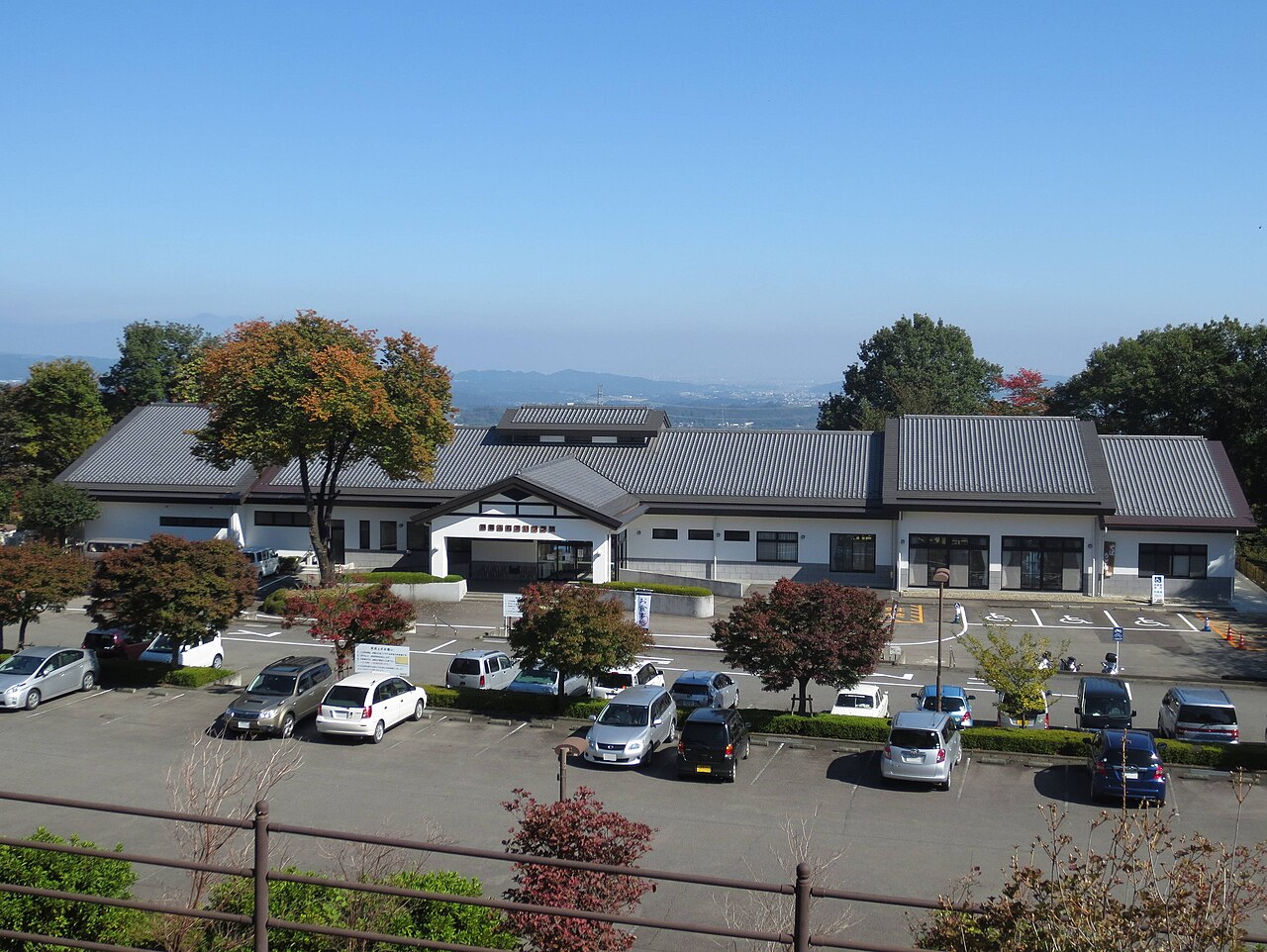
- A car park for worshippers is provided at the shrine for those arriving by road.
- Check official information before visiting, since taxi availability and shrine arrangements can change.
Inside the shrine precinct: gates and halls
Myogi Shrine was founded in the sixth century and stands on the eastern side of Hakuun-san, the main peak of Mount Myogi. Five deities are enshrined here: Yamato Takeru no Mikoto, Niu no Okami, Funaosa-hime no Mikoto, Sugawara no Michizane, and Dainagon Choshin. Among its treasures are three items granted by an imperial princess in eighteen ninety-eight.
The grounds divide into an upper sacred precinct and a lower former temple area, a trace of the centuries when Shinto and Buddhism were practised together here. Partway up the stone stairway stands the Karamon, a gate of seventeen fifty-six, carved from beneath the eaves down to its wall panels, with a golden dragon painted on the ceiling inside.
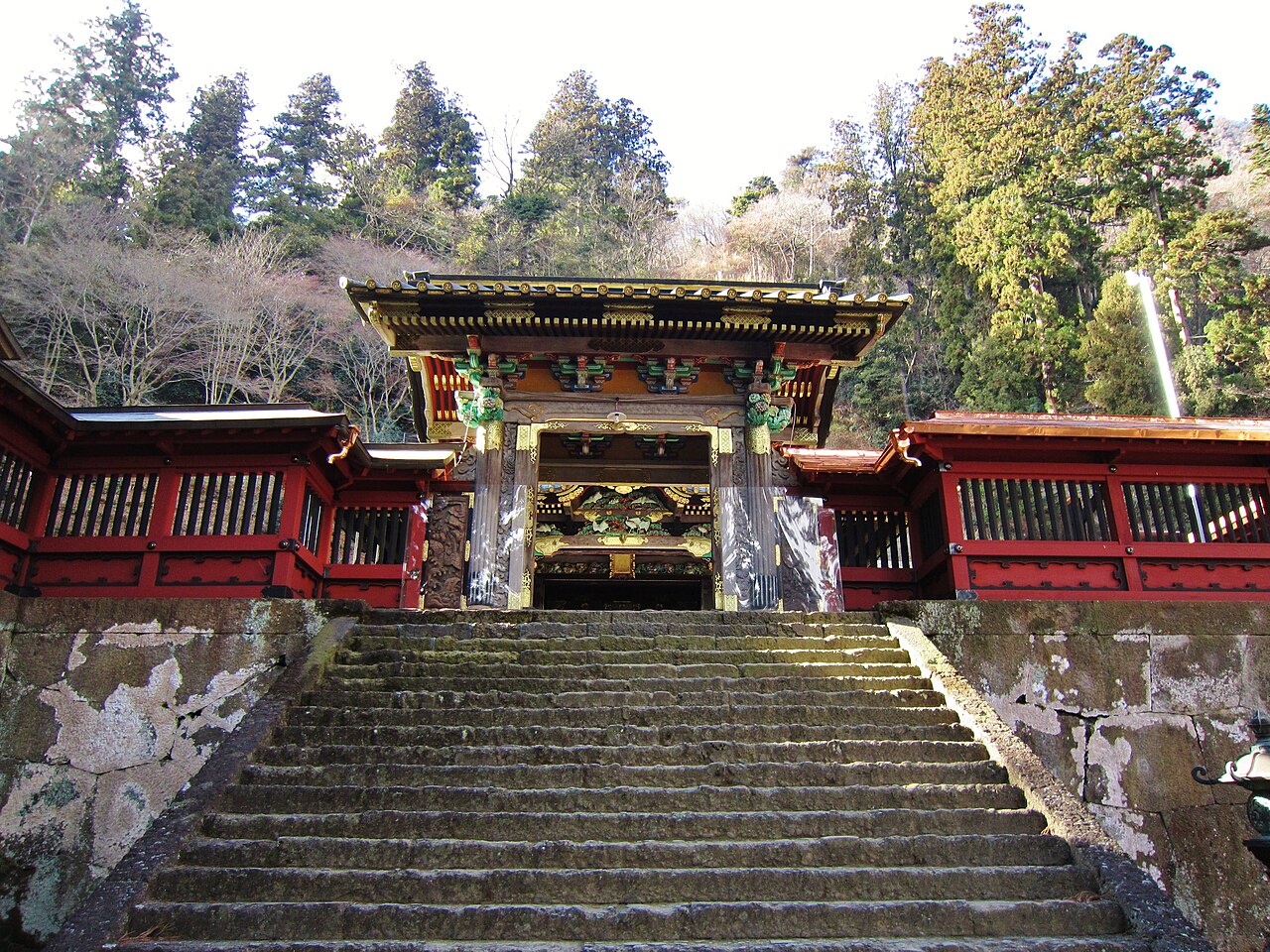
The Hakoso-sha, built in sixteen fifty-six, sets colourful carvings beneath its roof against a black-toned building and is listed as an important cultural property of Gunma Prefecture. The main sanctuary comprises three halls: the honden or inner sanctuary, the heiden or offering hall, and the haiden or worship hall, all designated Important Cultural Properties of Japan.
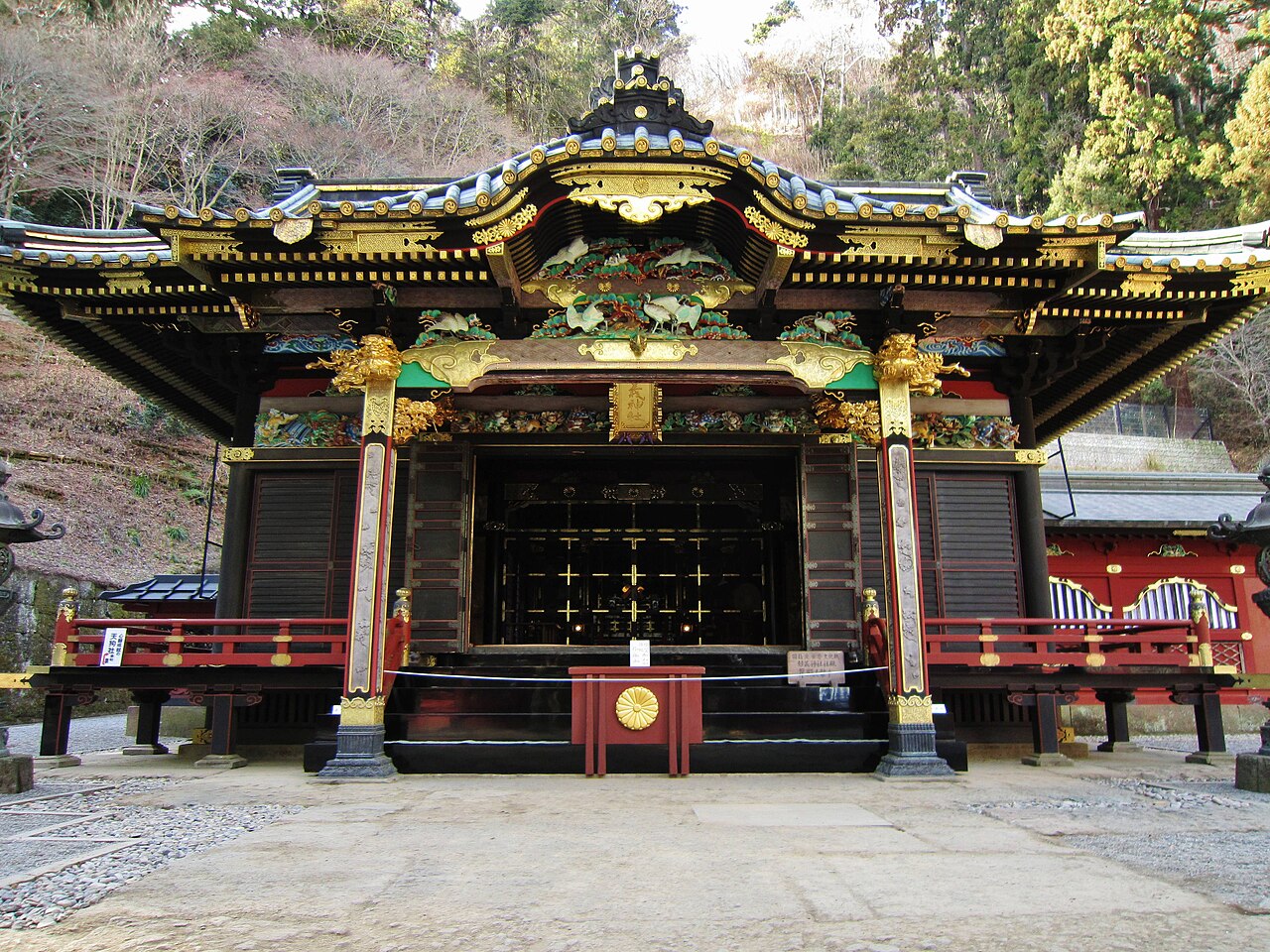
Beneath the roofs, sculpted figures stand out in full relief, a gilded dragon among them, and this lavish ornament is why the shrine is sometimes called the Nikko of Kozuke, after the old province that is now Gunma. The present halls date from a rebuilding in the Keicho era, following remodelling under Kazan-in Choshin in the Nanbokucho period.
A shrine with roots in the sixth century
According to the shrine's own records, Myogi Shrine was established in the reign of Emperor Kinmei and revived in the Hoki era. Under its original name, the Great Deity of Hakoso, it appears in the court chronicle Nihon Sandai Jitsuroku, which records that in the Jogan era the Hakoso deity of Kozuke Province received a court rank.
The name Myogi is explained in the Onko Zuihitsu, from the Meiwa era. By that account, the nobleman Kazan-in Choshin lived near Hakuun-san as Meigi, a name later generations are said to have miswritten as Myogi. The same text is read as saying Meigi described the striking scenery of Hakuun-san's sheer rock, a spelling said to appear in Bakin's Hakkenden.
In the Edo period the shrine enjoyed the close attention of the imperial prince-abbots of Kan'ei-ji in Ueno, who conducted its festivals, and the shogunate sent offerings every year. Three attached temples served as its caretakers on the abbots' behalf, and records say that a hall to the Myogi deity stood in Edo's Ueno before the Meiji Restoration.
Where to stay
Disclosure: This post may contain affiliate links. If you book through them, we may earn a commission at no extra cost to you.
The rock peaks of Mount Myogi
Mount Myogi is the collective name for three peaks: Hakuun-san, Kondo-san, and Kinkei-san. Seen from the east, Kondo-san sits between the other two, which is why it has also been called Nakanotake, the middle peak. A Taisho-era survey measured Kondo-san as the highest and Kinkei-san the lowest, and Myogi Shrine stands on the eastern side of Hakuun-san.
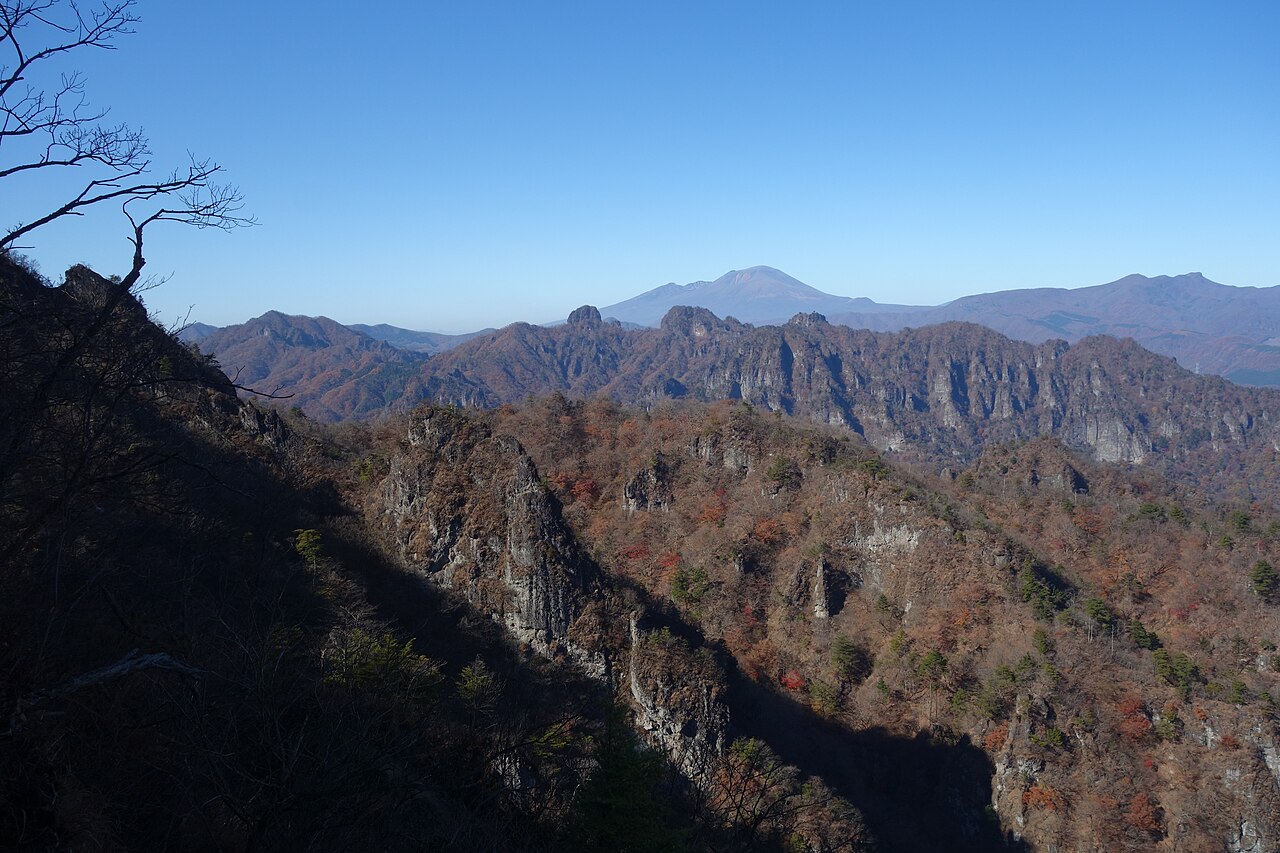
Together with Yabakei and Kankakei, Mount Myogi has long been counted among the three great scenic curiosities of Japan, and grouped with Akagi-san and Haruna-san as the three mountains of Kozuke. Geologists of that era classed it as a dissected volcano, meaning the walls of its crater were blown apart and worn away until the original cone was lost.
The same survey described the rock as mostly pyroxene andesite lava and agglomerate, breaking along plate-like and column-like joints, with weathering along those joints carving the forest of spires. On Kondo-san it recorded four stone arches, the Sekimon, and named rocks among them: Candle Rock, Turtle Rock, Tengu Rock, Cannon Rock, Mirror Rock, the Ant's Crossing, and the Womb-Crawl Passage.
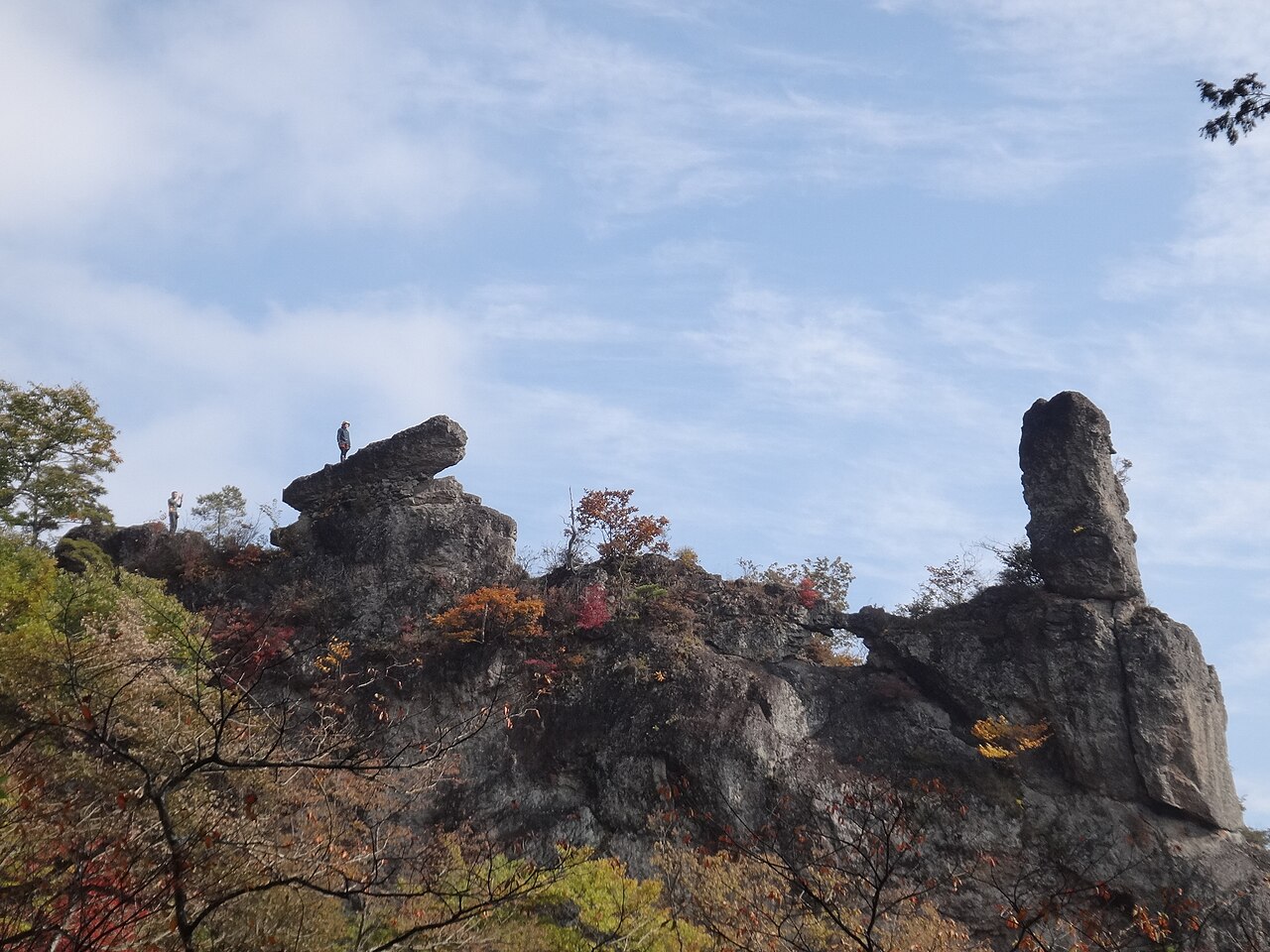
In nineteen twenty-three the Home Minister designated Mount Myogi a Place of Scenic Beauty. Most of that area was national forest, with the grounds of Myogi Shrine, the grounds of Nakanotake Shrine, and private land lying within it; the national forest went under the Ministry of Agriculture and Forestry, and in nineteen twenty-five Gunma Prefecture became custodian of the rest.
Views, foliage, and planning your visit
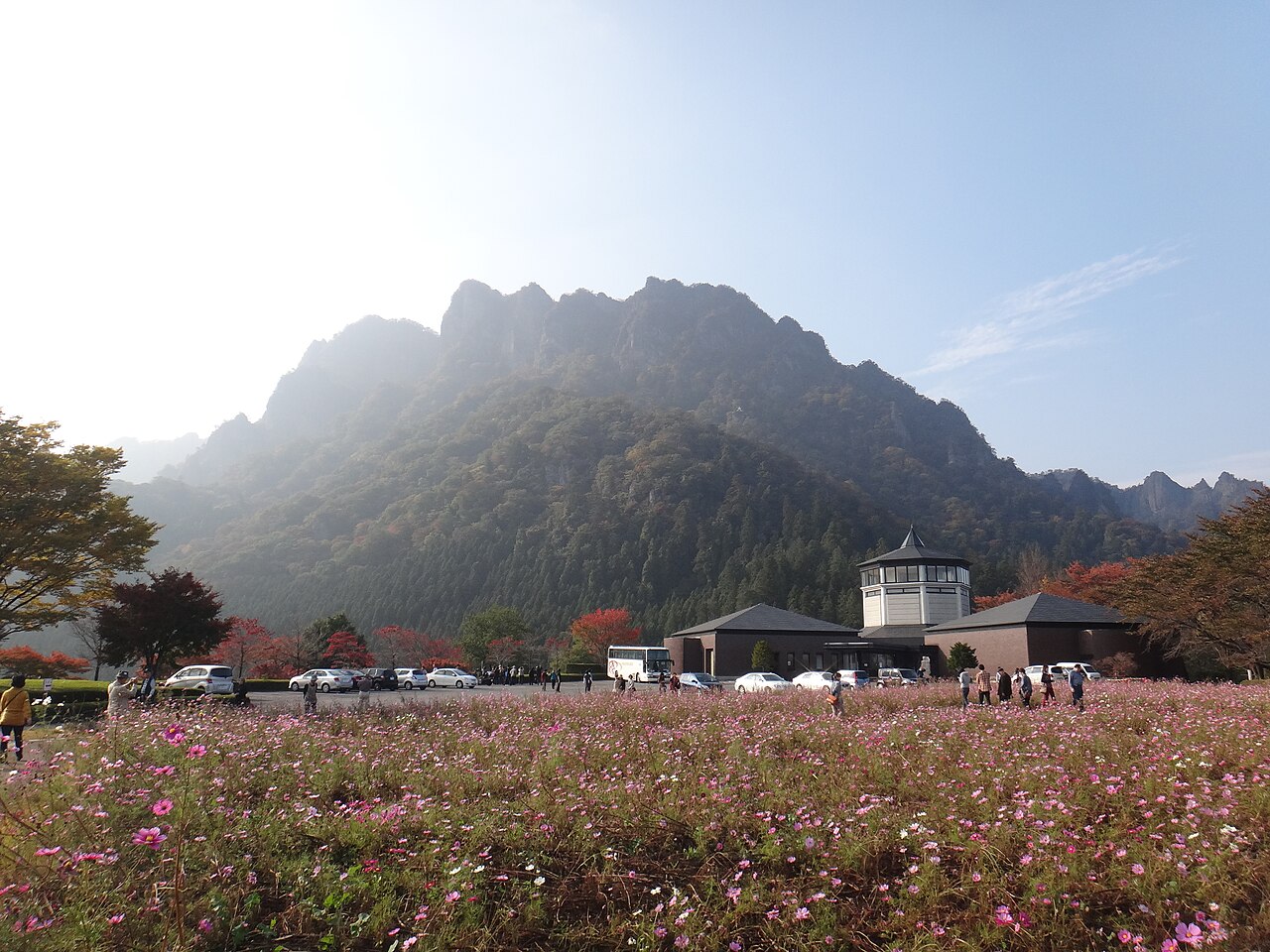
A day here divides naturally into two halves: the climb through the shrine's gates and halls, and time spent simply looking at the mountain. Because the grounds are open all day and the final approach from Matsuida Station is a short taxi ride, the visit can be arranged around the light rather than around a timetable.
The Taisho-era survey recorded the view from the rocky top of Kinkei-san as spreading wide across the Kanto Plain. The same report also described a landmark on the high ground behind Hakuun-san, the Dai-no-ji, a giant character for dai, meaning great, made at that time of bundled bamboo, named for the dai in Myogi Daigongen, and visible from far away.
Autumn has long been the season most celebrated. The report recorded the slopes of every peak turning colour, and that since ancient times poets, painters, and travellers of taste had set the scene down in verse and pictures. Old writings such as the Joshin Nikki and the Kisoji Meisho Zue called the strange skyline, autumn colours, and views beyond compare.
The written record is long: the Hokkoku Kiko of the Bunmei era mentioned Hakuun-san, another account recorded a shrine maiden delivering an oracle, and the Joshin Nikki pictured inns crowding the approach inside the Somon. If one day feels too short for shrine and mountain, look at places to stay near Myogi Shrine and give the rock peaks a second morning.