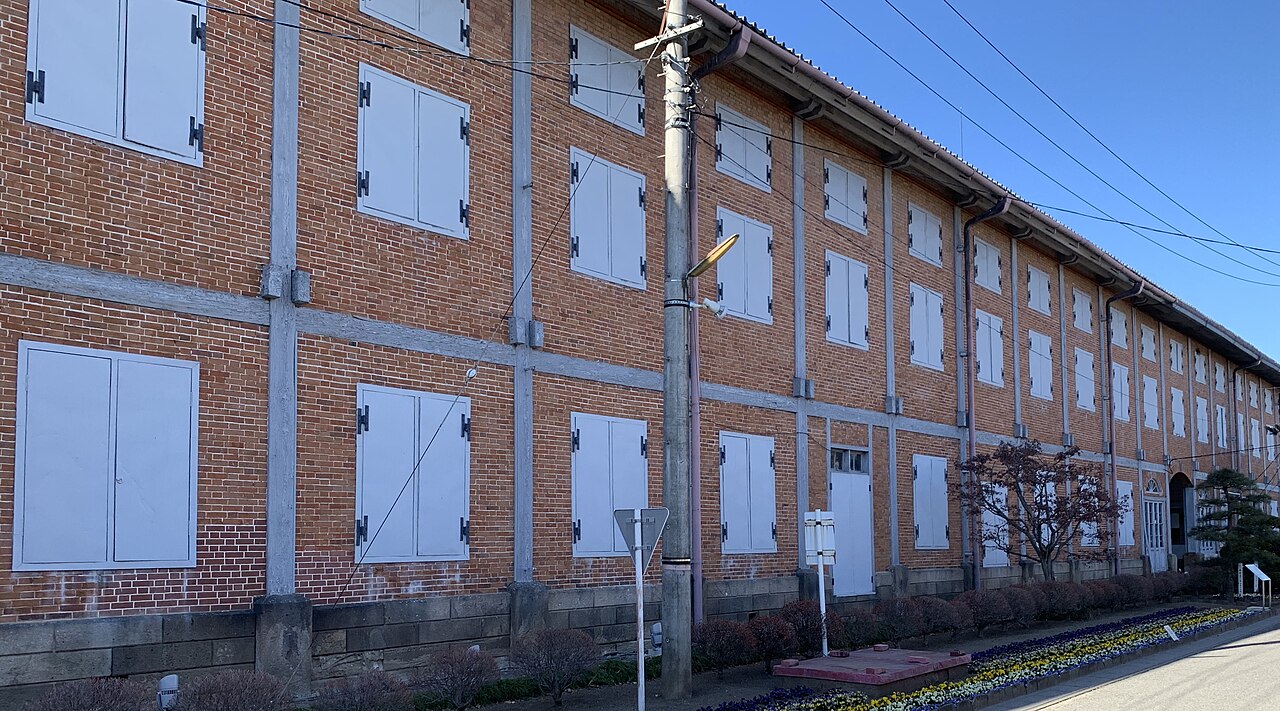
Tomioka is a small city in Gunma where, a century and a half ago, the Japanese government built its first model silk-reeling mill under the direction of a French engineer. The long brick warehouses still stand, the reeling hall still holds its machines, and the walk from the railway to the gate passes shops that once fed the women who worked here. It makes an unhurried day out from Tokyo.
Getting to Tomioka from Tokyo
The mill sits in the centre of Tomioka city, and the nearest station is Joshu-Tomioka on the Joshin Electric Railway, a small private line from Takasaki.
- By train: From Tokyo Station, take the Joetsu or Hokuriku Shinkansen to Takasaki and change to the Joshin Electric Railway for Joshu-Tomioka; the journey is about ninety-five minutes, not counting the transfer. The Joshin Electric Railway leg from Takasaki takes about forty minutes.
- From the station: The mill is about a fifteen-minute walk from Joshu-Tomioka Station, along the old shopping street.
- By car: From Tokyo, take the Kan-etsu Expressway from Nerima Interchange, switch to the Joshin-etsu Expressway at Fujioka Junction, and leave at Tomioka Interchange. Allow about seventy-five minutes without traffic or breaks. From the interchange to the parking lots is roughly ten minutes (about three kilometres).
If you would rather not manage the transfers yourself, there is one guided day tour from Tokyo that pairs the mill with Mount Myogi: see the Tomioka Silk Mill and Mount Myogi day tour from Tokyo.
Admission, opening hours, and closures
| Ticket | Price |
|---|---|
| Adults (individual) | one thousand yen |
| High school and university students (student ID required) | two hundred and fifty yen |
| Elementary and junior high school students | one hundred and fifty yen |
| Guided explanation session for individual visitors | two hundred yen per person; one hundred yen for junior high age and younger |
| Adults in a group | nine hundred yen |
| Group explainer (guide) | three thousand yen per guide |
The mill is open from nine in the morning until five in the afternoon, with last admission at half past four. It closes for the year-end period from the twenty-ninth to the thirty-first of December, and temporary closures for inspection or maintenance can happen, so check official information before visiting.
Why a silk mill is a World Heritage Site
In eighteen seventy-two the Meiji government built Tomioka as Japan's first state-run model mill for machine silk reeling. It later passed into private hands and kept producing raw silk until nineteen eighty-seven. Shibusawa Eiichi, then a Ministry of Finance official, was put in charge and hired the French silk engineer Paul Brunat, who planned the project, chose the site, oversaw construction, and guided the work for three years after the start. Brunat chose Tomioka because the surrounding farms raised silkworms, so cocoons were close at hand, and because there was room for a large compound and plenty of water.
The first director was Odaka Atsutada, Shibusawa's cousin and former teacher. Women were slow to sign up because of a rumour that the foreigners drank blood, so Odaka's fourteen-year-old daughter Yu became the first worker at her father's request; the rumour faded and recruits arrived from across the country.
In June twenty fourteen the mill was inscribed in Doha as "Tomioka Silk Mill and Related Sites", the first modern industrial heritage listing in Japan, together with the Arafune Cold Storage, the Tajima Yahei residence, and the Takayama-sha site.
Walking the grounds: three long buildings in a U
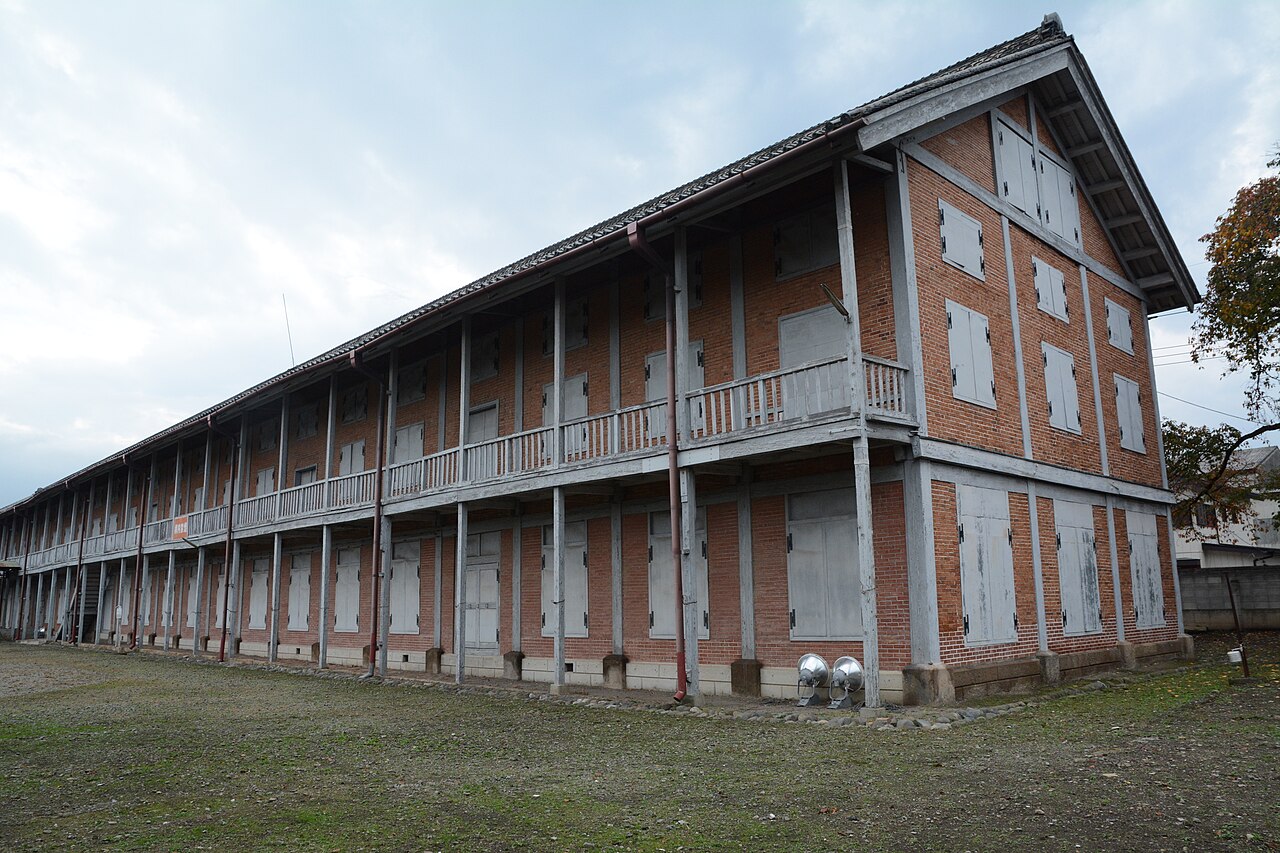
The East Cocoon Warehouse, the West Cocoon Warehouse, and the Reeling Hall stand on three sides of a courtyard, with the houses and service buildings around them. All three date from eighteen seventy-two.
East Cocoon Warehouse. A long timber-framed brick building with a tiled roof, mixing Japanese and Western methods; the upper floor once held some thirty-two tons of dried cocoons. You can go inside.
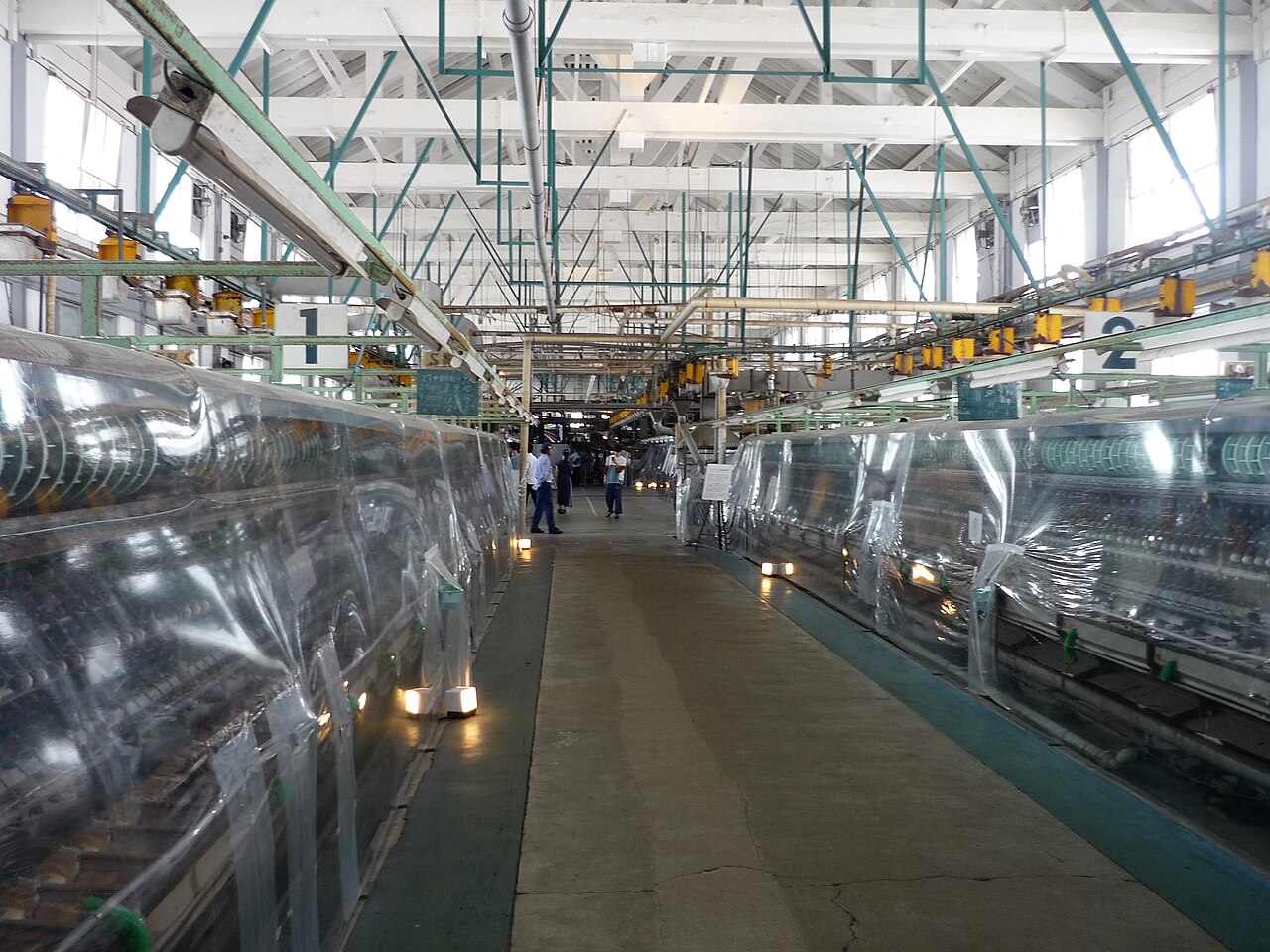
Reeling Hall. About one hundred and forty metres long, it was fitted with three hundred metal reeling basins so that three hundred women could work at once, one of the largest reeling floors anywhere at the time. The roof is a truss with no central pillars; the walls are lined with large windows because there was no electric light when the mill began, and a small raised roof along the ridge let the steam out. The automatic reeling machines inside today are Nissan models installed from nineteen sixty-six onward, and reconstructed French-style machines are used for thread-drawing demonstrations (check the official site for times).
West Cocoon Warehouse. Built to almost the same plan as its twin, it kept coal in the northern half of the ground floor and cocoons upstairs. After about six years of restoration it was returned to its appearance from the mill's peak, and since twenty twenty it has held a glass-walled multipurpose hall and gallery for exhibitions and events.
Where to stay
Disclosure: This post may contain affiliate links. If you book through them, we may earn a commission at no extra cost to you.
The French houses at the edge of the compound
Three houses from eighteen seventy-three stand around the main buildings, all in a colonial style with deep verandas suited to the humid Japanese summer.
The Brunat House, or Director's House, is a single-storey timber-framed brick residence where Paul Brunat lived with his family: a raised floor, a veranda on all four sides, louvered shutters at the windows. After his contract ended it became a dormitory and a place of recreation and classes for the women workers; it can be viewed from the outside only.
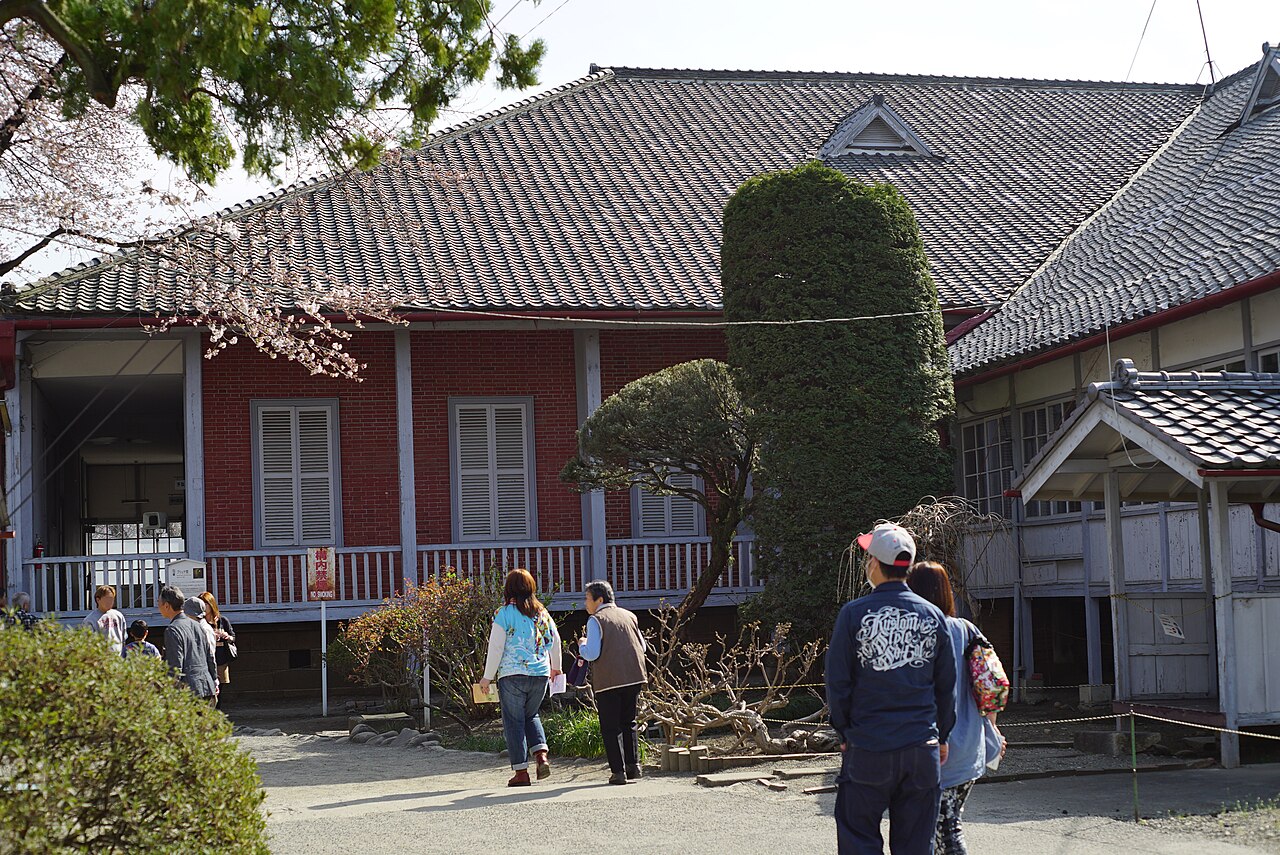
The Women's Instructors' House was built for the four French women hired to teach reeling. In the Taisho era it was converted into a dining hall and meeting rooms, but the brick walls of the upper floor are original.
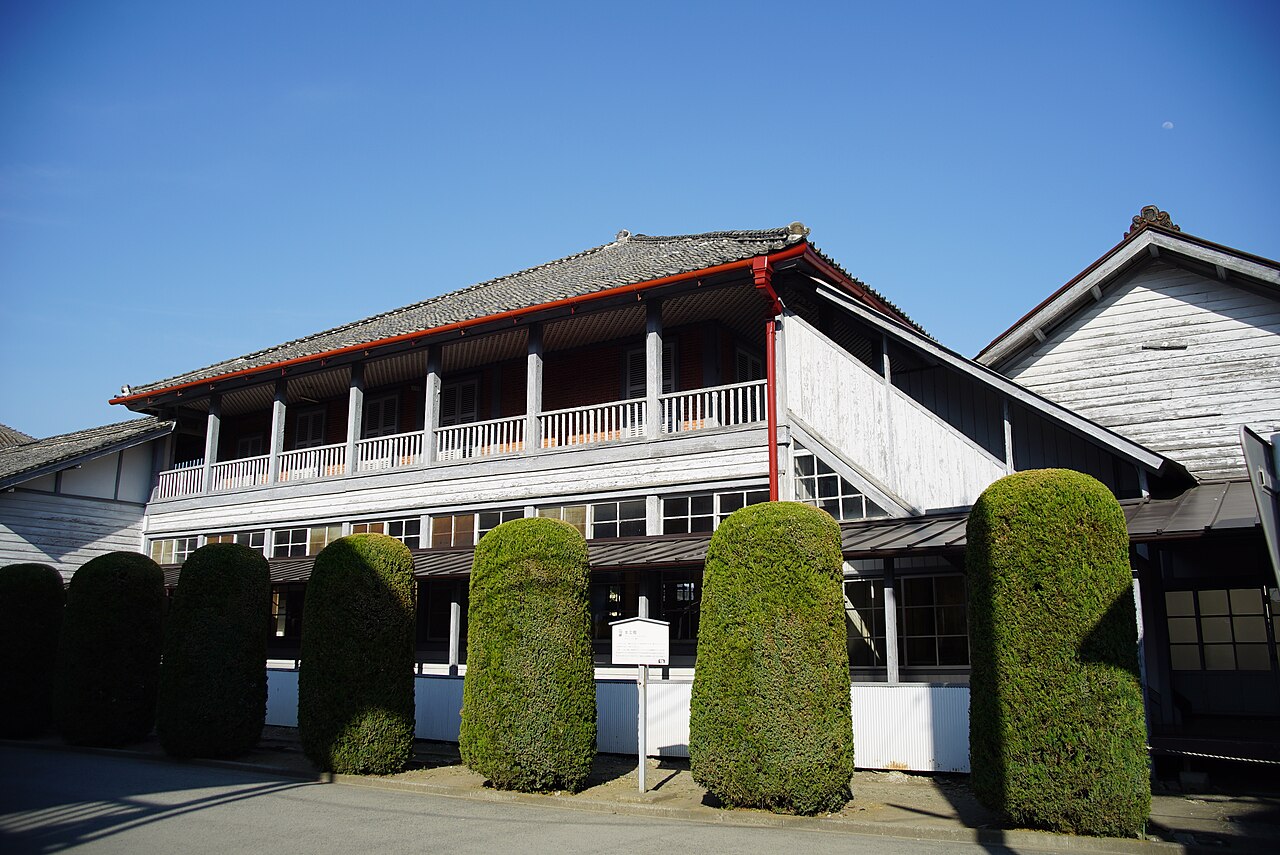
The Inspector's House housed the French men who checked the raw silk; its upper floor later gained a reception room for officials and members of the imperial family, with a marble mantelpiece that survives. The interior is closed to visitors.
Also on the grounds is the drying shed, where cocoons from the farms were dried so they would neither hatch nor grow mould in storage. A silkworm lives only about two months, yet a single cocoon unwinds into around a kilometre or more of thread.
Lunch on the old street between the station and the mill
The route from Joshu-Tomioka Station to the mill follows Ginza-dori, also called Denkikan-dori after a cinema that once stood here. With Nishi-Ginza-dori it keeps a retro streetscape, and several long-running shops trade on their links with the women of the mill. Shops selling food and goods made with silk line the way, and staff at the rest spots and information desks can point you to local favourites.
Some dishes are tied to the workers by local memory rather than records. At Takada Shokudo, the curry rice heaped with pork is said to be what the women ordered for delivery or ate on days off. Iseya, founded as a dumpling shop in nineteen thirty-four, serves a Chinese-style soba said to have been a favourite of the workers, plus mitarashi dango to take away. Yoshida Shichimi, a seven-spice maker founded in eighteen ninety-six, is remembered as the shop where workers bought a gift to carry home.
Closer to the gate, Hayami faces the main entrance and serves okkirikomi, the Gunma-style udon stewed in a refined broth with chicken and vegetables; in winter there is tempura of Shimonita leek. Café Drome, on Shiromachi-dori nearby, occupies a farmhouse from eighteen seventy-five and is known for a pudding sitting on a caramel made with Gunma miso. Tomioka also calls itself a crêpe town, and crêpe and galette shops are easy to find. For a souvenir, Tajimaya opposite the mill has made its kuzu-starch sweet Mayukomori for over a century, and the in-town tourist hub Otomi-chan-chi combines an information desk with local products. For the full period look, Asaya, a kimono shop a few minutes' walk from Joshu-Tomioka, rents retro-modern hakama outfits styled after the workers and keeps your bags while you walk.
Before heading back: the warehouse hub by the station
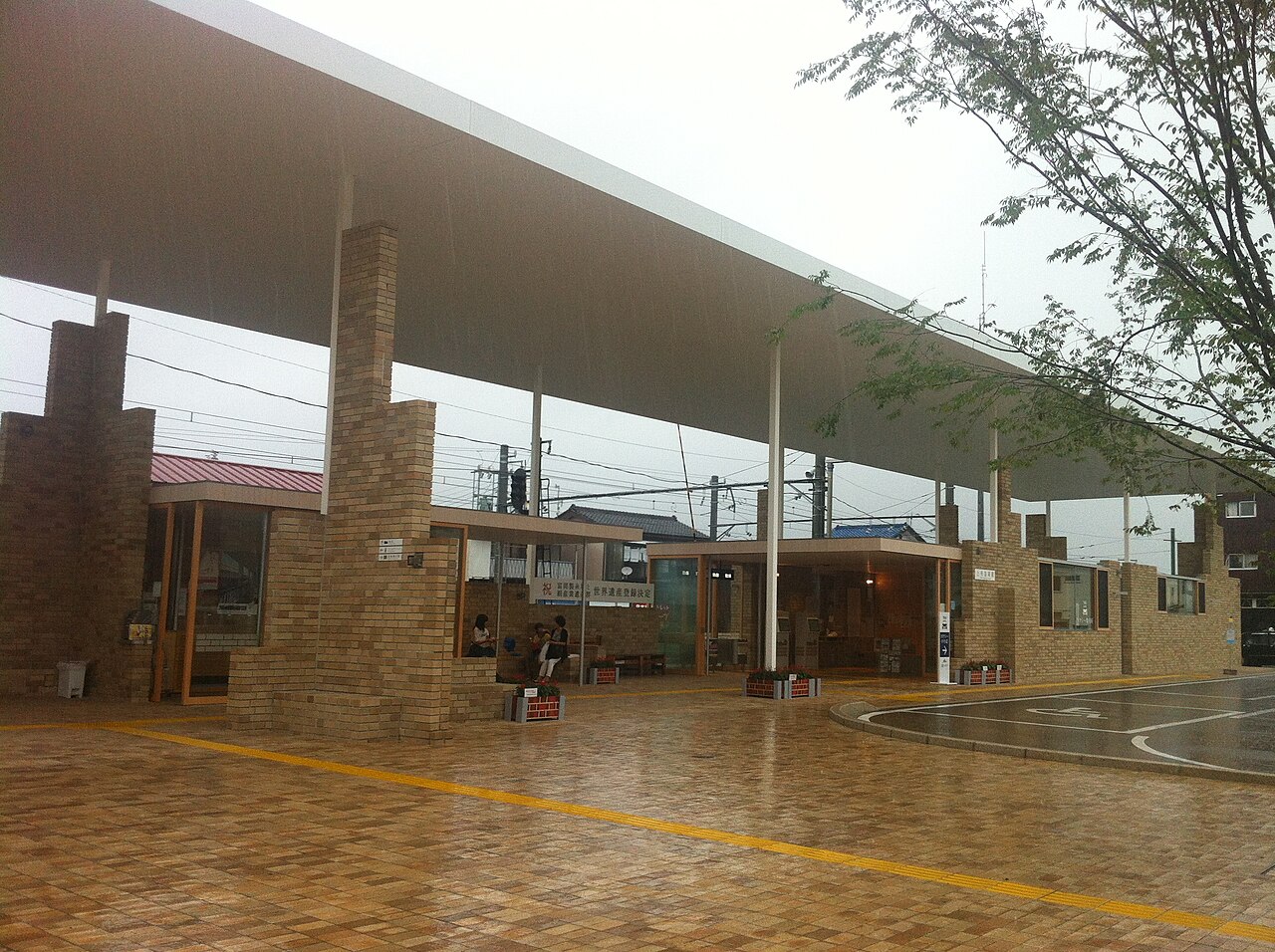
Right in front of Joshu-Tomioka Station, a group of old warehouses has been turned into a visitor hub under the supervision of the architect Kengo Kuma. Three buildings face a wide lawn: Sekaito, the prefectural World Heritage Centre, uses digital displays and a computer-graphics theatre to show the mill as it was and to explain the related silk sites (dogs and cats may come in with you); Merci Cocon & Café serves galettes, a nod to the mill's French connections; and the Okatte Market sells local vegetables and crafts. It is a good place for a spare half hour before the ride back.
Near the mill stands the former Nirazuka Silk Mill, a private mill founded by Nirazuka Naojiro, who had also helped build Tomioka. Modelled on the state mill, it ran from eighteen seventy-six to around eighteen seventy-nine and is the only surviving private mill building of its kind in Japan. Restored and on view since twenty twenty, it shows the marks where the reeling machines stood and the remains below the floor.
If you would rather not rush the trip back, you can stay the night in Tomioka: browse hotels and inns in Tomioka on Booking.com.