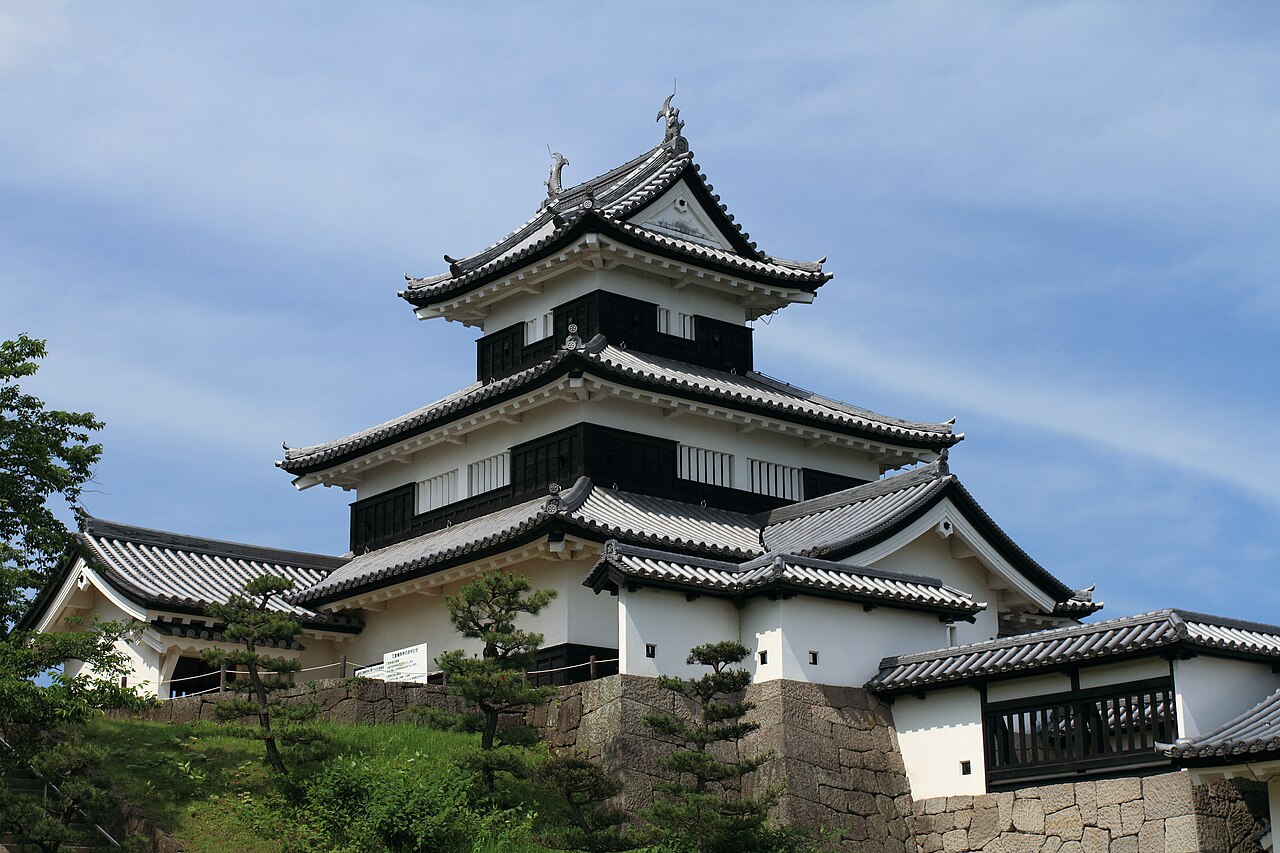
Shirakawa keeps a long memory: the Shirakawa Barrier is counted as one of the three ancient barriers of Michinoku. Nanko had no fences and could be visited by anyone at any time in the Edo period, when class differences were strict. Cherry-blossom sights spread across the city, Nanko Park and the castle park at Komine Castle among them.
Komine Castle: A Rebuilt Turret and Its Compounds
The three-storey turret of Komine Castle and its front gate were rebuilt in timber from Edo-period drawings, and black-painted wall boards protect the turret's walls. Around one hundred and fifty cherry trees at the castle can be seen in April, and plum trees in March.
The turret stands fourteen metres high at the northeast corner of the main compound, and the belt terrace wraps that compound from the west side to the north side across about eight thousand square metres.
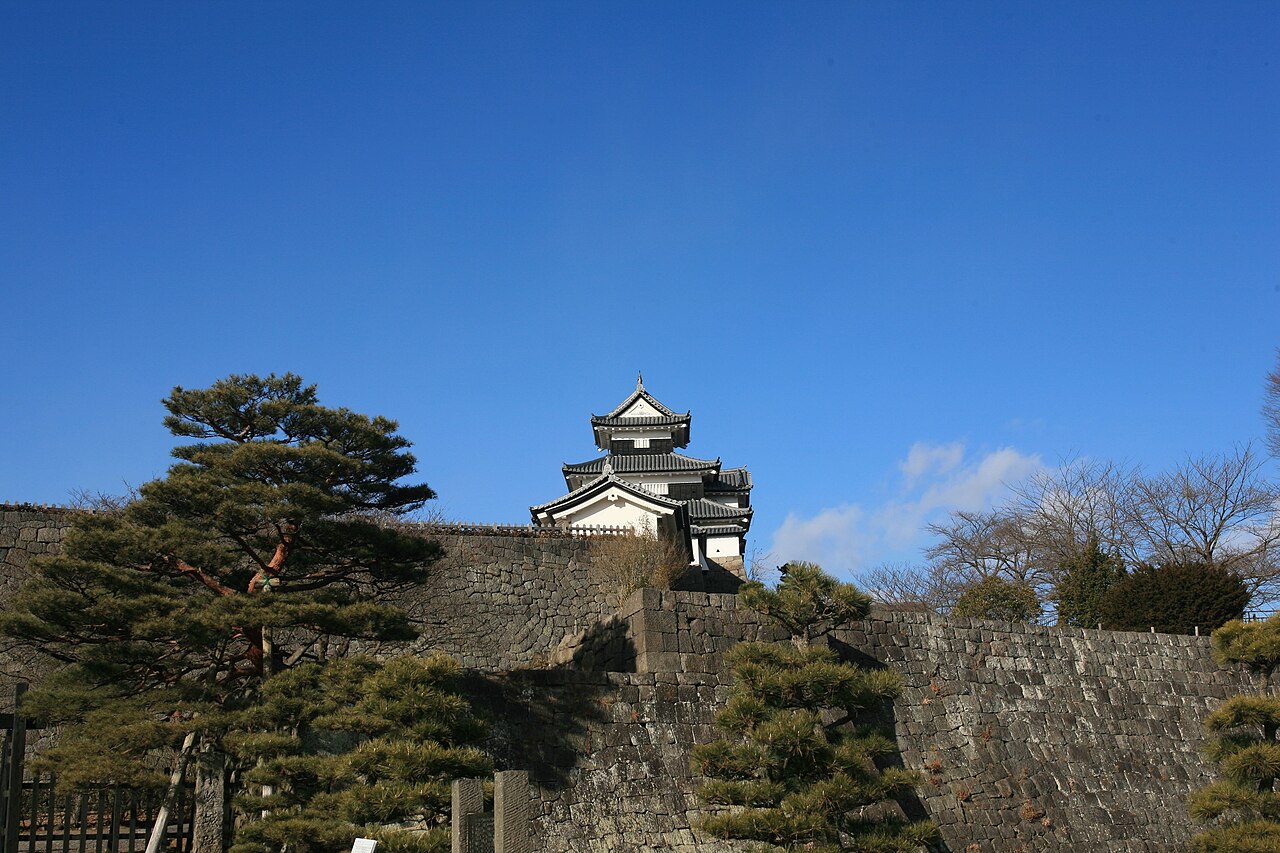
Dojo-mon, at the castle's south-west, was the gate dividing inside from outside, leading from the Sannomaru to the samurai residences. Inside Jozan Park, the Komine Castle History Museum is the castle's guidance facility, where a diorama recreates the castle in the Matsudaira Sadanobu era and a VR theatre restores the Edo-period castle in computer graphics on three screens.
Nanko Park: The Lake Walk, Cherry Trees and Tea House
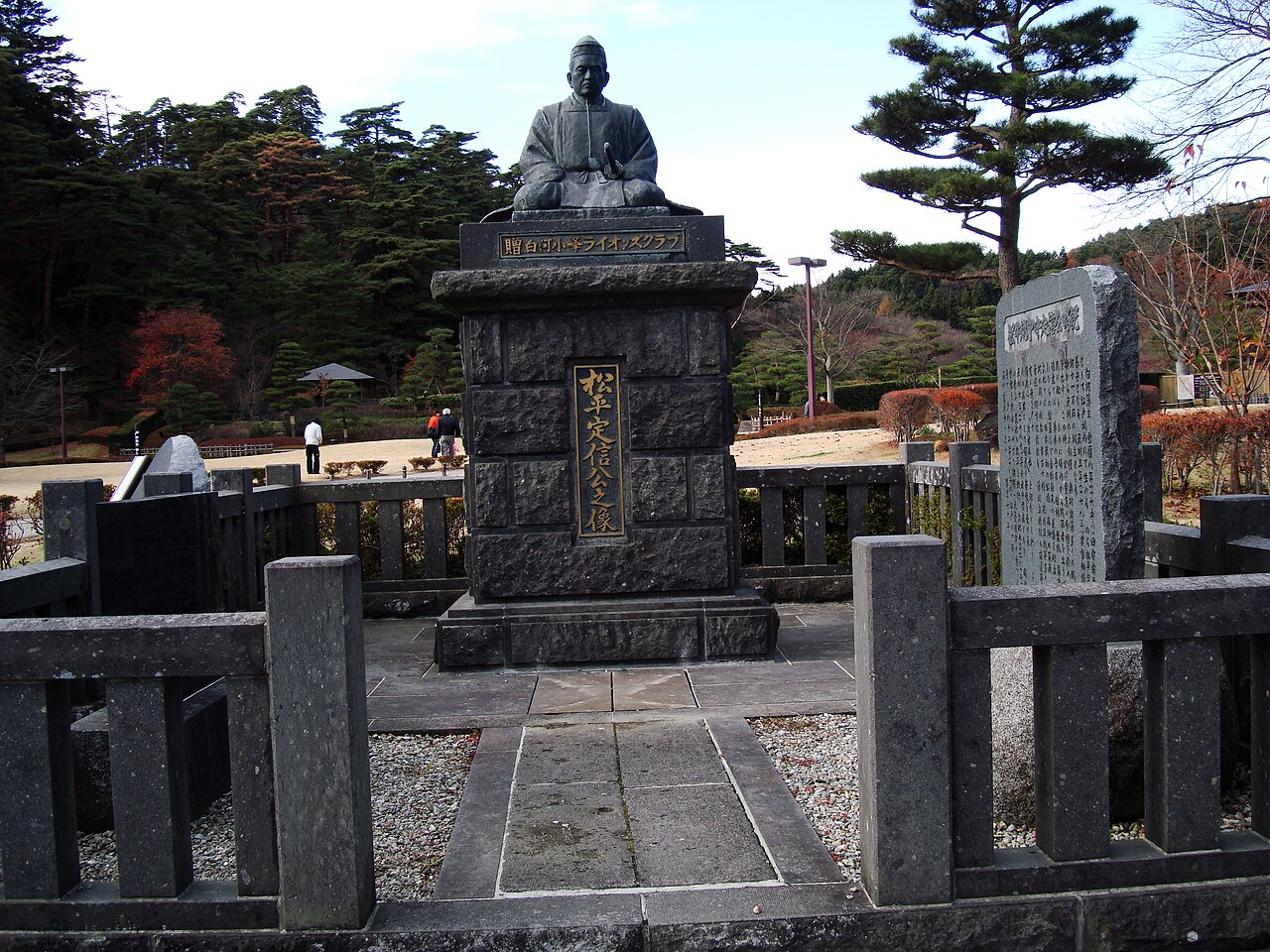
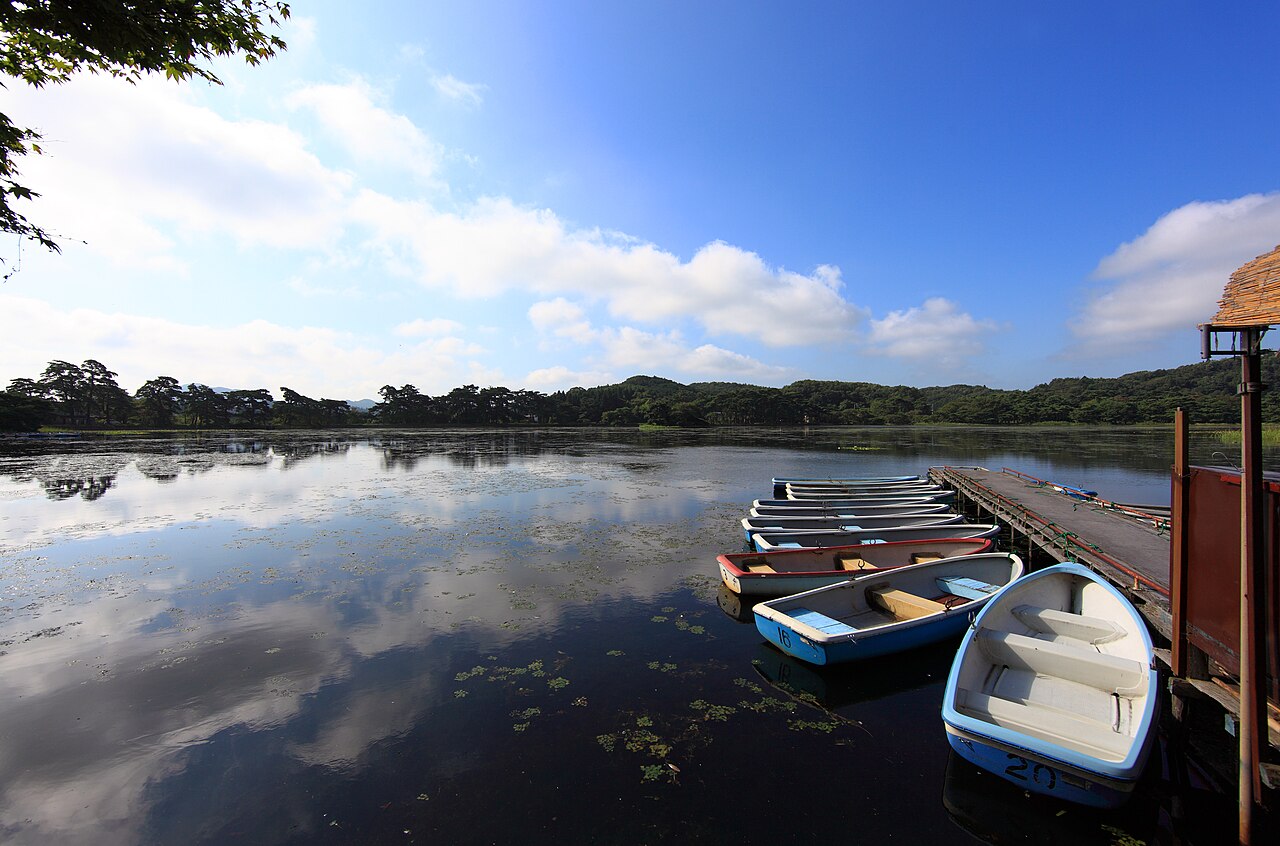
Matsudaira Sadanobu, the twelfth lord of Shirakawa, made Nanko Park by damming a wetland to hold water and adding garden elements. The name Nanko is said to come from a poem by Li Bai and from the lake's position south of Komine Castle.
One circuit of the lake runs about two kilometres, with scattered stone monuments and the scenery they describe to look at. Every spring the cherry trees on the lakeshore and the Rakuo-zakura along the approach to the shrine bloom, and the contrast of blossoms against the Nasu mountain range with remaining snow is described as beautiful, picture-like scenery.
Sadanobu built a tea house at the foot of a hill, where two eight-mat rooms divided by a bamboo trunk can look like one sixteen-mat room, a layout said to come from the idea of people talking as equals regardless of rank.
In the grounds of the shrine at Nanko, the weeping cherry known as Rakuo-zakura is about two hundred years old, named after Sadanobu's pen name and said to have been planted when he built the park. It carries many small, deep red, delicate flowers.
If you would rather end the day here than hurry back for the Shinkansen, browse places to stay in Shirakawa.
The Shirakawa Barrier and Mount Sekiyama
The Shirakawa Barrier worked as a border barrier from around the Nara period to the Heian period, and it is thought to have controlled the southward movement of the Emishi and the passage of people and goods. Noin Hoshi, Saigyo Hoshi and Matsuo Basho are among the poets who left many poems about it.
Sora, who travelled with Basho, wrote a verse that is thought to work in the deutzia flowers that bloomed in Shirakawa at that time. A giant cedar estimated at about eight hundred years old is said to have been hand-planted and dedicated by Fujiwara no Ietaka.
Mount Sekiyama, southeast of the urban area, holds a temple at its summit that is said to have been founded by Gyoki under Emperor Shomu's imperial order. Rich rural scenery spreads at its foot, the Nasu mountain range and Mount Bandai can be seen from the summit, and Mount Fuji may show in winter when the air is clear.
Daruma and the Old Town Walk
Shirakawa daruma are said to have been made from the late Edo period, and a painter retained by Matsudaira Sadanobu is reported to have drawn the face as a model. Rounder than other Tohoku-type daruma, with a gentle face, they are said to belong to the Kanto type, and the basic colour is red.
On each face you see a crane on the eyebrows, a tortoise on the moustache, a pine on the chin beard and a plum on the side whiskers, and a bamboo pattern sits below the face. Some large daruma carry a treasure ship painted on the body.
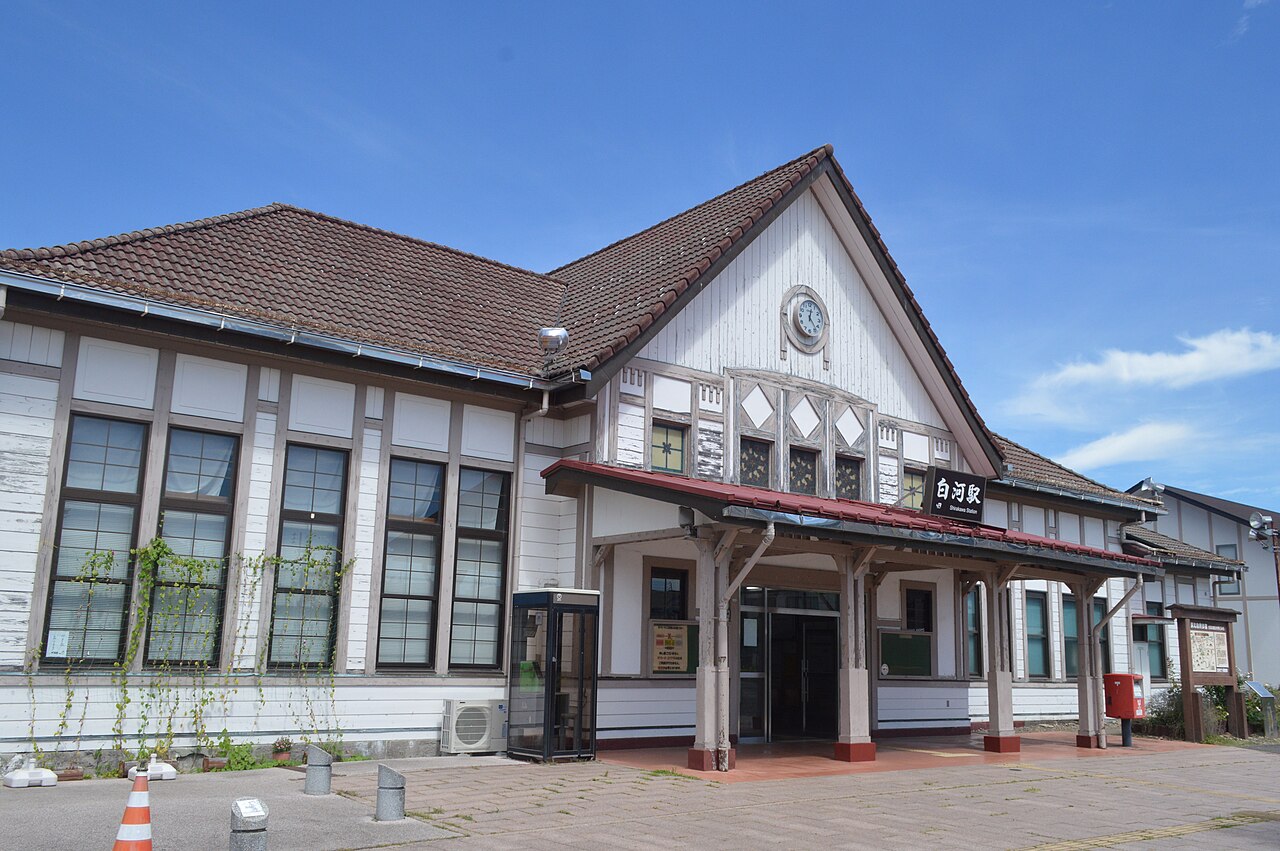
Along the Yantagawa river promenade, the path runs through a landscape where the natural scenery of each season and the old-fashioned townscape are in harmony. The Shirakawa Hristos Orthodox Church shows a regular octagonal cupola and white walls in Byzantine style, and Shirakawa Station's building keeps a retro Western-style look.
Shirakawa Ramen, Soba and the Daruma Burger
Shirakawa ramen pairs firm hand-made curly noodles with a clear, light soy-sauce soup drawn from chicken bones and pork bones, and the two blend together. The curly noodles come from starting to make them with soba-making techniques, and unlike ramen elsewhere in Japan, which mostly began at street stalls, Shirakawa ramen began in a shop.
Wariko soba is the representative dish of Shirakawa soba: mori soba divided into small dishes and tasted a little at a time with toppings such as salmon roe, nameko mushrooms and wild mountain vegetables.
The Daruma burger has a bun made from one hundred percent Shirakawa rice flour, with a fluffy, chewy texture, and the daruma face branded on it was blessed at Nanko Shrine, which enshrines the domain lord Matsudaira Sadanobu.
Getting to Shirakawa
New to rural buses and one-man trains? See how to ride them, step by step.
| From | How | Time |
|---|---|---|
| Tokyo | Tohoku Shinkansen to Shin-Shirakawa | 1 hour 15 minutes |
| Sendai | Tohoku Shinkansen to Shin-Shirakawa | 1 hour |
| Shirakawa Station (JR Tohoku Main Line) | On foot to Komine Castle | About 5 minutes |
| Shin-Shirakawa | JR bus bound for Tanakura to the Nanko Park stop | About 10 minutes |
Shin-Shirakawa is the Shinkansen stop; Komine Castle is reached on foot from Shirakawa Station, and the JR bus bound for Tanakura runs from Shin-Shirakawa to the Nanko Park stop.
Hours and Fees
| What | Hours or fare | Note |
|---|---|---|
| Three-story turret, Komine Castle | 9:00–17:00 | April to September |
| Three-story turret, Komine Castle | 9:00–16:00 | November to March |
| Komine Castle History Museum | 9:00–16:30 | Admission until 16:00 |
| Komine Castle History Museum admission | 300 yen general; 100 yen elementary, junior high and high school students | |
| Suirakuen | 9:00–17:00 | Until 16:30 from December to March |
| Suirakuen admission | 350 yen adults; 170 yen junior and senior high school students; free for elementary school students and younger | |
| Suirakuen admission with tea service | 850 yen adults; 700 yen junior and senior high school students | |
| Suirakuen (closed) | Second Wednesday December to February (following day if a holiday); second Wednesday and second Thursday in March and July; December 28 to January 3 |
Fees and hours were checked against official sources between 10 October 2026 and 9 November 2026.
The turret keeps shorter hours from November to March, the museum and Suirakuen charge admission, and Suirakuen offers a set that adds tea service.
If one day feels short for both halves, browse places to stay in Shirakawa and give the park its own morning.
Thinking of staying overnight?
Compare places to stay near Shirakawa, Fukushima, Japan →
Disclosure: This post may contain affiliate links. If you book through them, we may earn a commission at no extra cost to you.