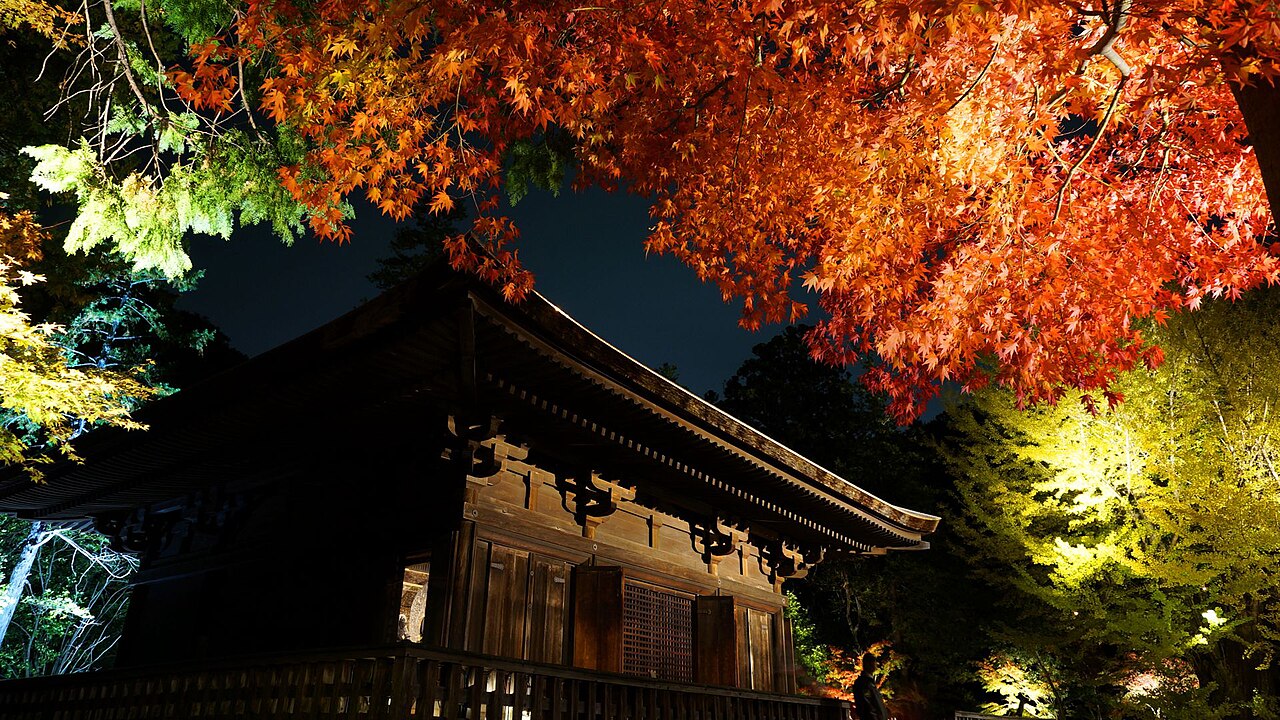
Shiramizu Amidado in Iwaki is a late Heian period Amida hall whose curved roof sits within a Pure Land garden, and the hall is a National Treasure. In autumn the large ginkgo and maple trees colour that garden, and the Coal Road, a former coal-carrying path, now runs from the hall toward Miroku-zawa, where the Joban coalfield began. One way to work through the area is to start with the hall and its garden, follow the Coal Road toward Miroku-zawa, look for the autumn colour at Takano Fudo, watch for the flash of Shioyasaki Lighthouse, and finish with the dishes that originated in Iwaki, such as sanma no pohpo-yaki and uni kaiyaki. The hall is the reason to come; the Coal Road, Takano Fudo, the coast and the fish are what turn the visit into a full plan.
Shiramizu Amidado: the National Treasure Hall and its Pure Land Garden
Shiramizu Amidado, the Amida hall of Ganjoji Temple, dates from the late Heian period and is said to have been built by Tokuhime, daughter of Fujiwara no Kiyohira, for the memorial service of her husband Iwaki Norimichi. The hall's curved roofline harmonizes with the Pure Land garden around it, and it is the only building in Fukushima Prefecture designated as a National Treasure.
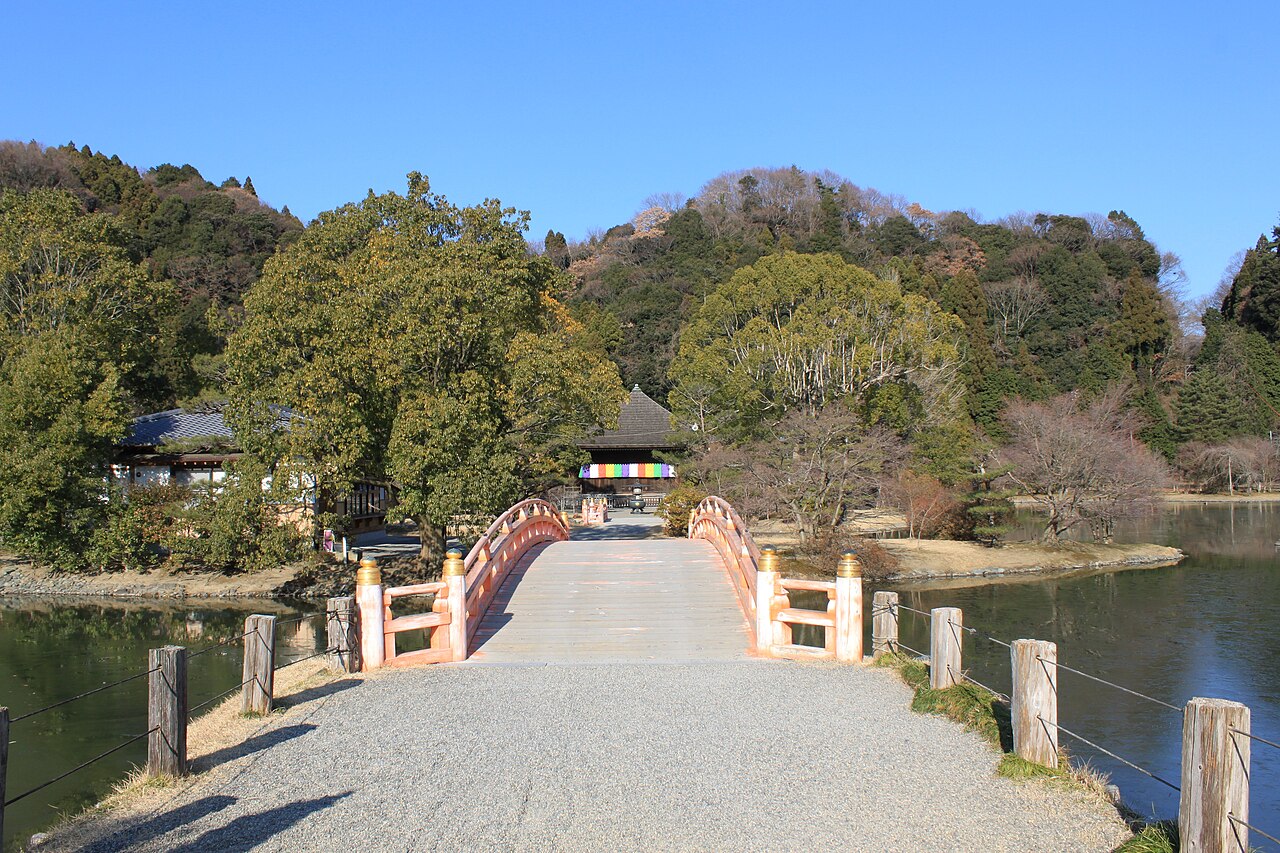
In autumn the large ginkgo and maple trees colour the garden, and maples and other trees turn around the hall, so the roof and the garden are seen together as one view. The large ginkgo of Shiramizu Amidado is designated a city natural monument, and it is the tree to pick out first.
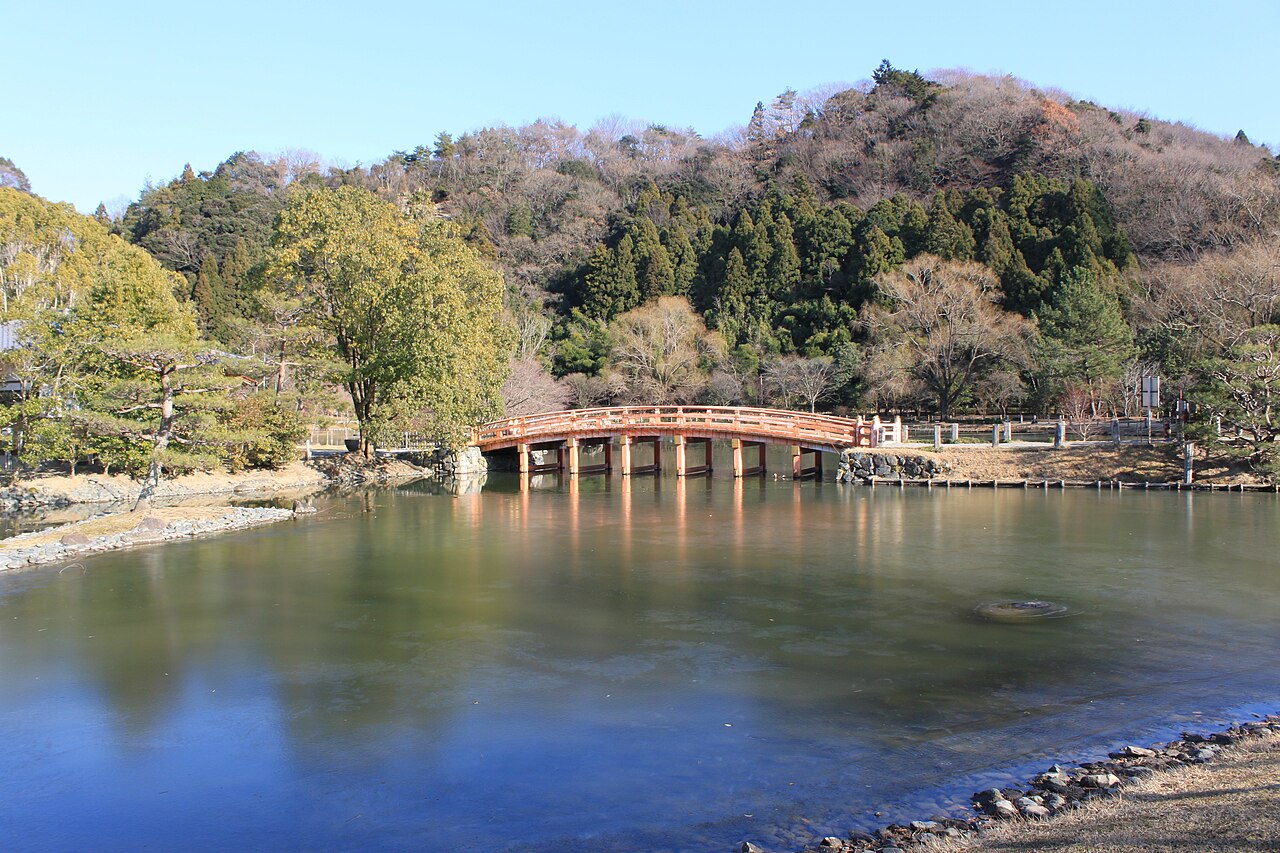
If you want to see a Heian period hall set in a Pure Land garden, give the garden as much attention as the hall, since roof and garden were set together to be seen as a whole.
The Coal Road, the Tsurushi Kannon and the Miroku-zawa Coal Museum
The Coal Road is a mountain path that once carried coal, and the rest spots used during transport have been set up with explanation photos. It is now a footpath linking the National Treasure hall and Miroku-zawa, the birthplace of the Joban coalfield.
Along the Coal Road are the Tsurushi Kannon, the monument to Katayose Heizo and the coal discovery, and the Miroku-zawa coal museum. The Tsurushi Kannon hall is the fourth temple of an Iwaki pilgrimage of thirty-three Kannon temples. The path to the museum also passes a marker at the site where coal was excavated.
The museum is private, built on mining tools and materials a former coal miner collected over many years, and it also shows an actual coal seam at a face excavated and exposed. If you want to see what the coal era left behind, walk the Coal Road from the hall to the museum, where the tools and the seam close the story.
The Old Sumo Ring Site, a Small Shrine and Autumn Colour at Takano Fudo
The Uchigo Sanjinja ruins once held a roofed sumo ring, and in the coal mining era people gathered there. The old sumo ring site is now used as Uchimachi Park, and the ruins are designated as a Modernization Industrial Heritage site, which places the park in the same coal story as the Coal Road.
In autumn, yellow ginkgo leaves spread like a carpet in front of a small shrine. The shrine holds an iron hanging Sho Kannon statue in high relief, said to have been made in the late Kamakura period.
At Takano Fudo, in the autumn colour season, a winding slope leads up to red maples and rows of small Jizo statues. If you like small sites with a story behind them, choose the sumo ring park, the shrine's iron Kannon and the Jizo rows at Takano Fudo, and let autumn supply the ginkgo carpet and the red maples.
Shioyasaki Lighthouse and the Usuiso Coast
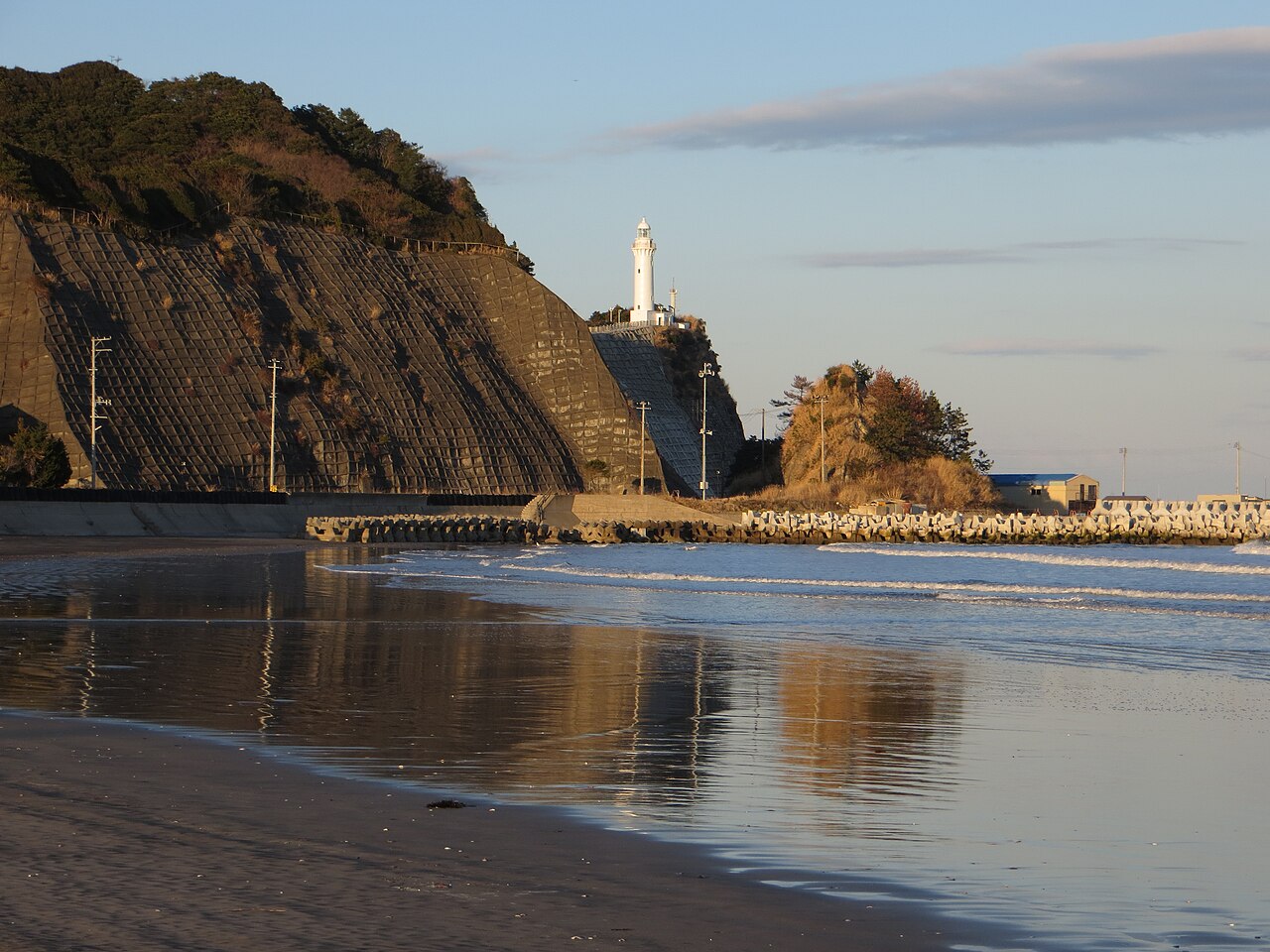
Shioyasaki Lighthouse gives a single white flash every fifteen seconds, and visitors can go inside.
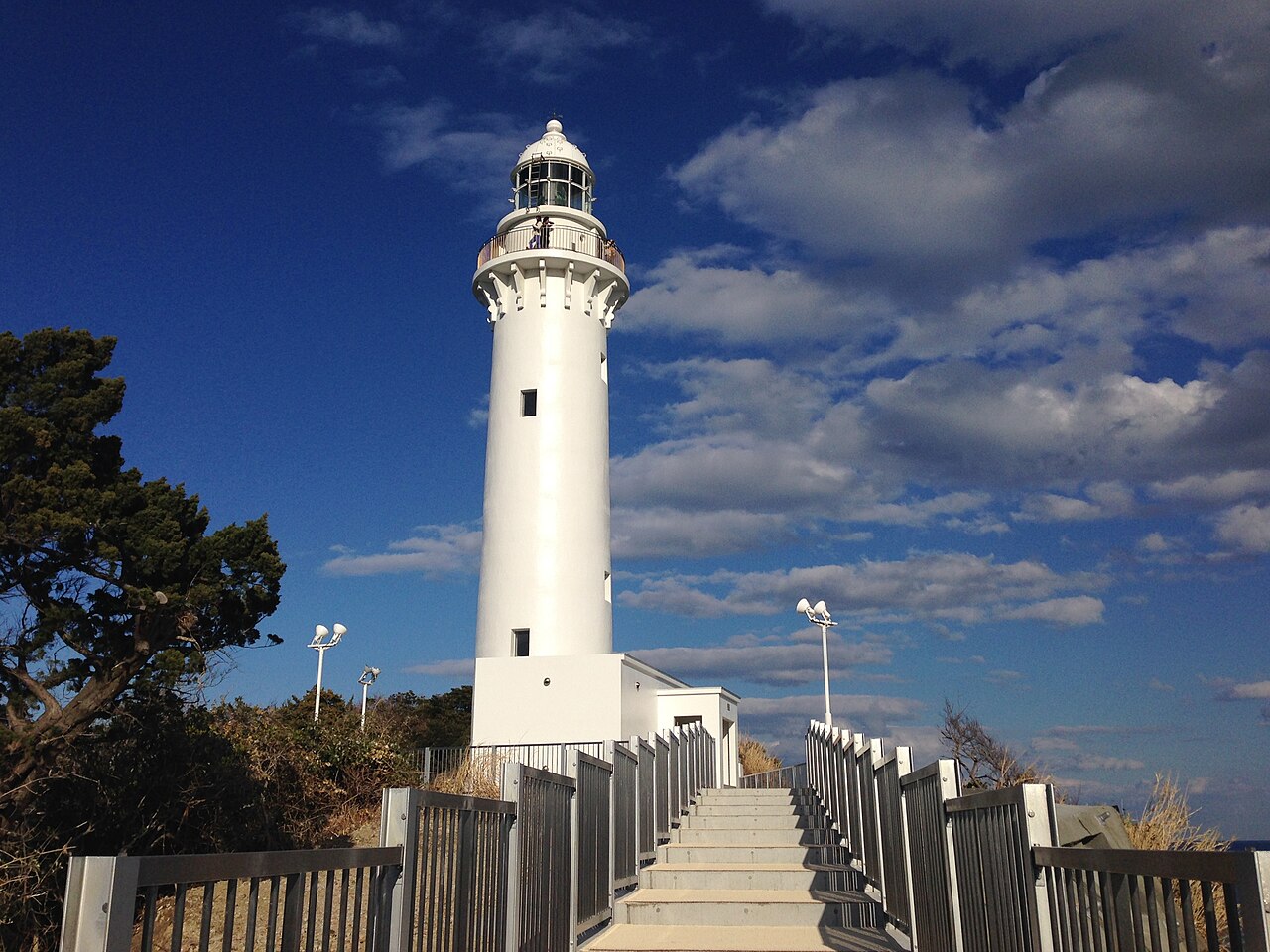
At Usuiso, the sandy beach and the highly transparent sea were selected as one of Japan's Nagisa Hyakusen. If a stretch of coast suits you after the hall, Usuiso gives you sand and clear sea, and the lighthouse a flash to count.
The Usuiso tsunami memorial is a granite monument carved with the names of one hundred twenty-two residents and others who died. It records the lesson to evacuate immediately when a big earthquake comes, and passes the tsunami disaster on to the next generation. On a seawall heavily damaged by the tsunami of the Great East Japan Earthquake, a bronze statue of a fisherman who worked on the recovery searches for fish from the tip of a boat, an image of living with the sea rather than fearing it.
Iwaki Seafood: Pohpo-yaki, Uni Kaiyaki and Mehikari
The sea off Iwaki is a fishing ground where a cold current and a warm current meet. Three dishes originated here: sanma no pohpo-yaki (minced sanma grilled with miso, green onion and ginger), uni kaiyaki (raw sea urchin steamed on a hokki clam shell) and sanma no mirin-boshi (sanma soaked in a seasoned sauce and dried).
A seafood shop in Iwaki sells its signature pickles and sea urchin miso, plus uni kaiyaki, miso-pickled items and dried fish, and its attached canteen serves Iwaki seafood. A seafood restaurant offers a sashimi lunch set, with fried mehikari, a fish of Iwaki, as a regular item.
A market canteen serves set meals, bento boxes, morning-market ramen and chashu-men and, in season, Ippei anko ramen. If seafood is the plan, let the season decide: first bonito in early summer, anko nabe in winter. To take the hall, the Coal Road and the Iwaki fish without rushing, places to stay in Iwaki let you spread the plan out.
Getting to Shiramizu Amidado
| Leg | How | Time |
|---|---|---|
| Tokyo Station to Iwaki Station | JR Joban Line limited express Hitachi | About 2 hours 22 minutes |
| Iwaki Station to the bus stop for Shiramizu Amidado | Route bus bound for Kawadaira from boarding point 3 | About 18 minutes |
| The bus stop for Shiramizu Amidado to the hall | On foot | About 5 minutes |
| Iwaki Station to Uchigo Station | JR Joban Line | About 4 minutes |
| Iwaki Station to Shiramizu Amidado | Car, about 7 km | About 20 minutes |
| Kawadaira to Iwaki Station | Route bus, a listed example departing 18:12 and arriving 18:41 | 490 yen |
The route bus from Iwaki Station runs on weekdays only. From the Uchigo Station Entrance stop, the route bus to the bus stop for Shiramizu Amidado takes about five minutes.
New to rural buses and one-man trains? See how to ride them, step by step.
Hours and Fees
| Place | What | Hours or fee |
|---|---|---|
| Shiramizu Amidado | Admission | Adults 500 yen; elementary school children 300 yen; free for preschool children |
| Shiramizu Amidado | Hours, April to December | 9:00 to 16:15 (gate closing) |
| Shiramizu Amidado | Hours, January to March | 9:00 to 15:45 (gate closing) |
| Shioyasaki Lighthouse | Morning visits | 9:00 to 12:00 all year round |
| Shioyasaki Lighthouse | Afternoon visits, March to September | 13:00 to 16:30 on weekends and similar days; 13:00 to 16:00 on weekdays |
| Shioyasaki Lighthouse | Visiting fee | 300 yen (donation) for junior high school students and older |
Admission reception at the hall ends thirty minutes before the gate closes. From October to February the lighthouse's afternoon visiting hours run from one to four, and it is closed for lunch from twelve to one.
Where to stay
Places to stay near Iwaki, Fukushima, Japan →
Disclosure: This post may contain affiliate links. If you book through them, we may earn a commission at no extra cost to you.