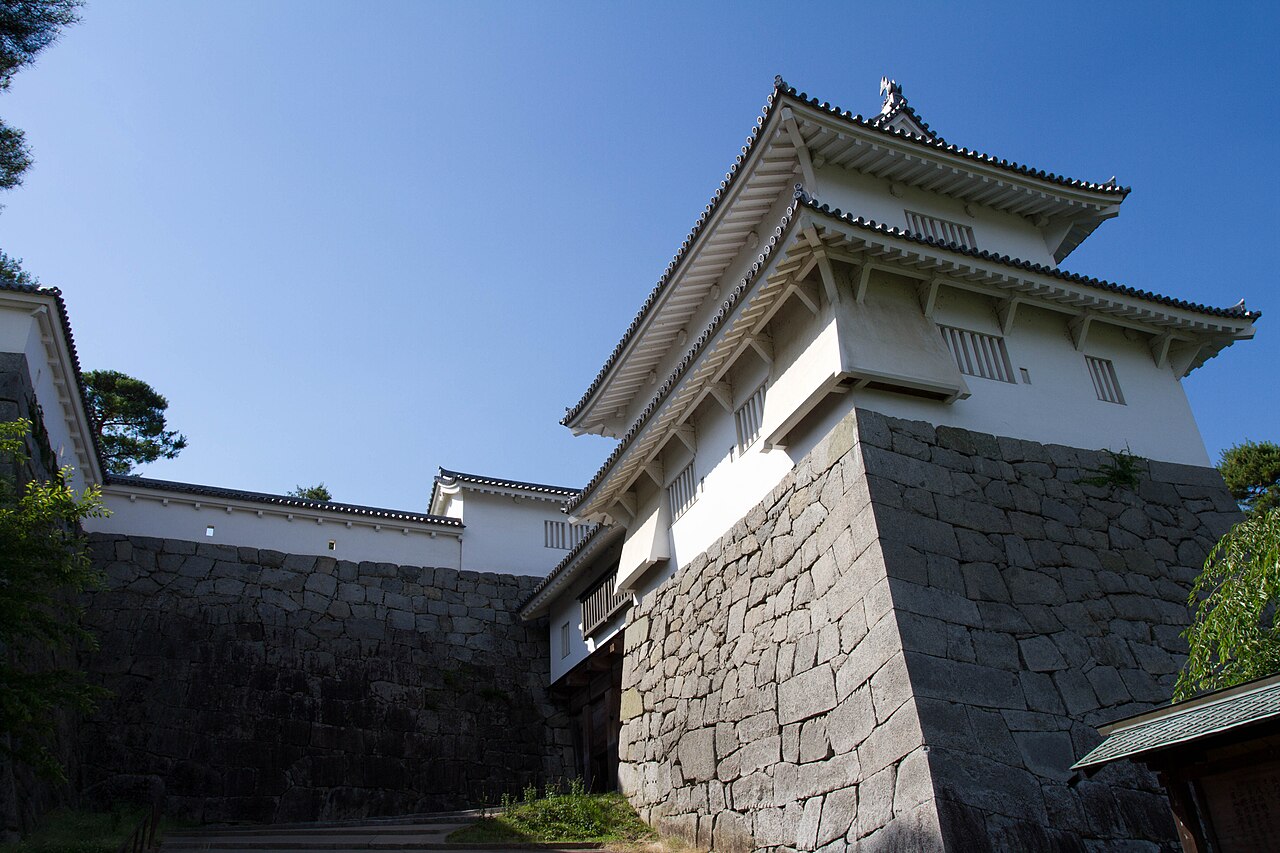
Nihonmatsu is a castle town in Fukushima where the stone wall at the main keep site of Kasumigajo Castle was laid by the same group of stone masons who built the walls of Azuchi Castle. Every October the taiko-dai floats of the Lantern Festival are pulled through the city with the shouts of the young men's groups and festival music. Up in the hills, Dake Onsen has a Milky Day when the source water turns white like milk, and down in the streets a distinctive aroma of fermenting sake can be smelled inside Himonoya Shuzoten.
Kasumigajo Castle Ruins and the Chrysanthemum Dolls
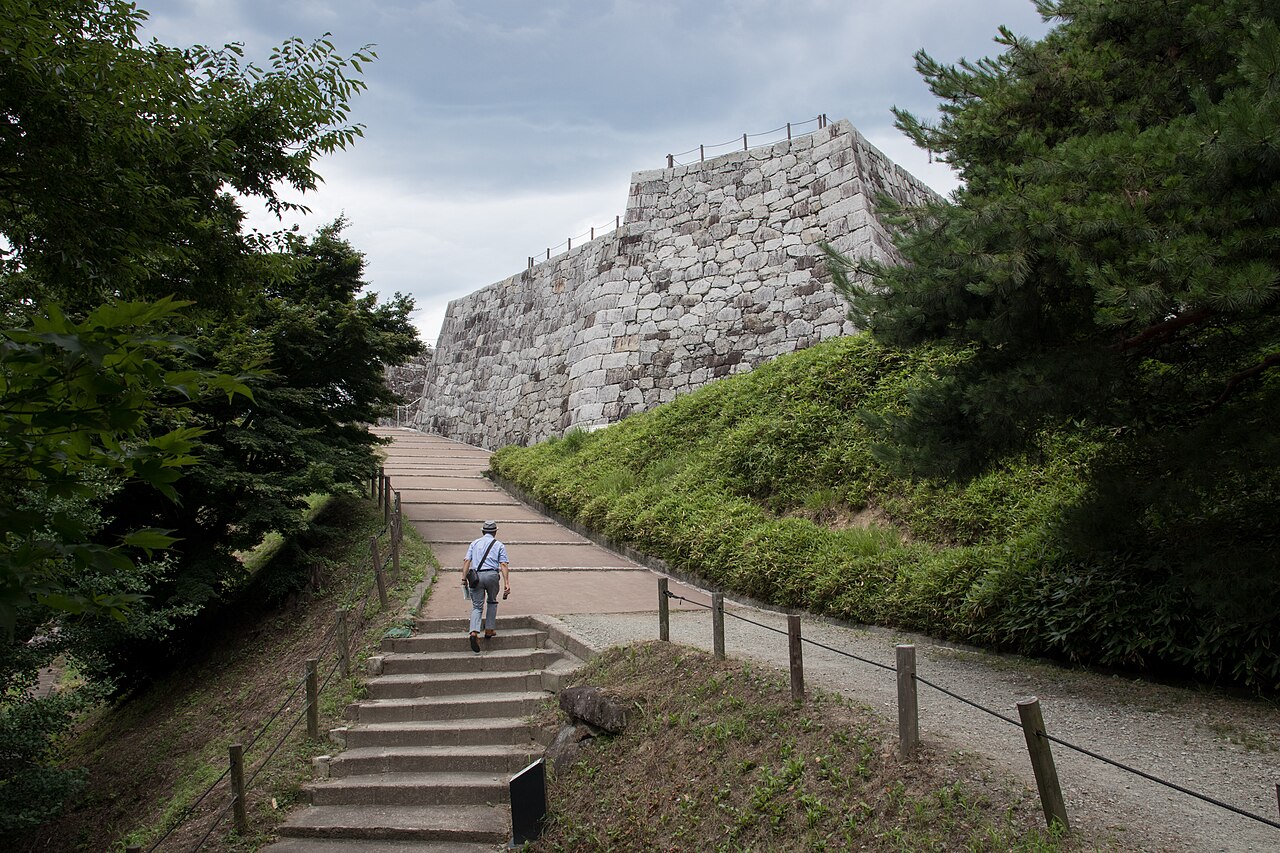
The stone wall at the main keep site of Kasumigajo Castle was built by a group of stone masons who also laid the stone walls of Azuchi Castle. Near the walls, the Hikage well is said to date from around the year fourteen hundred and reaches sixteen metres down.
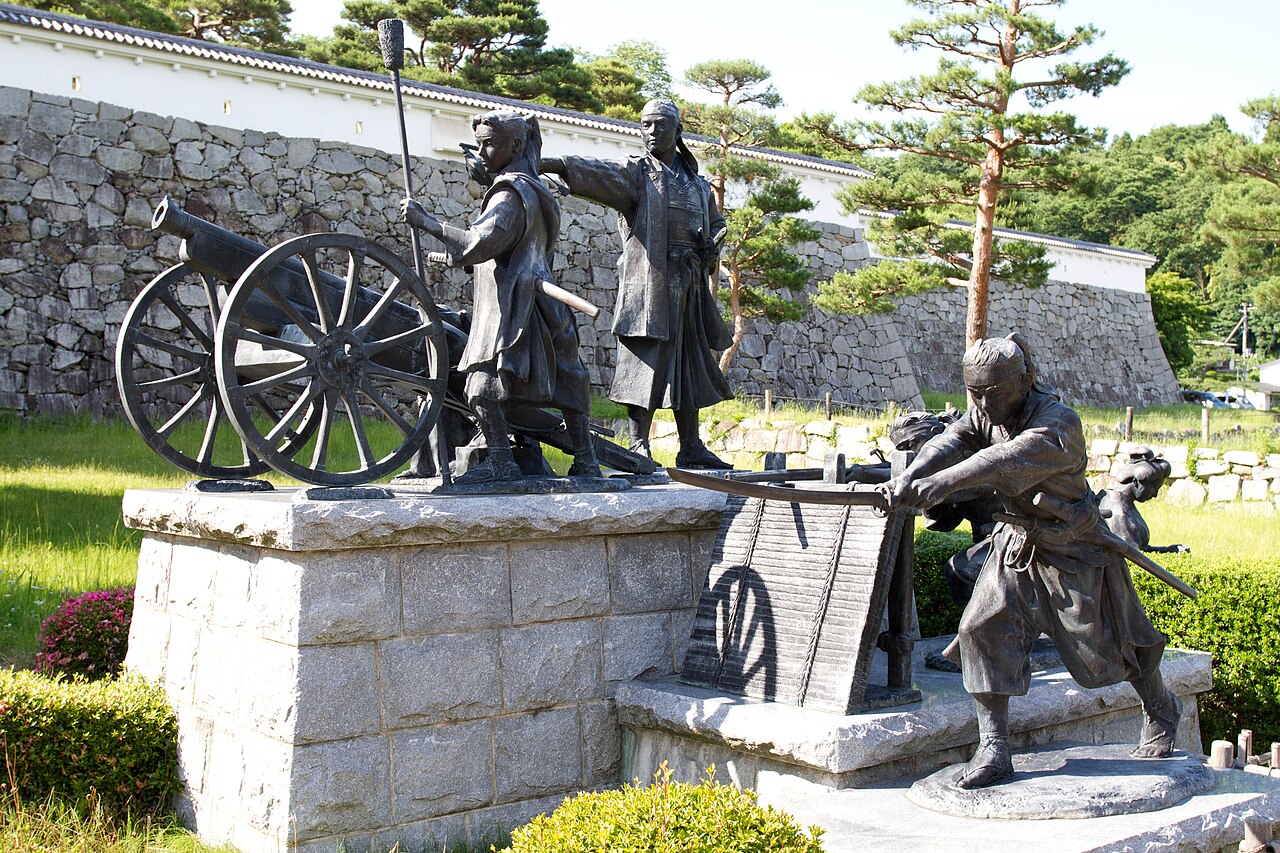
A group statue on the grounds honors the Nihonmatsu Boys Corps, who gave their young lives defending their hometown in the Boshin War.
Elsewhere on the grounds, a natural stone is said to be an ox that the lord who built the castle sacrificed, and that turned into stone.
In autumn the Nihonmatsu Chrysanthemum Doll Exhibition fills a venue described as full of chrysanthemum flowers and turning autumn leaves. Dressing a doll in chrysanthemum flowers is a traditional craft, and chrysanthemum flower competitions for Fukushima and for Nihonmatsu run alongside the exhibition. If you have only a short stay, the stone walls and the Boys Corps statue are the core of a visit, and the exhibition is the reason to time it for autumn.
The Lantern Festival and Its Drum Floats
The Nihonmatsu Lantern Festival is the annual grand festival of Nihonmatsu Shrine, held for three days from the first Saturday of October. Its origin is said to lie with Niwa Mitsushige, who entered the castle as lord and enshrined Nihonmatsu Shrine where his subjects could worship freely.
On the opening night, seven taiko-dai floats, each hung with strings of lanterns from its neighbourhood, come out and carry the bonfire of Nihonmatsu Shrine to their red lanterns. The floats parade through the city with the shouts of the young men's groups and festival music.
On the second day the floats return to their own neighbourhoods in the evening, light their lanterns again and parade through each one. On the third day they are pulled around their neighbourhoods in the daytime, and at night joint processions are held by four neighbourhoods and by three. After those processions the festival music does not stop and keeps ringing out under a sky full of stars until late at night, a good reason to stay the night.
Dake Onsen and the Milky Day
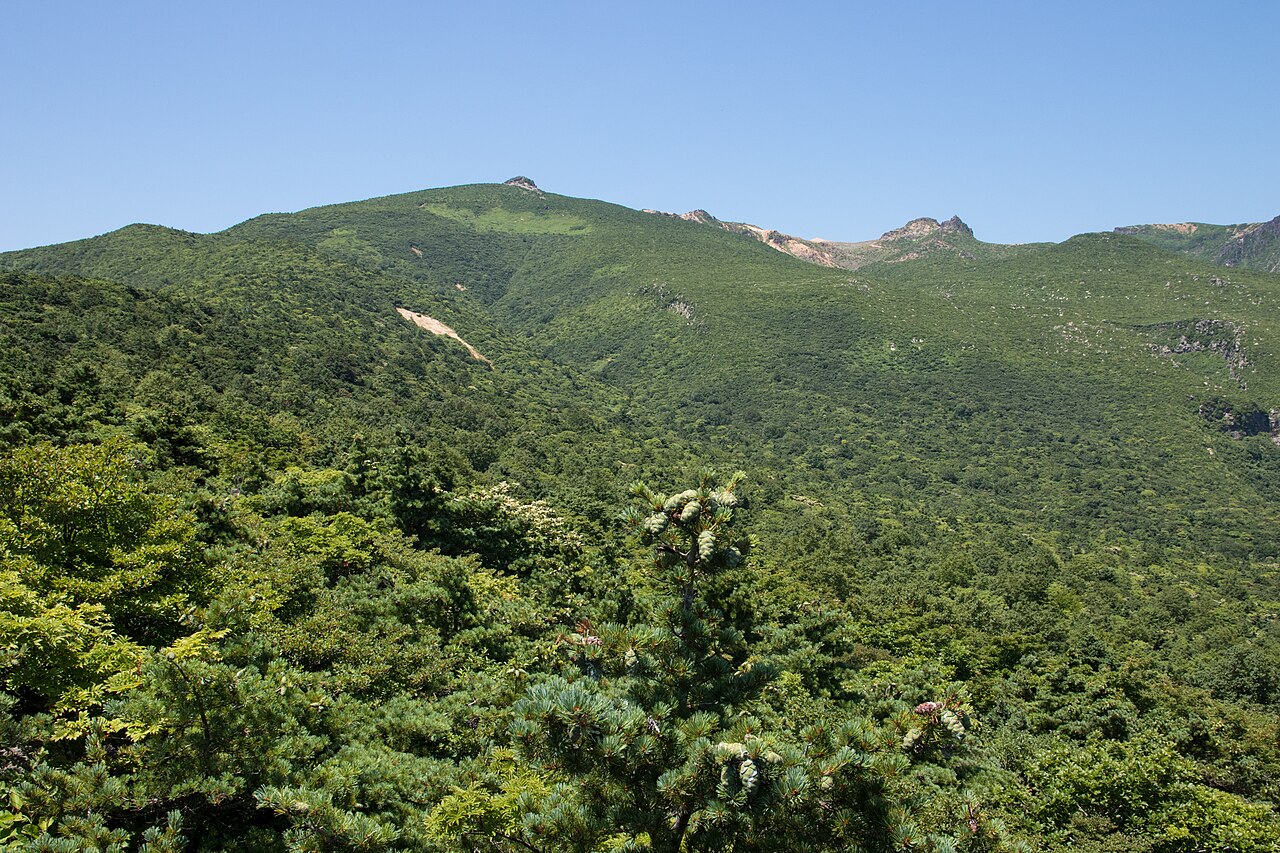
The spring water of Dake Onsen is acidic, with a pH of two point five, a rare type of spring nationwide. It is piped from a source on the mid-slope of Mount Adatara down to the hot-spring town, running through a yudoi flume along the mountainside. On the way the water is naturally agitated inside the pipe, and it is gentle on the skin even though it is an acidic spring.
The water is usually colourless and transparent, but once a week it turns cloudy white and milk-like, which gave Milky Day its name. That is the day the yumori keepers scrape away the yubana, a sulphur component stuck inside the yudoi, with a handmade scrubbing brush, and the flushed yubana turns the normally clear water white. Milky Day is also when Midorigaike pond turns a vivid emerald green.
From the two pond parks in the hot-spring town, Mount Adatara is in view on clear days, with spring and summer views, autumn foliage and winter snow. The mountain opening is held on the third Sunday of May each year and may change without notice. For one warm stop at the end of the day, the day-trip baths at Dake Onsen are in the table below.
Sake, Sweets and Hands-On Craft
Nihonmatsu has four sake breweries, and inside Himonoya Shuzoten a distinctive aroma of fermenting sake can be smelled. During the brewing period visitors can view the work site, and among the local labels is a sweet sake that suits Nihonmatsu snacks.
For food, Kunitaya runs a miso and soy sauce brewery with a cafe in a converted storehouse, serving Nihonmatsu local cuisine. Every set comes with zakuzaku, a mini sweet and a drink; zakuzaku is a traditional soup of many ingredients, mainly vegetables, cut into dice, and it is eaten on special occasions such as ceremonies of celebration and mourning. Nihonmatsu also has many long-established Japanese confectionery shops, and at one of them visitors can make fine Japanese sweets with a craftsman. The session takes about sixty minutes.
Those who like making things can choose between sweets making and the traditional furniture shop, where visitors do plane work and wooden-nail driving with a craftsman. The wood surface, rough at first, becomes smooth under the plane, while the wooden nails are very thin and break if struck too hard. In the shop's furniture, closing one drawer pushes another out by air pressure. At Ryusenji, visitors can try bell striking at the bell tower in the temple grounds, and families can strike the bell together.
The Demon Hag of Adachigahara
In the legend, a nursemaid in a Kyoto noble's residence raised a princess, and when the princess fell seriously ill a diviner said the cure was the living liver of a pregnant woman. In the legend, on a late-autumn evening when a cold wind blew, a young travelling couple asked for lodging at the rock cave where the nursemaid lived. In the legend, she then realized that the young wife was her own daughter, long parted from her, went mad with shock and became a demon, known as the demon hag of Adachigahara.
The grave of the demon hag lies near a temple that holds the rock cave of the story, and because of an embankment near the grave, visitors who come by car are asked to walk from a nearby parking lot. Nearby, a memorial hall stands with the birthplace house it commemorates, a former sake brewery with a cedar ball hanging from it to announce new sake. The guided course through the Adachigahara village with the grave takes about an hour to an hour and a half, so treat it as an add-on after the castle rather than a first stop.
Getting to Nihonmatsu
| Leg | How | Time and estimate |
|---|---|---|
| Nihonmatsu Station to the Chrysanthemum Doll venue | On foot | About 20 minutes |
| Expressway interchange to the venue | By car | About 5 minutes |
| Nihonmatsu Station to Nihonmatsu Shrine | On foot | About 5 minutes |
| Nihonmatsu Station to Himonoya Shuzoten | On foot | About 5 minutes |
| Nihonmatsu Station to a Japanese confectionery shop | On foot | About 5 minutes |
| Nihonmatsu Station to Ryusenji | By taxi | About 10 minutes |
| Nihonmatsu Station to a furniture shop | By taxi | About 10 minutes |
| Dake Onsen to Sky Pia Adatara Active Park | By car | About 5 minutes |
Rental bicycle applications can be made at the tourist information office.
New to rural buses and one-man trains? See how to ride them, step by step.
Hours and Fees
| Place | What | Hours or fee |
|---|---|---|
| Tourist information office in the station | Hours | 9:00-17:30 daily, unstaffed 12:15-13:00 |
| Electric-assist bicycle rental | Fee | 300 yen for up to 3 hours |
| Nihonmatsu Chrysanthemum Doll Exhibition | Hours | 9:00-16:00, no closing days during the period |
| Nihonmatsu Chrysanthemum Doll Exhibition | Adult admission | 1,000 yen |
| Himonoya Shuzoten brewery tour | Hours | 9:00-16:30 |
| Himonoya Shuzoten brewery tour | Fee | Tour 300 yen, tasting 500 yen |
| Daishichi brewery tour | General course | 2,000 yen, about 60-70 minutes |
| Daishichi brewery tour | Closing days | Saturdays, Sundays and public holidays in principle |
| Day-trip bath at mt.inn | Hours | Until 21:00, last entry 20:30 |
| Day-trip bath at a hot-spring inn | Hours | 11:00-15:00 |
| Day-trip bath at a hot-spring inn | Adult fee | 900 yen |
| Japanese sweets making | Fee | 1,500 yen per person |
| Ryusenji | Visiting hours | 10:00-18:00 |
| Furniture shop | Hours | 10:00-18:30, closed Wednesdays |
| Memorial hall and birthplace | Hours | 9:00-16:30, admission until 16:00 |
| Memorial hall and birthplace | Adult admission | 410 yen |
| Volunteer guide | Booking | Reserve by 10 days before the date |
| Sky Pia Adatara Active Park | Three-event experience | 3,000 yen for adults, tax included |
To make it an overnight trip, start with places to stay in Nihonmatsu.
Where to stay
Places to stay near Nihonmatsu, Fukushima, Japan →
Disclosure: This post may contain affiliate links. If you book through them, we may earn a commission at no extra cost to you.