Every guide to Tokyo will send you to Mount Takao. Almost none of them tell you how to be alone there. The mountain is described as rising to a 599-metre summit at the city's western edge, drawing several million climbers a year — by some counts the most-climbed mountain in the world. Yet the crowds follow a script: one paved trail, one ride up, a few busy midday spots. Step off that script and Takao turns out to have a quiet side that starts at the trailhead and runs all the way past the summit.
Start with the stream: Trail Six
Trail Six is described as the mountain's streamside route, a wooded ravine walk that passes small sacred spots on its way to the top. Guidebooks describe the going as varied and occasionally rough, better suited to proper walking shoes than sneakers. At a rock hollow along the lower stretch stands Iwaya Daishi, where according to local tradition the monk Kobo Daishi is said to have sheltered a mother and child from a storm.
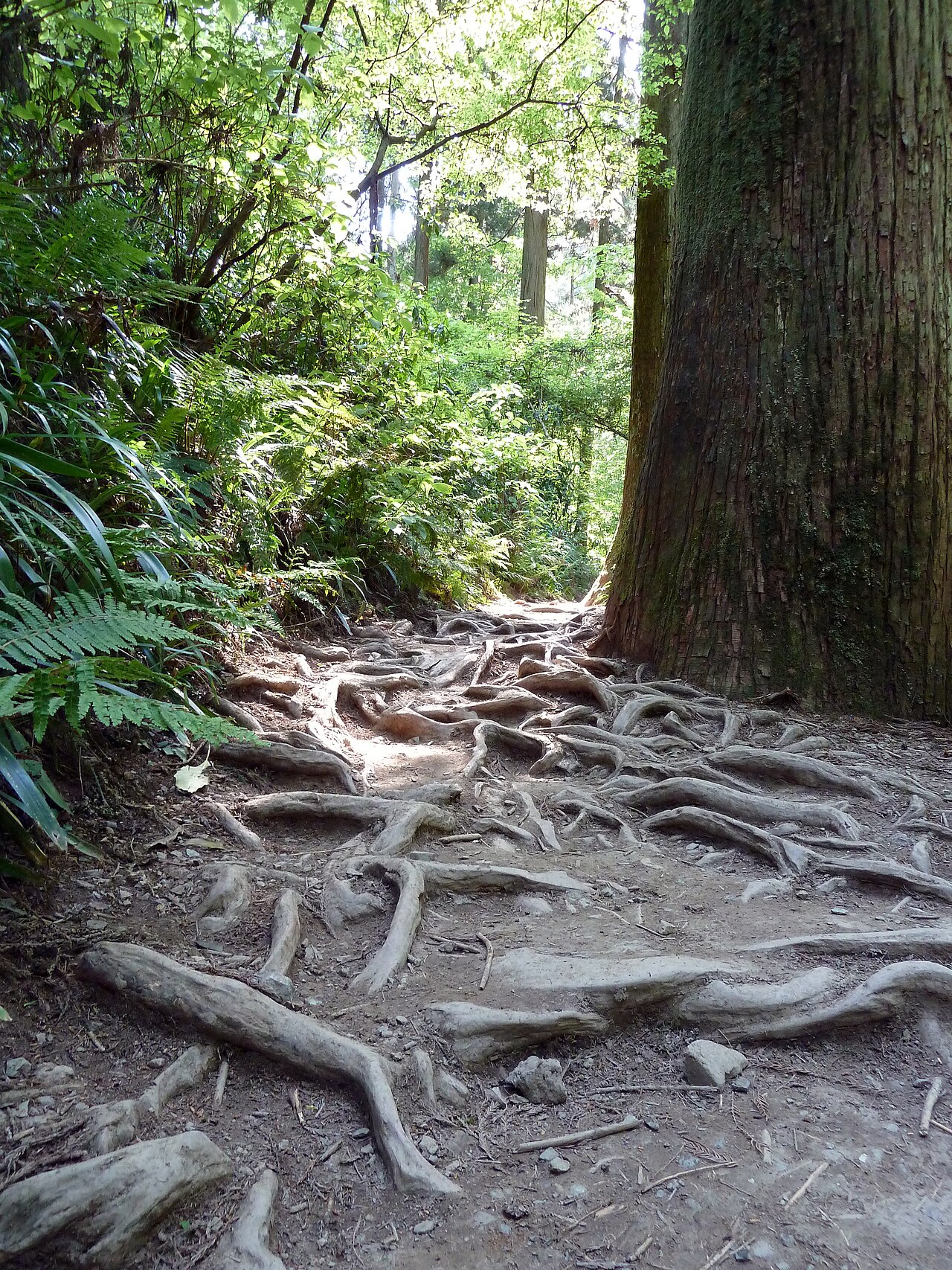
Past the small waterfall the trail is described as threading over exposed tree roots, and later the stream itself briefly becomes the path, crossed on stepping stones. Along the water, a line of small interpretive boards is described as introducing the creatures of the stream banks — an invitation to slow down that most walkers skip. The final approach is described as a long renewed staircase, the hardest stretch of the whole route and a fine excuse to stop hurrying.
The temple in the fog
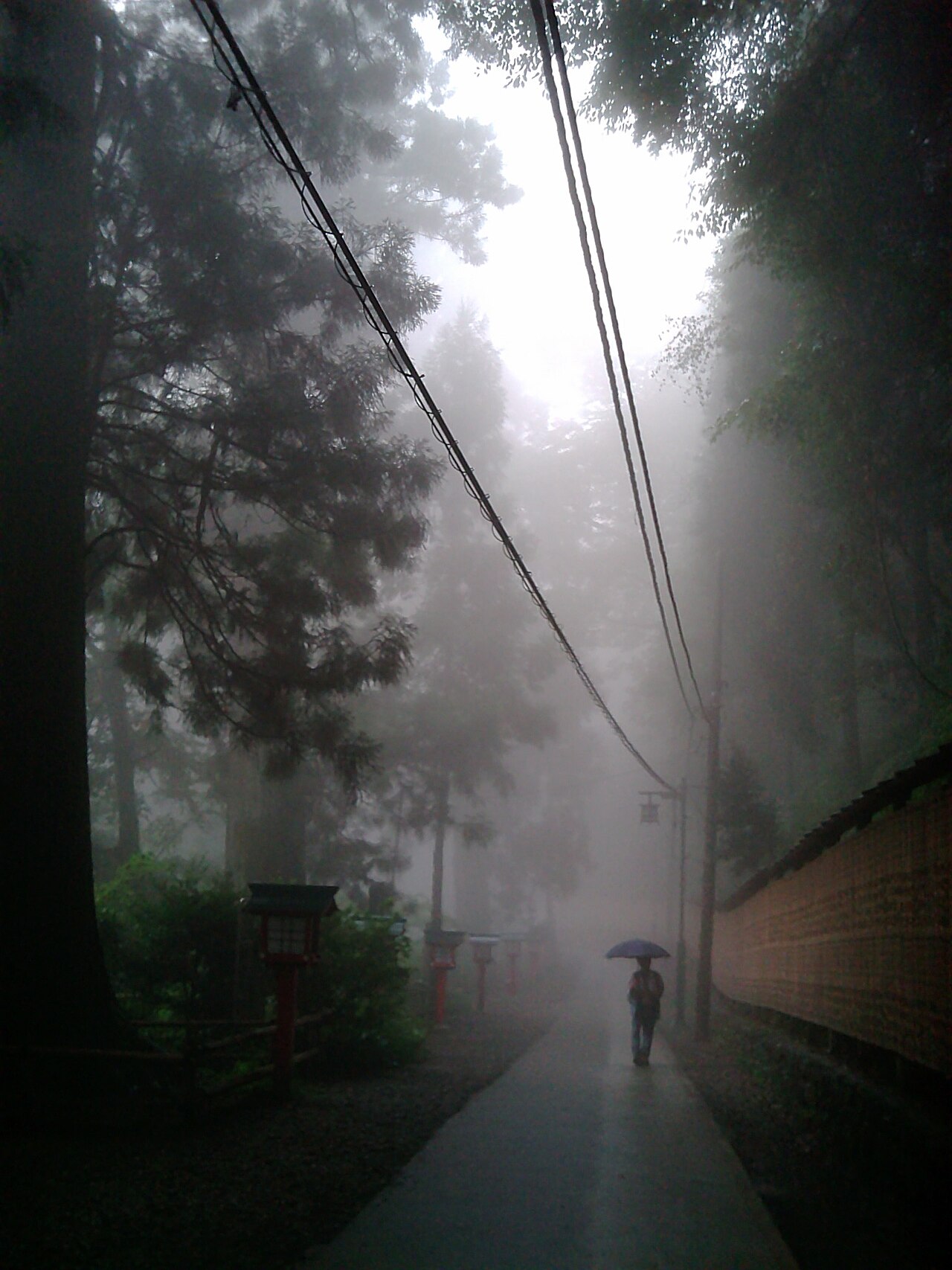
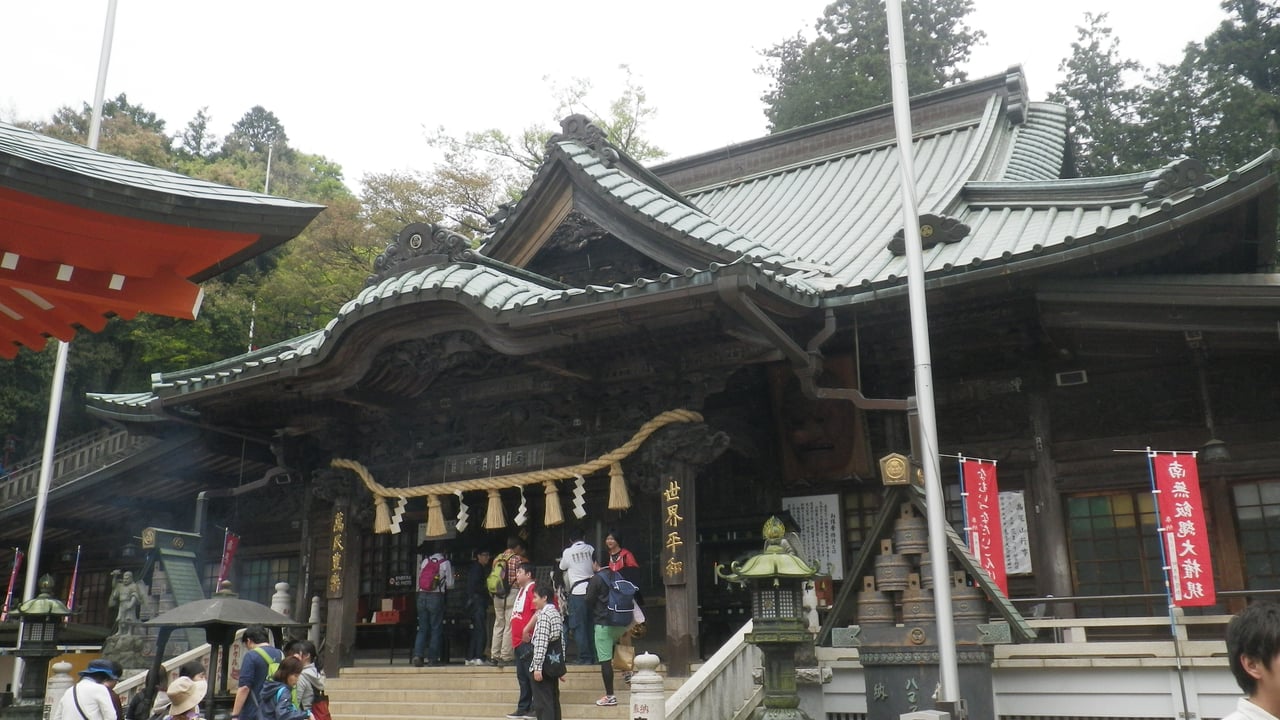
Halfway up the mountain, Yakuoin is described as one of the head temples of its Shingon lineage, ranked alongside Naritasan and Kawasaki Daishi. The temple is described as having been founded in 744 at imperial order, with the mountain deity Izuna Daigongen enshrined as its principal image since the fourteenth century. Tengu are everywhere on the grounds — long-nosed guardians and beaked ones alike, said to serve the deity as bringers of protection and luck, according to local tradition. One theory holds that the tengu are said to have been modelled on the yamabushi mountain ascetics who trained here, according to local lore.
The main gate is described as built entirely of cypress, sheltering the four Buddhist guardian kings. In the main hall, a fire rite is described as being performed for visitors through the day, and you can simply stand at the back and watch the flames.
Over the top: the ridge almost nobody walks
For a genuinely empty day, guidebooks describe continuing past Takao into Ura-Takao — the back-country ridge walk linking Mount Jinba and Mount Kagenobu that few day-trippers ever touch. On Jinba's grassy summit a white horse statue is described as standing over broad, airy highland views. From Kagenobu the whole Kanto plain is described as spreading out below.
Even on the main mountain there are overlooked corners: the small Konpira lookout partway up is described as a spot most climbers walk straight past, with the city's towers visible on a clear day. If you would rather have the logistics handled, there are guided day tours into Takao and western Tokyo that start from the city.
Where to stay
Places to stay near Mount Takao →
Disclosure: This post may contain affiliate links. If you book through them, we may earn a commission at no extra cost to you.
The foot of the mountain is the best-kept secret
The quietest part of Takao is not on the mountain at all. A short way from the trailhead area, Komagino Garden is described as a former doctor's residence turned formal Japanese garden, with dry-landscape and pond-strolling styles laid out side by side. Nearby, the Tama Forest Science Garden is described as the public face of a national forestry research institute, its wooded grounds welcoming visitors, with a small science museum inside. Further along, the Musashino Imperial Graves are described as four imperial mausoleums set among towering cedars, where quiet, formal visits are welcomed. Taken together, guidebooks describe this side of Takao as a scatter of gardens, research forests, and imperial grounds that most visitors never learn exists.
Soba, then a bath
Back near the trailhead, the soba houses are the reward. Takahashiya is described as serving grated-yam soba from a shopfront founded in the Tempo era. A few doors along, Momijiya Honten is described as a family soba shop from the Meiji era, known for its tororo bowls and roast chestnuts to take away. Beside the trailhead, a hot-spring bathhouse is described as offering outdoor baths and cypress tubs — the correct final chapter to a mountain day.
Getting there, and up
From Takaosanguchi Station at the end of the Keio line, the cable car's Kiyotaki base station is about a five-minute walk. Cars run from eight in the morning at fifteen-minute intervals, the ride up takes about six minutes, and the last run shifts with the season. A few minutes' walk from the same station stands the TAKAO 599 MUSEUM. It is a complex devoted to the mountain's nature, with film exhibits and a cafe — a good first stop, and a better rainy-day anchor.
A one-way ride on either the cable car or the lift costs 490 yen for adults and 250 yen for children. A round trip on either one costs 980 yen for adults and 500 yen for children. On the cable car only, a discounted one-way fare for riders with disabilities and one companion is 250 yen for adults and 120 yen for children. The same discount brings a cable-car round trip to 500 yen for adults and 240 yen for children.
Making it a quiet day
In the blossom and foliage seasons the mountain is described as busy even midweek, with the crush heaviest early in the morning; guidebooks describe a later start as the calmer choice. Route choice is the other half of the equation: the numbered trails and back routes are described as fanning out across the whole mountain, so the paved main path is never the only way. The reward for the detour is real nature — the mountain's flora is described as running to some sixteen hundred plant species, including a violet first found here. Flying squirrels are described as the resident mammal of the cedars, gliding between the trees after dark. Trail conditions, facility timetables, and seasonal events move around through the year, so check official information before visiting.
If Takao whets your appetite for the quiet side of western Tokyo, our guides to Mount Mitake's shrine settlement and the Okutama valley continue the same idea deeper into the mountains. Compare options and book: Takao and Tokyo day trips or Okutama outdoor experiences.