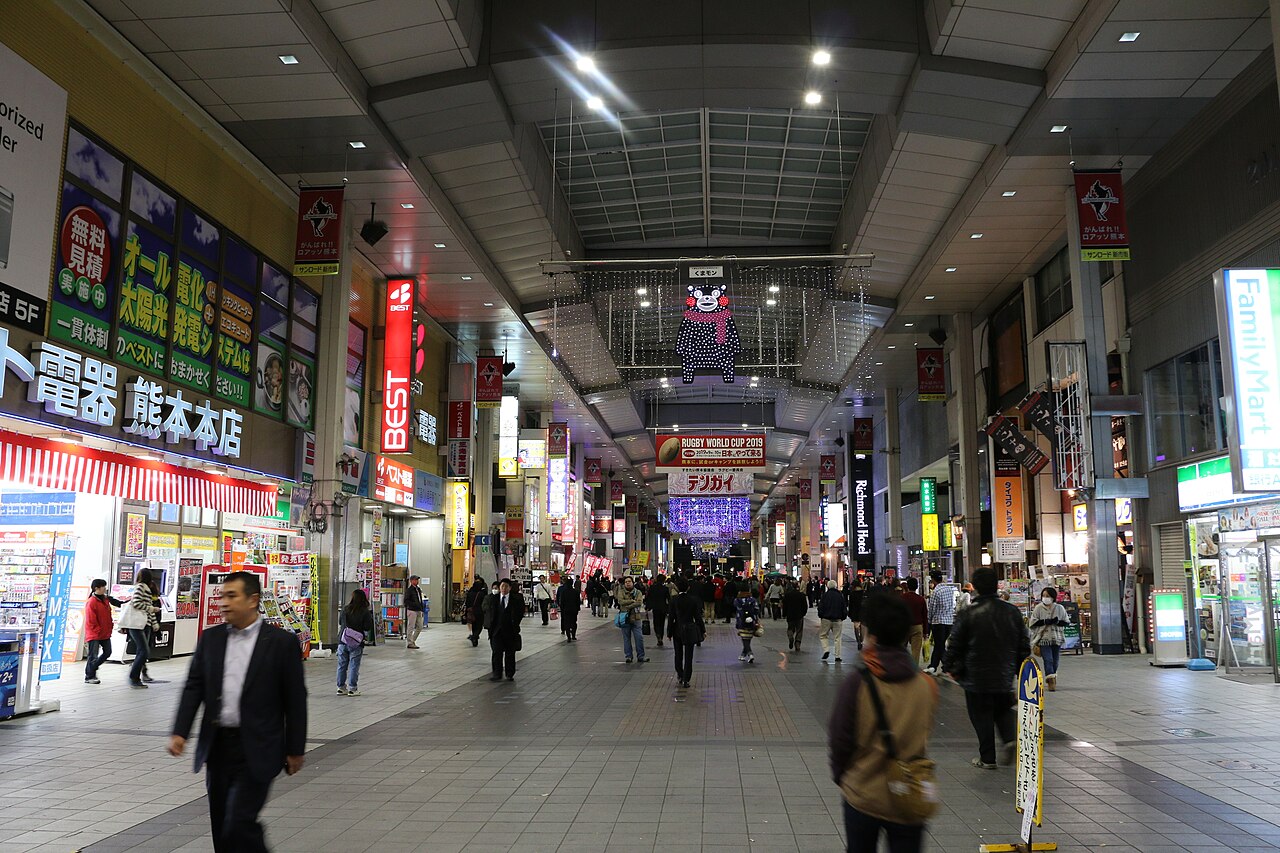
The regular illumination of Kumamoto Castle shifts in a gradation from warm colour to white, a reason to plan the day around nightfall. Horse sashimi shops keep the meat chilled as a whole block until an order comes in, then slice it and serve it freshly cut. The Kumamoto City Tram, whose vehicles range from retro cars to the ultra-low-floor COCORO, carries visitors between these sights.
Kumamoto Castle and Its Illumination
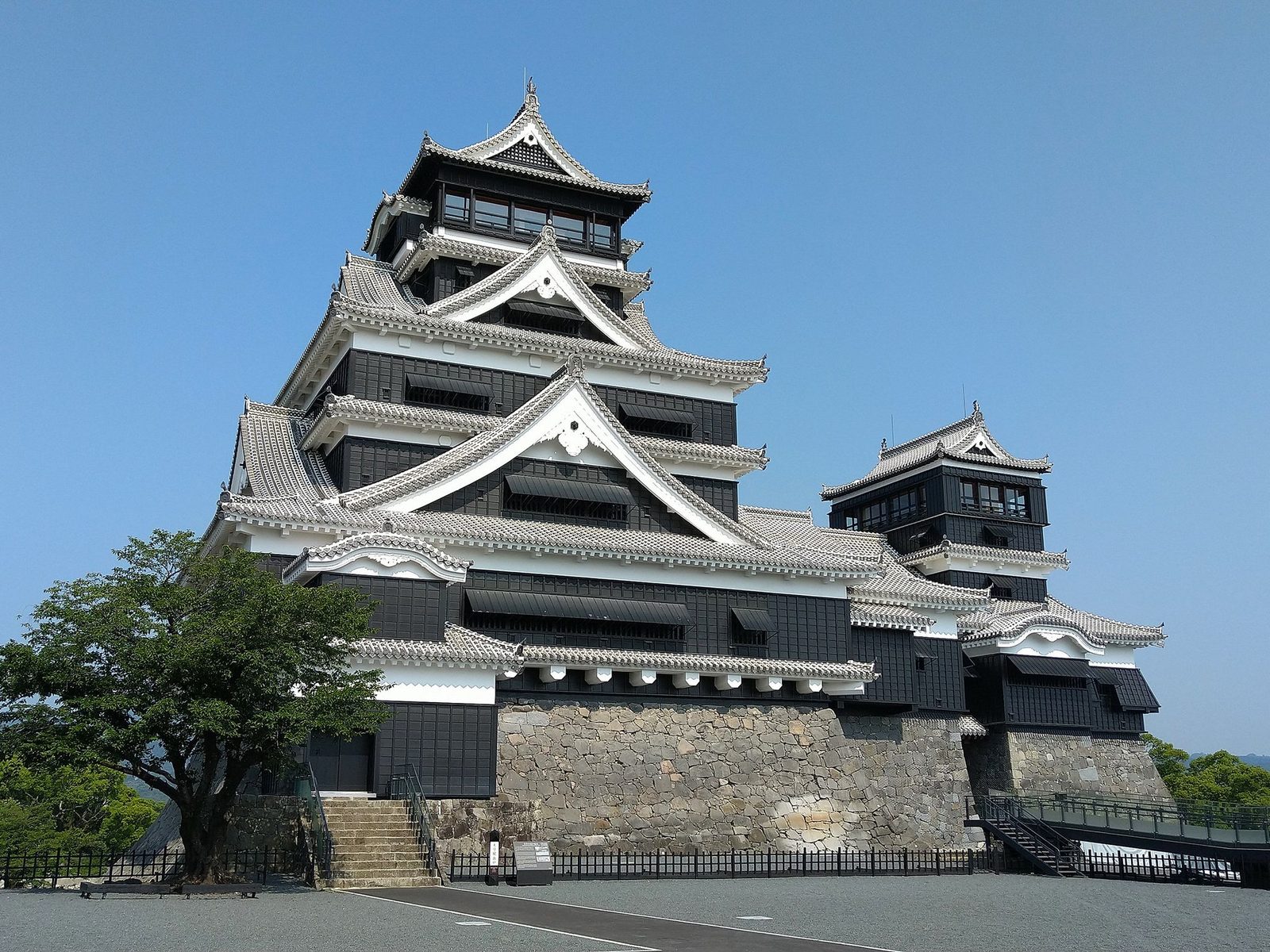
The exhibits in the keep of Kumamoto Castle use models and video to trace the tower from construction through the Seinan War fire, then from rebuilding through earthquake damage and restoration. That restoration is complete, the exhibits were fully renewed along with it, and a view waits on the top floor of the keep.
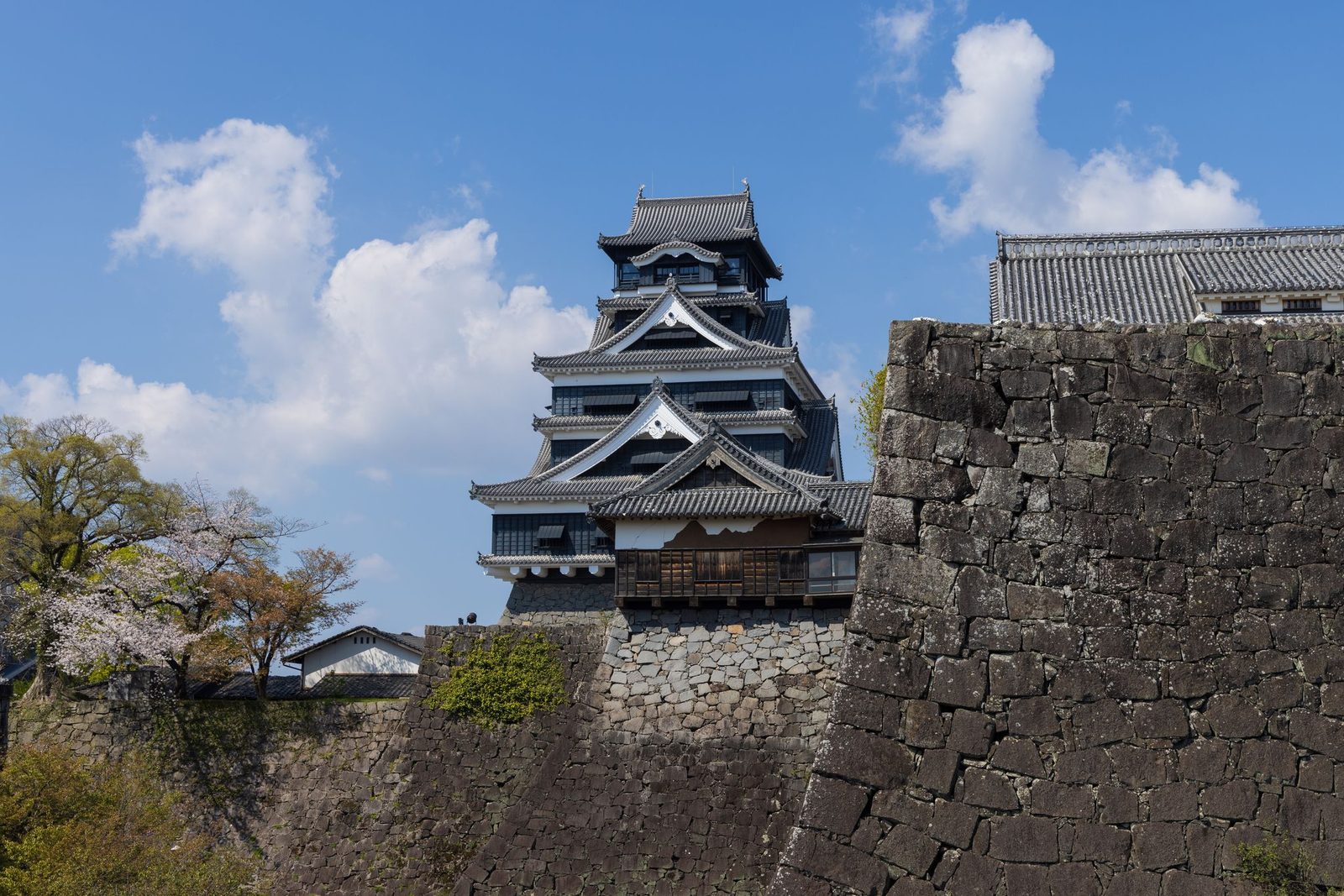
From fifteen minutes after sunset, the regular illumination begins with a sunset effect in which the west side of the keep is dyed in sunset colour. The whole keep stays lit until eleven at night, and until midnight the upper part of the keep is lit in a moonlight setting.
From one hour before sunrise, the regular illumination turns to a sunrise effect, with the east side of the keep lit like morning sun. The observation lobby on the top floor of the city hall takes in the whole of Kumamoto Castle, and after dark its lighting changes with the hour. Daylight suits the exhibits in the keep and nightfall suits the illumination, so a day split between the two covers both.
Suizenji Jojuen Garden
The Higo chrysanthemum display at Suizenji Jojuen is made up of a flower bed set within the garden and pot displays brought in from Kumamoto Castle. Cut flowers of the same chrysanthemum complete the display inside the garden's exhibition hall.
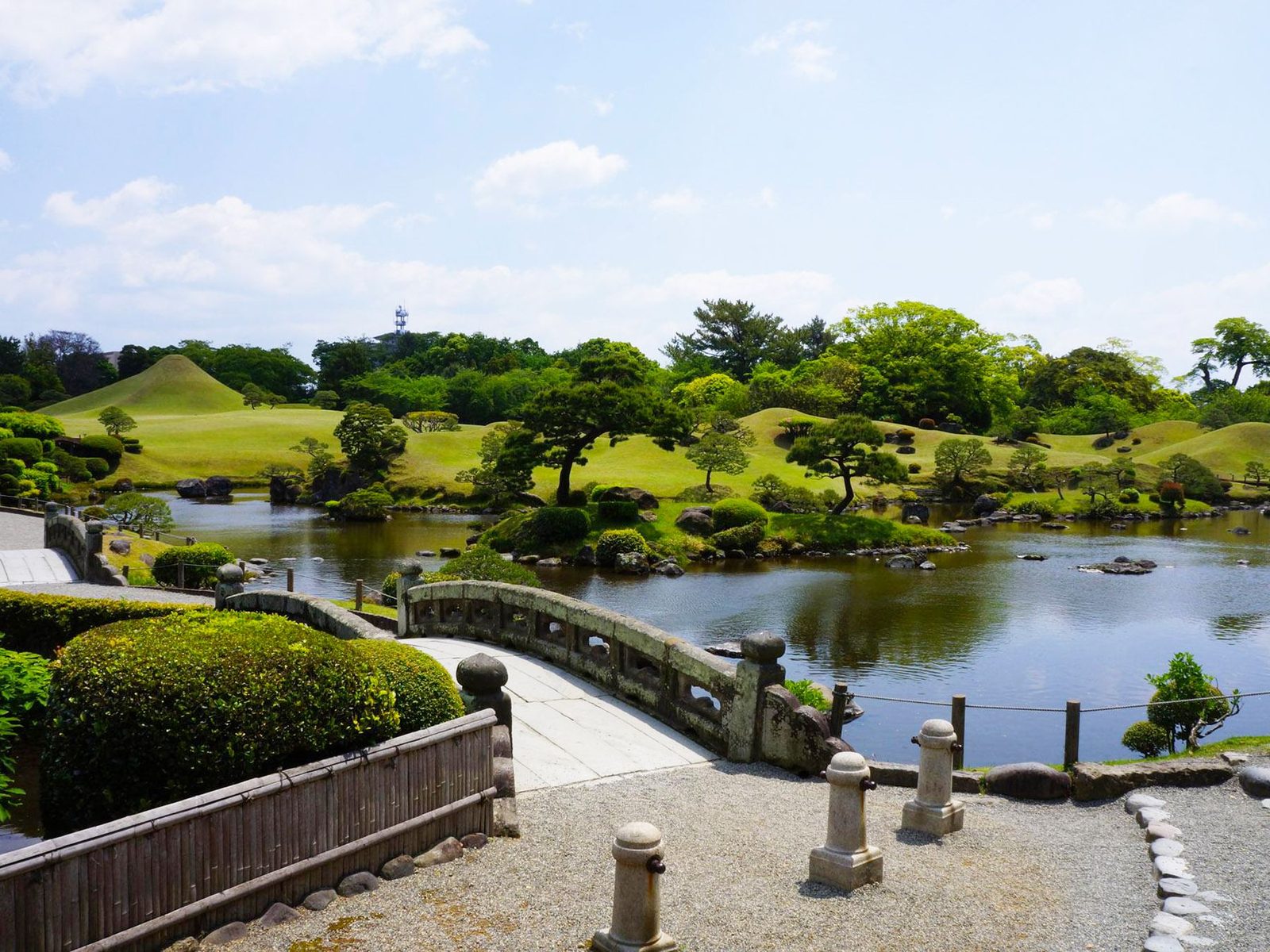
Cultivation staff stand in front of the Higo chrysanthemum flower bed and explain the flowers to visitors who stop there. Suizenji Jojuen, the garden around that bed, is one of the historic spots scattered across the city that are linked to the family that ruled the Kumamoto domain.
Kumamoto Horse Sashimi and Mustard-Miso Lotus Root
Horse sashimi in Kumamoto is thinly sliced raw horse meat, eaten with sliced onion and grated ginger and dipped in sweet soy sauce. The cut surface is a clean cherry-blossom pink when served, and it darkens after a little time because the meat oxidizes easily.
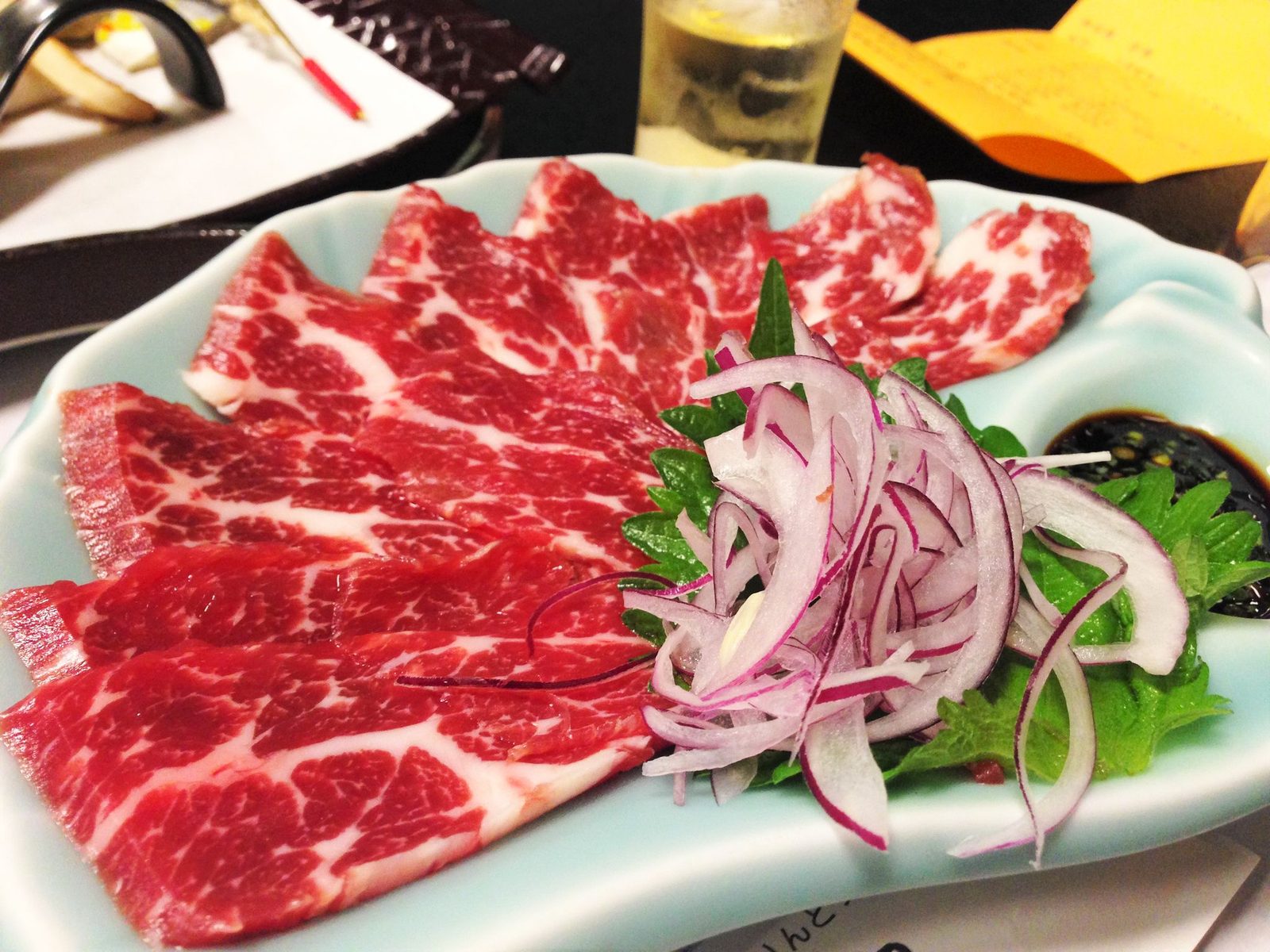
The taste of horse sashimi differs by cut, with marbled loin on one side and lean thigh meat on the other. Liver sashimi and tongue sashimi are served as separate cuts with their own taste. The fat in the marbled parts has a low melting point and melts easily, so those slices are eaten early. Minced horse sashimi mixed with natto and topped with a quail egg is eaten with sweet soy sauce as a snack with sake or shochu. A first order of marbled loin and lean thigh meat, eaten side by side, is a direct way to taste how far the cuts differ.
Mustard-miso lotus root has miso mixed with mustard packed into the holes of the root, coated in a flour and egg-yolk batter and deep-fried. Each slice of the lotus root has a crisp texture and a pungent heat that passes up through the nose. The lotus root is said to have begun when a priest of Suizenji had cooks devise a nourishing dish for the sickly first lord of the Kumamoto domain.
To stay overnight in the area, browse places to stay in Kumamoto.
Getting to Kumamoto
New to rural buses and one-man trains? See how to ride them, step by step.
| Leg | How | Time or cost |
|---|---|---|
| From Hakata to Kumamoto | Shinkansen | Fastest thirty-three minutes |
| From the front of Kumamoto Station to Kumamoto Castle and nearby sights | Shiromegurin castle loop bus | Runs every day, nine in the morning to five in the afternoon |
| Between Kumamoto Station, Kumamoto Castle, the arcade streets and Suizenji Jojuen | Kumamoto City Tram | Flat fare: adults (junior high school age and older) two hundred yen; children one hundred yen; babies free |
| To Suizenji Jojuen | On foot from the Suizenji Koen tram stop or from JR Shin-Suizenji Station | About five minutes from the tram stop; about twelve minutes from the station |
Hours and Fees
| Place | What | Hours or fee |
|---|---|---|
| Kumamoto Castle | Admission | High school students and older, eight hundred yen for individuals; elementary and junior high school students, three hundred yen for individuals |
| Kumamoto Castle | Hours | September to June: nine in the morning to five in the afternoon, last admission at four, last climb of the keep until half past four; July and August: nine in the morning to seven in the evening, last admission at six, last climb until half past six; closed on December twenty-ninth |
| Suizenji Jojuen | Admission | Adults sixteen and older, five hundred yen; children six to fifteen, two hundred yen |
| Suizenji Jojuen | Hours | Eight thirty in the morning to five in the afternoon, last entry at half past four; open every day of the year |
Fees and hours were checked against official sources on 10 November 2026.
Thinking of staying overnight?
Compare places to stay near Kumamoto, Kumamoto, Japan →
Disclosure: This post may contain affiliate links. If you book through them, we may earn a commission at no extra cost to you.