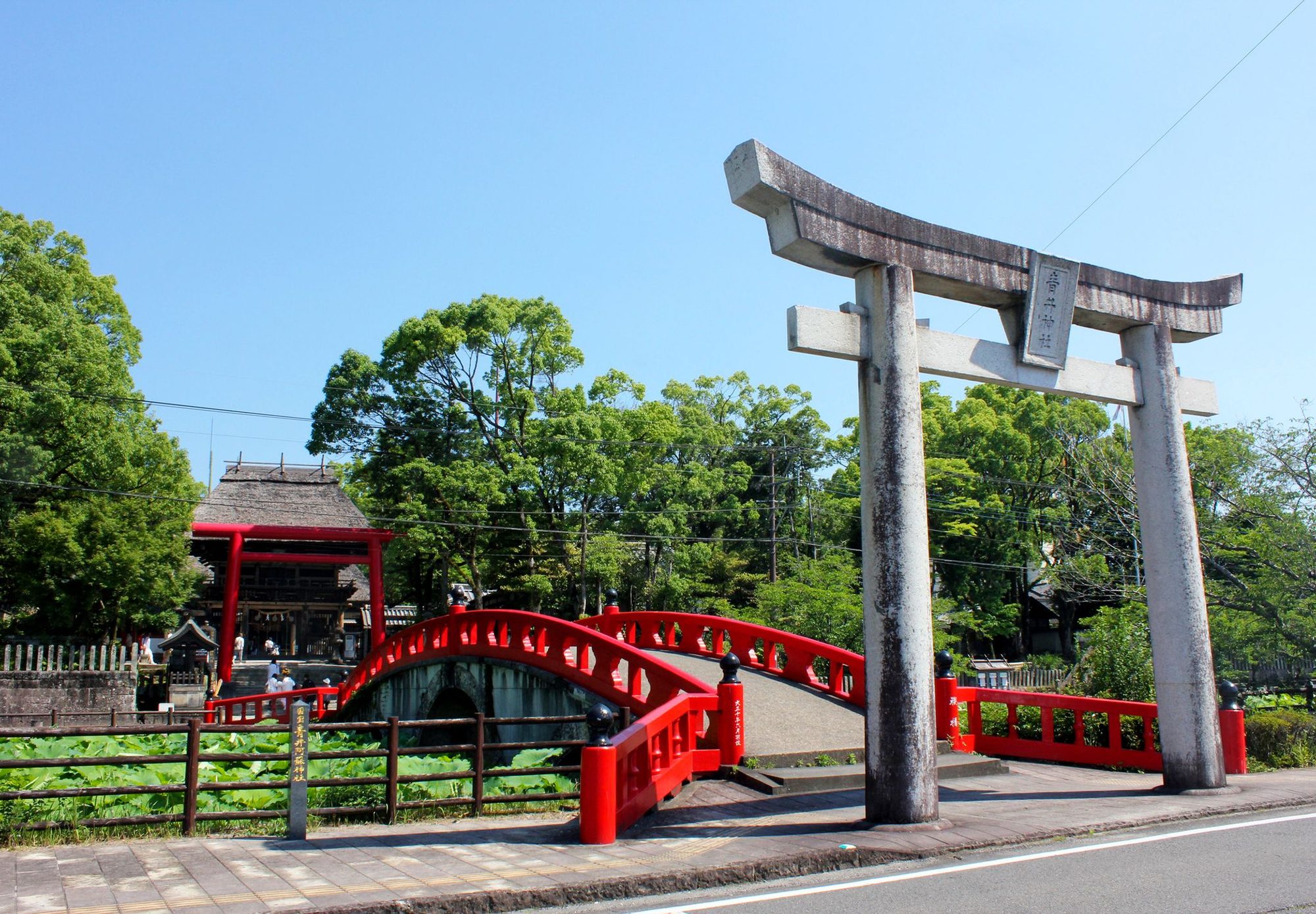
This guide covers one day in Hitoyoshi, the castle town on the Kuma River in Kumamoto Prefecture, approached from Fukuoka or Kagoshima by rail and highway bus, using fares and opening hours as the operators published them at the time of writing.
The day is built around two things: the Kuma River Railway, whose single-car trains leave from Hitoyoshi Onsen Station, and a compact center holding the castle ruins, Aoi Aso Shrine, and the former samurai quarter. Fares and hours below are set out in lists and tables; they do change, so check official information before visiting.
Getting to Hitoyoshi from Fukuoka and Kagoshima
The fast way in from either big city is a two-leg trip: a JR train to Shin-Yatsushiro, then the B&S Miyazaki highway bus onward to Hitoyoshi. Both routes share that one transfer, so the pattern is the same whether you start in Fukuoka or Kagoshima, and the timings below are the fastest published combinations.
- From Fukuoka (Hakata): the fastest combination, a JR train to Shin-Yatsushiro and then the B&S Miyazaki bus, takes one hour and forty minutes in total.
- From Kagoshima: the fastest combination, a JR train to Shin-Yatsushiro and then the B&S Miyazaki bus, takes one hour and thirty-five minutes in total.
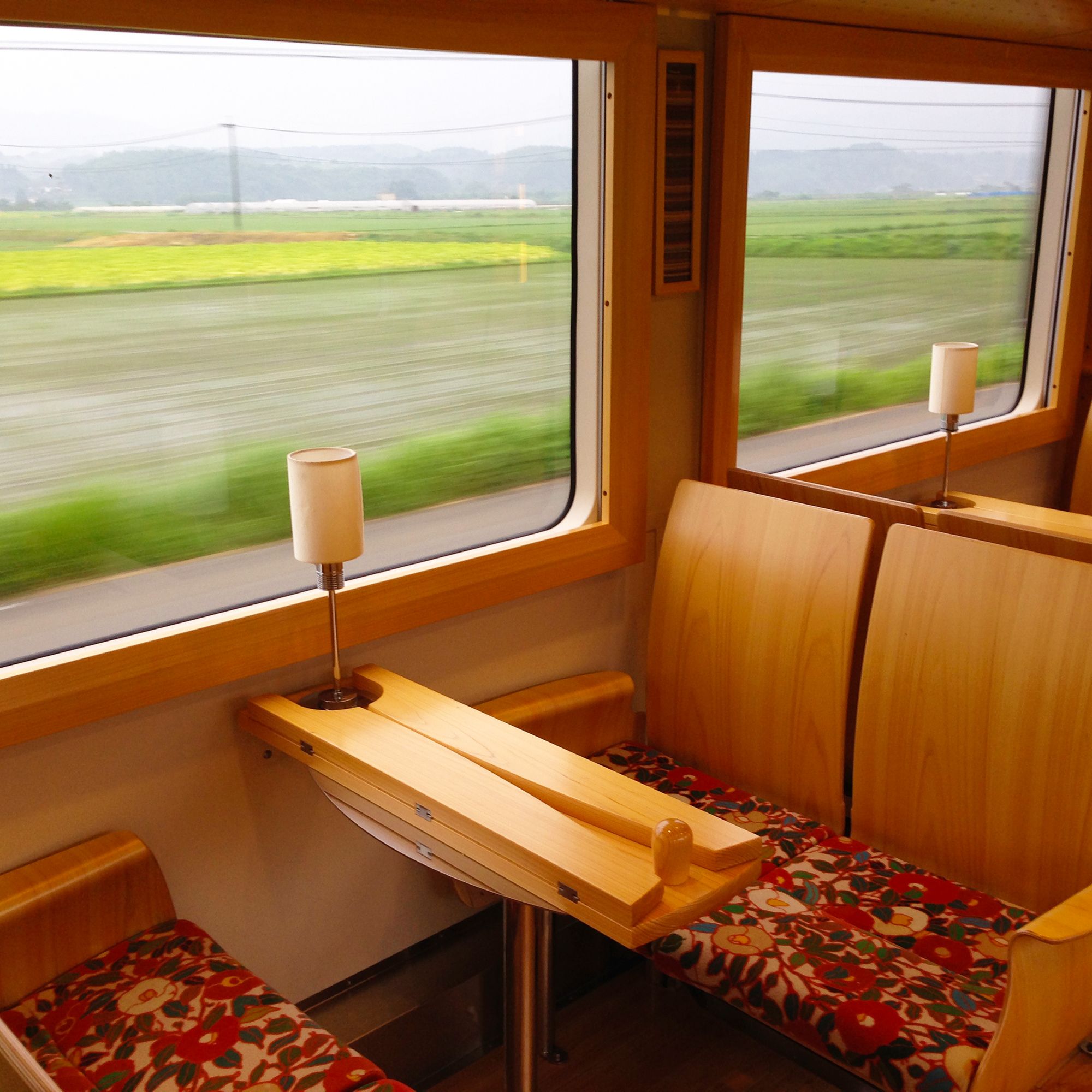
The fare for the highway bus leg is not printed here; the two bus booking centers in the next section keep regular hours and can confirm the current price. Aim for a morning arrival: the museum and the shrine hall both stop admitting visitors in the late afternoon, and the railway ride deserves unhurried time.
Kuma River Railway Fares and Day Passes
The Kuma River Railway, also written Kumagawa Railway, is the local line that leaves from Hitoyoshi Onsen Station and runs up the valley toward Yunomae. Its fares are distance-based, starting from a short-hop price, and there are three kinds of one-day pass, one of them sold only to visitors from abroad.
| Ticket | Adult | Child |
|---|---|---|
| Single fare, distances up to three kilometers | One hundred ninety yen | — |
| One-day pass for foreign visitors (tax included) | One thousand yen | Five hundred yen |
| One-day pass, train section only | Nine hundred yen | Four hundred fifty yen |
| One-day pass, train and alternate bus | One thousand two hundred yen | Six hundred yen |
For a day of hopping on and off, compare the three passes against the single fare: the base fare covers only a few kilometers, so several short rides quickly approach the price of a train-only pass. The visitor pass sits between the train-only and train-plus-bus passes in price, so choose by whether you need the alternate bus.
Booking the Highway Bus and Station Hours
For the highway-bus leg, book a seat ahead through one of the two centers below. Both operate on weekdays, Saturdays, Sundays, and holidays alike, and both can quote the current fare, which is the one number this guide does not print, so ask when you book.
- Miyazaki Kotsu Kosoku Bus Booking Center: eight in the morning to five in the afternoon, on weekdays, Saturdays, Sundays, and holidays.
- Kumamoto Kosoku Bus Booking Center: nine in the morning to five in the afternoon, on weekdays, Saturdays, Sundays, and holidays.
- Hitoyoshi Onsen Station (weekdays): six in the morning to ten in the morning, then half past three in the afternoon to half past seven in the evening.
Hitoyoshi Onsen Station, where the Kuma River Railway begins, keeps weekday business hours in two blocks: early morning and late afternoon into evening. If you plan to buy a pass at the station, time your visit to one of those blocks rather than the middle of the day, which the published hours do not cover.
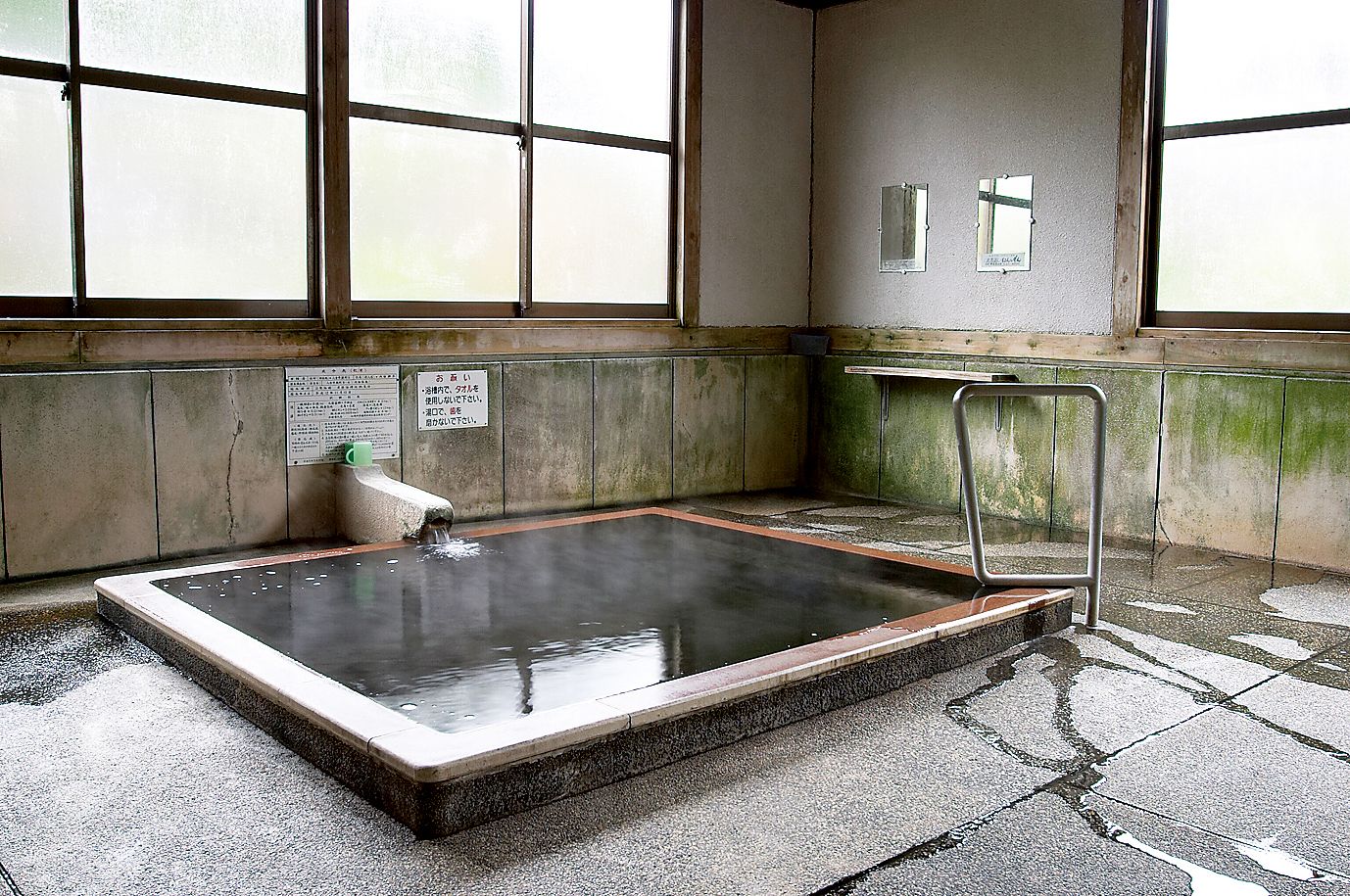
The word Onsen in the station name is not decorative: Hitoyoshi Onsen has public bathhouses in town, and Motoyu, pictured below, is one of them. Bath fees and hours are outside this guide, so treat a soak as a bonus fitted around the train times. If it tempts you into an overnight, browse places to stay in Hitoyoshi.
Where to stay
Places to stay near Hitoyoshi →
Disclosure: This post may contain affiliate links. If you book through them, we may earn a commission at no extra cost to you.
Hitoyoshi Castle Ruins and the History Museum
According to local records, Hitoyoshi Castle is said to have been first the seat of Sagara Nagayori, who came down to the Hitoyoshi estate in Higo province at the end of the twelfth century; his descendants are said to have lived there generation after generation. In the same source, Hitoyoshi Shrine is described as standing within the castle site.
In the same gazetteer, the town is described as lying near the middle of Kuma district in a basin walled by mountains, with the Kuma River through its center, and no outside force is said to have broken in during the Warring States period. The site is a ruin now, its moss-edged stone ramparts standing above the river.
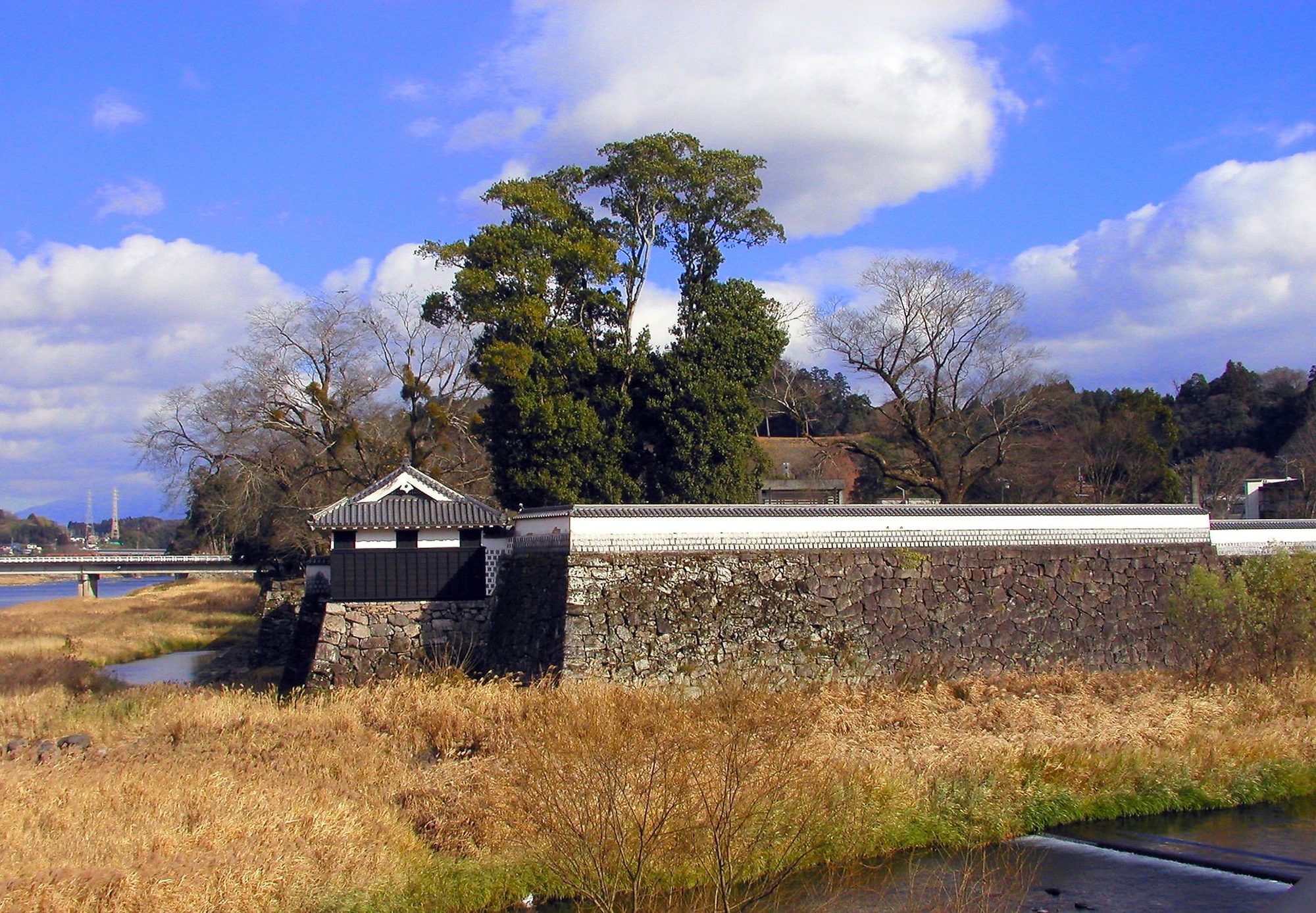
The Hitoyoshi Castle History Museum is the indoor half of the visit, and it keeps simple hours with a last-entry cutoff half an hour before closing, so it pairs well with a walk on the ramparts before the light goes. Fees are per person, with a lower rate only for groups of twenty or more.
- Open: nine in the morning to five in the afternoon.
- Last admission: thirty minutes before closing.
- Closed: from the twenty-ninth of December through the third of January for the New Year holiday.
- Admission: three hundred thirty yen per person.
- Groups of twenty or more: two hundred twenty yen per person.
Aoi Aso Shrine, Older Than the Castle
According to local records, Aoi Daimyojin, now Aoi Aso Shrine, is said to have been founded in the reign of Emperor Heizei at the start of the ninth century, enshrining the three Aso deities, and the people of northern Kuma are said to have revered it as their guardian shrine. That is nearly four centuries before the castle.
The vermilion Misogi Bridge arching over the pond in front of the shrine is the first thing to look for. For the exhibition side there is the Aoi no Mori National Treasure Memorial House, which keeps the same nine-to-five pattern as the castle museum, with last admission at half past four, and prices tickets by school age.
- Open: nine in the morning to five in the afternoon, with final admission by half past four in the afternoon.
- Adults (high school and older): five hundred yen.
- Elementary and junior high students: three hundred yen.
- Groups of ten or more: ten percent off per person.
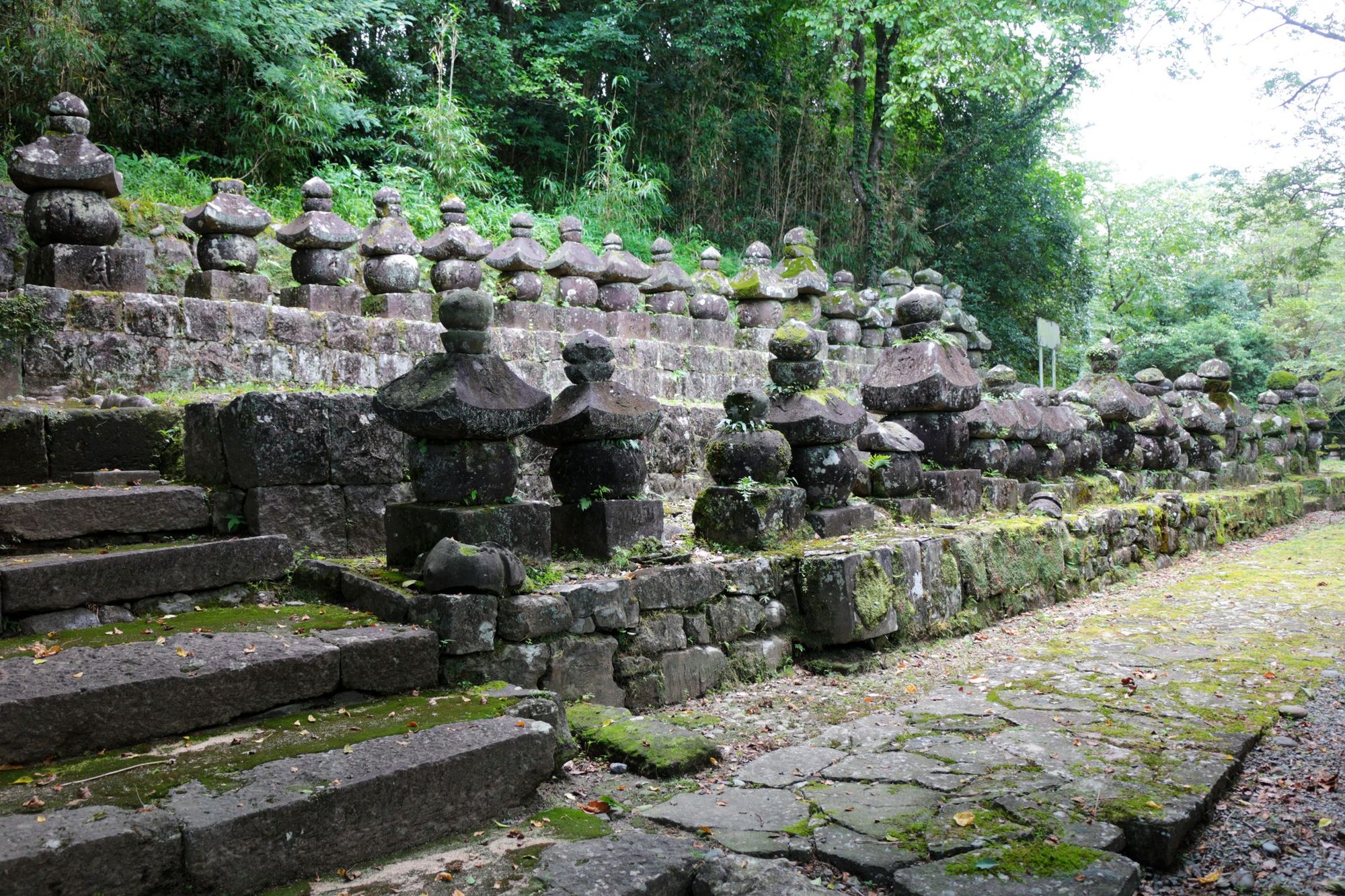
If the castle and shrine leave you curious about the Sagara family, who are said to have held Hitoyoshi for centuries, their stone grave markers stand in the precincts of Ganjoji temple. It is a different kind of site, with no hours or fees covered here, so treat it as an optional stop if time allows.
Local Food: Bone-Gnawing Stew and Yuzu Mochi
Honekajiri, literally bone-gnawing, is the dish to ask about. Bone-in cuts of wild boar or pork, ribs, back, and pelvis, go into a large pot of cold water and simmer for several hours until the meat comes away from the bone by itself; the only seasoning, added at the end, is salt.
Its home ground is the mountain end of the Kuma valley, the upper Kuma towns of Yunomae, Taragi, and Mizukami, where it stands for the banquet culture of inner Kuma. The boar version belongs mostly to the hunting season, while the pork version is made year-round to match local events, so timing decides which you meet.
Yubeshi, the yuzu mochi of the Hitoyoshi and Kuma area, is the counterpart to take home. A yuzu is hollowed out and its shell used as a cup, filled with a mix of miso, peanuts, sesame, ginger, and chili, steamed, then sun-dried for about two weeks to mature into a preserved food.
The Kuma River: Legends of the Yaridaoshi Gorge
According to local records, the Kuma River goes by a second name meaning ninety thousand, and it is described as having three sources: Mount Katao, Gokanosho, and Mount Ichifusa. The Katao stream is said to be the longest, at about thirty-six ri, an old unit; it meets the Ichifusa stream at Iwano village and the Gokanosho stream at Kinoe village.
The showpiece in those records is Yaridaoshi, about six ri downstream of Hitoyoshi, which is described as one of the finest stretches of scenery on the river. The water is said to cut through a bed of limestone, so the banks rise as sheer rock faces at right angles, and overhanging rock forms a hollow that boats pass through.
Two odd rocks are said to stand opposite. One, on the old Hitoyoshi domain side, is said to rise about a thousand shaku; the other, on the old Kumamoto domain side, is lower and is called Seishoko Rock after Kato Kiyomasa, who according to local legend was halted by this natural barrier when he marched against Kuma.
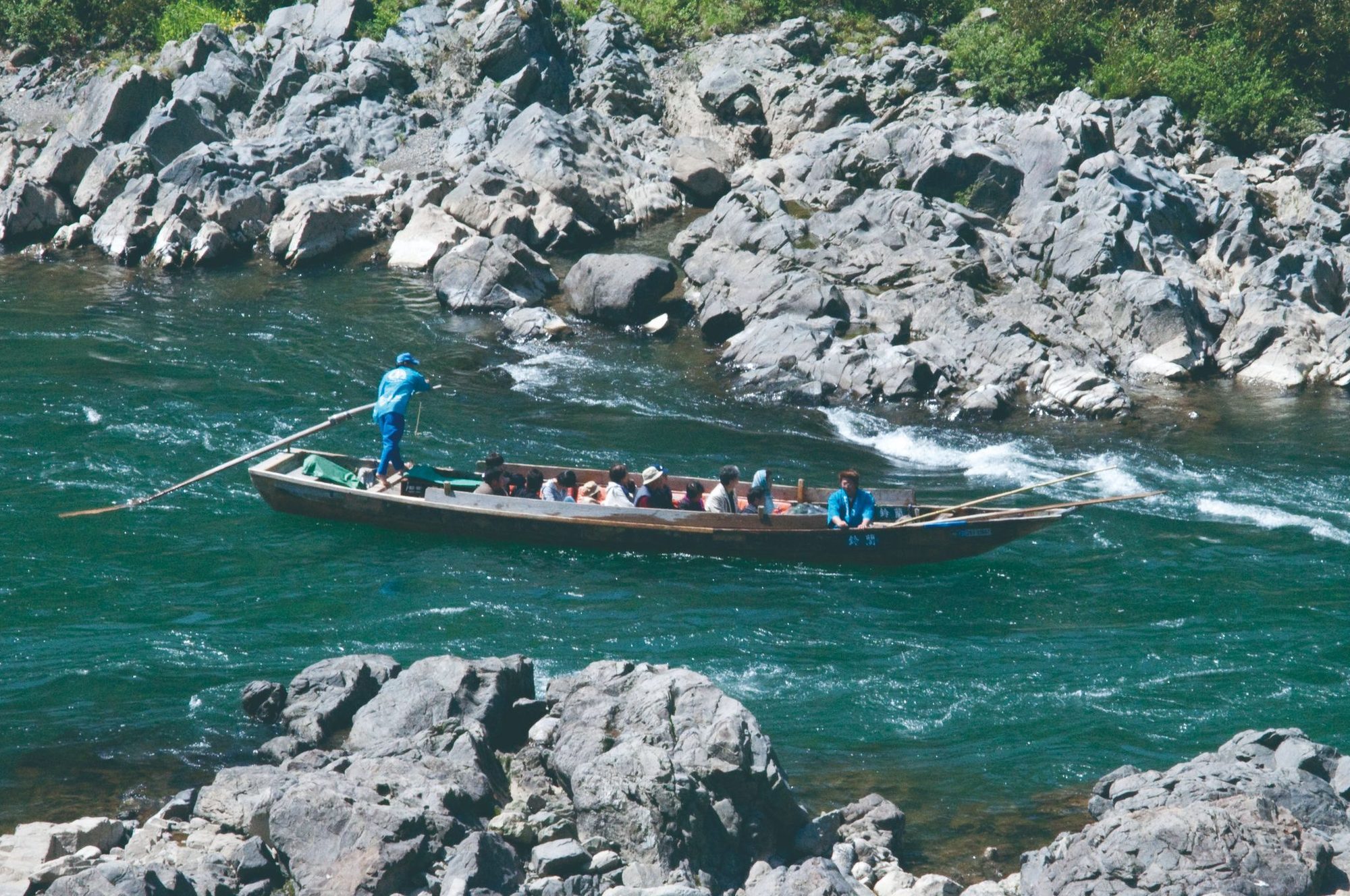
Flat-bottomed boats carry passengers on the river near town, as the photo above shows, but their fares and departure times are not covered here, so check them locally rather than building the day around them. If the river talks you into a second day, look at places to stay in Hitoyoshi and give the gorge its own morning.