This guide lays out a day at Kurama and Kibune: the ride on the Eizan Electric Railway from Demachiyanagi into Kurama, what you pay to enter the mountain and ride its cable car, Yuki Shrine and the root path at Kurama-dera, then Kibune Shrine and the summer dining platforms over the river. It closes with a way to fit all of it into a full day.
Getting to Kurama and Kibune from Kyoto
For anyone asking how to get there, a Kurama and Kibune day trip from Kyoto begins at Demachiyanagi Station on the Eizan Electric Railway, where the train to Kurama Station takes about thirty minutes, and the ride itself is part of the day.
A panorama car called Kirara runs the same stretch between Demachiyanagi and Kurama for the ordinary ticket price, with no extra charge for its large windows and seats turned to the view; between Ichihara and Ninose it brings the fresh green of early summer and the autumn colours close.
The Subway & Eiden Kurama-Kibune day-trip ticket is sold for adults only, and its price sits in the table below beside the mountain admission fee at Kurama-dera, the Reihoden museum entry charge and the cable car donations. Kibune Shrine is a short walk from the Kibune bus stop of Kyoto Bus, also shown in the table.
| Kurama and Kibune day trip: routes, fares and fees | Detail |
|---|---|
| Eizan Electric Railway, Demachiyanagi Station to Kurama Station, time on the train | 30 minutes |
| Subway & Eiden Kurama-Kibune day-trip ticket, adults only | 2,100 yen |
| Kurama-dera mountain admission fee | 500 yen |
| Reihoden (Kurama-yama Museum), admission | 200 yen |
| Kurama mountain cable car, one way, adults (donation) | 200 yen |
| Kurama mountain cable car, one way, elementary school children and under (donation) | 100 yen |
| Kibune Shrine, on foot from the Kibune bus stop (Kyoto Bus) | 5 minutes |
Up the Mountain at Kurama-dera
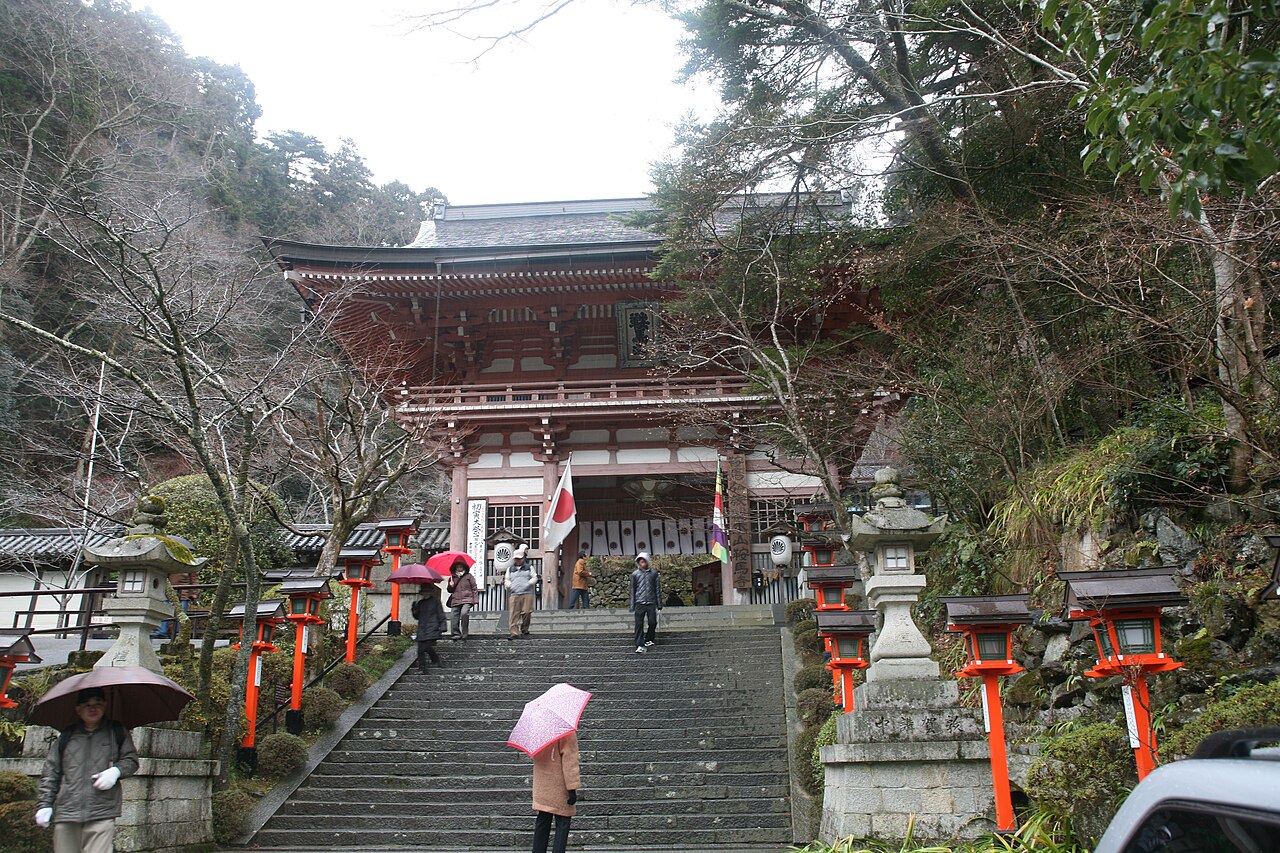
The road outside the Kurama stop of the Eizan line is the Kurama Kaido, which guidebooks describe as part of the Saba Kaido, the old mackerel road between Kyoto and Wakasa. Townhouses with projecting lattice windows still line it, so give the street a look before heading up to the Niomon, the temple's main gate.
From the Niomon a cable car climbs to the Tahoto stop for the donation shown in the table above, but Yuki Shrine does not lie on its route, so anyone who wants to call in there takes the walking path instead.
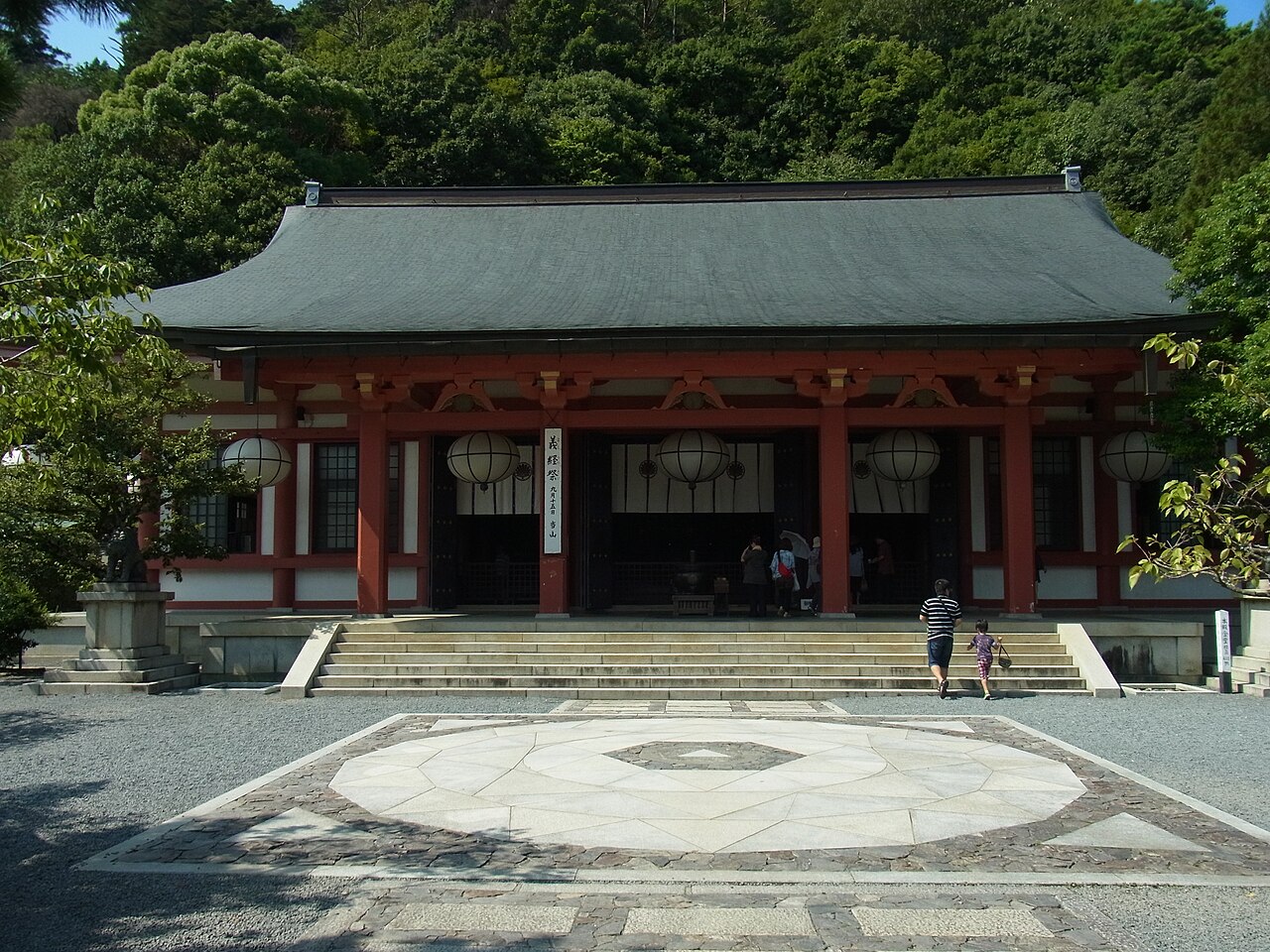
The main hall enshrines what guidebooks describe as a combined deity called Sonten, bringing together Bishamonten, Senju Kannon and Goho Maoson. The mountain lies under deep forest, which an older gazetteer notes was formerly known for matsutake mushrooms, so look at the trees as well as the halls.
Yuki Shrine and the Fire Festival
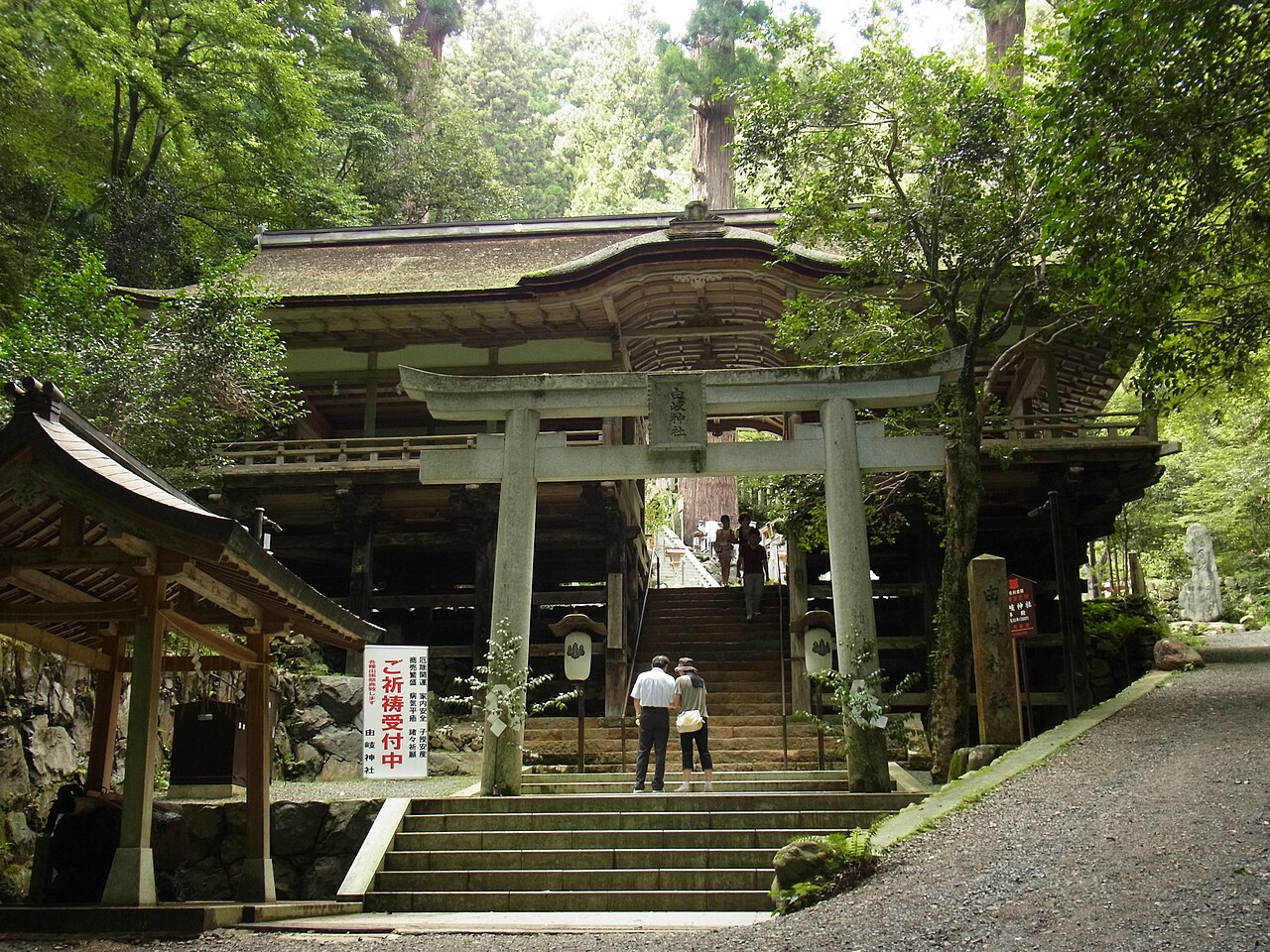
Yuki Shrine sits part-way up the approach to Kurama-dera and is the only shrine on Mount Kurama, the guardian shrine of the village of Kurama. A great cedar called Osugi-san, honoured as its sacred tree, watches over the grounds and is worth a pause on the way up.
The stone guardian dogs here are an unusual pair, each holding a child, and according to tradition people pray here for the gift of children and an easy birth. The shrine is also said to guard against fire, a point to hold in mind before its festival.
That festival is the Kurama Fire Festival, held on a night in October and counted among Kyoto's great eccentric festivals; guidebooks say it recalls the shrine's move from the imperial palace to this mountain, made in prayer for peace after calamities. Through the night a portable shrine is carried amid countless torches, and the grounds fill with visitors.
Where to stay
Disclosure: This post may contain affiliate links. If you book through them, we may earn a commission at no extra cost to you.
The Root Path and Yoshitsune Legends
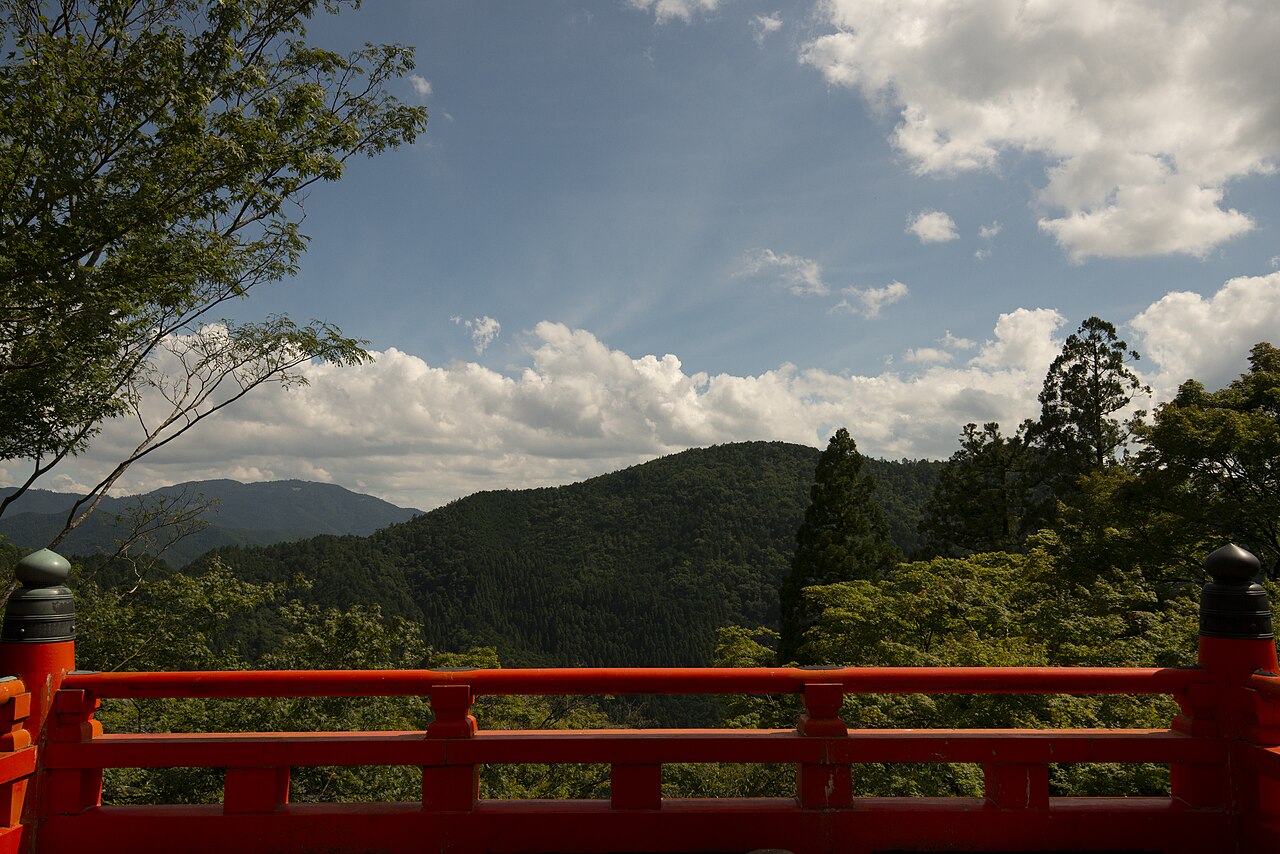
Along the temple approach a stretch called the Kinone-michi, the root path, has tree roots spreading over the ground, and it continues to the Mao-den at the inner sanctuary. Legend has it that young Ushiwakamaru practised martial arts here against the tengu, the mountain spirits of legend, so watch the roots as you go.
Ushiwakamaru grew up to be Minamoto no Yoshitsune, and according to tradition he trained at Kurama-dera from boyhood until he left for Oshu in the north; among the spots tied to him is the Sekurabe-ishi, a stone where he is said to have measured his height before setting out, so seek it out as you pass.
Further on, the Sojo-ga-tani valley is said to be where he learned swordsmanship and the arts of war from the tengu. An older gazetteer describes a small shrine to the Daisojo in the forest there, with oddly shaped rocks in front marked with what it calls sword cuts, worth a look before heading on toward Kibune.
Kibune Shrine: Water, Prayer and Old Records
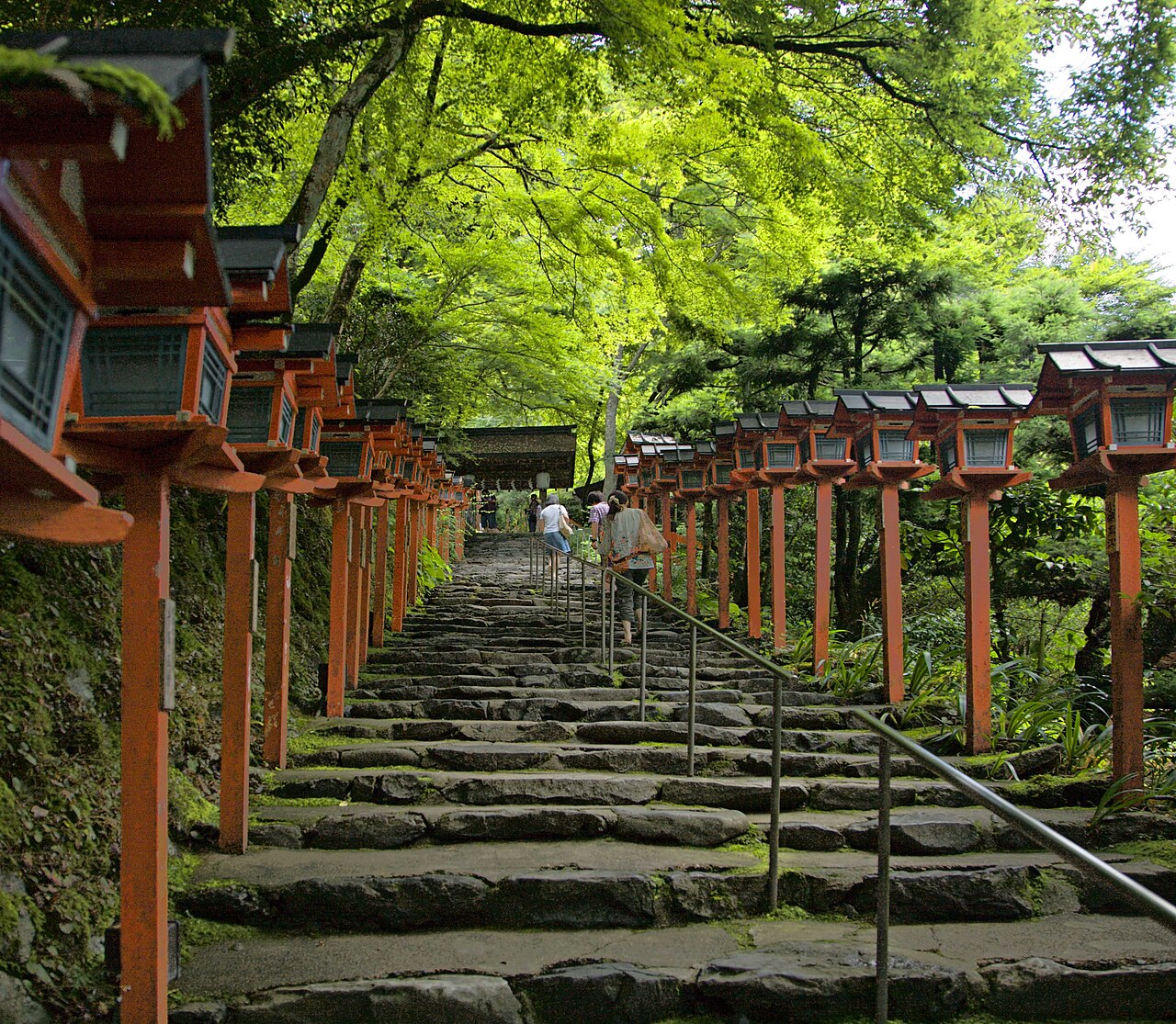
Kibune Shrine's main approach is a stone staircase with Kasuga-style lanterns on both sides, which guidebooks recommend for photographs. Between the main shrine and the inner shrine stands the Yui-no-yashiro, where visitors write a wish on a slip called a musubi-bumi and tie it there; beyond it a pair of great cedars, the Aioi-no-Osugi, stand side by side as a sign of harmony for couples.
The shrine serves the god of water as the head shrine of water shrines across Japan, and old records say its prayers were trusted to bring rain or stop it, with the court sending envoys in drought or long rain. Look for the statues of a white horse and a black horse: they recall live horses offered for such prayers, later replaced by painted ones, said to be the origin of today's ema plaques.
Legend has it that the poet Izumi Shikibu prayed here for her husband's love to return and was answered, and the shrine has drawn matchmaking prayers since. The inner shrine, said to be the original site, is also tied to the Noh play Kanawa, in which a woman makes the midnight visit called ushi no koku mairi. An older gazetteer describes the grounds as deeply still, shaded by tall cedars that darken the ground.
Summer Meals over the Kibune River
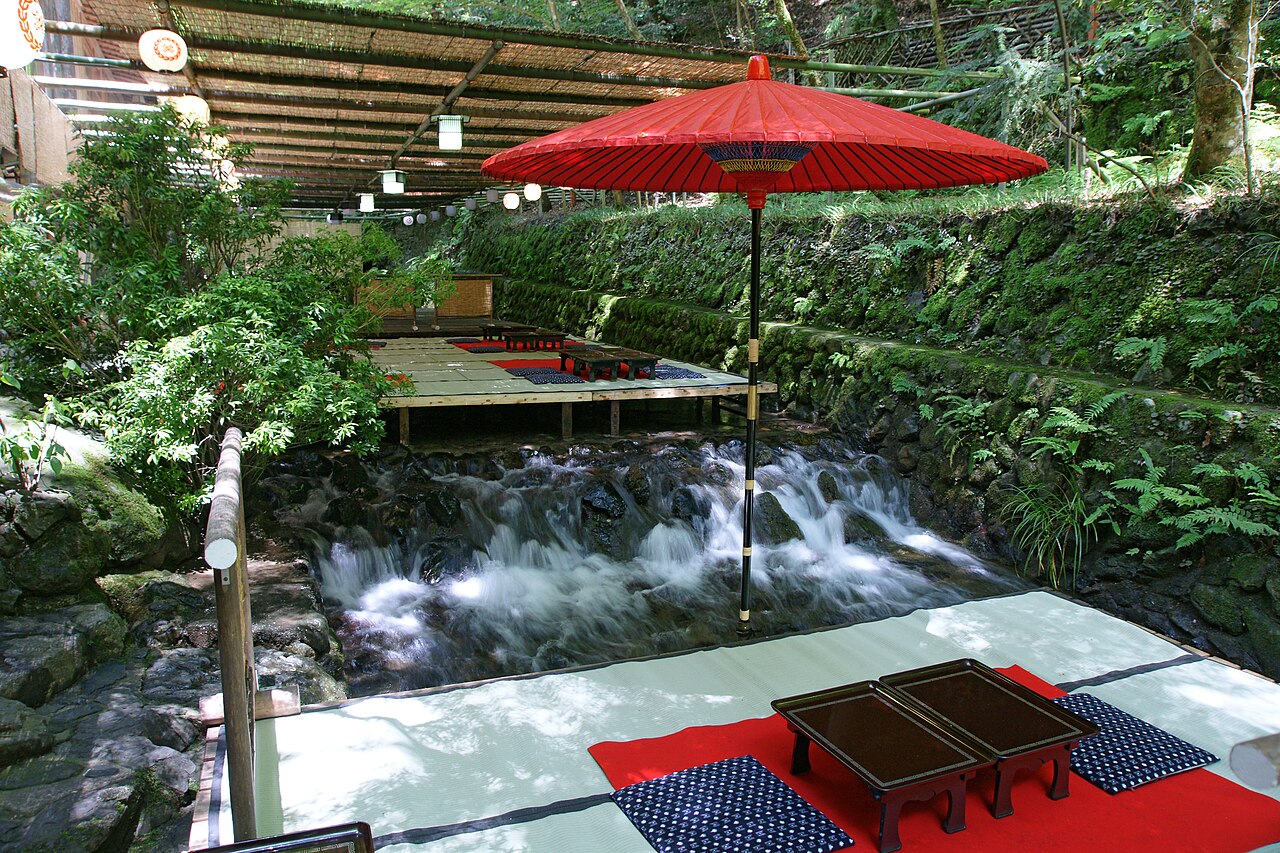
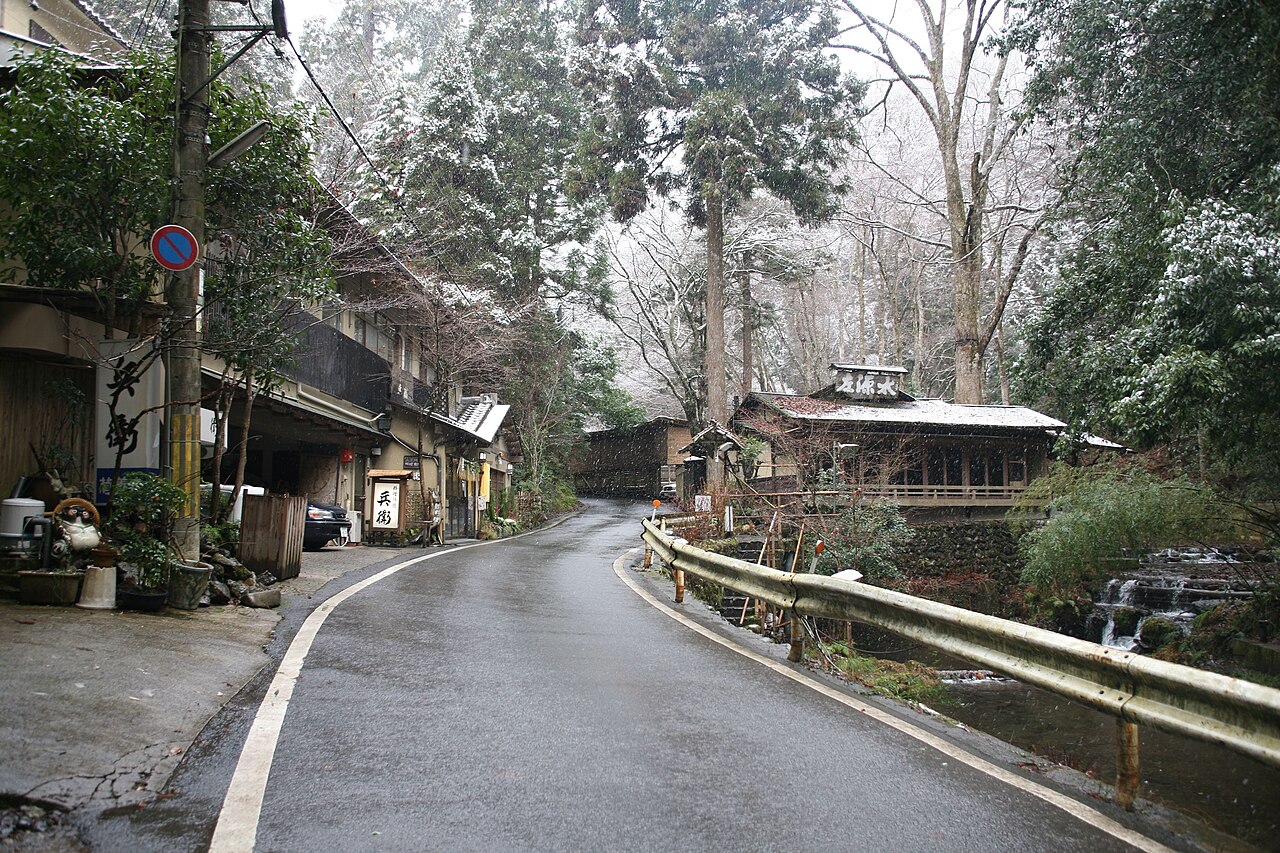
In summer, dining platforms called kawadoko are built out over the Kibune River, and a meal beside the running water is what draws a great many people up the valley. The seats sit directly above the stream, close enough, as the guidebooks put it, to reach down and touch the water, so choose a seat at the edge.
The platforms belong to the inns and eating houses along the river, and their size varies greatly from place to place, from small platforms to very large ones; the usual form is a tatami platform with low benches set across it, so expect to sit low.
The custom is said to have begun when a local shop offered food to travelling peddlers cooling their feet in the river, and in time full meals followed; a kawadoko meal makes the natural pause between Kibune Shrine and the journey back.
If a meal over the river makes you want to stay on near the mountain, have a look at places to stay in Kurama.
Fitting Kurama and Kibune into One Day
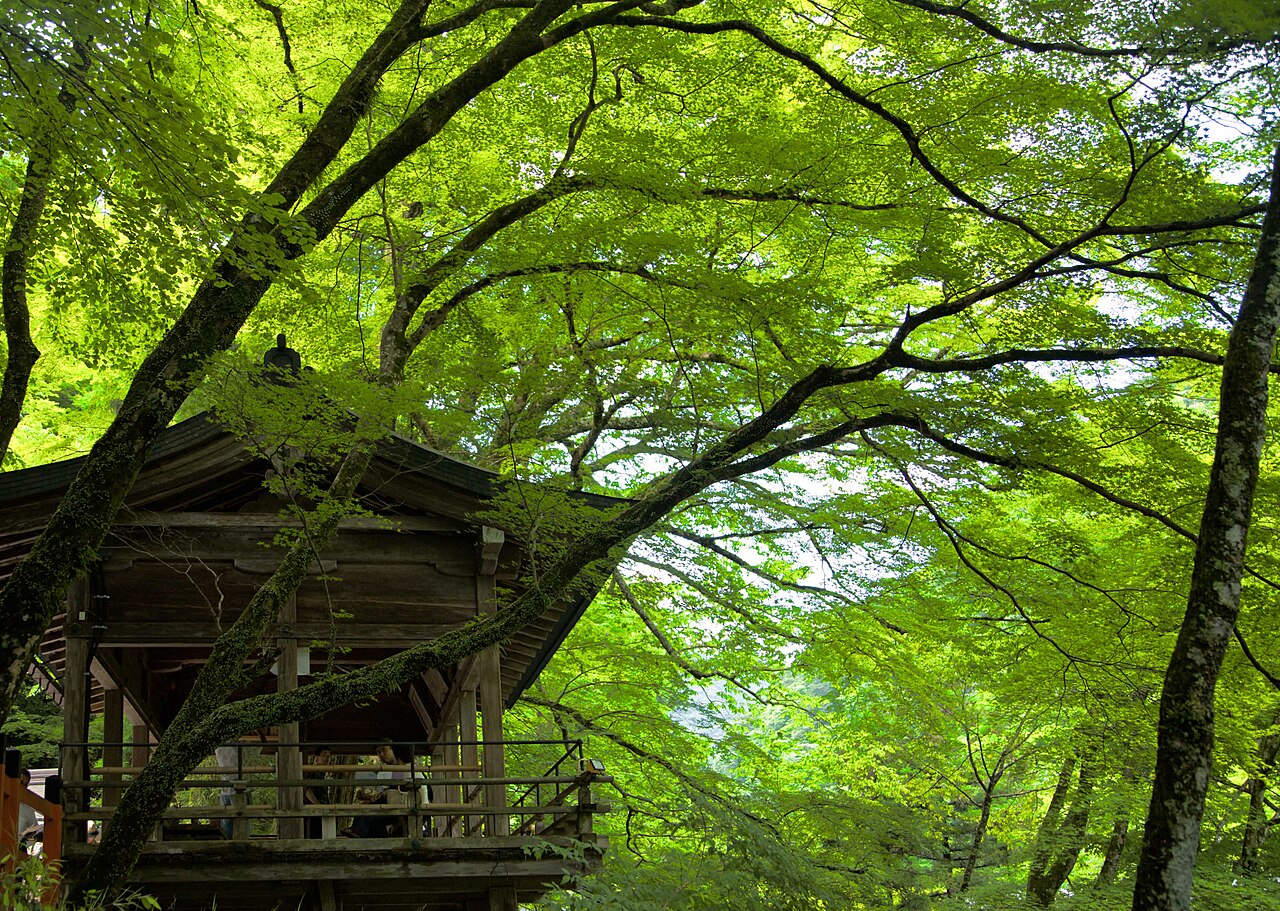
A workable order is to ride the Eizan line from Demachiyanagi to Kurama, climb past Yuki Shrine to Kurama-dera and the root path, carry on to Kibune, and finish with Kibune Shrine and a kawadoko meal, with the amounts in the table at the top. A shuttle also runs between the Kurama stop and the Kurama Onsen hot spring without a change of vehicle.
Kibune is cooler than the city, and guidebooks note it has long been valued as a summer retreat, with the river platforms staying cool even at the height of summer. According to guidebooks, July and August are the busiest months for the riverside seats, and May, June and September are easier.
Many platforms ask you to take your shoes off, so the guidebooks suggest bringing socks, and a layer to put on is welcome because the valley stays cool even when the city is hot; pack both before you leave Demachiyanagi.
With the day mapped out above, you can browse guided tours around Kurama and Kibune for your dates.