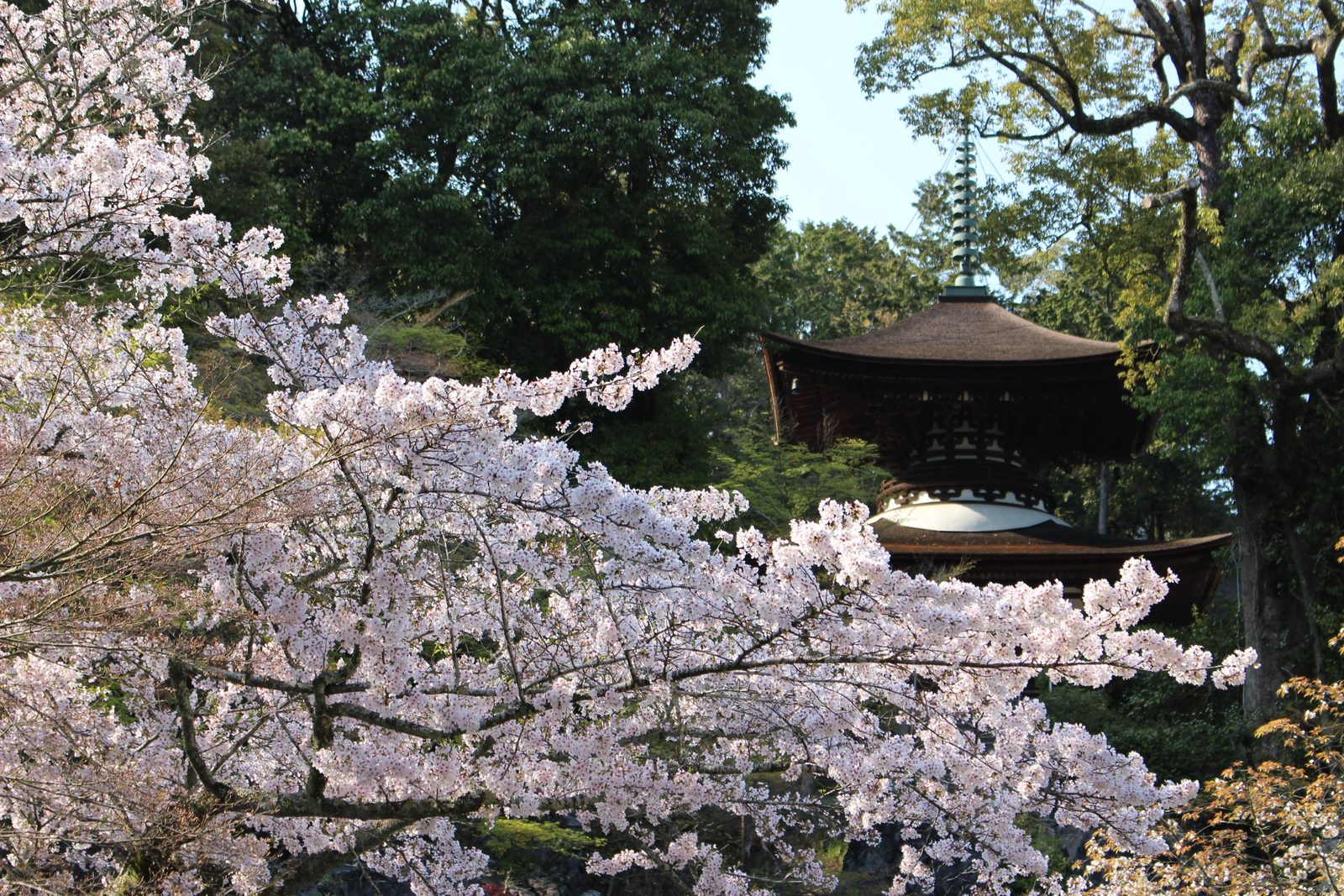
Climbing the Osaka stone steps at Ishiyama-dera brings the wollastonite rock into view straight ahead, with the worship hall of the main hall projecting over the same rock. Above it stands the Tahoto pagoda, and to the east of the pagoda the Tsukimi-tei pavilion looks out over the Seta River. The same climb takes in the rock, a hall built out over it and a river view, which is the reason to come.
Climbing From the East Gate to the Wollastonite Rock
Following the volunteer-guide order, from the East Gate to the wollastonite rock, the main hall and the Tahoto pagoda, gives the walk a set sequence. The gate faces east along the Seta River under a hip-and-gable tile roof. Nio guardian statues stand on either side, and a Toyotomi family paulownia crest is carved in openwork near the north gable.
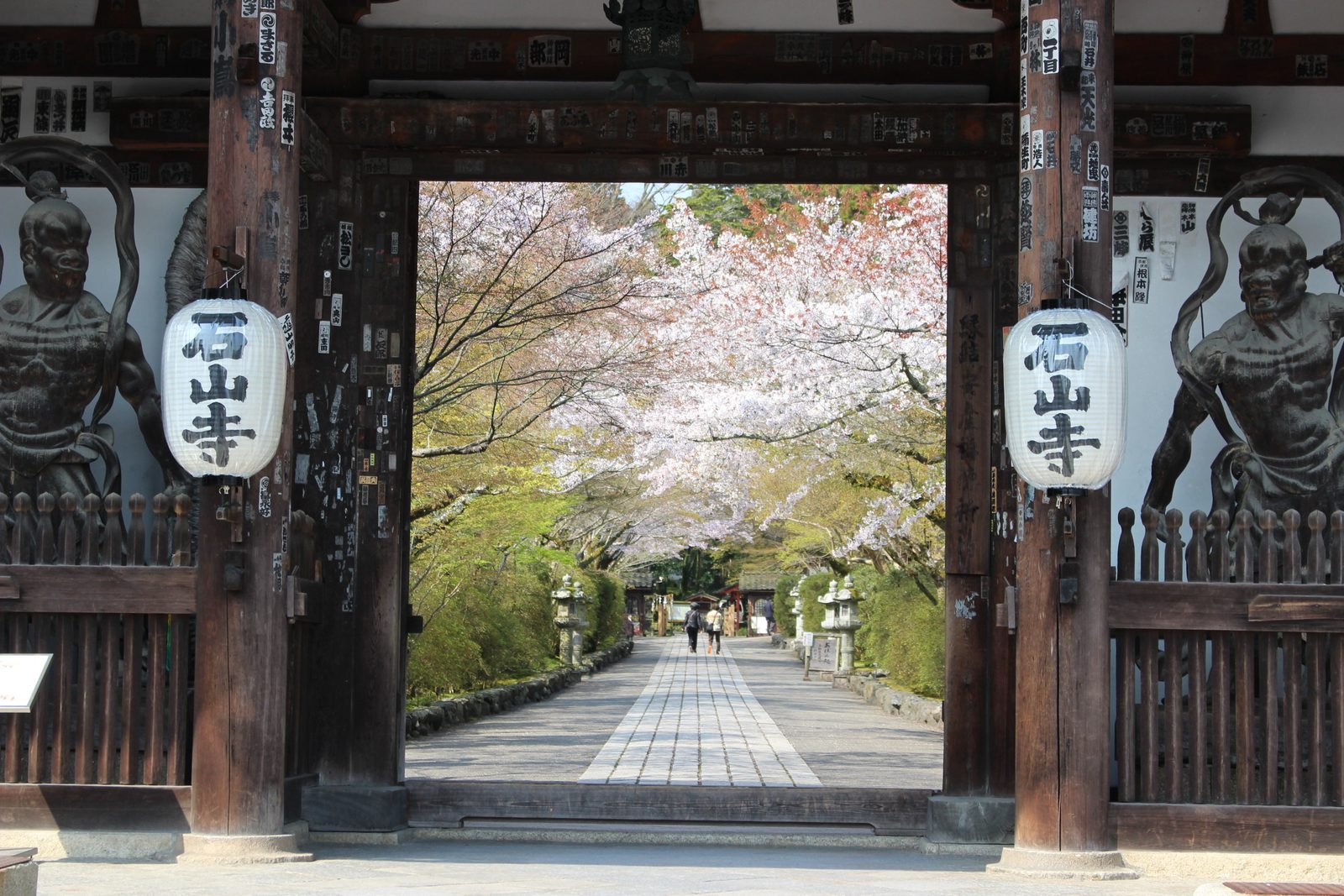
Climbing the Osaka stone steps toward the main hall starts beside a small shrine at the foot, which holds the Nasu Yoichi Jizo. Next comes the Ryuzo Gongen shrine, which faces east at the midpoint of the steps. At the top, the wollastonite rock stands directly ahead.
Walking the path at the former quarry just below the front of the main hall passes exposed wollastonite with quarrying marks. The rock is limestone altered by the heat of granite and is a designated natural monument. The name Ishiyama-dera derives from it. A monument carries a Matsuo Basho haiku about hail pouring down hard on the huge rock.
Inside the Main Hall: The Hanging Worship Hall and the Genji Room
Heading for the Genji room (Genji-no-ma) at the east end of the main hall's connecting aisle suits visitors who come for the Tale of Genji. The main hall is a National Treasure, and its worship hall is a hanging-style structure that projects over the wollastonite bedrock and faces south. The connecting aisle joins it to the inner sanctum.
Looking through the fire-flame-shaped window of the Genji room shows a recreated scene of Murasaki Shikibu's retreat. The figure of her inside is by the doll master Ito Hisashige. The room runs east to west and is said to be where Murasaki Shikibu stayed in retreat and began writing the Tale of Genji.
Visitors see a bronze statue of Murasaki Shikibu on the grounds. The Renyo-do hall is built jutting out from a wollastonite rock face. East of the main hall, the Sanjuhasho Gongen shrine stands on the rock under a cypress-bark roof. Water offered to the principal image is drawn from a well below the main hall.
Stopping at the Hojoden exhibition hall depends on the season, since it opens during the spring and autumn exhibitions. The Ishiyama-dera and Murasaki Shikibu exhibition is held there. The principal image of the main hall is a hidden image displayed at long intervals.
The Tahoto Pagoda, the Tsukimi-tei Pavilion and the Heian Bell
Visitors after a view head for the Tsukimi-tei pavilion, east of the Tahoto pagoda, above the Seta River. Looking up from below the wollastonite rock shows the pagoda, a National Treasure. Its upper level is circular, its lower level square, and its cypress-bark roof has a soft color. The pagoda enshrines a Dainichi Nyorai statue by Kaikei.
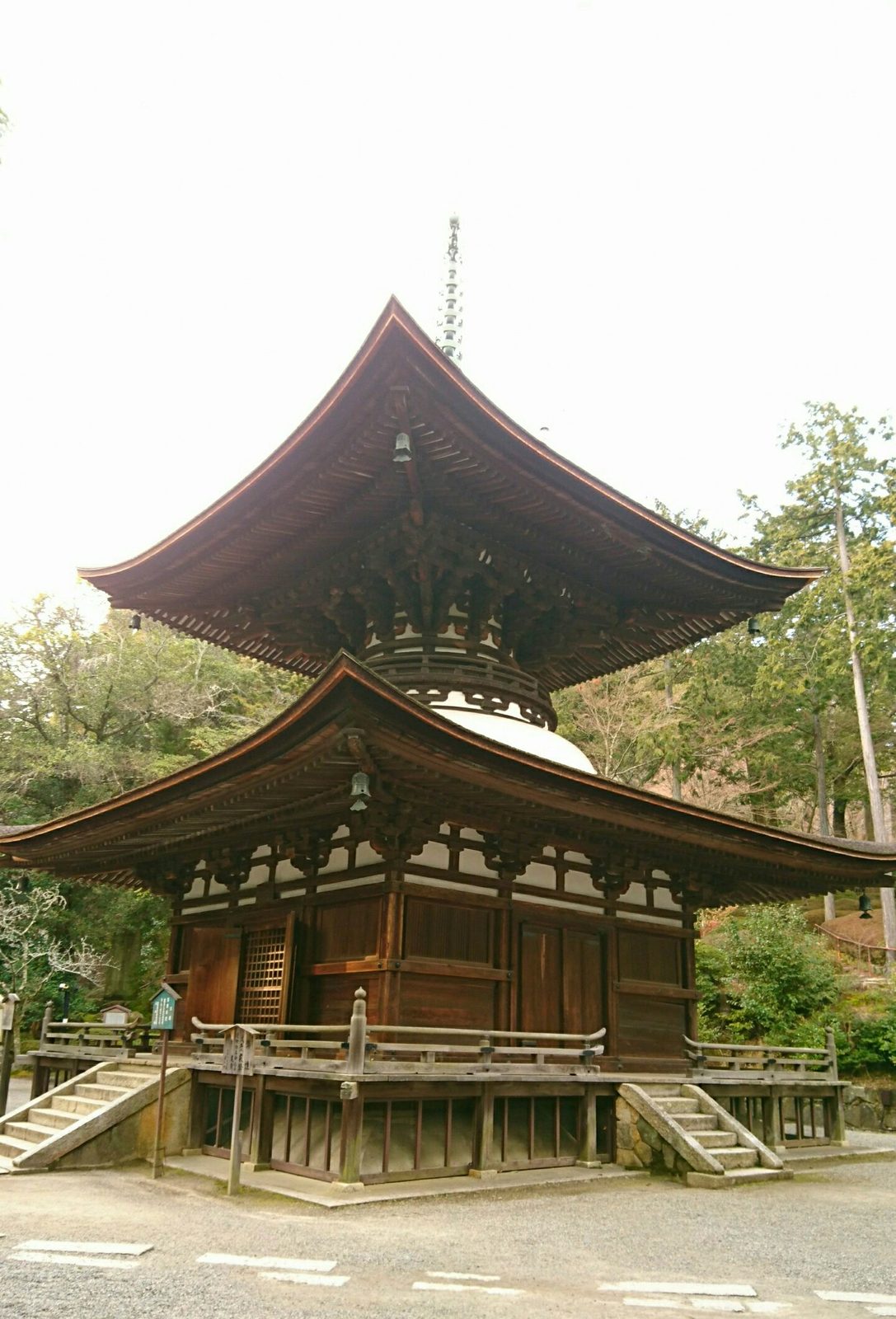
Walking east from the pagoda reaches the Tsukimi-tei pavilion, built jutting out over a rock face. It looks out over the Seta River and, far off, Lake Biwa. The Basho-an teahouse stands right next to it, and many people view the moon from the pavilion at the yearly autumn moon festival.
Stopping at the bell tower brings a Heian-period bell into the visit, hung in the upper level. The bell is known for its fine sound. It is struck by pulling a striking beam from the lower level.
Maples, Evening Lights and Flowers Through the Year
Timing a visit for the maple trees is easier because differences in elevation keep the leaves in view for a long period, listed as mid-November to early December. Look for them north of the Tahoto pagoda, along the approach, and around Hojoden and Shinkyodo. Green leaves mix with autumn ones, and osmanthus scents the autumn air.
Walking the grounds during Atara Yomomiji, the evening illumination, shows the maple trees, the main hall and the Tahoto pagoda lit up. It is held every year in November. Hand lanterns are lent to visitors in limited numbers. The volunteer-guide night route runs from the East Gate along the approach to the wollastonite rock and the main hall.
Walking the plum gardens from mid-February finds the trees in bloom, with a faint scent in the plum season. Plum, cherry and narcissus flowers can be seen around Hikari-do, and a peony garden below it shows large blooms from April to early May. In late April the Kirishima azaleas on either side of the approach turn bright red.
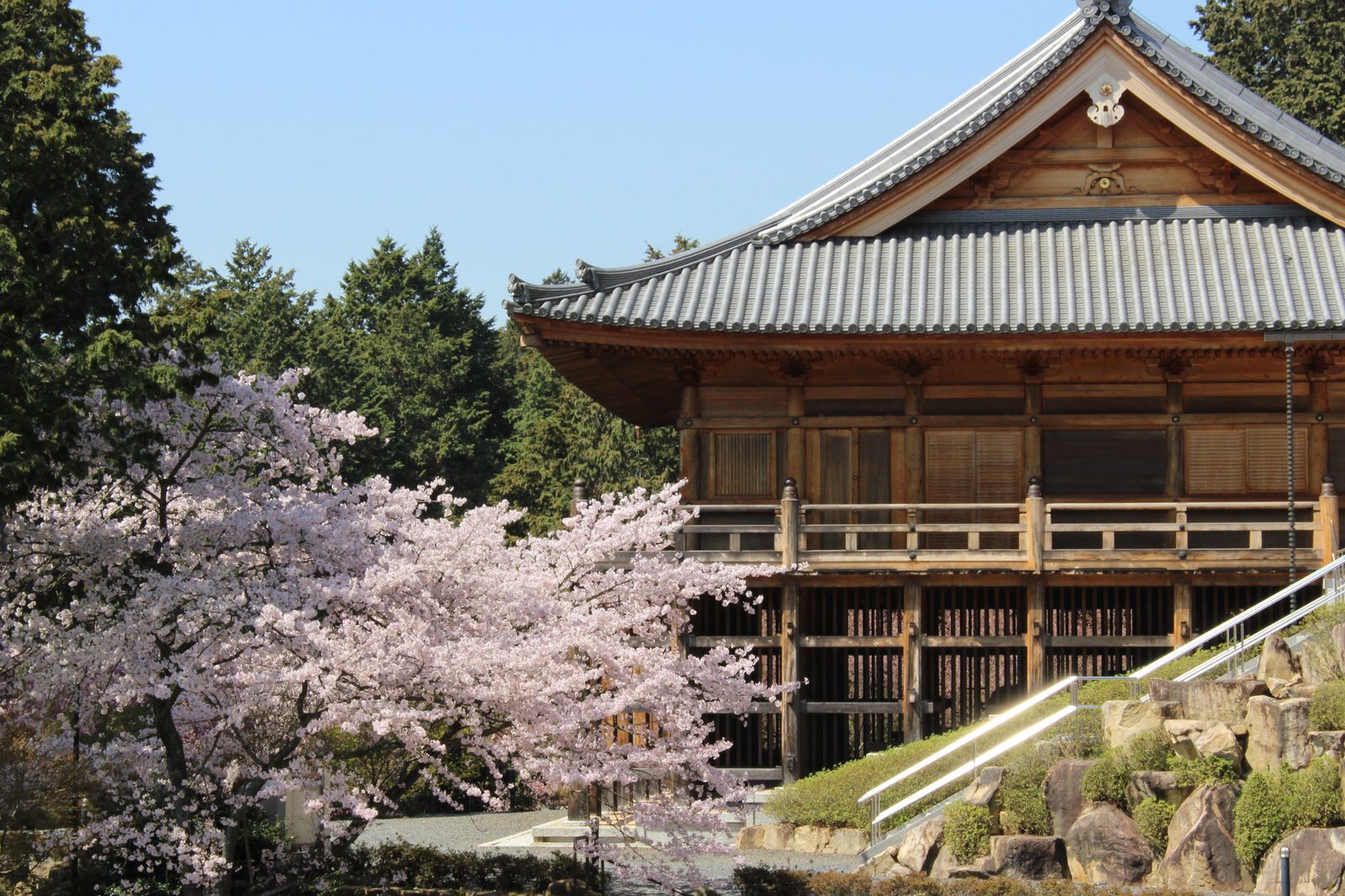
Following the year into summer leads to the strolling garden, where irises bloom, followed by hydrangeas and lotus. Winter camellia and sasanqua bloom in the cold of winter, with sasanqua across the whole grounds. After the leaf season ends, the grounds are quiet.
Eating at Shops the Temple Lists: Soba, Kettle Rice and Sweets
Choosing among the shops the temple lists is a matter of type, from hand-made soba and kettle rice to fried, chewy sweets. A soba shop serves soba made by hand every morning, with seasonal kinds. A kettle-rice shop serves shijimi clam rice with the cooked-kettle flavor and toasted aroma of okoge, plus charcoal-grilled eel.
Stopping at a funazushi shop offers funazushi that has no odor, along with a funazushi pie made in-house. Hotaru no Sato serves age-mitarashi, which is crispy outside and chewy inside. Another shop sells karinto manju fried in rice oil and fruit daifuku made with seasonal fruit.
Heading into Ishiyama Terrace starts with a pudding shop and a sweet potato sweets shop on the ground floor, with a café on the floor above. A Japanese confectionery serves ishimochi zenzai in autumn and winter in its café. A farm shop sells tea, rice and vegetables grown in Shigaraki without pesticides or fertilizer.
Getting to Ishiyama-dera, Hours and Fees
New to rural buses and one-man trains? See how to ride them, step by step.
The temple stands in Otsu, and places to stay near Ishiyama-dera are listed for the area. Viewing of the main hall inner sanctum may be suspended during the November evening lighting.
| Item | Details (as listed) |
|---|---|
| JR Kyoto Station to JR Ishiyama Station | thirteen minutes by special rapid service |
| JR Ishiyama Station to the temple | about ten minutes by bus to the stop in front of the temple gate |
| Keihan Ishiyamadera Station to the temple | about a ten-minute walk |
| Temple hours | the gate opens at eight in the morning and closes at four thirty in the afternoon; last entry is at four |
| Grounds entry | six hundred yen for an adult; inner sanctum viewing is five hundred yen more |
| Hojoden exhibition hall | three hundred yen more for an adult; opens during the spring and autumn exhibitions; ten in the morning to four |
| Parking | six hundred yen per passenger car; space for one hundred forty vehicles |
Thinking of staying overnight?
Compare places to stay near Otsu, Shiga, Japan →
Disclosure: This post may contain affiliate links. If you book through them, we may earn a commission at no extra cost to you.