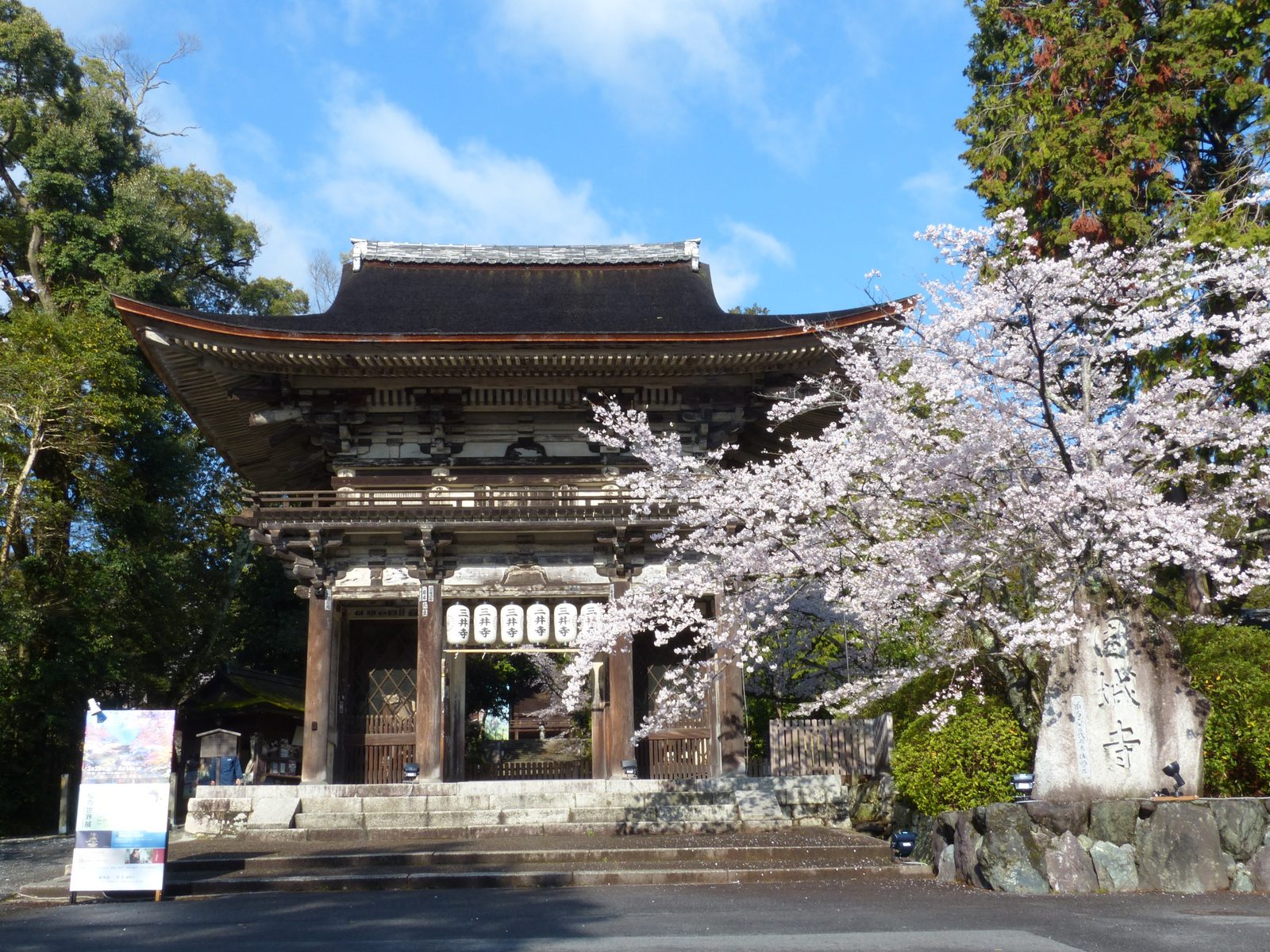
Mii-dera, formally Onjo-ji, is the head temple of the Tendai Jimon sect and the fourteenth temple on the Saigoku Thirty-three Kannon pilgrimage. What draws visitors is as much sound as sight: a bell listed by the Environment Agency among the one hundred soundscapes of Japan to preserve, and a spring house where water can still be heard bubbling behind the fence. Dragon legends run through both, and from the Kangetsu-butai, a stage-style building, the Otsu townscape and Lake Biwa lie spread out below. Chikara-mochi rice cake, named for the strength of Musashibo Benkei, carries the same legends into something to eat.
The Evening Bell of Mii
At dusk, when people hurry home, the sound of the Mii evening bell spreads across Lake Biwa. The bell, Mii no Bansho, is a national Important Cultural Property cast about four hundred years ago, and it sounds about a quarter tone below the note A.
A Noh passage describes calm waves and a moon shining clear through an autumn night, with the Mii-dera bell sounding clear. Among the Omi Eight Views, the verse for Mii has the bell hiding in mist.
The New Year's Eve ringing uses this same bell to drive away the old year's misfortune, tied to a legend of the dragon god of Lake Biwa. In the folk tale, a dragon woman asks a fisherman to strike it every day so that she and her child will know each other is well. On that night the temple sets out many lamps and eyeball rice cakes.
If sound is what draws you, this is the bell to look for: its deep tone continues for three minutes or more.
Evening Light on the Approach
In autumn, when the Nagara range turns to autumn colours, the halls and pagodas are lit madder-red at the time of the evening glow, among the deep trees. Along the approach, cherry trees stand in the same late light as dusk closes in.
At the foot of Mount Nagara the gap between morning and evening temperatures is large, and a sudden shivering cold can set in. In early April, Somei-Yoshino and wild mountain cherries colour the wide grounds pale pink, and the temple has about one thousand cherry trees.
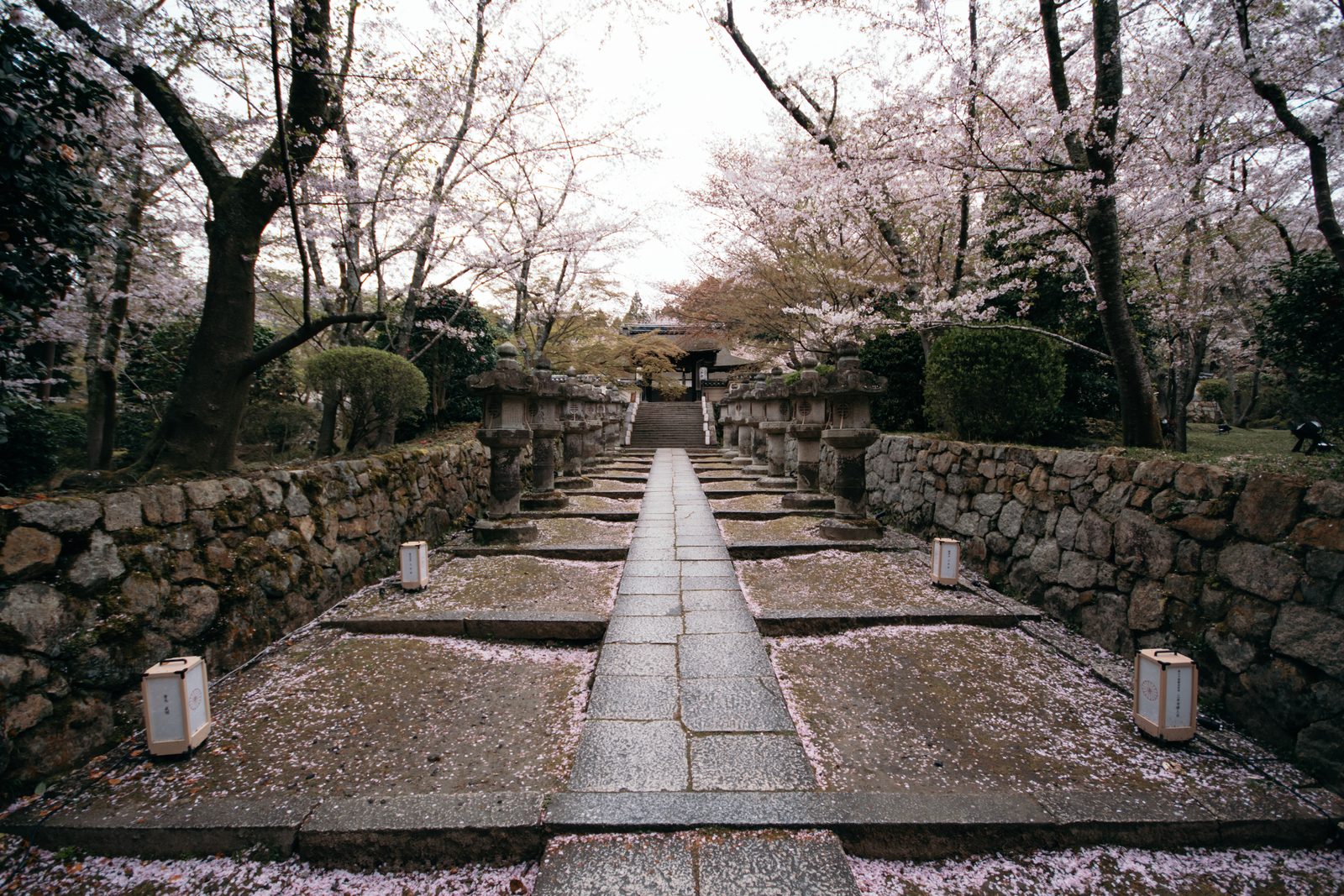
The grounds are unpaved, apart from where vehicles come in. In autumn visitors walk the natural earth path, stepping on fallen maple leaves of different shapes. Autumn suits the earth path and its fallen leaves, while early April brings the cherry trees; in either season, dress for a wide swing between morning and evening.
Benkei's Bell and the Dragon Legends
The Benkei drag bell is said to date from the Nara period. It still bears scars and cracks thought to date from when Benkei threw it away.
The legend says Benkei dragged the bell up to Mount Hiei and struck it, but it rang "I want to go home" in the Kansai dialect, so he angrily threw it into the valley. The bell is said to sweat and not sound before something bad, and to sound by itself before something good. In a time of upheaval it was buried for fear of plunder and is said to have rung by itself.
According to the legend, Tawara Tota Hidesato received the bell from the dragon god of Lake Biwa for killing the centipede of Mount Mikami, and gave it to Mii-dera. If the stories bring you here, look closely at the drag bell itself: its scars and cracks are the part of the legend you can see.
Akai-ya, the Pagoda and Kannon-do
At the Akai-ya spring house, a look through the fence shows the well water, and a bubbling sound can still be heard. It stands at the back of the Kondo, the main hall, on the west side, and its spring was the birth water of Emperors Tenji, Tenmu and Jito, the origin of the name Mii-dera.
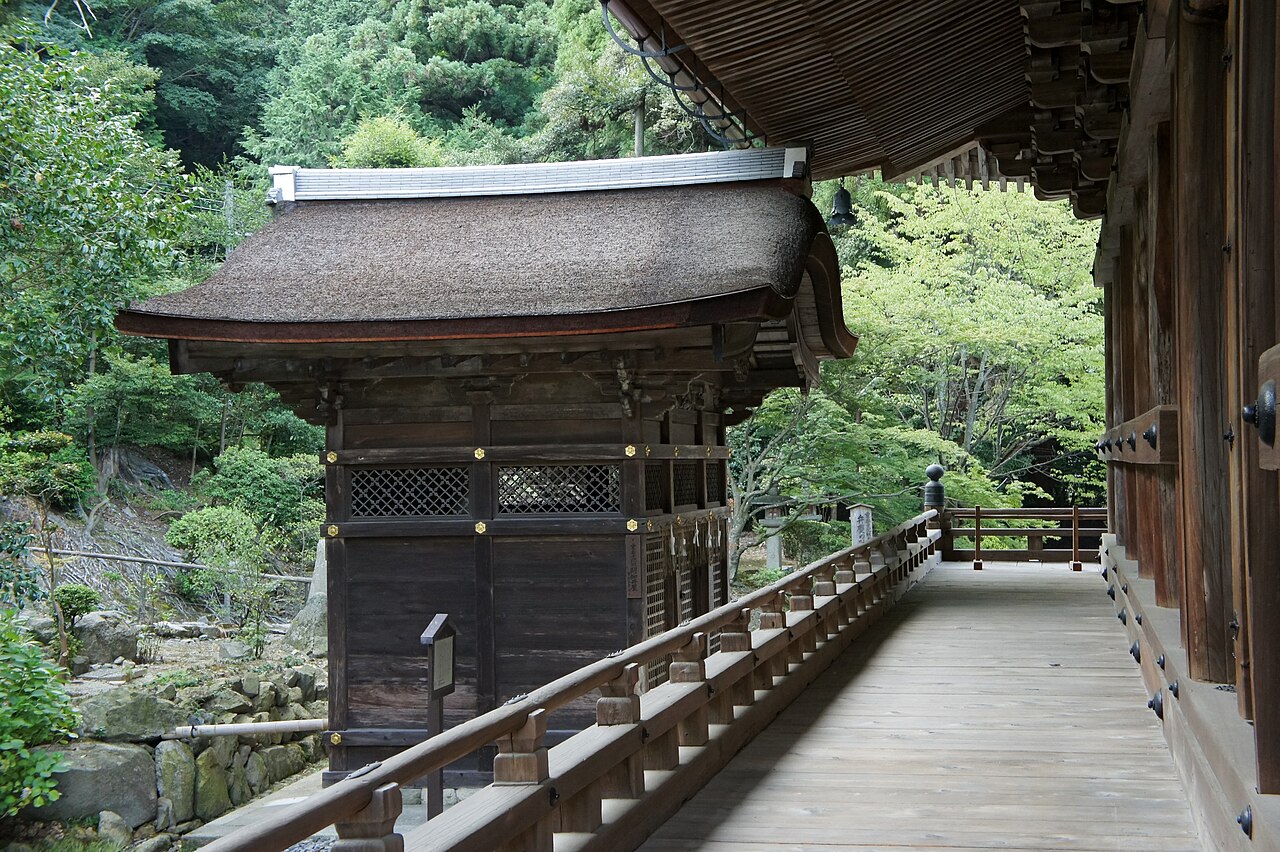
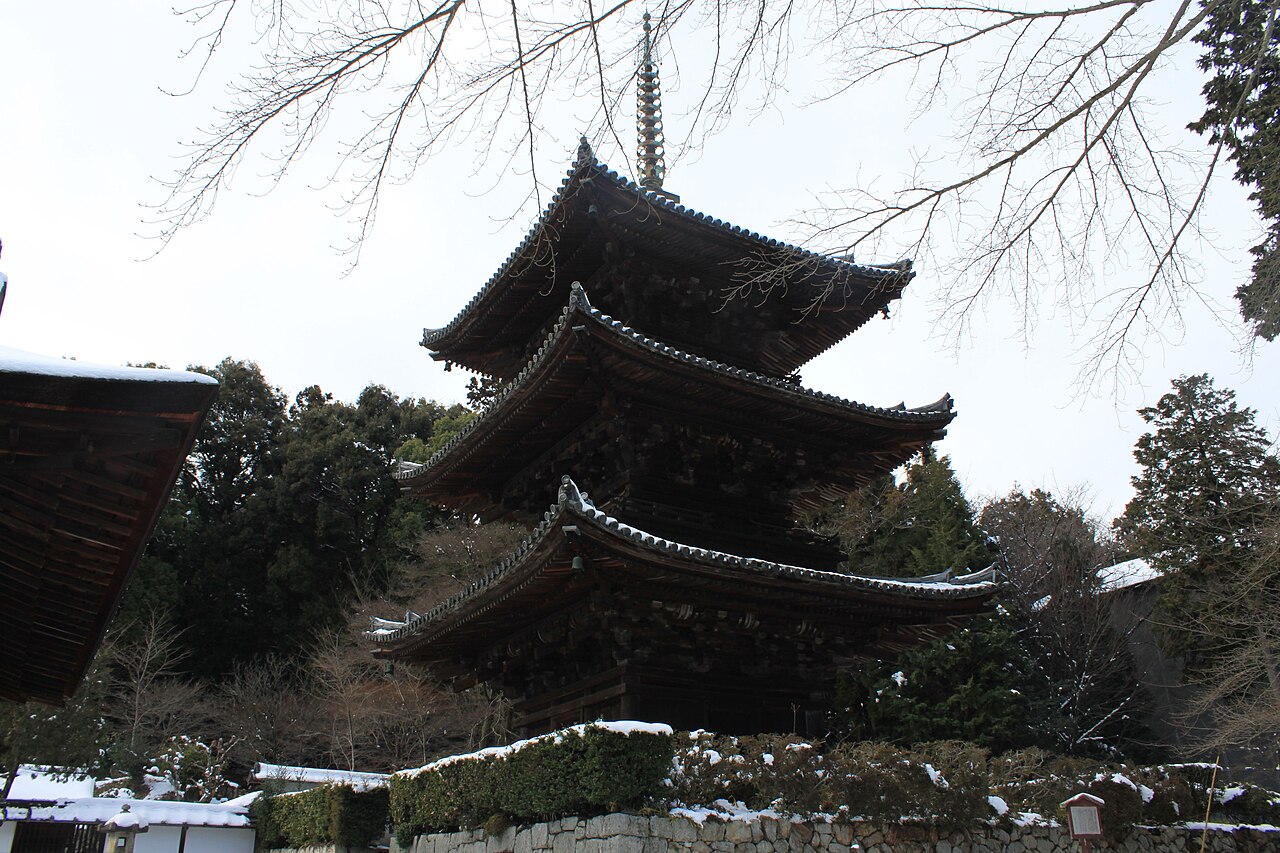
An old record says a nine-headed dragon god lived in the spring, appearing ten days a year at the hour of the ox at night. The three-storey pagoda is an Important Cultural Property from the Muromachi period, with a wooden Shaka triad on its bottom storey.
Kannon-do, the Kannon hall, dates from the Edo period and holds many votive plaques. From the Kangetsu-butai, a stage-style building, the Lake Biwa Canal (Biwako Sosui) and the Otsu townscape spread out below, with Lake Biwa beyond.
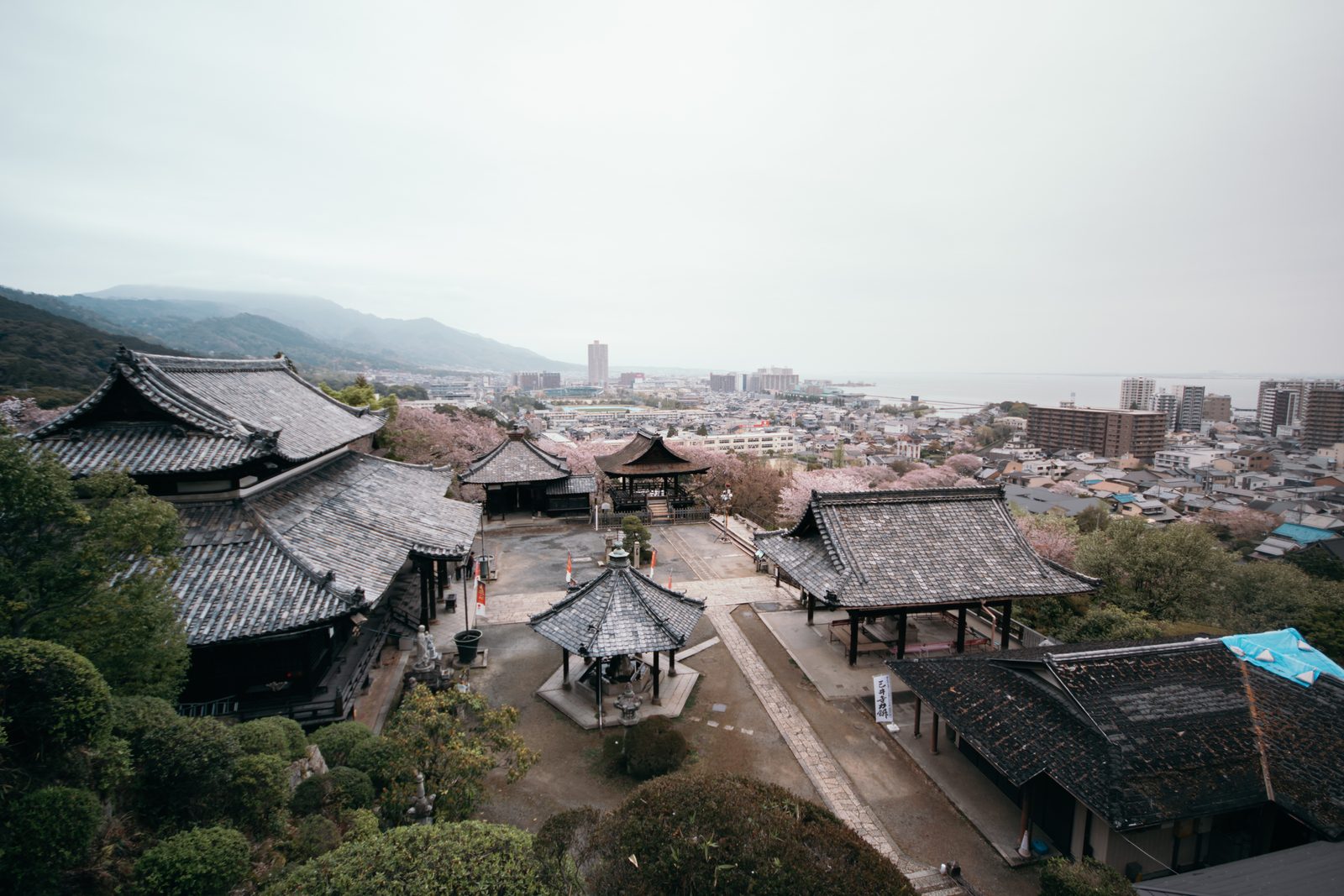
With fifty to sixty minutes for a visit, keep the spring house, the pagoda and the Kangetsu-butai view. Guided outings around the city are listed under experiences around Otsu.
Chikara-mochi, Zazen and the Lake Biwa Canal
Chikara-mochi rice cake takes its name from the strength of Musashibo Benkei, who in the legend dragged the temple bell up to Mount Hiei. It is made by a traditional method handed down through generations, from carefully chosen Omi glutinous rice pounded in a mortar.
The Lake Biwa Canal carries lake water through the tunnel beneath Mount Nagara and out above ground in Yamashina Ward, Kyoto. After the halls, the canal is a change of scale, a working waterway leaving the lake for Kyoto.
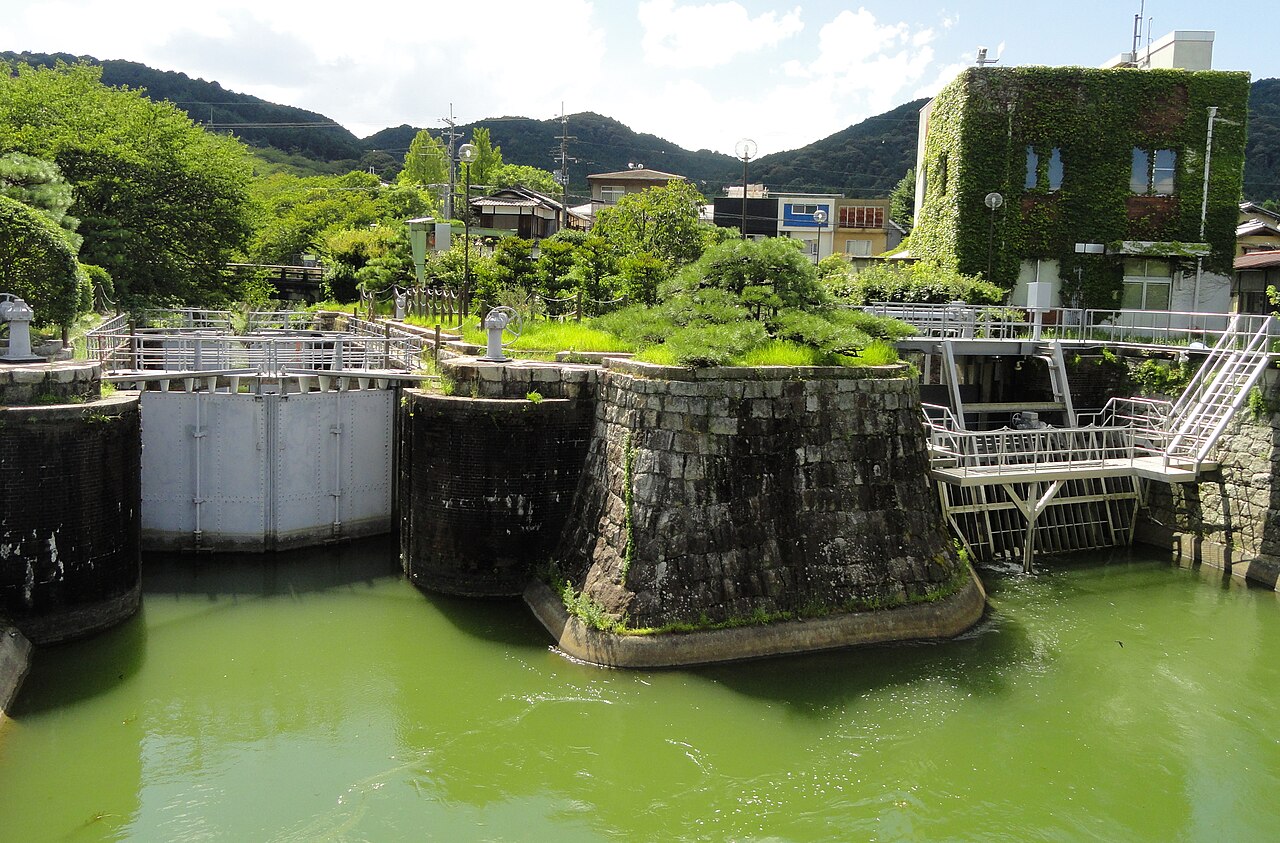
Zazen classes with a monk's Dharma talk are offered at Mii-dera. On the thirty-first of December, New Year's Eve, visitors who wish can strike the bell themselves. Eat the Chikara-mochi soon after buying it, since no additives are used, and plan the zazen class ahead: it is for groups of three or more and has to be arranged in advance.
If you would rather stay overnight, places to stay in Otsu is a place to start.
Getting to Mii-dera
| Leg | How | Time or fare |
|---|---|---|
| Kyoto Station to Otsu Station | JR Biwako Line | About 9 minutes |
| Sanjo Keihan to Lake Biwa Hamaotsu Station | Subway Tozai Line and Keihan Railway, no transfer | About 25 minutes |
| Otsu Station to Lake Biwa Hamaotsu Station | On foot | About 15 minutes |
| Keihan Ishiyama-Sakamoto Line Miidera Station to the temple | On foot | 7 minutes |
| Keihan Ishiyama-Sakamoto Line Otsushiyakushomae Station to the temple | On foot | 12 minutes |
| Keihan Ishiyama-Sakamoto Line Miidera Station to the Lake Biwa Canal | On foot | 5 minutes |
| Temple car park | Passenger cars | 350 spaces |
| Temple car park | Large buses | 30 spaces |
| Parking, private car | Fee | 600 yen |
New to rural buses and one-man trains? See how to ride them, step by step.
Hours and Fees
| Place | What | Hours or fee |
|---|---|---|
| Mii-dera | Opening hours | 9:00 to 16:30 |
| Mii-dera | Last admission | 16:00 |
| Mii-dera | Adult admission | 800 yen |
| Mii-dera | Junior and senior high school students | 500 yen |
| Mii-dera | Elementary school children | 300 yen |
| Mii-dera | Adult in a group of 30 or more | 700 yen |
| Mii-dera | Time needed for a visit | 50 to 60 minutes |
| Mii-dera | Rest days | None, year-round |
| Zazen class | Fee per person | 1,000 yen |
| New Year's Eve bell | Striking donation, keepsake given | 1,000 yen |
| Keihan Otsu Line one-day ticket | Adult | 800 yen |
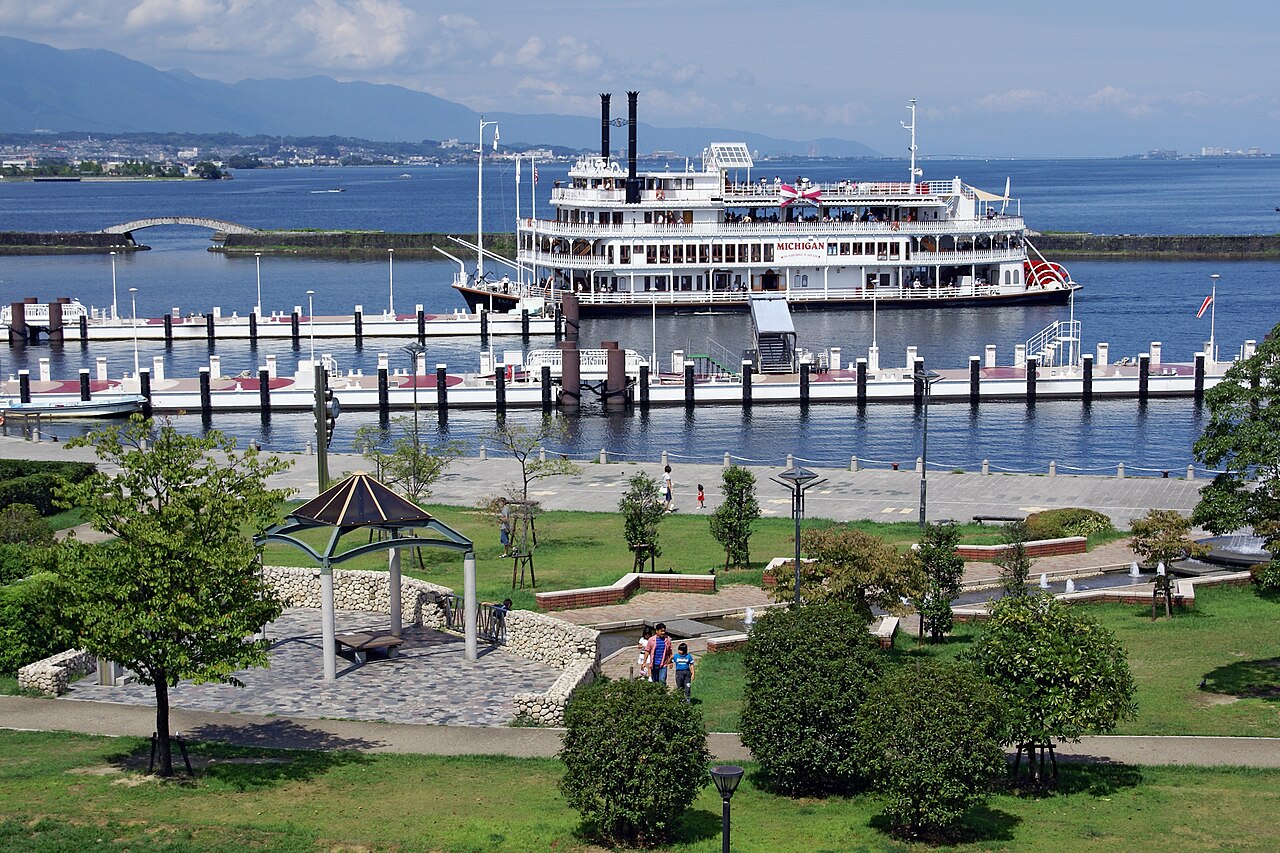
Where to stay
Places to stay near Otsu, Shiga, Japan →
Disclosure: This post may contain affiliate links. If you book through them, we may earn a commission at no extra cost to you.