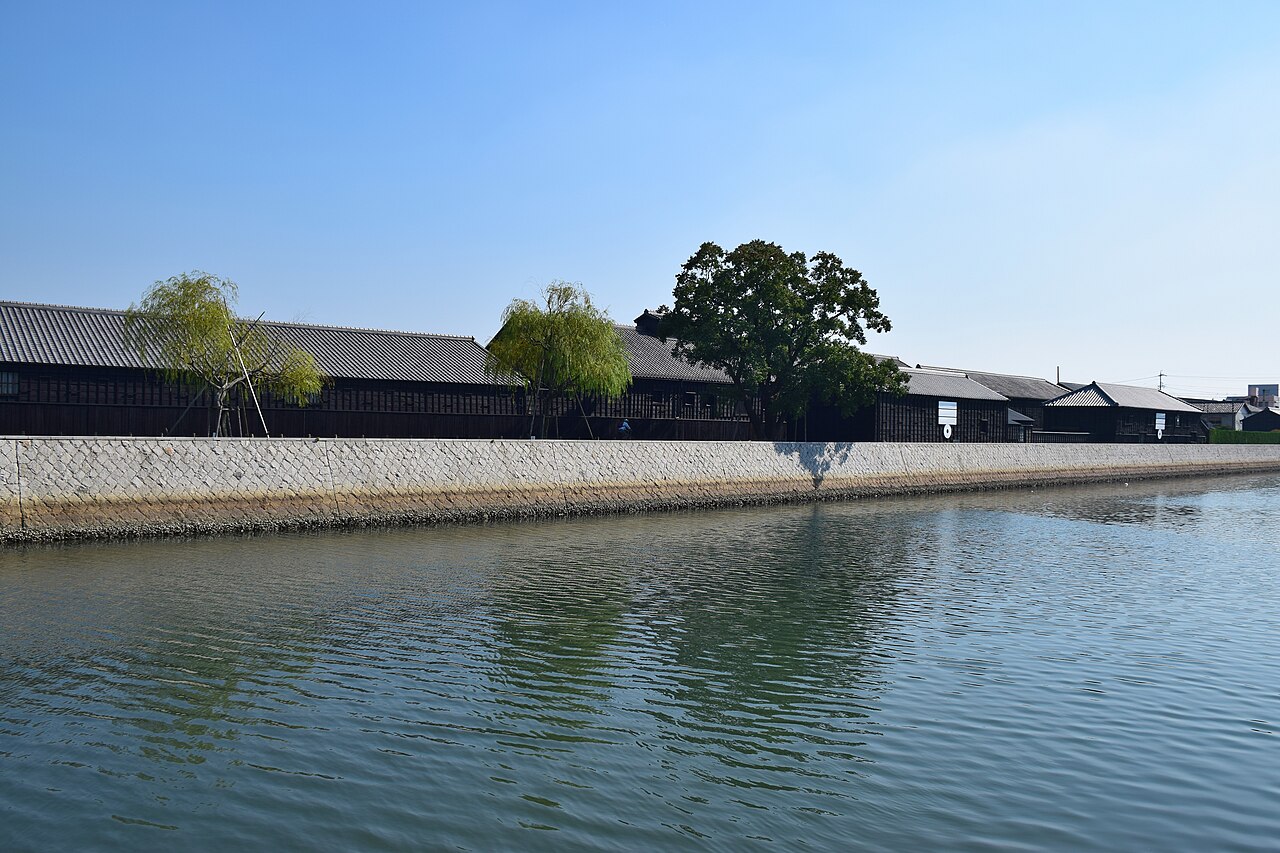
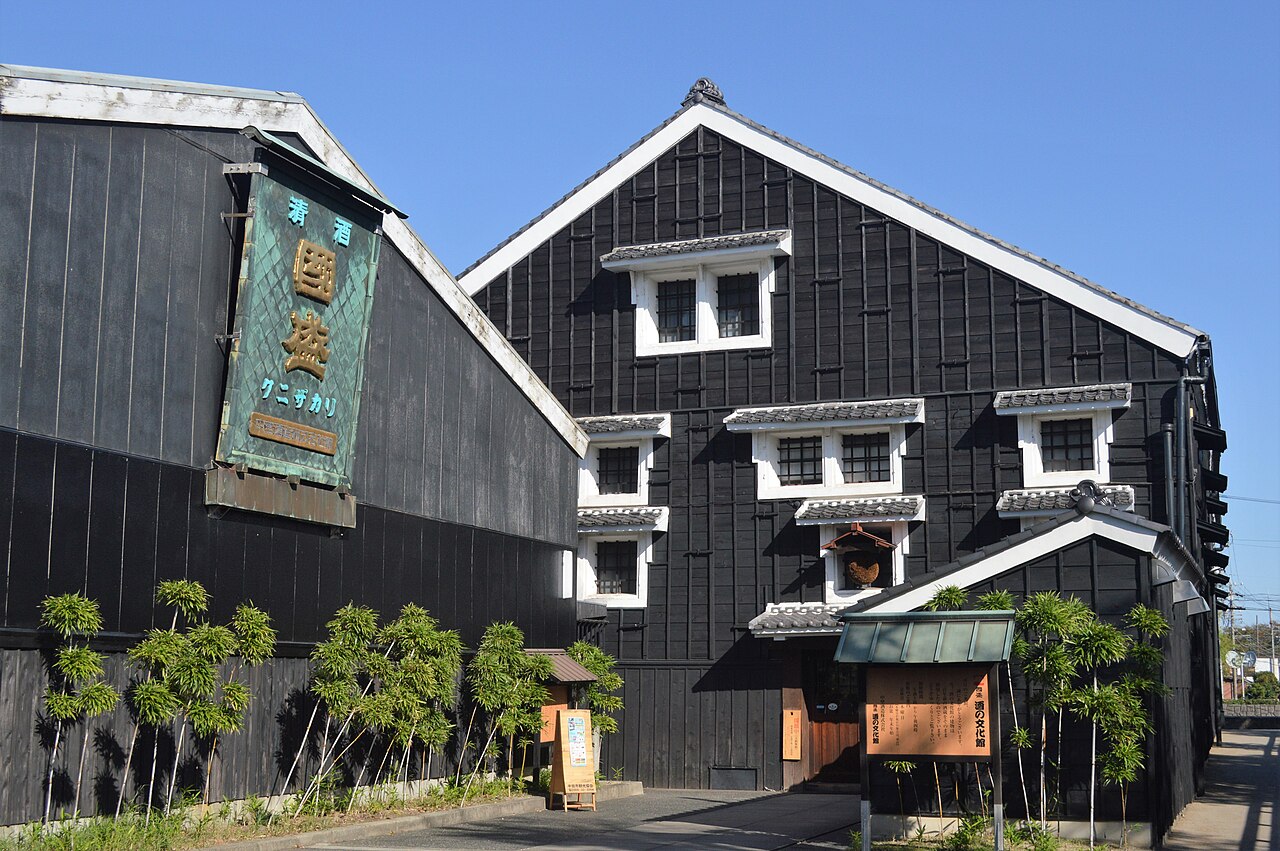
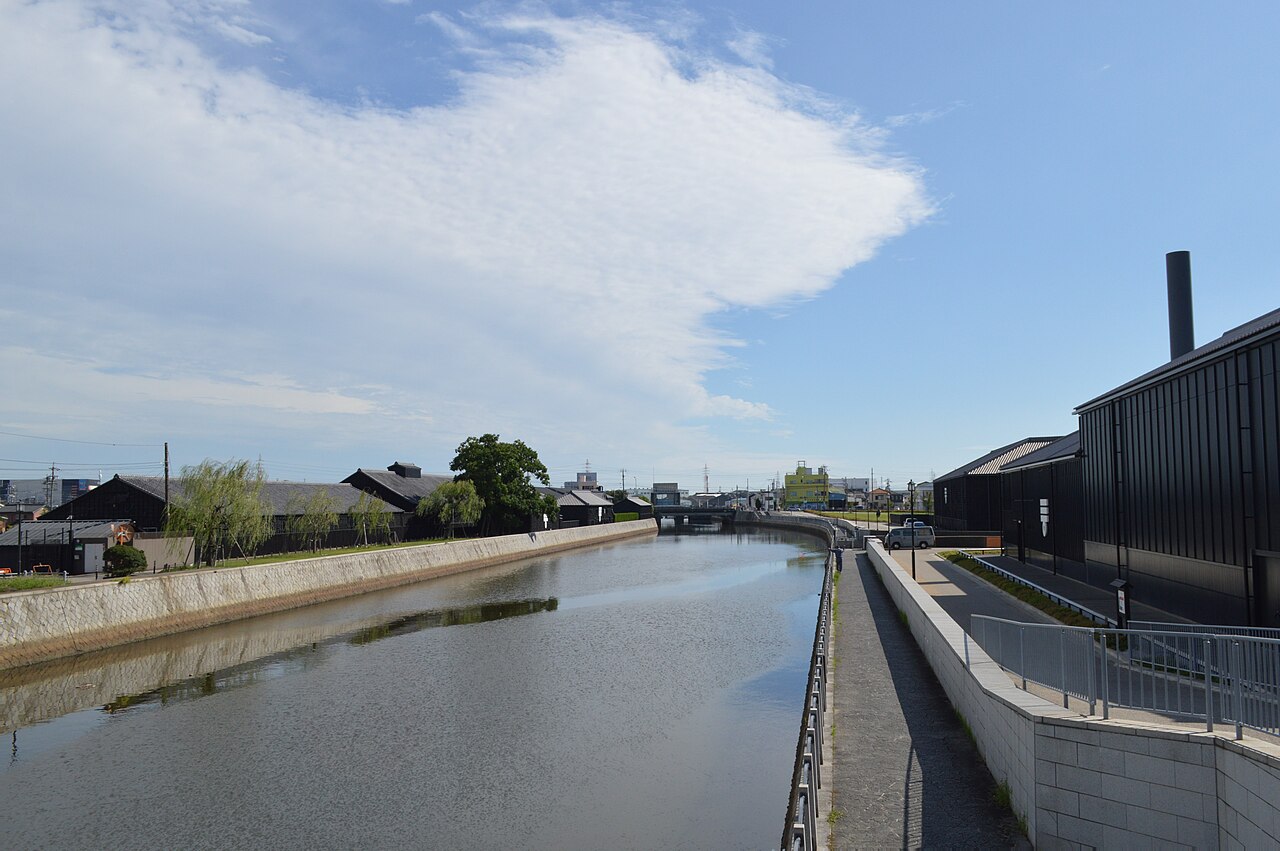
In Handa, Aichi, sake, vinegar and similar products are brewed, and black-boarded storehouses representing that industry remain along the Handa Canal. The canal area is described as the centre of Handa city sightseeing, with facilities such as the Mizkan Museum and the Sake Culture Museum gathered. Historic buildings are preserved along with the scenery of black-walled storehouses lining the canal.
What Is the Handa Canal Like? Black-Boarded Storehouses, Brewing History and Carp Streamers
The Handa Canal supported the development of shipping and brewing in the Edo period. Through the canal, which opened in the Edo period, specialty goods such as sake, vinegar and cotton were carried from the Chita Peninsula to Edo and Osaka.
Along the canal and in the storehouse-town area, rows of black-boarded storehouses and historic buildings can be strolled. Brewing storehouses stand by the Handa canal, and photos can be taken with the Mizkan mark depending on the camera angle. The Handa Canal area has the Ogura residence, a nationally registered tangible cultural property, and the historic Japanese garden Hanroku Garden.
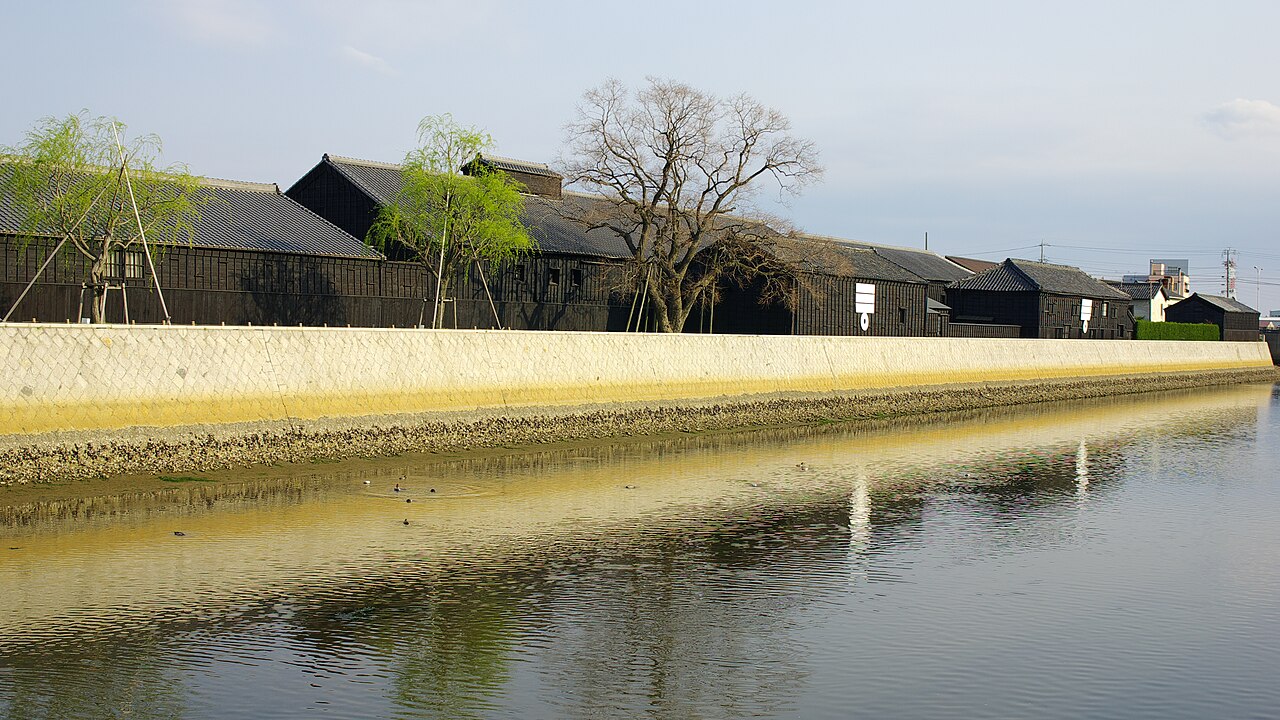
Fifty or more carp streamers fly over the Handa Canal from mid-April to the fifth of May each year.
What Is Inside the Mizkan Museum? Vinegar Brewing, a Fermentation Room and Two Courses
The Mizkan Museum is described as a hands-on museum where visitors learn about Mizkan's vinegar-making history and food culture. The museum conveys Mizkan's vinegar-making history, brewing technology and food culture together with the black-walled scenery along the old canal. The Mizkan group's history began when Nakano Matazaemon, who ran a sake brewery, succeeded in making sake-lees vinegar from sake lees.
In one section of the museum, visitors can see how vinegar was made in the Edo period and how brewing is done in the modern day.
The static-fermentation room presents a traditional method that has continued since the Edo period: sake is put in a square tub and acetic acid bacteria are added; the bacteria gather at the surface seeking air and ferment over two weeks while forming a thin film.
The Mizkan Museum offers two courses, the full-museum course and the mini course. The mini course lets visitors tour freely with a narrowed set of zones and is described as suited to those with small children. Visitors can make their own seasoning at the Mizkan Museum. The Mizkan Museum is a paid museum requiring advance reservation.
What Is the Handa Red Brick Building? A Former Kabuto Beer Factory and Its Exhibition Room
The Handa Red Brick Building is a historic building built in the Meiji era as a Kabuto Beer factory. It preserves structures needed for beer brewing, such as an arched fireproof floor and a five-layer double wall. Half-timbering is a structure of wooden pillars with brick walls, and the bricks are laid in English bond up to around the roof.
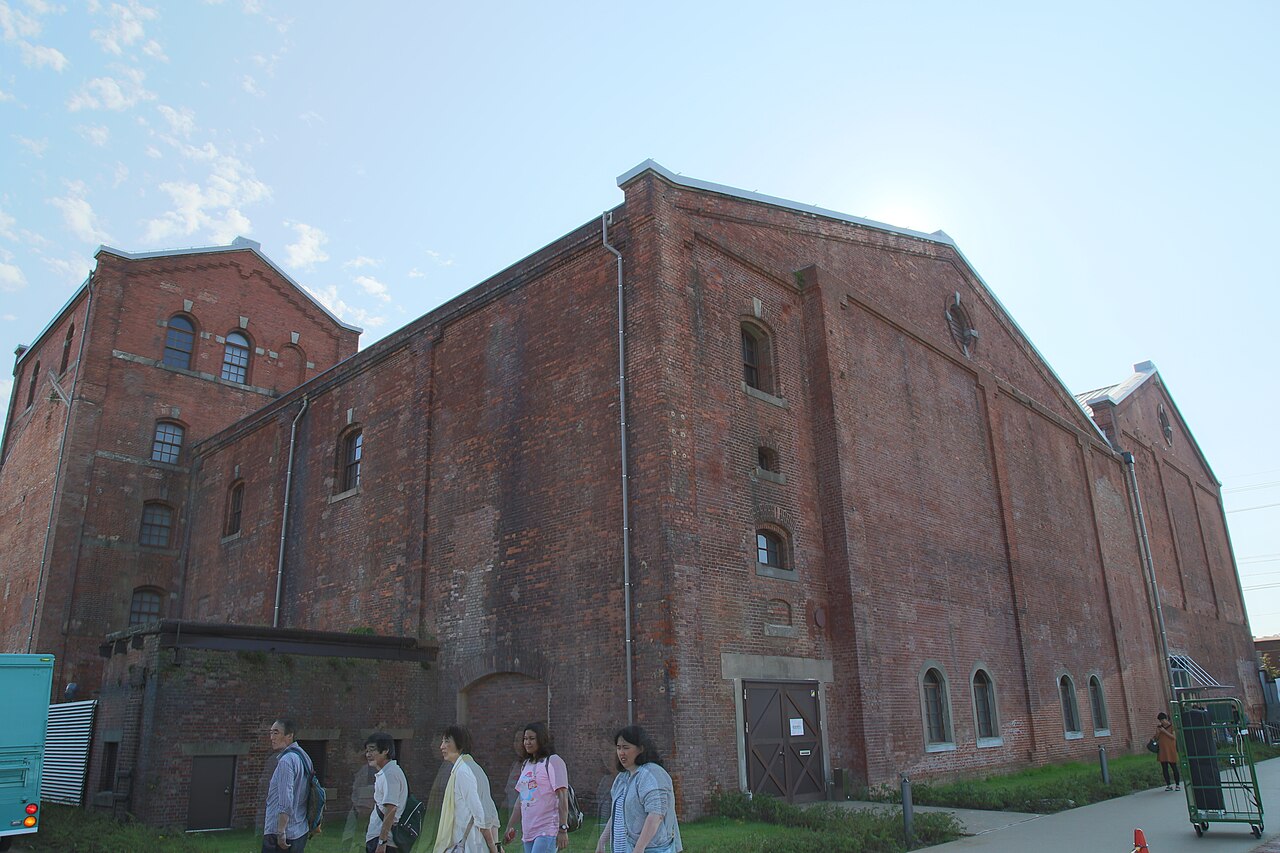
Marks of machine-gun strafing remain on the north wall of the building and can be seen. A permanent exhibition room presents the history of Kabuto Beer through models, video and period materials. Taking pictures is not allowed in the permanent exhibition room.
What Can You Eat and Drink at the Handa Red Brick Building? Revived Kabuto Beer, Cafe Lunch and a Shop
The cafe in the Handa Red Brick Building serves meals made with fresh local ingredients and a revived Kabuto Beer. The drinks include two kinds of revived draft Kabuto Beer recreating Meiji-era and Taisho-era tastes, and soft drinks such as homemade vinegar soda made with seasonal fruit. During lunch time, the menu centres on Western-style dishes.
The alacarte menu, prepared to go with Kabuto Beer, includes juicy sausages, bruschetta made with seasonal ingredients and colourful salads. The revived Kabuto Beer is described as having a classic taste in which the savory aroma of malt and bitterness blend in balance. The packaging of the revived Kabuto Beer reproduces the label of the time.
The Handa Red Brick Building shop stocks selected products centred on revived Kabuto Beer and local fermented seasonings and foods. The shop introduces fermented foods made by local brewers using traditional methods.
What Is Hanroku Garden Like? Wind Chimes, a Stroll Garden and the Sake Culture Museum
Hanroku Garden is a garden surrounding the residence of the Nakano Hanroku family, wealthy merchants who prospered in shipping and brewing from the Edo period. At the centre of the Hanroku Garden stroll is the Shiomi pond, whose water surface once rose and fell with the tide of the Handa canal.
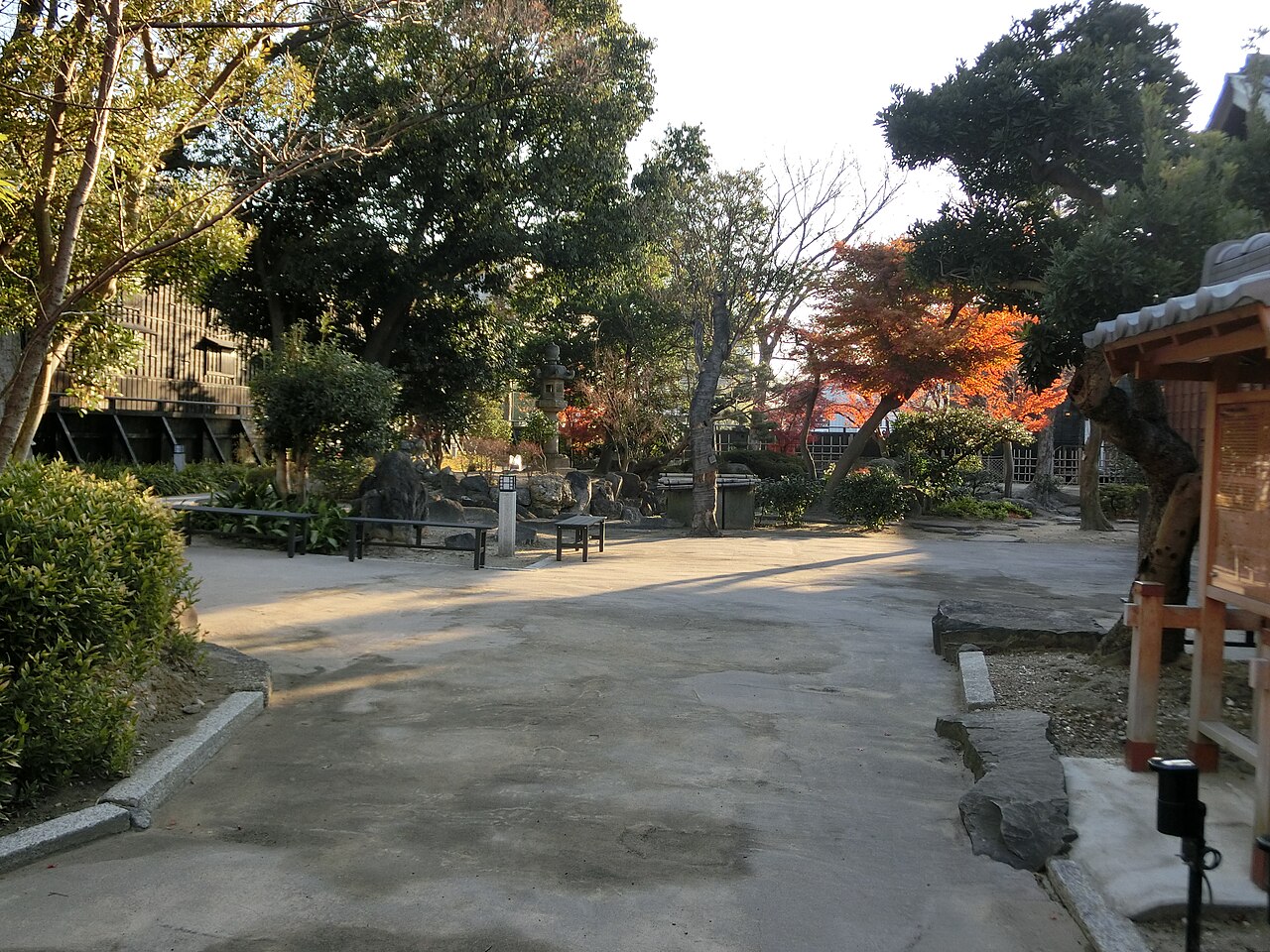
At Hanroku Garden, summer has wind chimes, autumn has lamps, and winter to spring has lantern decorations. During the summer wind-chime display, about one thousand colourful wind chimes are lined up in the garden. In that summer display, the wind chimes sound in the breeze that occasionally blows through from the canal.
The former Nakano Hanroku residence on the site houses, among other things, a French restaurant, HANROK, and a baumkuchen specialty shop. Visitors can eat baumkuchen sticks from the baumkuchen shop on a bench while looking at the garden.
A guidebook describes the Sake Culture Museum as a museum that uses, just as it stood, a storehouse where sake was brewed for about two hundred years, and it is said to display traditional brewing tools and materials and to have a tasting corner and a shop.
Getting to the Handa Canal
New to rural buses and one-man trains? See how to ride them, step by step.
| Route | Time or distance |
|---|---|
| Chita-Handa Station to the Handa Canal storehouse district | fifteen minutes on foot |
| Chita-Handa Station to the Mizkan Museum | thirteen minutes on foot |
| JR Handa Station to the Mizkan Museum | three minutes on foot |
| Sumiyoshicho Station to the Handa Red Brick Building | five minutes on foot, heading east |
| JR Handa Station to the Handa Red Brick Building | fifteen minutes on foot, heading northwest |
| Handa Chuo Interchange to the Handa Red Brick Building | about ten minutes by car, heading east |
| Handa Chuo Interchange to the storehouse district by car | four point five kilometres via National Route two hundred and forty-seven |
| A parking lot east of the storehouse town to the Handa Canal | five minutes on foot |
If you would rather stay overnight, places to stay in Handa is a place to start.
If you would rather have the day arranged for you, look at guided tours elsewhere in Aichi.
Hours and Fees
| What | Detail |
|---|---|
| Mizkan Museum opening hours | nine thirty in the morning to five in the afternoon; last admission three fifteen in the afternoon |
| Mizkan Museum booking | advance reservation required |
| Mizkan Museum closed days | Thursdays, year-end and New Year, and the Obon period |
| Mizkan Museum full-museum course, adult | five hundred yen |
| Mizkan Museum mini course, adult | three hundred yen |
| Handa Red Brick Building (building) hours | nine in the morning to six in the evening; cafe open until nine in the evening on Fridays and Saturdays |
| Handa Red Brick Building permanent exhibition hours | nine in the morning to five in the afternoon |
| Handa Red Brick Building permanent exhibition admission | two hundred yen for an adult; free for junior high school students and younger |
| Sake Culture Museum | ten in the morning to four in the afternoon; closed Thursdays; free of charge; advance reservation required |
| Rental bicycle | five hundred yen for one day, or three hundred yen for up to three hours |
Fees and hours were checked against official sources between 15 October 2026 and 19 November 2026.
Thinking of staying overnight?
Compare places to stay near Handa, Aichi, Japan →
Disclosure: This post may contain affiliate links. If you book through them, we may earn a commission at no extra cost to you.