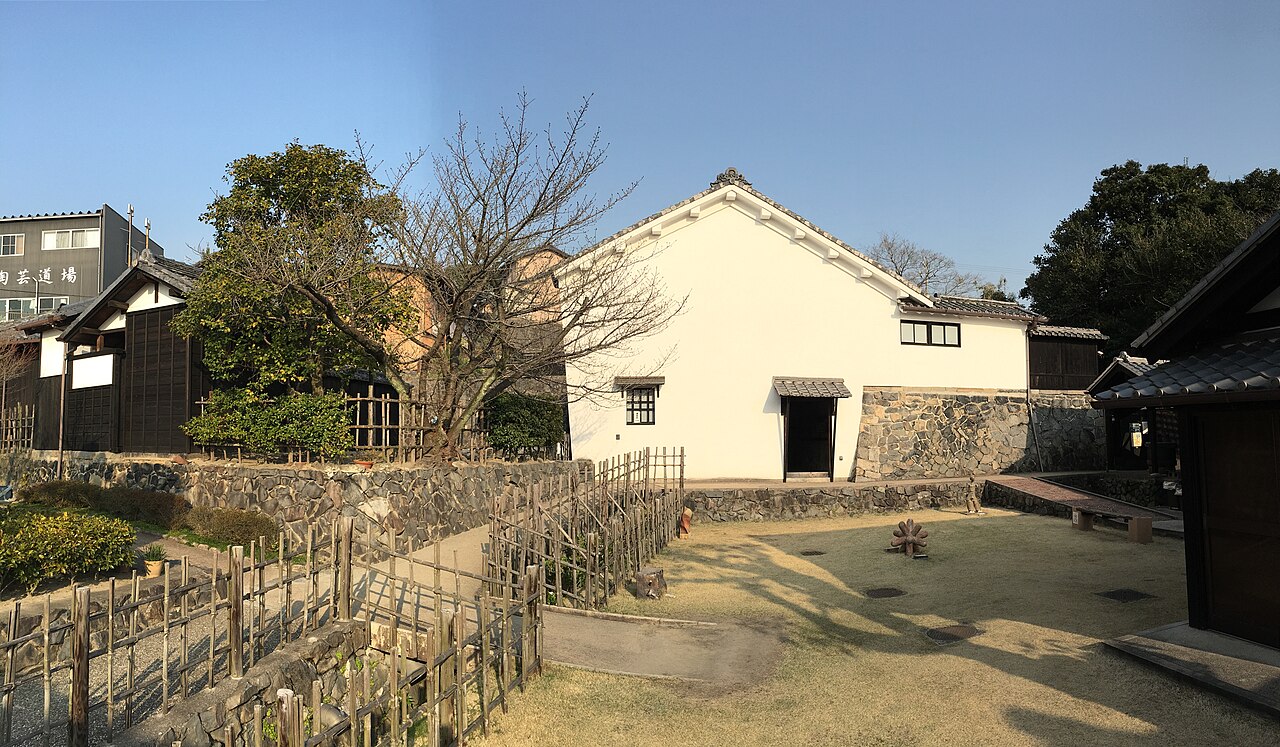
Most travelers see Tokoname only from the air. The town faces the west coast of the Chita Peninsula, and Central Japan International Airport — Centrair — stands within its city limits, yet the place the airport belongs to keeps a much lower profile. Up on the hill behind the harbor, brick chimneys still rise over the workshop lanes. Tokoname is counted among Japan's six ancient kilns, together with Seto, Shigaraki, Echizen, Tanba and Bizen — the oldest and largest among them, known for ware that fires to a deep vermilion. For anyone with half a day to spare between flights, it may be the easiest quiet town in Japan to reach.
Getting there
The limited express from Meitetsu Nagoya Station reaches Tokoname Station in about half an hour, and the one-way limited-express fare is seven hundred and fifty yen for an adult. From Chubu Centrair International Airport Station, the ride into town takes about five minutes. Both of Meitetsu's routes down the peninsula, the Tokoname and Airport lines, call here, with everything from limited expresses to all-stops locals. If you come by car instead, the footpath's own parking area charges three hundred yen for each eight-hour stretch, while the lot at the Ceramics Hall charges five hundred yen for the day.
New to rural buses and one-man trains? See how to ride them, step by step.
The footpath itself
Leave by the east exit and you pass a giant beckoning-cat figure the town calls Tokonyan; beyond it, a slope leads up to the Ceramics Hall, the customary start of the walking course, where local ware is displayed and sold. The name Tokoname itself is said to come from the smooth clay that lies exposed all over these hills — the first part of the name understood to mean the ground itself. Potters have worked that clay since the closing years of the Heian period, when the ware now called Old Tokoname began to spread from here, and rolling hills still make up most of the town.
Shipping money built what you see today. From the age of the coastal cargo ships through the Meiji era, Tokoname ware went out by sea to the whole country, and the brick chimneys and kiln-side streets of that boom still stand. The best-known corner is Dokan-zaka, a sunken lane whose flanking walls are faced with Meiji-era clay drainage pipes and early-Showa shochu jars, while rejected chunks from the pipe firings — kesawa — are pressed into the slope underfoot to give walkers a grip.
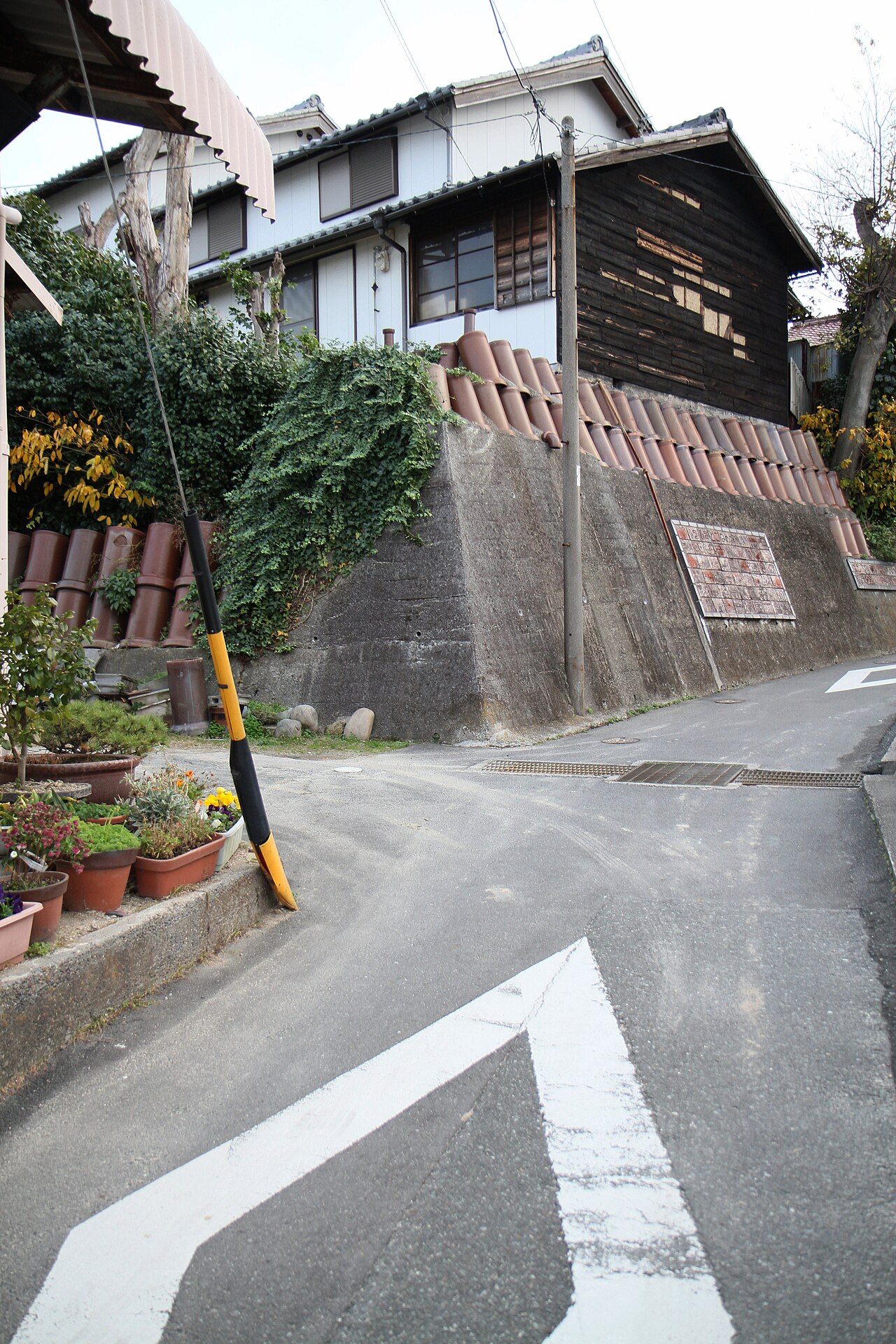
Farther along stands the Toei kiln, a climbing kiln raised toward the end of the eighteen-eighties that kept firing into the nineteen-seventies and is held to be the largest of its kind still standing in Japan. At the kiln plaza nearby, a workshop hall preserves a square kiln from the early nineteen-twenties that fired from both faces; its chamber can be viewed from inside, and pottery classes run upstairs. Old buildings keep finding second lives here: ni:no, an aged house along the lanes, pairs a ground-floor shop of local pottery and sundries with an upstairs cafe where lunches of local vegetables arrive on dishes made by the town's potters, and Bar & Bistro Kyoeigama occupies a former pipe-firing kiln, its brick walls still glinting where ash and salt fused onto them in the heat.
*Prefer to explore with company? Browse guided tours and craft experiences around Nagoya.*
Compare options
See partner pricing and availability →
Disclosure: This post may contain affiliate links. If you book through them, we may earn a commission at no extra cost to you.
Three stops worth your time
- INAX Live Museum. A campus of six themed halls on ceramics, tile and architectural terracotta, in the town where the INAX brand was born — its founders once advised the tile works for Frank Lloyd Wright's old Imperial Hotel, and the terracotta park here sets out columns actually used on that building. The World Tile Museum traces glazed decoration from Mesopotamian clay pegs to Islamic geometry and European plant-and-animal designs. Adult admission is a thousand yen, and the museum runs from ten in the morning to five in the afternoon, with last entry at half past four. It takes Wednesdays off, though a national holiday cancels the rest day; hands-on programs can be reserved online or at the kiln-plaza annex, and some can be joined on the spot.
- The Takita family house. A shipping-merchant compound from around the middle of the nineteenth century, restored and now shown to the public, on a height above Denden-zaka from which Centrair can be seen across the water. Admission is three hundred yen — two hundred for groups of twenty or more, with no charge for children of middle-school age and younger — and the house receives visitors from half past nine to half past four.
- Tokoname Tono-no-mori. A three-part complex — a ceramics museum, a research institute and training workshops — devoted to keeping the local craft alive. The renewed museum displays around three hundred pieces from a collection of production tools and wares designated an Important Tangible Folk Cultural Property, and the research wing occupies a building by Horiguchi Sutemi, a pioneer of Japanese modernist architecture.
Making it a slow half day
The times line up kindly here. Reach town by late morning — half an hour from Nagoya, minutes from the airport — and the walking lanes, the tile museum and the merchant house all fit before the last entries, which cluster around half past four. The tourist information center is staffed from nine to half past four if you want a paper map before setting out. Fees and timetables in a small town move with the year, so check official information before visiting.
If your visit really is between flights, the airport side of town has diversions of its own. Centrair's terminal complex connects directly to its own rail stop and folds in gourmet floors, an observation deck and even baths, while the Flight of Dreams hall displays the first-built Boeing Dreamliner airframe, donated by its maker — roughly a third of that aircraft's parts were made in this region. And one more Tokoname thread to pull before you go: the family behind a centuries-old brewery here — makers of sake since the middle of the sixteen-sixties, and of miso and tamari from the early eighteenth century — produced Akio Morita, a co-founder of Sony, and their old brewing halls now serve miso dishes and sell the family's seasonings.
*Planning a longer stay in the region? Compare day tours and experiences departing Nagoya.*