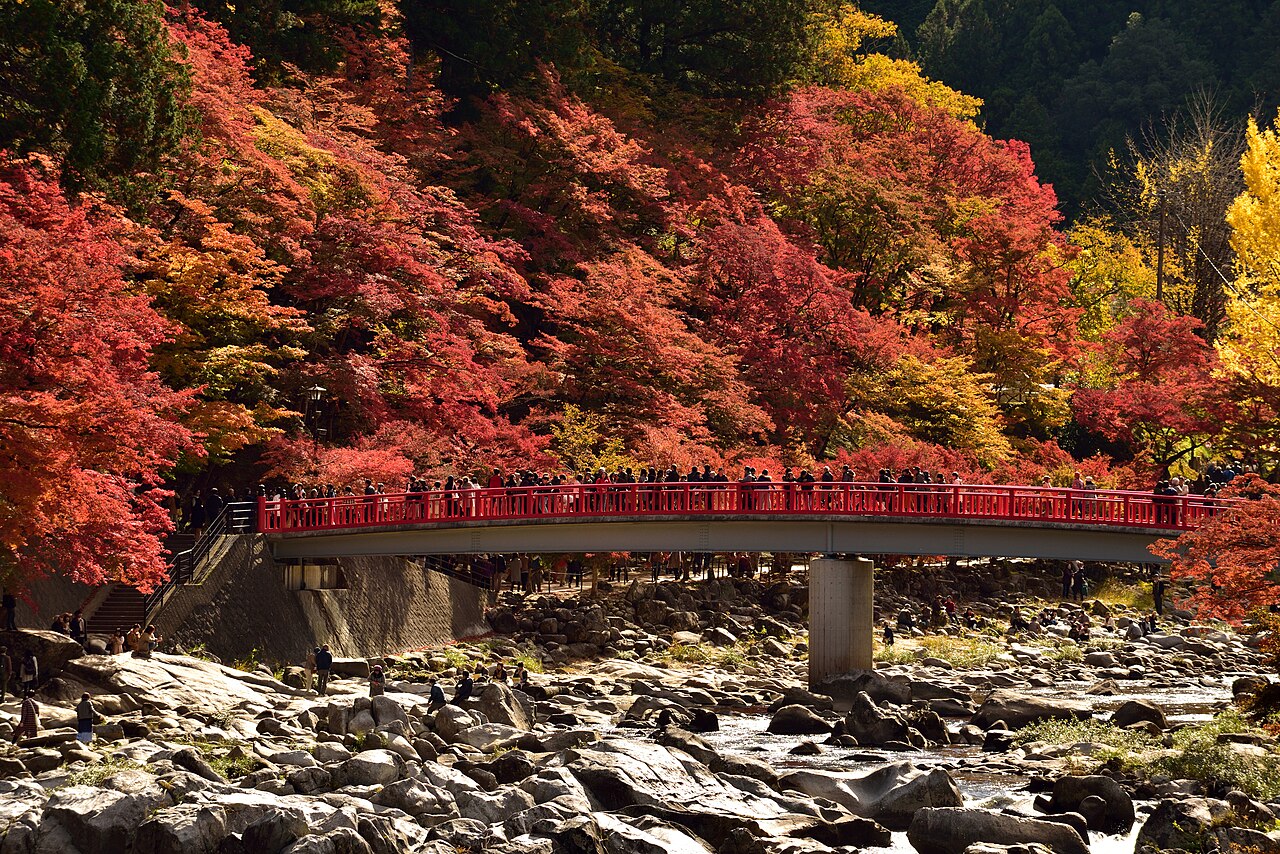
This article covers a day in Asuke, an old town in Toyota City in Aichi Prefecture, and its maple gorge, Korankei. It walks through the bus routes from Toyota-shi, Higashi-Okazaki and Josui stations, the Momiji Festival and the Iimoriyama illumination, the farmhouse museum Sanshu Asuke Yashiki, the streets of the old salt road, and lunch at Korankei Ichinotani.
Getting to Asuke and Korankei by Bus
Korankei is reached by bus from three Meitetsu railway stations, Toyota-shi Station, Higashi-Okazaki Station and Josui Station, and each route stops at the Korankei bus stop. Two of the routes are Meitetsu Bus services and the third is run by Toyota Oiden Bus, so the sensible choice is the route that starts on the railway line you are already using.
- From Toyota-shi Station on the Meitetsu Mikawa Line or Toyota Line, take the Meitetsu Bus Yanami Line bound for Asuke and get off at the Korankei bus stop.
- From Higashi-Okazaki Station on the Meitetsu Main Line, take the Meitetsu Bus Okazaki-Asuke Line bound for Asuke and get off at the Korankei bus stop.
- From Josui Station on the Meitetsu Toyota Line, take the Toyota Oiden Bus Sanage-Asuke Line bound for Hyakunengusa and get off at the Korankei bus stop.
The ride times published by the tourist association for the three routes are set out in the table below; they are approximate and cover the bus ride itself. Note that the Josui route is bound for Hyakunengusa rather than Asuke and runs as the Sanage-Asuke Line of Toyota Oiden Bus rather than as a Meitetsu Bus service.
| From | Route | Ride time |
|---|---|---|
| Toyota-shi Station (Meitetsu Mikawa Line/Toyota Line) | Meitetsu Bus Yanami Line (bound for Asuke) to the Korankei bus stop | about 50 minutes |
| Higashi-Okazaki Station (Meitetsu Main Line) | Meitetsu Bus Okazaki-Asuke Line (bound for Asuke) to the Korankei bus stop | about 70 minutes |
| Josui Station (Meitetsu Toyota Line) | Toyota Oiden Bus Sanage-Asuke Line (bound for Hyakunengusa) to the Korankei bus stop | about 60 minutes |
Arriving the evening before makes an early start simple; compare places to stay in Asuke.
Korankei: The Maple Gorge and the Festival Season
Guidebooks describe Korankei as a gorge along the Tomoe River, a tributary of the Yahagi River, and count it among the leading autumn-foliage spots of the Tokai region. All three routes in the previous section stop at the Korankei bus stop, and the gorge is the first stop of the day for anyone arriving by bus.
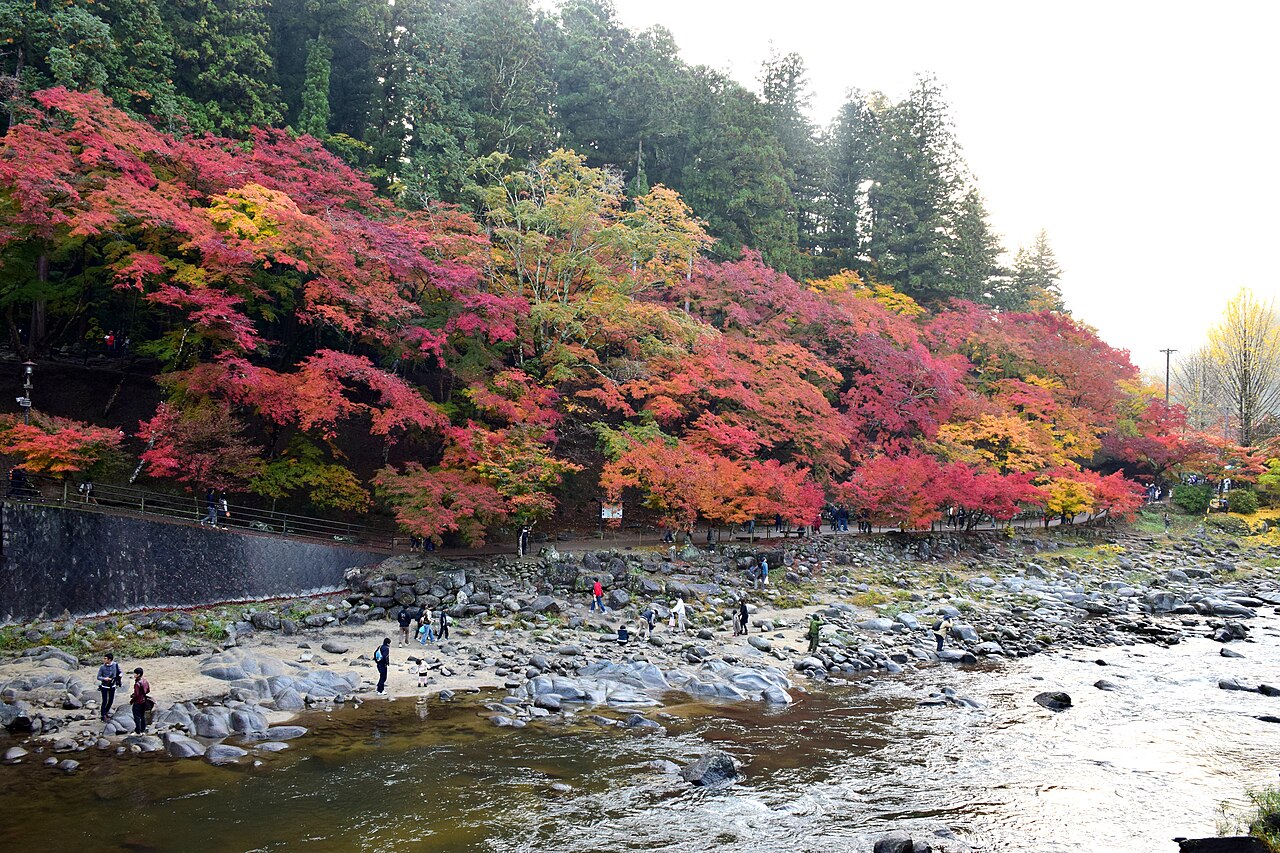
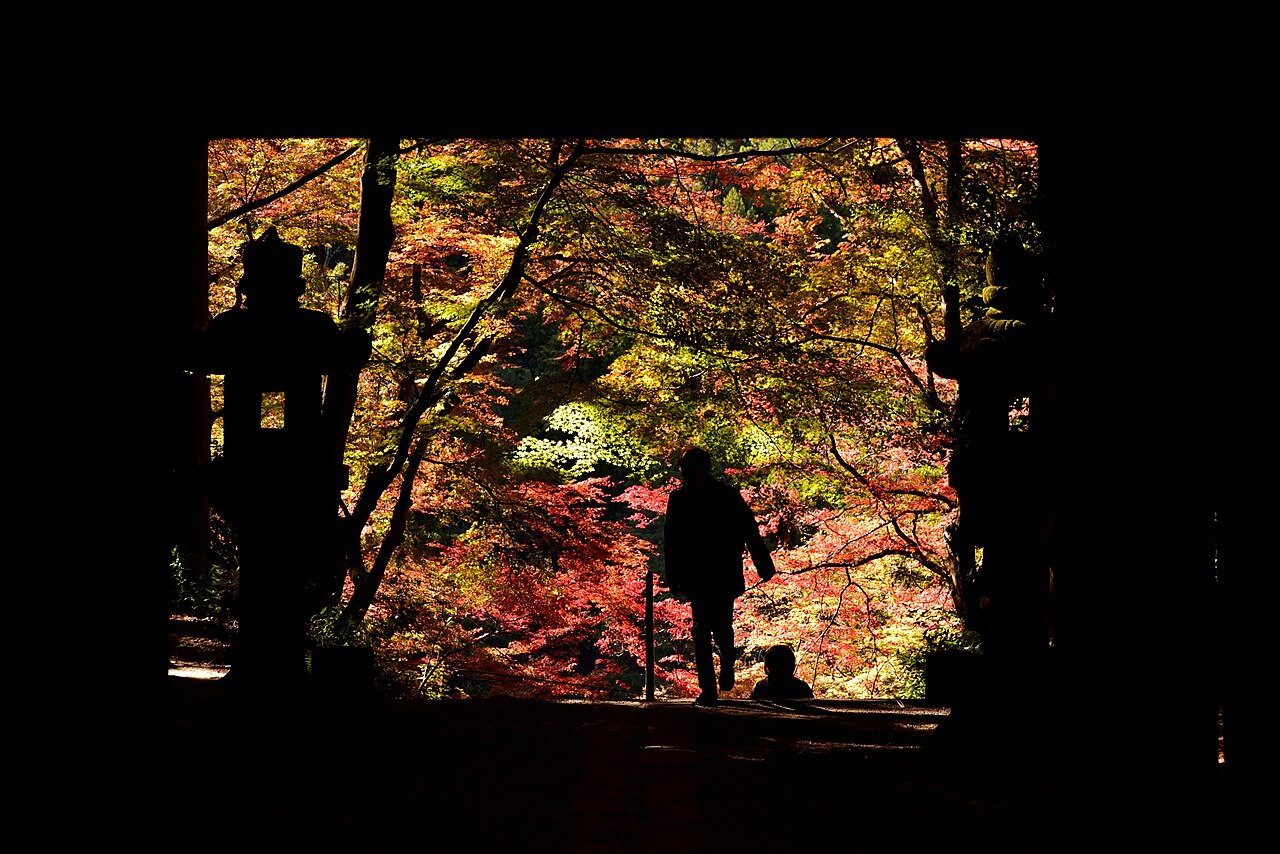
The maple tunnel is described in guidebooks as the approach from the Tomoe Bridge to Kojakuji temple, where tall maples lean in from both sides of the path and close over it, and it is treated as the leading foliage spot in the gorge. Walk it from the bridge end to the temple, whose gate appears in the photograph below.
The Taigetsu Bridge, with its red railings, is described as the symbol of Korankei and as a favourite place to photograph the bridge with the leaves. The Korankei Momiji Festival and the Iimoriyama illumination run through November, and the dates and the lighting time are set out below. Drivers pay a per-entry fee at the permanent parking lot, also listed.
| Item | Detail |
|---|---|
| Korankei Momiji Festival | November 1 (Sunday) to November 30 (Monday) |
| Iimoriyama illumination | November 1 (Sunday) to November 30 (Monday), from sunset until 21:00, no extension of period or hours |
| Permanent parking lot, regular passenger car, per entry | 1,000 yen |
For a night in the town after the illumination, see places to stay in Asuke.
Where to stay
Places to stay near Asuke, Aichi, Japan →
Disclosure: This post may contain affiliate links. If you book through them, we may earn a commission at no extra cost to you.
Sanshu Asuke Yashiki: A Farmhouse Museum on the Way
Sanshu Asuke Yashiki is described in guidebooks as a hands-on facility that recreates the life of farmhouses in the Asuke area from the Meiji era to the middle of the Showa era, with craftspeople demonstrating the handwork of the period using the everyday tools of the time. Its large thatched roof appears in the photograph below.
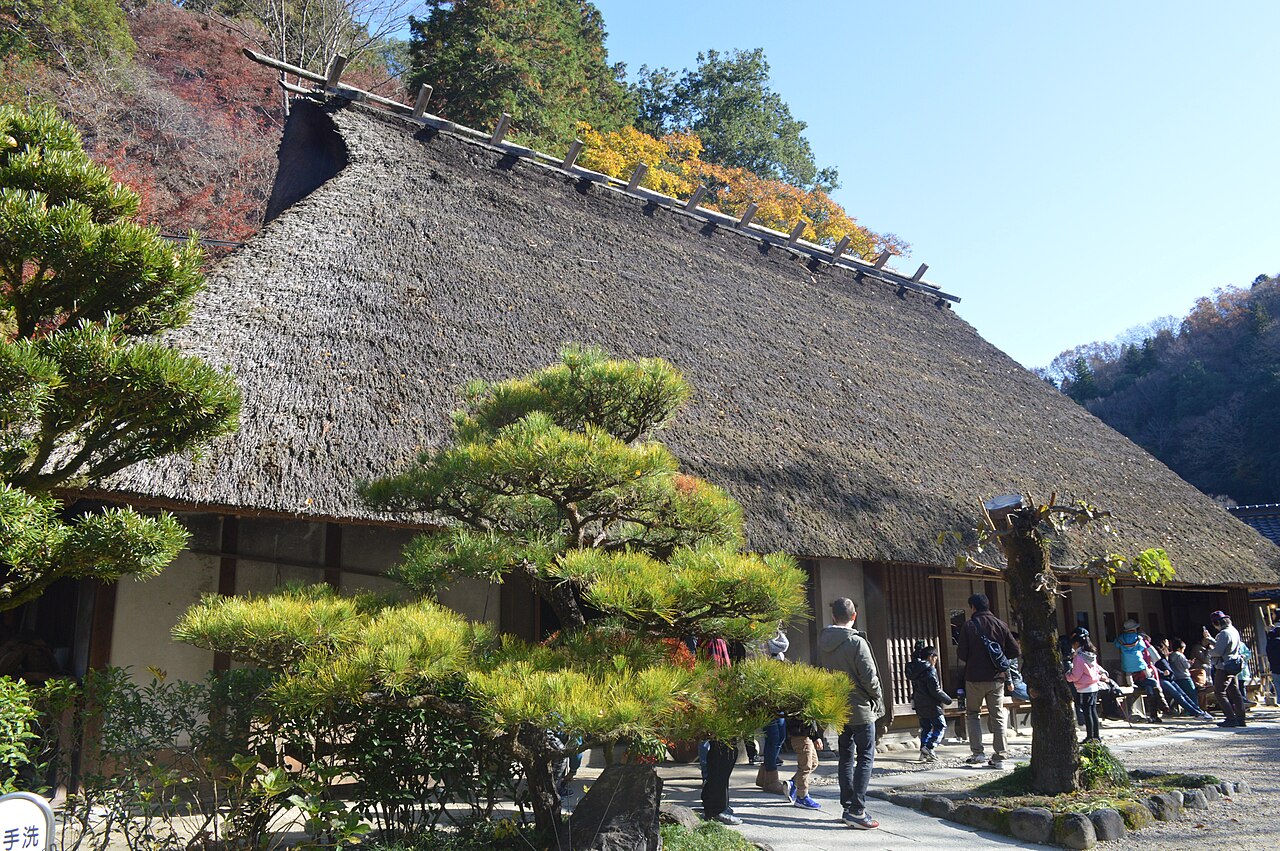
Admission for adults and for children, the business hours and the admission cut-off are listed in the table below, as published by the museum. The facility closes for the year-end and New Year period, and those closing dates are listed as well, so a visit at the turn of the year needs a different midday plan.
| Item | Detail |
|---|---|
| Adult admission | 300 yen |
| Child admission (elementary, junior high and high school students) | 100 yen |
| Business hours | 9:00 to 17:00, admission until 16:30 |
| Closed | 12/25 to 1/2 (year-end and New Year period) |
The Old Town and the Salt Road
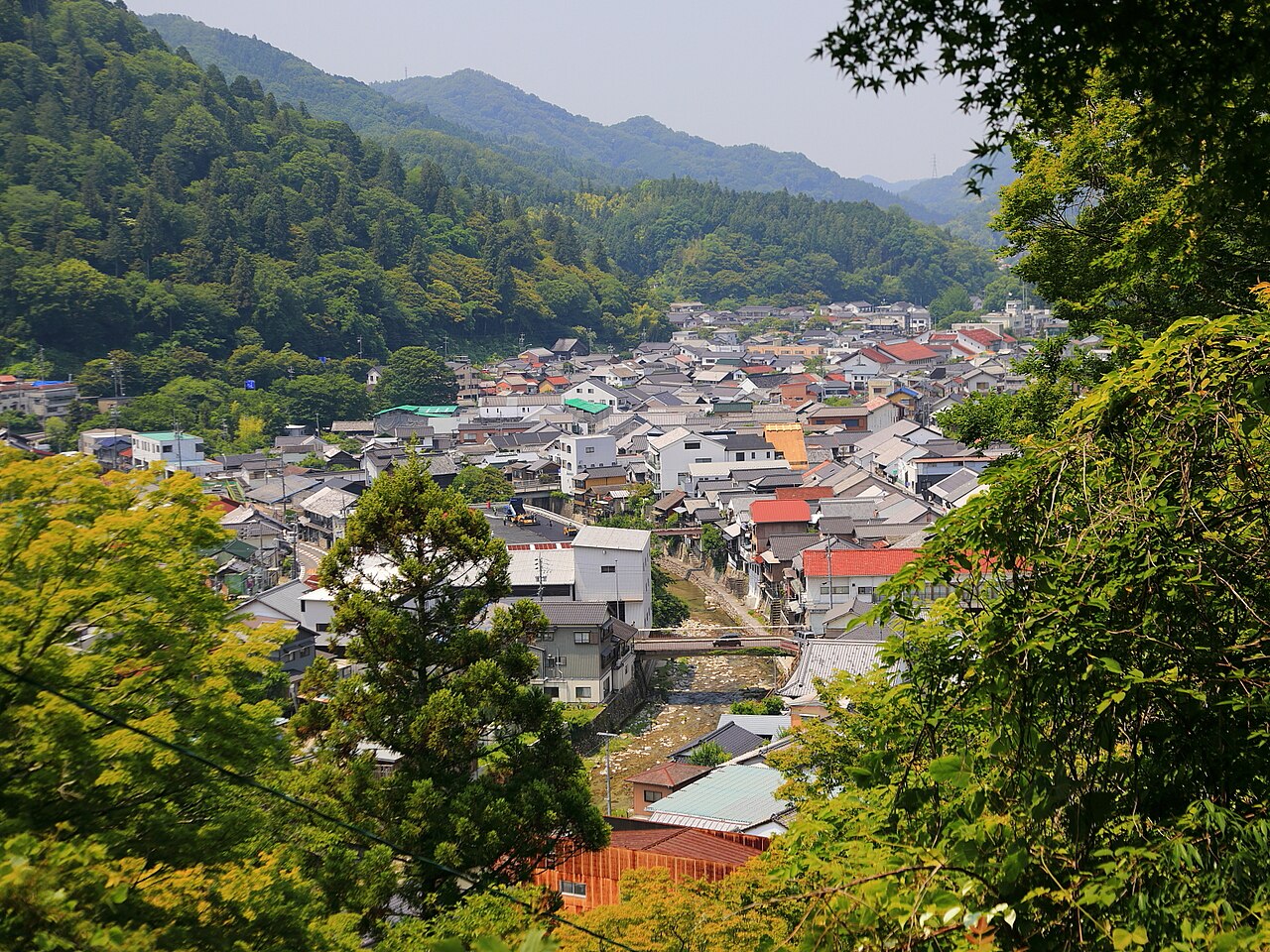
Guidebooks describe the old Asuke post town as keeping white-walled storehouses and buildings with lattice doors, and say the feel of an Edo-period post town comes through by walking its streets. Today's townscape is described as a rebuilding after a great fire, later designated a national preservation district for groups of traditional buildings. Walk the main street end to end.
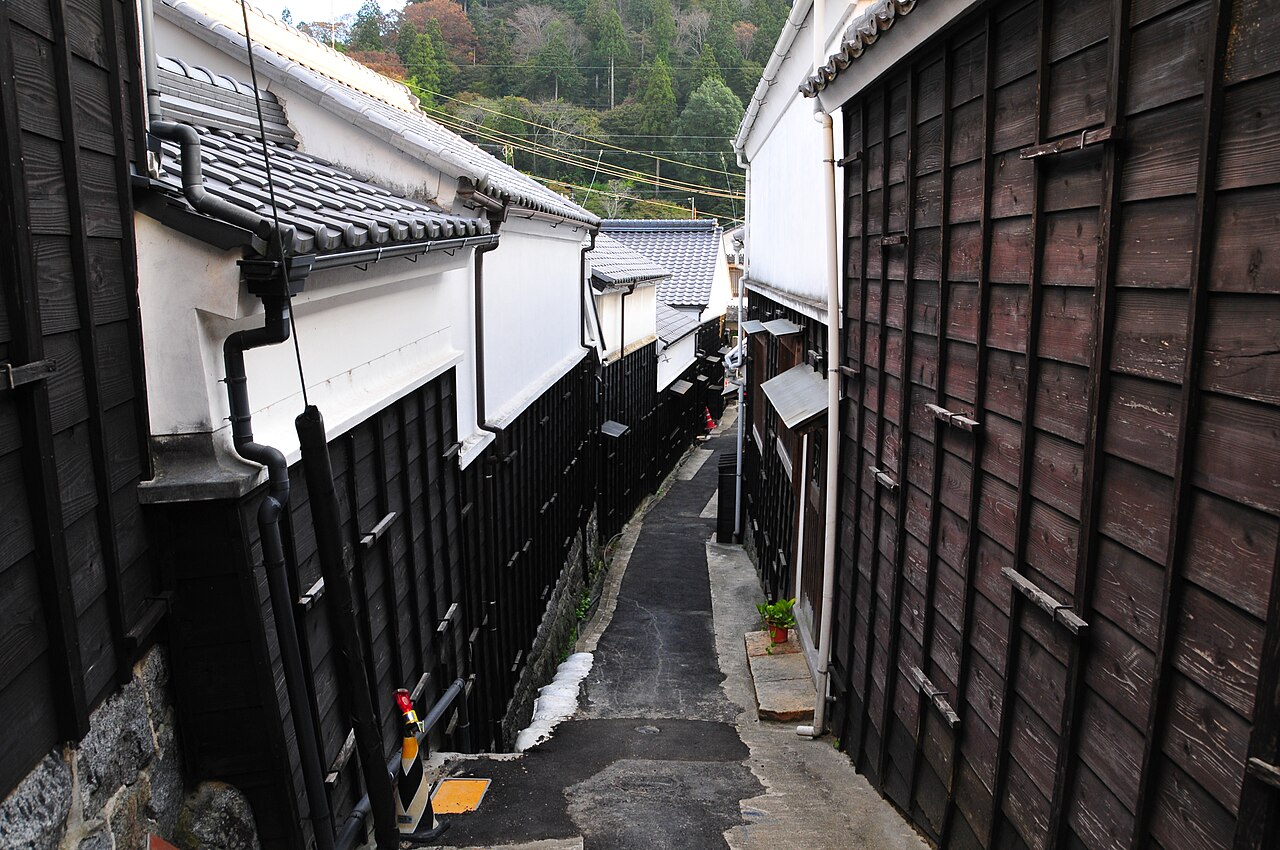
Guidebooks describe the Iida Kaido here as the Edo-period salt road that carried salt and seafood from Mikawa Bay toward Shinshu and Mino. Salt is said to have been unloaded and blended in Asuke to even out its quality before shipment, a practice called Asuke Naoshi, and the result went out as Asuke salt. Walk it with that in mind.
Manrin lane is described in guidebooks as the symbol of the Asuke townscape, a side lane off the old road lined with black plank fences and white plaster-coated walls; the Rinemon family's general store, run for generations and known as the Manrin bookshop, faces onto it. Turn in from the main street and follow the lane to its far end.
Lunch at Ichinotani
Guidebooks describe Korankei Ichinotani as an eating place along the gorge, with tatami seating overlooking the Tomoe River and seasonal lunches and sweets, such as sweetfish in summer and wild boar in winter. It is said to be joined by a covered corridor to the neighbouring tea room, Korankei Bunko, where takeaway items from Ichinotani can be eaten.
Lunch prices, the monthly kaiseki course, the business hours and the walk from the Meitetsu Bus Ichinotaniguchi stop are set out in the table below, as published by the restaurant. The last order comes in mid-afternoon, so treat Ichinotani as a midday stop and give the river walk the time after it.
| Item | Detail |
|---|---|
| Dining lunch at Ichinotani | from 2,200 yen (tax included) |
| Monthly-changing kaiseki course at the Ichinotani ryotei | from 4,000 yen (tax included) |
| Business hours | 10:30 to 16:00, last order at 15:00 |
| On foot from the Meitetsu Bus Ichinotaniguchi stop to the restaurant | 10-minute walk |
Putting the Day Together
A guidebook describes a landscape photographer's advice for the gorge: begin on the east side at Ichinotani, where the morning sun comes in, move to Sanshu Asuke Yashiki around midday, spend the afternoon near the Taigetsu Bridge and the maple tunnel, take the view from the Tomoe Bridge toward evening, and hold on until dusk for the illumination.
Sanshu Asuke Yashiki stops admitting visitors in the late afternoon, which is why the farmhouse museum belongs in the middle of the day. Ichinotani takes its last orders in mid-afternoon, so lunch there comes before the bridges. Whichever of the three stations you start from, the bus ride to the Korankei bus stop is the fixed part of the day.
Guidebooks describe the Momiji Festival month as a lively season, with many visitors and a range of events staged on the grounds, so the plan above is best treated as a sequence rather than a timetable. Arrive on an early bus, keep lunch early, and let the illumination close the day.
To split the gorge and the town across two days, look at places to stay in Asuke.