This guide covers the way from Nagoya to Arimatsu by Meitetsu, a private railway, the tie-dye merchant houses along the old Tokaido road, and the Hattori residence. It also covers the Arimatsu Narumi Shibori Kaikan and its tie-dye classes, the festival float hall and when it welcomes visitors, the craft's history, and lunch and bread, with rates in tables.
Getting to Arimatsu from Nagoya
The way in from Nagoya is the Meitetsu Nagoya Main Line, a private railway, and the stop to use is Arimatsu Station. Check that your train is on this line before you board, ride it out to Arimatsu Station, and note the station as your return point later.
A guidebook notes that only semi-express and local trains stop at Arimatsu Station, while limited express and express trains pass straight through, so check the type of train you are getting on before the doors shut. From Arimatsu Station it is a walk of five minutes to the Arimatsu Dashi Kaikan, the festival float hall.
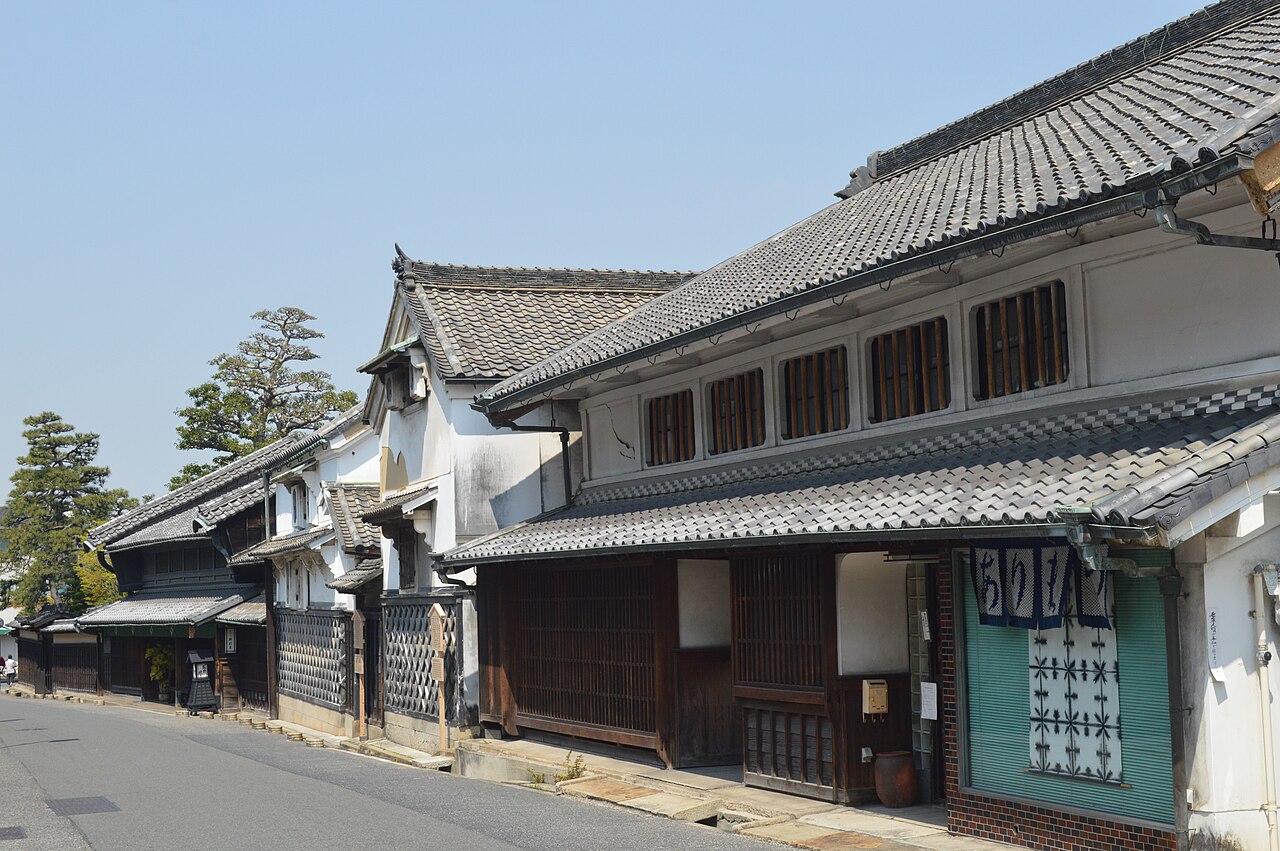
The preservation district, where the old merchant houses stand, spreads along the old Tokaido road on the south side of Arimatsu Station. Head south out of the station to reach the old road, where shibori merchant houses with tiled namako walls and slatted mushikomado windows line the way, and walk it end to end before coming back.
| Step | Detail |
|---|---|
| Rail line to take | Meitetsu Nagoya Main Line |
| Station to get off at | Arimatsu Station |
| Arimatsu Station to Arimatsu Dashi Kaikan, on foot | 5 minutes |
| Trains that stop at Arimatsu Station | Semi-express and local trains only |
Strolling the Old Tokaido and Its Merchant Houses
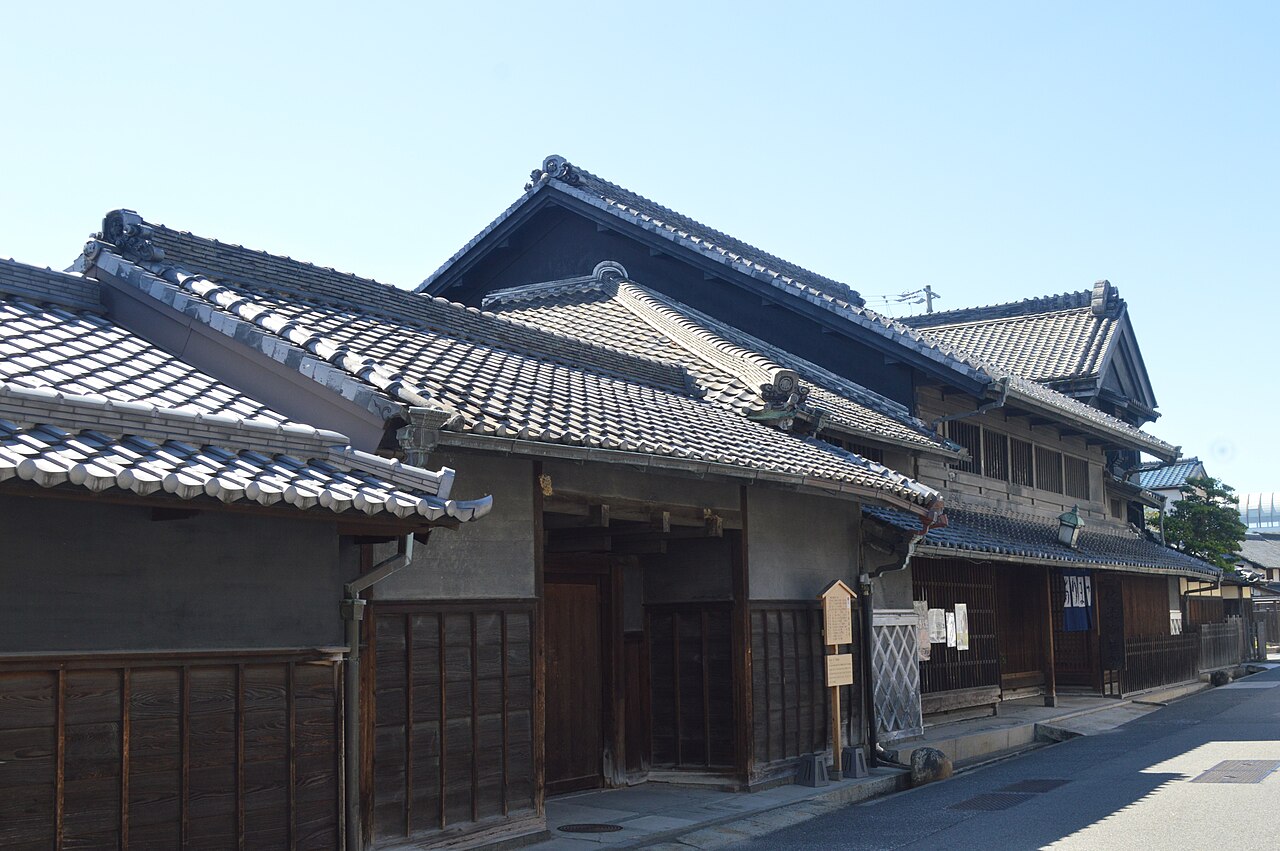
Shibori is Japanese tie-dye. Walk the old Tokaido road and the merchant houses, dating from the late Edo period into the Showa era, stand in an unbroken row, some keeping raised side walls and gas lamps. The town holds Japan Heritage status under a title naming it a tie-dye town where indigo cloth sways in the wind.
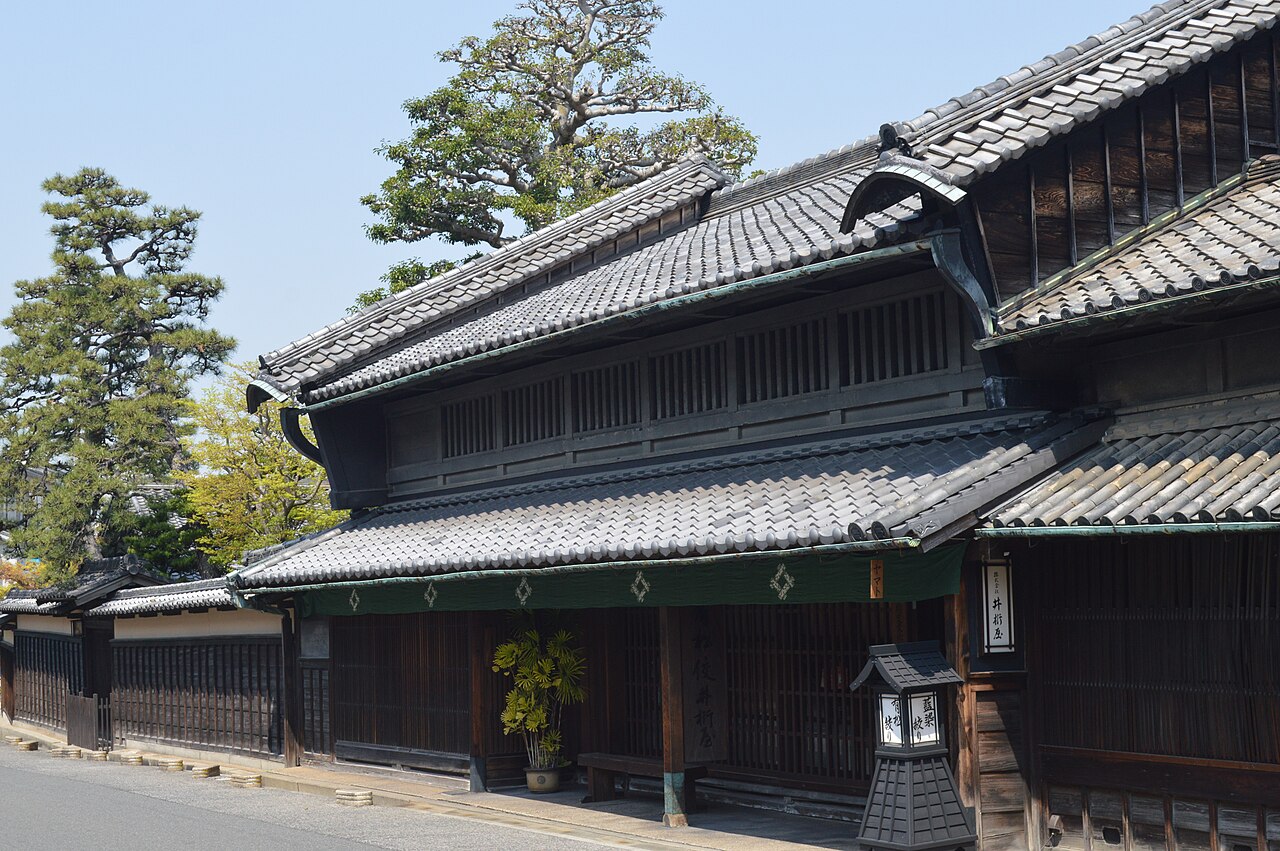
The Hattori residence is the largest of Arimatsu's old houses, with a long frontage on the old road and a group of buildings, main house, storehouses and gate, from the late Edo period into the Meiji era. Stand across the road to take in the main house, timber under plaster, with a low upper storey and mushikomado windows.
Look along the frontage for the earthen storehouses, finished in namako style with tiles set into plaster, and note that the whole group is a designated tangible cultural property of Aichi Prefecture. The main house still trades as Igetaya, a shop selling Arimatsu shibori, so step inside to see the cloth for yourself before moving on.
The Kamihan residence is named after Kamiya Hantaro, a shibori wholesaler whose family ran the trade, and dates from the early Showa period, with white namako walls and lattice windows. Its exterior can be viewed at any time of day with no entry fee, and each shop inside, including the bakery Ishigama Pan Dasenka Kura, follows its own timetable.
Where to stay
Places to stay near Nagoya, Aichi, Japan →
Disclosure: This post may contain affiliate links. If you book through them, we may earn a commission at no extra cost to you.
Seeing and Trying Tie-Dye at the Shibori Kaikan
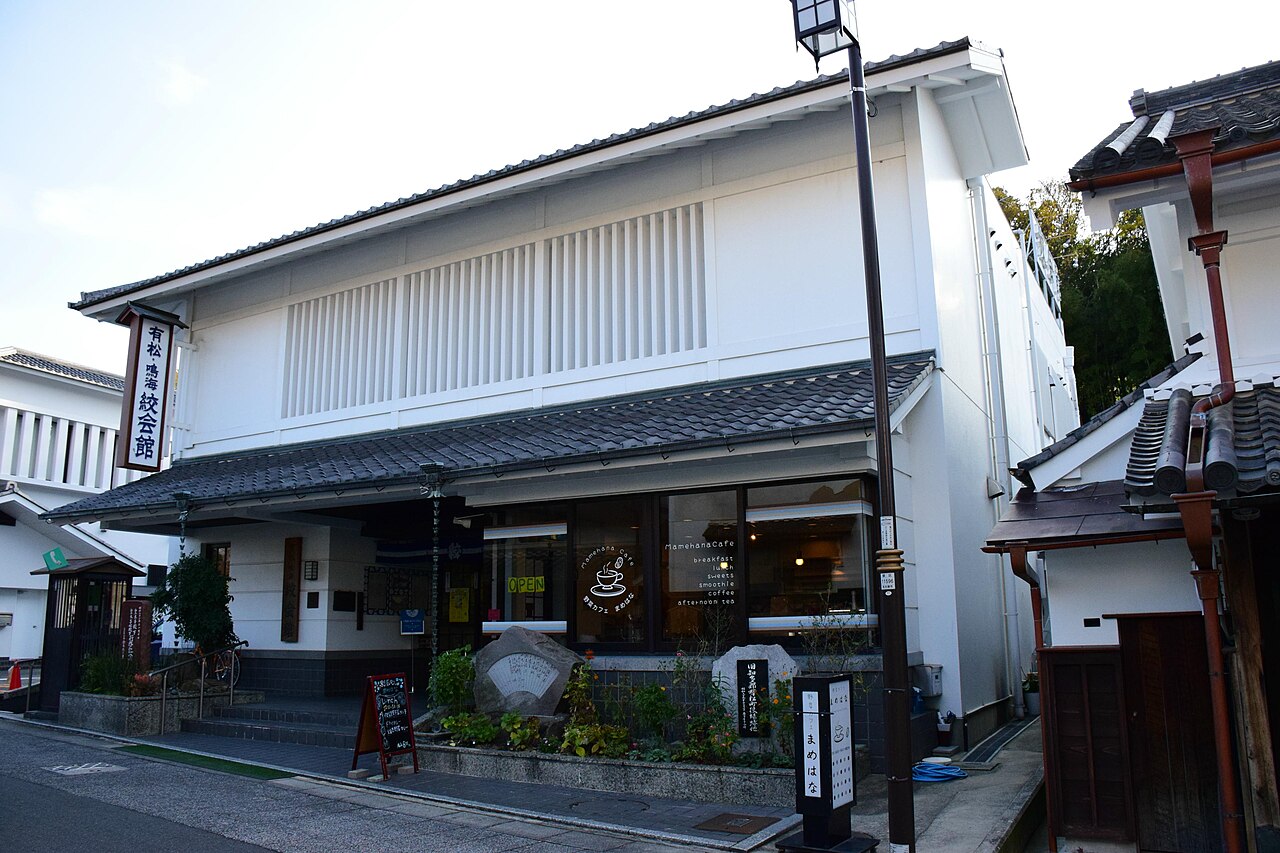
The Arimatsu Narumi Shibori Kaikan is the place to understand the craft before buying any of it. Inside are displays on shibori, a shop selling finished pieces, and demonstrations by traditional craftspeople; upstairs, two artisans are said to demonstrate different techniques, binding the cloth by hand in the stage that comes before dyeing.
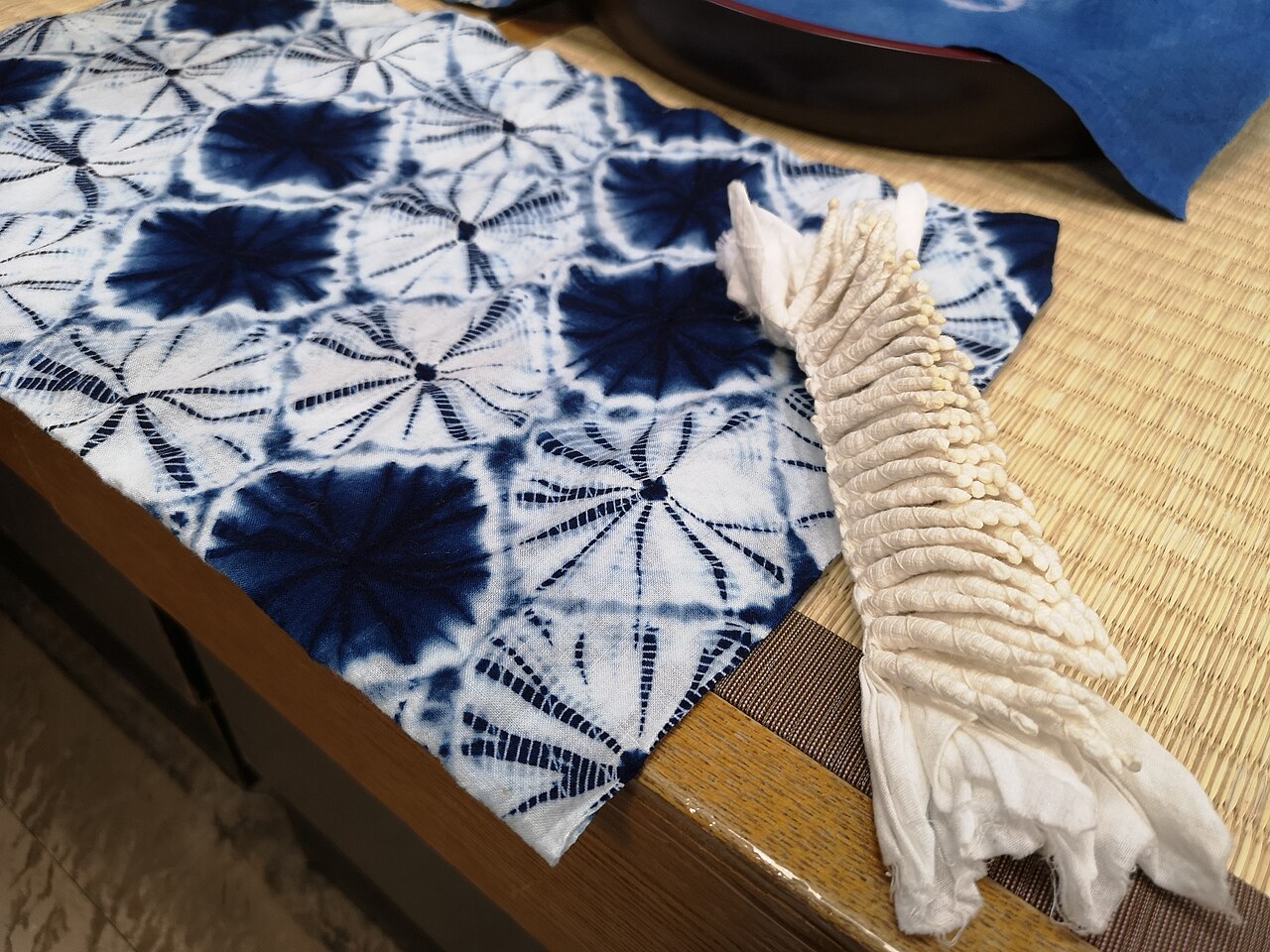
Opening hours, the time until which demonstrations run, and admission to the exhibition and video room are set out in the table below. Go through the displays, then head upstairs for the demonstrations, leaving enough of the afternoon to watch the binding properly rather than arriving just before the demonstrations stop.
On weekdays an individual can take a handkerchief class; on Saturdays and Sundays the class is snowflake shibori, a board-clamped pattern, on a tenugui, a thin cotton hand towel. They are separate classes with separate rates, listed in the table. Hand folding, binding and stitching give Arimatsu shibori hundreds of patterns, so look for a pattern you like.
| Item | Detail |
|---|---|
| Shibori Kaikan, exhibition and video room, adult | 300 yen |
| Shibori Kaikan, exhibition and video room, elementary to high school student | 100 yen |
| Shibori Kaikan, hours | 9:30 to 17:00, demonstrations until 16:30 |
| Handkerchief class, weekday individual, general | 1,800 yen, tax included |
| Handkerchief class, weekday individual, elementary to high school student | 1,600 yen, tax included |
| Snowflake shibori tenugui class, Saturday and Sunday, adult | 2,500 yen |
| Snowflake shibori tenugui class, Saturday and Sunday, elementary to high school student | 2,300 yen |
| Snowflake shibori tenugui class, Saturday and Sunday, infant | 2,200 yen |
Guided options around the town are listed under tours and activities in Arimatsu.
Arimatsu Dashi Kaikan, Open on Saturdays and Sundays
Dashi are festival floats, and the Arimatsu Dashi Kaikan is the hall where the town shows its own. It opens only on Saturdays and Sundays, so fit it into a weekend visit. The hall displays just one of the town's three floats, changing it each year, together with karakuri puppets, mechanical figures from the Edo and Meiji periods.
The hall is a walk of five minutes from Arimatsu Station, which makes it a natural stop at the start or end of the day. Admission and opening hours are in the table below; on a weekend you can pair it with the Saturday and Sunday class at the Shibori Kaikan in the same visit.
| Item | Detail |
|---|---|
| Dashi Kaikan, adult | 200 yen |
| Dashi Kaikan, high school student | 100 yen |
| Dashi Kaikan, hours, Saturdays and Sundays only | 10:00 to 16:00 |
A Short History of Arimatsu Shibori
Walk the road knowing how it began. Arimatsu started as a rest stop without lodgings on the old Tokaido road between the Narumi and Chiryu post towns, reputedly thinly travelled and wooded. In the early Edo period the Owari lord Tokugawa Yoshinao encouraged settlement for the protection of travellers, and the settler Takeda Shokuro is credited with creating Arimatsu shibori.
The Owari domain protected the craft as a local speciality, and shibori from here became known along the old Tokaido road as a souvenir to carry home from Owari. The scenes labelled Narumi in prints by Hokusai and Hiroshige are said to show Arimatsu itself, so compare the street with any print you know.
A Meiji-era gazetteer describes how the cloth, made in Arimatsu, was handled mainly by merchants in Narumi and so spread under the name Narumi shibori, until people took it for a Narumi product. The same gazetteer records that it drew demand across the country for being handsome, inexpensive and fresh in design. Read shop labels with both names in mind.
Lunch and Bread in the Old Merchant Houses
Ishigama Pan Dasenka Kura is a natural bakery and cafe in a corner of a former shibori wholesaler's house, the Kamihan residence, reached down a narrow lane. It bakes about thirty kinds of bread, raised on house yeast, in a stone oven each morning, and there is seating upstairs and in the courtyard, so sit down with a loaf.
For a sit-down lunch, mado cafe and Cafe & Bar Shokuro both offer lunch, and the prices, tax included, are in the table below alongside the bakery's Arimatsu shibori melon pan, a sweet bun sold by the piece or as a set. Buy a bun to eat on the walk back.
| Dish | Price, tax included |
|---|---|
| Ishigama Pan Dasenka Kura, Arimatsu Shibori melon pan, one piece | 194 yen |
| Ishigama Pan Dasenka Kura, Arimatsu Shibori melon pan, set of three | 540 yen |
| mado cafe, lunch | 1,650 yen |
| Cafe & Bar Shokuro, lunch | 1,650 yen |
If you would rather not head back the same evening, places to stay in Nagoya are worth lining up before you set out.