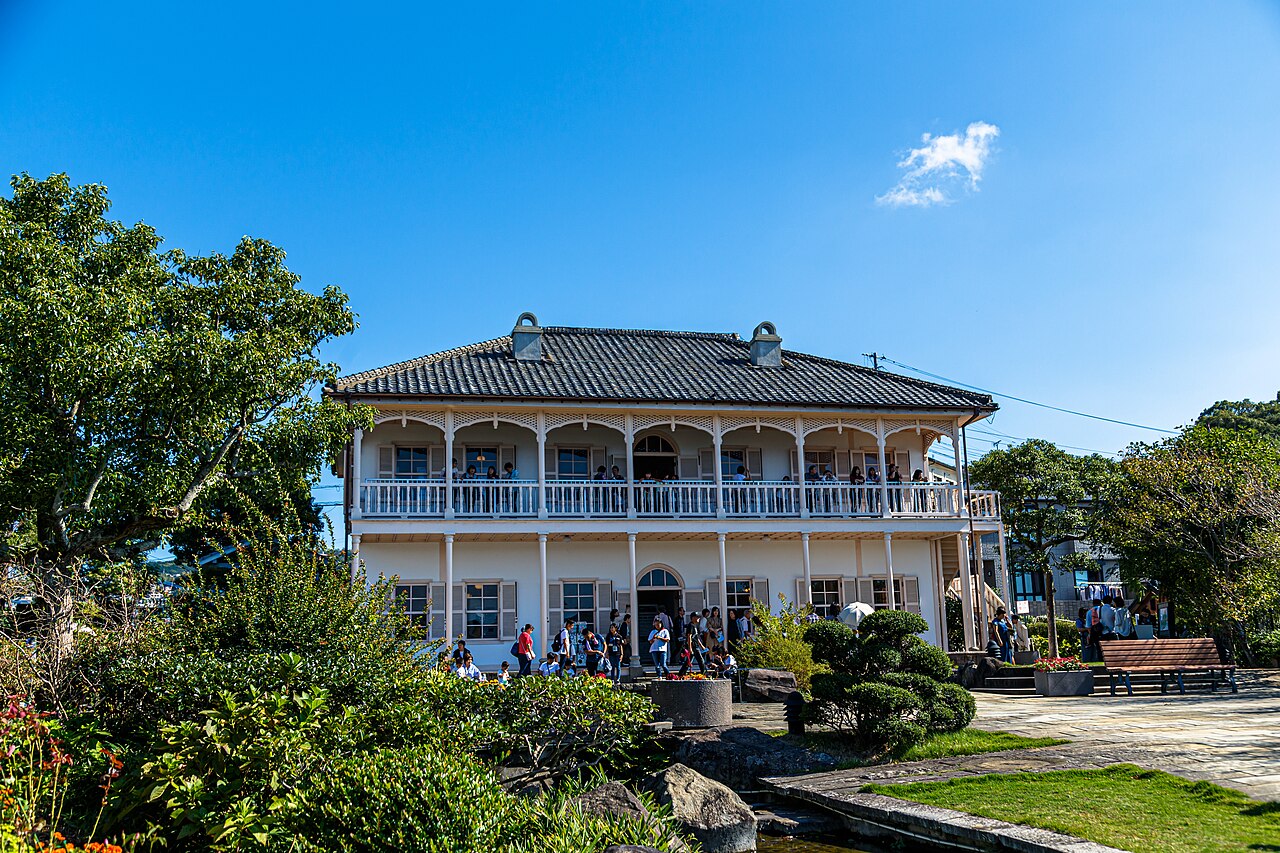
Riding the Glover Sky Road lifts visitors by elevator to a view of sky and slopes. The garden then winds along a circuit path with moving walkways and escalators past Western houses. Heart Stones are set in the stone paving, and one of them has no signboard. Retro costumes, a charcoal-roasted coffee and a ramune break fill out the visit.
Riding the Glover Sky Road and Climbing the Garden by Moving Walkway
The Glover Sky Road and the garden's moving walkways both carry visitors up the hill.
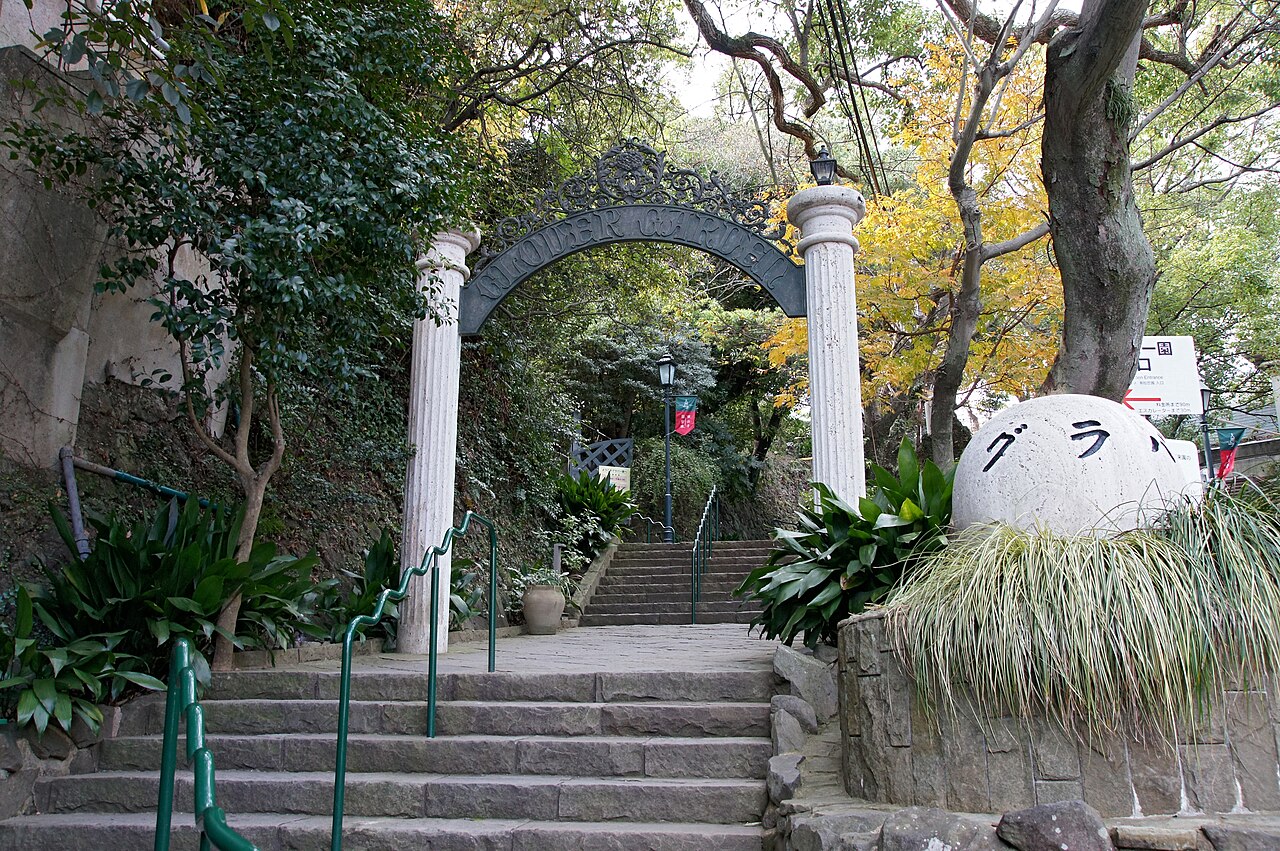
Riding the Glover Sky Road starts the visit with an elevator instead of a climb. The ride from the boarding point is a short one, and when it ends a view of blue sky and slopes opens ahead. Starting this way keeps the legs for the houses and the paving inside the garden.
Stepping onto the moving walkways continues the climb inside the grounds. The garden sits on hilly terrain, so it has moving walkways and escalators, and a circuit path runs around the grounds. Following that path in one direction brings the houses, the cafes and the Heart Stones into a single loop, with no need to plan a route beforehand.
Walking a slope in the neighborhood outside the garden shows another side of the hill: a well-preserved two-storey Western-style house, used as a private residence inside a nationally selected preservation district, is seen on the way up. Visitors who prefer to keep moving can leave it for the end of the day. The elevator and the walkways suit anyone who wants the climb handled for them.
Walking Past the Old Western Houses and Finding the Heart Stones
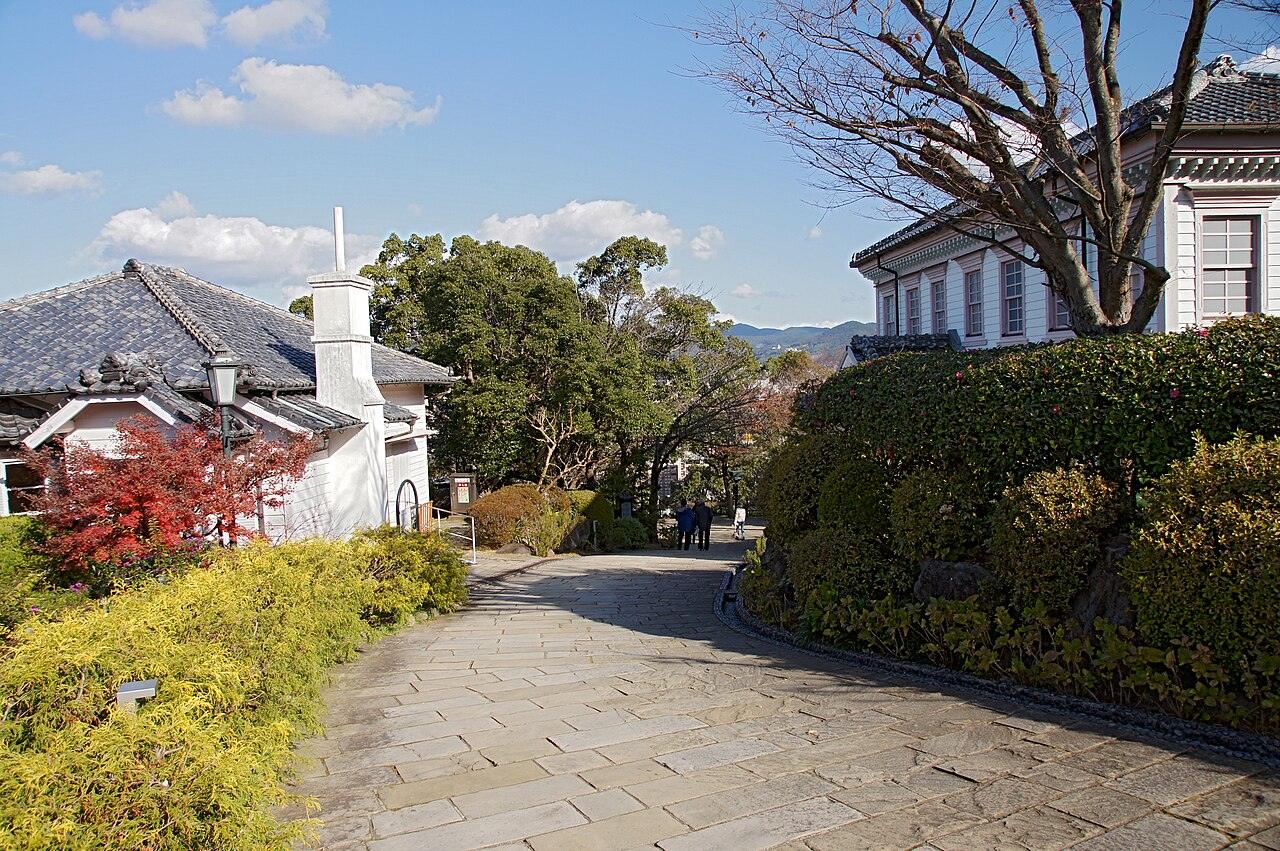
Former Glover House, Former Ringer House and Former Walker House stand among Heart Stones set in the stone paving.
Walking up to the Former Glover House shows a half-circle plan made with light and airflow in mind, under Japanese roof tiles. Its wide veranda has a wooden lattice ceiling, freestanding columns and arch-shaped transoms between them. At the Former Ringer House, the outer walls are sandstone from Amakusa and the veranda floor is laid with granite carried from Vladivostok. Six of the garden's buildings are Western-style buildings from the mid-Meiji period that stood in Nagasaki city and were moved here and restored.
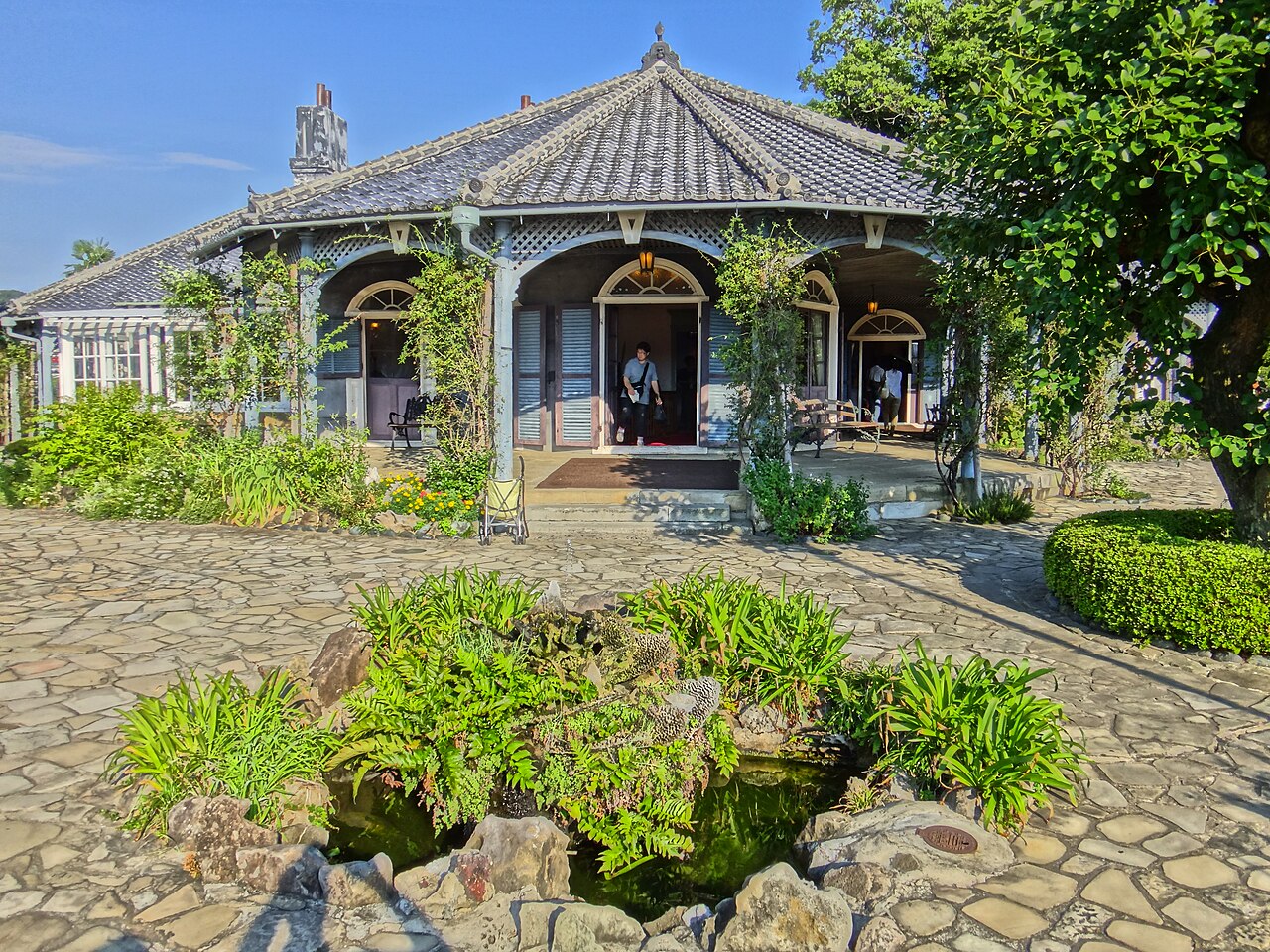
Looking for the Heart Stones turns the walk between the houses into a search. Two of them are set in the paving, and the one in front of the Former Glover House has no signboard, so it takes a slow look at the ground to find it. Along the way, the Former Walker House has a veranda around the building and a bay window that lets in sunlight, and the exterior of the Former Steele Academy has a form reminiscent of a church.
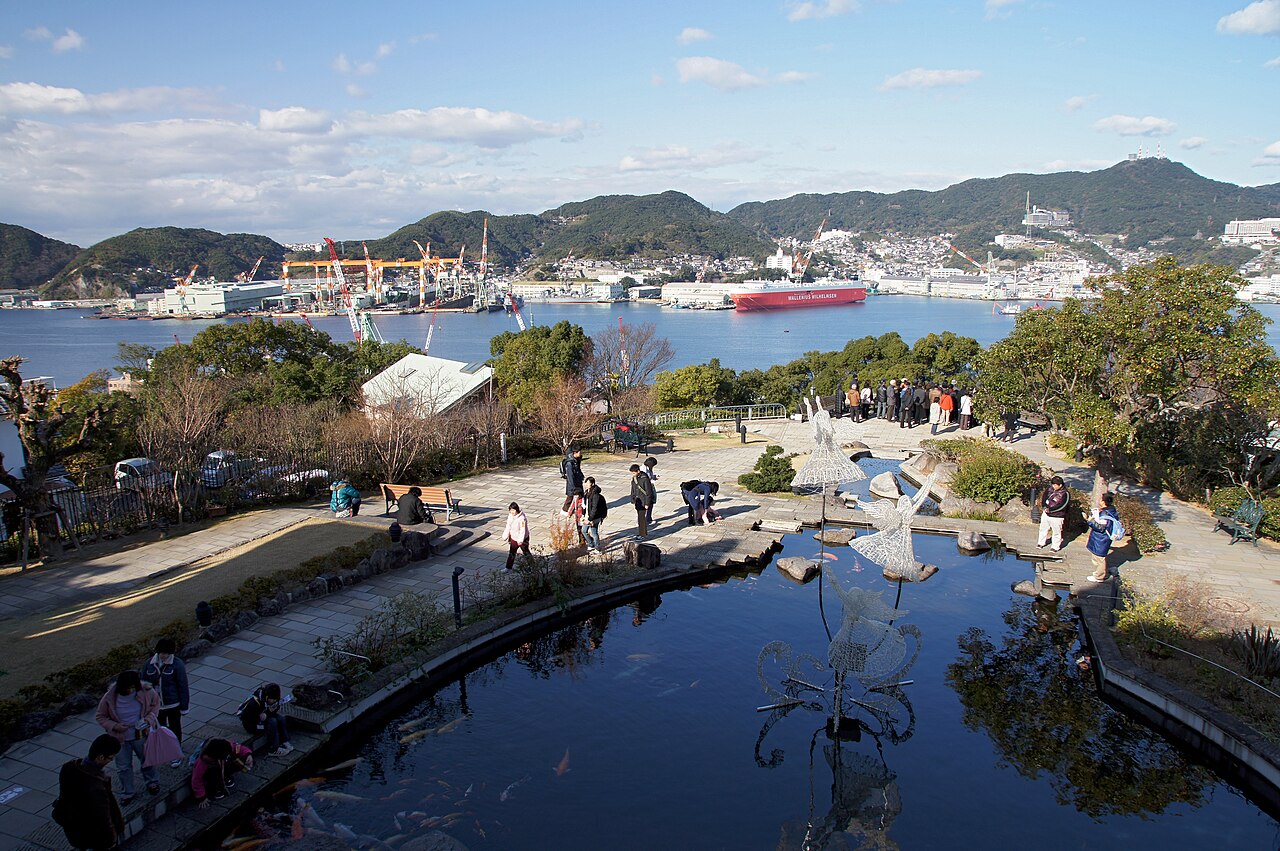
Stopping at the bronze statue of a soprano who sang the lead in Madame Butterfly adds a story to the walk. The figure is the opera's heroine with her young son beside her, pointing toward the harbor of Nagasaki. Gate pillars carved with the Freemason square and compasses stand beside the Former Ringer House, and an entrance staircase that is no longer in use sits beside the garden exit. Lantern Night runs in an autumn-winter season, with the dates in the table below.
Trying a Retro Costume, a Free Guided Tour and the VR Program
A retro costume, a guided tour and a VR program give the garden three activities beyond walking.
Choosing one retro costume from the many at the retro costume hall is the opening step, and then visitors walk around the garden wearing it. The plans include rental of a dress supervised by the production committee of an anime series. The hall provides no photography service, and when rain leaves the path wet, photography there is limited to inside the building.
Joining the guided tour, which is led by history and sightseeing guides at no charge, begins with paperwork. Visitors fill in the sign-up book at the guide office on the first floor of the Former Mitsubishi Second Dock House, then gather in front of the reception desk by the start time. The house was built as lodging for foreign crew members at the Mitsubishi shipyard. The tour may be cancelled at short notice depending on weather, so check its status on the day of the visit.
Watching the VR program is the indoor choice, with reception on the same floor of the Dock House. In it, the son of the Glover family serves as navigator and presents various episodes, and it is screened at any time within its stated screening period. The photo service takes requests in front of the Former Glover House: each group that asks receives a mini photo at no charge, a special-size photo with a frame is sold, and the service may be suspended in bad weather.
Stopping for Charcoal-Roasted Coffee, Ramune and Nagasaki Kunchi Floats
The Greenery Outdoor Cafe and Steele Gallery Cafe offer coffee and ramune among flowers and an old two-storey house.
Stopping at the Greenery Outdoor Cafe breaks up the circuit in the central area of the garden. The cafe recommends Nagasaki charcoal-roasted coffee, Banzai Cider and Ohiki Ramune, a Nagasaki original. Its space is surrounded by flowers and trees and serves as a resting area during the walk, which makes it a natural midpoint between the houses.
Sitting down at the Steele Gallery Cafe puts the break inside a two-storey Western-style building. Woodblock prints and picture postcards related to Glover Garden are displayed inside, so the stop doubles as a small exhibition. The Garden Shop stocks goods made for Glover Garden alone, along with standard Nagasaki souvenirs.
Visiting the Nagasaki Okunchi Hall moves the subject from houses to a festival. The hall displays umbrella floats and carried items that are dedicated at Nagasaki Kunchi, together with the festival's white dragon and blue dragon. The umbrella floats are the ones that lead the dedicatory dances of each dancing town. With limited time, the hall and one cafe cover both the food and the festival side of the garden.
Getting to Glover Garden, Hours and Fees
New to rural buses and one-man trains? See how to ride them, step by step.
The table below follows the guide page of the garden, and the daily timetable changes by season. For a night near the garden, compare places to stay in Nagasaki. For the harbor side of the city, see the Dejima and champon day trip.
| Item | Details |
|---|---|
| Garden hours, November to December | eight in the morning to eight in the evening, last admission seven-forty in the evening |
| Garden hours, January to March | eight in the morning to six in the evening, last admission five-forty in the evening |
| Individual admission | one thousand three hundred yen for general, six hundred fifty yen for children from elementary to high school |
| Guided tour | starts at eleven, one and three, takes about sixty minutes, sign-up on the first floor of the Former Mitsubishi Second Dock House |
| Glover Sky Road | elevator ride, round trip about five minutes |
| Reaching the Sky Road boarding point | about a three-minute walk from Ishibashi tram stop or from the Nagasaki Bus stop Oura Tenshudo-shita |
| Lantern Night, autumn-winter season | October twelfth to December thirty-first |

Thinking of staying overnight?
Compare places to stay near Nagasaki →
Disclosure: This post may contain affiliate links. If you book through them, we may earn a commission at no extra cost to you.