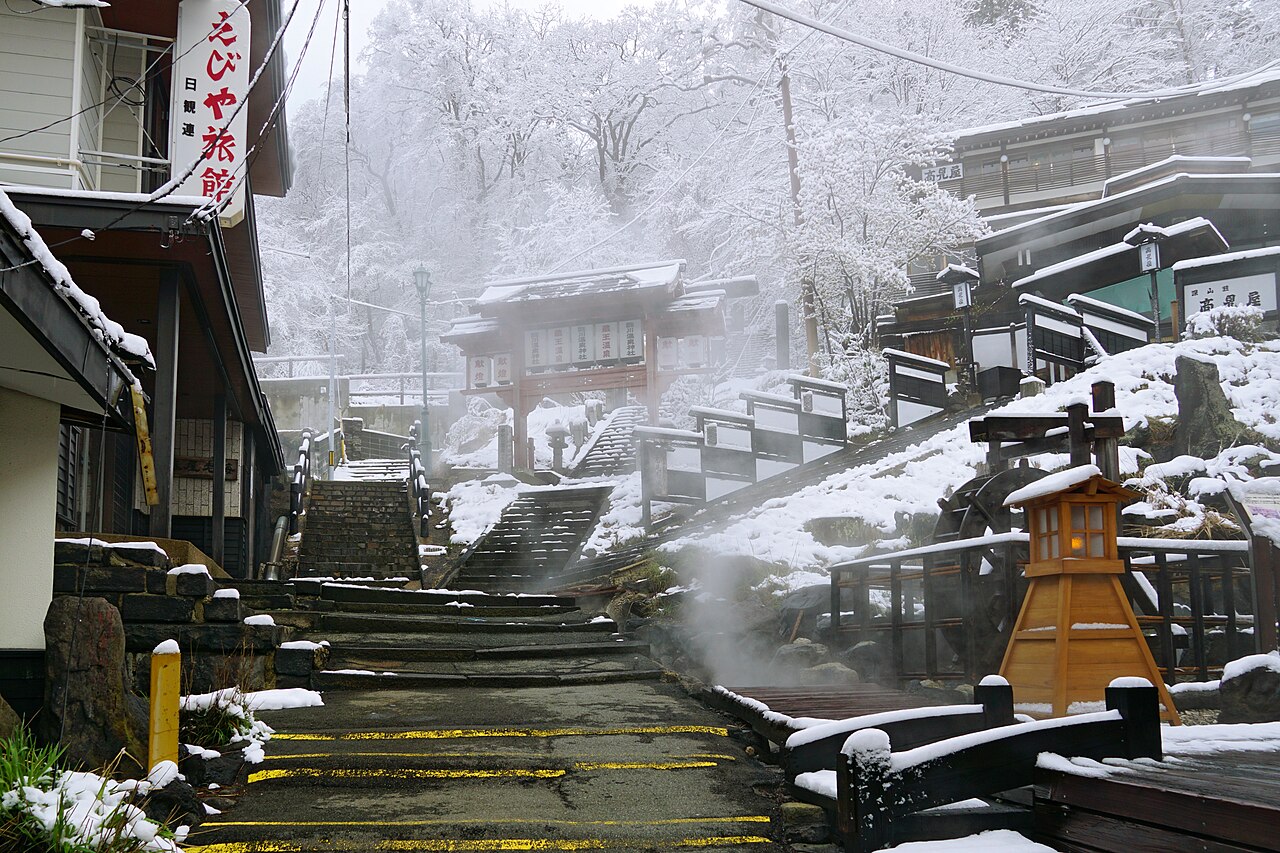
A distinctive smell of sulfur drifts in the air on a walk through the hot spring town of Zao Onsen, in Yamagata Prefecture. Zao Onsen is a strongly acidic sulfur spring, and getting into that water, in a public bath or a big open-air pool, is the reason to come.
Kamiyu, Shimoyu and Kawarayu Public Baths
Zao Onsen's three public baths, like its three foot baths, take in anyone who turns up, overnight guest or not. The spring was found long ago by a man who served in a prince's eastern campaign, and its water is what bathers sit in at the town's public baths today.
Kamiyu and Shimoyu are unstaffed, so bathers put the money into a box and bring a towel of their own, since none are lent or sold. Kawarayu, the third of the three public baths, runs the same way.
The water in these three baths is strongly acidic, so body oils come off easily without hard scrubbing. The sulfur spring has long been called a beauty-skin bath.
Precious metals turn black in this water, so bathers take them off before getting in. Bathers should keep the soak short and drink plenty of water after the bath.
Zao Great Open-Air Bath and the Teahouse Baths
The Zao Great Open-Air Bath lays out separate men's and women's pools along a mountain stream, with room for two hundred people at once. The source water runs through the pools freely, without being recirculated. With that much room, the Zao Great Open-Air Bath suits a group arriving together.
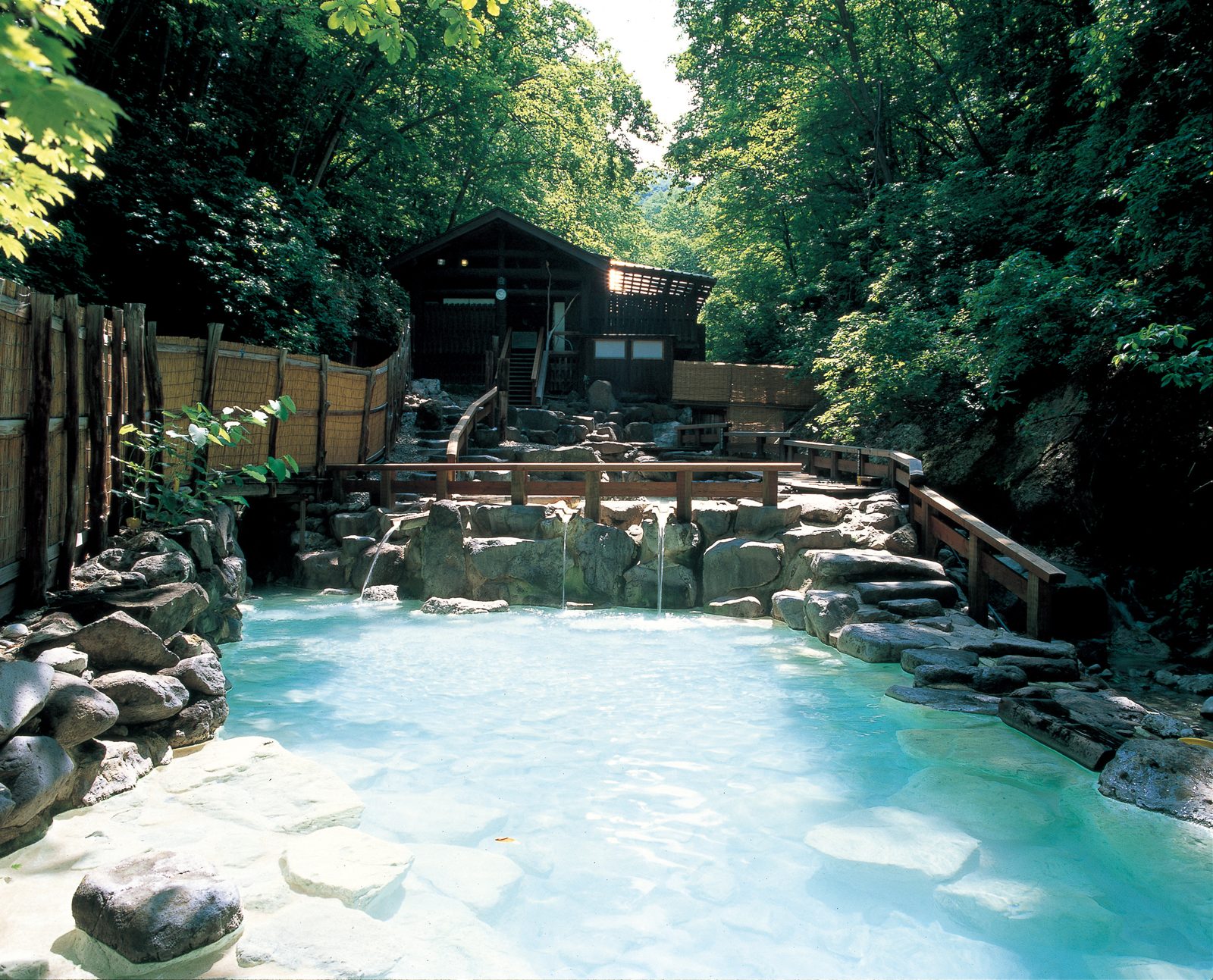
The Zao Great Open-Air Bath has no washing area, so soap and shampoo cannot be used there. The bath itself is a day-trip hot spring facility.
The teahouse baths offer four kinds of open-air pool, among them a pot bath and a pool that is soft on the skin. A foot bath is available at the teahouse as well.
Jingisukan, Soba and Tama Konnyaku in Zao Onsen
Zao's jingisukan uses thick-cut, mild lamb, grilled on a round helmet-shaped pan with a raised centre and dipped in sauce before eating. Each shop in Zao Onsen has its own sauce for jingisukan.
Cold meat soba and itasoba are among the meals on offer in Zao Onsen. Jingisukan appears on those menus too. Kasheru serves hand-made soba alongside jingisukan, so the noodles and the lamb can be ordered in one sitting.
Tomitaya serves set meals and katsu curry. Jingisukan is on the menu at Tomitaya as well. Tama konnyaku comes on a skewer, so it is easy to eat.
Inagomochi Rice Cakes and Cafe Sweets
Inagomochi comes as three bite-sized bean-paste rice cakes on a real bamboo leaf, topped with yellow rice grains that stand for rice flowers. The scent of the bamboo leaf transfers to the rice cake. The cakes trace back to Magoshichi, a Zao Onsen souvenir-shop head moved by sasa-mochi at a tea shop in Iga on his way home from an Ise pilgrimage.
At the cafe Igamochi no Sato Sanbe, inagomochi comes with a drink set of coffee or matcha, and takeaway is sold too. Magoshichi learned the method from the tea shop owner, took it back to Zao and taught it widely, and the cakes became a specialty of the town.
UNITE CAFE makes walnut desserts its specialty, among them a raw walnut soft-serve and walnut dango. The sky parfait represents the sky with blue pineapple jelly and white cream.
Zao Ropeway and the Juhyo Slopes
The Zao Ropeway takes about seven minutes from the base station to the juhyo highland station, and the ride continues to the summit station. Juhyo form when the seasonal wind from Siberia hits the Zao range and drives supercooled droplets and snow onto the evergreen conifers for a long time.
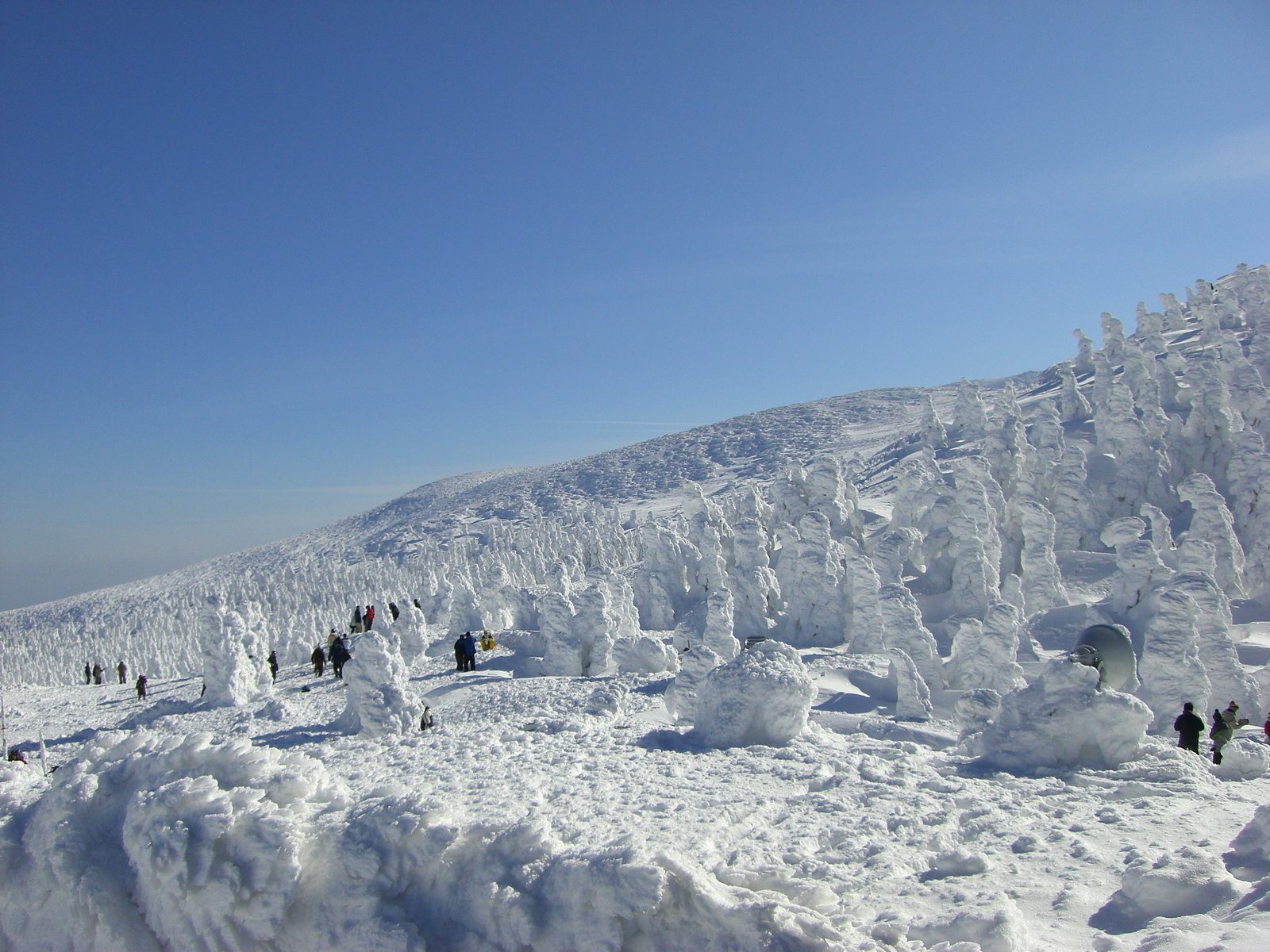
In winter, a panorama of juhyo spreads out as soon as riders step off the ropeway. A short walk from the top leads to the Jizo statue, buried in snow up to its neck. Juhyo are white ice, formed where wind-borne fog and cloud droplets freeze onto the trees, and they are nicknamed snow monsters.
For a limited period in winter, the juhyo are lit up at night, and an overnight stay in Zao Onsen leaves time to see them.
To stay overnight in the area, browse places to stay in Zao Onsen.
Getting to Zao Onsen
New to rural buses and one-man trains? See how to ride them, step by step.
| Leg | How | Time or cost |
|---|---|---|
| Yamagata Station to Zao Onsen Bus Terminal | Route bus | About forty minutes |
| Sendai Station East Exit to Zao Onsen Bus Terminal | Express shared bus (advance booking needed) | Adults two thousand five hundred yen one way, no round-trip discount; departs Sendai Station East Exit at eight in the morning and at nine in the morning, arriving at Zao Onsen Bus Terminal at nine twenty-five and ten twenty-five |
| Zao Onsen Bus Terminal to Shimoyu public bath | On foot | About three minutes |
| Yamagata Station to the Zao Ropeway | Taxi | About seven thousand yen |
Hours and Fees
| Place | What | Hours or fee |
|---|---|---|
| Kamiyu, Shimoyu and Kawarayu public baths | Hours | Six in the morning to ten at night, all year round |
| Shimoyu foot bath | Hours | Six in the morning to ten at night |
| Zao Great Open-Air Bath | Hours, season and admission | Six in the morning to seven at night, last entry six thirty in the evening; mid-April to mid-November; irregular closing days; adults six hundred yen, children three hundred and fifty yen |
| Teahouse baths | Admission | Adults eight hundred yen; children four hundred yen; infants aged three and over two hundred yen |
Fees and hours were checked against official sources on 10 November 2026.
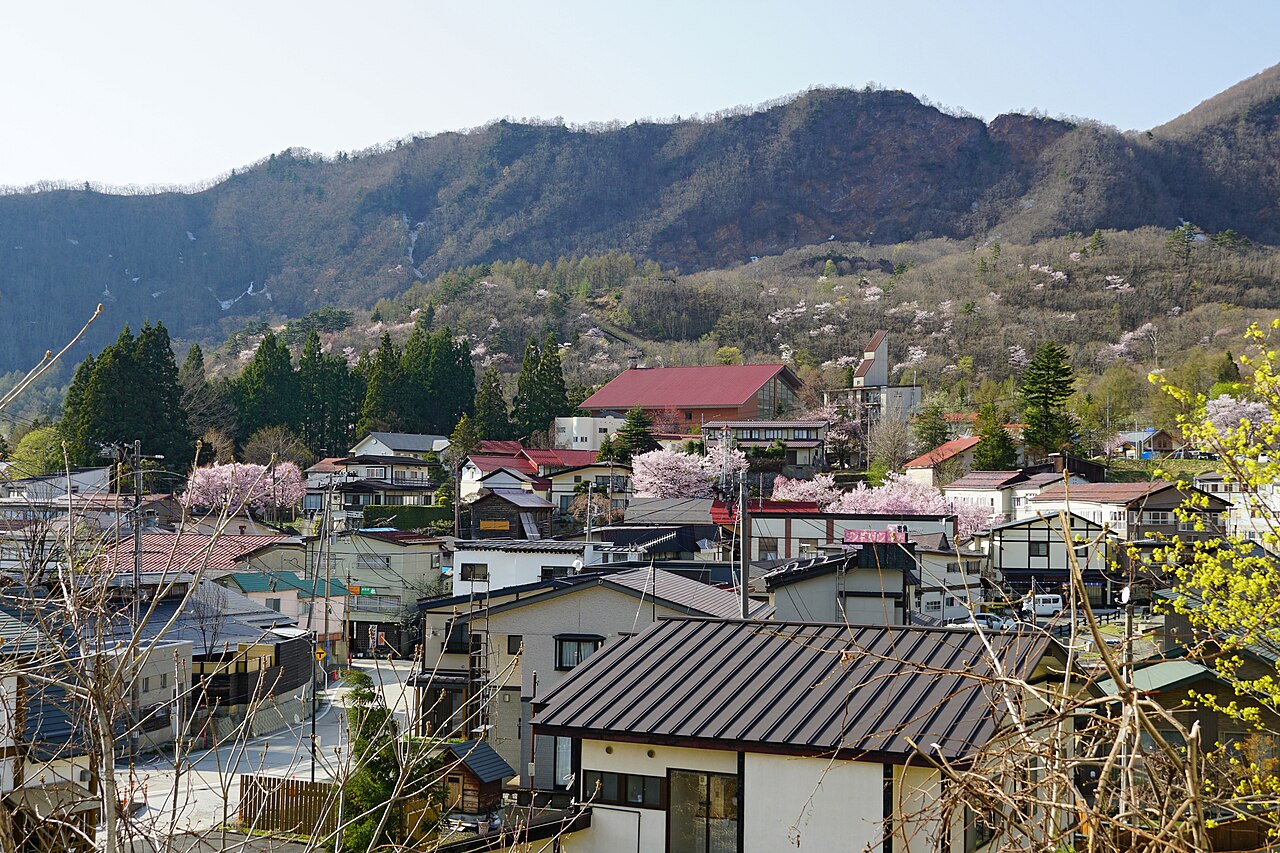
Thinking of staying overnight?
Compare places to stay near Zao Onsen →
Disclosure: This post may contain affiliate links. If you book through them, we may earn a commission at no extra cost to you.