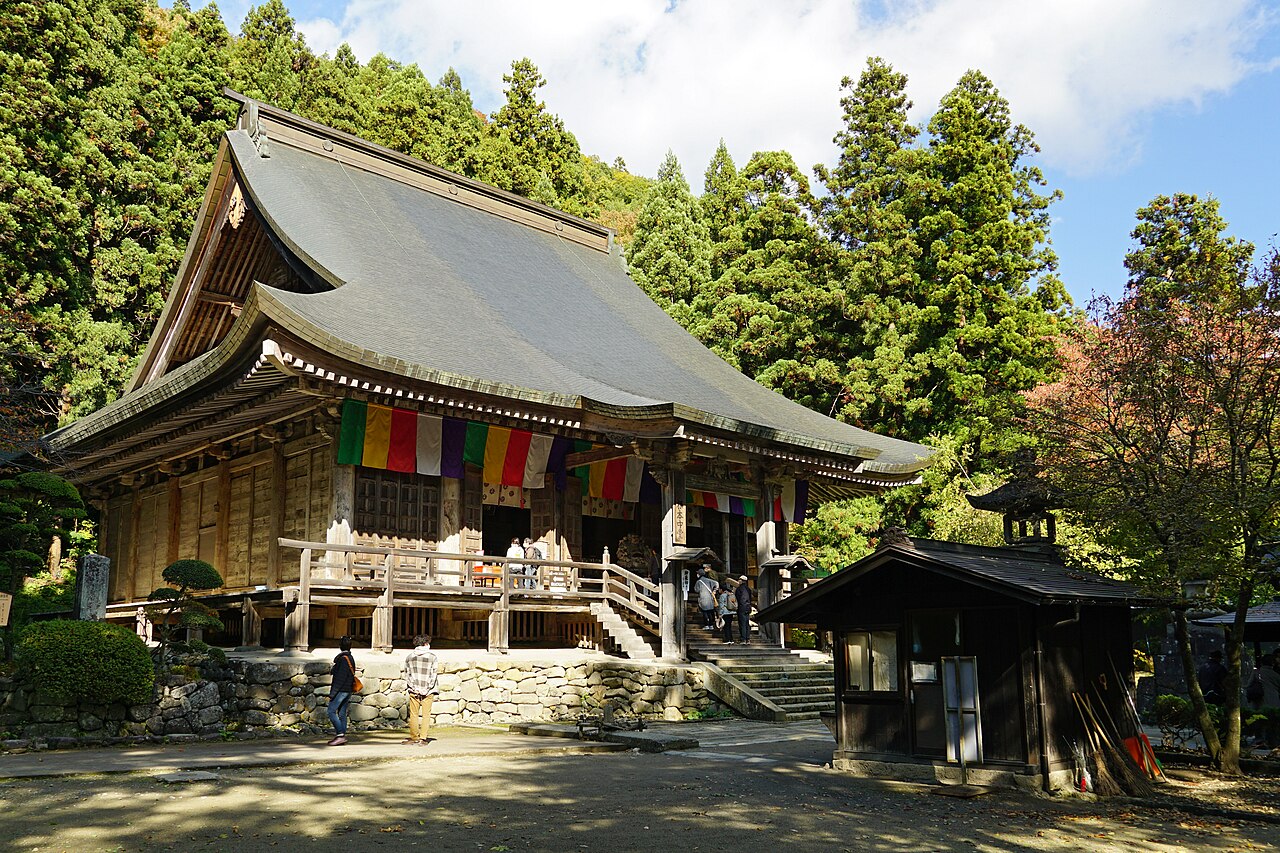
Yamadera is the mountain temple of Risshaku-ji, reached on the JR Senzan Line from Sendai or Yamagata and climbed by a flight of stone stairs. This guide covers the ride in, admission and seasonal visiting times, the climb from Konpon Chudo to Godaido, the haiku Basho left here, the temple's origins, and a day shaped from arrival to departure.
Getting to Yamadera from Yamagata and Sendai
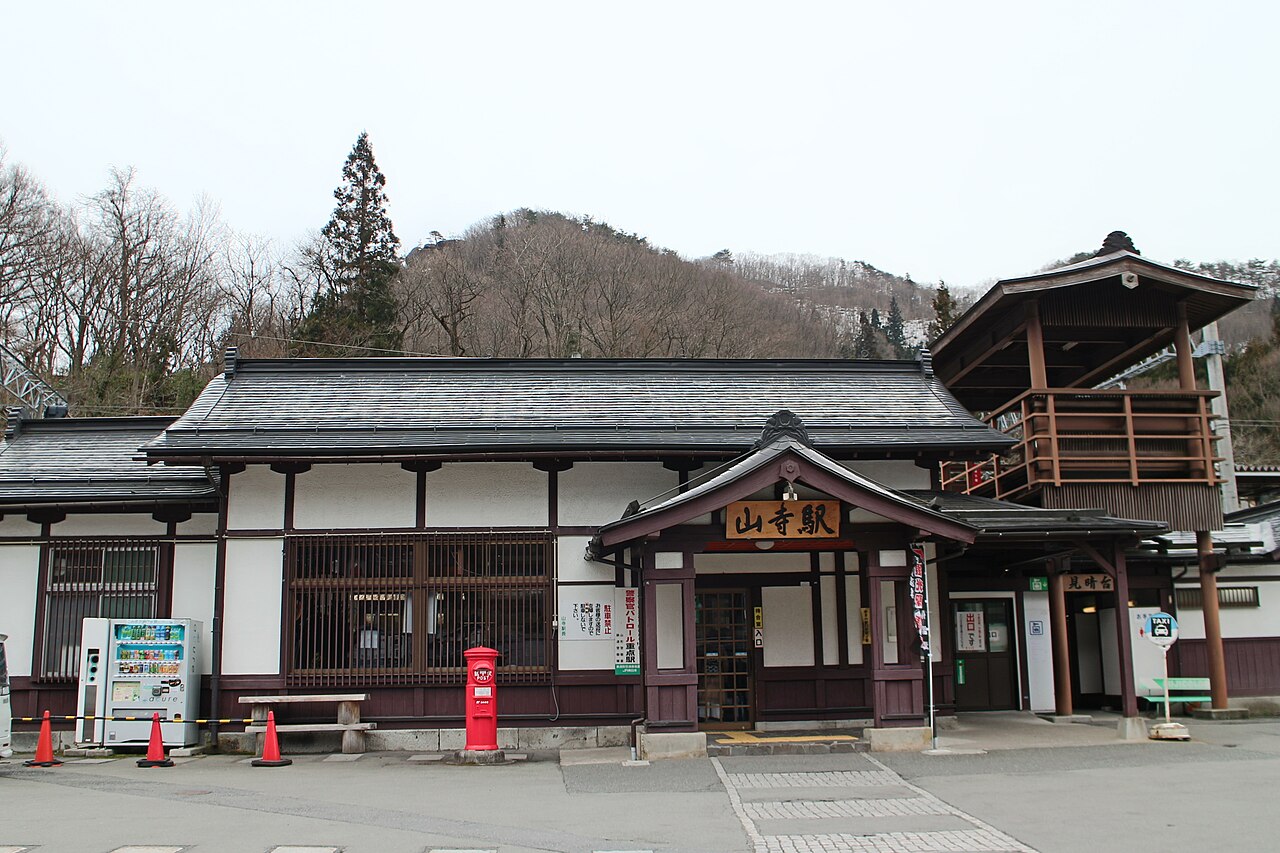
The JR Senzan Line serves Yamadera from both Sendai and Yamagata, which is what makes the temple a workable day trip from either city. The ride from Sendai is the longer of the pair, the ride from Yamagata the shorter, and both put you down at the same stop, a short walk from the climb.
From Yamadera Station, one walking time is given to the trailhead, the climbing entrance, and another to the entrance of the stairs on the approach path; the steps below list both, each with its own end point. To return, retrace the approach path to Yamadera Station and ride the JR Senzan Line back to Yamagata or Sendai.
- From Sendai Station, the JR Senzan Line takes 50 minutes to Yamadera.
- From Yamagata Station, the JR Senzan Line takes 20 minutes to Yamadera.
- From JR Yamadera Station, it is about a 5-minute walk to the trailhead, the climbing entrance of Risshaku-ji.
- From JR Yamadera Station, it is about a 10-minute walk to the entrance of the stairs on the approach path.
| Leg | Time |
|---|---|
| Sendai Station to Yamadera Station, JR Senzan Line | 50 minutes |
| Yamagata Station to Yamadera Station, JR Senzan Line | 20 minutes |
| Yamadera Station to the trailhead (climbing entrance), on foot | about 5 minutes |
| Yamadera Station to the entrance of the stairs on the approach path, on foot | about 10 minutes |
Admission and Visiting Hours at Risshaku-ji
Admission to Risshaku-ji is charged per person, with one rate for adults from junior high school age and a lower rate for children from age four. Worship in the inner sanctum of Konpon Chudo carries a separate fee of its own. The table below sets out each amount as the temple lists it.
Visiting hours follow the season rather than a single year-round schedule. The longest span runs from April to September, the autumn months shorten the afternoon, and winter trims both ends of the day. Match your month to the table before you set out, since the climb itself takes time and the stairs are the point of the visit.
| Item | Value |
|---|---|
| Individual admission, adults (junior high school students and older) | 500 yen |
| Individual admission, children (age 4 and older) | 200 yen |
| Inner sanctum worship fee, Konpon Chudo | 200 yen |
| Visiting hours, April to September | 8:00 to 16:00 |
| Visiting hours, October to November | 8:00 to 15:30 |
| Visiting hours, December to March | 8:30 to 15:00 |
Where to stay
Places to stay near Yamagata, Yamagata →
Disclosure: This post may contain affiliate links. If you book through them, we may earn a commission at no extra cost to you.
The Climb from Konpon Chudo to Godaido
The climb starts at Konpon Chudo. Inside, a flame brought from Enryaku-ji on Mount Hiei is kept burning. Worship in the inner sanctum is offered for the fee noted below. One guidebook says the hall was rebuilt by the first lord of Yamagata Castle and is said to be the oldest beech-wood building in Japan.
From the hall the stone stairs begin. One guidebook describes them threading between great rocks and through woods all the way to Godaido near the summit, and it counts the steps; that count is in the table below. Take them at your own pace, with the rock faces close on either side and the trees overhead.
| Item | Value |
|---|---|
| Stone steps on the approach path, as one guidebook describes them | 1,015 |
| Inner sanctum worship fee at Konpon Chudo | 200 yen |
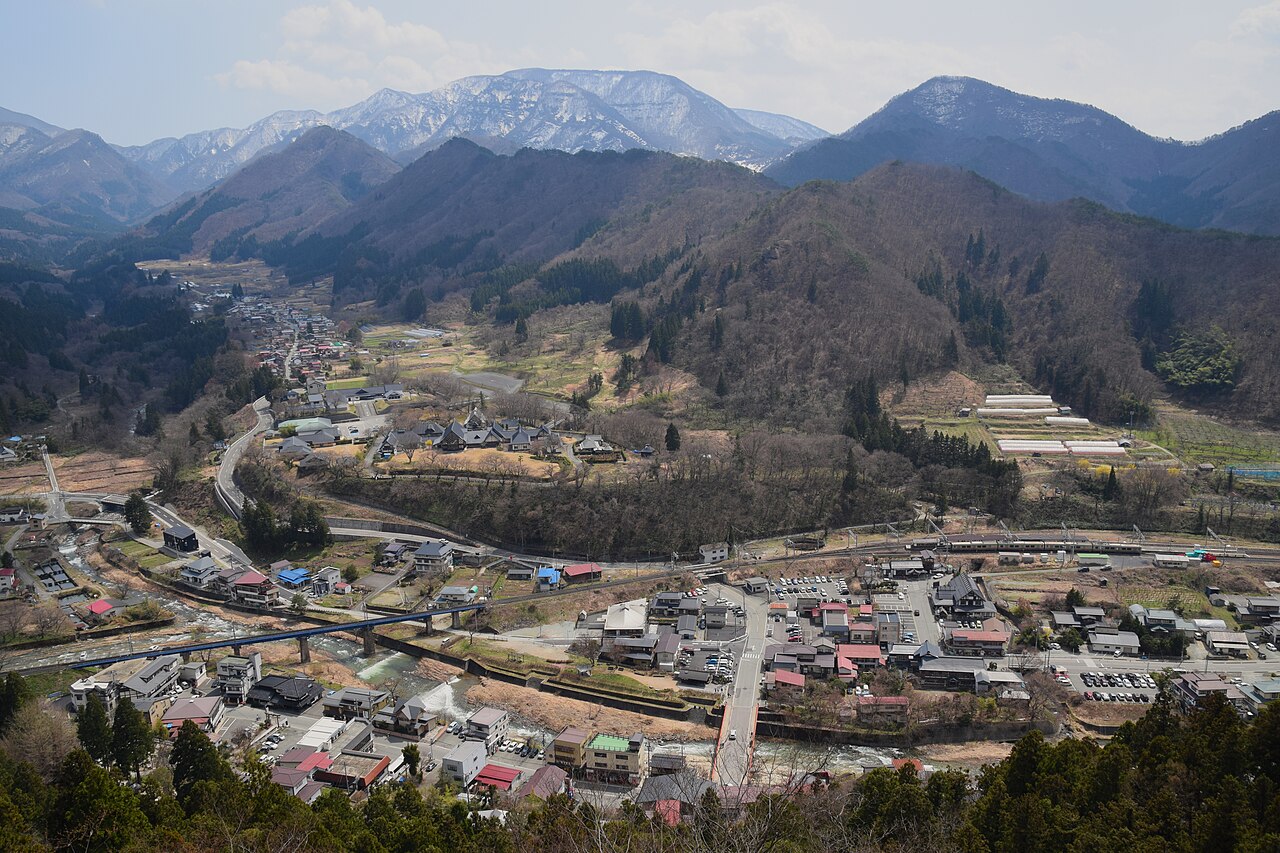
Godaido, built in the stage style, stands near the top of the mountain. One guidebook describes the whole of the mountain village below as visible from it, and the photograph here shows that view. When you have looked, go back down the same stairs to Konpon Chudo and the approach path.
Basho at Yamadera
Matsuo Basho came to Yamadera on the journey he recorded in Oku no Hosomichi. In the stillness of the mountain he felt the voices of the cicadas seeping into the rock, and the haiku he composed from that moment has remained famous ever since. He is said to have made the visit with his disciple Sora, one guidebook notes.
Within the grounds stands a mound known as the Semizuka, the cicada mound. It is said to have been raised by burying a tanzaku, a strip of poem paper, on which Basho had written the verse of the rock and the cicadas. Give it a moment when you reach it; here the temple ties the poem to the ground.
Yamadera Through Older Eyes
A Meiji-era gazetteer notes that the temple's formal name is Hojusan Risshaku-ji, and that Yamadera is the everyday name in general use. The temple traces its founding to Jikaku Daishi in the ninth century, a Tendai temple set among natural surroundings that change with each season. Carry both names up the stairs with you.
The same gazetteer says the founding followed an order from Emperor Seiwa, with an image of Shaka and Taho as the principal object of worship. The mountain title Hojusan is said to come from a stream in the grounds, fed by the middle and western valleys, according to another old guidebook. Pause at Konpon Chudo with that in mind.
An older guidebook describes the strange rocks of Yamadera and the scenery of Matsushima as the two great sights of Tohoku. One guidebook adds that the temple is said to have long drawn worshippers as a place for cutting bad ties. Whatever you carry up, take the stairs to Godaido and let the view answer.
A Day at Yamadera, Station to Station
A day here begins and ends on the JR Senzan Line. Step off at Yamadera Station, walk to the trailhead, the climbing entrance, and confirm the visiting hours for the season as you go in. Pay admission, visit Konpon Chudo and, if you wish, its inner sanctum, then start up the stairs toward Godaido.
Climb to Godaido, take in the village, and come back down by the same stairs and approach path. Down in the town afterwards, one guidebook describes Fumotoya Honten as serving a soft-serve ice cream made with the juice of Yamagata-grown cherries. The same guidebook describes Mitoya, a handmade-soba shop, as serving firm ita-soba made with buckwheat mainly from Yamagata.
When you are done, walk back to Yamadera Station and ride the JR Senzan Line back toward Yamagata or Sendai, the way you came. Yamagata is the shorter of the two rides, Sendai the longer, and both close the day where it began. If you want a base for the night before or after, see places to stay in Yamagata.