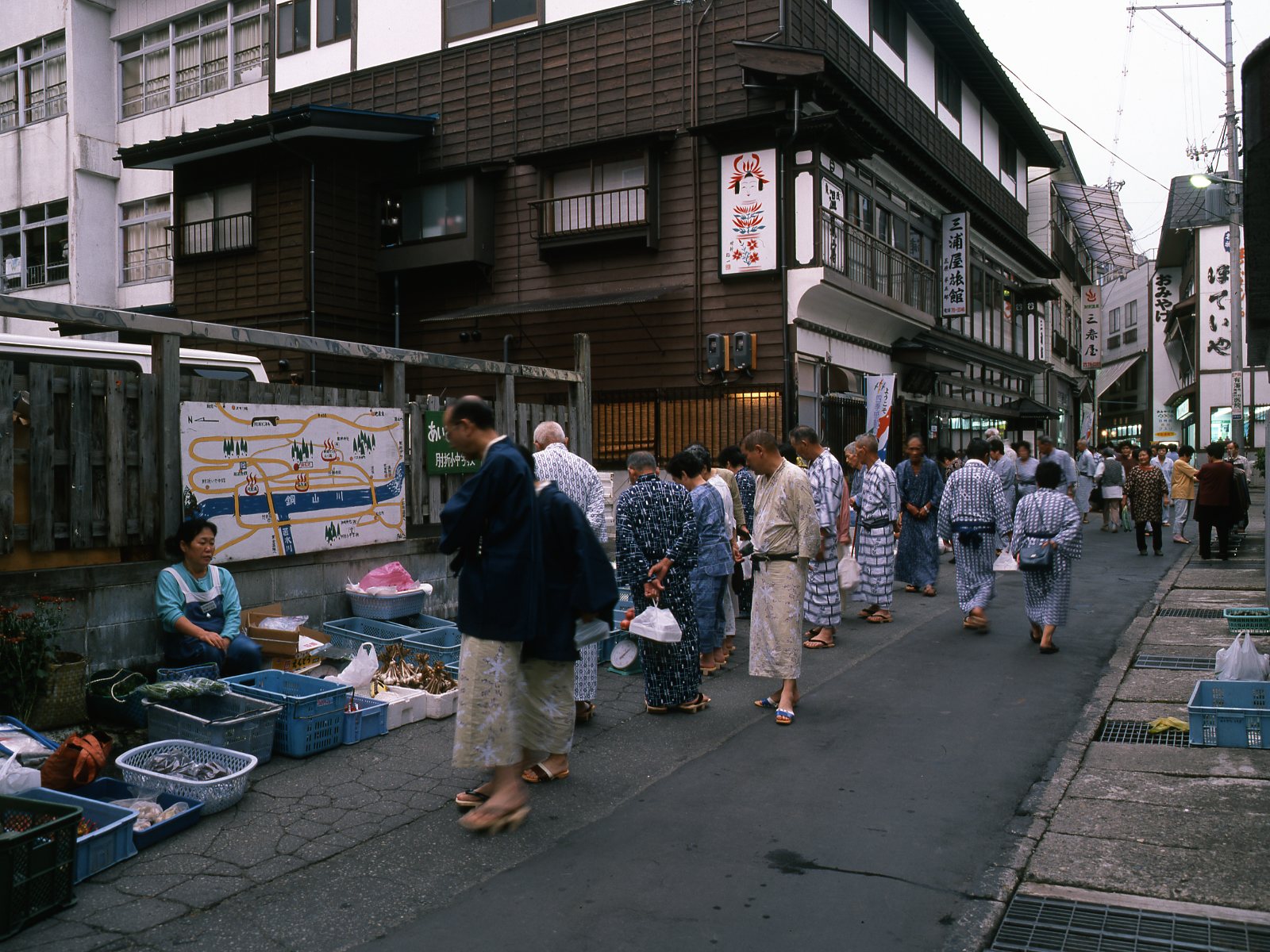
Hijiori Onsen is a quiet hot-spring town in Okura village, Yamagata, where ryokan of tasteful appearance stand side by side. Through its season the morning market is held every day, with mountain vegetables and vegetables of the season, and many visitors come as much to talk with the mothers at the market as to shop. All nineteen ryokan in the town have flowing hot-spring water, and in the mountains beyond the street lies Ishidaki Onsen, where the carbonation is abundant enough to make your body float, so bathers go in holding a stone.
The Morning Market and Cooking in Hijiori
The market is the reason to get up early in Hijiori Onsen. Freshly picked mountain vegetables, mushrooms and vegetables are set out in baskets, and many of the town's ryokan come with a kitchen for cooking your own meals, so you can cook what you bought. Daikokuya, a ryokan since the first year of Taisho, keeps toji culture alive and lets its guests cook market ingredients themselves. If you have a single morning, go to the market first, because it is over by half past seven, and Kaminoyu opens at eight.
The ryokan breakfasts lean on the same harvest. At one ryokan in Hijiori Onsen the breakfast tray carries a hot-spring egg with mountain vegetables picked nearby, and the yudofu is tofu from the clear water of Hijiori. Another inn puts up its mountain vegetables so that the dishes stay on the menu all year, all of it handmade. At Daikokuya the master goes up the mountain himself to gather mountain vegetables, and dinner runs to pork from Kaneyama, Yamagata beef and Yamagata local chicken from Okura village.
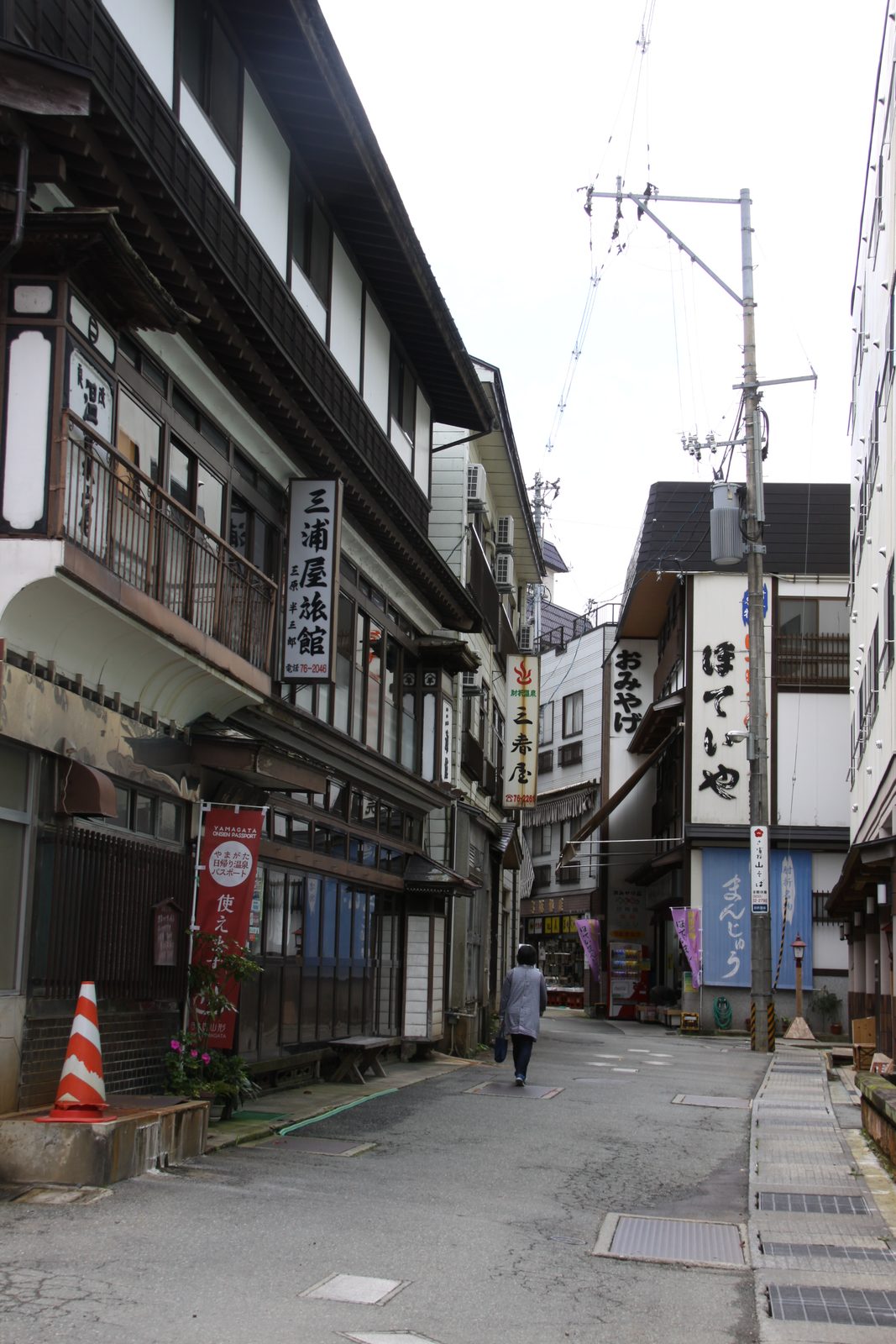
The street itself deserves a slow walk: the town has an abundant flow of hot-spring water and a Showa-retro feel, and halfway along the onsen street the old post office building makes a small landmark, its window lattice shaped like the postal mark. In summer there is also a night market on one Saturday evening a month.
Kaminoyu and Kaldera Onsen-kan
Kaminoyu is the town's shared bath. At Kaminoyu you bathe beside a Jizo statue, and source water pours into the bath from the foot of the statue. The spring at Hijiori has flowed since ancient times, and a bath beside the Jizo is a direct way to take that in.
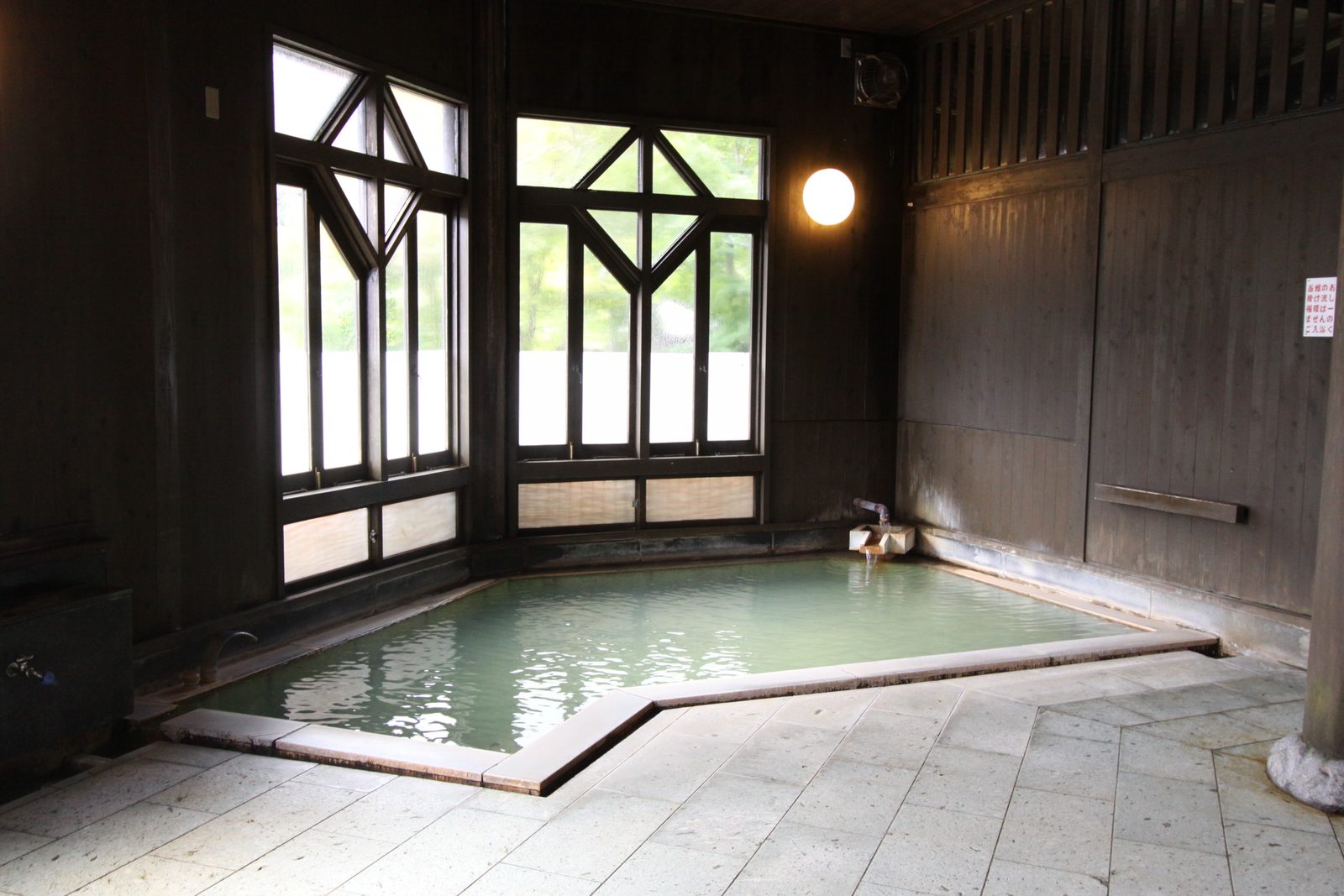
Kaldera Onsen-kan is the town's other bathhouse, while Hijiori Ideyu-kan serves a different purpose: its dining room offers lunch from a varied menu, and its large hall and private rooms are for resting between a bath and a walk. Kaminoyu is the one for an early soak, while Kaldera Onsen-kan stays open into the evening from April to November.
Ishidaki Onsen and the Ryokan Baths
For a bath you will remember, go to Ishidaki Onsen. It lies in the mountains two kilometres from the hot-spring town. It is nothing more than a simple structure holding back the spring as it wells from the mountainside, with trees growing thickly around it. The water at Ishidaki Onsen holds carbon dioxide gas, and your body floats as you soak. That is where the name comes from: the carbonation is so abundant that bathers go in holding a stone. It is about ten minutes by car from Hijiori Onsen.
Back in town, every one of the nineteen ryokan has flowing hot-spring water. In the large bath of one ryokan in Hijiori Onsen you can hear the hot spring flowing as you sit in it; that ryokan's large baths and its outdoor bath with a view sit on the fifth floor. In that outdoor bath a breeze from the river touches a body warmed by the spring, and on a clear night the sky above is full of stars. The water has long been valued for how it warms the body.
If your time is short, choose between the two: Ishidaki Onsen for the carbonated water that lifts you, or the ryokan bath for the sound of the flowing spring and the river breeze.
Gensen Park, the Dam and Jizo-kura
Upstream along the Dozan river from the town stands Hijiori Dam, on the register of tangible cultural properties and completed in nineteen fifty-two, and the ground around it is Gensen Park, where local people and toji guests meet. Inside the park you can watch the spring at source number five welling up on its own, and there is a foot bath from which you look across at the dam while your feet rest in the spring water.
On the first and third Saturdays of June, July, September and October the dam is lit up in a soft light; bad weather can cancel it and extra dates are sometimes added, so check the website first. A good way to see it is after a bath: walk toward Hijiori Dam with the sound of the water beside you and look at the lights. At Komatsubuchi, jade-green water reflecting the shadows of the trees runs between black rocks.
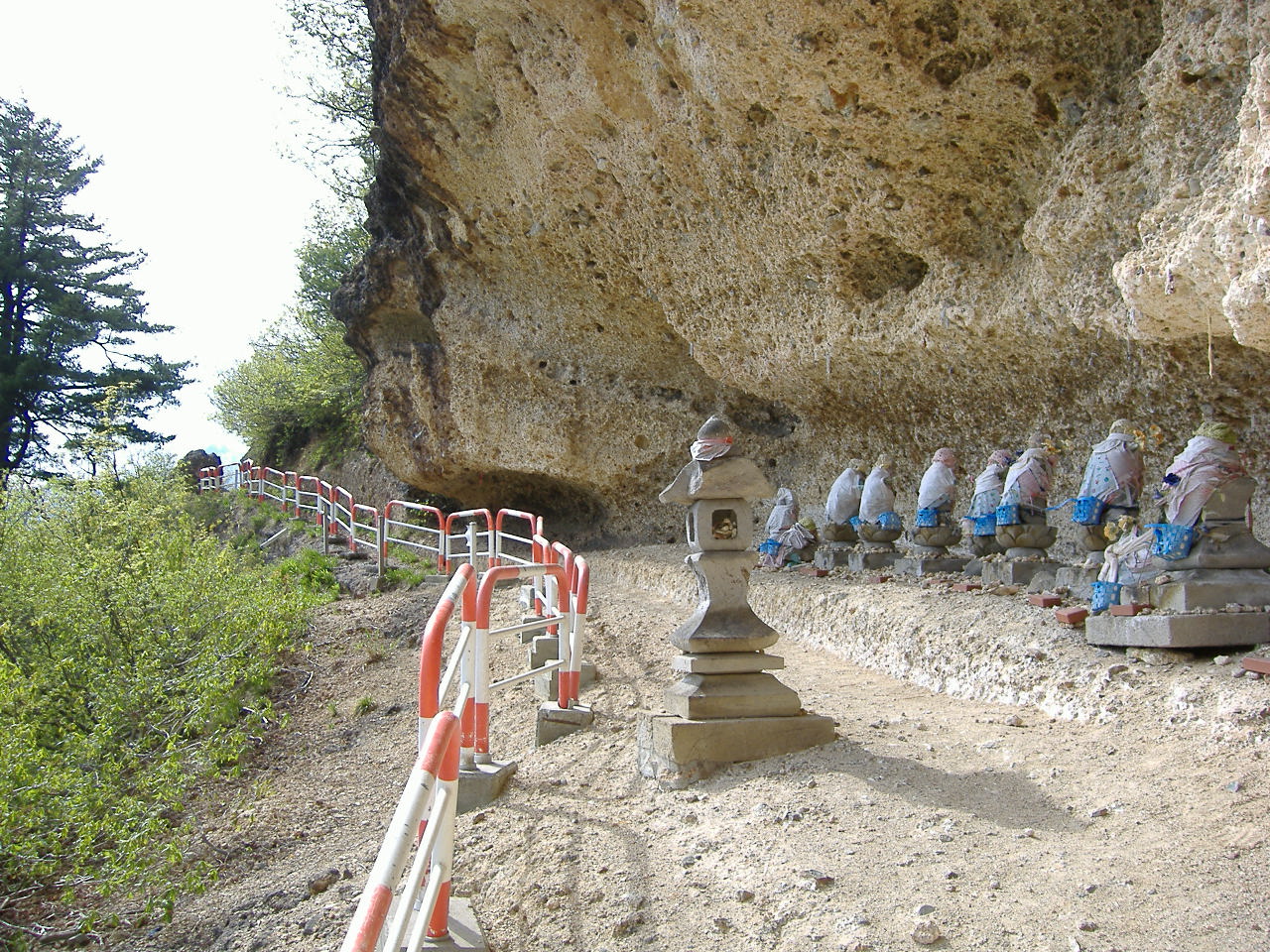
Jizo-kura holds the story of the town. By legend, Hijiori Onsen was discovered in the year eight hundred and seven by Gen'o, an ascetic from Bungo Province, and six stone Jizo stand in the shade of a tuff rock face, with a wooden main hall next to them. The rock wall is full of holes, and a legend says that if you twist paper into a strip while praying and pass it through a hole, the wish comes true. Save daylight for Jizo-kura: it is fifty minutes on foot by mountain trail from Hachiman Shrine in Hijiori Onsen.
Festivals on the Onsen Street and the Terraces
Kaito-sai, the festival of thanks to the deity of the spring, comes round every year on the fourteenth of July, and a portable shrine carrying the Jizo is paraded along the onsen street.
In summer the Shikamura terraces, where the view opens to Mt Chokai and Mt Gassan, host the Hotaru-bi concert on August's first Saturday. By day you hear piano and ocarina carried across the terraced rice fields, and after dark the wide terraces glow with about twelve hundred firefly-style lights. Through the evening the notes of an ocarina echo across the valley of the terraces. The terraces change their look with each season, and if they are the draw, plan the trip around the first Saturday of August, since the concert is a summer event.
At the end of the year comes Sange-sange, a yamabushi rite with a long history at Dewa Sanzan. Yamabushi dressed in white move along the onsen street with prayers for a good harvest and for health, and visitors who come to the rite are handed rice cake pounded fresh.
Getting to Hijiori Onsen
| Leg | How | Time and estimate |
|---|---|---|
| Yamagata Airport to Hijiori Onsen | A tourist liner service | Listed as available |
| Hijiori Yukemuri Line village bus | Longest listed section | 600 yen |
| Hijiori Yukemuri Line village bus | Shorter listed sections | 300 yen |
| Hijiori Yukemuri Line village bus | Round-trip ticket, valid for the 600-yen section | 1,100 yen |
| Hijiori Yukemuri Line village bus | Coupon booklet | 1,000 yen |
| Hijiori Yukemuri Line village bus | Children | Under 1 year free; 1 year to junior high school half fare |
| Hijiori Onsen Hachiman Shrine to Jizo-kura | Mountain trail on foot | 50 minutes |
| Hijiori Onsen to Ishidaki Onsen | By car | About 10 minutes |
New to rural buses and one-man trains? See how to ride them, step by step.
Hours and Fees
| Place | What | Hours or fee |
|---|---|---|
| Hijiori morning market | Season | April 20 to December 10 |
| Hijiori morning market | Hours, April and September to December | 6:00-7:30 |
| Hijiori morning market | Hours, May to August | 5:30-7:30 |
| Kaminoyu | Hours, April to November | 8:00-18:00 |
| Kaminoyu | Hours, December to March | 8:00-17:00 |
| Kaminoyu | Fee, adults | 400 yen |
| Kaminoyu | Fee, elementary school children | 300 yen |
| Kaldera Onsen-kan | Hours | 9:30-19:00 from April to November; 10:00-16:30 from December to March; reception closes 30 minutes before closing |
| Kaldera Onsen-kan | Fee | Adults 500 yen; elementary school children 200 yen; infants free |
| Kaldera Onsen-kan | Village resident rate | Adults 300 yen; elementary school children 100 yen |
| Hijiori Ideyu-kan | Tourist information desk | 9:30-16:00; 10:00-16:00 from December to March |
| Hijiori Ideyu-kan | Dining room | 11:00-15:00; last order 14:30 |
| Hijiori Ideyu-kan | Dining room closed | Every Tuesday and Wednesday |
| Hijiori Ideyu-kan | Rest room | 10:00-16:00 |
| Hijiori Ideyu-kan | Rest room fee | 200 yen |
| Hijiori Dam | Light-up dates | 1st and 3rd Saturdays of June, July, September and October |
| Hijiori Dam | Light-up hours | 19:00-20:30 |
If you are planning a trip around Hijiori Onsen, you can also look at places to stay in Shinjo.
Where to stay
Places to stay near Shinjo, Yamagata →
Disclosure: This post may contain affiliate links. If you book through them, we may earn a commission at no extra cost to you.