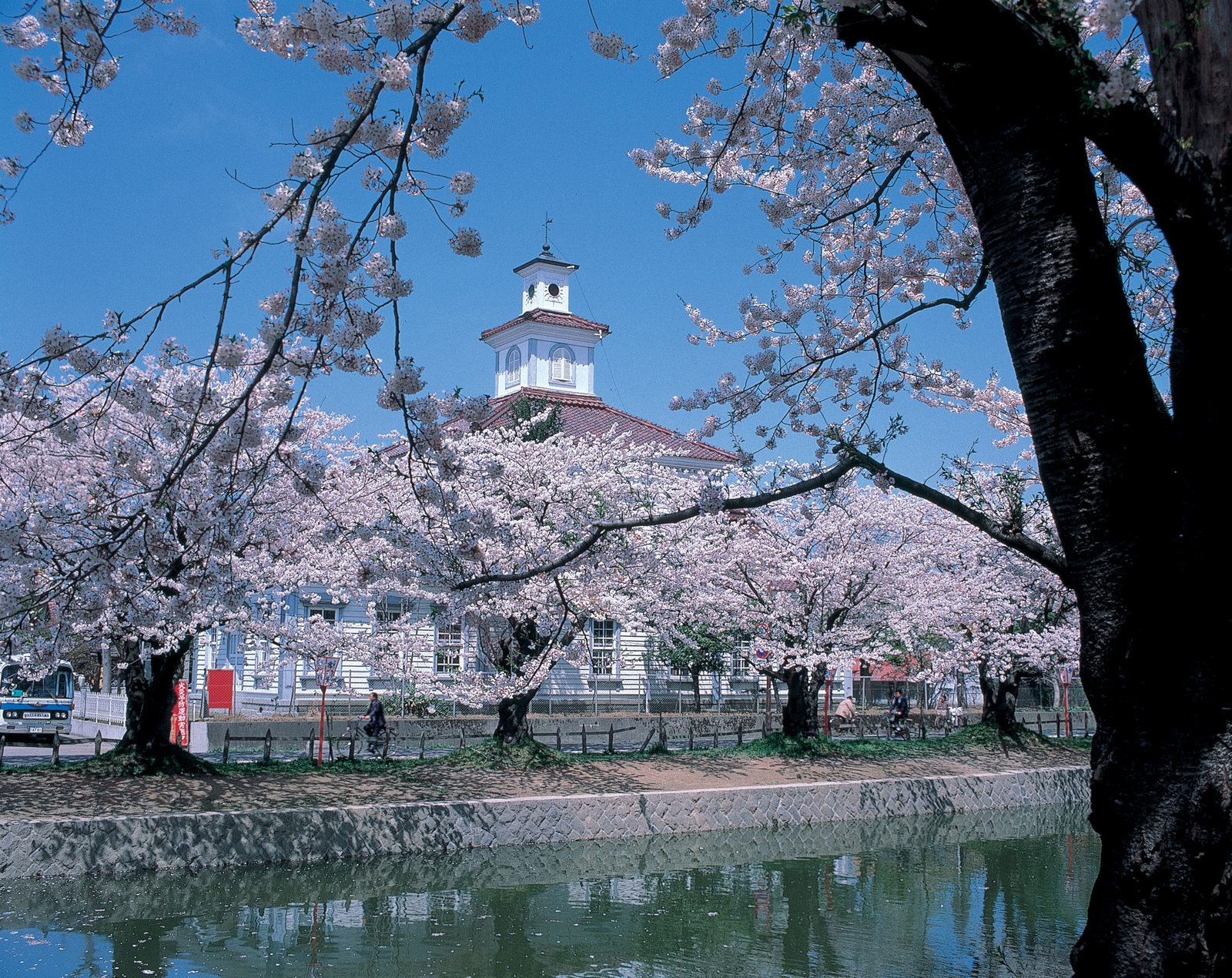
Tsuruoka, a castle town on the Shonai Plain of Yamagata, pairs a shrine with flower-filled water basins and a park ringed by retro halls with a silk farm built by former samurai and a hot-spring village in a mountain valley. The food is just as particular: a restaurant with just soba and mugikiri, ramen with a choice of thick or thin noodles, cream cheese pickled in sake lees, and sake from seven local breweries. One way to work through Tsuruoka is to start with the flower water basins at Shonai Shrine, look out over the park from the balcony of the former police building, see the silkworm houses at Matsugaoka, then finish at the lantern lane and source bath of Yudagawa Onsen. The soba can wait for whichever point in the day you are back in town.
Flower Water Basins and Goshuin at Shonai Shrine
Shonai Shrine stands inside the moat of Tsuruoka Park, and visitors come first for its hana-chozu, a water basin with many flowers floating in it. The basins change in colour and style with the season, as do the park's flowers, with wisteria, irises and azaleas among them. The shrine was founded on the former main enclosure of Tsuruoka Castle by people across the Shonai region who admired their former lord, and it enshrines the Sakai family, so the flowers now float where the core of the castle stood.
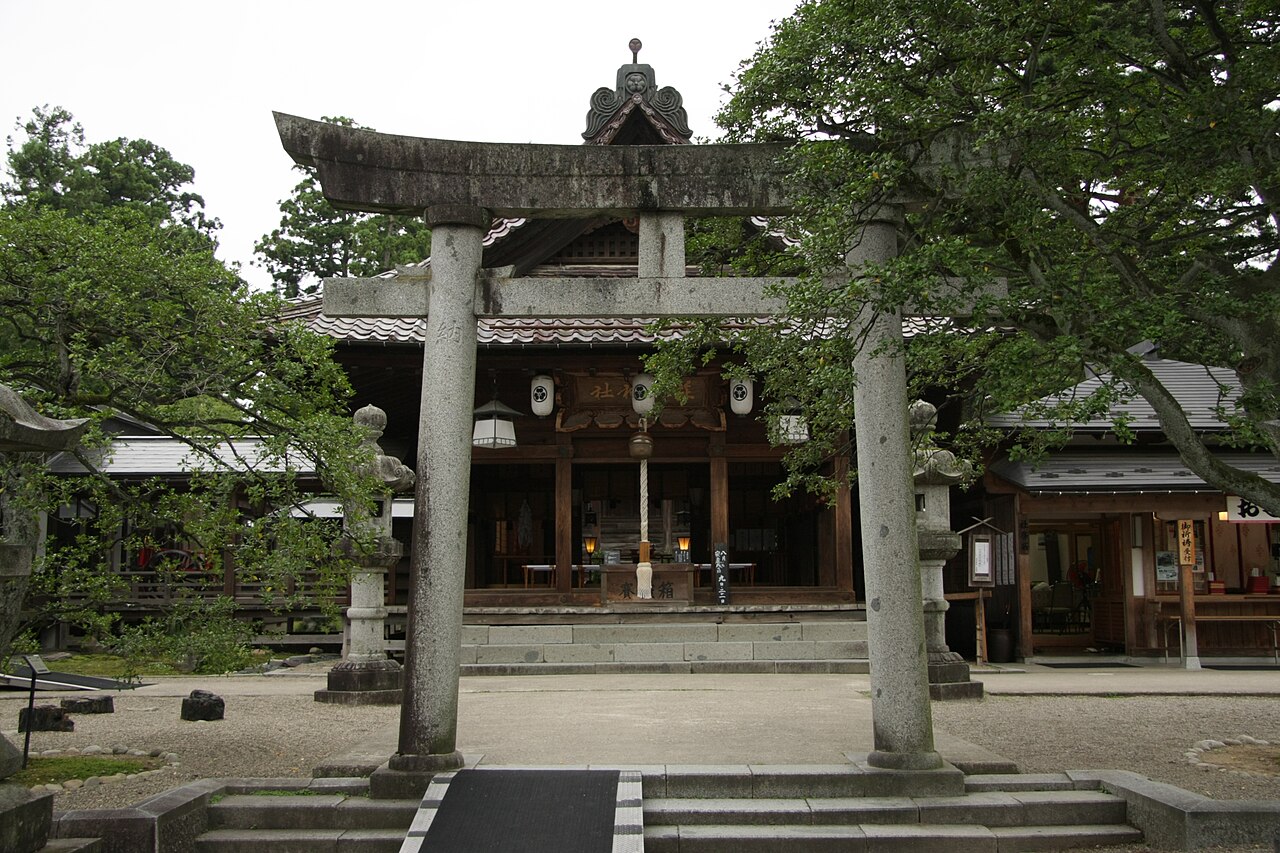
The goshuin changes with the season as well, and goshuin books embroidered with Tsuruoka Castle and a poem by Sakai Tadaaki of the lord's family come in cherry blossom, snow scene and summer night sky versions.
The treasure hall inside the grounds displays arms and armor and art crafts associated with the feudal lord. If you collect seals, time the visit for the version you want, since the stamp and the books both follow the seasons.
Retro Halls Around Tsuruoka Park and the Chido Museum
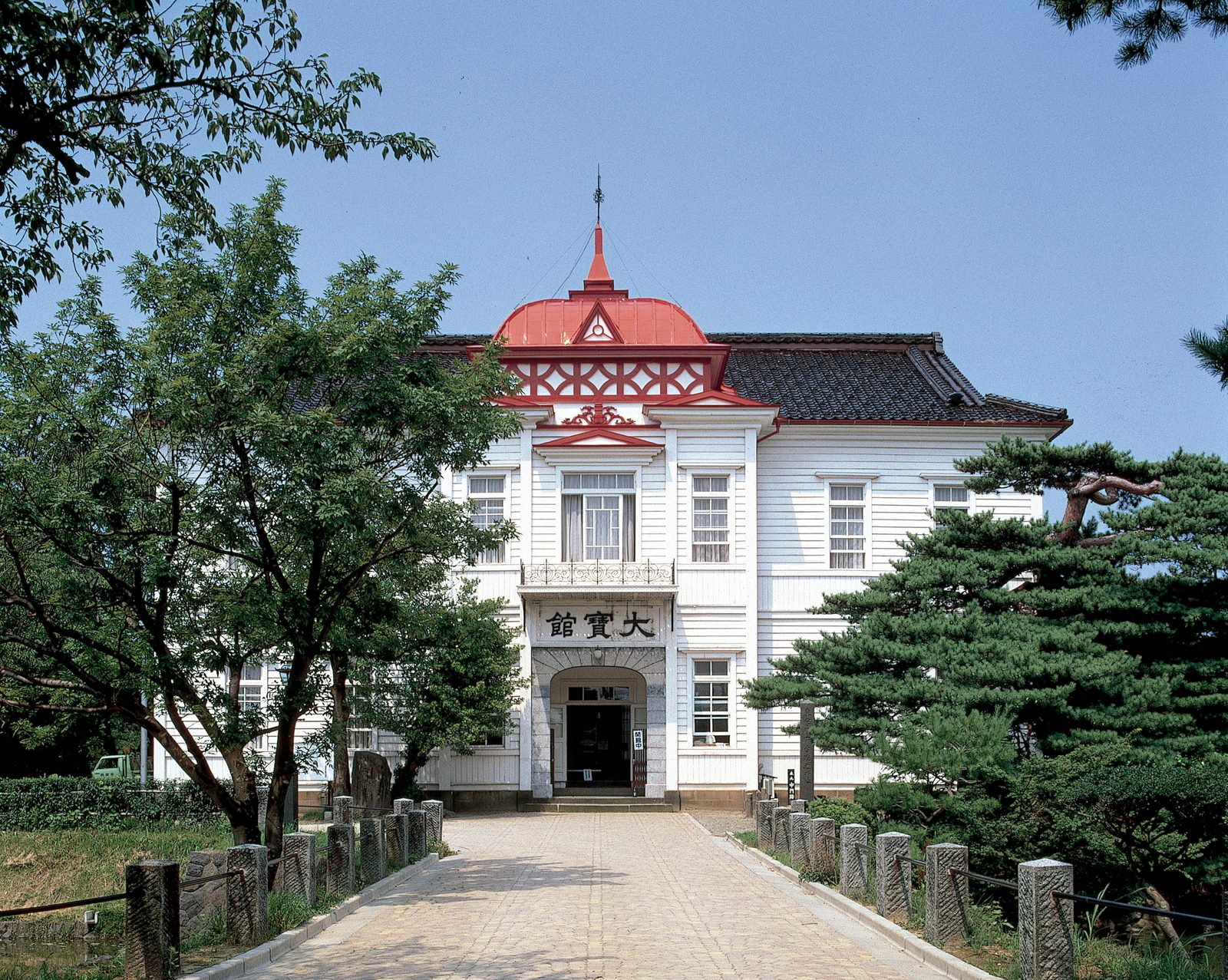
Tsuruoka Park, where Tsuruoka Castle once stood, is ringed by retro buildings, and the Taihokan with its red Renaissance-style dome roof is the one to look for first.
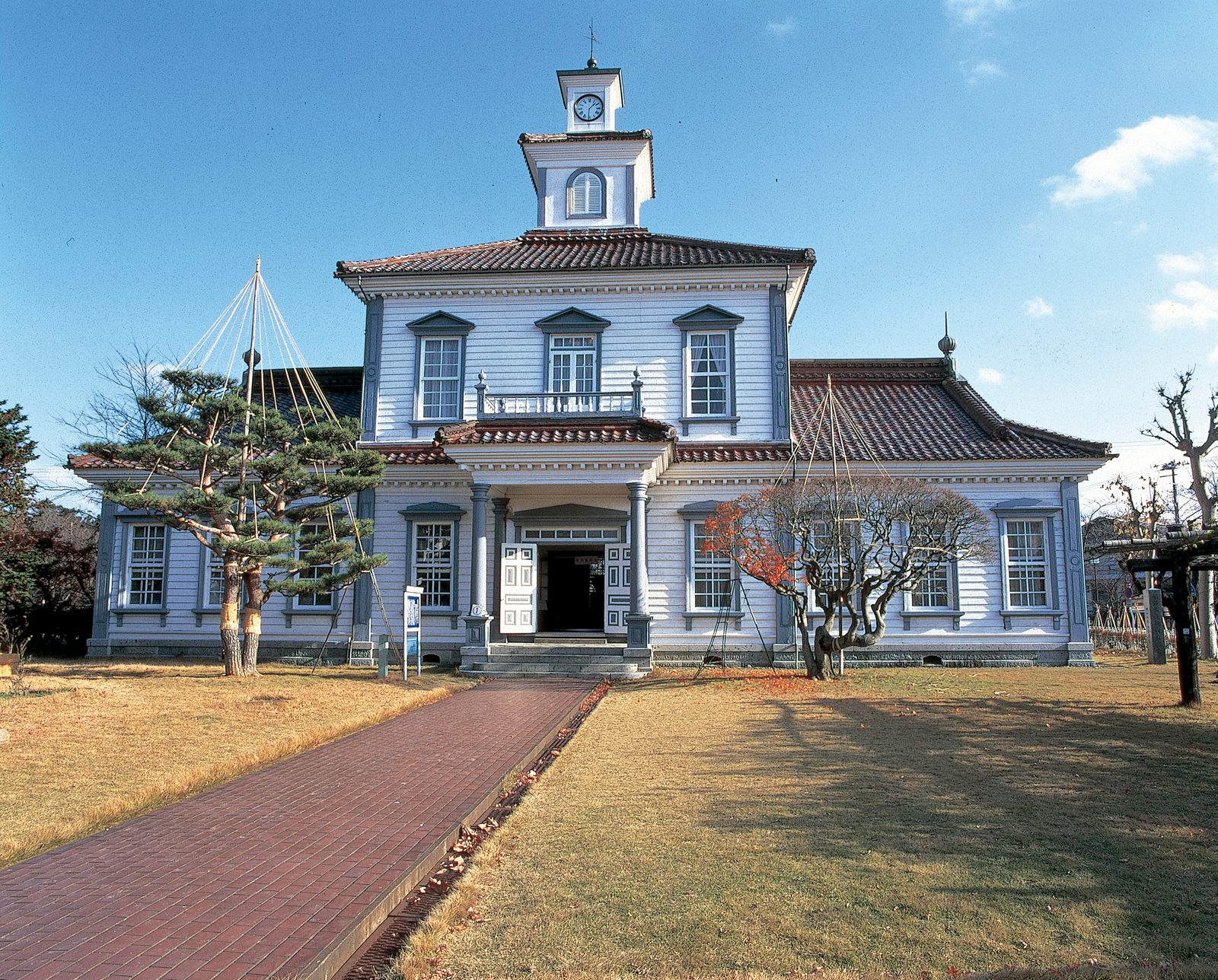
The Chido Museum gathers buildings from Tsuruoka and Shonai in one place, among them the former Nishitagawa District Office and the former Shibuya family residence. Visitors can step inside the former Tsuruoka police building and take in Tsuruoka Park in full from its second-floor balcony.
The Shonai domain's school was founded to renew the samurai ethos of the domain and to raise capable people, and its front gate, sacred hall, lecture hall and lord's chamber remain as a nationally designated historic site. Heishindo, the former Kazama family residence, was built by the seventh head of that merchant family on a former samurai residence site as his home and business base. If your time around the park is short, go straight to the Chido Museum balcony, since its gathered buildings and the park view cover the retro side of Tsuruoka in one stop.
Silkworm Houses at Matsugaoka Kaikonjo
Matsugaoka Kaikonjo is where about three thousand former Shonai samurai, backed by the whole region, swapped their swords for hoes and cleared wasteland, and the five tile-roofed, three-storey silkworm houses they raised still stand, with one of them restored as a memorial hall. Silkworm rooms still remain here, so what you see is the working farm rather than a marker where it used to be.
The fourth silkworm house has become a facility that presents the history and culture of the silk industry, which is the place to work out how former samurai who cleared the land and took up silk farming went about it. If you want to see how a samurai-built silk farm looked rather than read about it, the silkworm houses themselves are the point, and the restored house and the fourth house between them cover both the buildings and the story.
Yudagawa Onsen: A Lantern Lane and a Source Bath
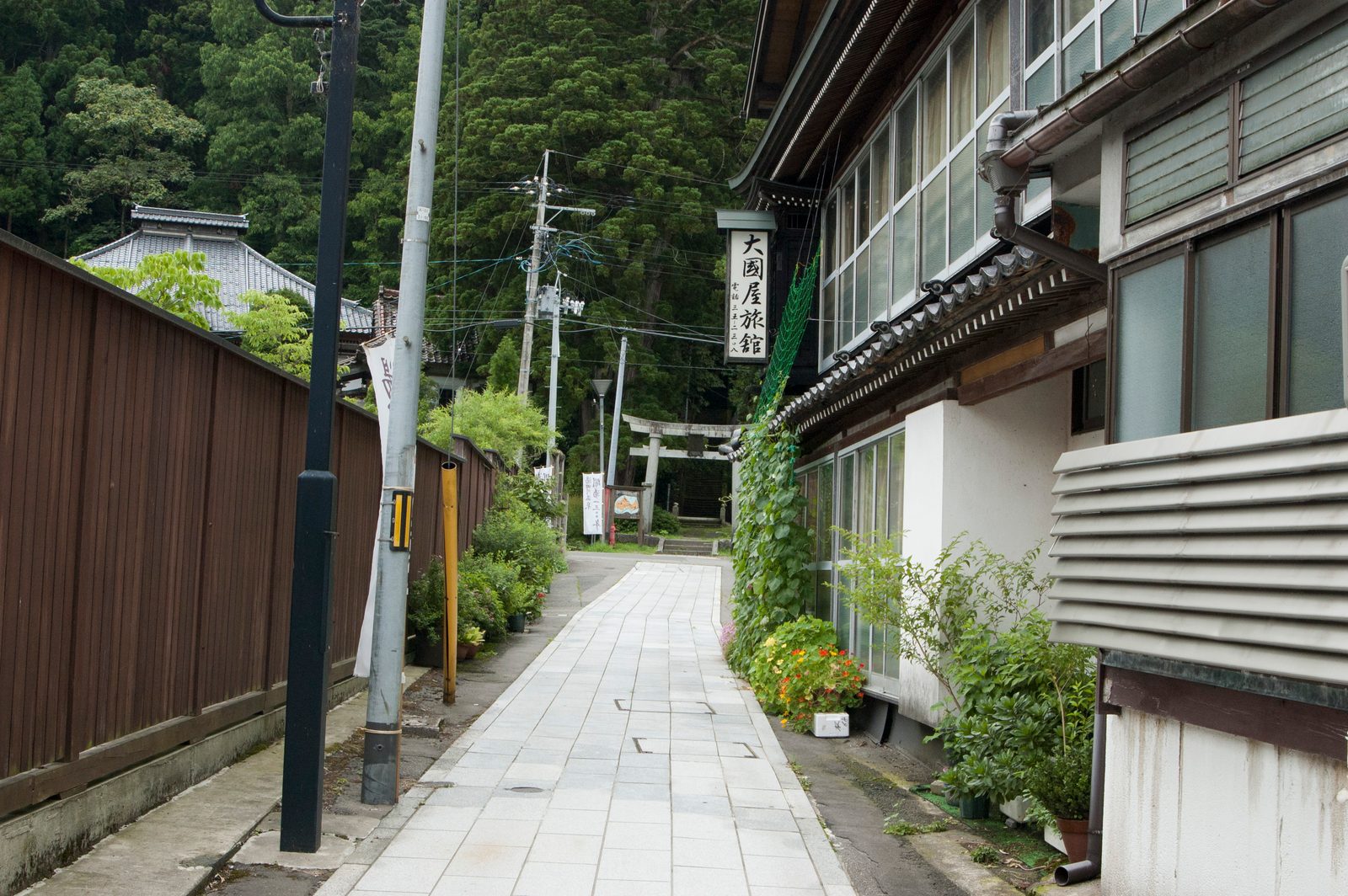
Yudagawa Onsen's lane from the public bath to the shrine at its end is set with bamboo lanterns and paper lanterns, and the shrine itself is known as a filming location, so the lane you walk finishes at a spot that has appeared on screen.
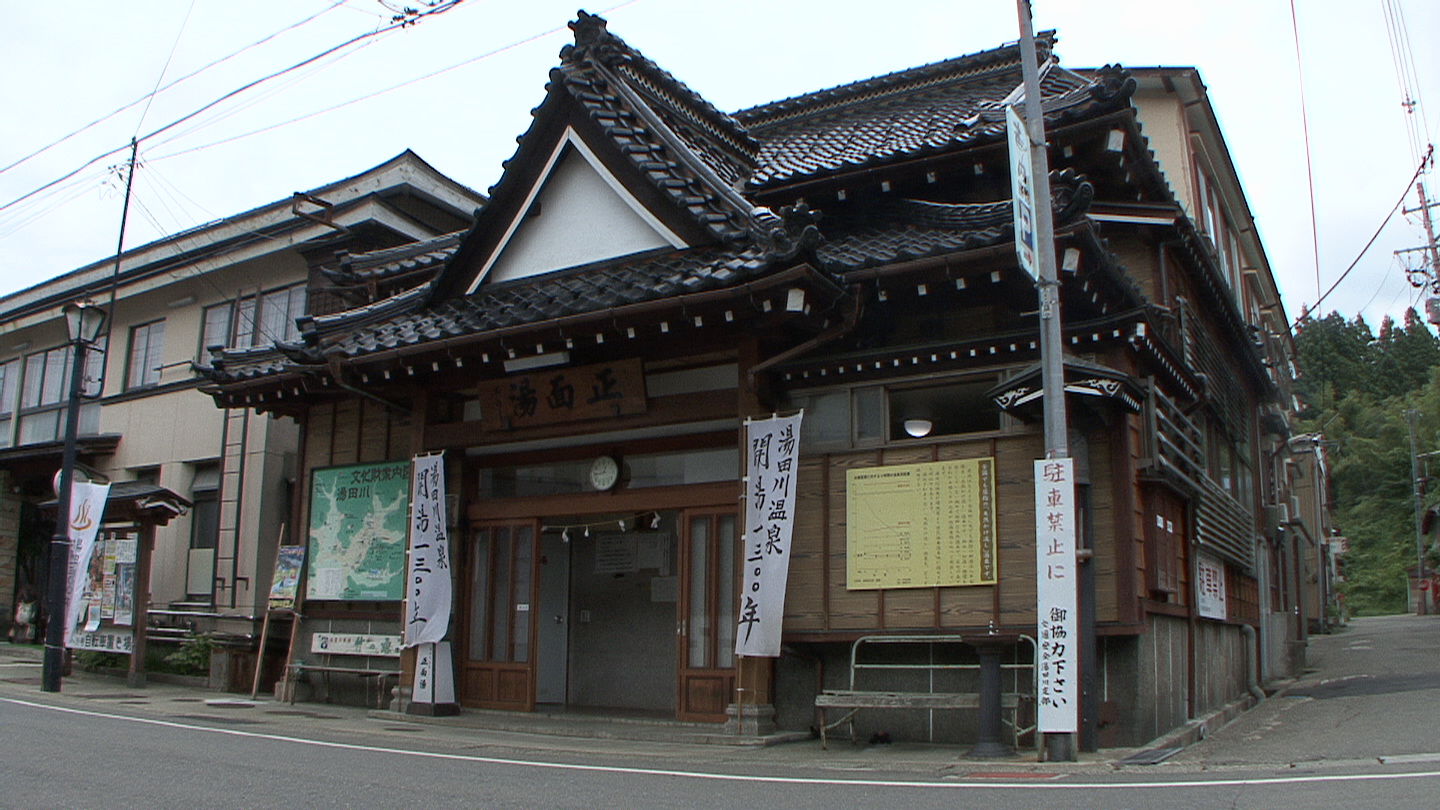
Known as the inner parlour of Tsuruoka, Yudagawa is a quiet hot-spring village in a mountain valley, with inns standing among bamboo groves and plum groves, and that setting is what separates it from the castle town below.
The public bath's water is natural hot spring water that is not diluted, heated or circulated, and because the inns and public baths are gathered close together, the feel of an old-style hot-spring cure village remains. If a quiet hot-spring stop is what you want from Tsuruoka, Yudagawa is the half of this route to linger in, with the source bath first and the lantern lane after it.
Soba, Ramen and Pickles in Town
Tsuruoka's noodle choices start with a soba restaurant that has just soba and mugikiri, and a ramen shop where the chuka soba comes with a choice of thick or thin noodles.
The same ramen shop has juicy chashu and curly noodles that go with the soup, and tsukemen, mazesoba and gyoza are there as well. A pickle shop has cream cheese made in Zao and pickled in local Shonai sake lees, and its pickle storehouse can be looked around.
Shiso rolls here are sweet-salty miso wrapped in deep-fried green shiso leaf, and they go with rice as well as with sake. A traditional local turnip grown by slash-and-burn farming has a crisp texture and is the other pickle to look for. If you like to graze between sights, start with the ramen shop's thick-or-thin choice, add a shiso roll with rice, and keep the soba and mugikiri for a sit-down meal.
Sake and Bamboo-Shoot Dishes
Tsuruoka has seven sake breweries, and three wineries make wine here as well. The Takeya Hotel in Yunohama Onsen has sake from all seven breweries by the one-go measure, along with a set of three recommended sakes for comparison, so people who do not drink much can still try Tsuruoka sake.
Yudagawa Onsen is known for a bamboo-shoot soup and for local sake poured into a length of bamboo, and that soup is the seasonal dish many visitors come for, in a village where plum trees bloom in spring. The village's seasonal food runs from bamboo-shoot dishes through to seafood and mountain foods.
If comparing the breweries interests you more than settling on one, the three-sake set covers the ground, and the bamboo-shoot soup is the local dish to put beside it. With the soup and the bath both in the village, Yudagawa is the part of Tsuruoka to end the day in.
Getting to Tsuruoka
| Leg | How | Time and fare |
|---|---|---|
| Tokyo Station to Tsuruoka Station | Joetsu Shinkansen and Uetsu Main Line | About 4 hours |
| Tsuruoka Station to Yudagawa Onsen | Bus, or taxi (about 20 minutes) | About 30 minutes by bus |
| Tsuruoka Station to Yudagawa Onsen | Bus, one-way fare | 600 yen |
| Tsuruoka Station to Chido Museum | Bus bound for Yunohama Onsen | About 10 minutes |
| Tsuruoka Station to Shonai Shrine | Bus bound for Yunohama Onsen to the city hall stop, then on foot | 10 minutes by bus, then a 2-minute walk |
| Tsuruoka Station to Heishindo | Bus bound for Yunohama Onsen to the stop for Heishindo | 5 minutes by bus |
From the Ginza-dori bus stop, Heishindo is a three-minute walk. A taxi from Shonai Airport to Yudagawa Onsen takes about twenty-five minutes.
New to rural buses and one-man trains? See how to ride them, step by step.
Hours and Fees
| Place | What | Hours or fee |
|---|---|---|
| Chido Museum | March to November | 9:00 to 17:00, last entry 16:30 |
| Chido Museum | December to February | 9:00 to 16:30, last entry 16:00 |
| Chido Museum and Heishindo | Closures | Chido Museum: every Wednesday and 28 December to 4 January; Heishindo: 13 July, and 1 December to 9 April, with a partial special opening during the Tsuruoka Hina Monogatari event |
| Heishindo and Shakado | Joint ticket, general admission | 500 yen |
| Heishindo | Hours | 9:30 to 16:30, last entry 16:00 |
| Yudagawa Onsen public bath | Source-flowing bath | 7:00 to 9:00 and 11:00 to 19:00 |
Heishindo is closed through the winter, so check the closures row if you are visiting between December and April.
Where to stay
Places to stay near Tsuruoka, Yamagata, Japan →
Disclosure: This post may contain affiliate links. If you book through them, we may earn a commission at no extra cost to you.