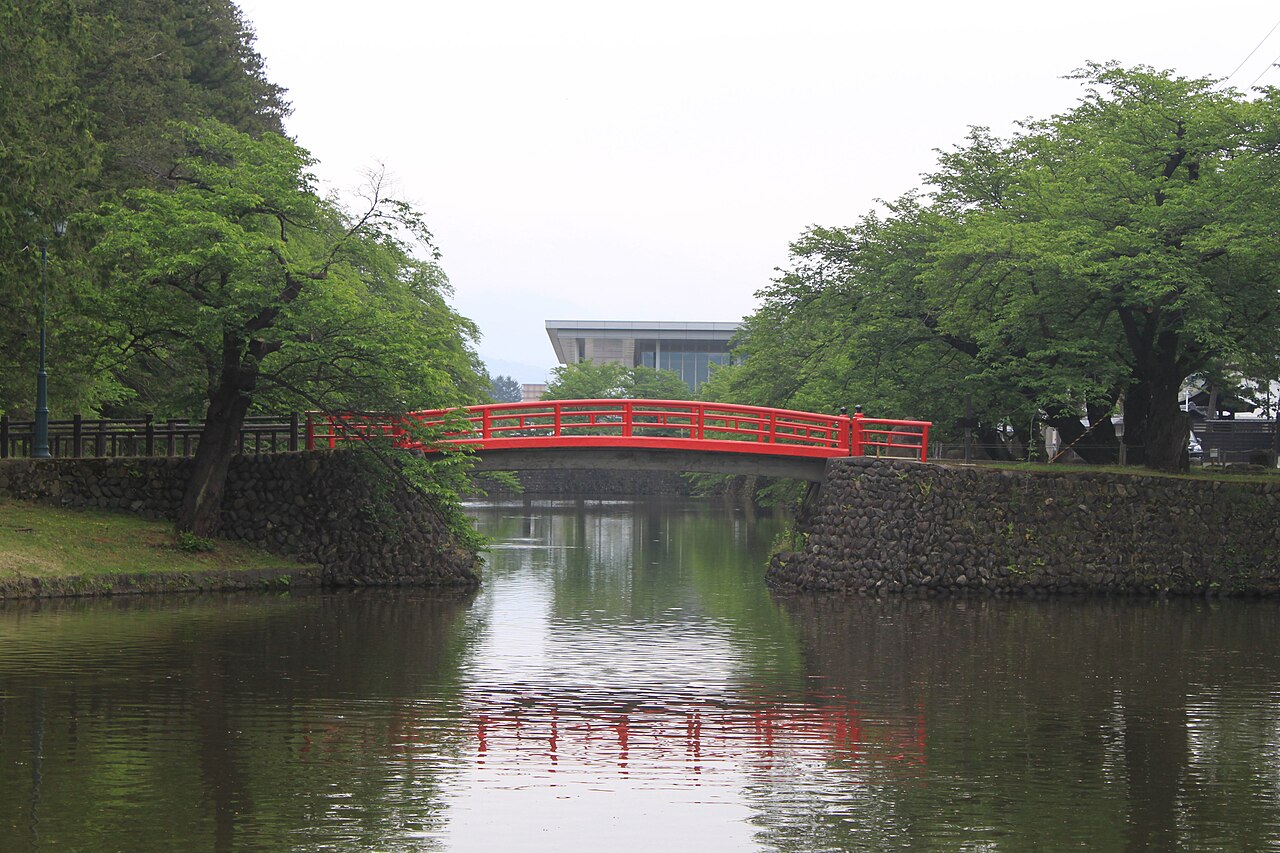
Yonezawa was once part of the Yonezawa domain governed by the Uesugi clan. Naoe Kanetsugu, a chief retainer of the first domain lord Uesugi Kagekatsu, laid the foundation of the Yonezawa castle town that remains. Traces of that castle town can be seen in the castle moat and its surroundings.
Uesugi Shrine and the Castle Moat
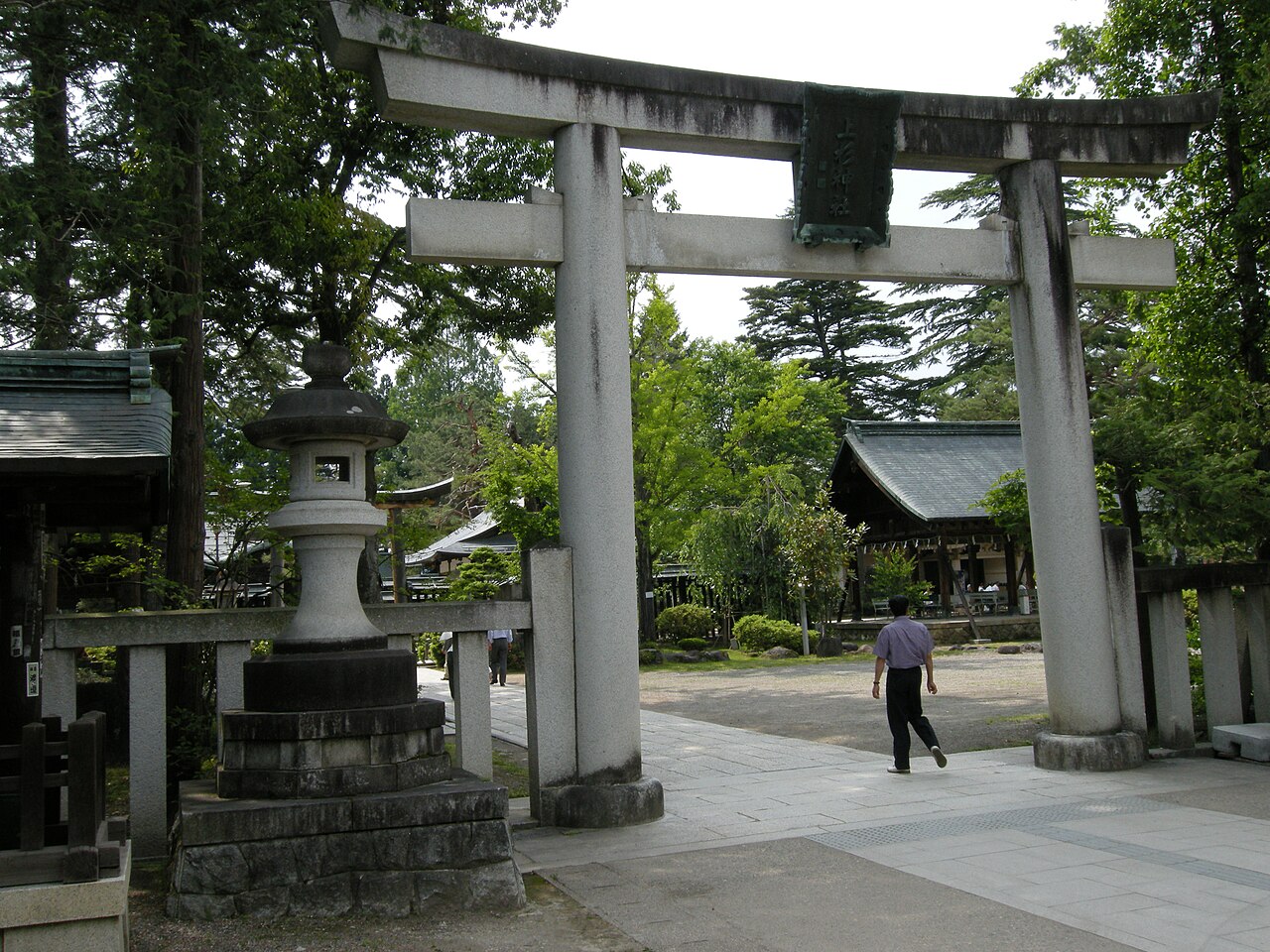
Uesugi Shrine stands on the site of the Yonezawa Castle main enclosure and enshrines Uesugi Kenshin as its deity. Cherry blossoms on the embankment around the precinct are reflected in the moat. The castle site, Matsugasaki Park, is surrounded on all four sides by a moat twenty to thirty-six metres wide and about eight hundred metres long.
Bronze statues of Uesugi Kenshin and Uesugi Yozan stand in the park next to the grounds. The Keishoden, the treasure hall in the shrine grounds, keeps and displays heirlooms of the Uesugi house and holds many cultural properties related to the clan.
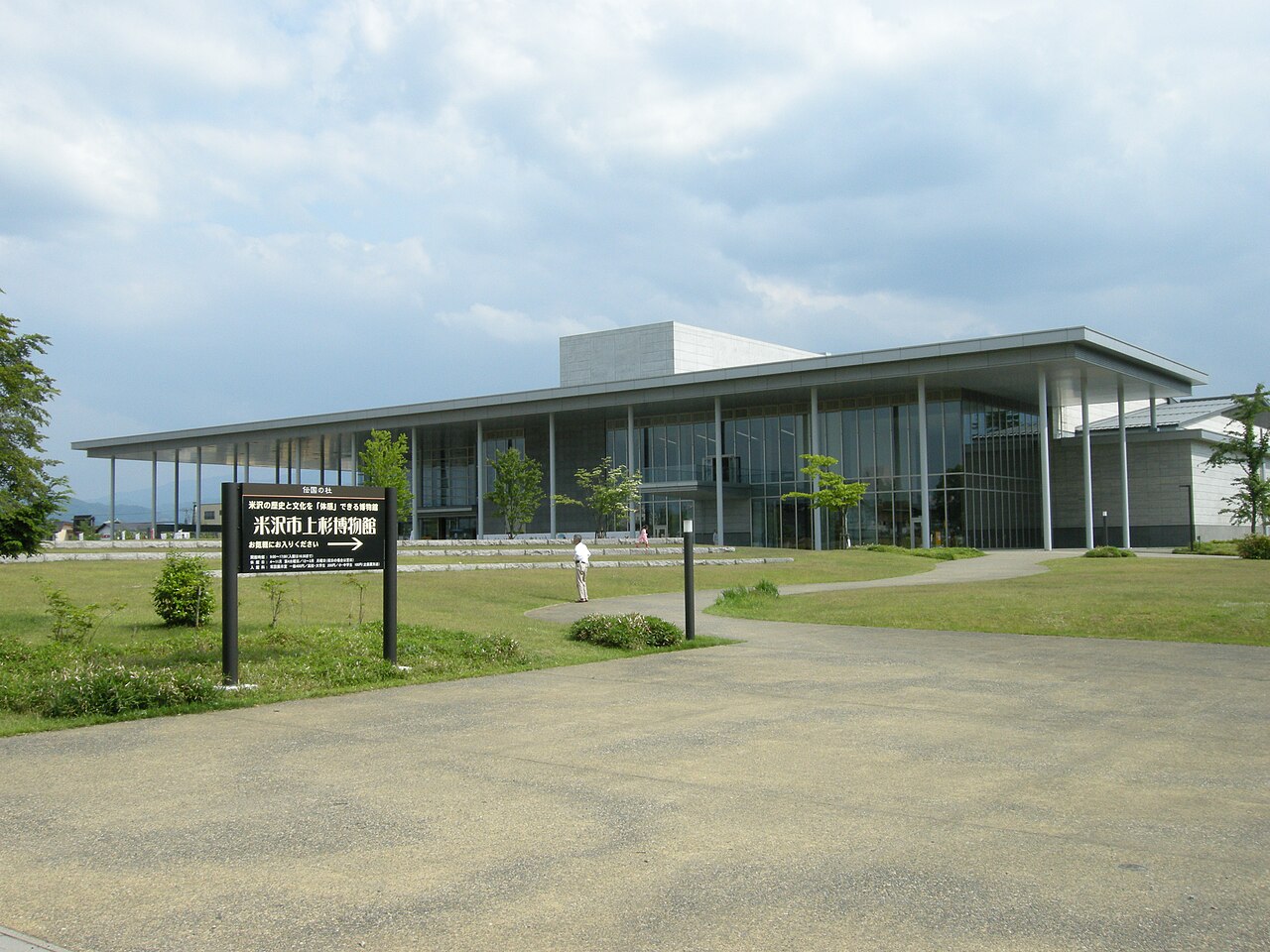
The Yonezawa City Uesugi Museum is nearby, and its permanent exhibition room introduces the history and culture of Yonezawa and the Okitama region. The original of the national-treasure Uesugi folding screens of Kyoto goes on special display for limited periods, and the schedule needs checking in advance. It is about a five-minute walk from the museum to Uesugi Shrine.
Matsugasaki Shrine, Rinsen-ji and the Uesugi Mausoleum
Matsugasaki Shrine enshrines Uesugi Kagekatsu, Uesugi Yozan, Naoe Kanetsugu and three others. Yozan had been enshrined together with Uesugi Kenshin at Uesugi Shrine and was later enshrined separately at Matsugasaki Shrine. A stone monument carrying a text by Yozan stands within the shrine grounds.
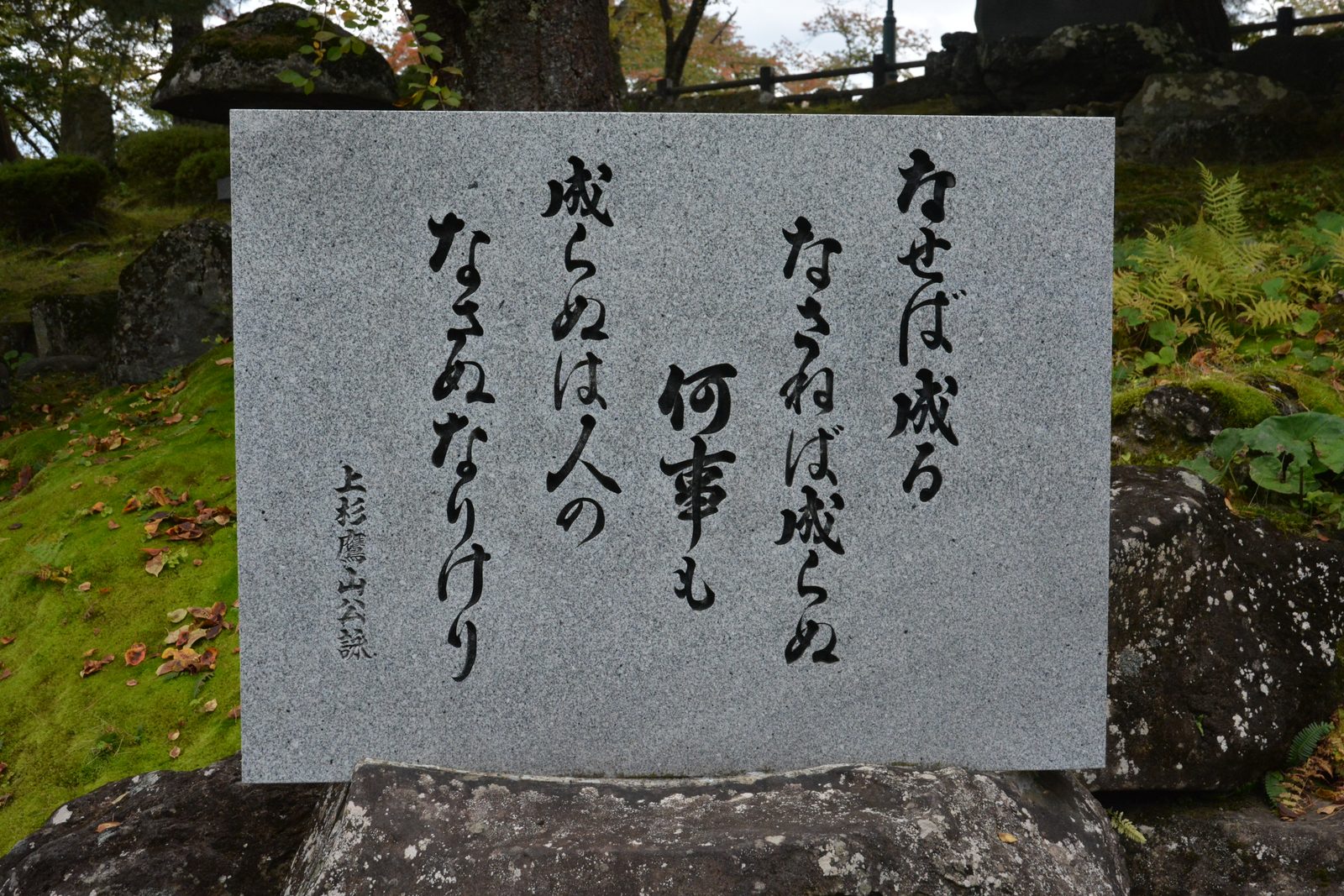
Uesugi Yozan took over the family headship at seventeen, when the Yonezawa domain carried a huge debt and could not move. Yozan cut the lord's living expenses at the Edo residence to about two sevenths, with daily meals of one soup and one dish, cotton clothing, and the court maids reduced from fifty to nine.
Rinsen-ji is the family temple of the Uesugi house and of Naoe Kanetsugu, and the graves of Kanetsugu and his wife and of the wives and children of successive Yonezawa domain lords are there. In spring a weeping cherry said to have been planted by Yozan can be seen.
The Uesugi family mausoleum, a nationally designated historic site, is the burial ground of the lords of the Yonezawa domain from Kenshin to the twelfth lord, with the shrine hall of Kenshin at the centre front. It is about a five-minute walk from Uesugi Shrine to Matsugasaki Shrine. It is about a twenty-minute walk from Matsugasaki Shrine to Rinsen-ji.
The Naoe Stone Levee, the Count's Residence and Hands-On Crafts
The Naoe stone levee built under Naoe Kanetsugu totals ten kilometres in length. Part of the levee is built by stacking large and small river stones sideways, a Sengoku-period stone wall technique. The riverbed where the levee remains has been developed as a park, with a walking course in one corner and stone monuments along the path introducing Kanetsugu's achievements.
The former Count Uesugi residence was built in the Taisho era. Visitors can tour the building and are served local cuisine at the Uesugi Memorial Hall.
Visitors to Yonezawa can try hand weaving on a traditional loom and plant dyeing such as safflower and indigo. Kimono and armor can be tried on, and reservations are required.
Yonezawa Beef, Ramen, Snow Vegetables and Sake
Yonezawa beef is eaten as steak, in hotpot and as sashimi, and sukiyaki made with marbled meat is popular. Yonezawa beef is described as having moist, melting fat, soft and juicy meat, and a mellow flavour.
Yonezawa ramen soup, based on chicken bones and dried small sardines called niboshi, is described as light with a pleasant aftertaste. The noodles are cut straight and hand-kneaded to make thin curly noodles.
Yukina is a blanched vegetable grown under the snow that is rare anywhere in Japan. Yukina is harvested from the field from mid-November to early December, surrounded with rice straw and soil, and left to wait for snow.
Ukogi has a distinctive aroma and bitterness and is eaten as tempura, ohitashi and ukogi rice, and its new shoots are eaten from around April to June. Imoni is a soy-sauce-flavoured pot made with taro, konnyaku, long onion, mushrooms, beef and other ingredients.
Yonezawa has three sake breweries, each brewing sake that draws on the local climate and land. At the sake brewery museum, the one thousand two hundred tsubo grounds hold a traditional sake brewery setting and an exhibition of sake-making tools. Inside, a large central pillar and an iron kettle hanging from a hearth hook can be seen, and the air stays cool even in summer.
The Uesugi Festival and the Snow Lantern Festival
The Yonezawa Uesugi Festival is held every year from April twenty-ninth to May third. On April twenty-ninth, the festival begins with a grand ritual ceremony and an opening parade, in which dance groups, schools and company groups from Yonezawa city take part and dancers walk and dance in colourful costumes.
On the evening of May second, a ritual said to have been performed by Uesugi Kenshin before battle to invite the guardian deity of the army is held for about one hour amid red-burning bonfires. On the morning of May third, the Uesugi army procession and the mikoshi procession walk through the main streets of the city.
The Uesugi Snow Lantern Festival and memorial service is held on the second Saturday and Sunday of February. Snow lanterns and snow bonbori are made in the Uesugi Shrine precinct and across Matsugasaki Park, and candle light creates a fantastical world. A snow memorial tower is built, and a memorial service is held for those who died in wars.
Getting to Yonezawa
New to rural buses and one-man trains? See how to ride them, step by step.
| From and to | By | Time or fare |
|---|---|---|
| Tokyo Station to Yonezawa Station | Yamagata Shinkansen | two hours ten minutes |
| Yamagata Station to Yonezawa Station | the Yamagata Shinkansen or the Ou Main Line | thirty-five minutes |
| Yonezawa Station to Uesugi Shrine | city loop bus, clockwise | about fifteen minutes |
| Yonezawa Station to Uesugi Shrine, one way | city loop bus, clockwise | two hundred ten yen |
| Yonezawa city loop bus one-day pass | adults, junior high school students and older | five hundred twenty yen |
| Yonezawa Station taxi stand to Uesugi Shrine | taxi | about ten minutes |
Hours and Fees
| What | Detail |
|---|---|
| Uesugi Shrine gate, April to the end of October | open six in the morning to five in the afternoon |
| Uesugi Shrine gate, November to the end of March | open seven in the morning to five in the afternoon |
| Keishoden hours | nine thirty in the morning to four in the afternoon, last admission a quarter to four |
| Keishoden open season | mid-March to November twenty-fifth |
| Keishoden, general admission | seven hundred yen |
| Uesugi Museum hours | open nine in the morning to five in the afternoon, last entry half past four |
| Uesugi Museum closed | the fourth Wednesday of every month from April to November, every Monday from December to March |
| Uesugi Museum permanent exhibition | four hundred ten yen general, two hundred ten yen high school and university students, one hundred ten yen elementary and junior high school students |
| Uesugi family mausoleum, general admission | five hundred yen |
| Rinsen-ji hours | open nine in the morning to five in the afternoon, closed on Wednesdays |
| Rinsen-ji admission | one hundred yen for the precinct, three hundred yen for the hall interior |
| The sake brewery museum admission | three hundred fifty yen general, two hundred fifty yen junior and senior high school students, one hundred fifty yen elementary school students |
Fees and hours were checked against official sources between 13 October 2026 and 18 November 2026.
If you would like more time in town than a day allows, browse places to stay in Yonezawa.
Thinking of staying overnight?
Compare places to stay near Yonezawa, Yamagata, Japan →
Disclosure: This post may contain affiliate links. If you book through them, we may earn a commission at no extra cost to you.