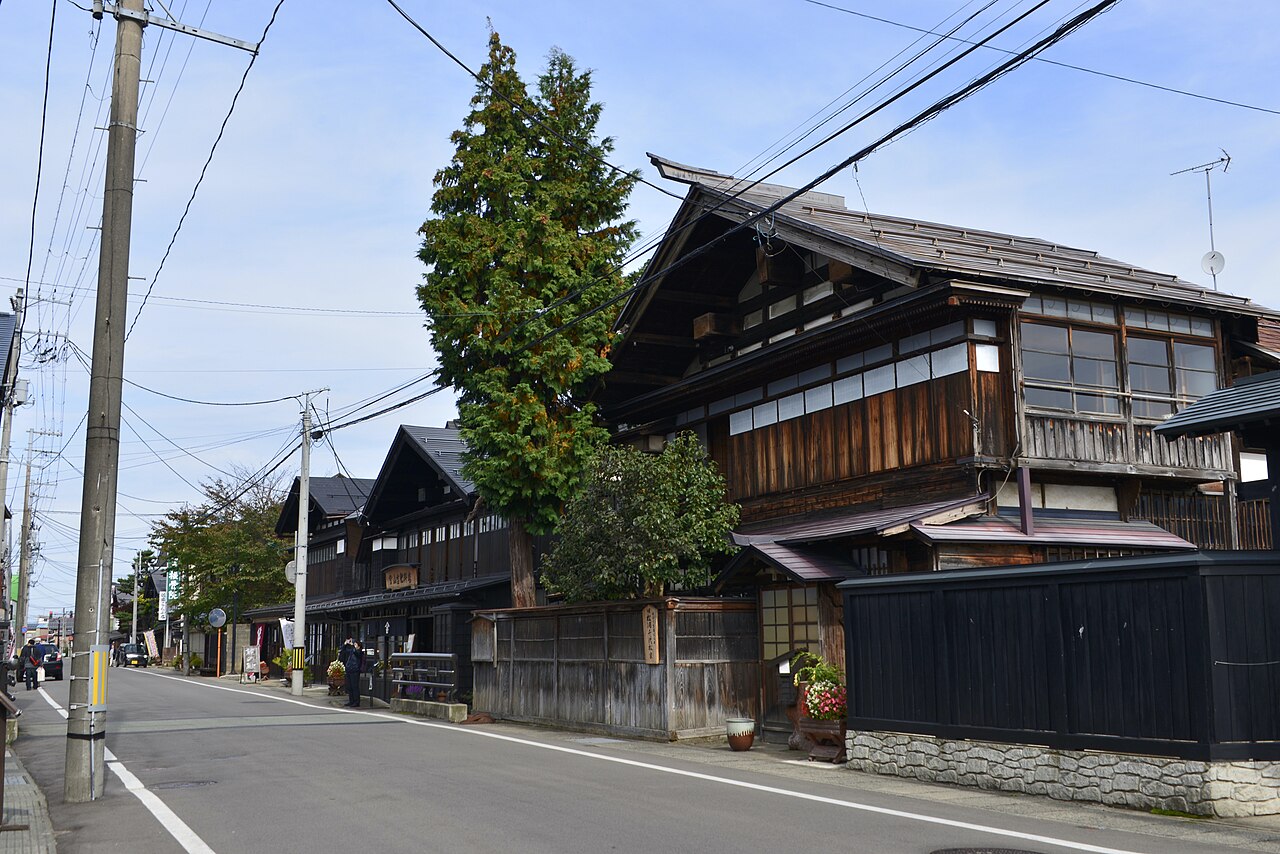
In Masuda's Preservation District for Groups of Traditional Buildings, long, narrow houses hold the relics of a once-booming merchant economy. Inside some of them stand uchigura, interior storehouses that cannot be seen from outside, a feature specific to snow country. Yokote's traditional pickle is iburigakko, daikon radish smoked and then pickled into a fermented food.
Masuda's Long Merchant Houses and Morning Market
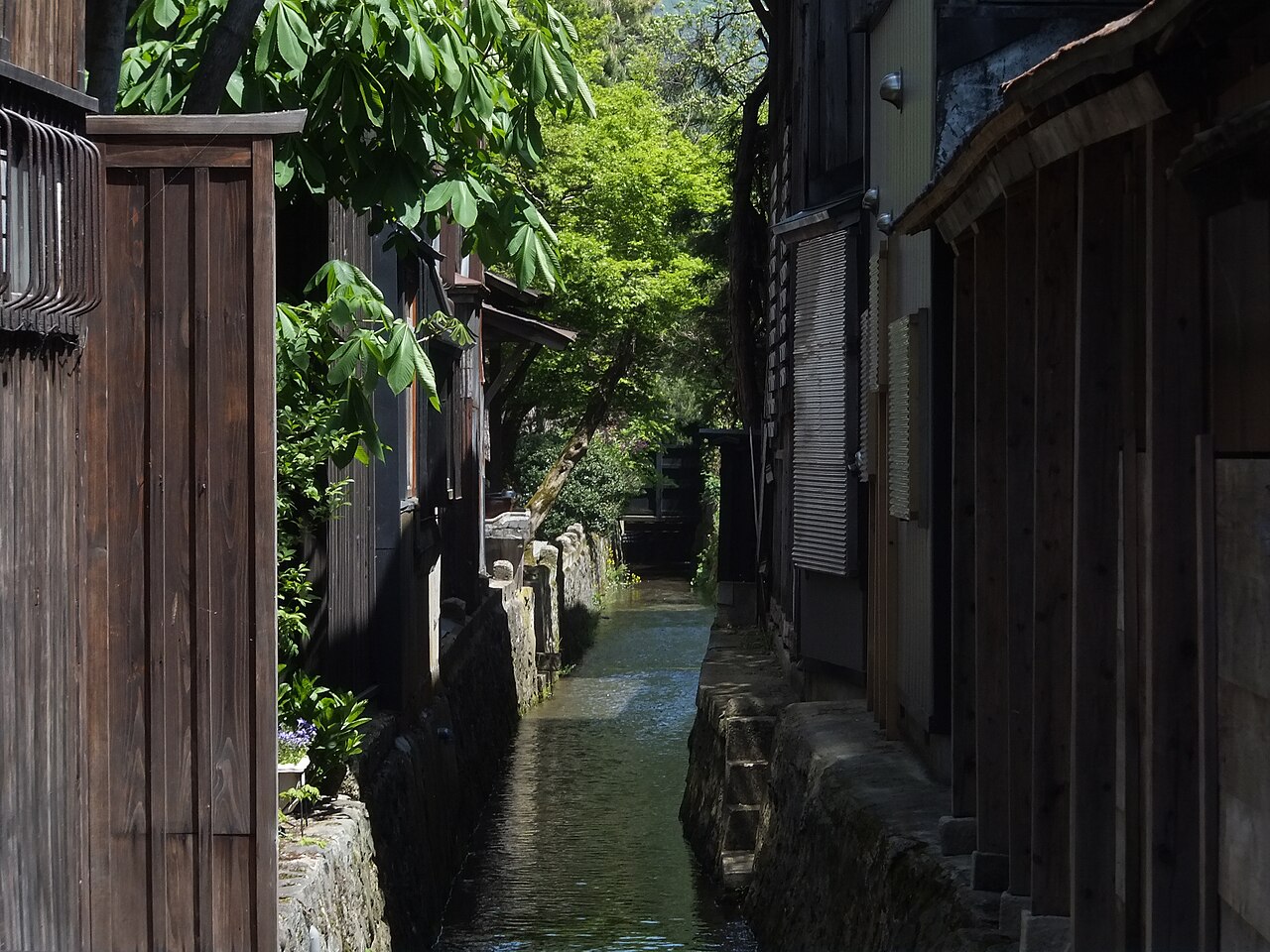
In the Edo period, shop taxes were levied on the width of the storefront, so Masuda's shops went up in tight rows. Merchants lengthened their homes backward from the street, leaving rows of long, straight structures.
Deep main houses stand on these lots, most of them gabled with the entrance on the gable end. Many remain private residences of families whose merchant lineages stretch back for generations, and a large house once sheltered as many as twenty people, family, servants and shop employees together.
Kitchens often held a well or a water pump, so residents drew water without leaving the house. The town's prosperity rested largely on its position at the confluence of the Minase and Naruse Rivers and the junction of the Oyasu and Tegura Highways.
The morning market is said to have started long ago and continues to the present, held each month on any day ending in two, five or nine.
Inside the Uchigura
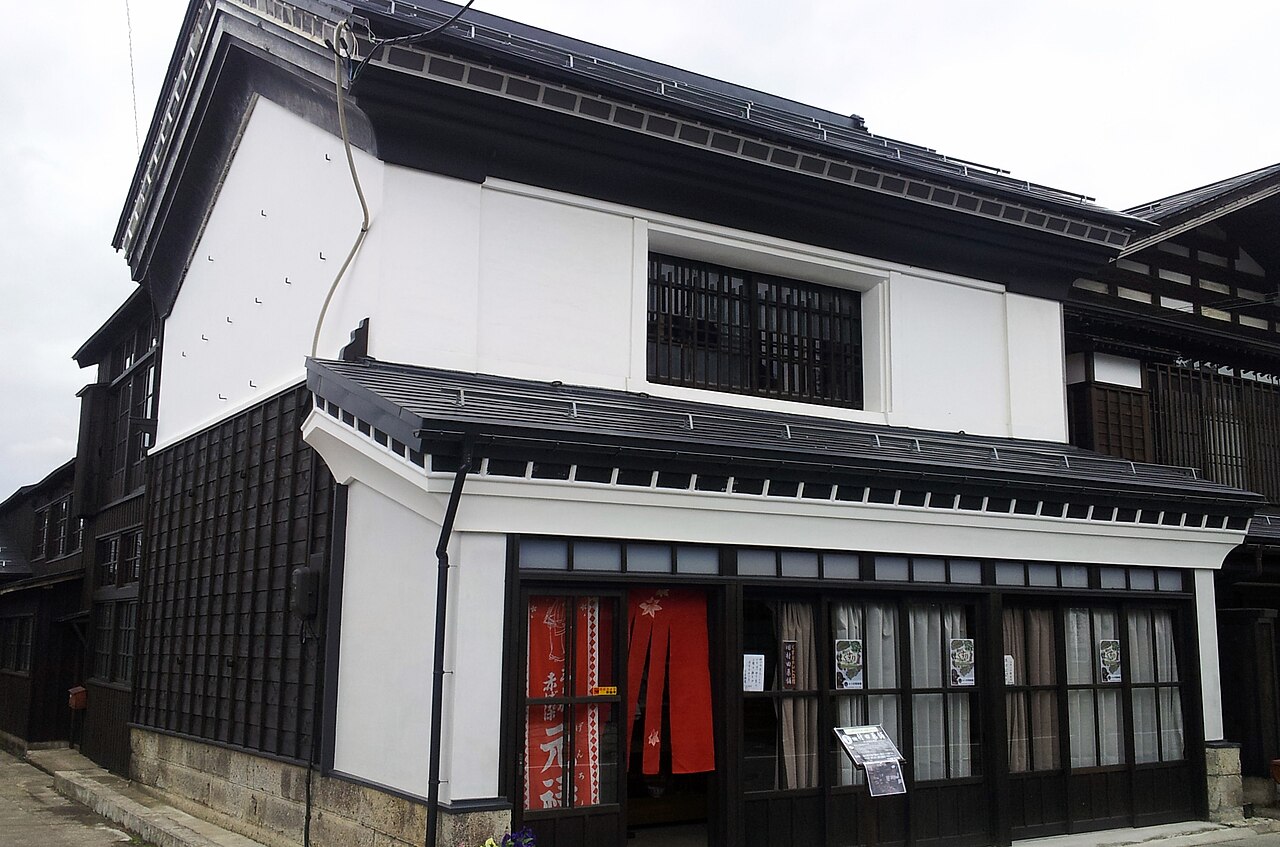
In certain merchant residences the storehouse sits within the living space: an exterior roof, the saya, joins main house and interior storehouse into one large covered area, and rather than holding goods these uchigura serve as everyday living rooms, often lavishly decorated.
As many as thirty residences in the district still contain an uchigura, some more than a hundred years old, clustered within a narrow stretch along the street. Their precursors were fire-resistant exterior storehouses for food, tools and trade goods. Long beams holding the outer roof rest on the sturdy uchigura, a frame that withstands the region's heavy snowfall.
The plank-floored kind, entered after removing footwear, divides into bunko-gura and zashiki-gura; a zashiki-gura has a plank-floored room at the front and a reception room at the back, with a plank-floored room upstairs that holds utensils as a bunko-gura.
On the inner storehouse tour, visitors view one of these storehouses for a fee, and the ticket carries a discount coupon for the shop. At one merchant-house site, an inner storehouse connects to a two-storey reception building, with a two-storey residence, a roofed passage and an outer storehouse continuing behind it.
At another house the traditional layout survives, with a passage running straight from the shop to the back gate, and elsewhere a former rice storehouse serves as a cafe.
Manga Originals at the Masuda Museum
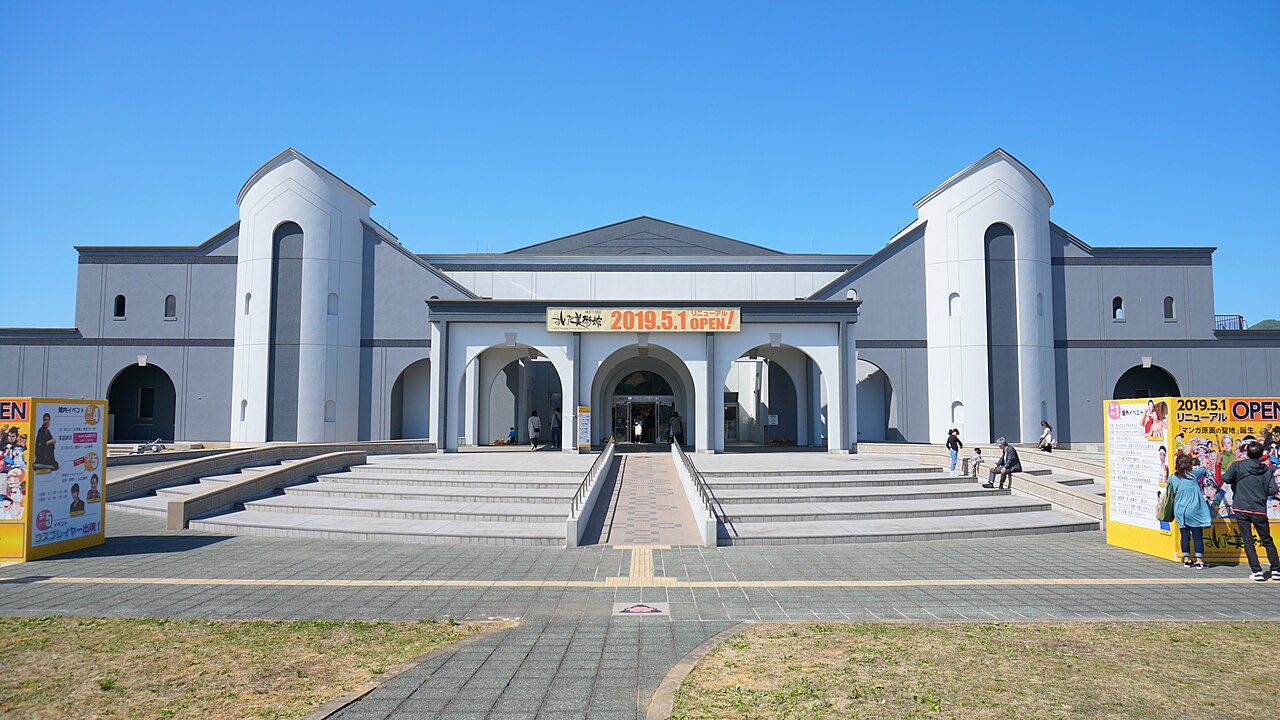
The Yokote Masuda Manga Museum is a gallery of genga, the original hand-drawn pages used in manga publication. Its holdings grew from the work of the Yokote manga artist Takao Yaguchi to pieces by more than a hundred and eighty Japanese and non-Japanese artists.
On the lower floor the Manga Culture Exhibition outlines manga culture in Japan and how manga are created. A display of original artwork winds along the walls of a sloped walkway up to the upper floor, where a rotating selection of genga hangs.
In the Permanent Exhibit, visitors see the pencil marks and corrective ink that record the changes artists made before the artwork was submitted for publication.
Smoked Pickles, Koji and Jumonji Noodles
Iburigakko has a smoky aroma and a crisp texture. Producers smoke home-grown daikon in dedicated huts, and from November to December the smoke from these huts can be seen in many places in the Sannai area. It can carry the name only if it meets the GI standards, including forty days or more in a rice-bran bed.
Kōji is made by introducing a microorganism called Aspergillus oryzae to steamed rice, soybeans or other grains. Daikon, eggplant or cucumber can be mixed with kōji and pickled, and kōji combined with soybeans becomes miso.
Residents of Yokote use as much as two to three times the usual amount of kōji in their miso, a process specific to the city. Jumonji-style chūka soba is a Japanese-style soup with a light soy sauce flavour, its stock made from niboshi, dried small fish, and katsuobushi, dried bonito.
Its noodles are thin and curly; once eaten as a snack, it is served by just a handful of shops in the city, and the taste differs from shop to shop.
Yokote's Snow Domes, Bonden and Castle Deck
At the Kamakura-kan, the kamakura room stays at about minus ten degrees at all times. Snow structures called kamakura have been built in this part of Akita Prefecture for at least four hundred years.
Children of Yokote's merchant families built small snow domes by the wells and rivers of the city, where they presented offerings and prayed to the kami of water. The large snow domes for the Winter Festival are the work of specialized artisans.
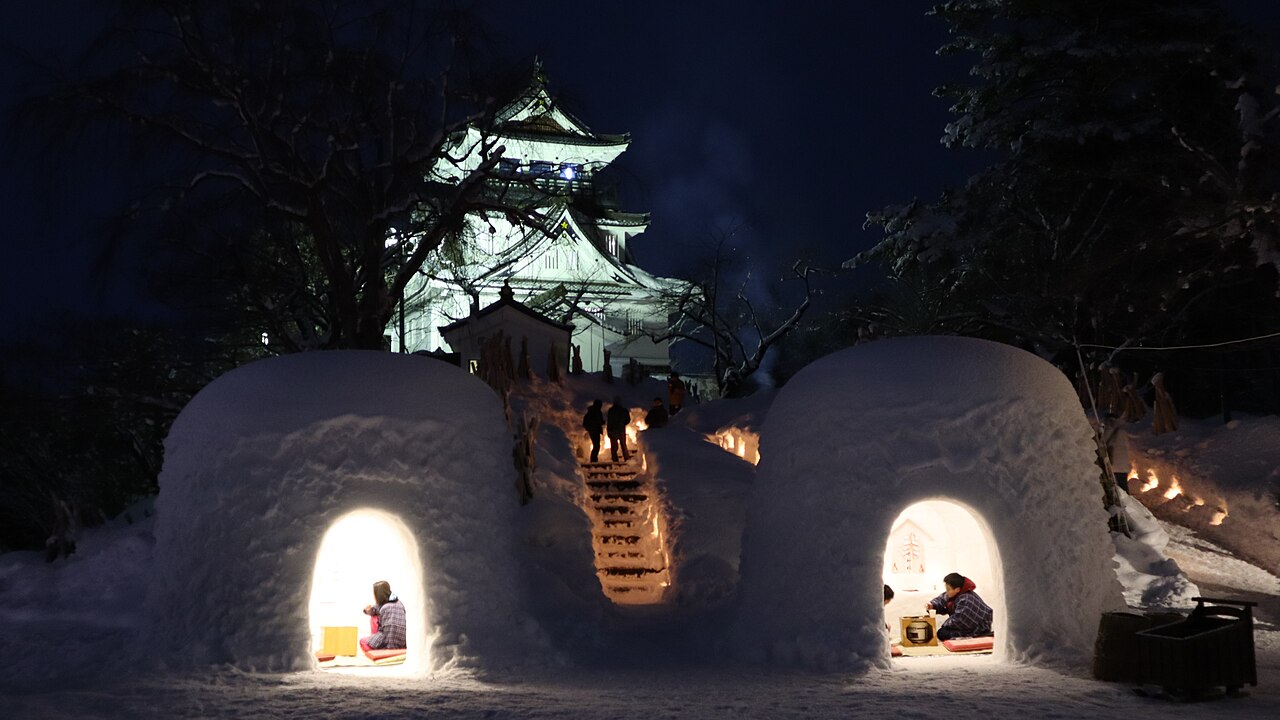
Those artisans gather about twenty metric tons of snow to make structures that each stand three metres tall with walls about seventy centimetres thick. Inside a kamakura stand an altar for offerings to the water god, woven mats, cushions and a brazier.
The bonden procession travels three and a half kilometres southeast from Yokote City Hall to Asahiokayama-jinja Shrine; a bonden can weigh as much as thirty kilograms, and most are battered by the time they arrive. At the main hall, each group offers the cloth hanging from its bonden as a prayer for a year of well-being and prosperity.
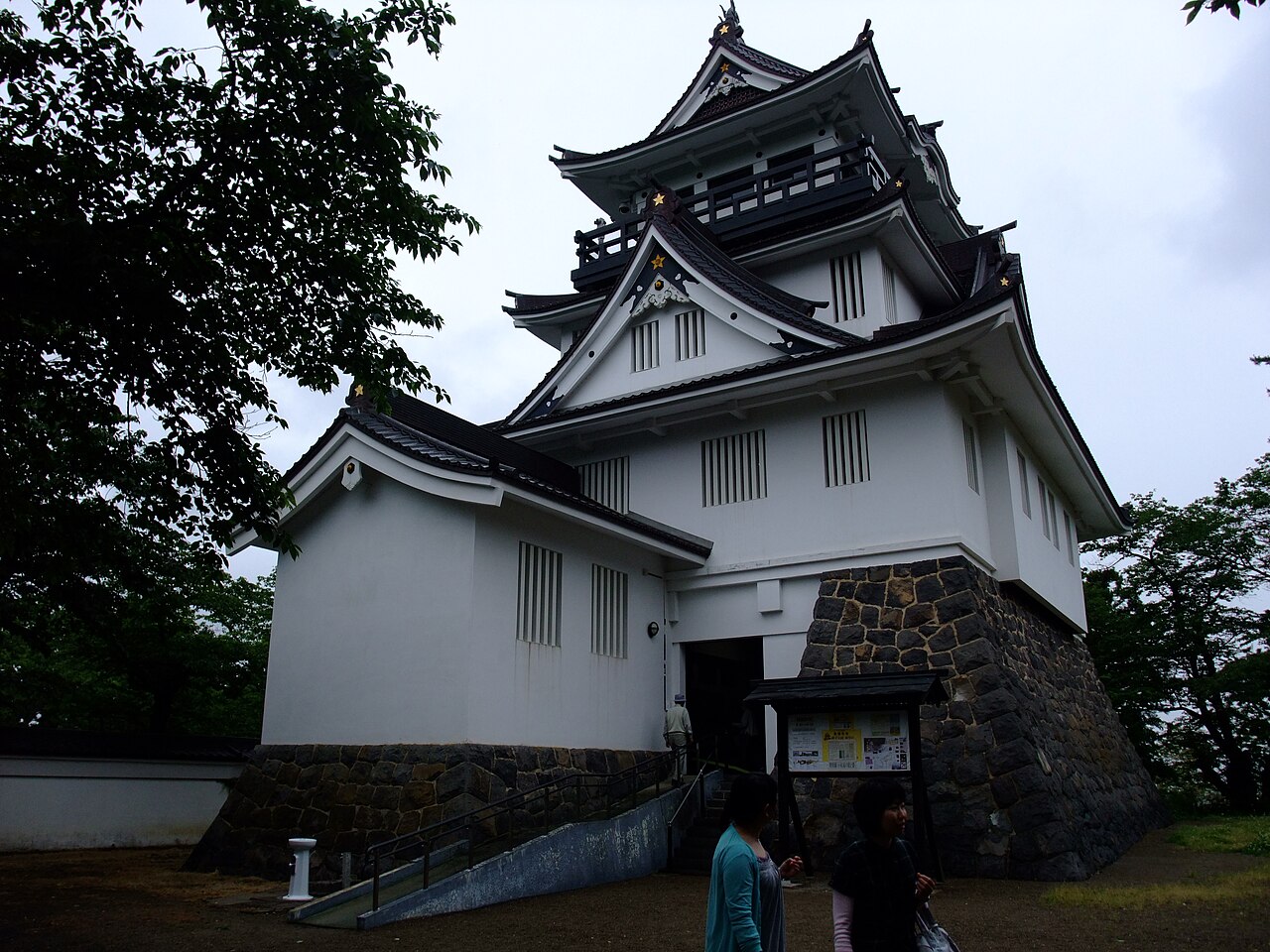
The Yokote Park Observation Deck resembles a castle keep but is a modern structure on the site of the ninomaru, the secondary bailey of the hilltop castle. Yokote Castle was fortified with earthen embankments, and to keep them from collapsing its defenders planted nira, a vegetable similar to chives.
Getting to Yokote and Masuda
New to rural buses and one-man trains? See how to ride them, step by step.
| Leg | How | Time |
|---|---|---|
| Tokyo to Yokote | Akita Shinkansen via Omagari, then JR Ou Line | About 3 hours 40 minutes (shortest, including transfers) |
| Sendai to Yokote | Akita Shinkansen via Omagari, then JR Ou Line | About 2 hours 10 minutes (shortest, including transfers) |
| Akita to Yokote | JR Ou Line | About 1 hour 20 minutes (shortest, including transfers) |
| Tokyo to Yokote | Car on expressways | About 5 hours 30 minutes |
| Jumonji Station bus stop to Masuda tourist and local products center | Bus | About 5 to 10 minutes |
| Jumonji Station to Masuda tourist and local products center | Car or taxi | About 10 minutes |
| Yokote Station East Exit to Masuda tourist and local products center | Bus | About 25 to 30 minutes |
| Yokote Station to Yokote Castle | Taxi | Fare estimate 1,090 yen |
The table covers rail from Tokyo, Sendai and Akita, the drive from Tokyo, and the last leg from Jumonji Station or Yokote Station by bus, car or taxi.
To stay overnight, browse places to stay in Yokote.
Hours and Fees
| What | Hours or fare | Note |
|---|---|---|
| Masuda tourist and local products center | 9:00-17:00 | Closed December 29 to January 3 |
| Inner storehouse tour | 200 yen | People under 20 free; the ticket includes a 200 yen discount coupon for the shop |
| Shop of the inner storehouse tour | 10:00-16:00 | Tasting coins sold in sets |
| Yokote Masuda Manga Museum | 10:00-18:00, last admission 17:30 | Closed on the 3rd Tuesday of the month (the next day if it is a public holiday) |
| Yokote Park Observation Deck | 9:00-16:30 | April 1 to November 30 and during the February Kamakura festival period |
| Observation deck admission | 4-museum shared ticket 100 yen | Castle seal sold at the reception |
| Kamakura-kan | 9:00-17:00 | Closed December 29 to January 3; free for junior high school students and younger |
| Yokote City Tourism Association shop | 9:00-17:00 | Handles iburigakko |
| Rental bicycle (ordinary) | 500 yen for up to 3 hours, tax included | |
| Yokote Bonden | Every year on February 16 and 17 |
Fees and hours were checked against official sources between 12 October 2026 and 8 November 2026.
The Masuda center and the Kamakura-kan are closed from late December to early January, and the inner storehouse tour ticket carries a discount coupon for the shop.
For another stop in the prefecture, see Kakunodate's samurai street, also in Akita.
Thinking of staying overnight?
Compare places to stay near Yokote, Akita, Japan →
Disclosure: This post may contain affiliate links. If you book through them, we may earn a commission at no extra cost to you.