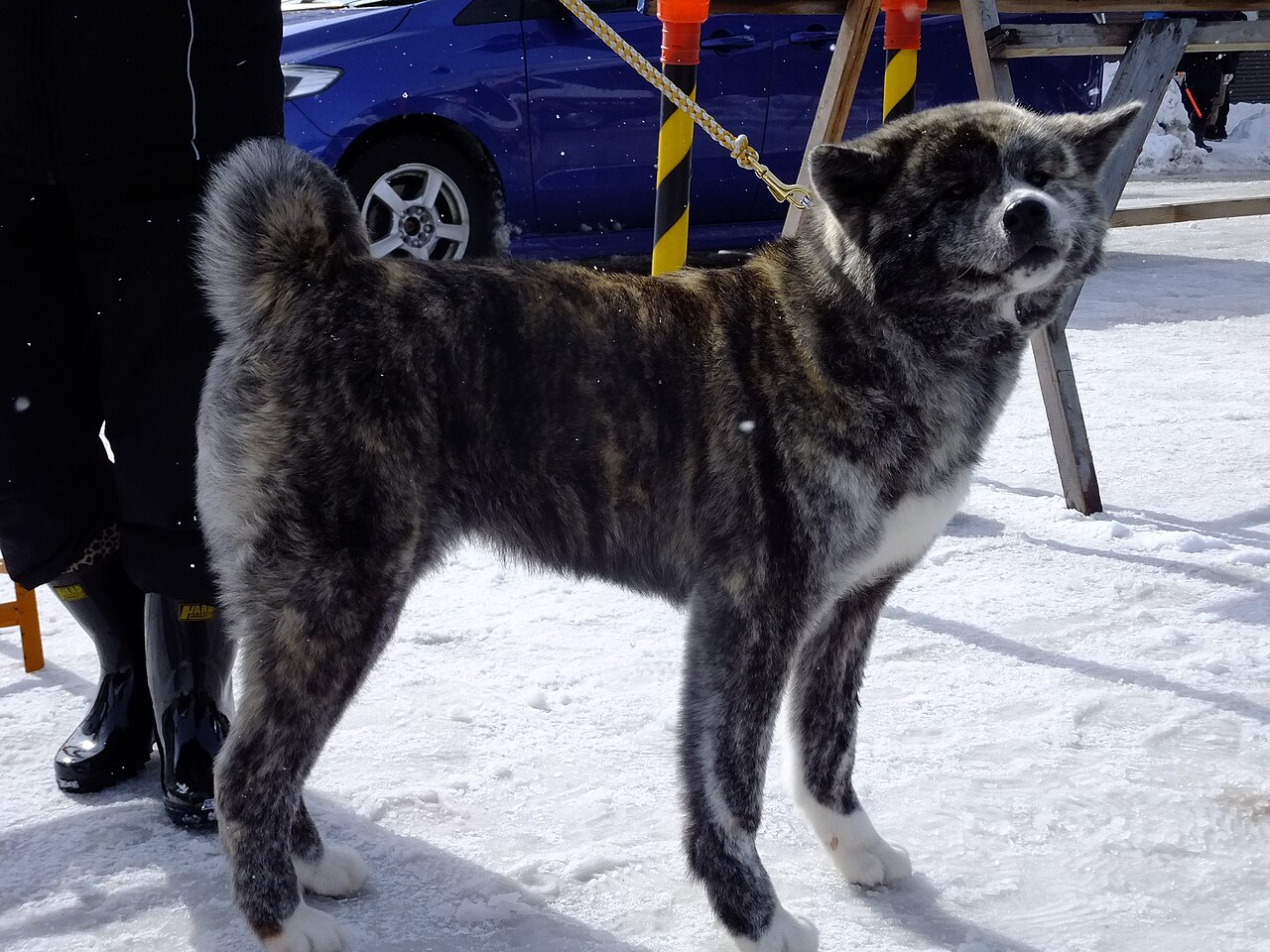
The reason to come to Odate is the Akita dog. A display room at Akita Inu no Sato shows one Akita dog, and inside the Akita Inu Kaikan, dogs belonging to Hozonkai members greet visitors. Morning and evening, Akita dogs can be seen walking in the city, and some onsen facilities keep a dog as their signboard dog. A stroll around the city also turns up Akita dog monuments and designs.
Meeting Akita Dogs in Odate
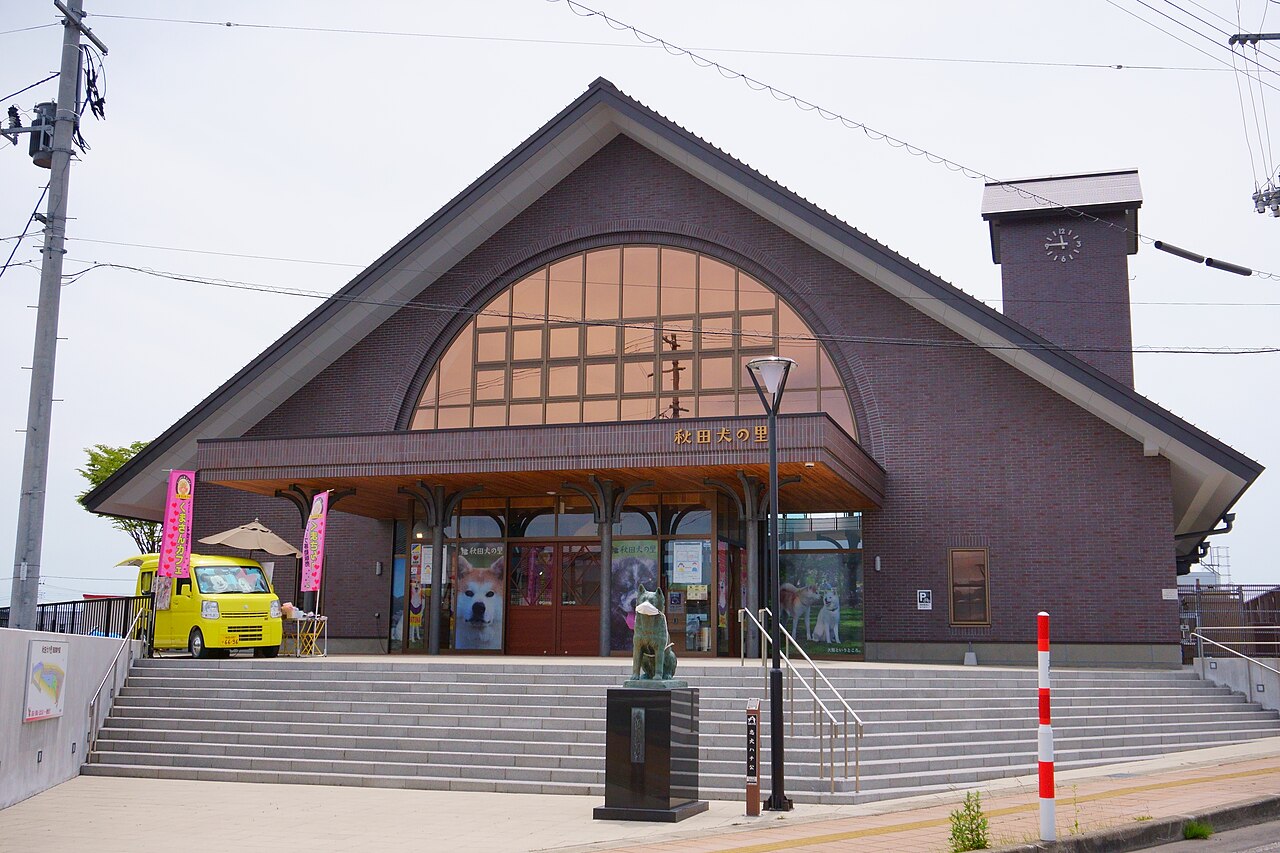
At Akita Inu no Sato the Akita dog is on view through glass, with no petting or touching offered there or at the Akita Inu Kaikan, so the visit is about watching. Sora, the signboard dog of Akita Inu no Sato, greets visitors, and anyone who meets Sora is asked to call out to the dog by name.
For a dog met on its walk in the city, visitors who want to photograph or touch it are asked to speak to the owner beforehand. At Odate-Noshiro Airport, on days of each month containing an eight, an Akita dog greets arrivals in front of the arrival entrance.
The museum room of the Akita Inu Kaikan exhibits the history, ecology and biographies of the breed, from an ancient hunting panorama to a room of an old house in the Odate area, and photographs displayed at the Kaikan show that present-day Akita dogs look quite different in form from those of the early Showa era.
Hachiko Statues and the Old Dog Shrine
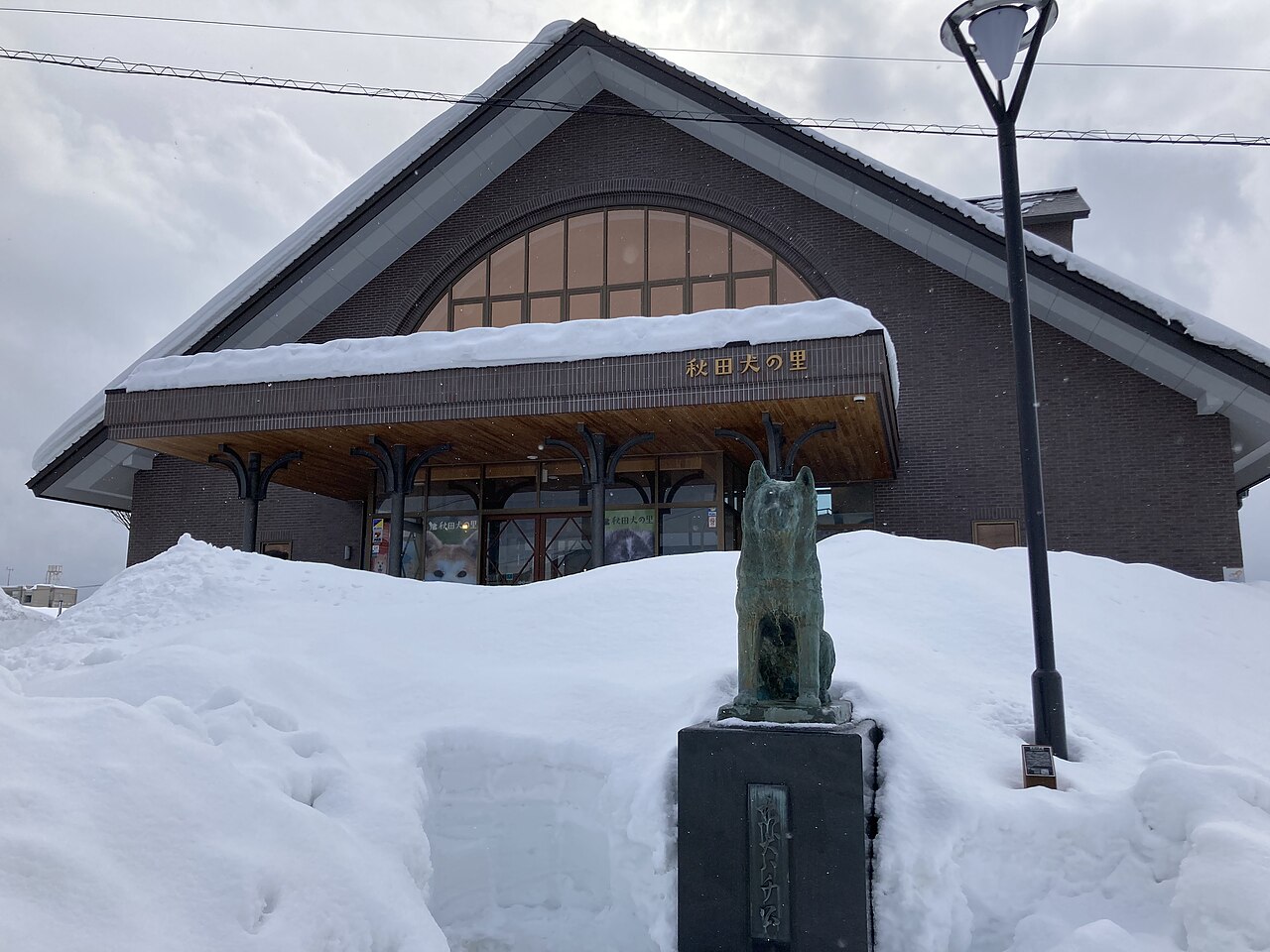
The Odate Hachiko statue, in front of the main staircase of Akita Inu no Sato, has both ears standing upright and a muscular build, where the Shibuya statue shows Hachiko in his later years with a drooping left ear. Another Hachiko statue stands in front of the Akita Inu Kaikan, on a pedestal that carried the city's Hachiko statue before the war.
On a mountainside in Odate City, the Old Dog Shrine enshrines the loyal dog Shiro and preserves his story. In the legend, Shiro ran home and barked restlessly at the wife of Teiroku, who did not understand what it meant, and from that night on his sorrowful howl echoed from the mountain peak over the castle town of Sannohe night after night. The story is held to be true, and the hunting licence that appears in it is still kept.
Odate Magewappa and Its Cedar Steamer
Odate Magewappa is a craft of natural Akita cedar, fine-grained and elastic, peeled into thin sheets, softened in hot water, bent and stitched with wild cherry bark. Alongside the conventional pieces come flower vases and interior goods that suit modern living.
A local sake manju comes in a magewappa steamer meant to be warmed with the manju before eating. The bun gives off a faint scent of sake and wood, and the steamer can be used as it is, for steaming or for soba.
Kiritanpo, Hinai-jidori and Sweets
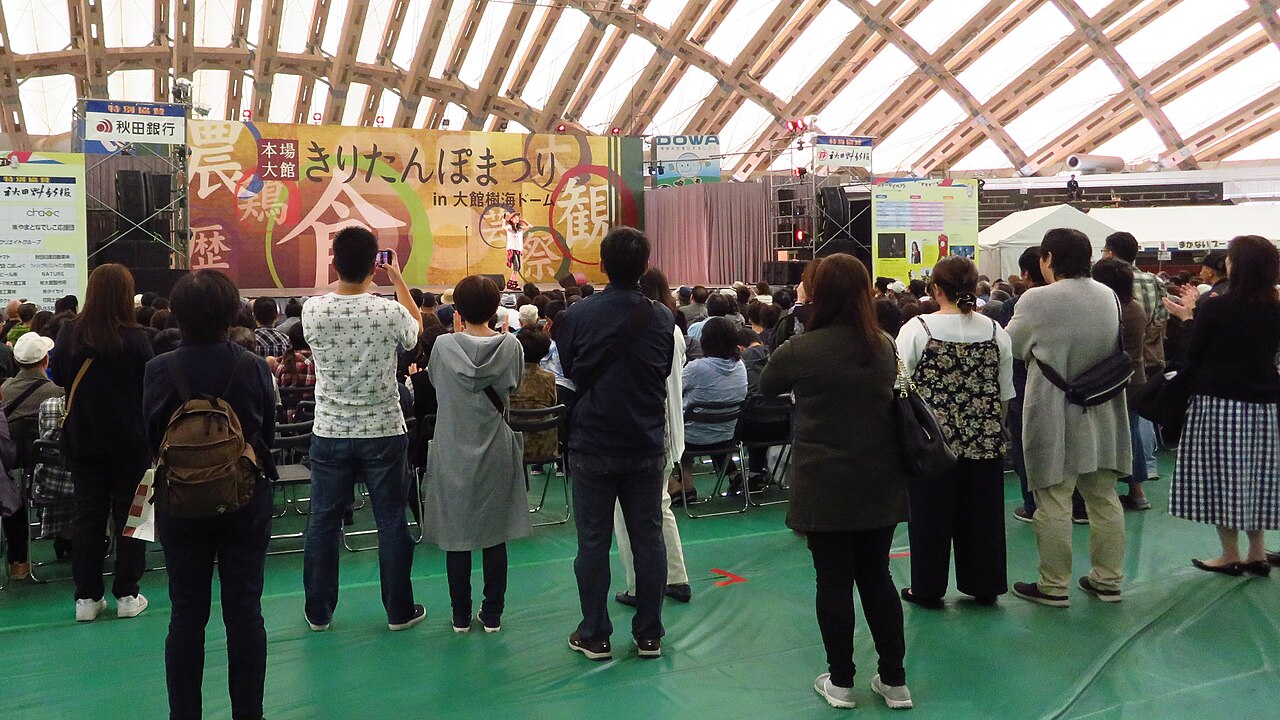
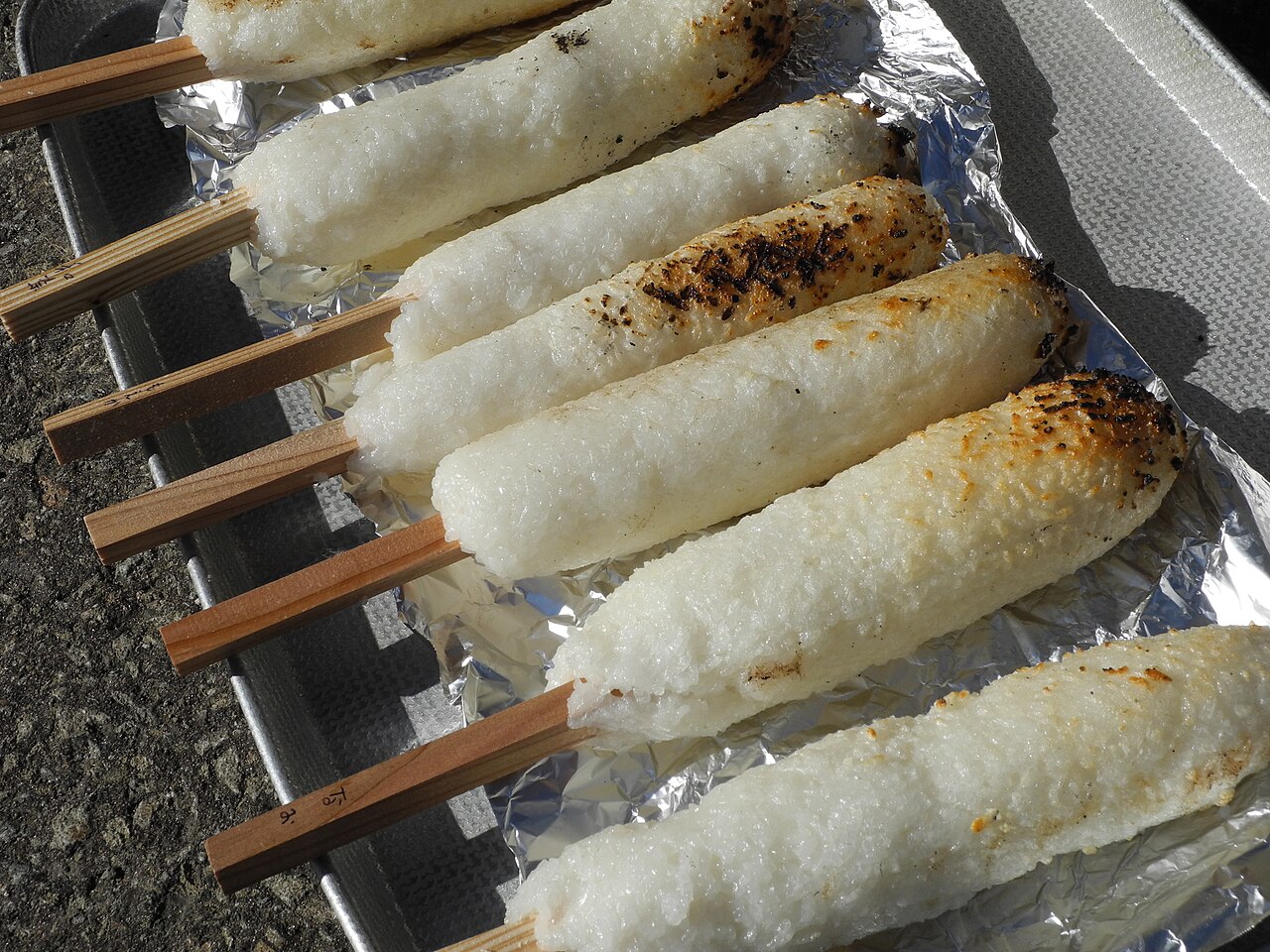
When autumn deepens and the new rice comes onto the market, tanpo gatherings are held often all over the city, people eat new-rice kiritanpo with fatty Hinai-jidori chicken, and the whole town becomes all kiritanpo. In Odate it is an ordinary home dish, handed down in each household from mother to child as the taste of home cooking.
At home it takes a pestle, a mortar and Akita cedar skewers: rice cooked slightly firm is pounded until sticky, put on a skewer, stretched out by hand and grilled over charcoal until golden brown. Kiritanpo is said to have started with charcoal burners and Akita cedar fellers who kneaded leftover rice in mountain huts and put it in chicken hot-pot or spread miso on it.
Hinai chicken has long been raised in northern Akita and was once paid as annual tribute in the Edo period; the birds roam wide pastures of clover, and the meat is firm, low in fat and mild in taste. Tonburi, the caviar of the fields, is made from the seeds of an amaranth-family plant with a technique handed down since the Edo period.
Sweets carry the same local flavours: an edamame monaka developed by volunteer confectioners in Odate, whose light shell and rich, mellow edamame bean paste melt together softly on the tongue, and sumashi-mochi with its light, refreshing bite.
Roses, Cherry Blossoms and the Torigata Garden
The Ishida Rose Garden is planted as a sample garden, basically one plant per variety, with about five hundred kinds of roses, and visitors can have a meal and rest at a cafe in a converted residence while looking at the garden.
Spring brings cherry blossoms. A weeping cherry at a temple in the city is put at about four hundred years old, planted as a young tree from Kyoto, with a second large weeping cherry said to have been propagated from it. Many cherry trees are planted on the riverbed of a river through the urban area, and at a nature park in the mountains pale pink blossoms are set against the young leaves of the mountains. A park next to the City Hall is the venue of the city's cherry blossom festival, with lighting up during the festival period.
The garden of the old Torigata residence is laid out around a pond, with Kyoto-style techniques in its stonework and an inner tea garden with a thatched-roof tea room. The garden changes with every season: azaleas in profusion in spring, a powerful cicada chorus in summer, blazing autumn leaves, and a silver-white world in winter.
To stay overnight in the area, browse places to stay in Odate.
Getting to Odate
New to rural buses and one-man trains? See how to ride them, step by step.
| Leg | How | Time |
|---|---|---|
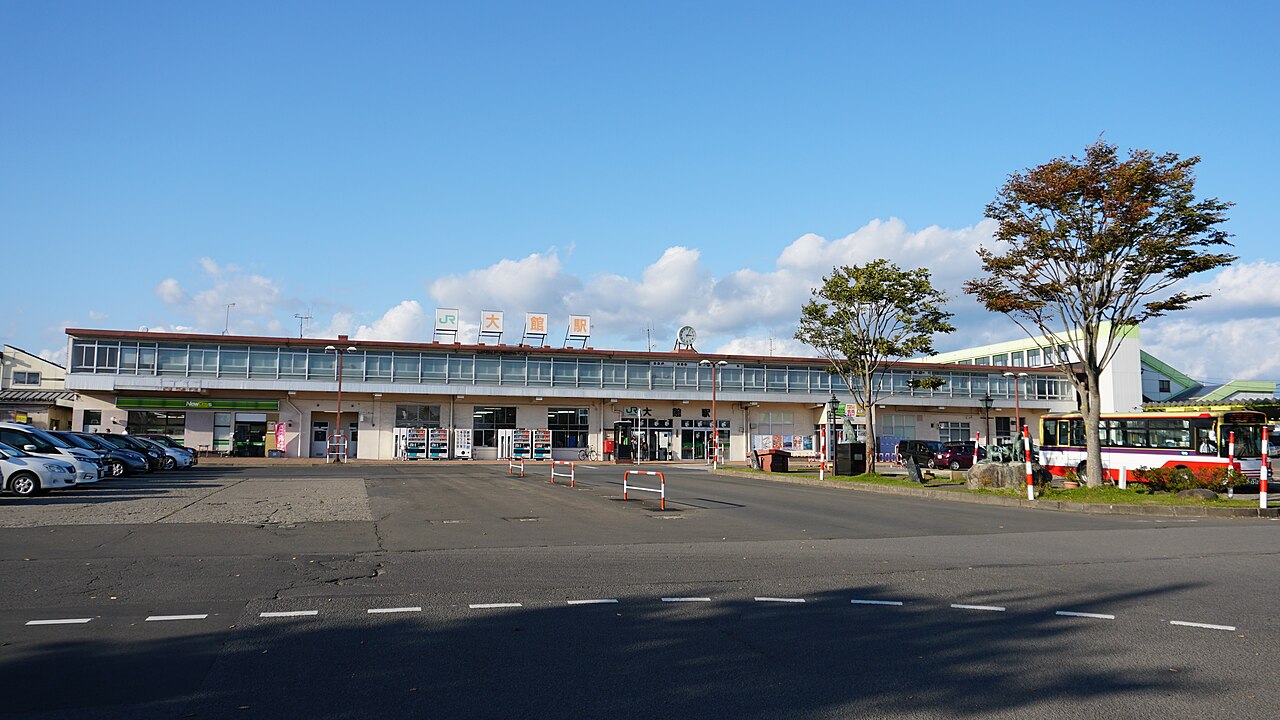
| From the Akita City direction to Odate Station | JR limited express | About ninety minutes |
| From the Aomori City direction to Odate Station | JR limited express | About seventy minutes |
| From the Morioka City direction to Odate | Expressway bus | About one hundred forty minutes |
| From Haneda Airport to Odate-Noshiro Airport | Plane | About one hour |
Hours and Fees
| Place | What | Hours |
|---|---|---|
| Akita Inu no Sato | Building | Nine in the morning to five in the afternoon; closed on December thirty-first and January first |
| Akita Inu no Sato dog display room | Hours | Half past nine in the morning to a quarter to five in the afternoon, with rest times for the dogs |
| Akita Inu no Sato dog display room | Closed day | Monday; the following weekday when Monday is a public holiday |
| Akita Inu Kaikan museum room | Hours | Nine in the morning to four in the afternoon every day; closed on the afternoon of August thirteenth and from December thirtieth to January fifth |
Fees and hours were checked against official sources on 11 November 2026.
Thinking of staying overnight?
Compare places to stay near Odate, Akita, Japan →
Disclosure: This post may contain affiliate links. If you book through them, we may earn a commission at no extra cost to you.