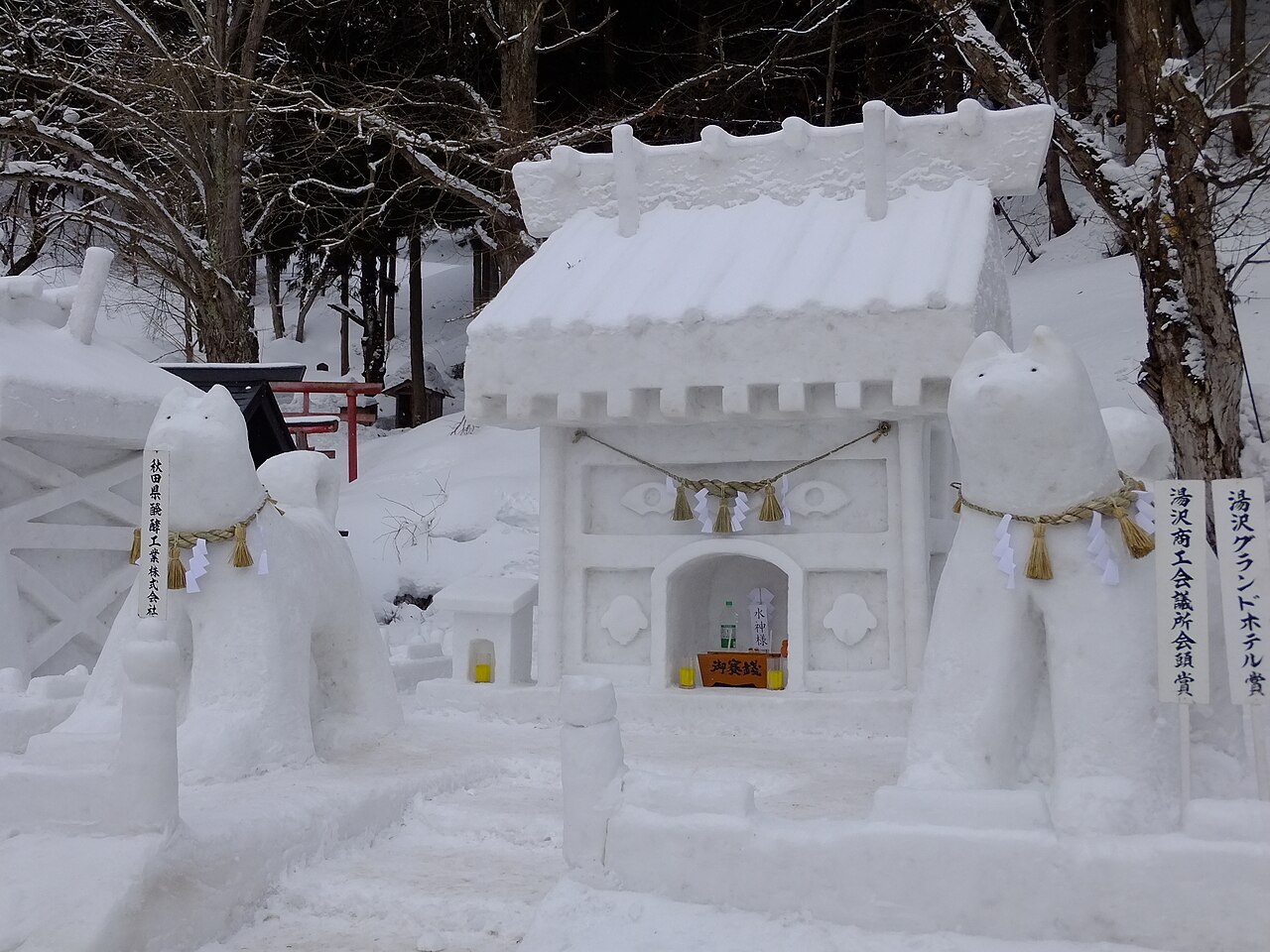
Yuzawa is a castle town in Akita with its old customs still in plain view. A festival of rice-flour dogs is said to go back to a lord who had them set at doorways and windows, and lacquerware with about eight hundred years behind it is still made from natural materials of the mountains. From the lookout on the castle hill you see Mt Chokai and the whole of Yuzawa, and during the lantern festival dozens of picture lanterns painted with ukiyo-e beauties hang along the streets.
Inaniwa Noodles and Kawatsura Lacquer
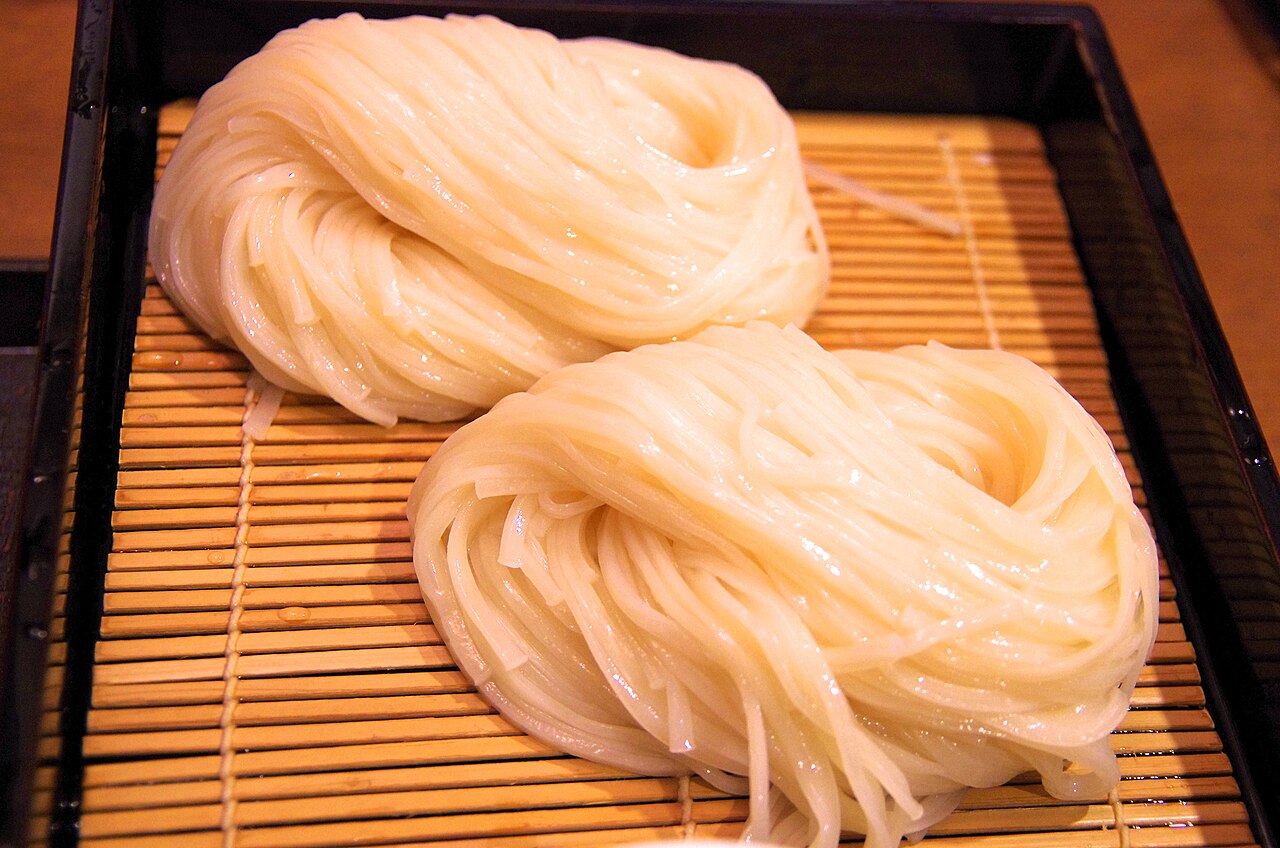
Inaniwa udon is the first thing to order in Yuzawa: noodles made with care from good-quality wheat flour, salt and clear water, with a rich flavour and a chewy bite. At the restaurant in the roadside rest area at Ogachi the noodles come as yamakake nameko Inaniwa udon or Inaniwa salad udon, with tempura soba on the same menu.
Kawatsura lacquerware is said to have begun when Dokku, younger brother of the Inaniwa castle lord Onodera Shigemichi, had his retainers coat sword scabbards, bows and armour with lacquer, and about eight hundred years on the pieces, many made from natural materials of the mountains, carry fine, flowing chinkin and makie work. The Kawatsura Lacquerware Traditional Crafts Hall shows documents, materials and the actual tools behind that history.
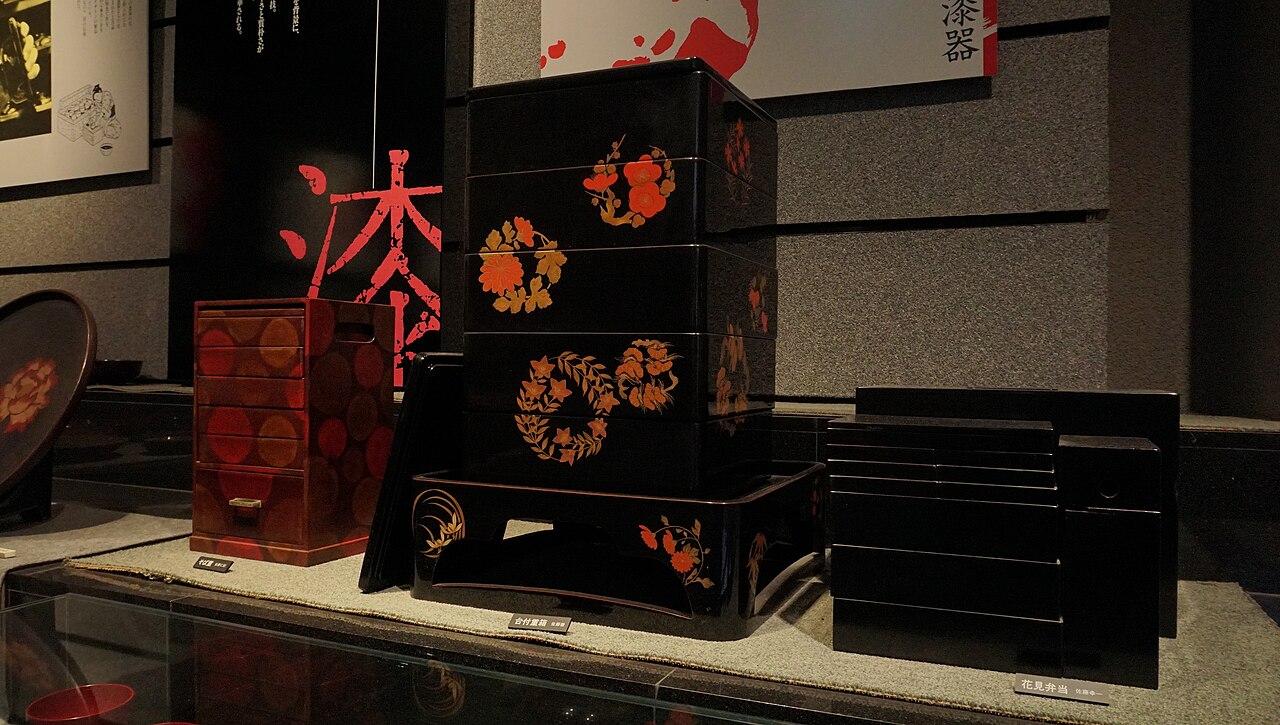
The two techniques are easiest to tell apart with their steps side by side: chinkin is cut with a hook-shaped chinkin kanna, lacquer rubbed into the lines and gold powder or leaf pressed in, while makie is brushed on over an underdrawing and dusted with gold or colour powder. Families with children and adults can learn about the lacquerware together.
A Castle Hill Above Chuo Park
From the lookout above Chuo Park you see Mt Chokai in the distance and the whole of Yuzawa below, on the ground from which a mountain castle that lasted about three hundred and forty years, from the Kamakura period into early Edo, watched for enemies and for signal fires on the Dewa Hills opposite. The castle is said to be the Onodera clan's, and the path up to the lookout climbs an easy slope kept in good walking condition.
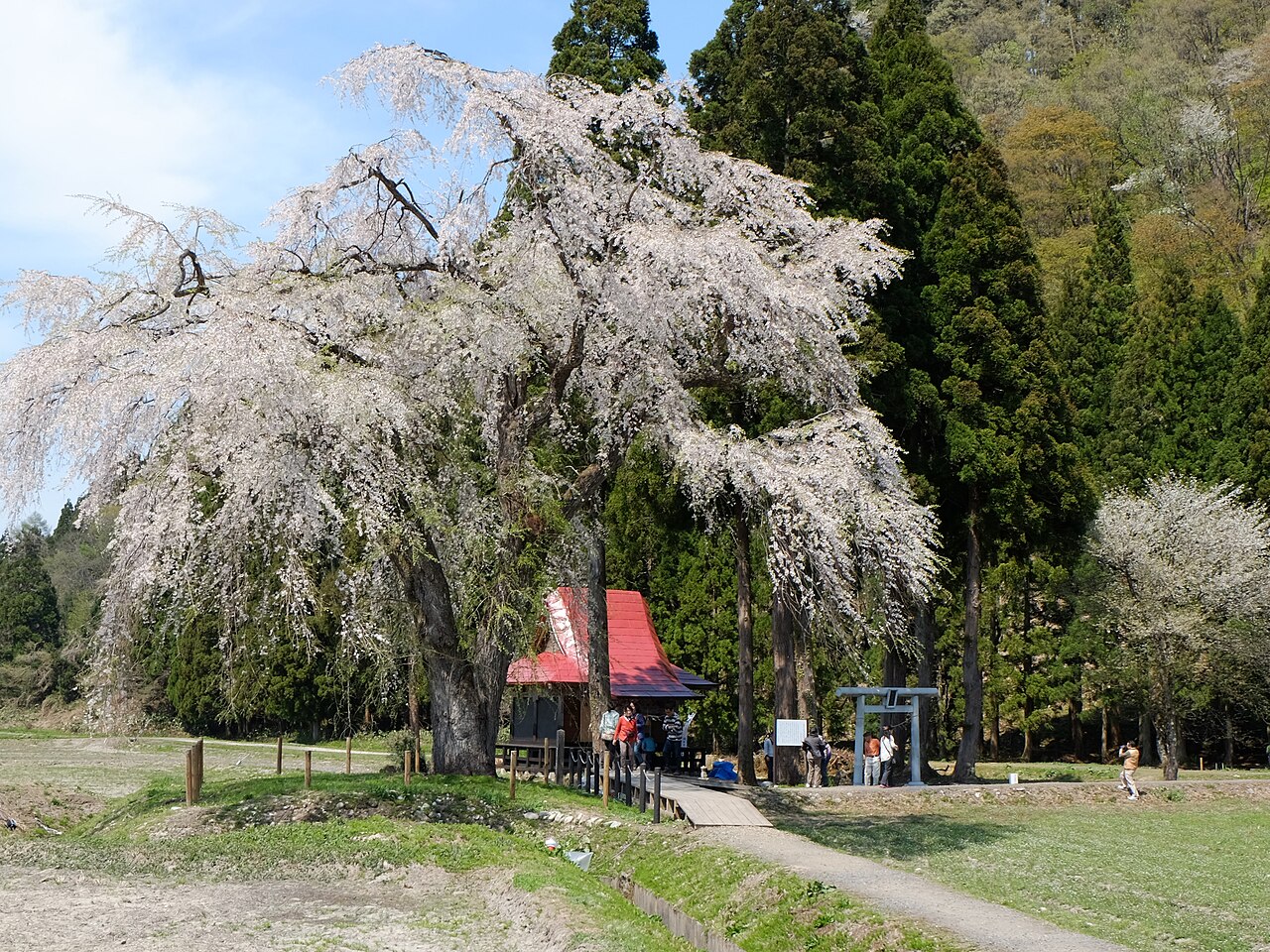
Beneath the male ginkgo at the shrine above Chuo Park, a golden carpet of leaves appears for a very short period, once two or three days of fine weather follow the leaves coming down, and looking up the slope then shows a road turned gold. It is a matter of timing, so treat it as a bonus.
Chikaramizu spring water holds at twelve degrees all year, and the Kenpo-nashi tree produces sweet, edible fruit in autumn. If the hill is the first stop, begin at the lookout: with the whole town spread below, the order of the streets makes sense afterwards.
Rice-Flour Dogs, Picture Lanterns and Maiden Poems
On a shopping street commonly called Inu-kko Street you walk between dog-shaped topiary drawn from the Inu-kko Festival, said to have begun when the lord of Yuzawa, after putting down a bandit band, had rice-flour dogs, cranes and turtles set at doorways and windows on the evening of the old Little New Year. The custom is said to have run for about four hundred years, and the festival today brings winter fireworks, a fair of local products, Yuzawa Minami-ke Satake taiko, dondo-yaki and a prayer ceremony for pet dogs.
During the Tanabata Picture Lantern Festival, houses tie paper strips in five colours and streamers to green bamboo by their doorways, and dozens of picture lanterns painted with ukiyo-e beauties hang along four shopping streets at the heart of the town. To be there at dusk, when every lantern is lit at once and the town turns into a night without darkness, look at places to stay in Yuzawa and stay the night.
The Komachi Festival, long held at the Shakuyaku-zuka to remember Ono no Komachi, comes round when the peonies are fragrant; after a Shinto prayer and a shrine maiden's dance, seven Komachi maidens chosen from the city recite her waka as an offering at Komachi-do. At the Atago Shrine festival a daimyo procession is offered every year, and what files past carries the standing of the Satake-Minami clan of Akita domain.
Breweries, Streets and Straw Guardians
On one street you walk under triangular roofs and past half-timbered walls in the manner of old German houses, a product of Yuzawa's exchange with Siegburg in Germany. Ryozeki Shuzo, founded in eighteen seventy-four, brews behind a main building put up in nineteen twenty-three, and its shop corner pours tastings and carries a commemorative sake for the brewery visit.
Ishimago Honten still brews by a hand-made method close to the one used at its founding in eighteen fifty-five, with local ingredients, under a name that joins the Ishi of Ishikawa to the Mago of Magozaemon from the first owner's line. Momotose, a shop and cafe, lets you handle Japanese-made wooden furniture, tableware and everyday goods. For a visit built around sake, put Ryozeki's tasting corner and Ishimago's hand-made brewing ahead of the hill.
In the Iwasaki district three Kashima-sama stand at the approaches to the village, four-metre-tall straw figures that are said to embody a war god and to keep evil spirits and epidemics from coming in. They belong to the villages rather than the castle town, and they are the reason to go beyond it.
Ono no Komachi and the Shrines of the Onodera Lords
At Komachi-do you stand before a large sacred tree holding a statue of Ono no Komachi as a deity, in a hall modelled on the Phoenix Hall in Kyoto, in the Ono area where she is said to have been born in eight hundred and nine. If her story is the way into the town, begin with that statue.
The legend sends her to the capital at thirteen and to court at sixteen, brings her home at about thirty-six and leaves her alone at Iwaya-do, composing poems, burning incense and carving her own likeness until she dies at ninety-two, the life the statue in the tree stands for. At Ogachi the roadside rest area takes the shape of the hat she is said to have worn on the way home, and inside a diorama lays out the places tied to her.
Imaki Shrine is said to have been founded around fourteen twenty-four by the Inaniwa castle lord Onodera Yataro Michihiro, and the wooden Fudo Myoo you face there as its principal image is said to be the work of Unkei. At Kumano Shrine in Ozawa, three hanging Buddhist plaques are designated tangible cultural properties of Akita Prefecture.
Getting to Yuzawa
| Leg | How | Time and estimate |
|---|---|---|
| Tokyo to Yuzawa | Akita Shinkansen, then the Ou Main Line | Fastest 4 hours |
| Tokyo to Yuzawa | Yamagata Shinkansen, then the Ou Main Line | Fastest 4 hours 30 minutes |
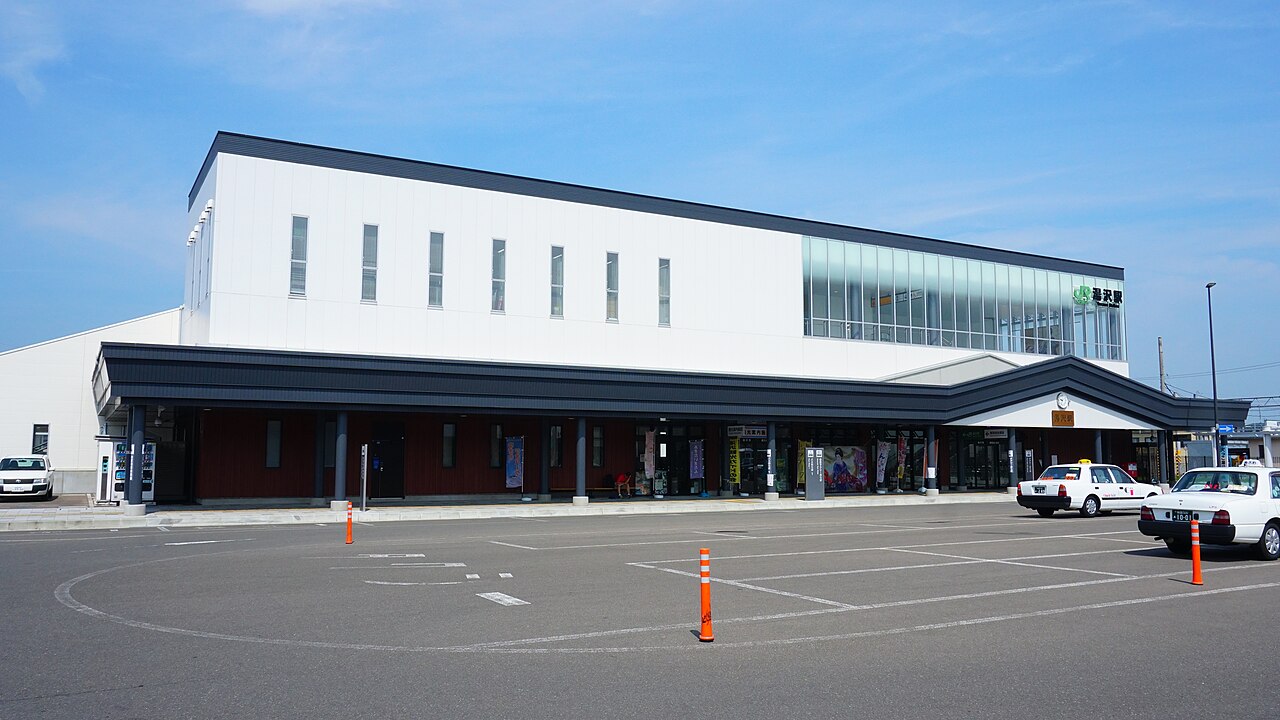
| Yuzawa Station to Chuo Park | On foot | 9 minutes |
| Yuzawa Station to Ryozeki Shuzo and Kimura Shuzo | On foot | About 20 minutes each |
| Inside Yuzawa Station | Tourist information facility | 8:00-19:00 |
| Yuzawa Station to Koyasu Onsen | Route bus | 1,140 yen |
| Yuzawa Station to Doro Onsen | Komachi Shuttle shared taxi | 2,000 yen per person; 1,000 yen per trip on some sections |
| Yuzawa IC to the Kawatsura Lacquerware Traditional Crafts Hall | Car via National Route 398 | About 15 minutes |
New to rural buses and one-man trains? See how to ride them, step by step.
Hours and Fees
| Place | What | Hours or fee |
|---|---|---|
| Kawatsura Lacquerware Traditional Crafts Hall | Hours and closing days | 9:00-17:00; closed from December 31 to January 5 |
| Chinkin and makie experience | Reception | 10:00-15:30 |
| Inaniwa Castle | Hours and closing day | 9:30-16:30; closed every Tuesday (the next weekday if Tuesday is a national holiday) |
| Inaniwa Castle | Admission | Adults 430 yen, children 210 yen, including a round trip on the slope car |
| Brewery tours | Booking | Ryozeki Shuzo: book up to 3 days in advance; Kimura Shuzo: book in advance |
| Local guide association | Guided walks | 2,500 yen for up to 10 customers with one guide, up to 2 hours |
| Local guide association | Guided walks, larger groups | 4,500 yen for 11 to 20 customers with two guides, up to 2 hours |
| Festivals | Dates | Inu-kko Festival: second Saturday of February and the following day; the 2026 Tanabata Picture Lantern Festival: August 5, 6 and 7; Komachi Festival: second Saturday of June |
The chinkin and makie experience takes one hour and thirty minutes. For groups of three or more it is two thousand seven hundred and fifty yen per person for each technique, and it must be booked ahead.
Where to stay
Places to stay near Yuzawa, Akita, Japan →
Disclosure: This post may contain affiliate links. If you book through them, we may earn a commission at no extra cost to you.