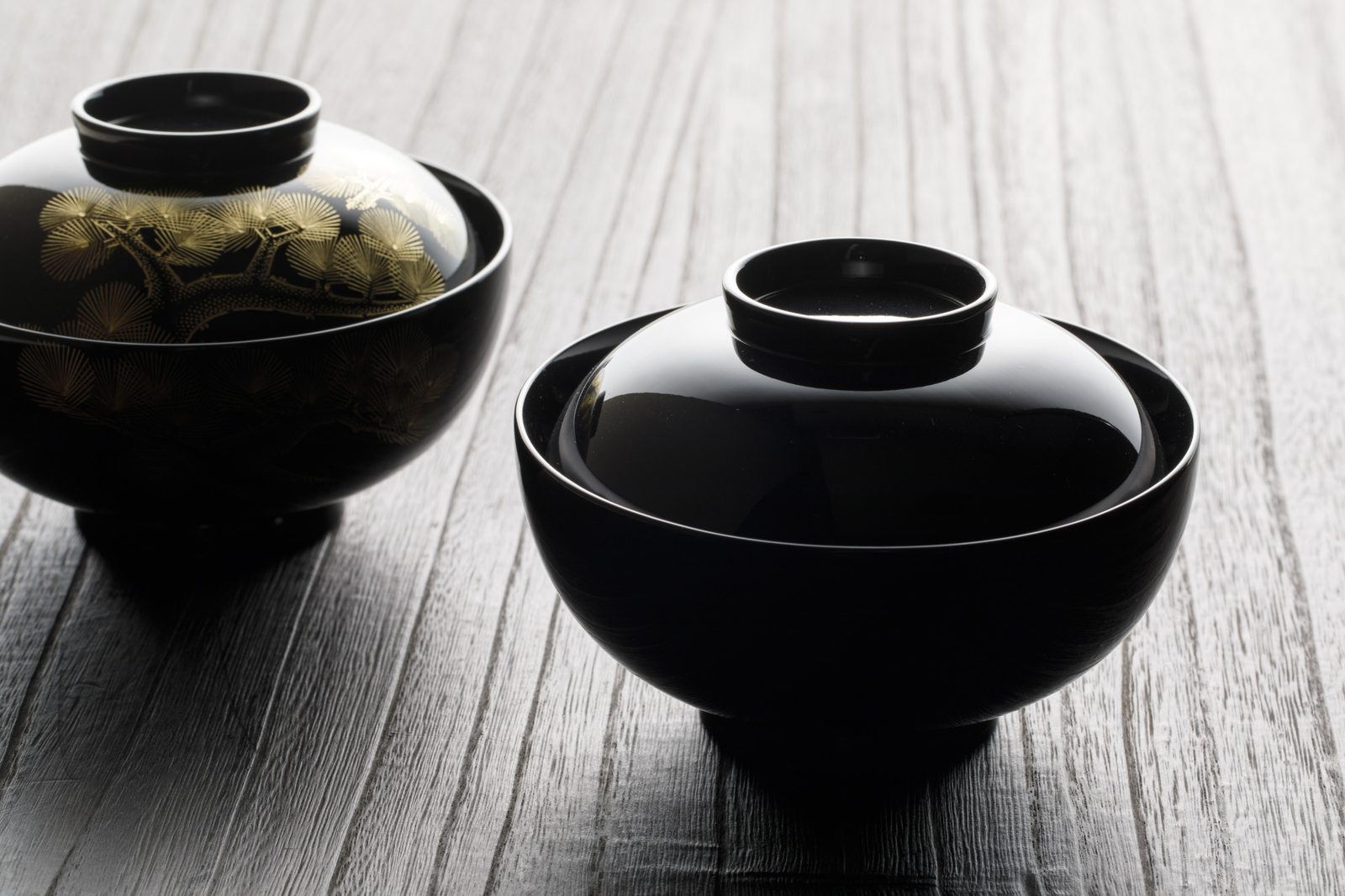
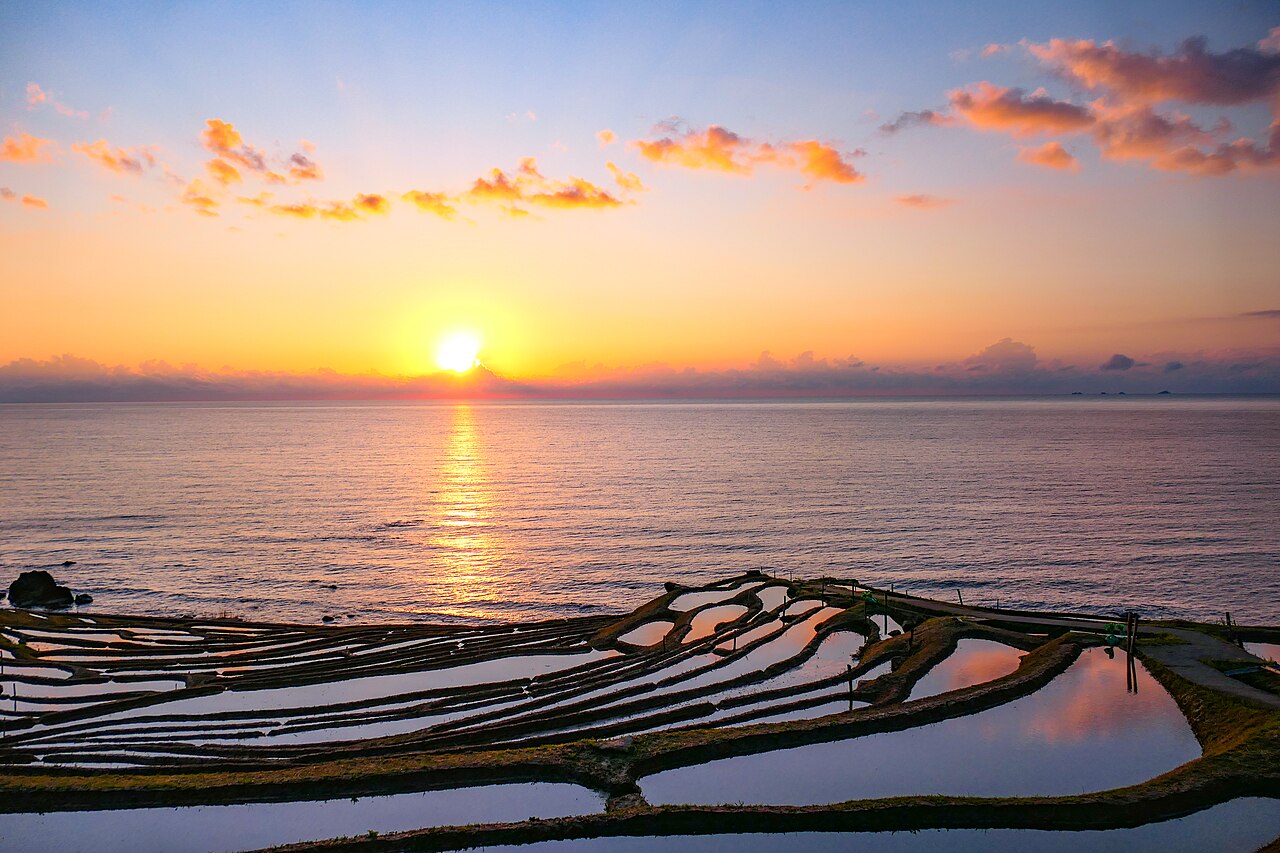
Wajima-nuri is lacquerware produced in Wajima, Ishikawa Prefecture. It is designated as a national important intangible cultural property. In Shiroyone, the Senmaida terraced paddies consist of about four hectares of slope with one thousand and four small paddies.
What Can You See at the Wajima Museum of Urushi Art? Maki-e, Chinkin and a Lacquer Globe
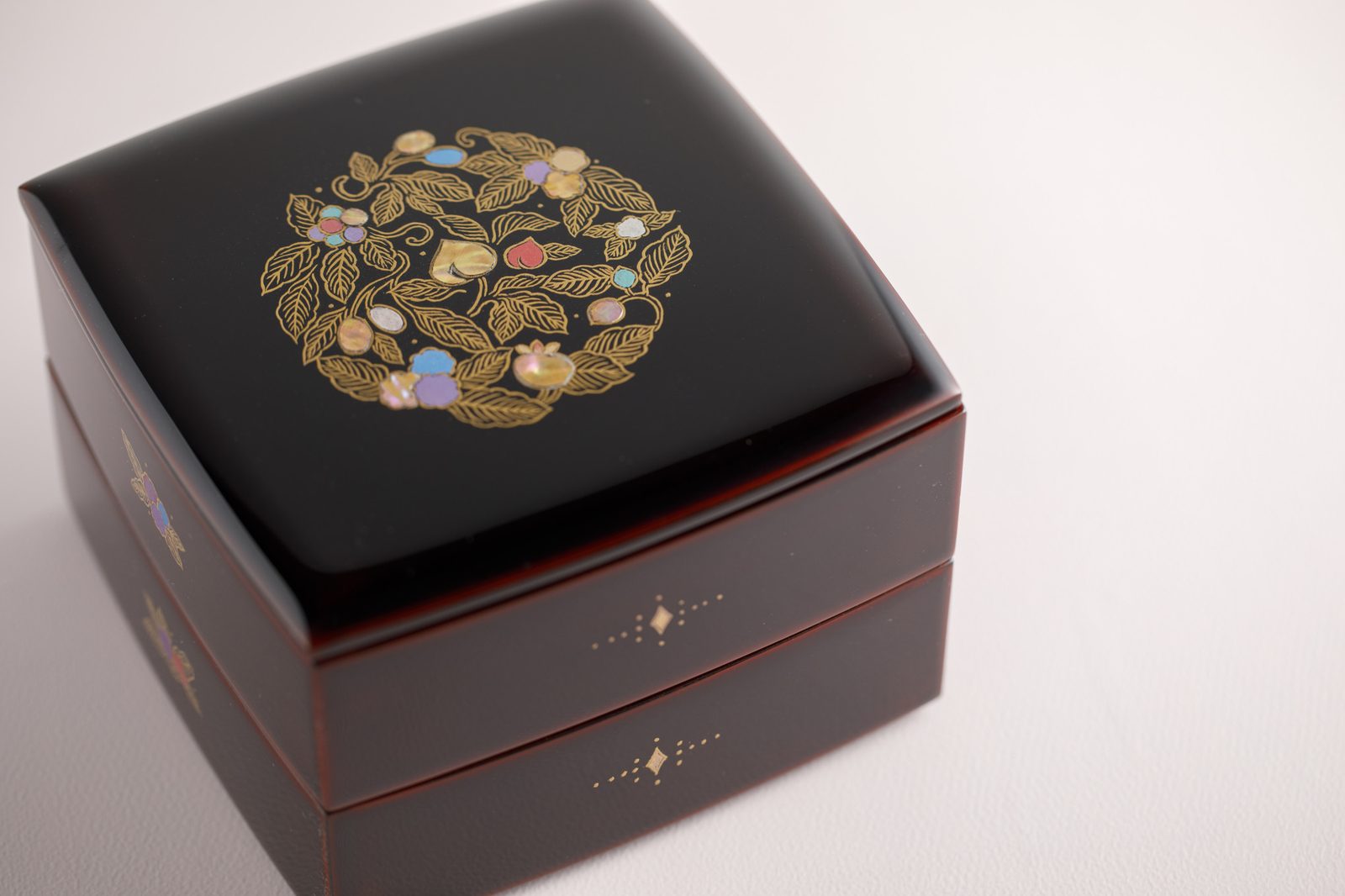
Maki-e and chinkin both bring gold to a lacquer surface, one by drawing a pattern in lacquer and sprinkling the gold on, the other by carving a pattern and putting the gold in. In maki-e, a pattern is drawn in lacquer, and gold powder or similar is sprinkled on and fixed before the lacquer hardens.
Chinkin is a technique in which a pattern is carved into the lacquer surface with a chinkin chisel. Lacquer is rubbed into the grooves, and gold leaf or gold powder is put in.
The large Wajima-nuri globe 'Earth at Night' was completed by technicians from eight divisions: bowl base wood, bent-wood base, joinery base, magnolia base wood, lacquering, roiro, maki-e and chinkin.
On the globe, maki-e and chinkin gold shine against a deep black that only lacquer art can produce, and the gold reflects the lights on the ground.
The trees in a plaza next to the museum carry species name plates, so visitors can stroll while looking at them. Colouring a chinkin spoon or chopsticks and decorating a maki-e strap are among the hands-on experiences.
How Is Wajima Lacquerware Made? What the Lacquerware Hall Shows
The exhibition room at the Wajima Lacquerware Hall introduces the Wajima-nuri making process and the culture of the nushiya through detailed process samples, tools and folk materials.
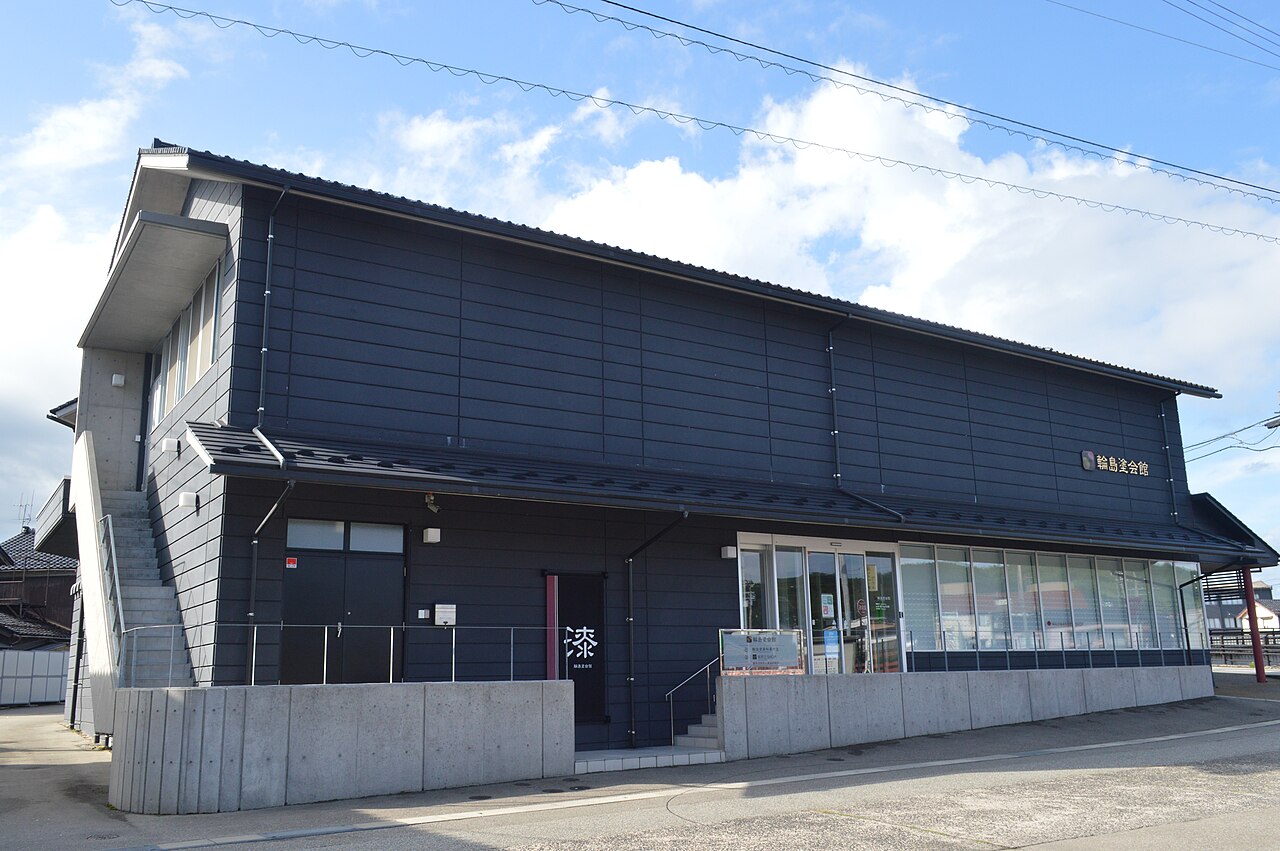
Wajima-nuri production, the making process the room introduces, is divided by trade into three broad parts: kiji (the wooden base), lacquering and decoration. The nushiya acts as the producer who checks and adjusts all the processes.
The wooden base comes in more than one kind. The wan-kiji craft uses a lathe and a plane to make round vessels such as bowls and plates, and its materials are zelkova, mizume cherry and horse chestnut.
Magemono kiji is made by soaking thin straight-grain boards in water to soften them and bending them into round trays and lunch boxes. The ho-kizi craftsperson hollows out material with a chisel and plane to make items of any shape, such as detailed works.
In the base-coat stage, cloth is applied to reinforce fragile parts, a step called nunokise, and the base lacquer is mixed with diatomaceous earth called jinoko. In the shita-zi process, lacquer of several kinds is applied repeatedly to the wooden base many times to build up the body of the vessel.
In the togimono process, sharpening is repeated through many stages to shape the vessel and make a beautiful surface. In the uwanuri process, the lacquer is applied while paying close attention to its drying, so that dust and dirt do not stick.
Making a single piece of Wajima-nuri lacquerware takes one hundred or more steps.
What Is There to See and Eat at Shiroyone Senmaida?
The terraces change with the farming calendar, so what there is to see depends on the season. Water is drawn into the paddies from late April, and planting by local farmers and volunteers begins in early May.
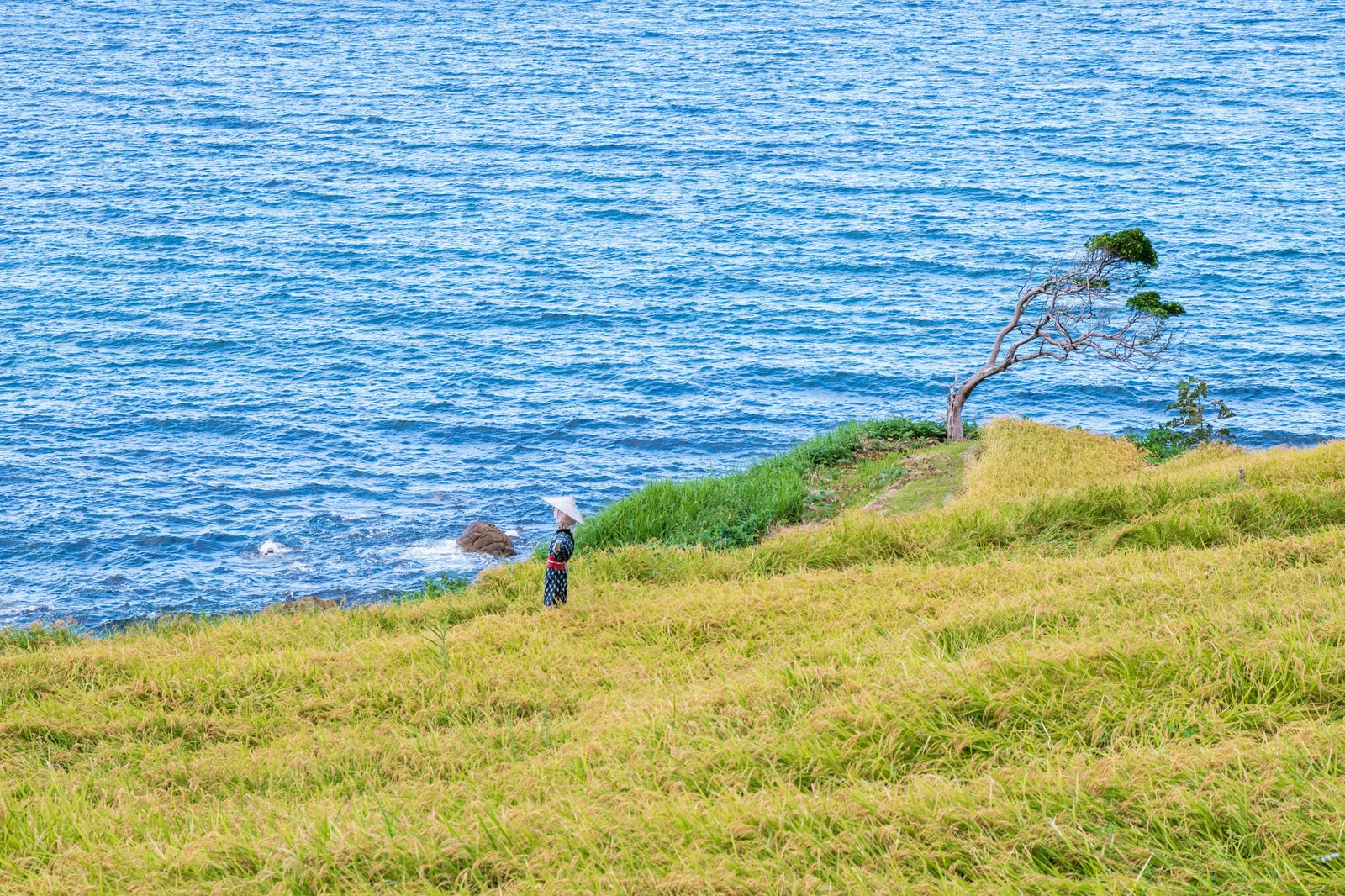
In autumn the rice ears turn golden and Shiroyone Senmaida reaches its harvest season. The harvested rice is hung on a wooden frame in Shiroyone and dried in the sun.
Food menus using locally produced rice, vegetables and seafood are available at the roadside rest area that adjoins the Shiroyone Senmaida terraces. Noodles made with ago-dashi, fried Noto blowfish and a deep-fried soul food are on offer.
Rice-bran-pickled seafood caught in Noto, the fish sauce ishiri and seaweed gathered by the ama divers of Hegura Island are displayed.
A cafe serves an original-roast coffee modelled on the sunset over Shiroyone Senmaida, a medium-dark roast with a restrained bitterness. The cafe's sweets can be taken out.
What Is the Wajima Morning Market?
The market's story begins at a shrine. At the festival day of the Fugeshihiko shrine in Fugeshi district, products were brought to a consecrated site and bartered, and this is said to be the beginning of Wajima's market.
Until the early Taisho period, women from a village came to sell, carrying baskets full of lightly salted horse mackerel on shoulder poles.
The permanent Wajima Morning Market is held inside Wai Plaza Wajima.
Getting to Wajima
New to rural buses and one-man trains? See how to ride them, step by step.
| Route | Time |
|---|---|
| Kanazawa to the Wajima Museum of Urushi Art by express bus | about three hours |
| Kanazawa to the Wajima Museum of Urushi Art by car via the Noto Satoyama Kaido | about two hours |
| Michi-no-Eki Wajima to Shiroyone Senmaida by taxi or bus | about fifteen minutes |
| Michi-no-Eki Wajima to the Wajima Museum of Urushi Art by city bus (Noranke bus, Umi course) | ten minutes |
| Wajima Ekimae stop at Michi-no-Eki Furatto Homu to the Wajima Museum of Urushi Art on foot | about twenty-five minutes |
| Noto Satoyama Airport to Wajima by bus | about thirty minutes |
| Haneda Airport to Noto Satoyama Airport by plane | about sixty minutes |
To explore with a guide, see guided tours around Wajima.
Hours and Fees
| What | Detail |
|---|---|
| Wajima Museum of Urushi Art hours | nine in the morning to five in the afternoon, with entry until four thirty in the afternoon |
| Museum year-end closure | closed December twenty-ninth to thirty-first |
| Museum general admission | listed as six hundred thirty yen |
| Entering the museum building | free of charge, but a viewing fee is required to see exhibitions in the exhibition rooms |
| Chinkin spoon colouring experience | one thousand seven hundred yen for high school students and older |
| Chinkin chopstick colouring experience | one thousand five hundred yen for high school students and older |
| Maki-e strap experience | seven hundred yen for high school students and older |
| Wajima Lacquerware Hall second-floor exhibition room admission | three hundred yen for adults, two hundred yen for high school students, one hundred yen for junior high school students, free for elementary school students |
| Permanent Wajima Morning Market inside Wai Plaza Wajima, hours | open nine in the morning to one in the afternoon |
| Permanent Wajima Morning Market closing day | Wednesday (irregular) |
Fees and hours were checked against official sources between 15 October 2026 and 18 November 2026.
Compare options
See partner pricing and availability →
Disclosure: This post may contain affiliate links. If you book through them, we may earn a commission at no extra cost to you.