Ureshino is a hot-spring town in Saga whose name, the story goes, comes from the words of a delighted empress. Soak in water described as one of Japan's three great beauty-skin hot springs, then taste a block of tofu that the same water melts softly. Ureshino tea carries five hundred and fifty years of history, and on the main street a foot bath and a foot-steam bath wait for anyone passing through. A day here is built around soaking, tasting and strolling.
A White Crane, a Legend and Where to Soak
According to legend, Empress Jingu stopped here on her way home from battle and saw a white crane that had been soaking its tired feathers in the river fly off in good health. The story goes that wounded soldiers were put into the water, hot spring water was found welling up, and their wounds healed at once. Her words of joy are handed down as the story behind the name Ureshino.
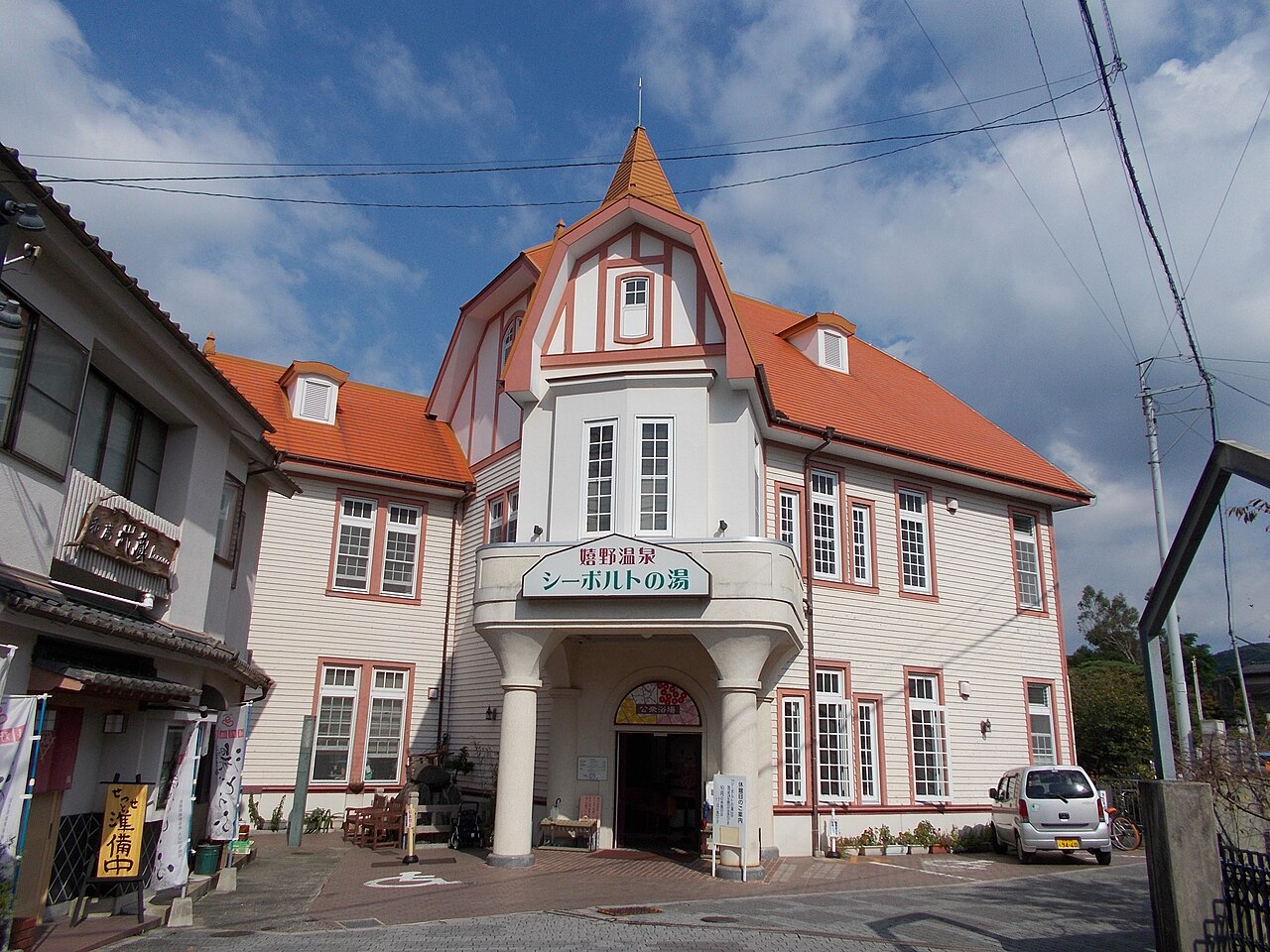
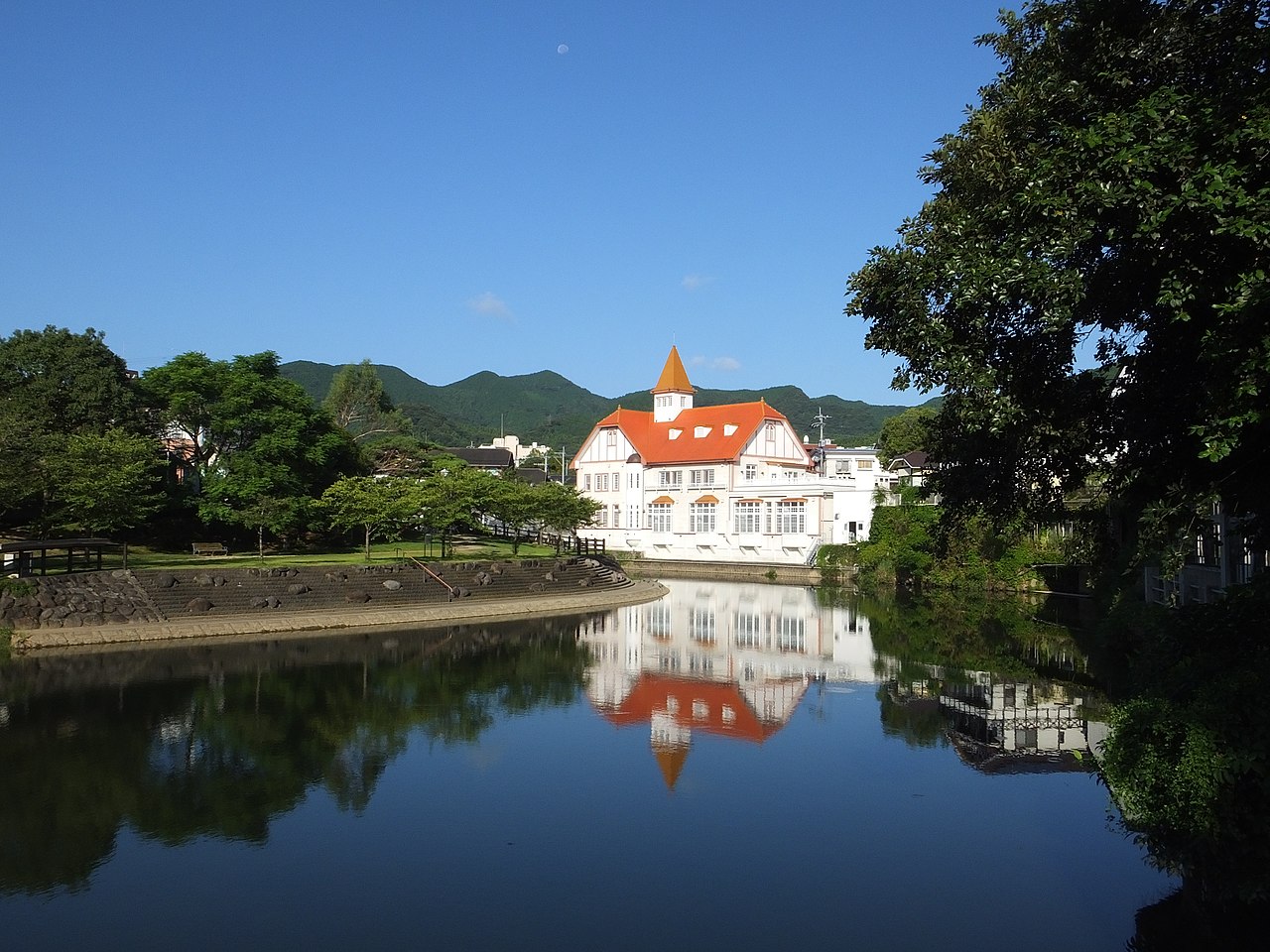
The spring is a sodium bicarbonate spring, high in sodium, and the public bathhouse where visitors soak in it is Siebold's Bath: a gothic-style, two-storey wooden building of about seventy-five square metres with an orange, stylish exterior, on the bank opposite Ureshino Onsen Park. Inside are a large bath, private baths and a citizens' gallery, plus a multipurpose bathroom without barriers and a bathroom usable from a wheelchair.
The Taishoya day-use bath offers a different kind of soak: a large bath built as an open-air style atrium, men's bath on the second floor and women's on the third, with a rooftop and glass-walled sides that can be opened and shut. Towels can be rented at this semi-open-air bath.
Onsen Yudofu: Tofu That Melts in the Spring Water
Onsen yudofu is said to trace back to the Japanese envoys to Tang China, who brought the tofu-making method home; it was later refined in the village of Ureshino into the melting yudofu served today. What you taste is the water at work: the balance of components in the hot spring breaks down the tofu's protein and softens it until it dissolves.
It is said that since the days when Ureshino prospered as a post town on the Nagasaki Kaido, travellers have eased their fatigue with a soak in the hot spring and this tofu. The tofu is made at five tofu shops in the town, and dishes built around it are served at the twenty-five inns and hotels of the Ureshino ryokan association.
Souan Yococho, a restaurant that calls itself the originator of onsen yudofu, makes its yudofu from its own home-made tofu, and the result is a dish with a smooth, soft texture. Hand-made udon and soba are on the menu as well.
Taishoya Yudofu Honpo, a shop, has a corner where fresh yuba made from high-concentration soy milk is made, tasted and sold. It also sells a melting-yudofu set to carry home, alongside local specialty products and a local mandarin juice.
Ureshino Tea: From the Hillside to the Bath
Ureshino tea began when a visitor from Ming China brought a firing pan and taught the pan-firing method. The leaves grow in a basin ringed by misty mountains, with clear air and pure water. For gyokuro, the garden is covered with straw or similar to keep direct sunlight off the leaves; the shoots are hand-picked as one bud and three leaves, and the tea is brewed at low temperature.
Steamed tamaryokucha takes the other route: the leaves are steamed at high temperature, rolled well and dried, and each curls like a magatama, with colour and gloss; the tea is described as having little astringency and a good aroma. A tea exchange hall lets visitors learn the history, making and taste of Ureshino tea by touching, tasting and talking with people.
The tea reaches the bath too. At Chagokoronoyado Warakuen, a day-bath inn, the open-air bath is a tea bath in which Ureshino tea is soaked in the hot spring water, and the tea-laden water pours into the tub from a giant stone teapot.
Shops in town sell sweets made with Ureshino tea, plus limited products found nowhere else: a matcha-coloured ground-tea cookie with a crisp bite, and a vivid green mugwort dumpling made by hand every day from home-grown mugwort.
Along the Main Street: Shrine and Foot Baths
Toyotamahime Shrine enshrines Toyotamahime, a beautiful-skinned goddess, in a hot-spring town known as a beauty-skin spring. The shrine's messenger, a catfish, has been revered since ancient times by hot-spring guests, who held it to be effective for skin ailments, and worshippers still come to pray for beautiful skin; touching the white catfish is said to bestow that blessing.
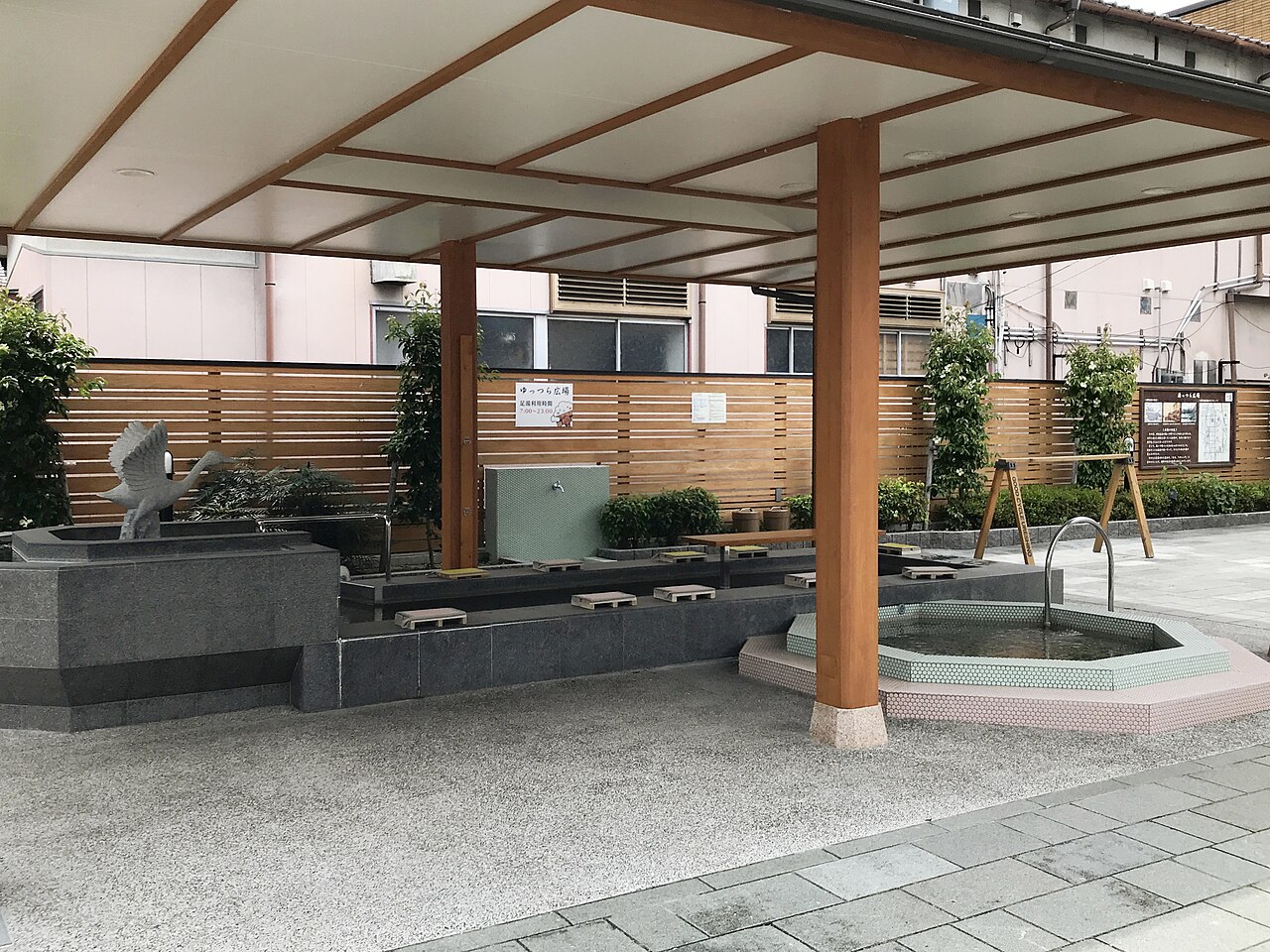
Yuttsura Hiroba, the third foot bath along the main street of the Ureshino shopping district, is a place to soak feet and hands: a foot bath, a hand bath and a children's play bath. Here a visitor can feel the spring water, described as one of Japan's three great beauty-skin hot springs, on the hands.
Yushuku Hiroba, on the main street, has a foot bath and a foot-steam bath that anyone can use at no charge during a stroll. The foot bath can be used from a wheelchair, and the foot-steam bath has handrails. The steam bath uses hot-spring mist: it seats seven; you put both feet into the holes, cover your knees with a box and steam for about ten to fifteen minutes.
Pottery, Paper, Workshops and a Flower Garden Cafe
Ureshino's pottery began with a white, shining stone, said to be Japan's first porcelain stone, found on the bed of a stream upstream of the river that flows through the village of Yoshida. At the Hizen Yoshida Pottery Museum, visitors can see and buy works by the eleven potteries of the Hizen Yoshida kiln cooperative displayed in its hall, and paint their own five-sun plate, yunomi teacup or mug.
Shidayaki no Sato Museum offers the same craft, with a mug, a plate, an incense burner or a lampshade to decorate. At the craft workshop tewofuru the making is in wood instead, a pen or a bracelet that goes home with you the same day.
The craft of papermaking in Shiota-machi goes back about three hundred and fifty years; it stopped once and was later revived. The Shida flower garden is tended by a couple who cleared a bamboo-thicket mountain and grow seasonal flowers; in spring moss phlox leads, with rape blossoms and nemophila alongside. The cafe Ensoleille, inside the garden, serves an Ureshino tea roll cake and hojicha cream puffs among other items made with the local tea.
Getting to Ureshino
New to rural buses and one-man trains? See how to ride them, step by step.
| From | To | Time |
|---|---|---|
| Hakata Station | Ureshino Onsen Station | 60 minutes |
| Nagasaki Station | Ureshino Onsen Station | about 25 minutes of ride time |
| Takeo-Onsen Station | Ureshino Onsen Station | 5 minutes |
| JR Takeo-Onsen | Ureshino Onsen (JR bus) | 30 minutes |
| Fukuoka Airport terminal | Ureshino Bus Center (expressway bus) | about 1 hour 20 minutes |
| Ureshino Bus Center | Siebold no Yu (on foot) | 7 minutes |
| Fukuoka city (by car) | Ureshino IC | about 1 hour |
| Nagasaki (by car) | Ureshino IC | about 1 hour |
| Ureshino IC on the Nagasaki Expressway (by car) | town centre | 5 minutes |
Hours and Fees
| What | Fare or time | Note |
|---|---|---|
| Siebold's Bath, admission | 450 yen adult, 220 yen child | |
| Siebold's Bath | 6:00 to 22:00 | last admission 21:30 |
| Siebold's Bath, private bath | 2,500 yen for 50 minutes | up to 5 adults |
| Yuttsura Hiroba | 7:00 to 23:00 | every day |
| Yuttsura Hiroba on Wednesday mornings | may be unavailable | regular cleaning |
| Yushuku Hiroba, foot bath | 8:00 to 23:00 | |
| Yushuku Hiroba, foot-steam bath | 9:00 to 20:00 | |
| Taishoya day-use bath | 12:00 to 23:00 | |
| Chagokoronoyado Warakuen, tea bath (day use) | 11:30 to 14:00 | not available on Tuesdays |
| Souan Yococho | 10:30 to 15:30 and 17:30 to 21:00 | closed Wednesdays |
| Taishoya Torokeru Yudofu, 2-block pack | 2,000 yen | tax included |
| Nakashima Miekaen gelato, cup | 450 yen | |
| Nakashima Miekaen gelato, twin | 520 yen | |
| Nakashima Miekaen tea shop | 10:00 am to 5:00 pm | |
| Hizen Yoshida Pottery Museum | 8:30 to 16:30 | |
| Hizen Yoshida painting, 5-sun plate | 864 yen | tax included |
| Hizen Yoshida painting, yunomi teacup | 864 yen | tax included |
| Hizen Yoshida painting, mug cup | 1,080 yen | tax included |
| Shidayaki no Sato Museum | 9:00 to 17:00 | |
| Shidayaki painting (mug, plate, incense burner, etc.) | 800 to 1,200 yen | |
| Shidayaki lampshade painting | 2,800 yen | |
| tewofuru pen-making | from 4,800 yen | tax included, varies with the wood type |
| tewofuru bracelet-making | from 2,800 yen | |
| tewofuru, time needed | about 2 hours or more | from meeting to dispersal |
| tewofuru reservations | close at 10:00, 10 days before the experience date | |
| tewofuru payment | cash, paid on site | |
| Ureshino Onsen Summer Festival | August 11 every year | next day if it rains |
| Ureshino Onsen Autumn Festival | November 3 every year | a national holiday |
| Ureshino Saturday Night Market | 19:00 to 21:00 | |
| Ureshino Chuo parking lot | 300 yen for 24 hours | paid parking |
Fees and hours were checked against official sources between 9 October 2026 and 30 October 2026.
If you would rather have a guide shape the day, tours around Ureshino Onsen are one way to arrange it. For a night in town, see places to stay in Ureshino.
Thinking of staying overnight?
Compare places to stay near Ureshino, Saga, Japan →
Disclosure: This post may contain affiliate links. If you book through them, we may earn a commission at no extra cost to you.