Some places earn a visit with a whole itinerary. Takeo, a small onsen town in Saga, earns it with a single ancient tree — and then keeps you for the baths. This is a town for a slow half-day: a shrine in the morning, an old gate at midday, hot water whenever you are ready.
A Shrine at the Foot of Mount Mifune
Takeo Shrine sits at the eastern foot of Mount Mifune, in the city of Takeo in Saga Prefecture. Its founding is placed, by tradition, in the early eighth century — which would make it more than thirteen hundred years old. Five deities are said to be enshrined here, among them Takenouchi no Sukune, and together they are venerated as Takeo Daimyōjin.
The worship hall you see today is a rebuilding from the later twentieth century, with the sweeping curve of a karahafu gable at its front. The shrine is known as a popular one, drawing many worshippers who come seeking long life, better fortune, and good matches — this is not an obscure place, and it does not pretend to be.
The Camphor of Three Thousand Years
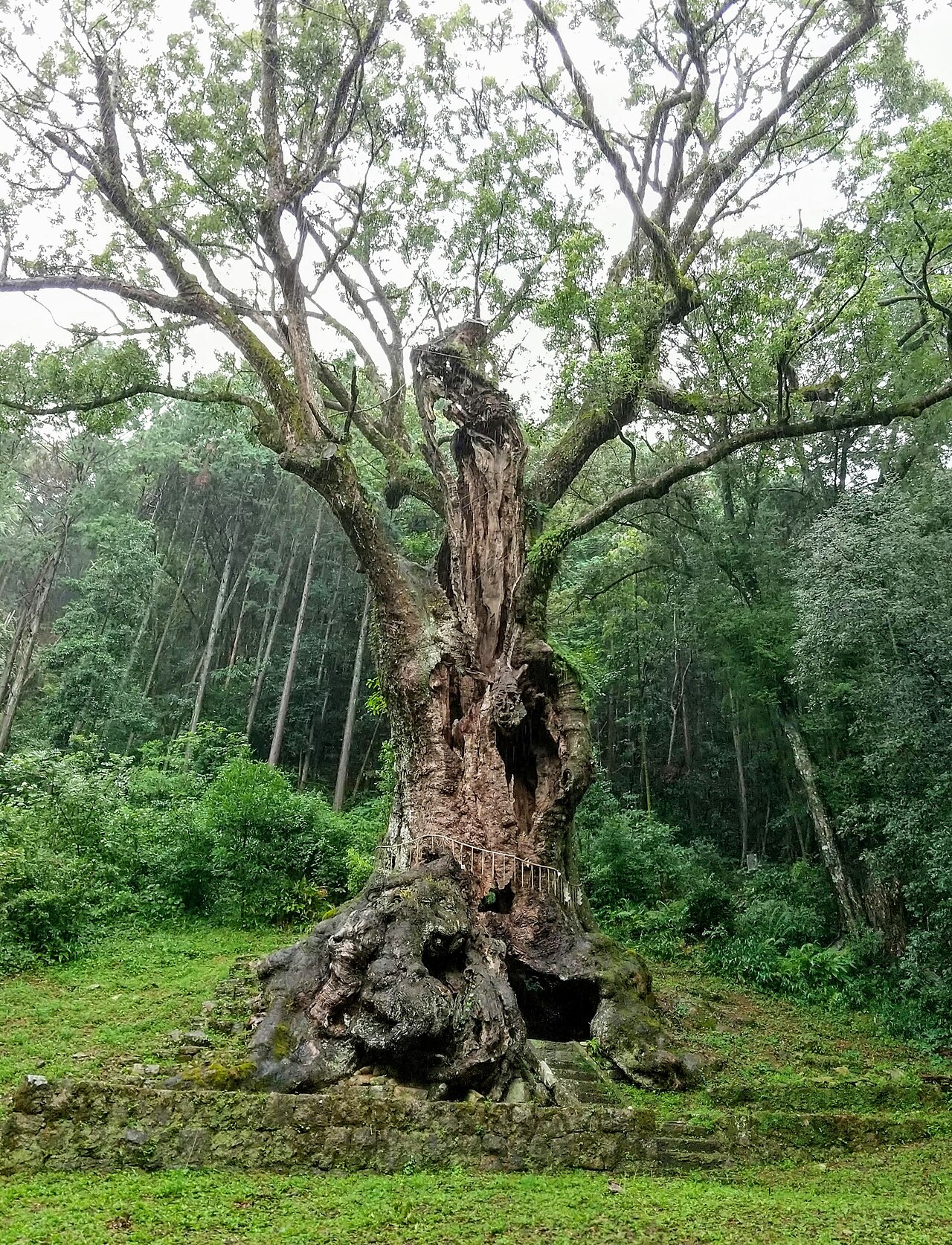
Within the grounds stands the reason most people come: the sacred camphor of Takeo, reckoned to be about three thousand years old. It is the symbol of the shrine, and it carries a reputation for blessings of many kinds — long life and better luck among them.
The trunk is hollowed with age, the roots wear a coat of moss, and a stone approach leads in beneath tall cedars. Come early if you want the clearing to yourself.
Legends Among the Trees
The stories here attach themselves to the trees. A dragon deity is said to dwell at the root of the great camphor, and the tree has drawn quiet worship since long ago. Elsewhere in the grounds stand the meoto hinoki, a pair of cypresses growing as if hand in hand; tradition credits them with watching over marital harmony and every other kind of bond a person might wish to tie.
Getting There
From Takeo-Onsen Station, the shrine is about five minutes away by bus; ride to the Takeo-Kōkō-mae stop, and it is a walk of about three minutes from there. A taxi from the station also takes about five minutes.
New to rural buses and one-man trains? See how to ride them, step by step.
Where to stay
Disclosure: This post may contain affiliate links. If you book through them, we may earn a commission at no extra cost to you.
The Baths Behind the Vermilion Gate
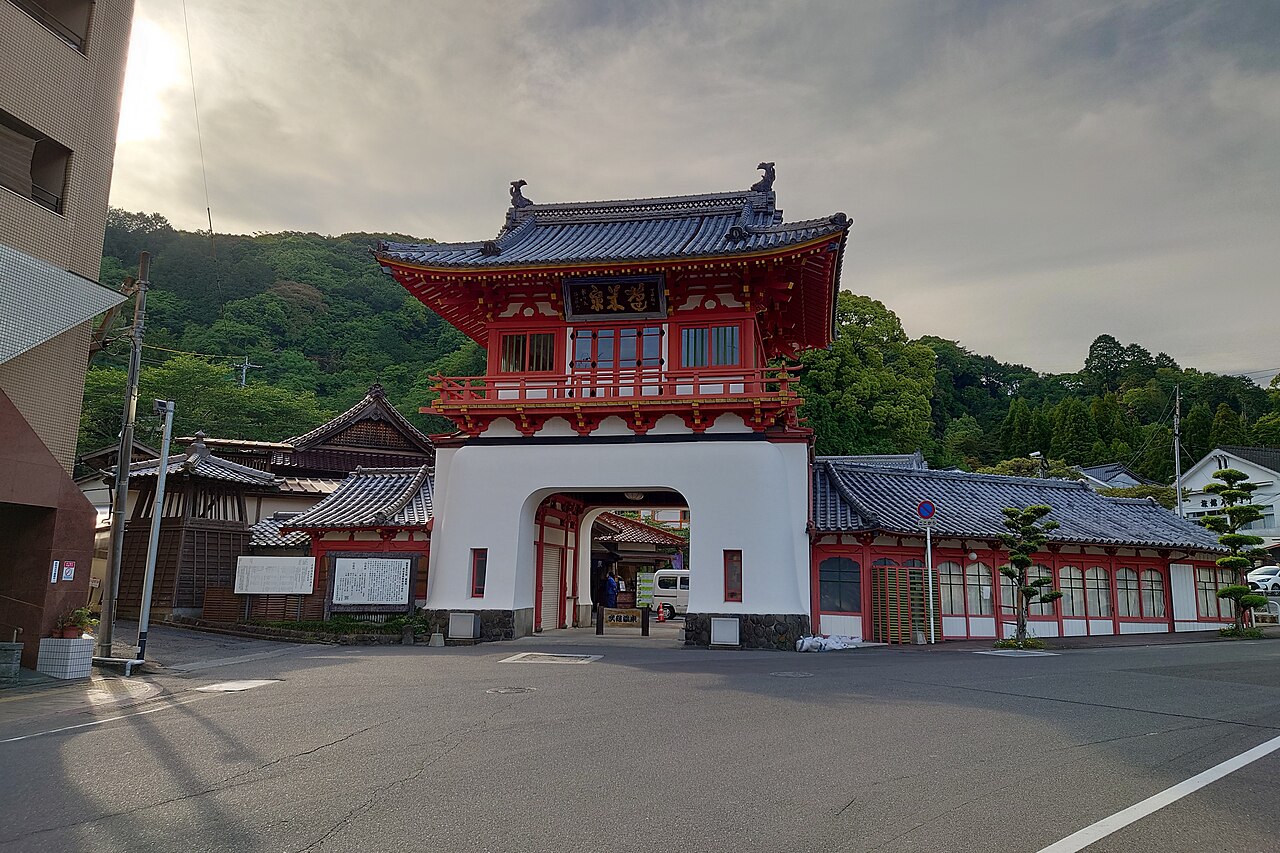
The onsen quarter announces itself with a two-storey vermilion gate — white plaster below, tiled roofs above, a green hill rising behind. Pass under it and you are at the baths. Adults bathe for five hundred yen, and children from the age of three up through elementary school for two hundred and fifty yen. The baths take visitors from half past six in the morning until a quarter to midnight, with the last entry accepted until eleven at night.
Planning a Quiet Half-Day
If you like your day to have a shape, Takeo makes it easy. The day-use baths at Rakan no Yu run in five sittings: from eight until half past ten in the morning; from three until half past five in the afternoon; from half past five until eight in the evening; from half past seven until ten at night; and a final sitting from half past nine until midnight.
So one natural rhythm suggests itself: greet the camphor first, while the light is low; walk back down to the gate; and let the first morning sitting — or a late-afternoon one — close the loop. There is no need to hurry any of it.
If you would rather have someone else do the arranging, you can browse guided tours and experiences around Takeo and build the day around one.
Takeo does not perform for visitors. It has a tree that was old before the shrine was young, hot water that has never needed a slogan, and a gate that tells you exactly where you are. Come with half a day, and leave with the better part of it slowed down.