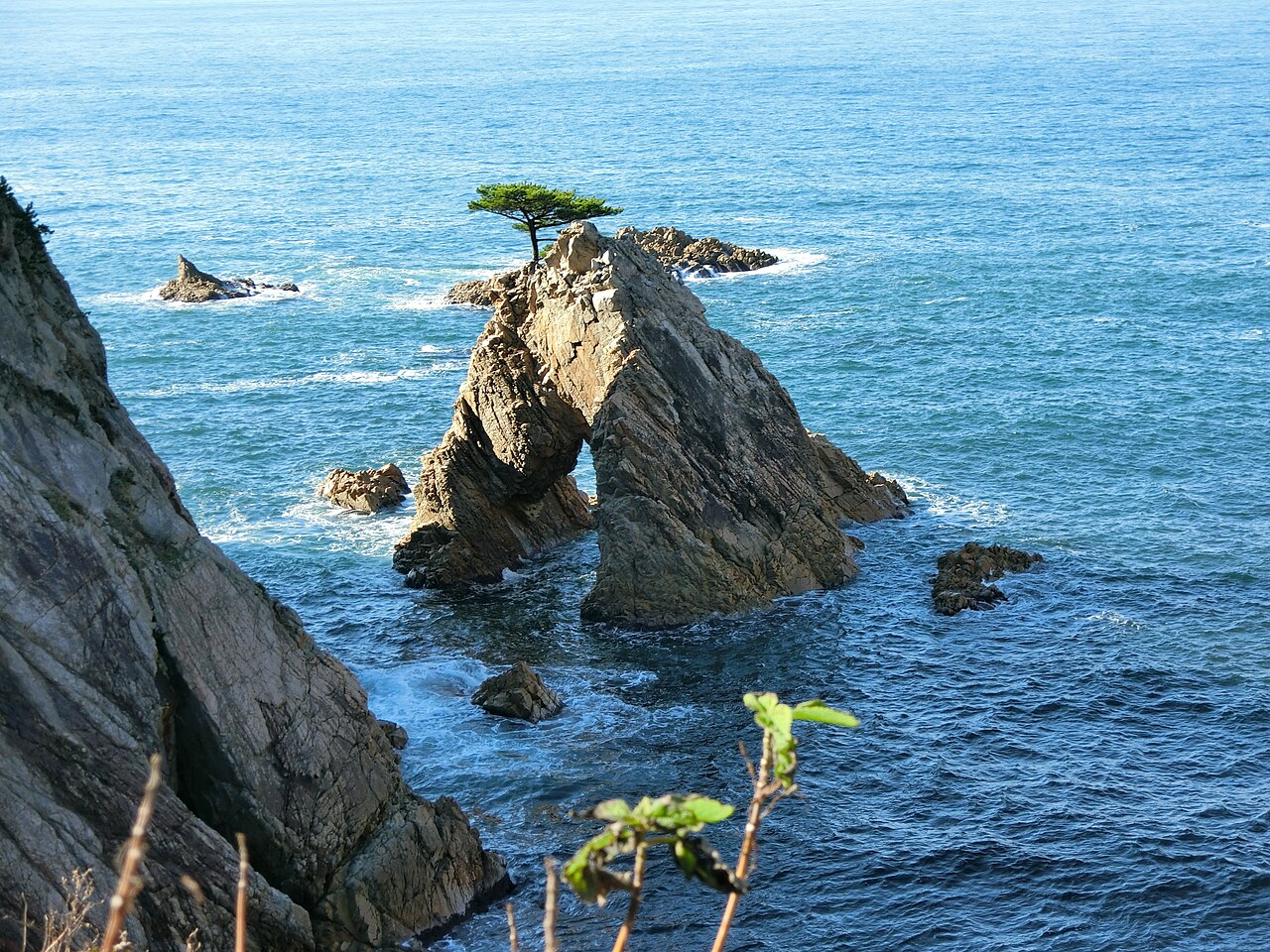
The Uradome Coast in Iwami, one of Japan's hundred selected shores, is a run of sea gates and caves shaped over a long span of time. Islands of every size stand in the emerald-green water along the same shore. That water reaches about twenty-five metres of visibility and carries the name Iwami Blue.
Nataneshima, Senkanmatsushima and Ryujin Caves
Nataneshima is five islands standing in a row, once a single cape that waves and wind wore apart over a long span of years. It is said that a Kitamaebune ship loaded with rapeseed ran aground near the island in the Edo period, and flowers began to bloom afterward.
Senkanmatsushima is a detached granite rock with a hole the sea has worn right through it, like a tunnel. The sea cut that passage, leaving a sea-eroded tunnel in the granite.
Two caves lie at the tip of Haneo Cape. Okaryujin opens in the middle of the rock wall there and connects inside with Umiryujin, where the sound of waves echoes. In the early Showa era a writer entered Umiryujin by small boat. The writer was struck by the cold air inside even in summer and by the deep colour of the water.
Sea Gates and Caves by Boat: The Uradome Island Cruise
The Uradome island cruise takes the large cruise boat in close to the sea gates and caves of the coast. The same boat also brings passengers close to sheer rock faces. The small adventure-cruise boat goes in close to oddly shaped rocks and into shallow inlets. It reaches narrow places that the large boat cannot enter.
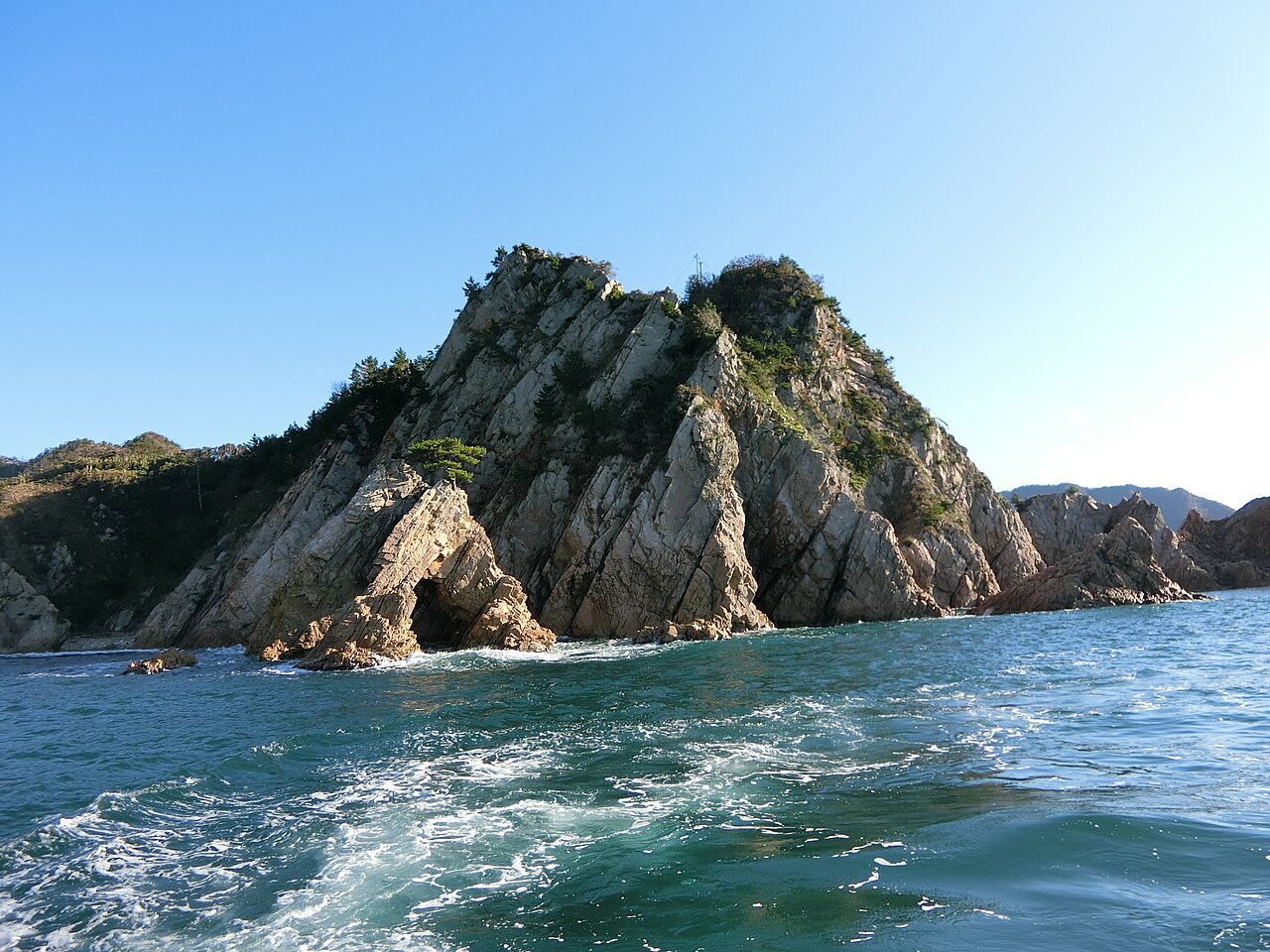
On the small boat an underwater viewing box lets passengers look down into the sea. The small boat also passes directly beneath a rock wall seventy metres high. Choose the large boat for the sea gates and the small boat for the narrow passages.
Walking the Uradome Nature Trail, Kamogaiso and Shirawara
The Uradome Coast Nature Trail strings together sea gates and caves, with white-sand beaches along the way. Toward Ajiro and Shirawara the trail turns into climbs and descents. The Haneo Cape Nature Trail follows the ridge of the cape toward the San'in Kaigan learning centre. On the way it passes a beach that holds memories of the Elizabeth Saunders Home.
Shirawara Coast pairs a beach of coarse-grained sand with a rocky shore of rounded stones. A continuous series of wave-cut benches runs along the same shore. Offshore to the northeast stands an island of dark rock, made of blackish stone from deposited volcanic ejecta, unlike the granite of Shirawara.
Kamogaiso is the collective name for three beaches, from Kokamogaiso in the west to Okamogaiso in the east. Many small islands float in its complex inlets, and on the beaches the large-grained quartz sand glitters like crystal. The coastal plants along these beaches change with the season. Ducks and sea cormorants can be met here as well, as the name Kamogaiso suggests.
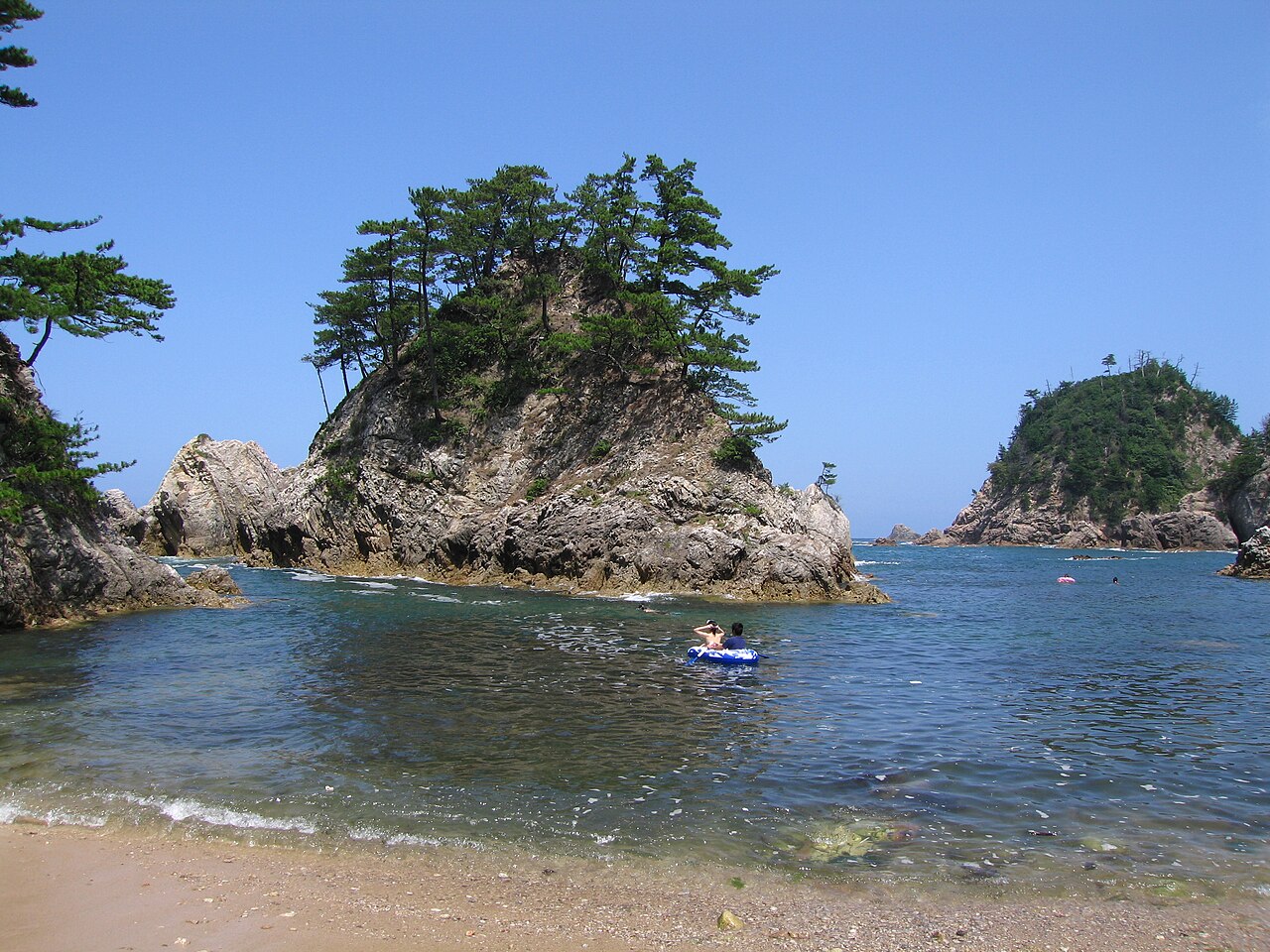
The walking path along the coastline brings the clear sea up close. Colourful fish from the south arrive in that water on the Tsushima Current, and snorkelling brings them into view. Snorkelling and other menus above the clear underwater scenery run for everyone from adults to children. In summer the three shallow white-sand beaches fill with swimmers.
Sea Kayaks and Clear Kayaks on the Uradome Coast
The sea kayak outing on the Uradome Coast sets paddlers out on the water of the coast under their own power. In the clear kayak the hull is transparent, so looking down shows the fish and seaweed in the sea beneath.
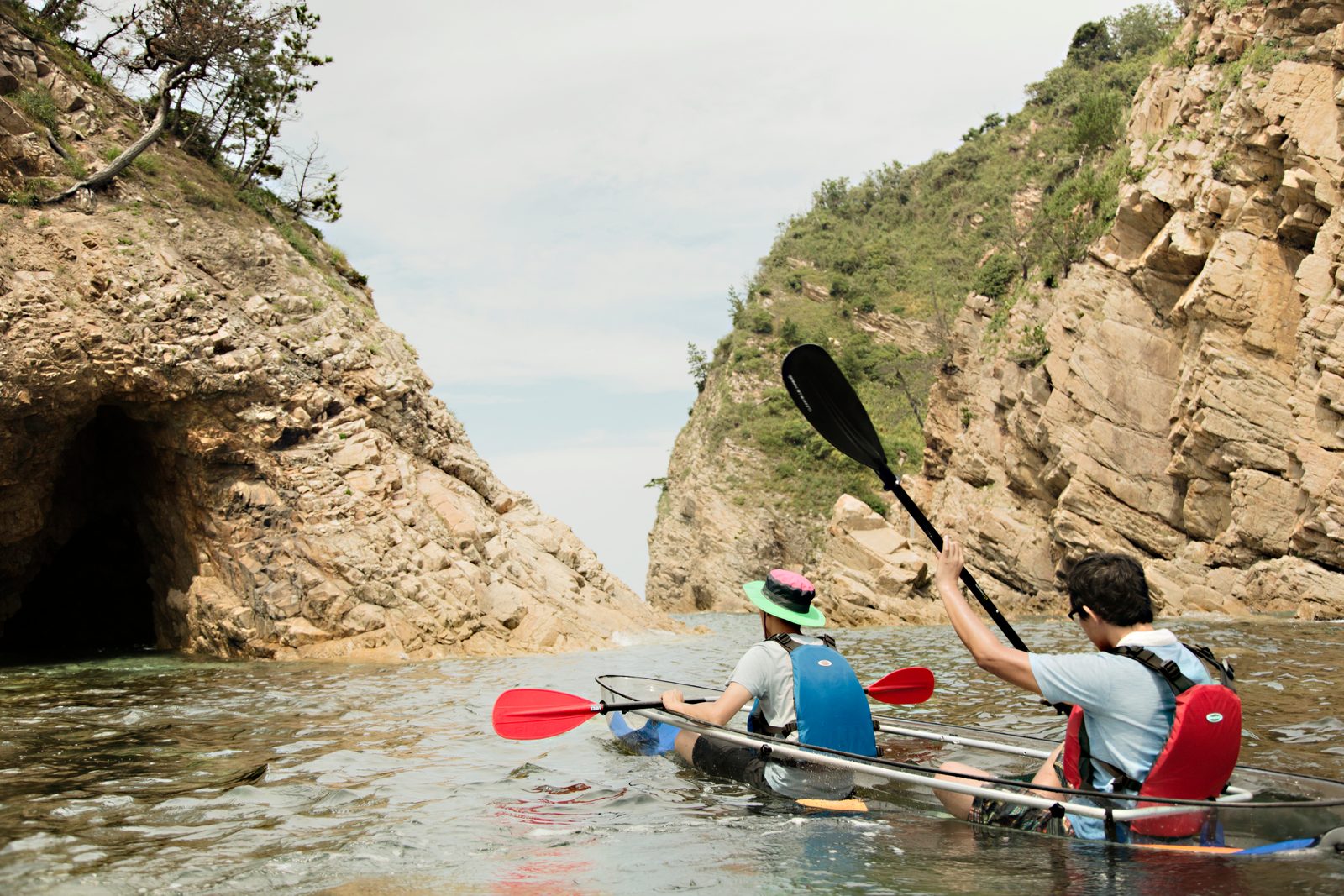
A guide accompanies the outing, and beginners can take part. From the kayak, paddlers can photograph scenery of overlapping strata and paddle through caves. Single-seat and double-seat kayaks are available, and visitors are asked to consult about which to take.
Seafood at Ajiroya and Squid Drying at Ajiro Port
Ajiroya is the restaurant inside the cruise terminal building, and it serves fresh seafood landed at nearby fishing ports. The same building holds a shop selling Iwami souvenirs. The seafood set meal lets diners eat sashimi and simmered fish at one sitting. A portion of fried items completes the same set.
The menu also runs to a seafood rice bowl and a squid-ink curry. Its seasonal dishes draw on seafood specific to the Sea of Japan, such as white squid and a local shrimp. If one dish has to stand for the local catch, the seafood set meal covers it in a single sitting.
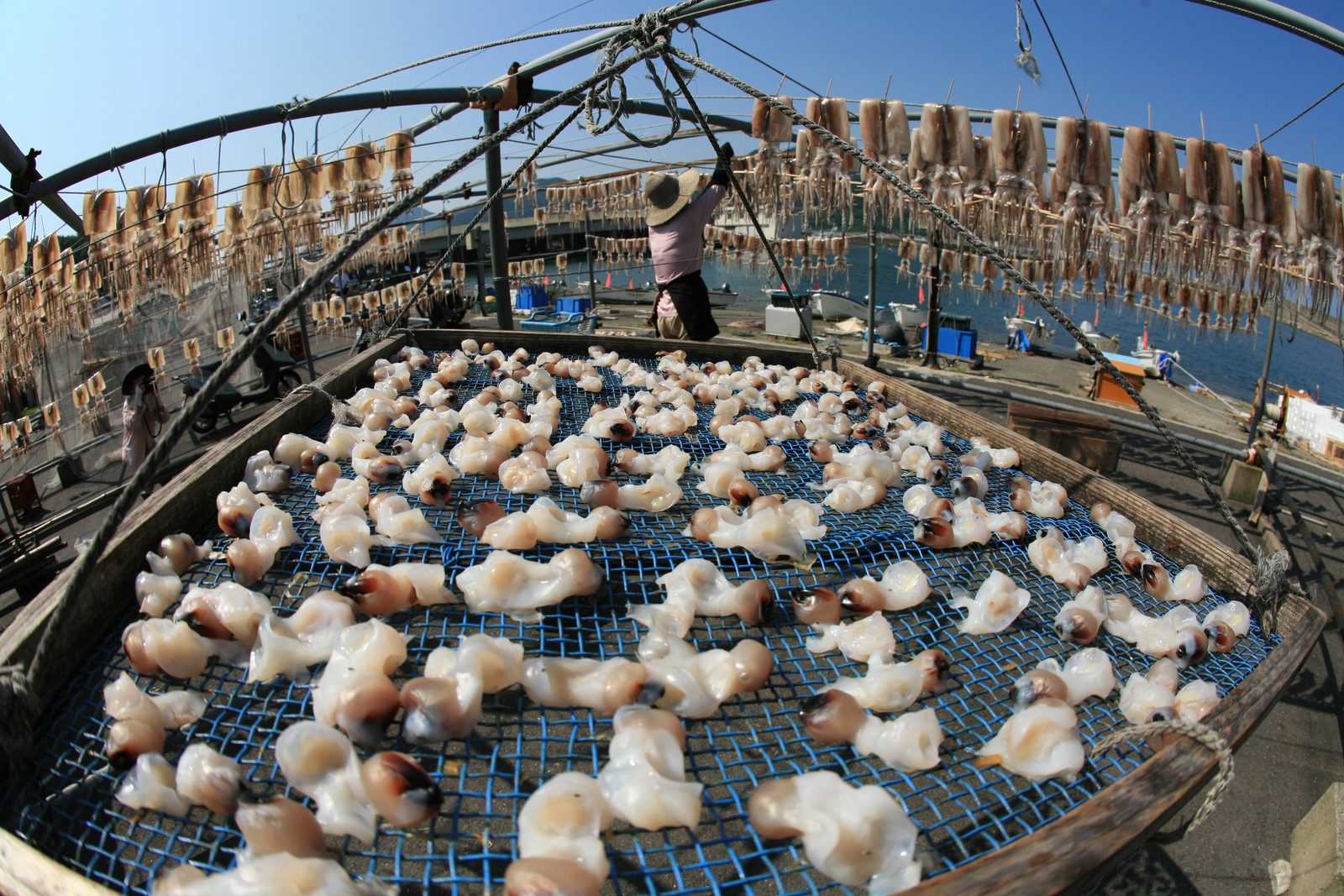
At Ajiro Port, squid landed at the market that morning are hung on stretched ropes, with the ears set upright so they stay on the rope. Each squid is dried belly first and then back, in a set order followed at the port. The ears take their turn last. Iwami's dried squid carries the salt air of the harbour and stays thick in the flesh.
To stay overnight in the area, browse places to stay in Iwami.
Getting to Uradome
New to rural buses and one-man trains? See how to ride them, step by step.
| Leg | How | Time or cost |
|---|---|---|
| Iwami Station to the cruise terminal | Route bus 32, 32H or 33 to the stop in front of the terminal, then a 30-second walk | About 15 minutes by bus |
| Tottori Station to the cruise terminal | Route bus to the stop in front of the terminal | About 40 minutes by bus |
Hours and Fees
| Place | What | Hours or fee |
|---|---|---|
| Large island cruise boat | Hours and fares | About 40 minutes per sailing. Adults 1,800 yen and children 900 yen per person. Hourly departures from the 9:30 boat to the 15:30 boat. In service March 1 to November 30. |
| Small adventure-cruise boat | Hours and fares | About 50 minutes per sailing. Adults 2,500 yen per person. Children aged 4 and older 1,800 yen per person. Hourly departures from the 9:00 boat to the 15:00 boat. In service late April to mid-October. |
| Ajiroya (seafood restaurant at the cruise terminal) | Hours | 11:00 to 15:00, last order 14:00; closed on Tuesdays, over the year-end and New Year period, and in January and February |
Fees and hours were checked against official sources on 9 November 2026.
Thinking of staying overnight?
Compare places to stay near Iwami →
Disclosure: This post may contain affiliate links. If you book through them, we may earn a commission at no extra cost to you.