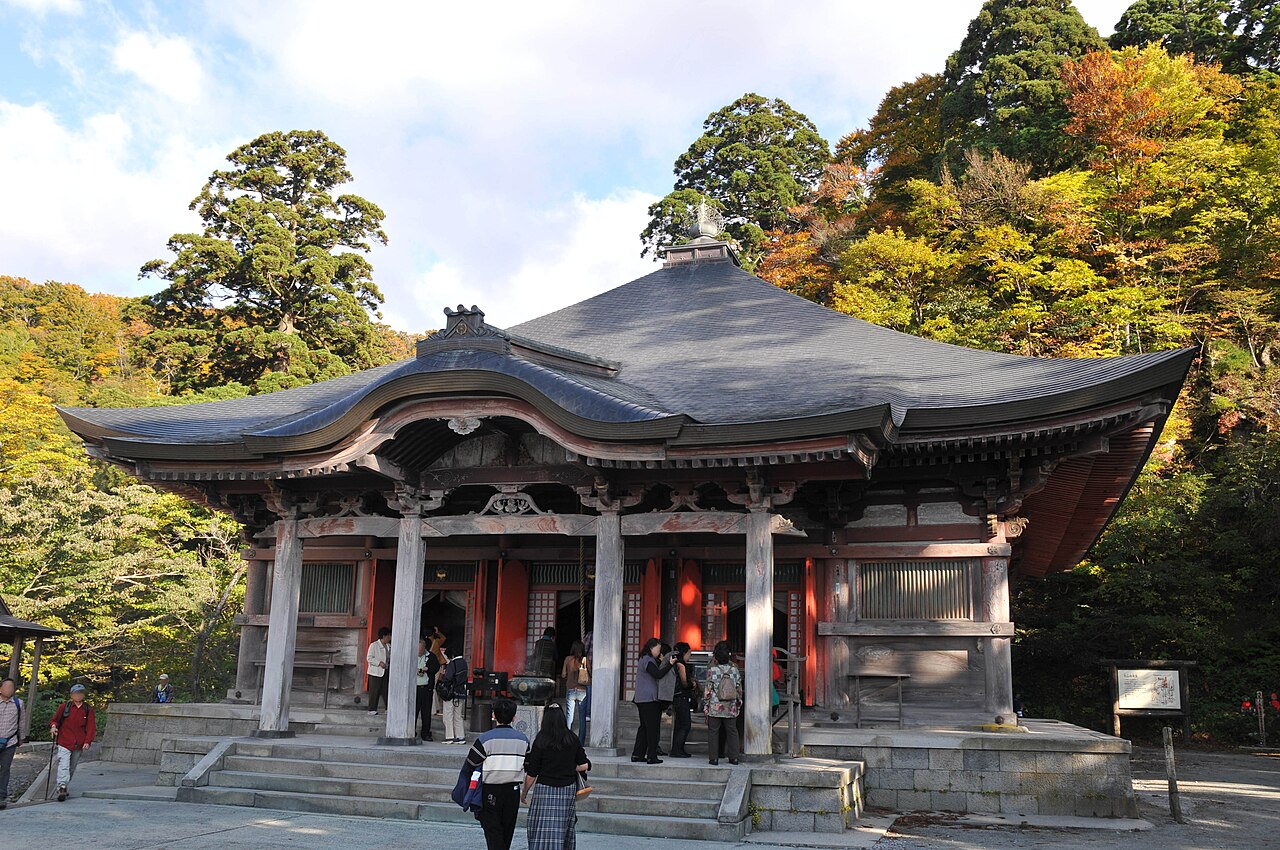
Daisen, in Daisen Town, Tottori, pairs a stone-paved approach of natural stone with a temple precinct where visitors ring a bell and stroke a treasure ox statue, and a mountain whose foothill forest turns colour in autumn. The approach climbs from Daisenji to Ogamiyama Shrine Okumiya, and the certified local shops of the town add Daisen soba to the visit. One way to work through Daisen is to start on the stone-paved approach, stop at the jizo statues and the bell in the temple precinct, look up at the autumn forest and finish over a bowl of Daisen soba.
Walking the Stone-Paved Approach to Ogamiyama Shrine Okumiya
Visitors to Daisenji begin on a stone-paved approach of natural stone running up to Ogamiyama Shrine Okumiya. Remains of monks' quarters lie buried on both sides of the cedar-lined path, a jizo carved into a rock face sits on the right, and beyond it a copper torii, the site of the former main hall and the shrine gate of the Okumiya follow.
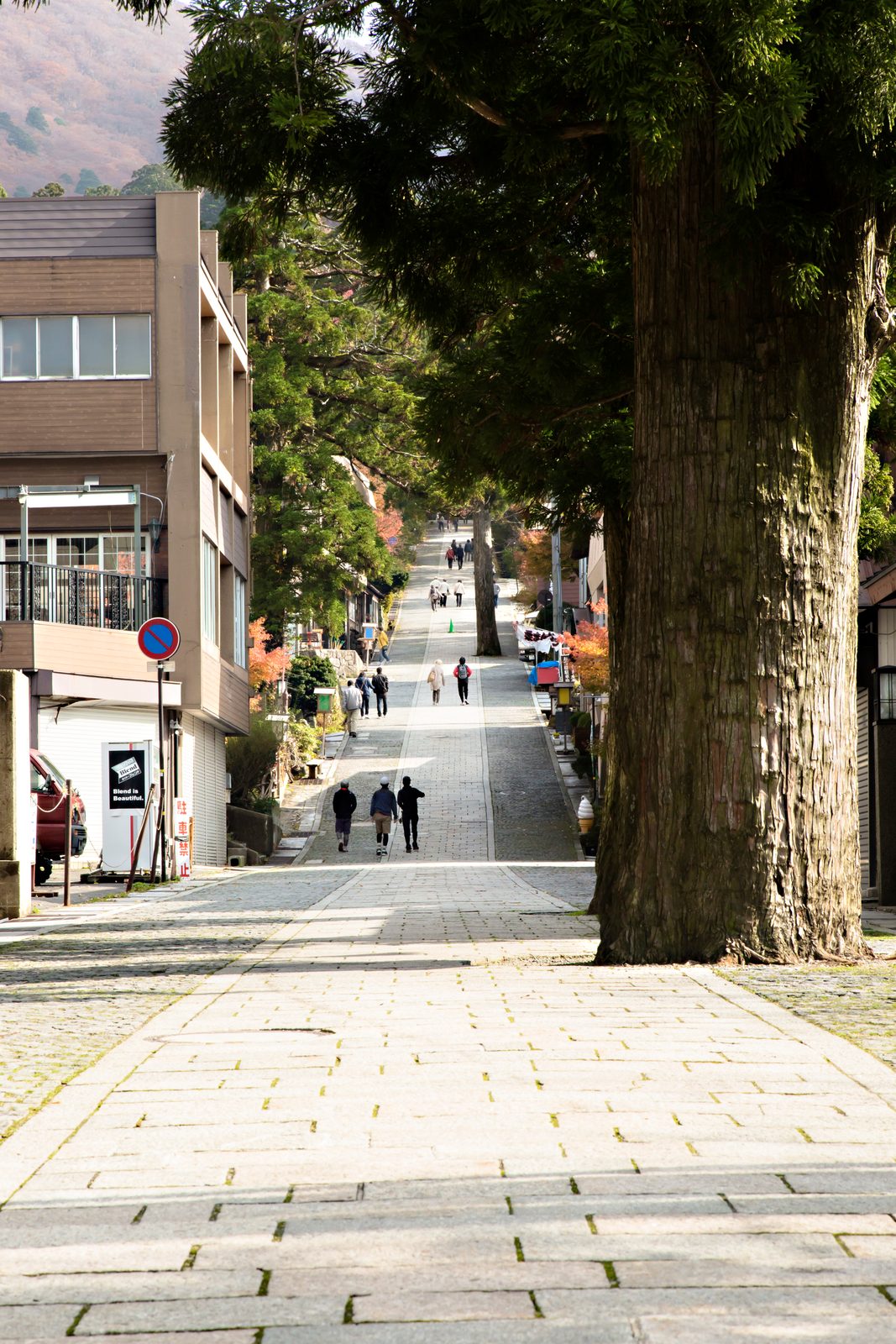
A spring marked with characters sits beside the approach; its water has a clear taste with no aftertaste, and walkers can draw it on the way up. The monk soldiers of earlier days are said to have valued this long-flowing spring. A river in the area runs between stone walls like huge rocks cut in half.
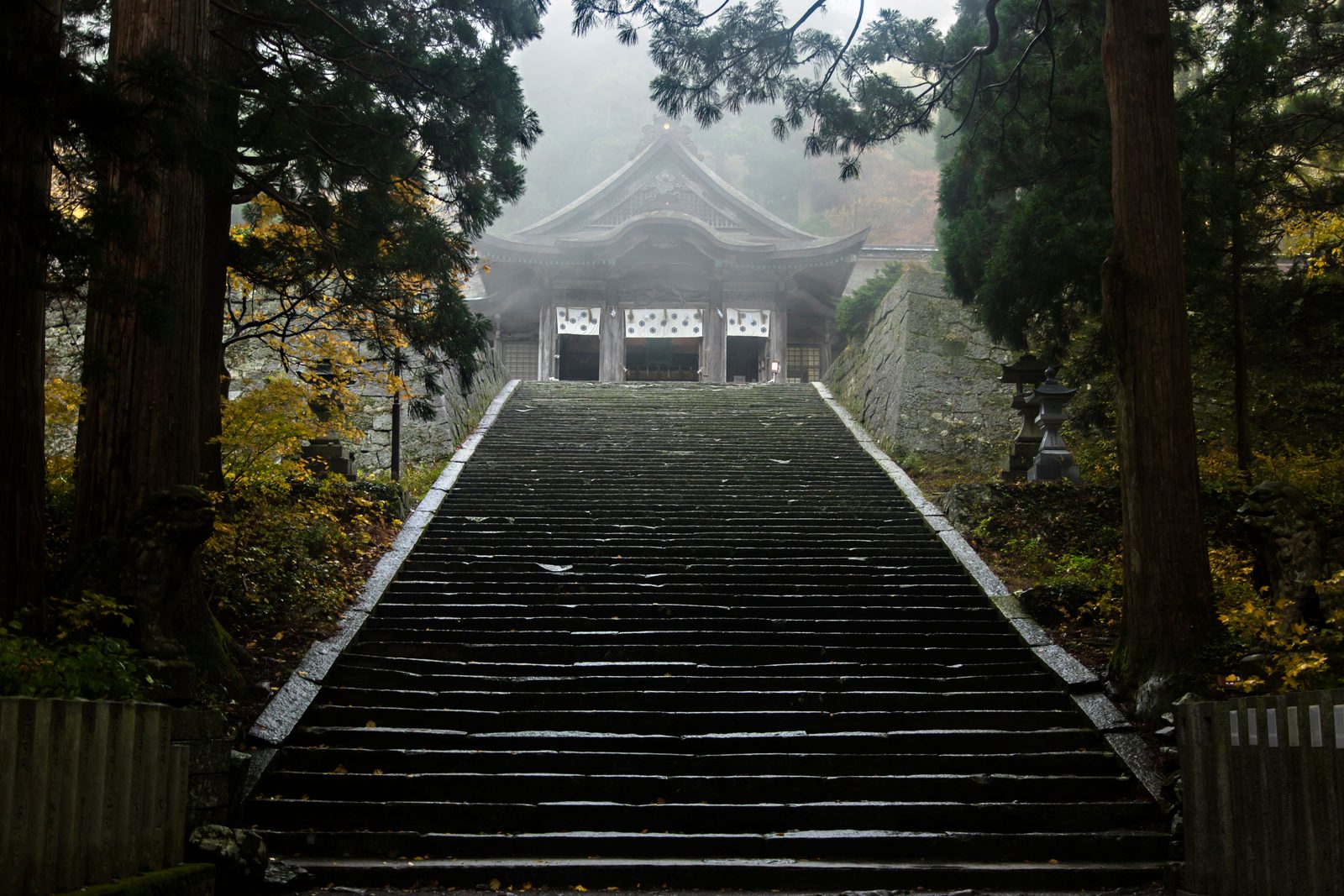
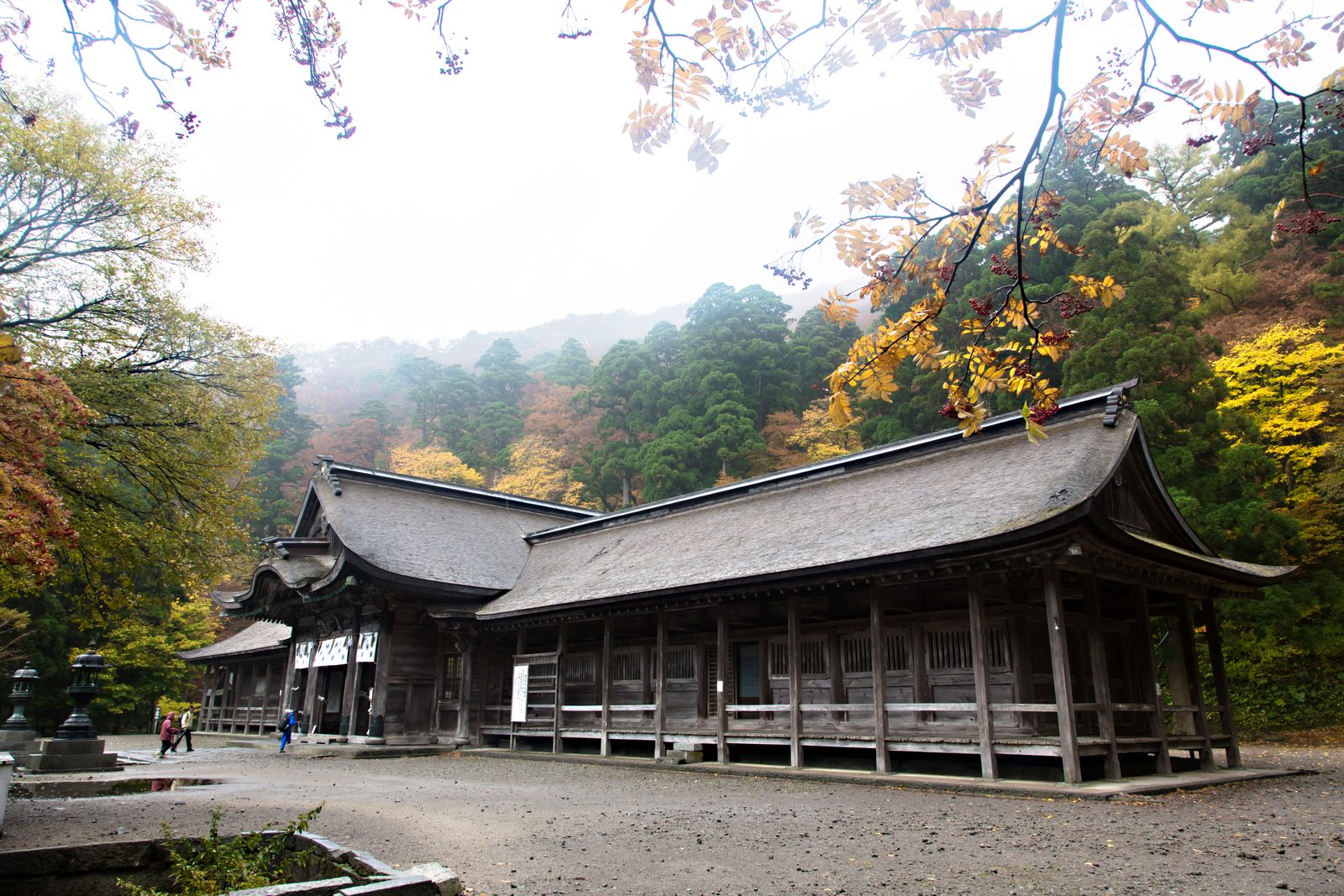
At the upper end the paving reaches the gongen-zukuri main hall of the Okumiya. Its gate is called the reverse gate because the bolt sits on the outside: moved as it was from the front gate of the former main residence of the temple, it still faces backward. If you take one stretch of Daisen on foot, make it this approach: spring, natural stone and gongen-zukuri hall in one climb.
Jizo Statues, a Stone Torii and the Daisenji Precinct
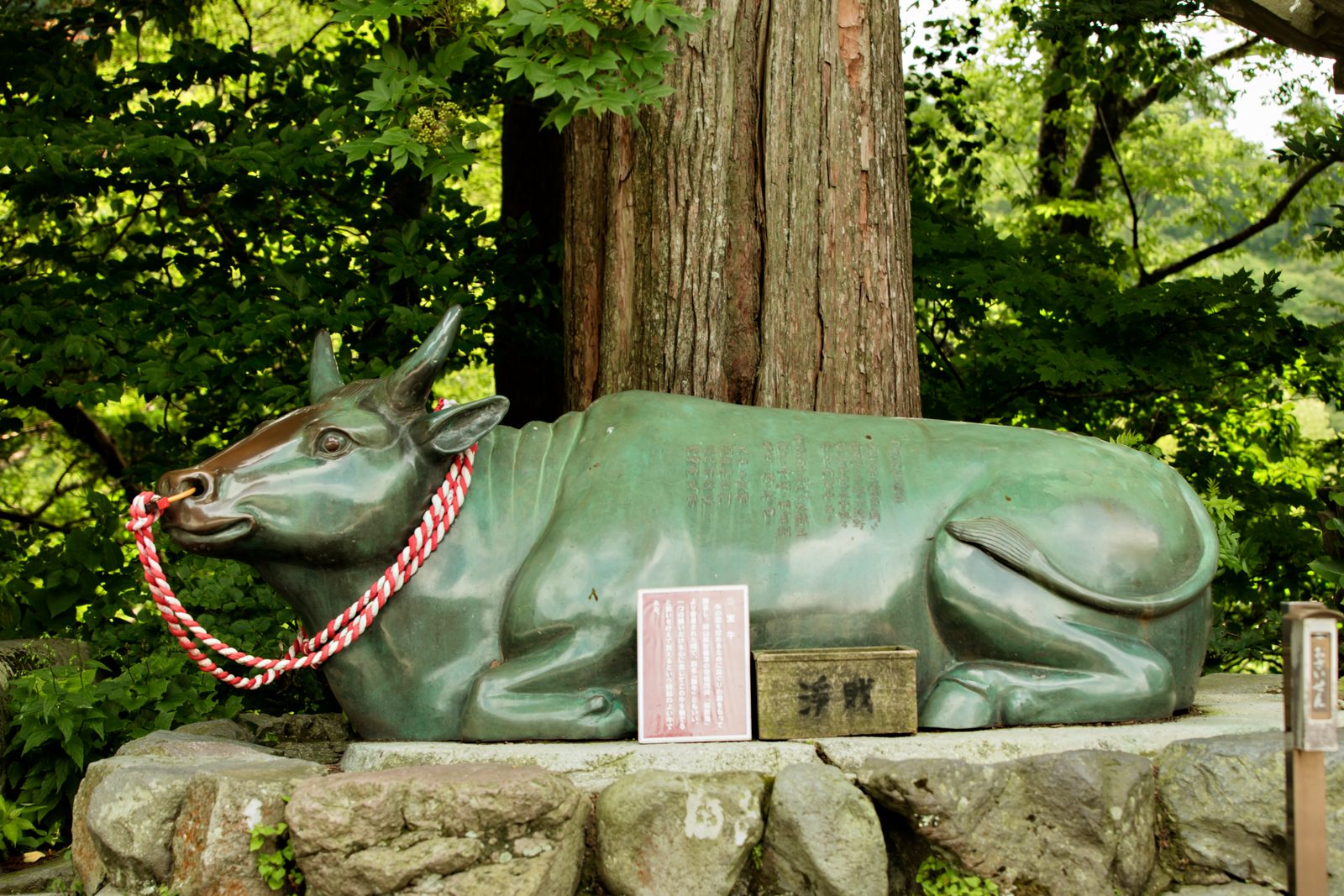
In the Daisenji precinct, visitors ring the bell and stroke the treasure ox statue while making a wish. The hand-wash basin is lotus-shaped and cast in bronze, and a stone torii, one of the torii here, rises on a tall stone pillar.
Jizo turn up in several forms: one stands at the fork of two old roads, and on the old Daisen road countless broken stone monuments at the site of an old hall count together as a jizo. A plump seated jizo waits beside stone steps, another stands quietly in a black pine grove ringed with kumazasa bamboo grass, and one on the approach to the shrine wears a red wool hat and faces slightly upward.
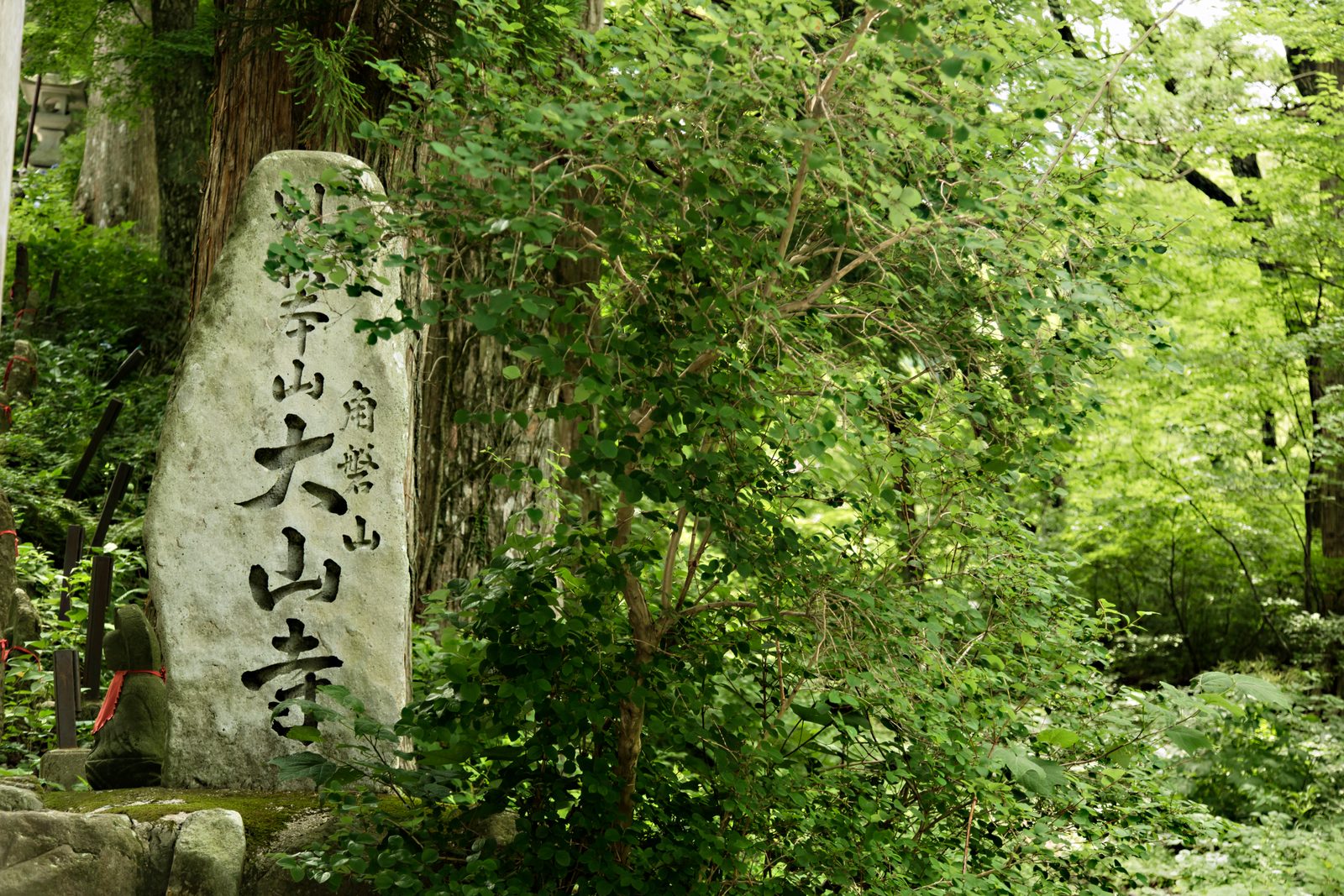
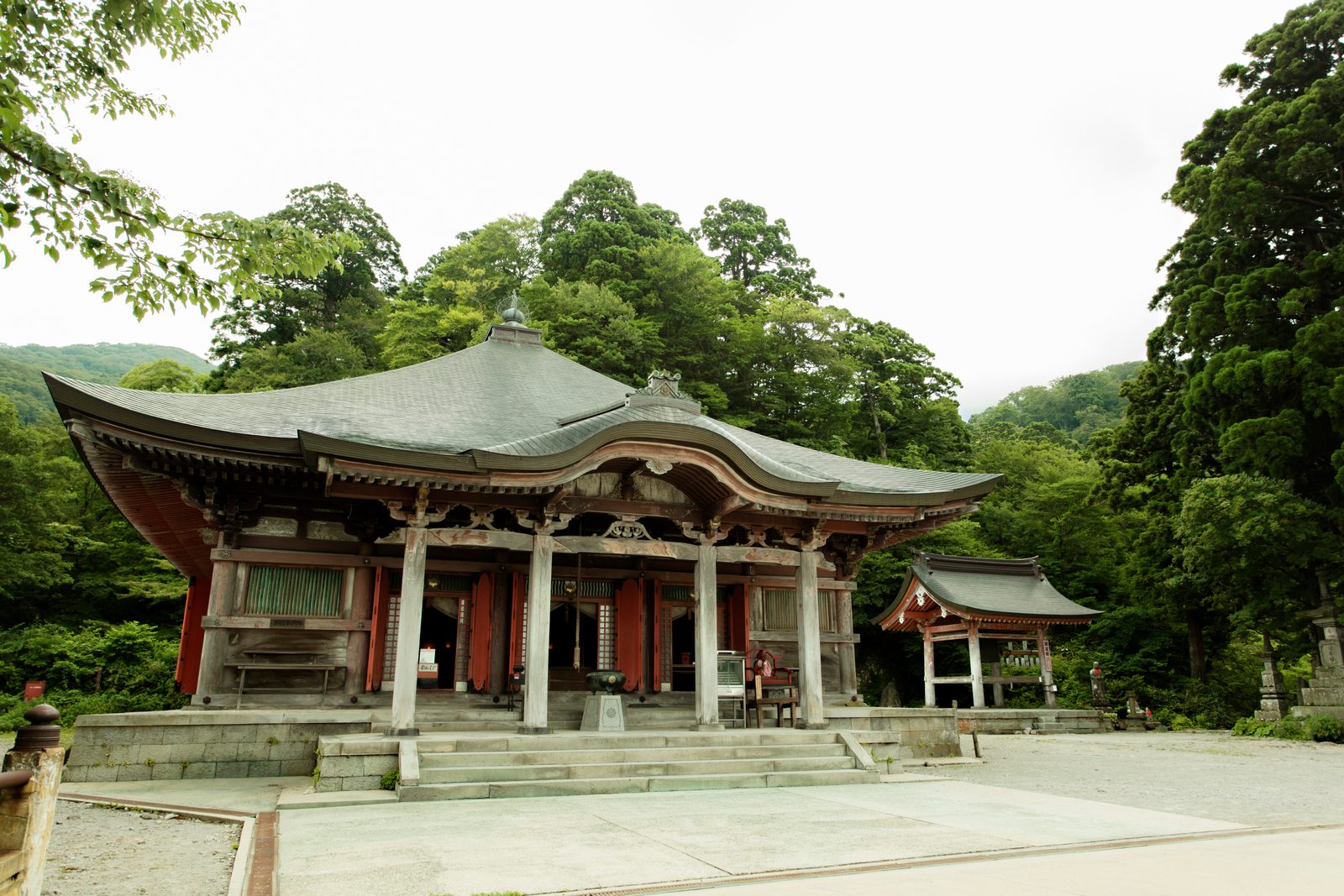
A large jizo statue carved with an invocation dates from the late Edo period, and crossing a bridge carved underneath with the Diamond Sutra is said to erase all sins. The main hall you see today was rebuilt after a fire and, with the bell tower, is a registered cultural property. If you like finding small figures, give the side paths time rather than heading straight for the main hall.
Autumn Colour, the North Face and the Beech Forest
In autumn the forest on the foothills of Mount Daisen turns vermilion, orange and yellow, and the colour in Daisen Town is seen against the north face of the mountain. At Kinmon, once set up as a boundary between the gods and humans, the forest around it takes on the same colours.
In November, visitors can walk on a road of soft fallen leaves near the stone torii. From Goenyama Noroshidai, the view takes in the north face, the highland and the town streets at the foot of the mountain, and in winter the same field turns into a ski slope.
A walk through the primeval beech forest of Daisen passes under green light that is described as pouring down like a shower, and several mountain plants can be seen higher up. If the autumn colour is what you came for, pair the leaf-covered road by the stone torii with the view from Goenyama Noroshidai, where the north face and the town streets are seen together.
Daisen Soba, Okowa and Local Tastes
The specialities of Daisen Town are turban shell and broccoli, and the dish to look for is Daisen soba at certified local shops, made by grinding in the sweet skin of the buckwheat for a distinctive black colour and a plain flavour.
Each certified shop varies its soup stock and toppings: grated yam, simmered naratake mushrooms, homemade tsukudani of forest mushrooms, sand-dune long yam in yamakake soba, and in spring and autumn tempura wild vegetables.
Daisen okowa, a soy-sauce-flavoured glutinous rice dish, cooks shiitake, burdock, chestnut, konnyaku and fried tofu with the rice; it is said to have begun with warrior monks cooking rice before battle, and in the Meiji period it fed brokers at the livestock markets and Daisen pilgrims. A lodge serves Genghis Khan from spring to autumn, a direct-sales shop at a fish centre sells fish landed on the quay, and at the fishing port turban shell is in season in early summer. For a taste of the area, start with Daisen soba, then Daisen okowa; seasonal food and the November road of fallen leaves suit an unhurried pace, so consider places to stay in Daisen.
Getting to Daisen
| Leg | How | Time |
|---|---|---|
| Yonago Station to Daisenji | Nihon Kotsu route bus to the Daisenji stop | About 50 minutes |
| Yonago Kitaro Airport to Yonago Station | Airport connecting bus | About 30 minutes |
| Yonago Kitaro Airport to Daisenji | Taxi or rental car | About 70 minutes |
| Yonago Station to Daisenji | Taxi or rental car | About 40 minutes |
| Yonago IC to the Bakuroza parking lot | Car via Prefectural Route 24 (Daisen Kanko Road) | About 15 minutes |
| Daisenji to Ogamiyama Shrine Okumiya | On foot along the stone-paved approach | About 20 minutes |
New to rural buses and one-man trains? See how to ride them, step by step.
Hours and Fees
| Place | What | Hours or fee |
|---|---|---|
| Daisenji treasure hall | Hours | 9:00 to 17:00 |
| Daisenji treasure hall | Admission | Adults 300 yen; elementary and junior high school students 200 yen |
| Daisenji treasure hall | Closed | No regular closed days; closed for the winter from 1 December to 31 March |
Where to stay
Places to stay near Daisen, Tottori, Japan →
Disclosure: This post may contain affiliate links. If you book through them, we may earn a commission at no extra cost to you.