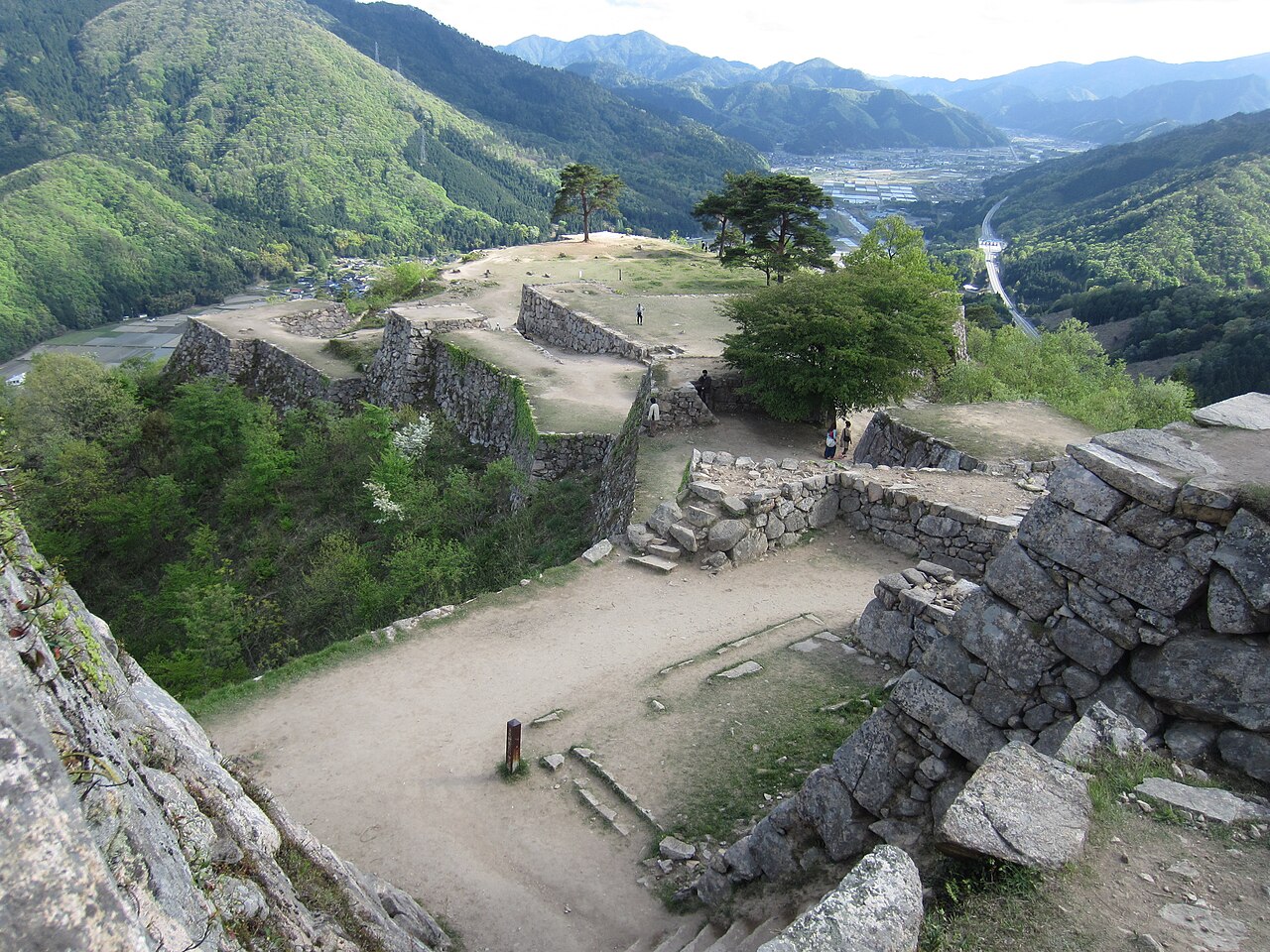
Wrapped in a sea of clouds, Takeda Castle Ruins in Asago, Hyogo, calls to mind a castle floating in the sky, and that view is why it has come to be called the Castle in the Sky and Japan's Machu Picchu. The mist behind the image can occur on clear early mornings in late autumn, a seasonal feature of the Tajima region. No buildings remain on the hilltop, yet the stone walls of the castle's era stand in their original form, laid in a technique that combines stones of various sizes. The cloud and the walls are the two reasons an early start here is worth the effort.
Cloud Sea Mornings at the Sky Castle
The reason to be on the mountain early in the morning is the cloud sea, the sight of the castle wrapped in cloud that gave the ruins the names Castle in the Sky and Japan's Machu Picchu. The ruins also carry a name meaning a lying tiger, a story that comes from the way they look like a tiger lying down.
A cloud sea appears more easily in the early morning from the second half of September. That is why the cloud sea season is the period to plan around. Morning mist on clear early mornings in late autumn is a seasonal feature of the Tajima region, so a clear sky at daybreak is what to hope for.
The cloud does not keep strictly to the season. When there is a temperature difference between noon on the previous day and the morning itself, a cloud sea can appear even in March. None of this is a promise that the cloud will be there on any given date.
Walking the Stone Walls and the Castle's Story
Once inside, the walk follows the walls, and what there is to see is stone. No buildings survive, so the stone walls of the castle's era, still in their original form, are what the visit is built around, and they repay a slow pace. They are laid in a technique that combines stones of various sizes, and they are said to have been built by a stonemason group from Omi, now Shiga Prefecture. In various places the walls form gate structures built to keep enemies out.
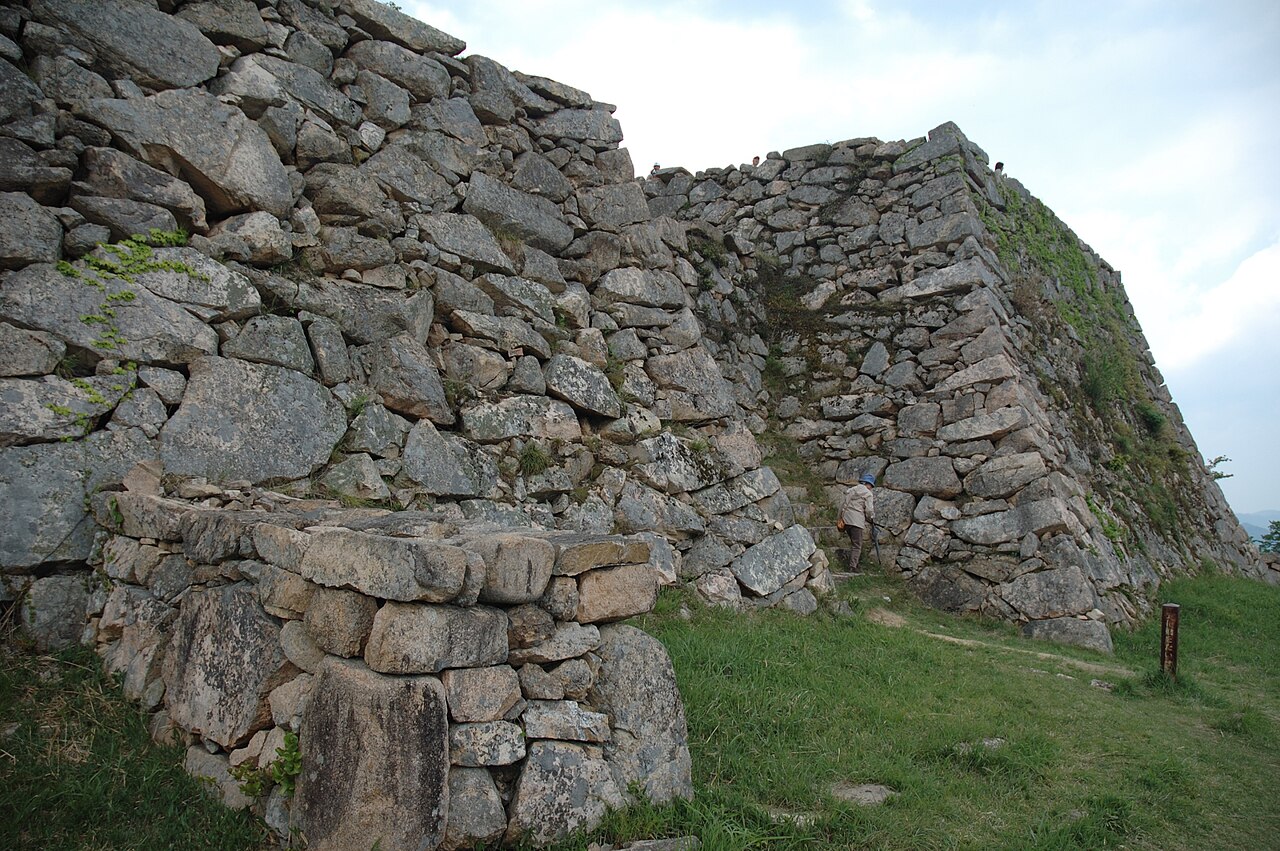
A new viewing path inside the ruins leads down to a stone rampart that visitors could not see up close before, because entry to that part of the castle had been restricted. The stone walls that survive are thought to have been developed while Akamatsu Hirohide was lord of the castle.
Takeda Castle is said to have been built when Yamana Sozen, then the governor of Tajima, ordered his retainers of the Ota-gaki clan to build it, and the Ota-gaki served as lords of the castle for seven generations. The castle is thought to have been lost to Hashiba Hideyoshi's Tajima campaign, after which the Ota-gaki clan is thought to have declined, and the names Yamana and Akamatsu from this story reappear on the castle seals described later.
Seasons: Late Summer to Spring Cherries
The cloud sea season has a lead-in. From the second half of August, cooler days begin to appear. The ruins start to show different faces.
Spring is a season in which a cloud sea rarely appears, but it can sometimes be seen when conditions align. One has appeared in April. A guide has photographed a single wild cherry tree in bloom near the second lookout at a gorge viewpoint, and the pale pink of the cherry blossoms suits both the castle ruins and the cloud sea.
For anyone choosing between seasons, cherry blossom with a cloud sea is a spring possibility rather than a plan, while the early-morning cloud sea of autumn is the surer bet.
Teramachi-dori and the Castle Town
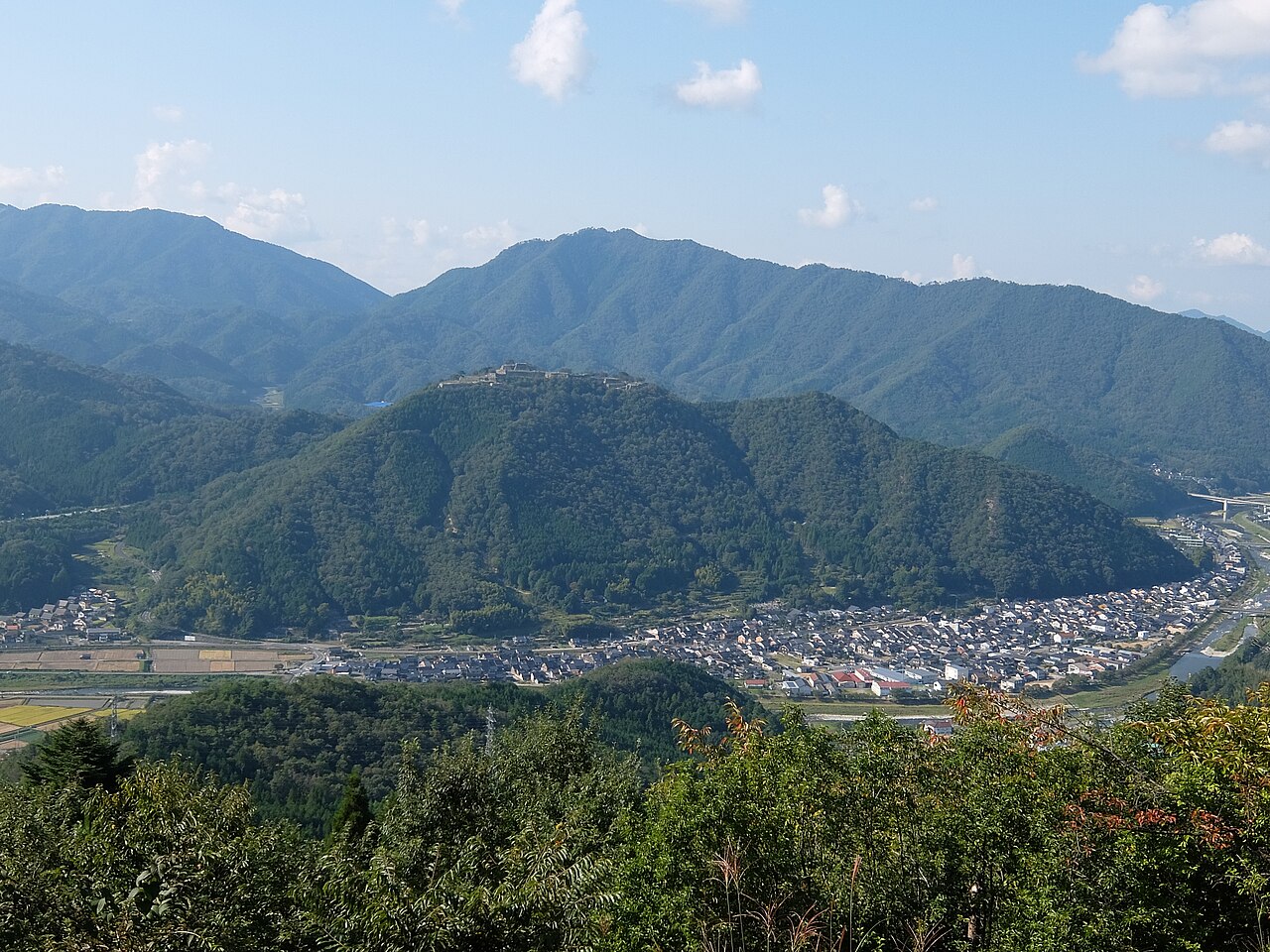
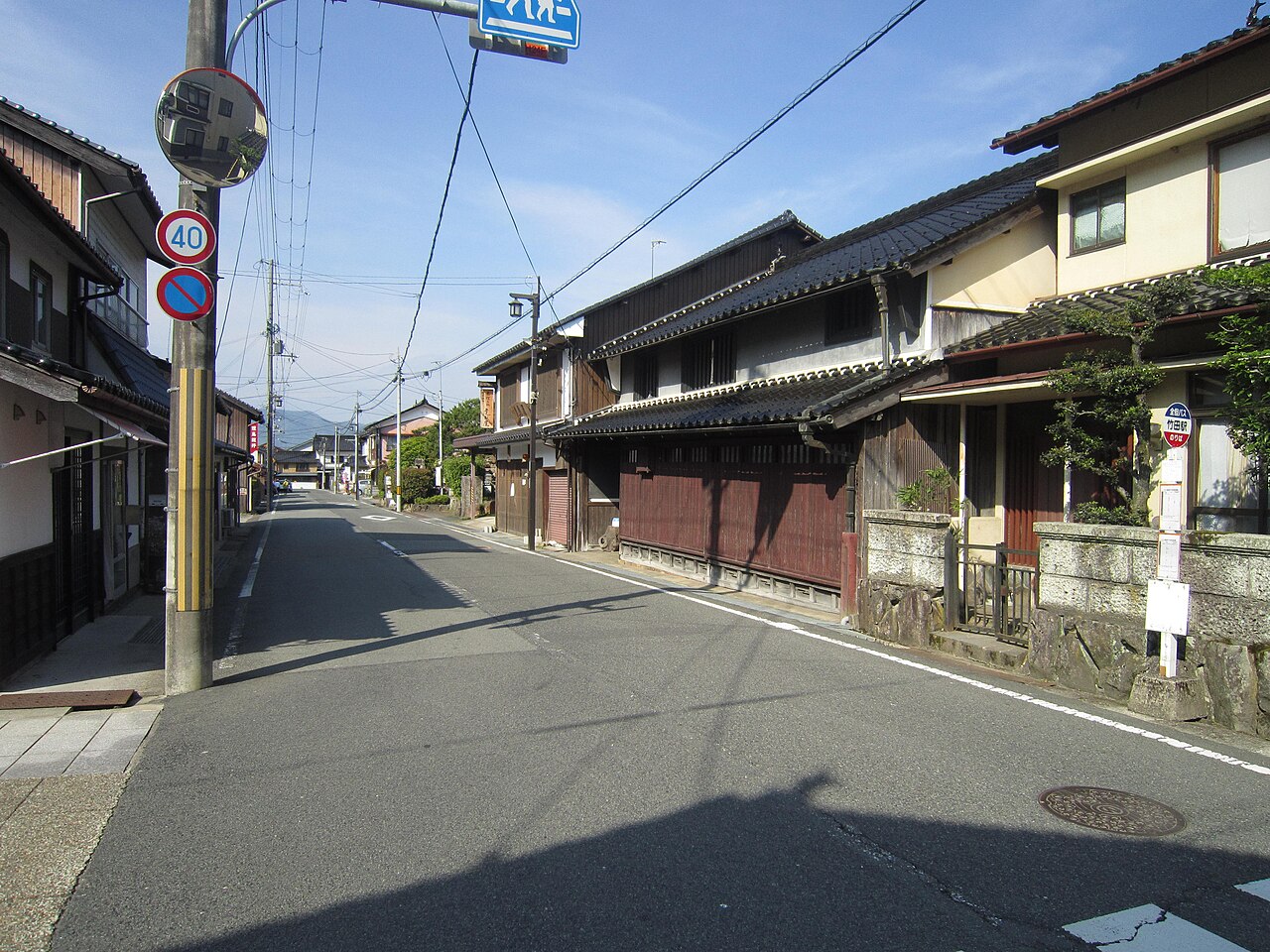
Back at the foot of the hill in the castle town, Teramachi-dori is the stretch where four temples and a shrine stand side by side. Walking it, you pass white-walled fences, a stream with brocade carp swimming in it and a row of pine trees, and about three thousand irises are planted along the stream and in a park.
Beside the approach to the shrine is a sumo spectator stand built as semicircular tiers of stacked stone, designated a prefectural cultural property, and one of the temples has a tile-topped earthen wall.
The castle town also has a converted sake brewery that now holds an information hall, accommodation, a restaurant, a cafe and a marche. For background, the Wadayama tourist information office has exhibits to see of materials centred on the Takeda area, such as the castle ruins and the gorge viewpoint.
Yamajiro no Sato and Castle Seals
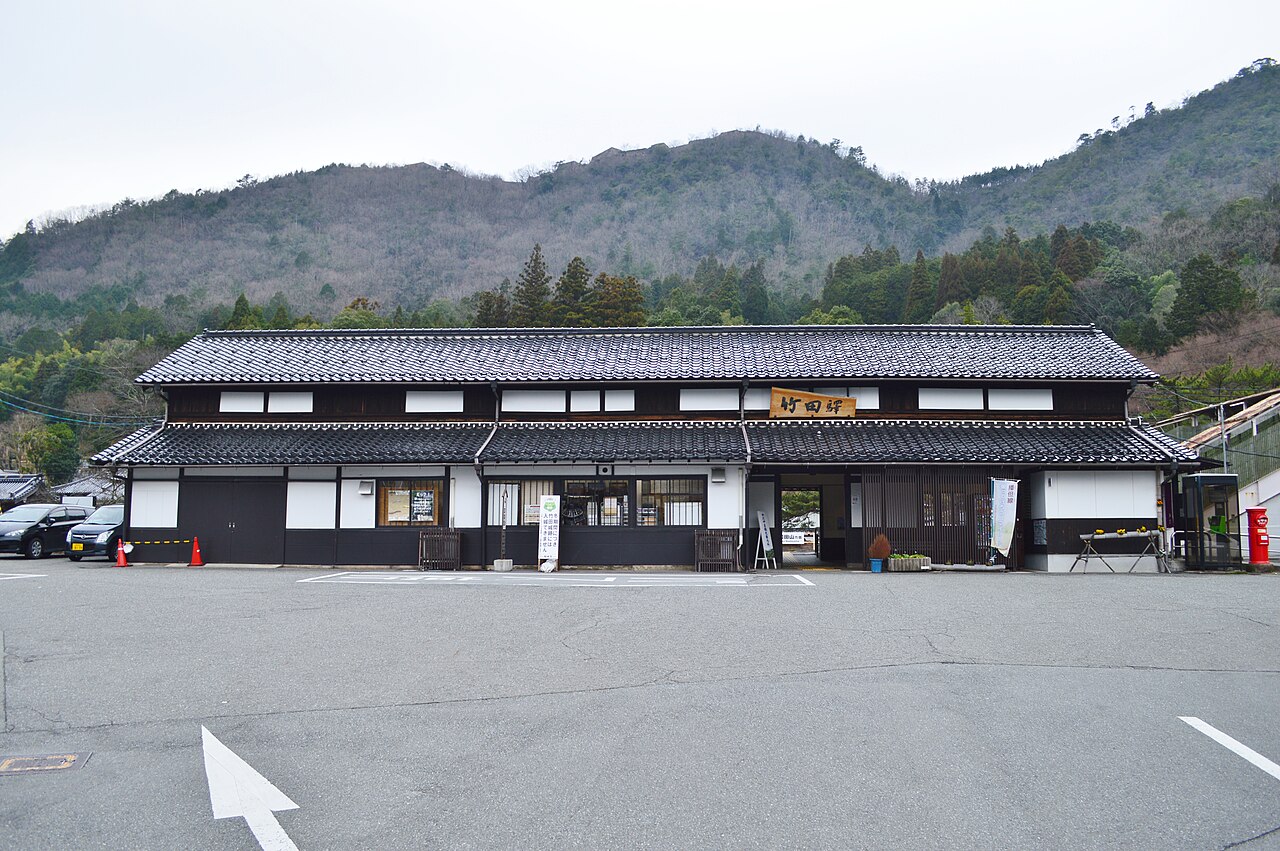
Yamajiro no Sato sits at the foot of the castle ruins, and its information centre is where a visit starts or ends, with three-dimensional photographs to have taken, a theatre showing to watch, the Hundred Famous Castles stamp to collect and a handmade map to pick up for strolling around the town of Takeda. The second floor displays materials about the castle ruins to look over, and next to the information centre are a shop and a restaurant for a meal.
Castle seals limited to Takeda Castle Ruins are sold at the castle information hall and at Yamajiro no Sato, not at the fee collection building at the castle entrance, so buy before or after the climb rather than at the top.
There are three kinds to choose from: one with the Yamana family crest, one with the Akamatsu family crest, and one carrying both, which ties the seal back to the two families in the castle's story. Seal books come in two kinds, brown and red.
Getting to Takeda Castle Ruins
New to rural buses and one-man trains? See how to ride them, step by step.
| Leg | How | Time or charge |
|---|---|---|
| Ekiura Trail and Hyomai Shrine Trail | Two of the four trails; closed for the time being after bears were sighted on the trails | Not in use |
| Bears | Confirmed in various parts of the city and in surrounding municipalities; climbers are asked to make noise with a bell or a mobile phone | - |
| From around Takeda Station | Tenku Bus; the West Trail and the South Trail are the routes on which taxis and buses run | One-day pass 500 yen adults, 250 yen children |
| Yamajiro no Sato to the castle ruins | Tenku Bus | About 10 minutes |
| Takeda Station to the mid-slope bus and taxi stop, then to the castle entrance | Taxi, then on foot | About 20 minutes, then about 20 minutes on foot |
| West Trail from Yamajiro no Sato | Gate passable when going up | 4:30-16:30 |
| South Trail | Park at lots B1 or B2 near National Route 312, then walk; gate passable when going up | 5:00-16:00 |
| Parking | Yamajiro no Sato lot A 100 cars, lot B1 100 cars, lot B2 150 cars | Free |
| Lot A at Yamajiro no Sato | Can become full by around 2:00-3:00 in the morning on weekends and holidays | October and November |
| Himeji to Wadayama Station | Bantan Line | A little under 2 hours |
| Kyoto to Wadayama Station | Limited express | About 1 hour 45 minutes |
| Inside the castle ruins | About 30 to 60 minutes, excluding travel from the parking lot; no toilets inside | - |
Two of the four trails are out of use for the time being, so from around Takeda Station the Tenku Bus is the way up, and the West Trail from Yamajiro no Sato and the South Trail from the lots near the national road are the routes that remain for walking. To start from nearby in the early morning, see places to stay in Asago.
Hours and Fees
| What | Fare or time | Note |
|---|---|---|
| Entry, spring (March 1 to end of May) | 8:00-17:00 | Last entry 16:30 (16:00 for the South Trail) |
| Entry, summer (June 1 to mid-September) | 5:00-17:00 | Last entry 16:30 (16:00 for the South Trail) |
| Entry, cloud sea season (mid-September to early December) | 5:00-17:00 | Last entry 16:30 (16:00 for the South Trail) |
| Entry, winter (early December to January 3) | 10:00-15:00 | Last entry 14:30 (14:00 for the South Trail); no entry from January 4 to the end of February |
| Admission, individual adult (high school and older) | 500 yen | Per person |
| Admission, group adult (20 or more people) | 450 yen | Per person |
| Annual passport | 1,000 yen | Fiscal year Reiwa 8 |
| Volunteer guide | 3,000-5,000 yen | Per guide |
| Castle seal | 300 yen each | Including tax |
| Castle seal book | 2,000 yen each | Including tax |
| The castle information hall | 9:00-17:00 | No closing days |
| Restaurant at Yamajiro no Sato | 11:00-15:00 | Until 16:00 on weekends and holidays |
Fees and hours were checked against official sources between 11 October 2026 and 3 November 2026.
Entry in cloud sea season begins at five in the morning, and the ruins cannot be entered from January fourth to the end of February. If the plan is to be at the entrance at five, start the night before with places to stay in Asago.
Thinking of staying overnight?
Compare places to stay near Asago, Hyogo →
Disclosure: This post may contain affiliate links. If you book through them, we may earn a commission at no extra cost to you.