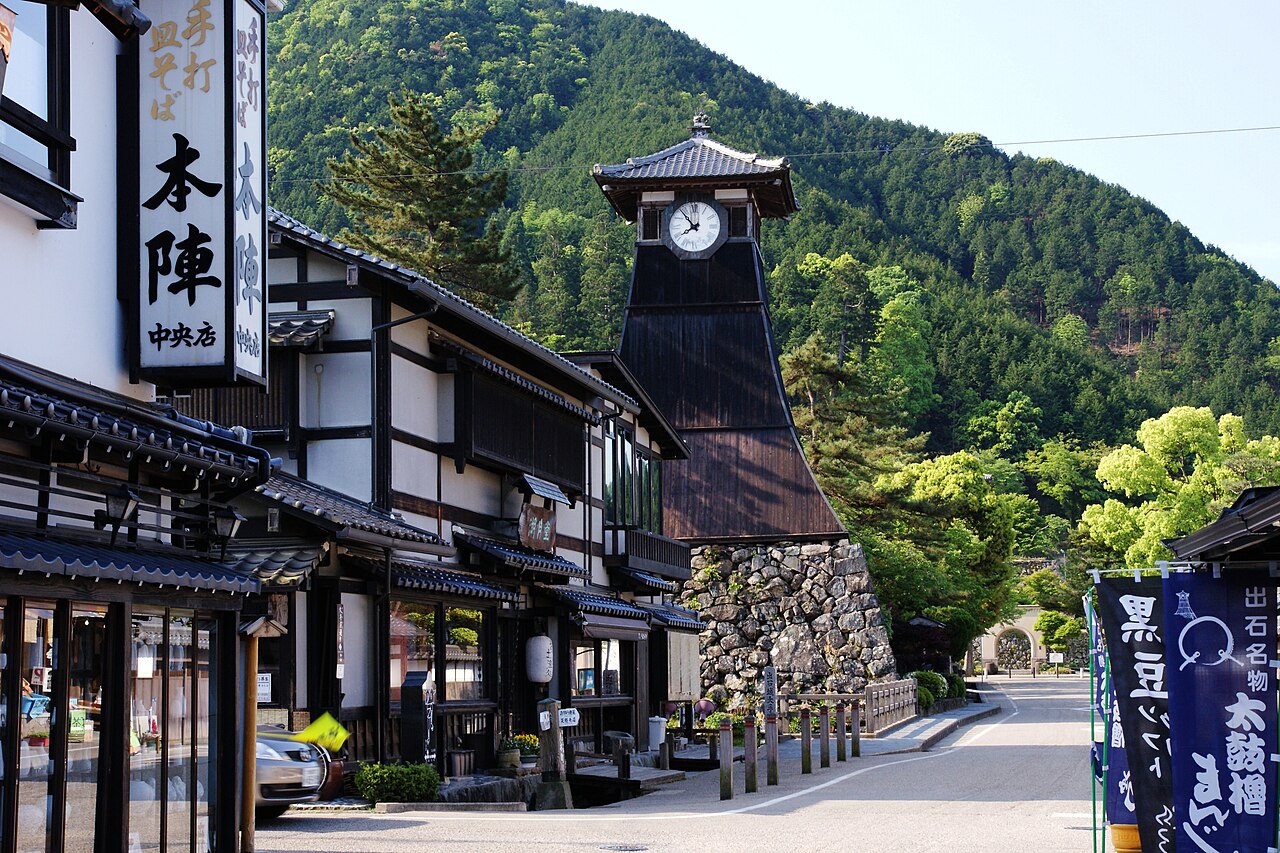
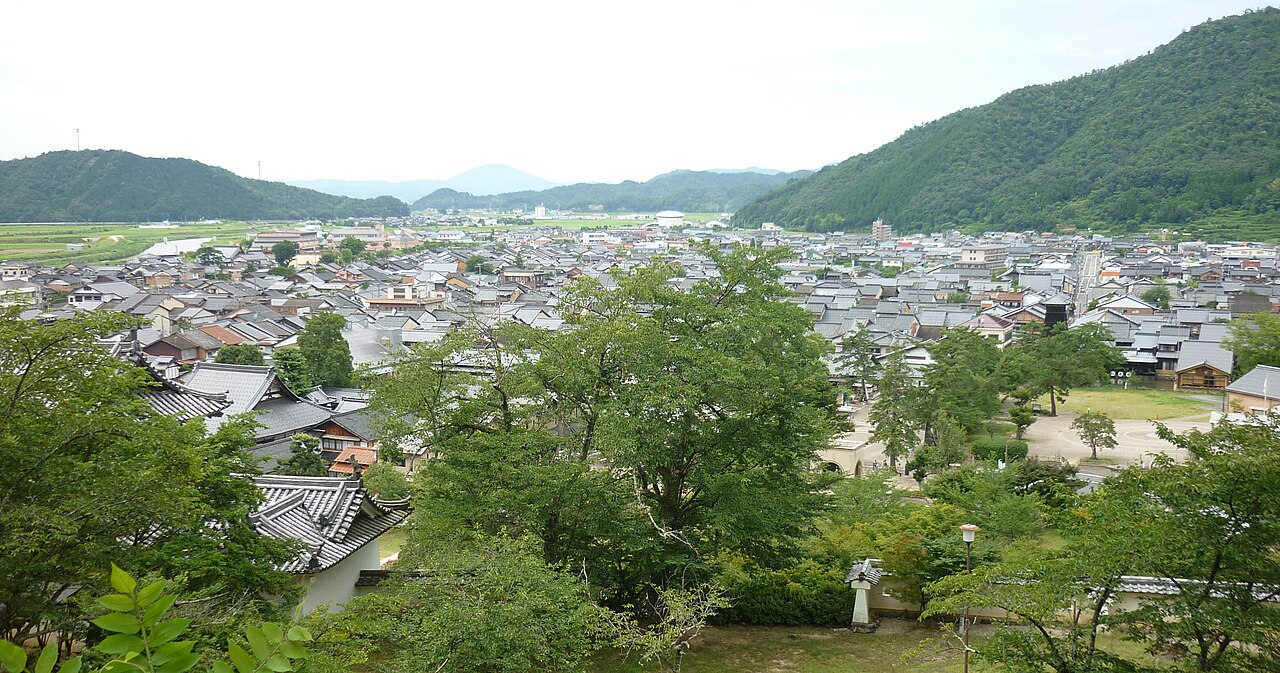
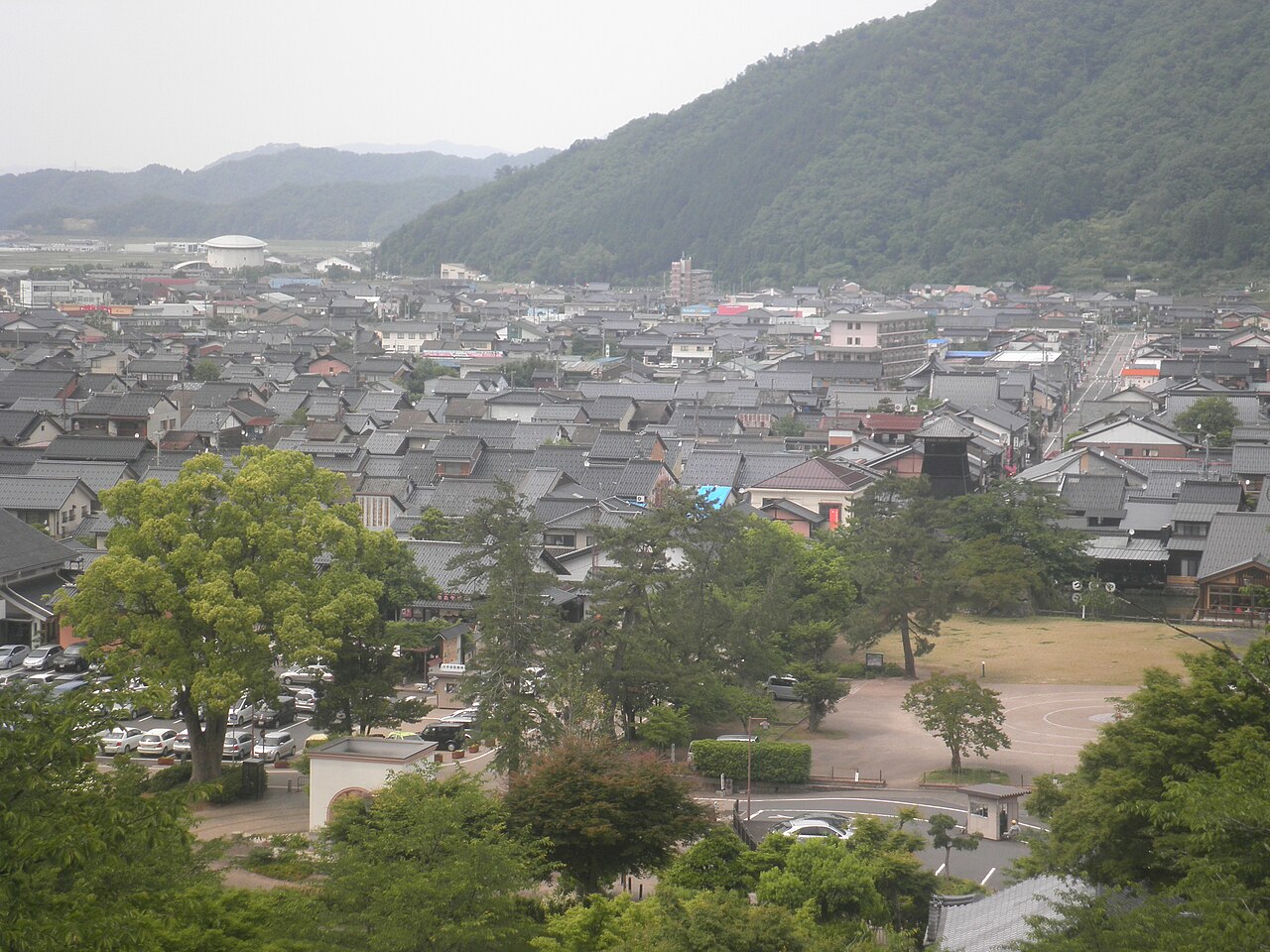
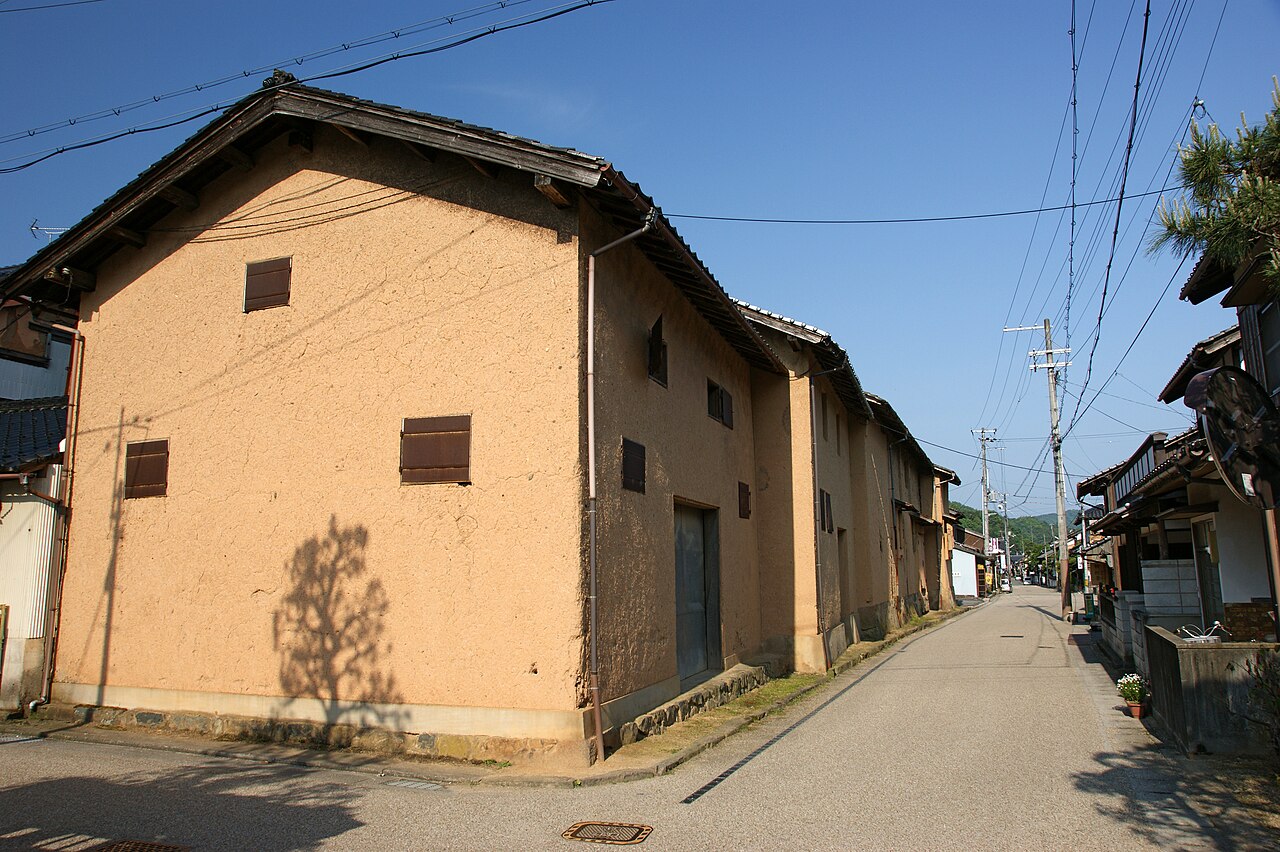
Izushi is a small former castle town in the hills of northern Hyogo. It rewards a slower pace: a morning on the castle terraces above the tiled roofs, a lunch of buckwheat noodles on small white plates, and an afternoon between an old playhouse, a chief retainer's residence and lanes of earthen storehouses.
This guide is for a single day from the Kyoto direction or from Kinosaki Onsen: how to get there, what the ticketed buildings cost and which days they shut, how the local soba is eaten, and a walking order that keeps backtracking to a minimum.
Getting There from Kyoto and Kinosaki Onsen
From both Toyooka Station and Kinosaki Onsen Station the last leg into Izushi is by bus, so plan the rail part first.
- From the Kyoto direction: the JR San'in Line limited express Kinosaki reaches Toyooka, Ebara or Yōka station in about two hours and thirty minutes.
- From Toyooka Station: the bus to Izushi takes about twenty minutes.
- From Kinosaki Onsen Station: allow about forty minutes for the roughly twenty kilometres, made up of about ten minutes on the JR line from Kinosaki Onsen Station to Toyooka Station and about twenty minutes on the bus from Toyooka Station to Izushi.
Weekday fares on the Zentan Bus direct service:
| Route | Weekday direct fare |
|---|---|
| Kinosaki Onsen Station to Izushi | seven hundred and fifty yen |
| Hiyoriyama to Izushi | eight hundred and ninety yen |
If you will ride the bus more than once, compare the Zentan Bus free pass covering Kinosaki, Izushi and Kannabe Kogen:
| Free pass | Adult | Child |
|---|---|---|
| One day | one thousand five hundred yen | seven hundred and fifty yen |
| Two days | two thousand five hundred yen | one thousand two hundred and fifty yen |
| Three days | three thousand yen | one thousand five hundred yen |
With Kinosaki Onsen Station only about forty minutes away, the hot-spring town is a comfortable overnight base for Izushi; you can compare inns and hotels around Izushi and Kinosaki before fixing your dates.
A Walking Order for One Day
One order that fits the opening times of the ticketed buildings:
- Morning: the castle ruins. Take the Inari approach, one hundred and fifty-seven stone steps beneath thirty-seven torii gates, up to the enclosure at the top and the view over the roofs.
- Late morning: Karo Yashiki and Eirakukan, the chief retainer's residence and the old playhouse.
- Lunch: sara soba, five small plates of Izushi ware to a serving.
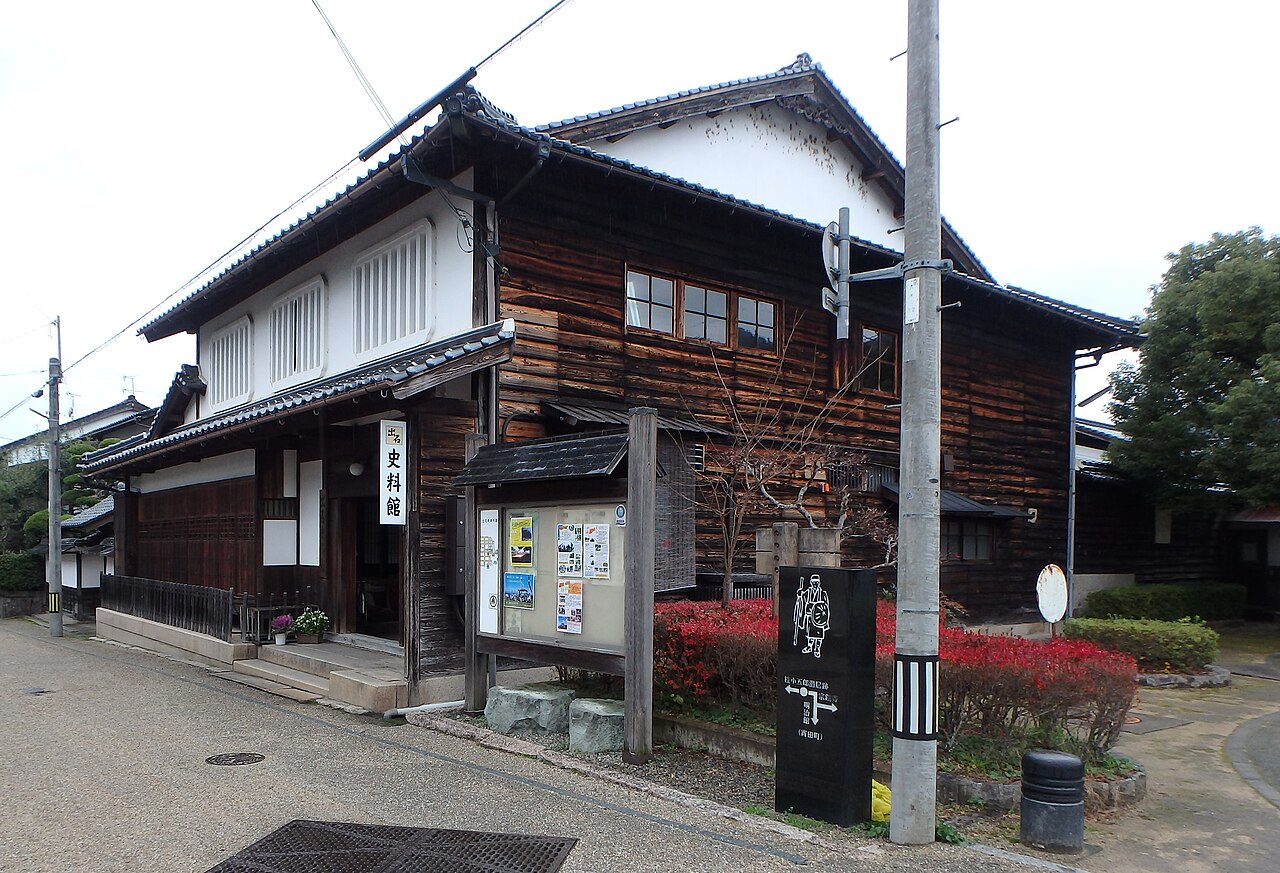
- Afternoon: Meijikan and the storehouse lanes, then Sokyoji temple in Tojo-machi or the longer walk north to Izushi Shrine in Miyauchi.
- Before you leave: the Izushi Tourist Centre, which sells souvenirs of Izushi soba and Izushi ware and serves local sweets such as soba soft-serve and soba-tea pudding.
What the Three Ticketed Buildings Cost and When They Shut
All three open at the same time, and all are cheap. Individual rates are shown first, group rates in brackets.
| Building | Adults | Students | Hours |
|---|---|---|---|
| Izushi Eirakukan | four hundred yen (three hundred and twenty) | two hundred and forty yen (one hundred and ninety); junior high, elementary and younger free | half past nine to five, five being the last admission |
| Izushi Karo Yashiki | two hundred yen (one hundred and sixty) | high school and university students one hundred and twenty yen (one hundred) | half past nine to five, last admission half past four |
| Izushi Meijikan | two hundred yen (one hundred and sixty) | one hundred and twenty yen (fifty) | half past nine to five, last admission half past four |
Closing days to plan around:
- Eirakukan is closed every Thursday, on the thirty-first of December and on the first of January.
- Meijikan is closed on Mondays (the following day when the Monday is a public holiday) and from the twenty-eighth of December to the fourth of January.
Eirakukan deserves the most time of the three. It opened in nineteen hundred and one and is the oldest surviving playhouse in the Kinki region; it went dark for a period, was restored, and still stages kabuki and variety shows. The working stage machinery has been kept, including a revolving stage turned by hand, the "suppon" lift that raises an actor up through the hanamichi walkway, and an underground passage beneath it; the auditorium seats about three hundred and sixty.
Where to stay
Places to stay near Izushi, Hyogo, Japan →
Disclosure: This post may contain affiliate links. If you book through them, we may earn a commission at no extra cost to you.
Sara Soba: Five Plates Make One Serving
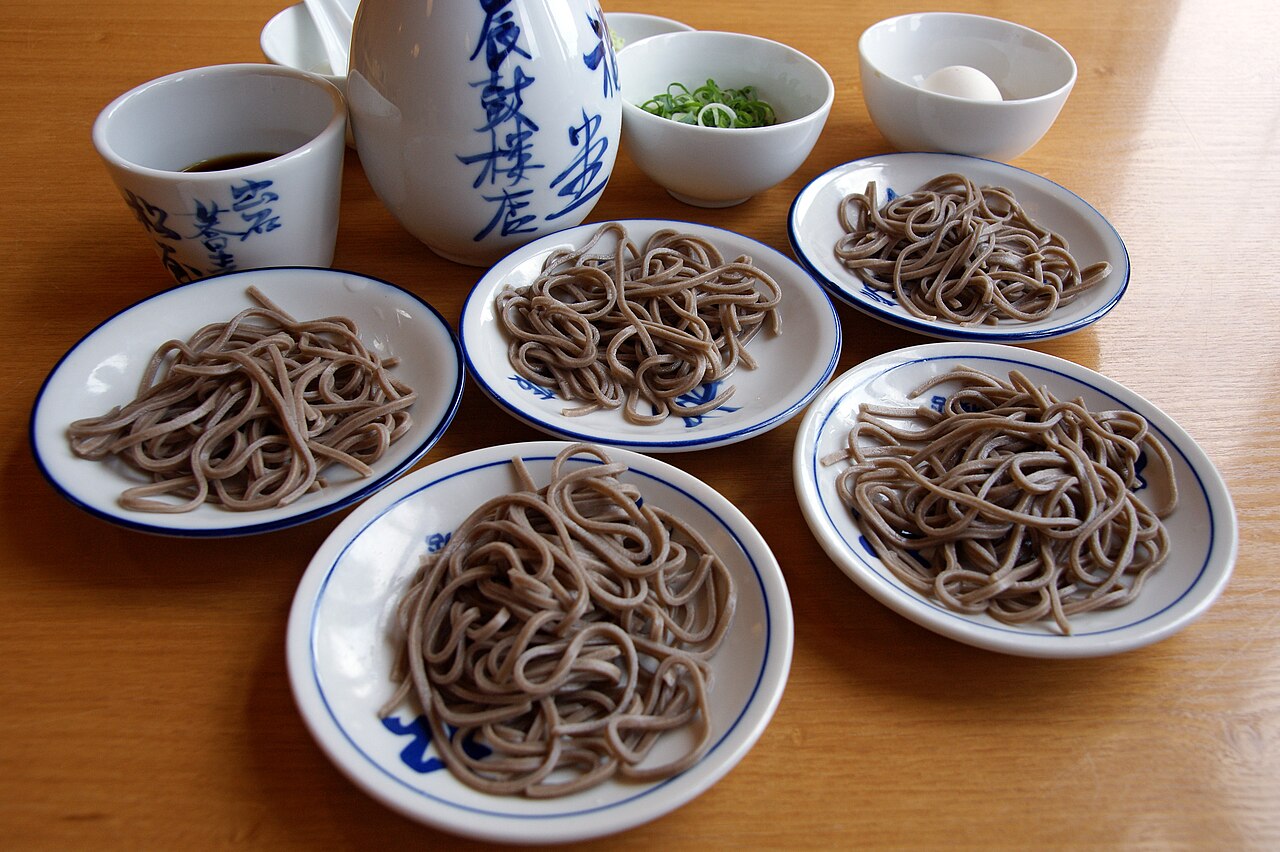
Izushi's dish is buckwheat soba laid out on small plates of Izushi ware, the milky-white porcelain the town is known for. The story told locally is that it dates from the middle of the Edo period, when Sengoku Masaakira arrived from the Ueda domain in Shinshu and brought that region's way of making soba with him; over time a serving settled at five white plates of Izushi-yaki. Each plate holds a bundle of noodles, and the set comes with a dipping cup, grated condiments, chopped scallion and a raw egg.
Some shops make a game of it. At Kizan, men who finish twenty plates or more and women who finish fifteen or more receive a "soba-tsu tegata", a token for soba connoisseurs, and a single diner who clears forty plates or more is awarded the "kiwami" grade of the same token.
The porcelain is a souvenir in its own right. Izushi ware is prized as a milky-white porcelain, its vases in particular, and the Izushi Tourist Centre stocks it alongside local soba.
Up to the Castle Terraces
Izushi Castle was built in sixteen hundred and four by Koide Yoshihide at the foot of Mount Ariko, laid out as a hillside castle of stepped enclosures. The Inari approach that leads up through it has one hundred and fifty-seven stone steps and thirty-seven torii, and the Inari enclosure at the top is the viewpoint for the whole town.
Above it lie the ruins of Arikoyama Castle, built in fifteen hundred and seventy-four by Yamana Suketoyo, then military governor of Tajima. It was a large fortress: measured in metres, about seven hundred and forty from east to west and seven hundred and eighty from north to south. It is listed among the Continued Top One Hundred Castles of Japan and protected as a national historic site as the Yamana clan castle sites; many visitors go up for the view from the summit and for the stone walls of different periods that survive on the way.
Sokyoji Temple and Izushi Shrine
Sokyoji, in Tojo-machi, is a Rinzai temple founded in the Ōan years of the late fourteenth century by Yamana Ujikiyo and moved to its present site after Yamana Suketoyo took over Izushi. It was the Yamana family's mortuary temple, revived in the Genroku years by the priest Takuan Sōhō, who is said to have entered the priesthood here as a boy; with a main hall and five or six Buddha halls, it is among the largest temples in the area.
Izushi Shrine stands in Miyauchi, a little north of the town, and once held the rank of kokuhei-chūsha. Cherry trees line both sides of the approach between the first and second torii, so spring is its busiest season; the grounds also hold a garden of wisteria, iris, bush clover and maple around a pond where fish are raised. The present halls are said to have been built in seventeen hundred and seventy-four by the Sengoku clan, and the treasury holds documents connected with the emperors Shijō, Go-Daigo and Go-Murakami.
A Short History of the Castle Town
Yamana Suketoyo moved to Izushi in the Tenshō years of the late sixteenth century and built his castle on the hill south of the town, a site now called Kojōzan. In the eighth year of Tenshō, fifteen hundred and eighty, Toyotomi Hideyoshi took the castle and Suketoyo surrendered. The lordship then passed through Toyotomi Hidenaga, Maeno Nagayasu, Koyama Hidemasa and Matsudaira Tadanori before Sengoku Masaakira was installed early in the Hōei years, and the castle was abolished after the Meiji Restoration.
Under the Sengoku, Izushi was a domain of thirty thousand koku governed by Sengoku Oki-no-kami, and it became the setting of the Sengoku Sōdō, a domain dispute connected with Kamiya Ten that lives on in kōdan storytelling.
Before You Go
- Choose your day with the closures in mind: a Thursday takes Eirakukan out of the plan, and a Monday takes Meijikan out.
- Last admission at Karo Yashiki and Meijikan is half past four, so put the castle steps in the morning and the buildings after lunch.
- The fares, hours and closing days above come from official information published by the operators; check each official website before you set out.
- If you would rather go with a guide, see what tours are currently running around Izushi and Toyooka.
- For an overnight stay, search inns and hotels in and around Izushi.