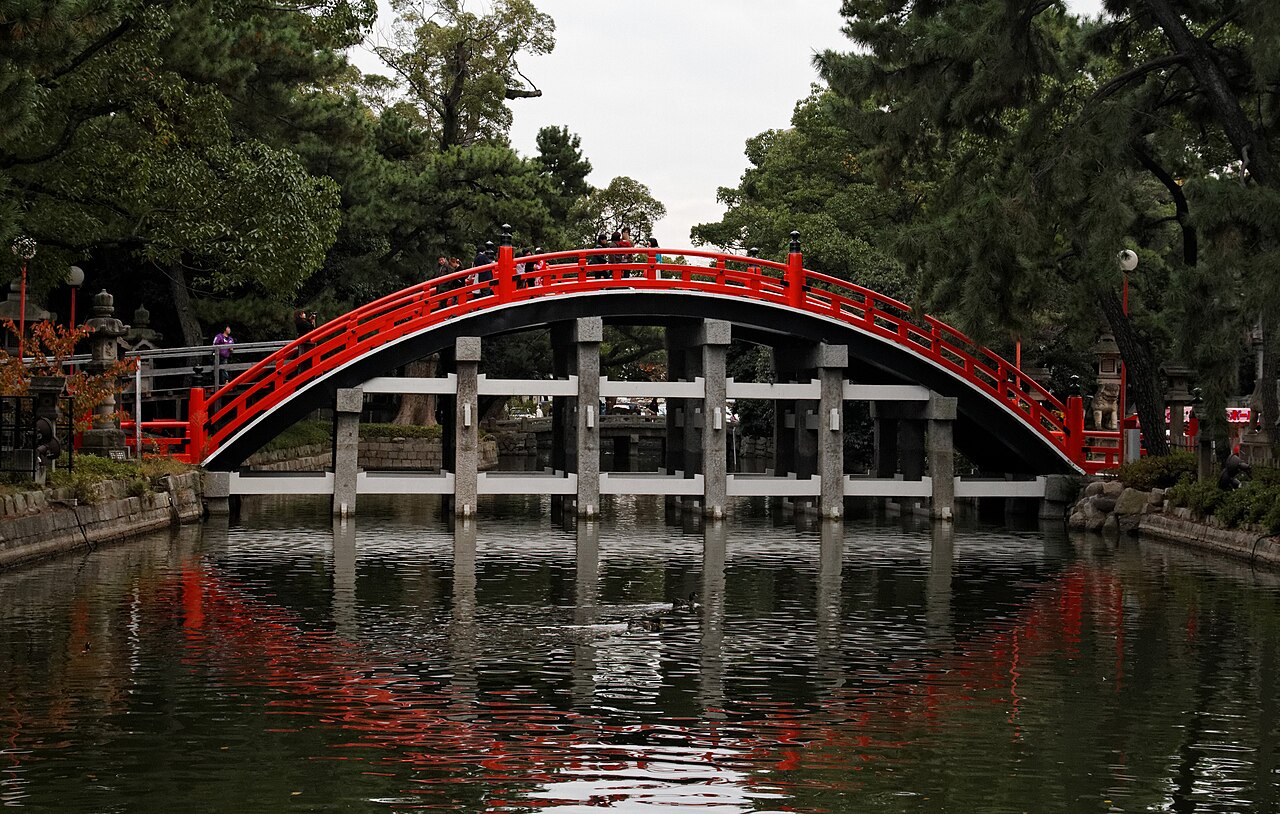
Crossing the bridge to reach the main hall is how many worshippers arrive at Sumiyoshi Taisha, and there is a belief that the crossing alone serves as purification. The shrine's founding is recorded in the regency of Empress Jingu. It is the head shrine of about two thousand three hundred Sumiyoshi shrines nationwide, and its main buildings are in the sumiyoshi-zukuri style, which became a model for shrine builders elsewhere in Japan.
The Four Main Halls: Walking the Sumiyoshi-zukuri Line
The four main halls are all National Treasures, built in the sumiyoshi-zukuri style, which pre-dates influences from the Asian mainland.
Walking between the first to fourth main halls follows no particular order of worship. The sequence at each is two deep bows, two claps, a prayer and a final deep bow. The first, second and third main halls are arranged in a vertical line, and the third and fourth sit side by side.
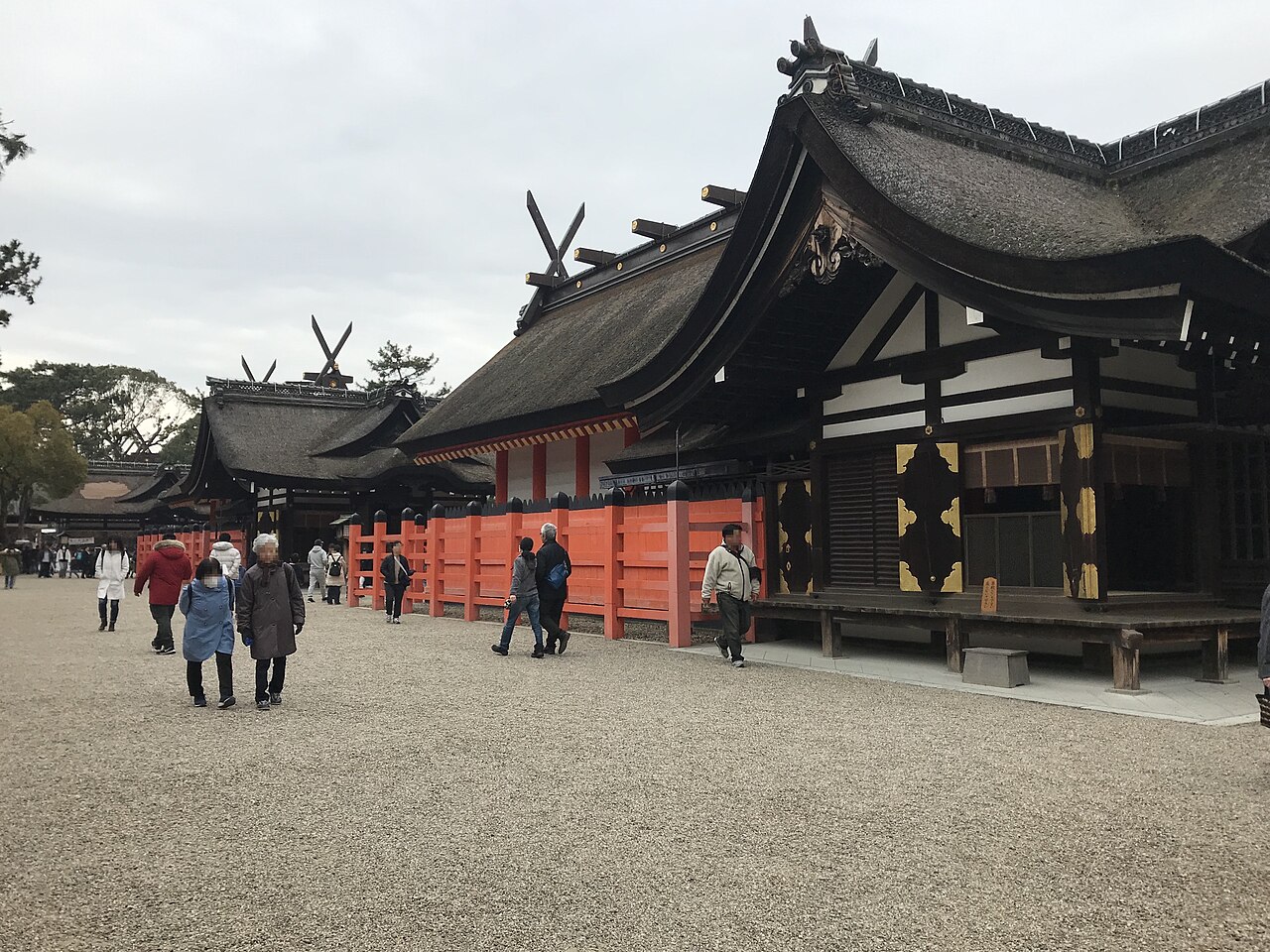
Looking along the line, visitors find every hall facing west toward Osaka Bay. The two roof slopes that flow down on either side of the ridge can look like an opened book. Mercury pigments give the beams their bright vermillion, and the whitewash on the walls is made from crushed seashells.
The Sorihashi Bridge and the Approach: Crossing Before You Worship
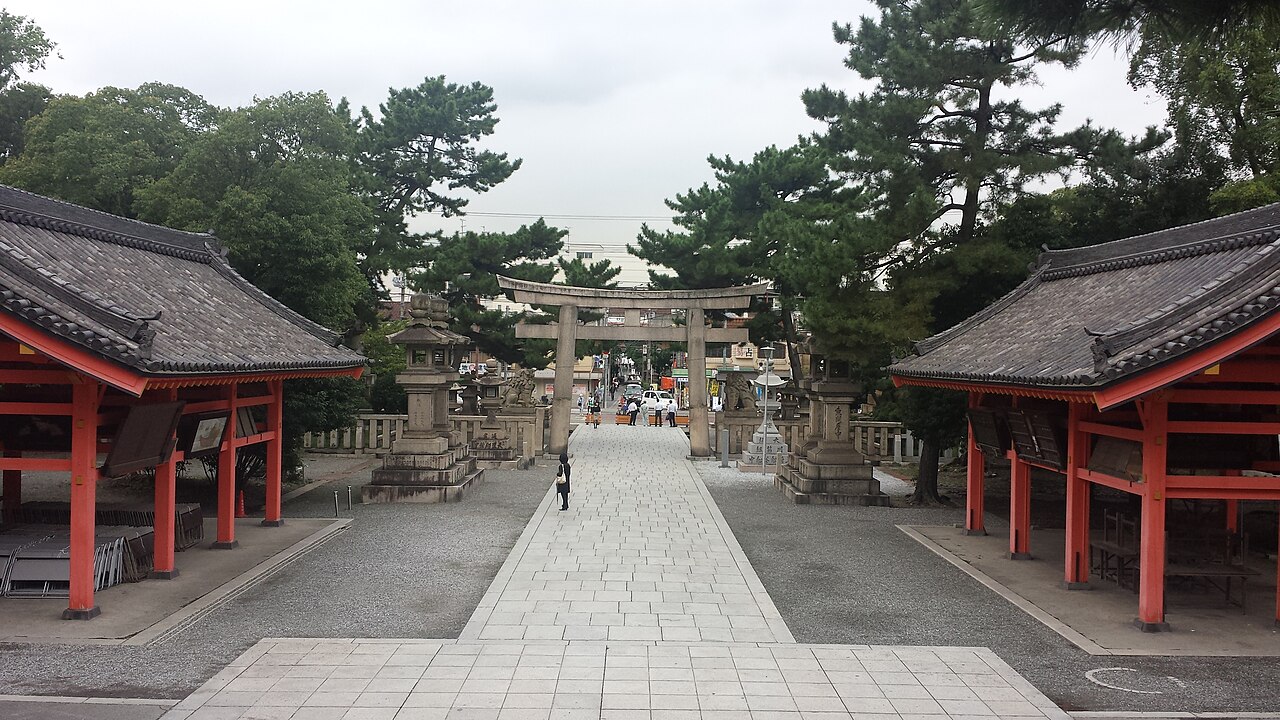
Take the approach slowly: Nishi Ootorii, the Sorihashi bridge and the temizuya each come with an act of their own.
Bowing lightly in front of the torii comes before passing through it. Nishi Ootorii is the first thing visible when heading to the shrine. The center of the approach is said to be where the deity walks, so walking at the side is recommended.
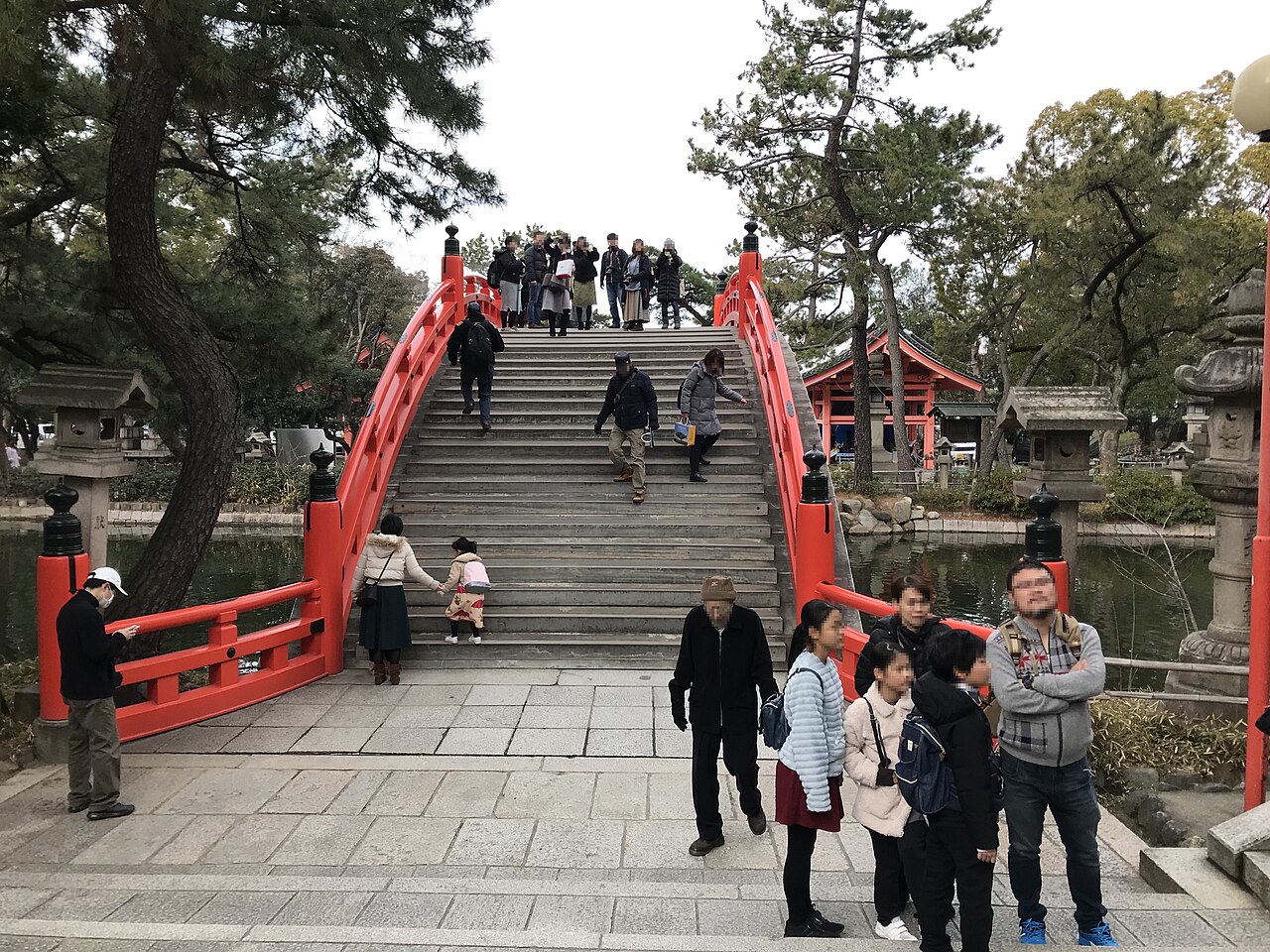
Holding the railings on both sides is what visitors are asked to do when crossing the bridge. Its modern form has a steel frame and cypress-wood boards. At the temizuya, the ladle goes in the right hand to draw water and wash the left hand, and it is not put directly to the mouth.
If you would rather have the shrine explained as you walk, a private guided visit to Sumiyoshi Taisha is bookable in advance.
Stones, Charms and the Hatsutatsu-mairi Round
Anyone arriving with a wish has Goshogozen, the Omokaru stone and the Hatsutatsu-mairi shrines to pick from.
Picking up a stone at Goshogozen, on the south side of the first main hall, follows a belief that a pebble inscribed with the character for five, large or power makes wishes come true when kept as a charm. Visitors can also get into a bowl on the grounds and take commemorative photos. A rabbit statue stands in front of the fourth main hall.
Following the Hatsutatsu-mairi means visiting four shrines on the first tatsu day of each month. The round runs from Tanekashi-sha to Kusumi-sha and Asazawa-sha and ends at Otoshi-sha, where sacred rice is received. At Kusumi-sha, a small cat is received with the left paw raised in odd-numbered months and the right paw raised in even-numbered months.
Testing whether a wish will be granted is what visitors do at the Omokaru stone, a stone for divining wishes at a small shrine next to Otoshi-sha. At Omoto-sha, visitors may buy small wooden plaques called ema, write down prayers and wishes for love, and hang them up outside the shrine. At Tanekashi-sha, those who have received a prayer are given an otanesen coin.
The Subsidiary Shrines: Daikai, Funatama, Shiga and Wakamiya
Go to Daikai Shrine for a main hall built in the same Sumiyoshi-zukuri style as the main shrine, with Shiga Shrine in parallel beside it.
Stopping at Daikai Shrine, visitors find a heiden, a watarigoten and a west gate around the main hall. All three are designated Important Cultural Properties together with that hall. Shiga Shrine faces west and enshrines three deities, in a single shrine building.
Looking at the door painting of Funatama Shrine, visitors see old Japanese higaki-bune and sailing ships, with airplanes above. Funatama Shrine is an ancient shrine listed in the Engishiki. Wakamiya Hachimangu, south of Goshogozen, faces west and enshrines Emperor Ojin, child of Empress Jingu, the deity of the fourth main hall.
Rice Planting and the Stone Stage: The Otaue Shinji
Plan around the Otaue Shinji, a national Important Intangible Folk Cultural Property held every year, or a performance day at the Ishibutai.
Watching the rice-planting ritual, visitors see a seedling passed from the ueme to the kaeueme before planting begins. Sacred water is poured on the four sides of the paddy to purify it. Sacred oxen are led through the paddy, and women plant rice seedlings in its waters. Kagura-me perform the Yaotome dance at the central stage of the paddy.
Looking at the Ishibutai, visitors see a stone stage that faces north toward the four main shrines. On performance days, a vermillion fence is placed along its edge, and the two galleries beside the south gate are opened for the musicians who perform inside. The Sumiyoshi odori is danced in the shape of the character for heart.
Purification, Archery and Moon-viewing Through the Year
The year also brings the chinowa reed ring of the Nagoshi Harae Shinji, a long-distance kyudo archery tournament and moon-viewing poems on the Sorihashi bridge.
Joining the procession of the Nagoshi Harae Shinji, participants take one reed and pass through the chinowa while purifying themselves. A waka poem is recited during the passage. At the moon-viewing festival, Shinto priests recite selected poems from submitted offerings in the ancient manner on the bridge. The Sumiyoshi odori and bugaku are then offered there.
New Year: The White Horse, Sacred Water and Fire
If the visit falls at the beginning of the year, look for the sacred horse Shirayuki-go, the sacred well water and the Sumiyoshi Tondo fire.
Seeing a white horse at the beginning of the year is said to ward off evil spirits. In the white horse ritual, Shirayuki-go visits each main shrine and then runs around the precincts. A goshuin and an amulet are offered only on that day. The chief priest draws water from the sacred well, drawn only for the Wakamizu no Gi and the rice-planting ritual.
Calling out to each other, Ebisu with a young plum branch and Daikoku with a bag of small rice cakes approach one another in the Tōka Shinji. At the Sumiyoshi Tondo festival, old amulets, talismans and New Year decorations are burned in sacred fire. On Ebessan days, prayers are held before the shrine and prayer wood bearing wishes is burned.
Putting the Sections Together: A Route Through the Shrine
Following the sando, the path of worship from the torii to the shrine buildings, sets the order of a visit. Start at Nishi Ootorii, cross the arched bridge and stop at the temizuya before the main halls. Goshogozen fits in after the halls, and the wish-divining stone comes last, because Otoshi-sha lies southeast of the main shrine precincts. You can compare places to stay in Osaka before you book.
Getting to Sumiyoshi Taisha, Hours and Fees
New to rural buses and one-man trains? See how to ride them, step by step.
| Item | Details (as listed) |
|---|---|
| Nankai Main Line | Sumiyoshitaisha Station, three minutes on foot heading east |
| Nankai Koya Line | Sumiyoshihigashi Station, five minutes on foot heading west |
| Hours, April to September | six to five |
| Hours, October to March | six thirty to five |
| Prayer | received daily, nine to three fifty, no reservations; ten thousand yen per wish |
| Parking | about two hundred cars; thirty minutes two hundred yen, free for two hours with prayer; closed nights and New Year period |
Times and fees above are as listed.
Thinking of staying overnight?
Compare places to stay near Osaka →
Disclosure: This post may contain affiliate links. If you book through them, we may earn a commission at no extra cost to you.