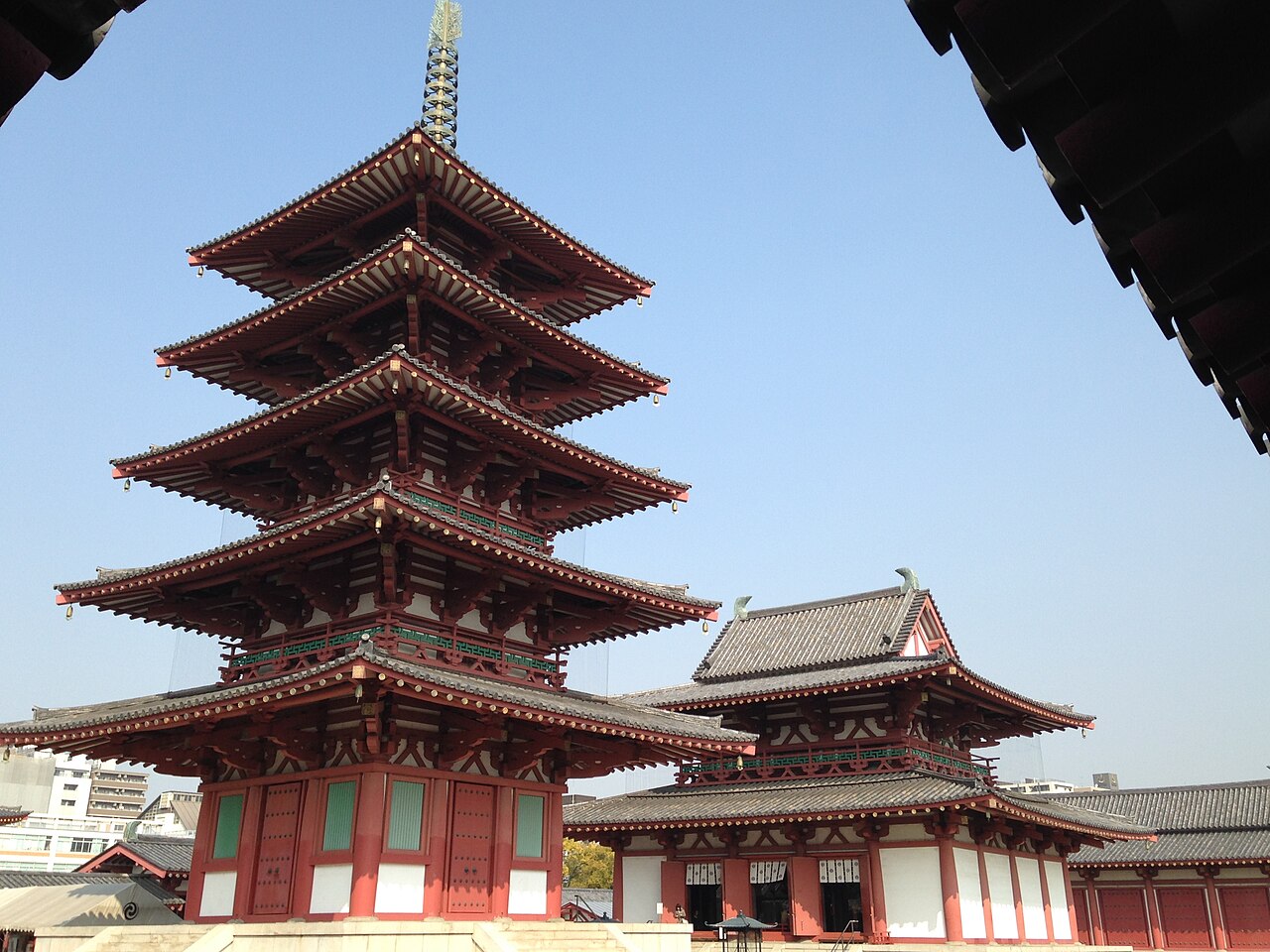
The area around Genshoji-zaka has a long history as a temple town. At Shitennoji, visitors have a sutra wood strip floated after the memorial service. At Keitakuen, garden paths, stepping stones and bridges run around a wide pond. Anyone can copy sutras at Isshin-ji, and Genshoji-zaka is a narrow, gently sloping stone-paved slope.
This route runs from Shitennoji to Keitakuen, Isshin-ji, Genshoji-zaka and Aizen-do, and leaves out the Osaka City Museum of Fine Arts and the EDGE THE HARUKAS attraction.
At Shitennoji, a hall attendant sinks the sutra wood strip in a turtle-shaped water basin, and the strip floats up to the water surface by itself.
| Time guide | Place | What you do | Walk or stay |
|---|---|---|---|
| Morning | Shitennoji | Arrive on foot from Tennoji Station, heading north | Twelve minutes |
| Morning | Central Temple and Treasure Hall | See the halls and the collection | About forty minutes |
| Morning | Shitennoji garden | Sit in the Japanese garden | About twenty minutes |
| Afternoon | Keitakuen | Walk the pond path | Entry until sixteen thirty |
Floating a Sutra Strip and Sitting in the Garden at Shitennoji
After the memorial service, visitors have the sutra wood strip floated at the turtle-shaped water basin of Shitennoji. Water flows through a bamboo tube from the mouth of a stone turtle, and the practice floats a wooden tablet bearing a posthumous name. Once the rite is done, visitors hand the memorial sutra wood strip to the person in charge there.
Visitors can see the picture-scroll of Prince Shotoku's life legends in a hall that is opened on the twenty-second of every month. Kobo Daishi, in his youth, visited Shitennoji and worshipped the setting sun at the west gate. Sitting in the Japanese garden, a world without noise and bustle opens up although it lies in the city.
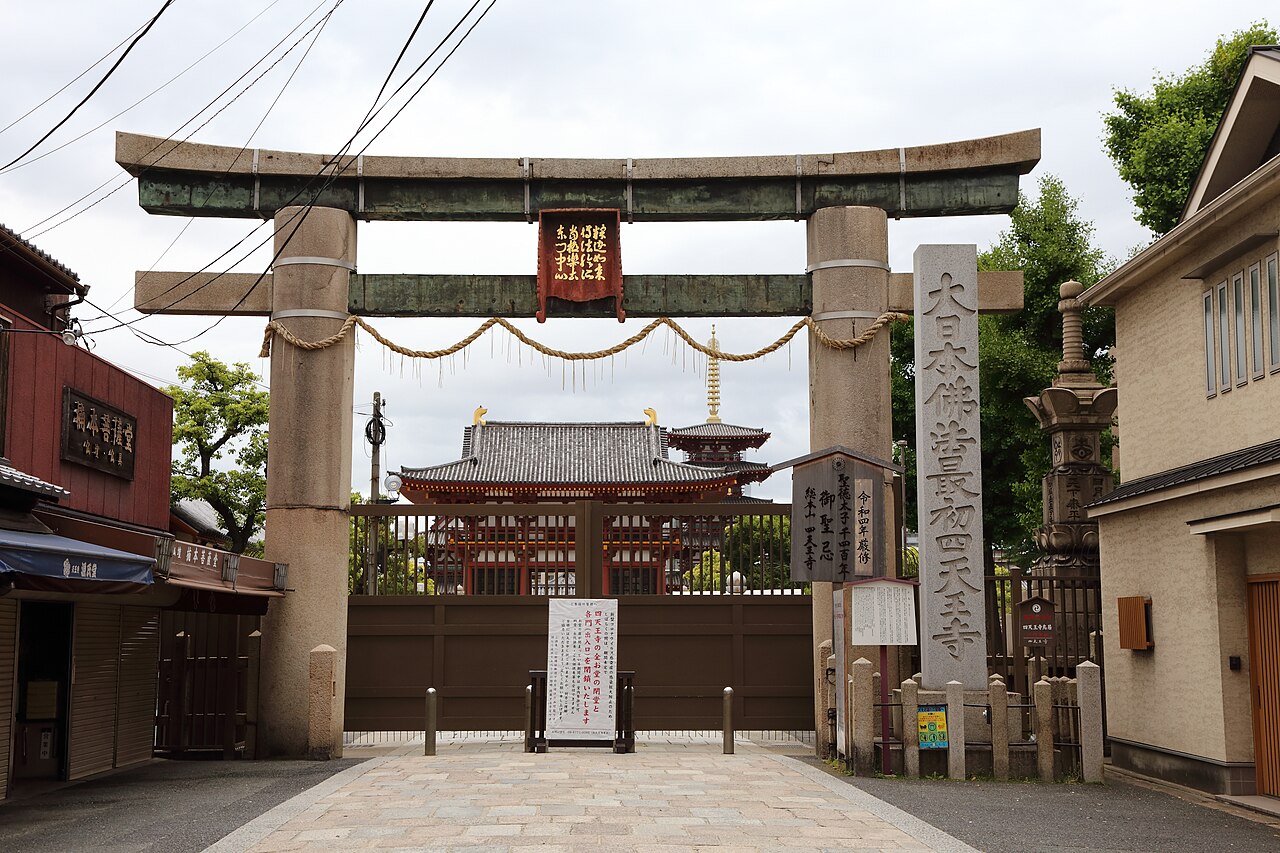
On the twenty-first of each month, stalls line the precincts and many worshippers come. The current buildings faithfully reproduce the style of the founding period, the Asuka period. Shitennoji suits visitors who want a rite to join, with the sutra strip floated after the memorial service and stalls lining the precincts on the twenty-first.
Strolling Keitakuen and Looking Across the Pond From the Pavilion
On entering the garden, a shore of spread white stones comes into view, and a wide large pond lies beyond it. A middle island planted with black pine floats in the centre of the pond, and scattered rock islands form a scene that recalls a vast ocean.
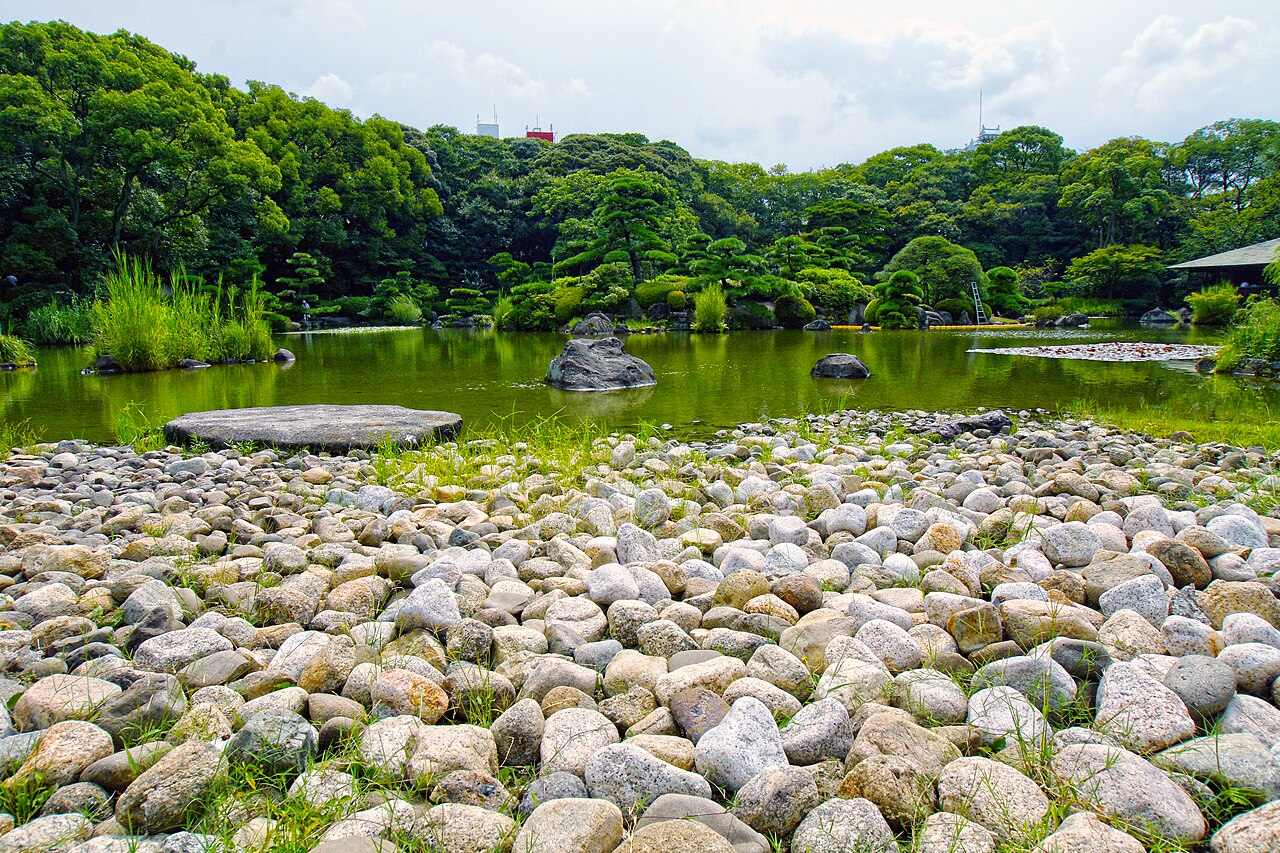
Walking the garden path, visitors meet the north-east artificial hill, the great waterfall at its foot and the pavilion at the pond's edge one after another. Garden paths, stepping stones and bridges run around the pond, and tea houses and pavilions are dotted around it.
At one rock, the dragon's body is represented by low azalea shrubs, making it look as if a dragon is winding along the water's edge. The main building of the Osaka City Museum of Fine Arts can be taken in as a view from the back of the garden.
From one pavilion at the pond, visitors can look across the whole garden spreading to the north. That pavilion is a rest pavilion built to project over the water on the south side of the pond. Keitakuen suits visitors who want a pond to walk around, with paths, stepping stones and bridges circling it and a pavilion built over the water.
Copying Sutras and Offering Incense at Isshin-ji
Anyone can copy sutras at any time in the Shakyo-do sutra-copying hall of Isshin-ji. The hall is described as having a stillness not expected in an urban area. At the nokotsu-do, the ossuary hall, visitors can offer incense sticks, candles and flowers.
In the great corridor at Isshin-ji, Buddha statues built with donations from worshippers are enshrined. The Okotsu-butsu, an Amida Nyorai statue made of remains, is built from the remains deposited over ten years, gathered together. A teahouse at the temple gate is described as made for visitors who come to worship.
On the east side of the precincts is a grave that carries a legend of sealing away drinking. Many shamoji, rice paddles offered in prayer to quit drinking, are dedicated at that grave. Isshin-ji suits visitors who want to do something with their hands, since anyone can copy sutras in the sutra-copying hall at any time.
Walking the Stone-Paved Slope of Genshoji-zaka and Reading the Monuments
Genshoji-zaka is a narrow, gently sloping stone-paved slope, named because the road runs east-west through a cut in temple grounds at the foot of the slope. The slope was also a setting in one of the works written by Oda Sakunosuke.
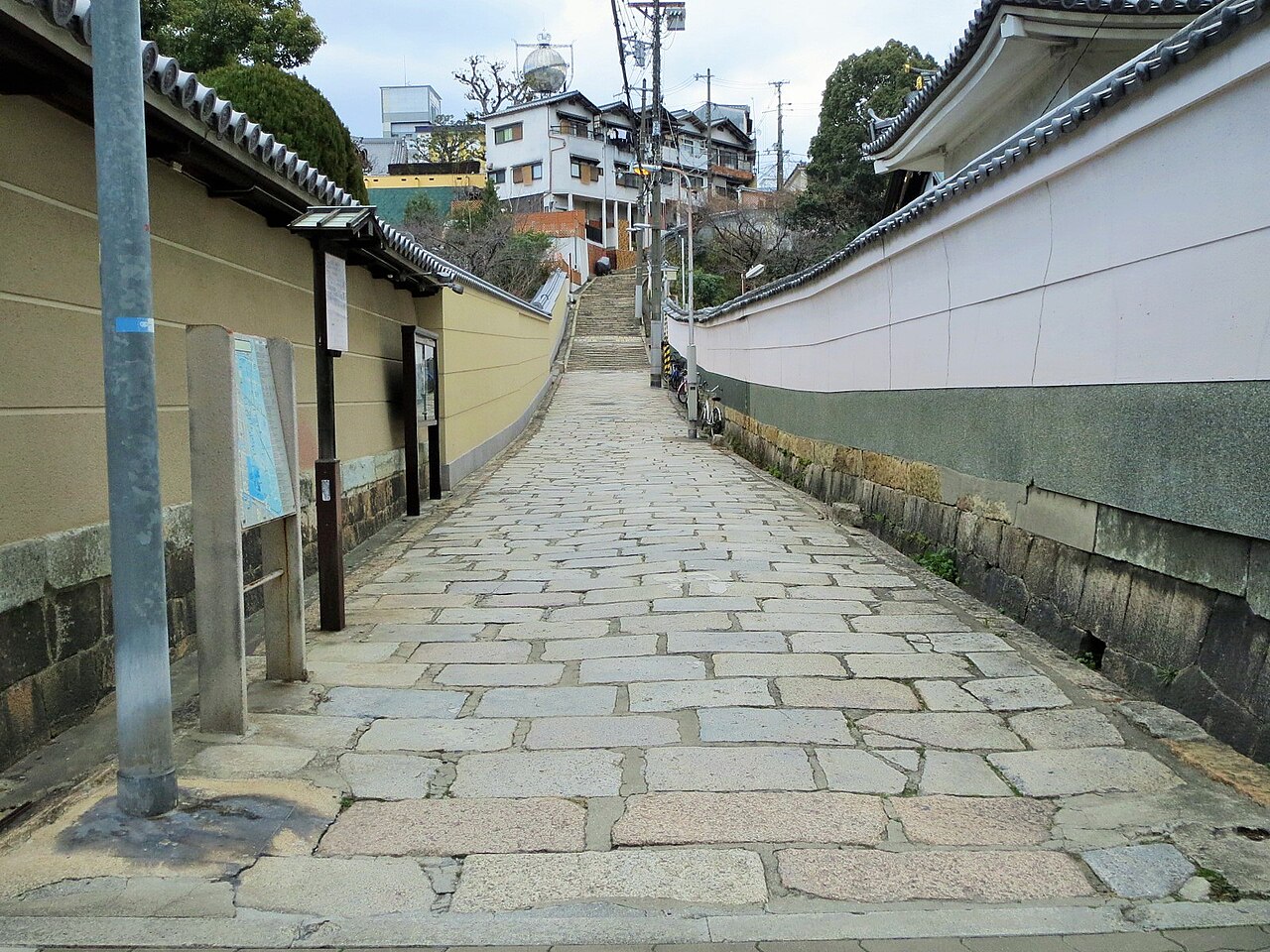
The name of a second slope is said to come from how the road's ups and downs, seen from its foot, resemble a snake. At the top of that slope there is a literary monument to a work by Oda Sakunosuke, built by the City of Osaka.
At the shrine where Sanada Yukimura died in the Summer Siege of Osaka, a monument marking his death remains. Below the office of that shrine an empty well remains, surrounded by a stone fence. Genshoji-zaka suits visitors who want a narrow, gently sloping stone-paved slope and a setting from Oda Sakunosuke's writing.
Praying to the Hidden Buddha Aizen Myoo at Aizen-do
The prayer method is to press a written wish between both hands, hold them above the nose, recite the Aizen mantra and wish with eyes shut. Because Aizen Myoo is the centre of esoteric Buddhism, the figure is often kept as a hidden Buddha that people rarely get a chance to see.
The Aizen Myoo figure, with its lion crown, is described as having a fiery red body, a wrathful expression, and three eyes and six arms.
During the Aizen Festival, the hidden principal image of Aizen Myoo is among the figures that are specially unveiled. If time is short outside the Aizen Festival, Aizen-do is the stop to leave out, since people rarely get a chance to see its hidden Buddha.
Getting to Shitennoji and Tennoji
New to rural buses and one-man trains? See how to ride them, step by step.
| Route | Item | Detail |
|---|---|---|
| Tennoji Station, JR loop line | To Shitennoji, heading north | Twelve minutes on foot |
| Tennoji Station, Subway Midosuji Line and Tanimachi Line | To Shitennoji, heading north | Twelve minutes on foot |
| Shitennojimae-yuhigaoka Station, Subway Tanimachi Line | To Shitennoji, heading south | Five minutes on foot |
| Abenobashi Station, Kintetsu Minami-Osaka Line | To Shitennoji, heading north | Fourteen minutes on foot |
| Shitennojimae-yuhigaoka Station, Osaka Metro Tanimachi Line | To Treasure Hall, heading south | Five minutes on foot |
For an overnight stay in Osaka, browse places to stay in Osaka.
Hours and Fees
| Place | Item | Time or fee |
|---|---|---|
| Shitennoji gate | Worship from outside the halls | Twenty-four hours |
| Rokujido | Hours | Eight thirty to eighteen hundred |
| Rokujido | On the twenty-first of each month | Eight to eighteen hundred |
| Central Temple | Adult, individual rate | Five hundred yen |
| Keitakuen | Hours | Nine thirty to seventeen hundred |
| Keitakuen | Last entry | Sixteen thirty |
| Keitakuen | Weekends and holidays, May and September | Until eighteen hundred |
| Keitakuen | Closed | Every Monday |
| Keitakuen | Adult | Three hundred yen |
| Keitakuen | High school and university students | Two hundred yen |
| Keitaku-en combined ticket | General | Six hundred yen |
Fees and hours were checked against official sources on 16 November 2026.
Thinking of staying overnight?
Compare places to stay near Osaka →
Disclosure: This post may contain affiliate links. If you book through them, we may earn a commission at no extra cost to you.