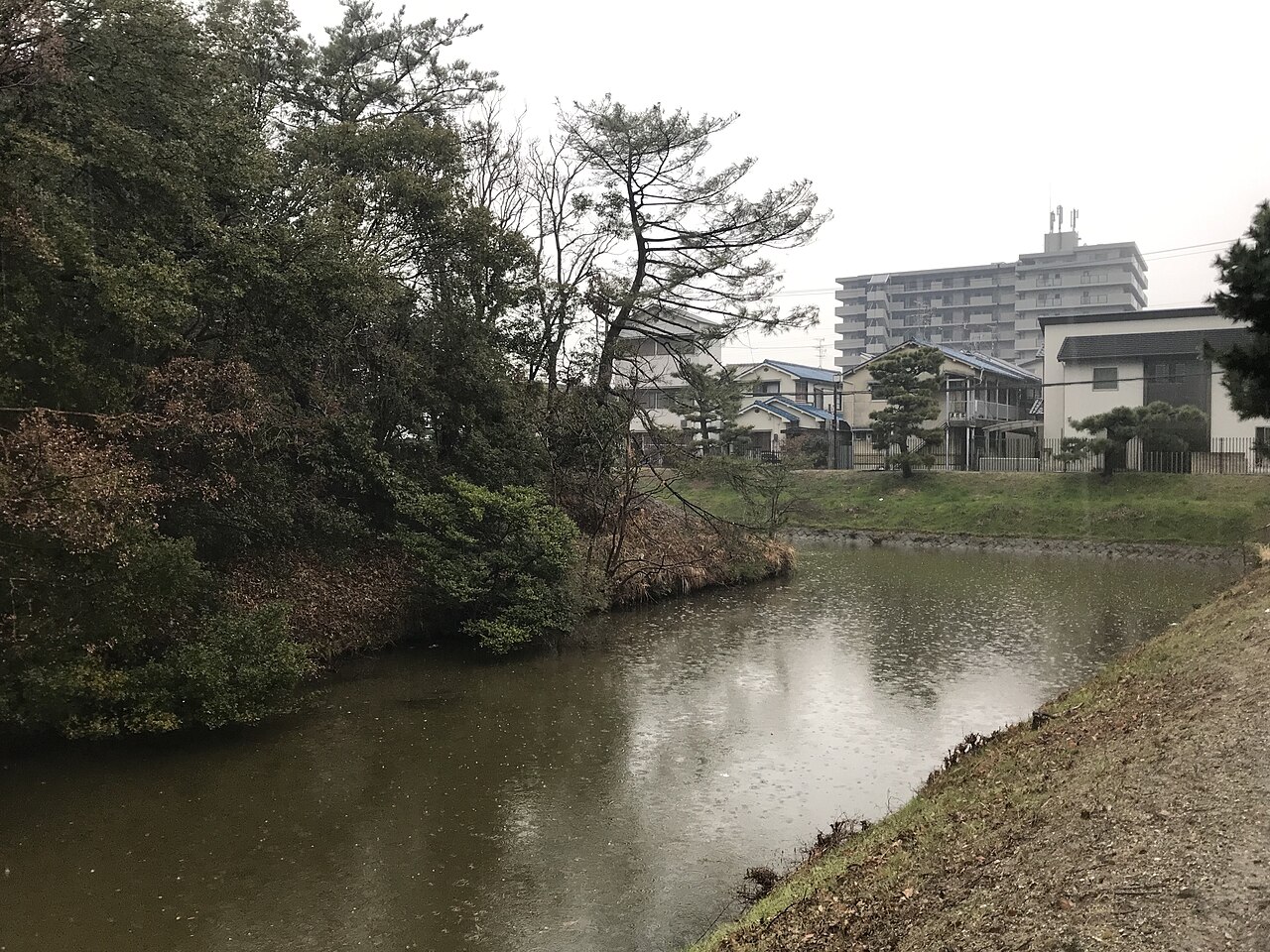
The largest burial mound in Japan sits in the middle of an ordinary suburb, and it is easy to walk straight past it. From the pavement, Daisen Kofun — the keyhole-shaped tomb attributed to Emperor Nintoku — reads as a long, green hill behind a moat: no ticket gate, no queue, and, in truth, no view. That honest anticlimax is exactly what makes Sakai such a rewarding quiet day out from Osaka. You come for a monument you cannot quite see, and you stay for a merchant town of tea rooms, gunsmith lanes, a garden pond, and a wooden lighthouse stranded between the factories and the sea.
A tomb too large to see
Daisen Kofun stretches close to half a kilometer from end to end, rises in three stepped tiers, and lies inside three rings of moat. The walk around its outer edge comes to nearly three kilometers, and somewhere along that circuit the scale finally lands: the hill keeps going, and going, while the moat keeps the city at a distance.
The mound itself is off-limits. Visitors stand at a worship point facing the front of the tomb across the water and see a forested slope — nothing more. It costs nothing to stand there, and the quiet is part of the point: this is a place for slow walking rather than sightseeing in the usual sense. More than forty mounds of the Mozu group survive across the city, from grand keyholes to modest bumps between car parks, and a large share of them joined the World Heritage list in two thousand nineteen.
Begin at the Mozu Tombs Visitor Center. The center receives visitors from nine in the morning until six in the evening, rests over the New Year period, and charges no admission.
Daisen Park and the garden
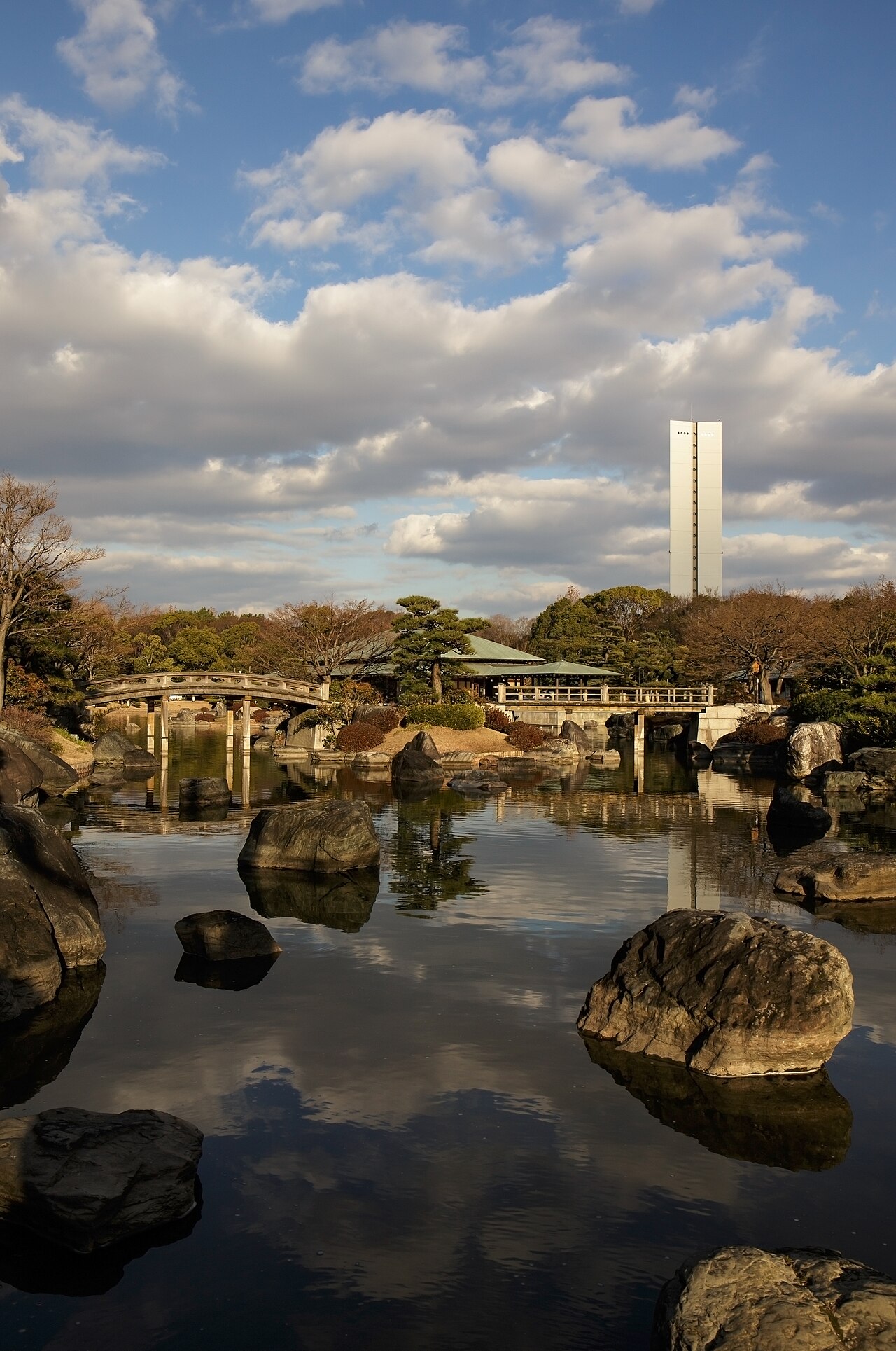
Between the great mound and its smaller neighbors spreads Daisen Park, a broad public green with lawns, groves, and a Japanese garden. Entry to the park costs nothing. In the garden, a low arched bridge crosses a pond that holds the sky, a green-roofed pavilion waits on the far side, and a slender white tower — the park's peace memorial — shows above the treeline. On a clear evening the water goes still and the whole scene feels much farther from the city than it is.
The city museum stands inside the park and tells the town's double story: the age of the mounds and the age of the merchants. Fans of Art Nouveau can add the Sakai Alphonse Mucha museum elsewhere in the city, devoted to the poster artist's work. It receives visitors from half past nine in the morning until a quarter past five in the afternoon, with last entry at half past four. Admission is 510 yen.
The merchant town of tea and iron
Medieval Sakai grew rich as a trading port and governed itself like few other towns in Japan; its merchants funded temples, its forges turned out matchlock guns, and its tea masters — Sen no Rikyu first among them — refined the austere style of tea that still shapes the art. The old town north of the mounds keeps this inheritance in a compact, walkable grid.
Where to stay
Disclosure: This post may contain affiliate links. If you book through them, we may earn a commission at no extra cost to you.
- Sakai Rishonomori — a museum of Sen no Rikyu and of the poet Akiko Yosano, both children of this town. It receives visitors from 9:00 to 18:00, with last entry at 17:30, and rests on the third Tuesday of the month and over the New Year. Admission to the permanent rooms is 300 yen, with the tea-room experiences charged separately.
- Nanshuji — a Zen temple bound to Rikyu's memory, with a dry landscape garden and a Buddha hall said to be the only one of its style in Osaka. Admission is 400 yen.
- Myokokuji — home to a great cycad said to have lived for about a thousand years. The temple is about a three-minute walk from the Myokokuji-mae stop.
- The gunsmith's house — the workshop-residence of a matchlock-forging family. It receives visitors from ten in the morning until five in the afternoon, with last entry at half past four.
- The Yamaguchi family residence — a merchant-era townhouse rebuilt after the fires of the early seventeenth century. It keeps the same times: ten in the morning until five, with last entry at half past four.
- Honganji Sakai Betsuin — the great temple hall of the old town, with no admission charge.
- Kan-bukuro — a sweet shop said to have been trading since the fourteenth century, and a fitting last stop before the tram home.
A lighthouse between the factories and the sea
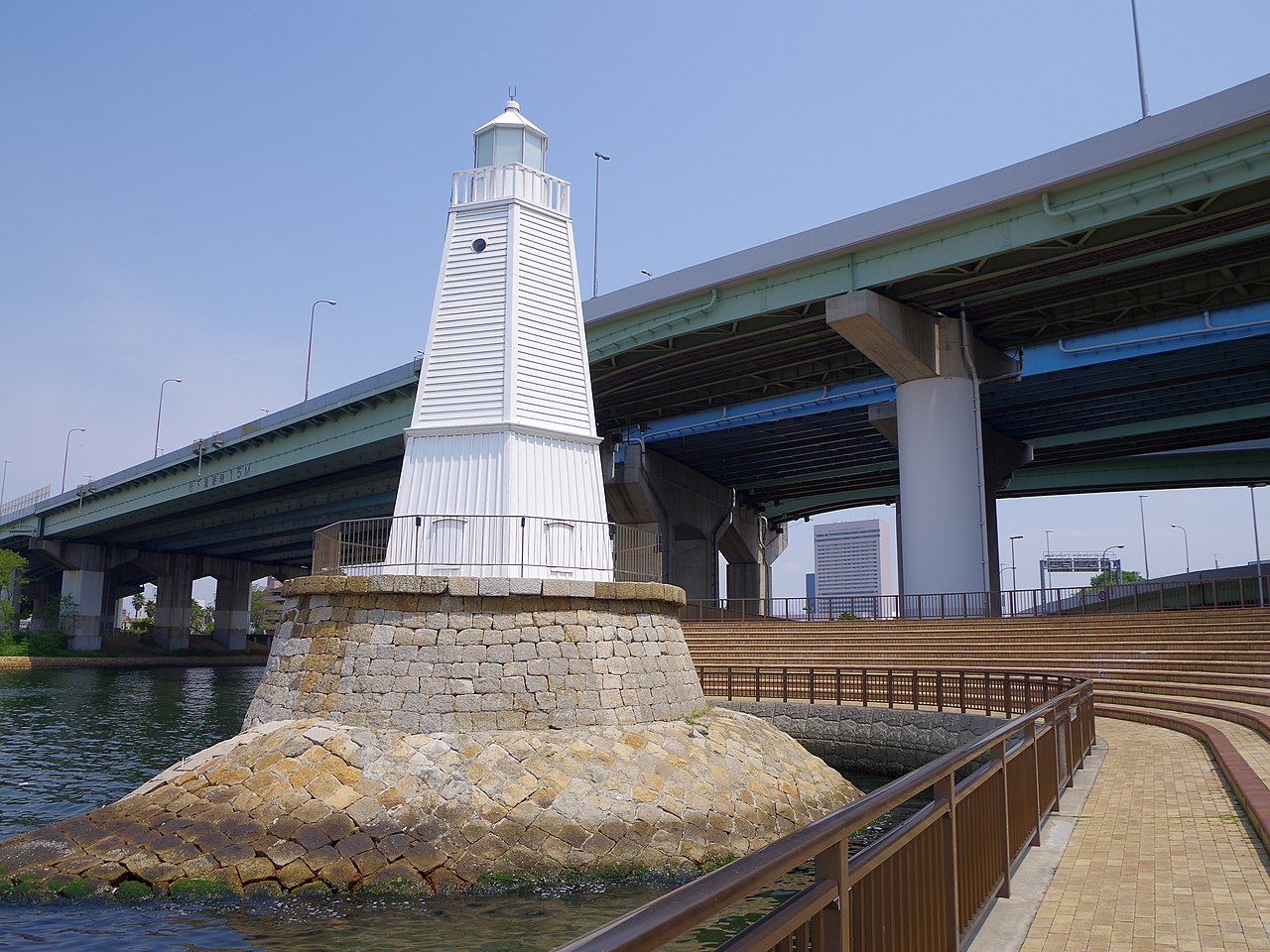
Walk west from the old town and the streets end at water — or at what used to be water. The old Sakai lighthouse, a white wooden hexagon on a stone base, was raised in the eighteen-seventies and is counted among the oldest Western-style wooden lighthouses in Japan still standing on their original site. The harbor it once guided is gone; reclaimed land and an elevated expressway now frame it. Seen from the small park at its foot, it is a strangely moving thing — a leftover of the town's seafaring century under an indifferent sky.
Getting there and getting around
The pleasure of moving around Sakai is the Hankai tramway — the last streetcars in the Osaka area — whose single cars rattle south from the city through old shopping streets. Two routes run: the Uemachi route from Tennoji-eki-mae down to Sumiyoshi, and the Hankai route from Ebisucho through Sakai's old town to Hamadera-ekimae.
For orientation:
- The Myokokuji-mae stop puts you at the temple quarter and the gunsmith lanes.
- The Shukuin stop is the one for Sakai Rishonomori and the heart of the old town.
- The Goryo-mae stop begins the walk toward Daisen Kofun and the park.
- Hamadera-ekimae, the southern end of the line, leads to the pine groves of Hamadera Park.
Myokokuji stands about a three-minute walk from its namesake stop, and Otori Taisha — the ancient shrine at the city's southern edge — is about a five-minute walk from the west exit of Otori on the JR Hanwa Line.
A quiet day, in order
- Start at the Mozu Tombs Visitor Center, then make the long circuit of Daisen Kofun's moat while the morning is still cool.
- Cross into Daisen Park for the garden pond and the museum.
- Ride the tram to Shukuin and give the afternoon to the old town — Rishonomori first, then temples and forges at your own pace.
- Save the sweet shop for the end of the walking.
- If light remains, continue to the old lighthouse, or ride the tram to the southern end of the line at Hamadera.
Book a guided day in Sakai
The town's story — mounds, merchants, tea, and guns — rewards a guide who can hold the thread while you walk. If that appeals, browse the current options below.