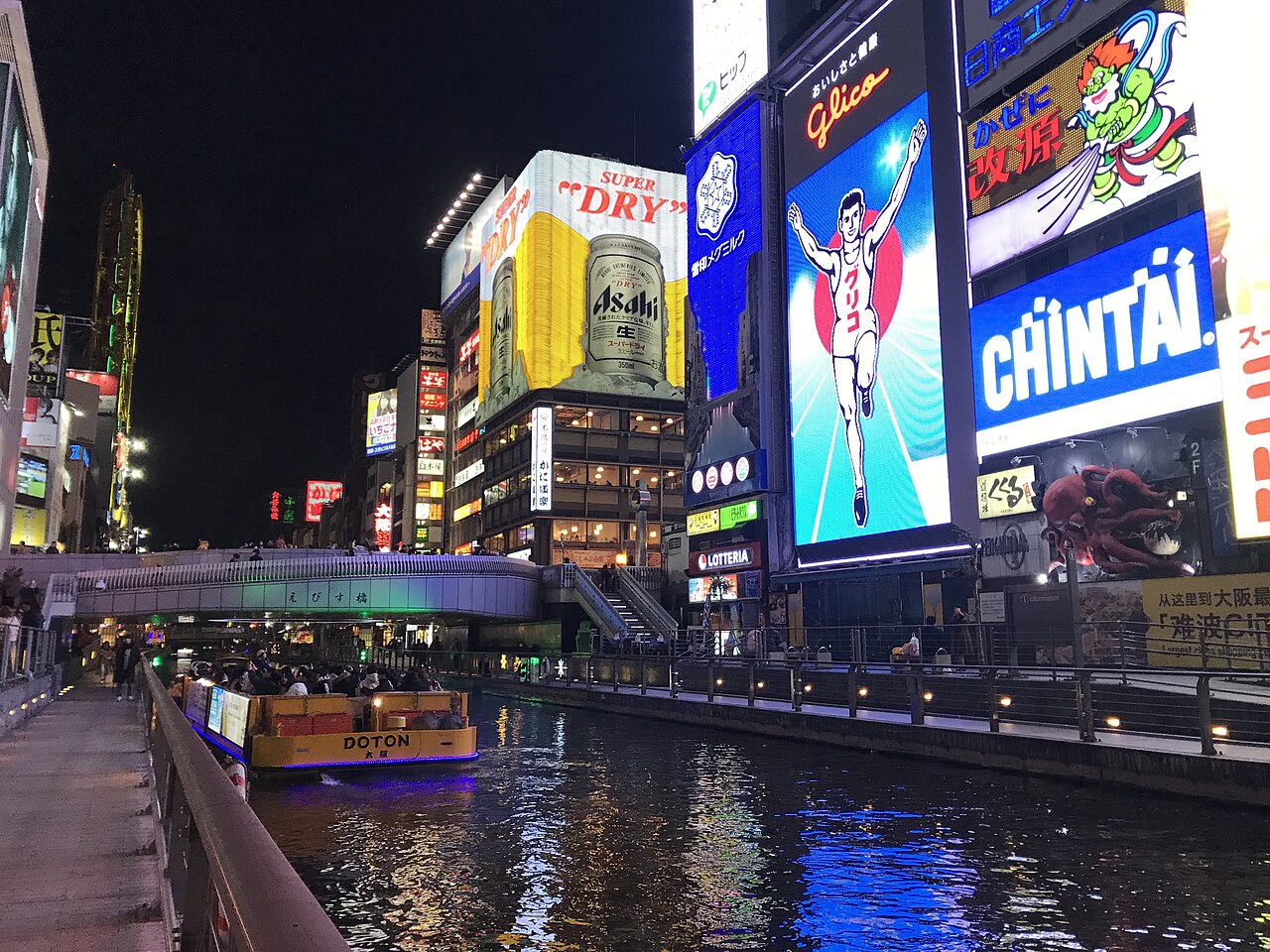
Dotonbori is a major entertainment district in Minami, Osaka, where giant three-dimensional signs line the street, among them the Glico sign, a giant crab, an octopus and a pufferfish. Kuidaore Taro sounds his gong and drum here, and people have their photos taken with him. The contrast sits inside the same district: Hozenji is described as having a calm, quiet Naniwa atmosphere.
For signs and theatres, begin on the street with Kuidaore Taro and the Shochikuza; for eating, takoyaki, okonomiyaki and kushikatsu are served in the restaurants along Dotonbori-dori. If time is limited and a stone-paved alley matters more than giant signs, go straight to Hozenji Yokocho, where the moss-covered Mizukake Fudo is enshrined at the end of the alley.
Giant Signs, Kuidaore Taro and the Theatres of Dotonbori
Look up along Dotonbori-dori, where the Shochikuza theatre, Kani Doraku and the Glico sign line the street as giant three-dimensional signs, joined by a giant crab, an octopus and a pufferfish. On the rooftop of the Kushikatsu Daruma building a Daruma Daijin rotates, and the Don Quijote Dotonbori store is marked by its yellow Ferris wheel.
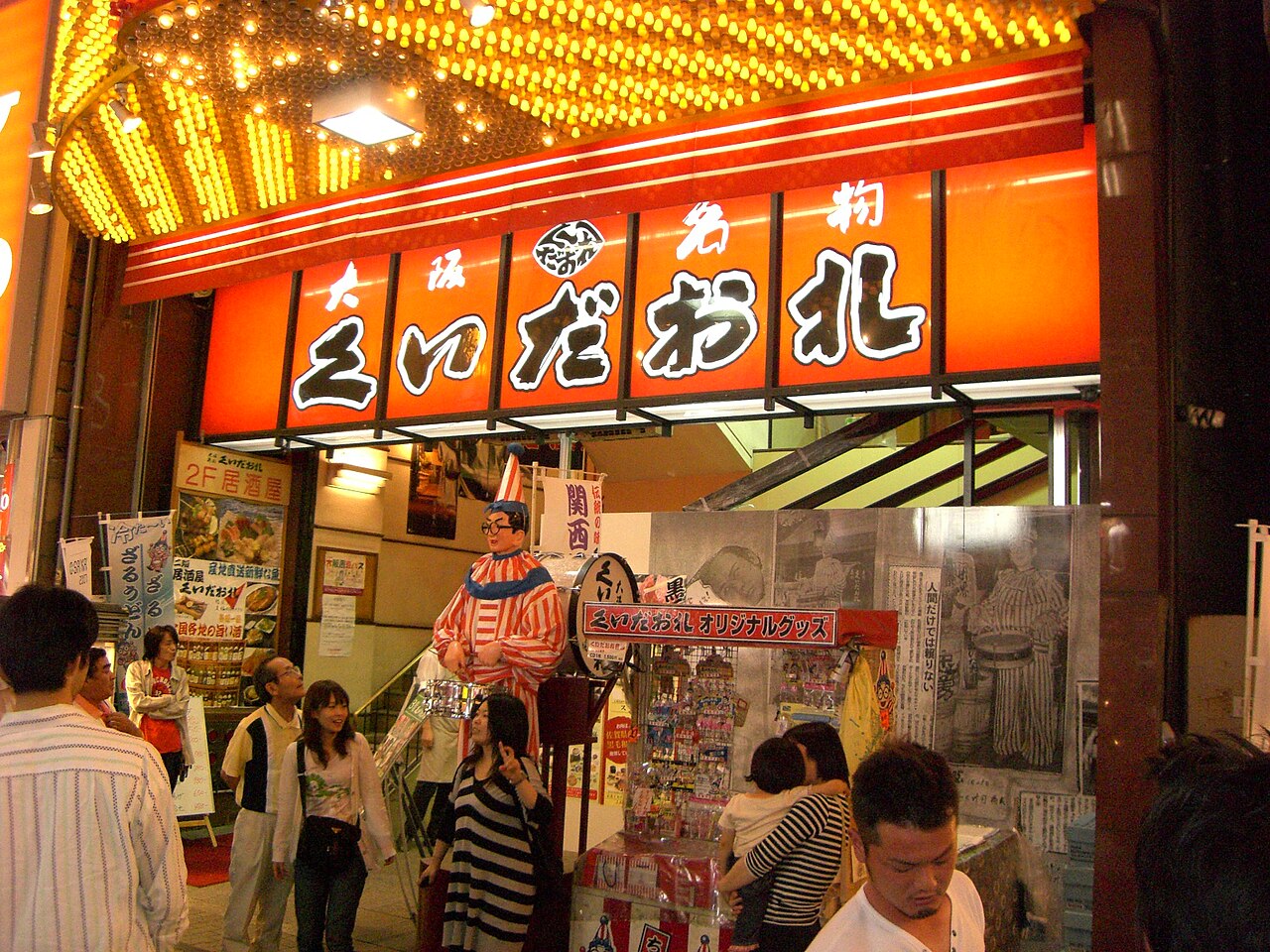
Kuidaore Taro sounds a gong and a drum in a chin-don rhythm, and visitors have their photos taken with him. He was made by a Bunraku puppet maker and is Japan's first robot signboard. That origin ties the figure to the stage arts of the district, where ningyo joruri is performed at the National Bunraku Theatre.
The Shochikuza, near Ebisubashi, is the one theatre in Dotonbori built as a playhouse. It was built in nineteen twenty-three as Japan's first stylistic theatre and marked its hundredth anniversary in twenty twenty-three, which makes it the stop for stage history. Its programme covers kabuki, contemporary drama, revues, musicals and concerts, in an interior based on red seats and marble.
The district is named after Yasui Doton, who used his own funds to cut the canal about twelve years after the Battle of Sekigahara, so the name points back to the waterway. Theatres and small playhouses gathered on the south side of the canal, and restaurants arose naturally to serve their audiences. Those who like signs and stages have both on this one street.
The Dotonbori Canal, Tonbori River Walk and the Cruise
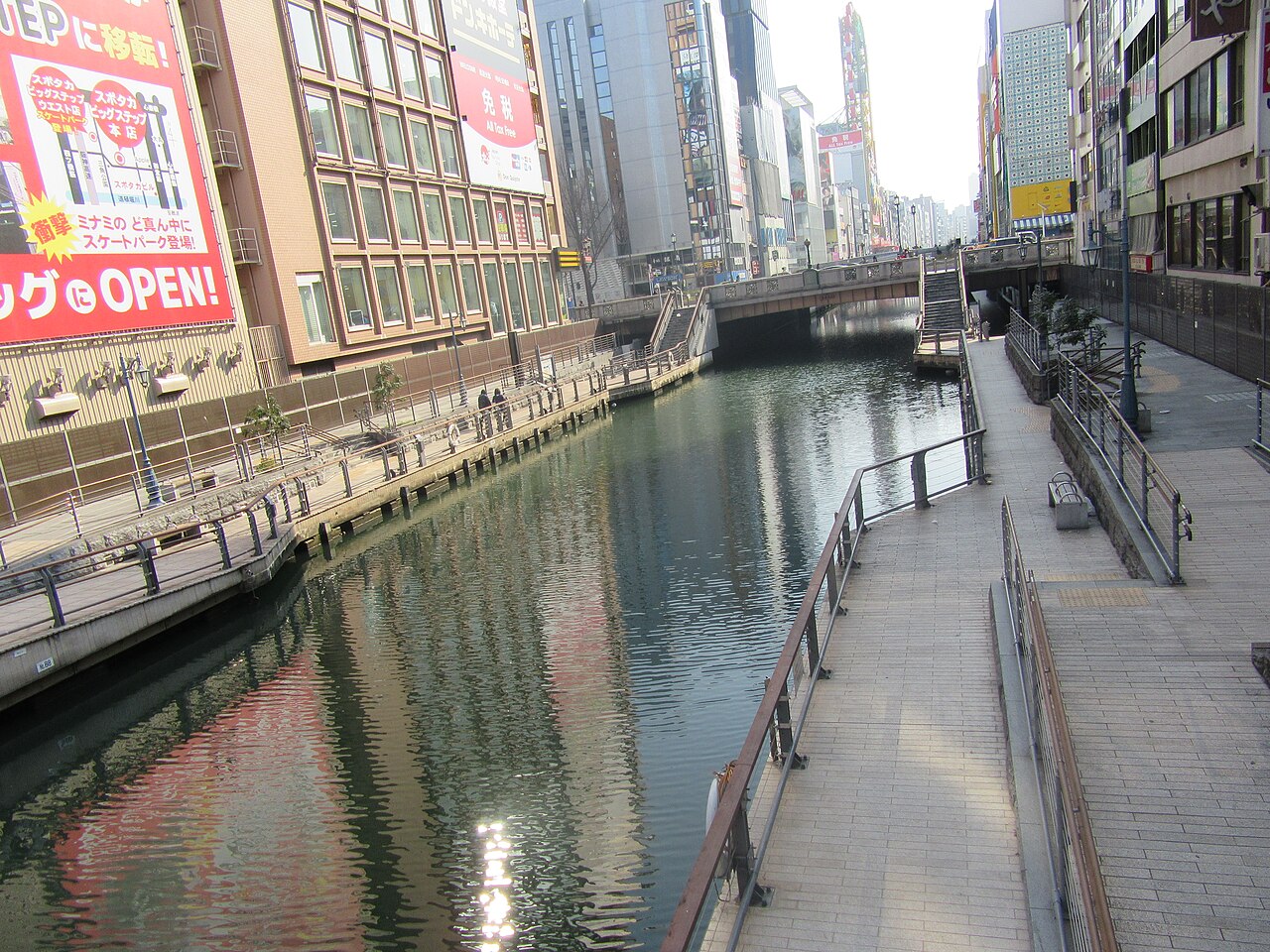
Walking beside the water is possible on the Tonbori River Walk, a promenade along the water surface. The sections between Ebisubashi and Nipponbashi and the Minatomachi section have opened, six hundred metres in total, which is enough for an unhurried stroll along the canal. At Ebisubashi, a slope on the east side of the bridge leads down to the promenade.
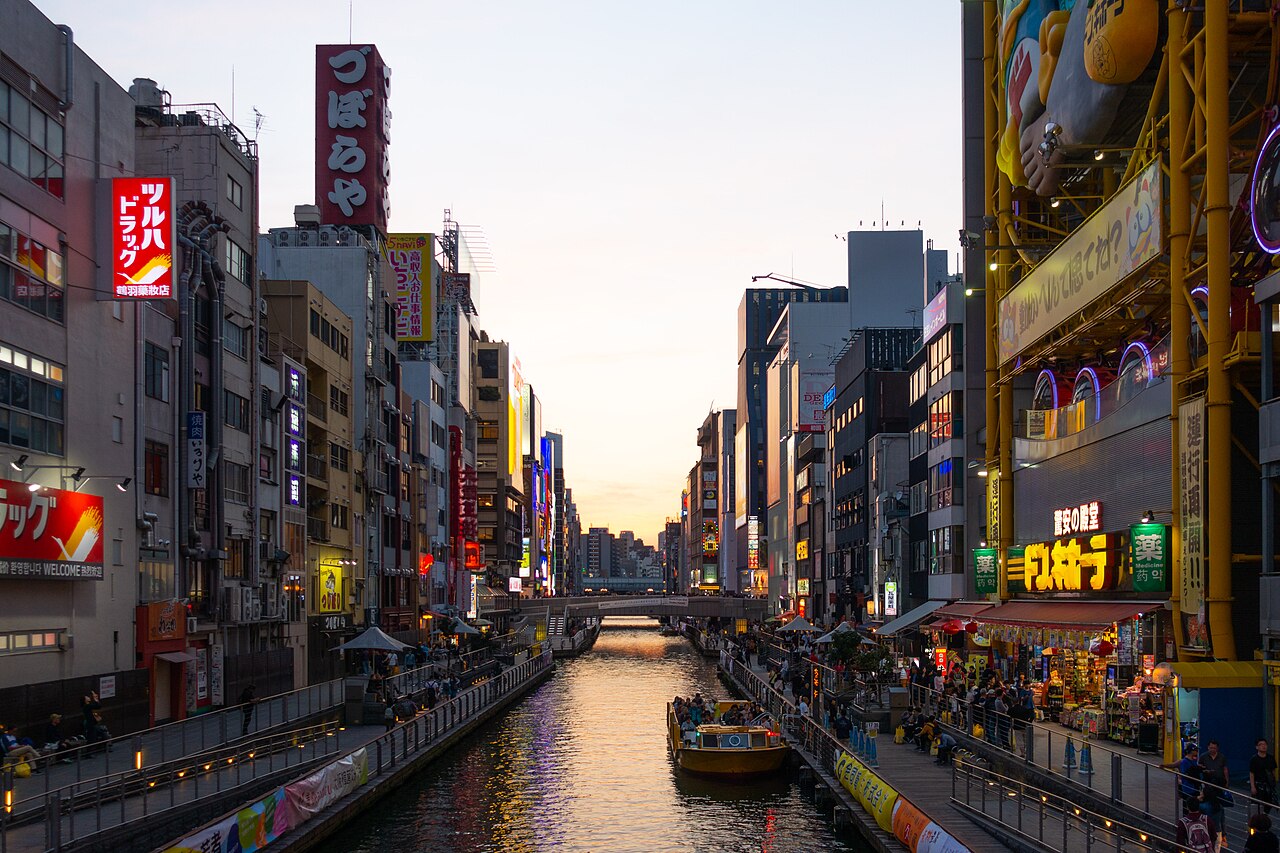
The promenade is described as having beautiful neon lights reflected on the water. It is also a place for events, since the Tenjin Festival and the kabuki boat arrival take place here. The boat arrival links the waterside to the theatres of the district. For walkers who want the canal more than the street, this promenade is the part to choose.
Sightseeing boats on the Dotonbori River operate from the landing stages of the promenade. The Tombori River Cruise has its boarding reception on the first floor of the Don Quijote Dotonbori store on the north bank of the promenade, with the boarding point right in front of it. Departure details are in the table at the end of this article.
Takoyaki, Okonomiyaki and Kushikatsu Along Dotonbori
Start with takoyaki at the main store of Dotonbori Takohachi, where craftsmen bake it by hand on a copper griddle using a soy-sauce batter. The menu has a hundred items of Osaka dishes, which means takoyaki, okonomiyaki, yakisoba, negiyaki and Akashiyaki can all be ordered in one place, along with teppan dishes.
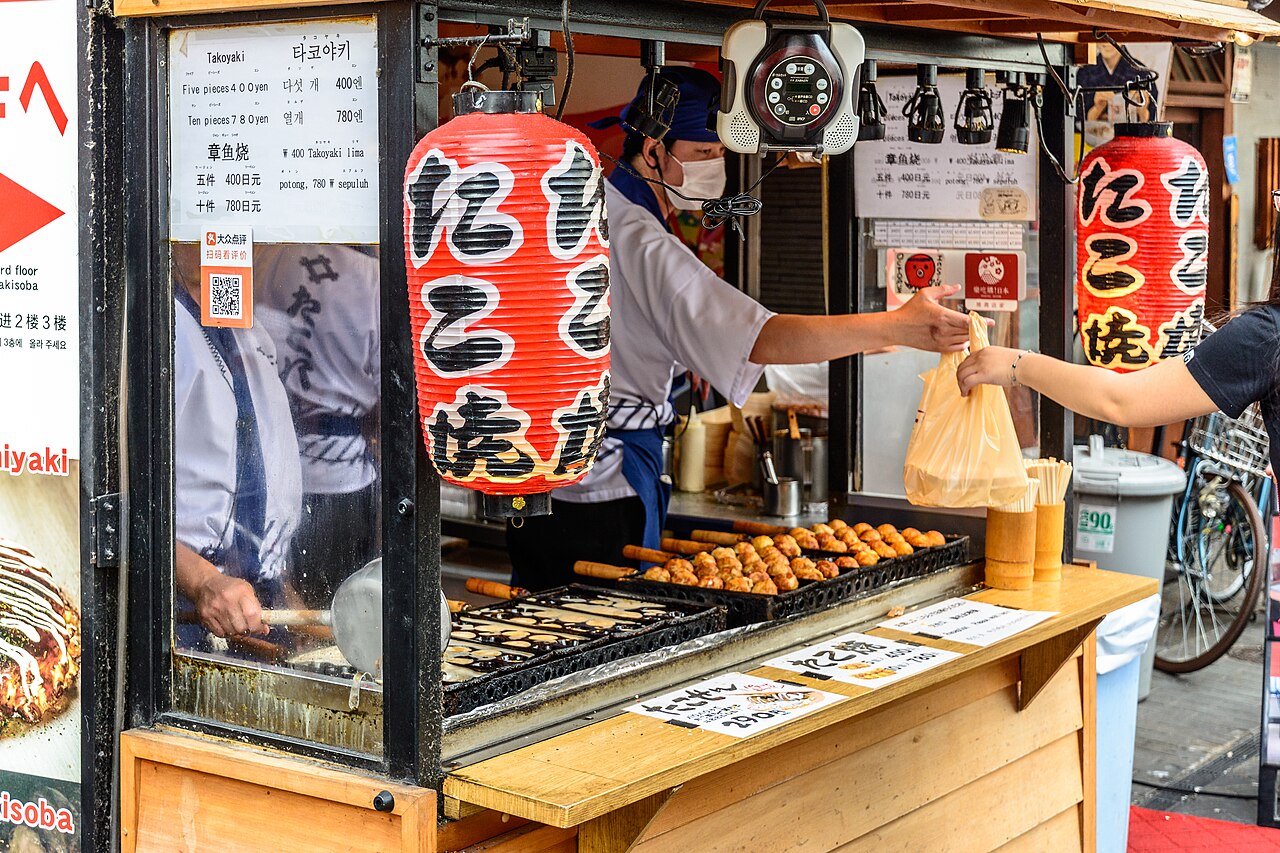
The takoyaki has a browned outer skin and a soft, melting interior, while the Akashiyaki is made with eggs and has a very fluffy texture. Kushikatsu is served as an assortment of beef, shrimp, pork, squid and asparagus. Draft beer and a Dotonbori highball are served too, so one order can cover several Osaka dishes.
Restaurants of various genres stand on both sides of Dotonbori-dori. The choices include a takoyaki restaurant that also serves okonomiyaki and kushikatsu, and an okonomiyaki restaurant with counter seats as well as table seats. A conveyor-belt sushi restaurant holds a tuna cutting show every day, and the tuna cut on the spot can be eaten there. Choose it for a show with the meal, and Takohachi for comparing Osaka dishes.
Hozenji Yokocho and the Mizukake Fudo
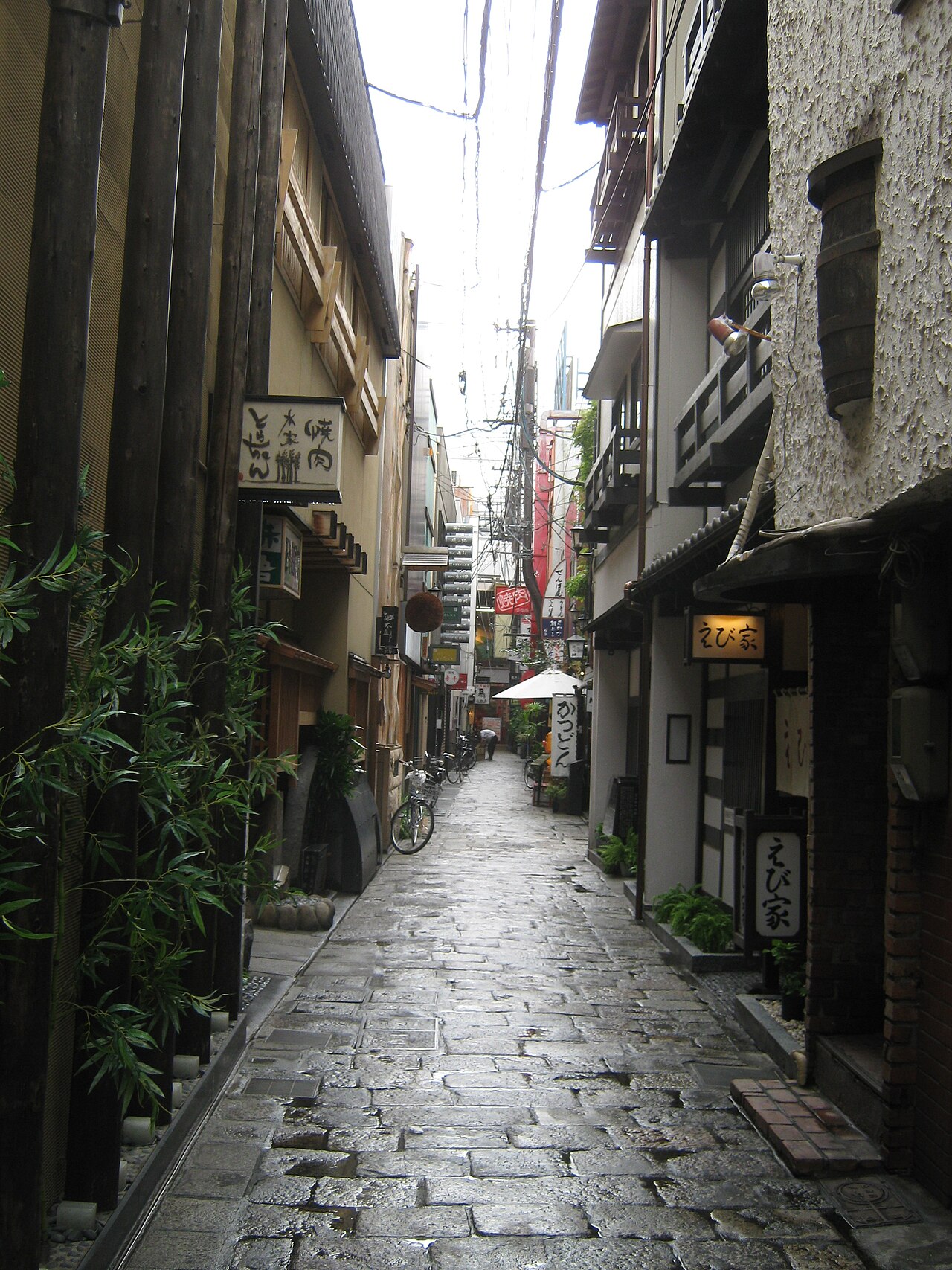
Enter Hozenji Yokocho from the Sennichimae shopping street by a narrow alley marked with a wooden signboard. The stone-paved path is sprinkled with water, the smell of incense drifts from the left side, and footsteps echo with a clacking sound on the stone. Its two alleys run east to west, eighty metres long and less than three metres wide, so the whole Yokocho is a small place to walk.
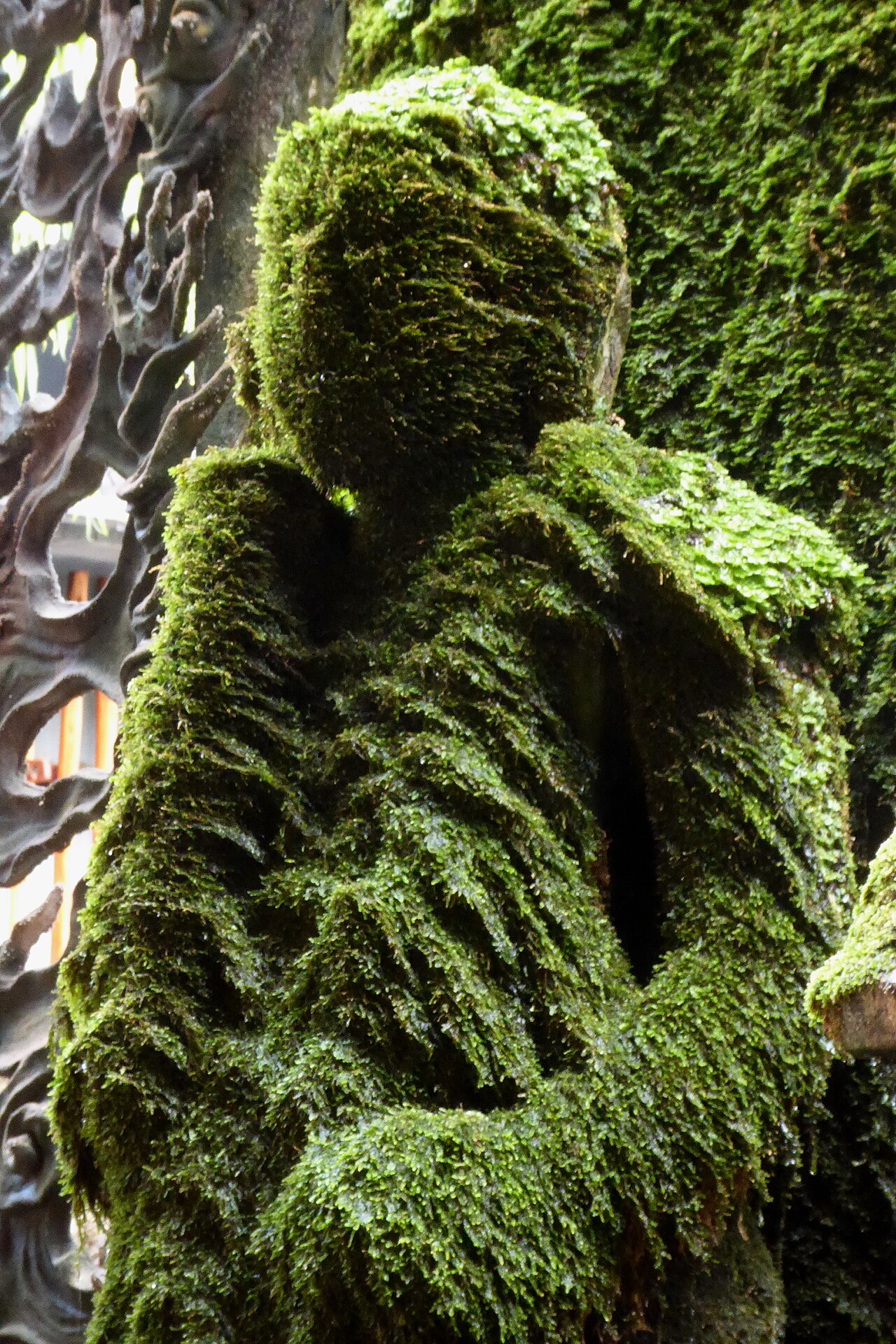
Mizukake Fudo is enshrined at the end of the alley. People pour water over the statue with a ladle while making wishes, which is why it is always covered in green moss. The statue survived the war, and the moss now covers it all over. Around Hozenji the scent of incense drifts, with the faint glow of lanterns over the stone paving.
About sixty shops line the stone-paved alley, including long-established kappo restaurants, bars, kushikatsu, okonomiyaki and sushi, so a meal can follow the visit. The alley was originally the precinct of the Jodo sect temple Tenryuzan Hozenji, and stalls serving worshippers developed into it. Walkers who prefer a stone-paved alley to a street of giant signs should give this part of the district their time.
Hozenji Yokocho is known as the setting of a novel by Oda Sakunosuke and was sung about in a popular song, whose lyrics are inscribed on a monument in the alley. Until the early Showa period it had two yose theatres. A sweet shop next to Mizukake Fudo and a kappo restaurant near the west gate are both still in business.
Getting to Dotonbori
New to rural buses and one-man trains? See how to ride them, step by step.
| Route | Item | Detail |
|---|---|---|
| Namba Station on the Osaka Metro Midosuji, Yotsubashi and Sennichimae lines | Exit fourteen | Dotonbori is immediately reachable, as it is from Osaka Namba Station on the Hanshin and Kintetsu lines |
| Nipponbashi Station on the Osaka Metro Sakaisuji and Sennichimae lines | Exit two | Dotonbori is immediately reachable |
| Nankai Namba Station | North entrance | About a seven-minute walk north to Dotonbori |
| Namba Station on the Osaka Metro | Dotonbori shopping street | About a five-minute walk |
| Namba Walk | Exit B sixteen at Namba Station or Exit B eighteen at Nipponbashi Station | Hozenji is a one-minute walk north |
| Namba Station on the Midosuji Line, Sennichimae Line, Kintetsu and Nankai | Hozenji Yokocho | Five minutes on foot |
| Namba Station, Shinsaibashi Station and Nipponbashi Station | Tombori River Cruise | About a five to ten minute walk |
| Osaka City Bus | Flat fare | Two hundred and ten yen for all sections on most routes, with some routes excepted |
If you would rather stay overnight, places to stay in Osaka is a place to start.
Hours and Fees
| Place | Item | Time or fee |
|---|---|---|
| Hozenji precincts, including Mizukake Fudo | Visiting | Can be visited twenty-four hours a day |
| Hozenji amulet office | Reception | Open from ten in the morning to six in the evening |
| Mizukake Fudo goma ritual | Monthly date | The twenty-eighth of every month, from seven in the evening to half past eight in the evening |
| Mizukake Fudo goma ritual | Offering fee | Listed as five hundred yen and three hundred yen |
| Hozenji yearly events | Hozenji festival and Konpira festival | Hozenji festival on August ten and eleven; Konpira festival on October nine and ten |
| Hozenji yearly events | New Year first goma and Setsubun-e | New Year first goma and lion dance offering on January two and three; Setsubun-e on February three |
| Tombori River Cruise | Operating hours | Eleven in the morning to nine in the evening, departing every hour on the hour and at half past |
| Tombori River Cruise | Fare | Adult two thousand yen; student of junior high school age and above one thousand yen; five hundred yen for elementary school children and for preschool children beyond one per adult |
| Tombori River Cruise | Duration | Takes twenty minutes |
| Dotonbori Takohachi main store | Opening hours | Open from ten in the morning to half past ten in the evening |
| Don Quijote Dotonbori store | Opening hours | Twenty-four hours, though at night the tax-free counter may handle service |
| Enjoy Eco Card, a one-day pass for Osaka Metro and Osaka City Bus lines | Price | Adults eight hundred and twenty yen on weekdays and six hundred and twenty yen on weekends and holidays; children three hundred and ten yen at any time |
Fees and hours were checked against official sources on 19 November 2026.
Thinking of staying overnight?
Compare places to stay near Osaka →
Disclosure: This post may contain affiliate links. If you book through them, we may earn a commission at no extra cost to you.